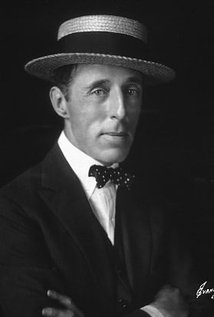
 D.W. Griffith (1875–1948)
Born: January 22, 1875 in LaGrange, Kentucky, USA
Died: July 23, 1948 (age 73) in Hollywood, Los Angeles, California, USA
He has been called “the father of film technique,” “the man who invented Hollywood,” and “the Shakespeare of the screen”.
In 1920, he established United Artists with Charles Chaplin, Douglas Fairbanks, Mary Pickford.
Sometimes, whether you like it or not you have to give the devil his due. D.W. Griffith’s “Birth of a Nation” may be an embarrassing reminder of the dark side of our history that we’d just as soon sweep under the rug, but for better or worse it invented the feature film as we know it.
 WAY DOWN EAST WAY DOWN EAST1920 dir. D.W. Griffith Starring Lillian Gish Richard Barthlemess |
 Intolerance Intolerance1916 dir. D.W. Griffith Starring Mae Marsh Robert Harron |
 JUDITH OF BETHULIA JUDITH OF BETHULIA1914 dir. D.W. Griffith Starring: Blanche Sweet Henry B. Walthall |
 AN UNSEEN ENEMY AN UNSEEN ENEMY1912 dir. D.W. Griffith Starring: Lillian Gish Dorothy Gish |
 ORPHANS OF THE STORM ORPHANS OF THE STORM1921 dir. D.W. Griffith Starring Lillian Gish Dorothy Gish |
 THE BIRTH OF A NATION THE BIRTH OF A NATION1915 dir. D.W. Griffith Stars: Lillian Gash Mae Marsh |
Similar to our number two, Orson Welles, if that was the only film he ever made it would probably be enough to grant him a spot on this list.
Prior to “Birth” movies were very much filmed stage plays, with single camera’s recording the comings and goings with as little dynamism as possible. Possibly more than anyone else of his day, Griffith understood how film could manipulate an audience’s emotions, put them in the characters shoes through manipulation of images: the jump cut linking disparate images into a combined idea; the use of medium shots and close ups to alter the viewers response to a characters circumstances (the closer the shot the more you feel what the character is feeling): deep focus to enable action to occur on multiple plains, creating visual tension and irony. He used panning shots to communicate real scale and backlighting to enhance mood. He understood that camera height and angle would subconsciously affect the audience’s understanding of a scene.
Others were experimenting with these same techniques of course, and might even have put them all together eventually, but Griffith did it first and best.
And he did it biggest. The James Cameron of his time, bigger was always better for Griffith. “Birth of a Nation” was the most expensive film ever made until a few year later when his next film “Intolerance” premiered. In “Intolerance” he took his experimentation with editing to its next logical step, copying Eisenstein’s theory of montage as he told an epic story intercut across four different timelines, from ancient Babylon to his own modern day.
More important than the scale of his narratives was the, well, scale of his narratives. Until Griffith came along most films were 60 minutes or less, with exhibitors and studios unsure about an audience’s stamina for taking in longer entertainments. Griffith, however, saw the opportunity for longer running times to allow for more development of character and theme and greater depth of storytelling. And with “Birth of Nation’s” colossal box office (approximately $200 million in modern figures, the highest grossing film of all time until the 1930s) he proved it was financially viable as well.
Griffith was undeniably a man of his time and his films, particularly “Birth of a Nation” are filled with the sort of hateful, blatant racism that is so out of step with modern society. An argument can, and has, been made that his film and his own pedestal are built entirely out of his technical skill, that much of the underlying material is cliched and embarrassing despite whatever changes they wrought. There is more than a little truth to that and Griffith’s place in filmmaking history is likely to remain controversial for quite some time.
Roger Ebert made a famous comparison of “Birth of a Nation” to Leni Refinstahl’s “Triumph of the Will,” describing both as great films about evil. In that sense, “Nation” perhaps even achieves a height it’s creator never intended. It tells us not just about what film can do, but also about evil as well and that’s a necessary knowledge because you can never change a thing until you understand it.
The fact is the modern film of today has not moved too far from the standard Griffith created. Whether he was the first to do it or just the best, Griffith was the one who standardized modern film vocabulary for the greatest number of people and thereby set the tone for everyone who came after him. Whether we like it or not, his impact on filmmaking is inescapable.
 Festival Reviews
Reblogged this on WILDsound Writing and Film Festival Review.
LikeLike
Reblogged this on WILDsound Writing and Film Festival Review.
LikeLike
Reblogged this on .
LikeLike