Happy Birthday: John Gallagher Jr.

johngallagherjr.jpgHappy Birthday actor John Gallagher Jr.

Born: June 17, 1984 in Wilmington, Delaware, USA

He played guitar for a band named “Annie’s Autograph”.

Parents are musicians. Has played in several bands and performs occasionally as a singer/songwriter.

John originated the role of Jeff in David Lindsay Abaire’s hit play “Kimberly Akimbo”

Played in a band called Old Springs Pike which plays relatively frequent gigs at various locations primarily in New York City.

Won a Tony Award in 2007 for his portrayal of Moritz in “Spring Awakening”.
Younger brother of actress Jaime Gallagher.

Today’s Birthdays: June 16th

Happy Birthday Today: Vilmos Zsigmond (1930–2016), Daniel Zelman, John Franklin, Geoff Pierson, Eileen Atkins, Tupac Shakur (1971–1996), Eddie Cibrian, Arnold Vosloo, Abby Elliot, Clifton Collins Jr., John Cho, Laurie Metcalf, Missy Peregrym, Sibel Kekilli, Daniel Brühl

FINDING DORY (USA 2016) ***1/2 – Movie Review

Deadlines to Submit your Screenplay, Novel, Story, or Poem to the festival:http://www.wildsound.ca

finding_dory.jpg FINDING DORY (USA 2016) ***1/2
Directed by Andrew Stanton

Starring: Ellen DeGeneres, Albert Brooks, Ed O’Neill, Ty Burrell, Kaitlin Olson, Eugene Levy, Dominic West, Kate McKinnon, Bill Hader

Review by Gilbert Seah

FINDING DORY is the sequel to the highly successful 2003 animated FINDING NEMO. Though director Andrew Stanton swore at that time: “no sequels”, FINDING DORY arrives more than 13 years after. Though several identical characters from the first film appear in the sequel, the story is quite different and can stand alone on itself, despite the fact that the story takes place 6 months after the first film ended.

The film opens with water flowing from the sea, demonstrating how advanced animation technology has become. Water and fire were almost impossible to animate a decade ago.

Dory (spritely voiced by Ellen DeGeneres) is a little Pacific regal blue tang who suffers from short term memory loss. She tries, comically to remember events the best she can, but she is most afraid of losing her parents (Diane Keaton and Eugene Levy). This she does. With the help of new friends Nemo (now voiced by Hayden Rolence) and his father Marlin (Albert Brooks), she sets out to find her parents. The adventures take them to the Marine Life Institute where she meets other characters like a white beluga whale called Bailey (Ty Burrell) and Hank (Ed O’Neill), the octopus.

FINDING DORA would definitely not be recommended for smaller children. For one, I do remember as a child my biggest fear being the death of my parents or even just my father. Where would I be without money or someone to look after me? The film’s story of little Dory losing her parents, fearing at one point the death of both her parents and also the loss of her two good friends would be enough to scare children into having nightmares for months.

The film is annoying, especially in the first third with lots of noise made by the aquatic characters. When a few speak, some do too fast that quite a lot of dialogue ends up too gibberish for the children to make out.

A film about sea creatures allows the screen to be filled with gorgeous colour. Stanton clearly realizes this potential as he fills the screen with countless colourful images.

The switch from a male protagonist in FINDING NEMO to a female one in Dory is also a welcome change. The balance of male and female characters add to the political correctness tied in to other issues like animal rights, which thankfully is subtly brought across in the film. The film also contains the much talked-about brief LGBT scene in which 2 women find their stroller occupied by an octopus. Full credit to Disney for being so progressive.

The film’s change of ending that caused a delay in the film’s release is well worth it. It is great to see all the fish freed from the truck back into the ocean, thus re-enforcing the fact that amusement sea-worlds like Marineland should not keep fish and sea-mammals in captivity,

As an animated feature FINDING Dory does not disappoint. But from Disney, one always expects more, but the film unfortunately provides only more of the same. Stay for the song “Unforgettable” by Australian singer Sia Furler, performed during the end credits.


Also, Free logline submissions. The Writing Festival network averages over 95,000 unique visitors a day.
Great way to get your story out: http://www.wildsound.ca/logline.html

Deadlines to Submit your Screenplay, Novel, Story, or Poem to the festival:http://www.wildsound.ca

Watch recent Writing Festival Videos. At least 15 winning videos a month:http://www.wildsoundfestival.com
GENIUS (UK/USA 2015) **** Movie Review:

Deadlines to Submit your Screenplay, Novel, Story, or Poem to the festival:http://www.wildsound.ca

genius.jpgGENIUS (UK/USA 2015) ****
Directed by Michael Grandage

Starring: Colin Firth, Jude Law, Nicole Kidman, Laura Linney, Vanessa Kirby, Dominic West, Guy Pearce

Review by Gilbert Seah

GENIUS is a British-American drama based on the 1978 National Book Award-winner “Max Perkins: Editor of Genius” by A. Scott Berg.

The film opens in New York City 1929 at the height of the American Depression, which is depicted only in a few of the film’s selected scenes. The film traces the life of the rich and talented. They leave out the poor, those who never get a chance to ever read of book or go to school. The genius in the film is Thomas Wolfe (Jude Law) who every literary enthusiast knows wrote “Look Homeward, Angel” and “Of Time and the River”. It is the mentoring of Wolfe under his editor, Maxwell Perkins (Colin Firth) that is under study in the film. Genus comes with a price. Perkins took on the new writer and taught him to trim down his overlong but talented writing. Perkins ran foul of Mrs. Bernstein (Nicole Kidman) who Wolfe was having an affair with. Mrs. Bernstein accuses Perkins of stealing Wolfe from her. This he does. The film also shows the relationship between Perkins and his other writers like Ernst Hemingway (Dominic West) and F. Scott Fitzgerald (Guy Pearce).

It is a beautifully crafted film and well acted – full of the drama of life while displaying the love of English prose. The film is shot in subdued colours by cinematographer Ben Davis, which is a constant reminder of the film being a period piece.

The script by John Logan contains lots of dramatic dialogue which leads director Grandage to indulge in theatrics. One also wonders, for example in a scene in which Wolfe first collapses from his illness on a beautiful beach whether this was made up.

The film contains different pleasures. One and foremost is the beauty of writing. Grandage spends a fair amount of time forcing the audience to listen to the poetry of Wolfe’s written works. The film also expresses Wolfe’s joie de Vive in the form of his infidelity and drunkenness.

Firth’s controlled performance contrasts brilliantly with Law’s wild card portrayal of Wolfe. Their climatic confrontation on the street where Perkins tells off a drunken Wolfe will be one to be remembered. Kidman makes a memorable comeback as Wolfe’s bitchy mistress who survives from suicidal mess to strong personality. She has the film’s most memorable line tas she confronts Wolfe: “You don’t know how much I had to go through so I can look at you and feel nothing!”

The Brits are fond of complaining of American actors portraying British characters, as evident in an article in the June issue of Sight and Sound. Now Americans can complain of the same. Brits Colin Firth, Dominic West and Jude Law play Americans while Aussies Nicole Kidman and Guy Pearce do the same. But to the actors’ credit, they do an excellent job, American accents and all.

The relationship between Wolfe and Perkins is kept totally straight with no hint of homosexuality or even an hint of male eroticism. At one point in the film, it is even hinted that Perkins is a genius of friendship. But no doubt this relationship is a powerful one. The genius also reflects Wolfe’s heat prose as expressed in the many readings of his cited works.

GENIUS, director Michael’s Grandage’s directorial debut show promise, talent and well crafted filmmaking, making him a name to be reckoned with.


Also, Free logline submissions. The Writing Festival network averages over 95,000 unique visitors a day.
Great way to get your story out: http://www.wildsound.ca/logline.html

Deadlines to Submit your Screenplay, Novel, Story, or Poem to the festival:http://www.wildsound.ca

Watch recent Writing Festival Videos. At least 15 winning videos a month:http://www.wildsoundfestival.com

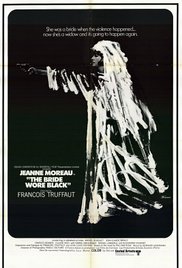
Movie Review: LA MARIEE ETAIT EN NOIR (THE BRIDE WORE BLACK) (France 1967) *****

Deadlines to Submit your Screenplay, Novel, Story, or Poem to the festival:http://www.wildsound.ca

the_bridge_wore_black.jpgLA MARIEE ETAIT EN NOIR (THE BRIDE WORE BLACK) (France 1967) *****
Directed by Francois Truffaut

Starring: Jeanne Moreau, Jean-Claude Brialy, Michel Bouquet

Review by Gilbert Seah

My personal favourite Truffaut movie and French film of all time sees sultry siren Jeanne Moreau do away with the 5 killers who accidentally shot her bridegroom on her wedding day. The Bride has 5 men to hunt, to lure and to kill. Julie Kohler (Moreau) methodically tracks them down one by one and does away with them without remorse. Truffaut gives her femme fatale more human feelings than necessary as she almost falls in love with one of them.

Five of France’s most popular actors of the time (Claude Rich, Charles Denner, Michel Bouquet, Daniel Bouloanger and Michel Lonsdale) play 4 of Julie’s victims, with Jean-Claude Brialy the common friend to two of them. It is a great delight to watch all of them on the screen again.
This film is Truffaut’s tribute to Hitchcock after he interviewed and the Master of Suspense wrote the book Hitchcock. Using Hitchcock’s frequent composer Bernard Herrmann, the film has the complete Hitchcock feel.

Truffaut includes the element of guilt, a key element in a Hitchcock film in the scene where Julie confesses her crimes to a priest in the confessional box. in the scene, she claims that she is dead after her groom, David was shot.

The most emotional scene is the one in which Julie realizes that she has fallen in love with one of her groom’s killer, Fergus (Denner). It is something she had not expected but she cooly brushes it away determined to complete her lifeline quest.

Truffaut has been described as the kindest of film directors and this film illustrates why. He does not let the innocent characters die. The cleaner who steals and drink from the bottle that holds the poisoned liquor is emptied by Julie. When the school teacher (Alexandra Stewart) Julie impersonates to do away with a victim is arrested, she calls the police to prove her innocence. The film’s best and most touching scene has the teacher enter the school gate after release only to be swarmed by all the children of the school offering their hugs and love.
The only thing missing in the story is how Julie managed to find the identity and whereabouts of the killers. Perhaps this is bet left out as it might damage the credibility of the story if too much is explained.

THE BRIDE WORE BLACK is unfortunately Truffaut’s least favourite film as he had a big argument with his cinematographer on the look of this movie, but to this critic the film is still perfection! I have not hailed more than 5 films in my lifetime as masterpieces but THE BRIDE WORE BLACK is surely a Masterpiece!

The film will open the Truffaut/Hitchcock tribute at the Bell Lightbox in July 2016.

Also, Free logline submissions. The Writing Festival network averages over 95,000 unique visitors a day.
Great way to get your story out: http://www.wildsound.ca/logline.html

Deadlines to Submit your Screenplay, Novel, Story, or Poem to the festival:http://www.wildsound.ca

Watch recent Writing Festival Videos. At least 15 winning videos a month:http://www.wildsoundfestival.com

A GENTLEMAN’S GUIDE TO LOVE AND MURDER (Play Review)

a_gentlemans_guide_to_love_and_murder.jpgby Gilbert Seah

A GENTLEMAN’S GUIDE TO LOVE AND MURDER is a musical comedy, with the book and lyrics by Robert L. Freedman and the music and lyrics by Steven Lutvak. The musical is enjoying both rave reviews and a successful run at Toronto’s Princess of Wales Theatre riding on its grand win of four Tony Awards in June 2014 including Best Musical.

The musical is based on the 1907 novel Israel Rank: The Autobiography of a Criminal by Roy Horniman, with some changes like the names its characters. It should be noted that the book was also made into an Ealing Studios film – the famous KIND HEARTS AND CORONETS starring Alec Guinness. While the film stood out as a black comedy, the musical version opts for outlandish comedy.

The story concerns a penniless young man named Monty Navarro (Kevin Massey) who discovers that he is 9th in line to become the Earl of Highhurst. The aristocrat D’Ysquiths (the name selected because its first syllable is ‘die’; another name was used in the film) disinherited Monty’s mother and denies his existence. Monty decides to knock off the eight so that he can become Earl. In the meantime, his girlfriend Sibella (Kristen Beth Williams) ditches him while he fall for Phoebe (Adrienne Eller).

The story has potential for bedroom farce, Sondheim type musical numbers and murder, a favourite theatre staple.

Kevin Massey has an excellent voice which is likely the reason he was chosen to play the main lead. He also makes a good straight man for all the comedy going around him. But it is John Rapson who steals the show, playing all the eight D’Ysquith family members as Alec Guinness did in the film. Both actors Massey and Rapson got a standing ovation during the performance I attended. But my prize for performance goes to Mary VanArsdel, playing Miss Shingle who shines in both comedy and song.

The best segment of the musical is its take on British bedroom farce with Monty hiding his two women in different rooms while being proposed by one . (See photo inset.) The shutting and opening of doors are perfect in timing with antics well choreographed while the song “I’ve Decide to Marry You” is performed.

The musical’s outlandishness is highlighted by Linda Cho’s costume design which won her a Tony. Her overdone pink costumes for Sibella and for the other females in the story are unforgettable. The scenic (Alexander Dodge) and projection design (Aaron Rhyne) also deserve mention. The moving trees in the skating sequence and the chasing bees demand mention.

Despite warnings in song at the start (“A Warning to the Audience) and middle (“Final Warning”), A GENTLEMAN’S GUIDE TO LOVE AND MURDER is a harmless entertaining evening at the theatre that should delight everyone without offending any. The only times the musical almost offends are the segments with Lady Hyacinth abroad in Africa, India and Egypt. But those are forgivable as they are done for the purpose of harmless enjoyment.