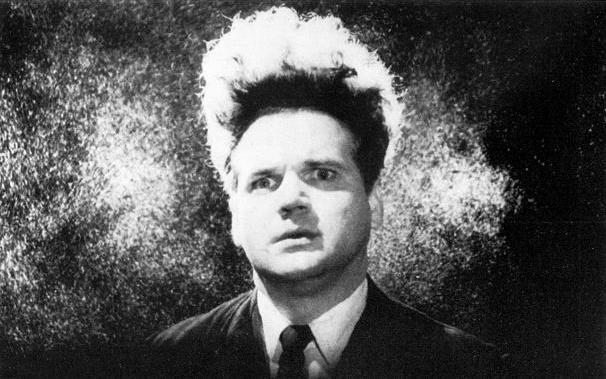
1977 Movie Review: GRAND THEFT AUTO, 1977


GRANT THEFT AUTO, 1977
Movie Reviews

Directed by Ron Howard
Starring: Ron Howard, Nancy Morgan, Elizabeth Rogers, Marion Ross, Clint Howard
Review by James Aston

Teenage lovers Sam Freeman (Ron Howard) and Paula Powers (Nancy Morgan) want to get married in Las Vegas. When Paula introduces Sam to her wealthy parents they take a disliking to him, believing that Sam wants to marry Paula for money. Paula’s parents think their daughter would be better suited to local rich kid and busybody Collins Hedgeworth (Paul Linke). They throw Sam out of their house and send Paula to her room but Paula escapes and steals her parents priceless Rolls Royce before picking up Sam and hitting the road. Paula’s father, Bigby (Barry Cahill), deploys his helicopter to chase the couple as they race towards Vegas, Collins Hedgeworth joins the chase shortly after, stealing a car as he goes. Collins calls a local radio station and offers listeners a reward of $25,000 for anyone that can stop the fleeing couple. What ensues is an ever-growing chase full of crashes and explosions as everyone tries to claim the reward. As media coverage of the chase escalates Bigby makes a plea to his daughter over the telephone, but she refuses to listen. Sam wonders whether Paula’s motivation is love for him or a desire to spite her father, but Paula persuades Sam that she loves him. An epic pile-up occurs and the priceless Rolls Royce is destroyed. Sam and Paula manage to escape, eventually getting married in Las Vegas. 

REVIEW:

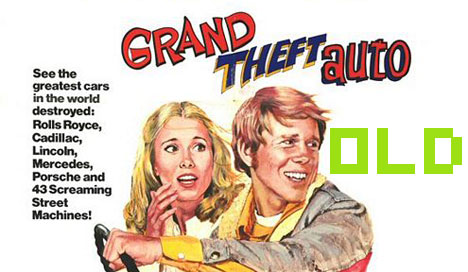
They say the simplest stories are told the best, and Grand Theft Auto succeeds where many exploitation movies failed. Few exploitation flicks made for particularly challenging viewing, but often the plot was so badly paced or paper-thin that it was in no way compelling or believable. Frequently the story was only a background device on which the supposed shocks, thrills and spills were hung. Considering the fact that exploitation movies were made in a matter of weeks to save money there was little time for writers to work on a script anyway. Not that the script mattered to the studios. Their motive was to attract an audience by making big promises about ‘dangerous’ subject matter in order to exploit the curiosity of the paying public. Quite often it turned out that the studio was over-hyping or downright lying about the content of those movies. Yet Grand Theft Auto manages to adhere to its promotional promise of seeing “the greatest cars in the world DESTROYED!” while telling a simple but well paced story that grows from a private affair between a teenage couple and the girls family into an all-out battle that involves the entire town. This is a breathless little comedy chase movie, although in 2009 you’ll probably laughing at delivery of the comedy rather than the jokes themselves. Grand Theft Auto delivers entertainment between the crashes and explosions thanks to a well paced story that is simple and nicely paced. However Grand Theft Auto is not a great movie by any means.

It might come as a surprise that Grand Theft Auto was directed by Academy Award-winner Ron Howard. Anyone that has seen Howard’s newly-released abomination Angels and Demons (2009) will tell you that the film is ridiculously convoluted and makes no sense whatsoever, and yet it is very well directed. Young Ron was never going to win an Academy Award for his direction on Grand Theft Auto, it’s clear that he was just finding his feet here. Admittedly Howard’s direction is on par with most other B-Movie directors of the time, excluding the occasionally brilliant Roger Corman, in that their mantra seemed to be “point, shoot and never retake a scene.” That’s understandable really considering the studios demanded a quick production. The fast turnaround of these movies meant that directors had no choice but to work quickly if they wanted to get paid, so it’s not entirely Howard’s fault that he doesn’t excel as director here. Perhaps it was also the added pressure of taking a starring role in the movie that stunted Howard’s work in both areas because Nancy Morgan shines the brightest out of the two leads. As those well versed in this genre might expect the dialogue is frequently corny and the acting is only a notch above diabolical across the board, but it really doesn’t matter. Every character is played for laughs apart from the lead characters, which makes Howard and Morgan stand out as ‘wooden’. Howard and Morgan are good choices as leads though with his youthful good looks, and while the chemistry between Sam and Paula doesn’t exactly crackle, they are well matched in terms of looks which is what is most important in a movie like this.

Teenagers in the late 1950’s were not visiting movie theaters because there absolutely nothing being produced by the main studios that appealed to them. Small exploitation studios such as New World Pictures made movies cheaply, quickly and frequently with the sole intention of getting those teenagers to spend their disposable income at the theater or drive-in every week, and in doing so made huge profits for decades until the major studios caught up. With Grand Theft Auto New World Pictures skilfully did everything they could to achieve that goal. The fact that this love story is based around a cars is a stroke of genius because of the huge audience that would go with their lover to the drive-in every Saturday. The teenage audience loved the extremely rebellious storyline because their own parents would disapprove, and they loved the promise of illegal activity from the title alone. They were thrilled by the coarse language and the destruction. NWP pitched the movie perfectly for their audience and it shows. NWP spent $602,000 making Grand Theft Auto and grossed a spectacular $15 million. They did have twenty years of refining the formula though, take a look at Teenage Caveman (1958) for a laughably bad early attempt at attracting this audience.

The acting is bad. The direction is sub-par. This could be repeated for many of the mass produced exploitation films that were released during the 50’s, 60’s and 70’s. Grand Theft Auto is by no means a five star movie but when viewed alongside its peers it stands out. Other movies from this genre often gave a whole lot of sizzle without any smoke. They didn’t deliver the incredible, shocking or lurid content that they promised in their trailers and on their posters and those were the things the audience came to see. In fact they were utterly shameless when it came to exploiting their audience, and to add pain to injury these movies didn’t even provide much entertainment as part of the deal, because nobody took the time to pace the story correctly. Grand Theft Auto scores against its rivals by not insulting its audience. Watch this movie for what it is: a 1970’s exploitation movie that for once actually tries hard to deliver what it promises.
 

GRAND THEFT AUTO

Film Review: BRIGSBY BEAR (USA 2017)

Deadlines to Submit your Screenplay, Novel, Story, or Poem to the festival: http://www.wildsound.ca

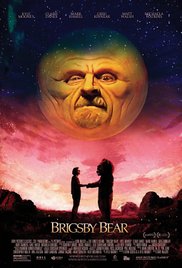
BRIGSBY BEARAfter being freed from the kidnappers he thought were his parents, a man sets out to make a movie of the only TV show he has ever known.

Director: Dave McCary
Writers: Kevin Costello, Kyle Mooney
Stars: Mark Hamill, Claire Danes, Kyle Mooney

Review by Gilbert Seah

Who is BRIGSBY BEAR? The name indicated a TV cartoon show for kids. That is exactly what Brigsby Bear is, but why has no one heard of this bear? The answer is that Brigsby Bear is a children’s show character totally concocted and made by kidnapper parents to keep the child occupied.

When the film opens, we seen the now adult still kidnapped James Pope (Kyle Mooney) watching an episode of Brigsby Bear on television through VCR cassette tapes. James is shown having dinner with his parents, Ted (STAR WARS’ Mark Hamill) and April (Jane Adams) who practice odd rituals. It is soon revealed that James Pope was kidnapped from a hospital as a baby and since childhood all the way to adulthood has known nothing about the world except Brigsby Bear, a children’s show character fabricated by his kidnapper parents. One day, James is rescued and brought out into the real world where he learns that Brigsby Bear is not a real children’s show. Confused and baffled by these turn of events, James sets out to make a Brigsby Bear movie to show the world what he has learned.

The main flaw of the film is the film’s credibility. The credibility factor is sacrificed for the film’s charm. Director McCary goes all out to show that there is no badness in every character of his story. The kidnappers are revealed to be good hearted people whose only sin is wanting to love their own child. They even admit to knowing their abduction of James being wrong, yet they are desperate to love. For all the trouble that James creates in the environment around him, everyone is forgiving from his family (his sister initially shown as an independent no-nonsense sibling; his doting parents) to all his new friends. Everyone also aids James to make his Brigsby film. The title of his finished film, comically called “BRIGSBY BEAR, the film my friend help me make” tells the whole story.

It is difficult to figure out the intentions of BRIGSBY BEAR. Perhaps the message is that there is goodness in everyone, even if you have kidnapped a baby and kept it for your own for a full twenty years.

The most enjoyable bits of the film are the BRIGSBY BEAR episodes. The cartoon bear costume and his adventures saving the world from the evil Sunsnatcher are nothing short of hilarious – with lots of corniness thrown in for good measure. The special effects are crayon drawn but colourful enough.

BRIGSBY BEAR proves that corny can be funny! The good intentioned film over emphasizes the point of how good intentions triumphs over evil. The film ends up entertaining enough if one can stomach the over saccharine sweetness.

Small indie films like this one and previous successes like NAPOLEON DYNAMITE featuring geeky protagonists have a niche audience which somehow do reasonably well at the box-office. The well-intentioned BRIGSBY BEAR should do likewise.

Trailer: https://www.youtube.com/watch?v=FFUvQi2TVOE

Also, Free logline submissions. The Writing Festival network averages over 95,000 unique visitors a day.
Great way to get your story out: http://www.wildsound.ca/logline.html

Deadlines to Submit your Screenplay, Novel, Story, or Poem to the festival:http://www.wildsound.ca

Watch recent Writing Festival Videos. At least 15 winning videos a month:http://www.wildsoundfestival.com

Film Review: SUNDOWNERS

Deadlines to Submit your Screenplay, Novel, Story, or Poem to the festival: http://www.wildsound.ca

SUNDOWNERSIt’s not the destination wedding that matters, but the journey the hapless videographers have trying to capture it.

Director: Pavan Moondi
Writer: Pavan Moondi
Stars: Phil Hanley, Luke Lalonde, Tim Heidecker

Review by Gilbert Seah
 
SUNDOWNERS follows two young males Alex Hopper (Phil Hanley) and Justin Brown (Luke Lalonde) as they travel to a Mexican resort as videographers to shoot a wedding.

It is a case of everything that could possibly go wrong does, and in the worse possible way. Their trip is already doomed from the start when their boss gives them the incorrect flight information This is followed by incorrect hotel information. It does not help that Justin is recruited as Alex’s photographer and really knows nothing about the camera. When they finally meet members of the wedding family, they find more trouble afoot. The bridegroom has just lost his job and gone bankrupt, with the bride, who appears to be all over him, unaware f the situation. They meet the best man, who is of questionably character though appearing friendly enough. The father urns out gay and hits upon Alex. All the high jinx sounds ripe for crazy and laugh-out loud humour but surprisingly the film is only mildly funny.

For a film with a cast of stand-ups, the laughs are surprisingly few and far between. The film plays like an uncomfortable comedy where the comedy is supposed to come from the misfortunes of the lead characters. A similar example is THE OUT-OF-TOWNERS where a couple lands in New York City and everything goes wrong. Incident after incident work against the couple but as the audience wants the couple to do well, it is hard to laugh at the mishaps. The same goes for the two landing in Mexico where one thing after another do not go as planned.

If one observes the dialogue at many points in the movie, many of the lines can be put together in a stand-up comedy routine. But somehow put in the situation of the film’s plot, they do not come across as funny at all. This is surprising considering that many of the cast and director are real life standup comics. They should be aware of how critical timing is. An example is the horror comedy GET OUT by a director who is a stand up comic. GET OUT was unexpectedly funny, primarily out of timing and camera set ups.

The film benefits from the two lead actors Luke Lalonde and Phil Hanley. They are spirited, good looking, likeable and emit good chemistry. They appear to be people fun to be with which means audiences feel comfortable with their characters.

The film is set in Mexico. The film’s hotel setting looks like any one of the all-inclusive resorts that I have visited in Mexico. But the credits indicate the film being shot in Columbia.

Moondi gives the impression that he is out to get cheap laughs at every opportunity. An example is evident in the scene where the couple rides a cab and the camera focus on a row of bobbing dog heads laid out on the dashboard. Another has them sitting on the steps of a hotel waiting fro a cab when Mexicans walk behind them laughing as if the stand ups are provided by laughter to get the humour going.

SUNDOWNERS should and could have been funnier!

Also, Free logline submissions. The Writing Festival network averages over 95,000 unique visitors a day.
Great way to get your story out: http://www.wildsound.ca/logline.html

Deadlines to Submit your Screenplay, Novel, Story, or Poem to the festival:http://www.wildsound.ca

Watch recent Writing Festival Videos. At least 15 winning videos a month:http://www.wildsoundfestival.com

1977 Movie Review: THE GAUNTLET, 1977

THE GAUNTLET, 1977
Movie Reviews

Directed by Clint Eastwood

Cast: Clint Eastwood, Sondra Locke, Pat Hingle, William Prince, Bill McKinney, Michael Cavanaugh, Carole Cook
Review by Surinder Singh

SYNOPSIS:

Strong-willed but mediocre cop Ben Shockley (Clint Eastwood) is given a special mission by his superiors: to escort prostitute and witness Gus Mally (Sondra Locke) from Las Vegas to Phoenix. The only catch is that the two of them are being set up and are never supposed to reach Phoenix alive! Shockley and Mally form a relationship to be reckoned with as they dodge bullets and enemies on the road to Phoenix.

REVIEW:

It’s fair to say that not all of Eastwood’s directorial forays have been greeted with awards and critical praise. What is clear is that he has embraced a wide range of subjects and genres over the years with his directing career never afraid of tackling any subject head on. The Gauntlet is a more offbeat, character piece despite what the movie poster is trying to sell you. Sure the bullets fly and the vehicles smash but this is not the heart of the movie.

Like in the masterful Play Misty For Me (1971) Eastwood has put forth another strong female character. The charismatic Mally arrives in the typical western guise of the ‘hooker-with-a-heart-of-gold’ but sheds the clichÈ as soon as the films gets going. While she’s clearly vulnerable, she is also incredibly intelligent and immediately out smarts the intimidating, unflinching chaperone of Clint Eastwood. The best scenes in the movie are those showing Mally manipulating the slightly slow-witted Shockley.

Eastwood is knowingly playing against type here. He knows we are expecting him to tear up the screen and outsmart the bad guys with his amazing physical ability. But like all great directors Eastwood goes the opposite way to expectations and plays Shockley as a man on equal terms with his female character. Locke and Eastwood cleverly play their scenes like a bickering married couple rather than the obvious hero and damsel in distress.

Sondra Locke deserves a lot of praise for being able to hold her own next to one of cinema’s most formidable screen talents. Her most powerful scene is where she coldly pushes a chauvinistic cop to the point of mental breaking point with a long, insightful put down. Such is the intensity of Locke’s performance that we almost forget Eastwood is even in the car! The point made here is that no matter what label society hangs on you, a person can be strong, confident and survive the toughest of social situations.

It’s very pleasing to see Shockley and Mally’s relationship bloom into a real relationship over time. While it’s a convention we are expecting, the relationship is believable and not contrived. They’re the classic tortured souls who could certainly go further in life if they stayed together. The other side to this relationship is that Mally teaches Shockley things about himself he never noticed and vice versa. Despite his failure to catch onto the conspiracy, Shockley learns from Mally that he’s actually a better cop than he realizes.

Everything comes to a head in the film’s final climax. The title of the film refers to the final action set piece of Shockley and Mally driving through a gauntlet of gun fire (complements of a corrupt police department) in a bus turned to Swiss cheese. It could be argued that the sequence is slightly too long and doesn’t really develop as a piece of action. But what the slow pace does do is give you a feeling of suspense that our two main characters may not survive the ordeal.

The films ends with a final genre defiant move; Mally draws the gun and shoots the bad guy. In a standard cop thriller it would be customary for Eastwood to do this but after the entire journey it feels rather fitting that Mally do it! The film proves that a successful partnership between two people has to be a 50/50 scenario. Yet despite having such universal themes The Gauntlet seems to be a hard movie to place. Perhaps in time film audiences will re-visit this seventies classic!

the gauntlet.jpg

1977 Movie Review: ERASERHEAD, 1977

  MOVIE POSTERERASERHEAD, 1977 
Movie Reviews

Director: David Lynch

Stars: Jack Nance, Charlotte Stewart and Judith Anna Roberts

Review by Russell Hill

SYNOPSIS:

A deranged man is forced to look after his strange-looking baby and struggles to cope with his own demons.

REVIEW:

David Lynch has always been an odd director. Turning narratives on their head, Lynch makes regular storylines seem unreal and not like anything which is based on reality. Take Blue Velvet for example – it’s a love story at first but weird and fantastical individuals appear throughout. Eraserhead is no different, especially as its imagery and storyline is more akin to Salvador Dali’s Un Chien Andalou.

Harry Spencer (Nance) lives in squalor. With an untidy apartment, Spencer leads a twisted existence. His strange girlfriend Mary (Stewart) informs him that she has given birth to a grotesque-looking child. Spencer and Mary struggle to cope looking after a deformed child and she leaves them both. Spencer tries to juggle his romantic feelings for the girl who lives opposite him with caring for his child. Will Spencer give into his rage and kill his child?

Eraserhead is certainly not for family viewing. Its use of strange imagery is similar to what might be in the psyche of a demented maniac. However, for adult viewers, it’s a fascinating film. As any new father learns, their baby can be terrifying. Although Eraserhead takes the metaphor to a completely different level, especially as the child doesn’t look human, one can sympathise with Spencer.

Lynch’s direction is sublime. Eraserhead was his first feature-length film and shows a truly great director in his infancy. The film touches on a subject which was very important to Lynch, especially as his own child had recently been born with clubbed feet. Although basing a character on his own personal life and turning it into an alien-like creature might be a step too far, the similarities are certainly evident.

Although it is an odd movie, Eraserhead is one of the best surreal films to have been made in the past fifty years. It isn’t surprising that it has been likened to the work of Luis Bunuel and Last Year at Marienbad because it takes several viewings to fully appreciate.

eraserhead.jpg

1977 Movie Review: CLOSE ENCOUNTERS OF THE THIRD KIND, 1977

CLOSE ENCOUNTERS OF THE THIRD KIND, 1977
Movie Reviews

Directed by Steven Spielberg
Starring: Richard Dreyfuss, François Truffaut, Teri Garr, Melinda Dillon, Bob Balaban, Lance Henriksen
Review by Steven Loeb

SYNOPSIS:

Cableman Roy Neary is one of several people who experience a close encounter of the first kind, witnessing UFOs flying through the night sky. He is subsequently haunted by a mountainlike image in his head and becomes obsessed with discovering what it represents, putting severe strain on his marriage. Meanwhile, government agents around the world have a close encounter of the second kind, discovering physical evidence of otherworldly visitors in the form of military vehicles that went missing decades ago suddenly appearing in the middle of nowhere. Roy and the agents both follow the clues they have been given to reach a site where they will have a close encounter of the third kind: contact.

REVIEW:

In the early days of science fiction movies, beings from other planets were often used as a symbol of fear and destruction. During the Red Scare of the 1950s, aliens were often used as a representation for the invasion of Communism. They came, they saw and they destroyed everything in their path. By the late 1970s, though the Cold War was still going strong, the Red Scare was long over, and the Strategic Arms Limitation Talks (SALT) had improved relations between the United States and Russia, leading to a reduction in the number of missiles that each country would be allowed to keep in their arsenals. It seemed that the two super-powers might be coming toward some kind of resolution to their decades-long war; of course this would not actually happen until more than ten years later. Nevertheless, if there is one film that shows a prevailing optimism in the direction that the Cold War, and the world in general, was taking at the time, it was Close Encounters of the Third Kind (1977), the third film directed by Steven Spielberg.

Close Encounters of the Third Kind is the story of a small town electrician named Roy, played by Richard Dreyfuss, who experiences a seemingly random encounter with a UFO. After the experience, Roy becomes obsessed with aliens and UFOs. His behavior becomes extremely strange and erratic, including drawing the same mountain over and over. When he is unable to explain his behavior to his wife, she leaves him, and only then does he realize that he is drawing Devils Tower in Wyoming, the site where the UFOs are about to make contact with humans. As he races to get there, the government, having made a list of people who will be allowed to visit the aliens, apprehends him. After being questioned, Roy is added to the list, the aliens return the numerous people who had been abducted over the years, Roy and the others on the list enter the spaceship and are taken away to make contact with the friendly aliens.

Close Encounters was a film that Steven Spielberg had been working on for almost a decade by the time it was finally released. After shopping the film around, Spielberg was finally able to sell the script, and get creative control of the project, following the massive success of Jaws (1975). Based on a story he had written as a teenager, it is one of the few scripts for which Spielberg gets full writing credit, even though the script went through numerous changes and numerous other writers worked on different drafts of the story. Despite the contributions of other writers, in many ways, this is the first real Spielberg film, as this is where he began to incorporate themes that he would use in many of his later films, some of which reflect his own life and would come to define him as a director. This is the first of Spielberg’s films to depict an unhappy marriage; Spielberg’s own parents had divorced when he was a child and he often incorporates broken families, or single parent homes, in his films. Roy and his wife have a tempestuous relationship to begin with, and they see their marriage become even more strained as a result of Roy’s obsessions, ultimately leading to the collapse of their relationship. Spielberg would use this theme most famously in E.T. the Extra Terrestrial (1982), a film about a lonely boy who finds friendship with a lost alien. Spielberg’s films also often incorporate the themes of wonder and child-like innocence, seen here as Roy enters the spaceship at the end of the film. Though he is unsure of what is going to happen, he is excited and awed instead of afraid. This motif was used again in the Indiana Jones movies and, perhaps most successfully, in Jurassic Park (1993).

Close Encounters was the second collaboration between Steven Spielberg and Richard Dreyfuss, the first being Jaws two years earlier. Dreyfuss, who had first gained fame for his role in American Graffiti (1973), became a major movie star after Jaws. In 1978, he became the youngest actor ever to win the Best Actor Oscar for his role in The Goodbye Girl (1977), though this honor has since been surpassed by Adrian Brody.

Unfortunately for Dreyfuss, at the peak of his success, he developed a serious drug habit and, after crashing his car and being arrested for cocaine possession in 1982, he was forced to enter rehab. He was eventually able to resuscitate his career, going on to receive a nomination for Best Actor for Mr. Holland’s Opus (1995). After Close Encounters, Dreyfuss and Spielberg would work together one more time in Always (1989), a film that is widely considered to be one of Spielberg’s worst movies.

Close Encounters of the Third Kind was a huge success, both critically and at the box office. It was nominated for nine Academy Awards, including a Supporting Actress nomination for Melina Dillion, playing the mother of an abducted child, and Spielberg’s first for Best Director; the film would walk away with two Oscars, for cinematography and sound editing.

close encounters.jpg

1977 Movie Review: ANNIE HALL, 1977

ANNIE HALL MOVIE POSTER
ANNIE HALL, 1977
Movie Reviews

Directed by Woody Allen
Starring: Woody Allen, Diane Keaton
Review by Eli Manning

SYNOPSIS:

Neurotic New York comedian Alvy Singer falls in love with the interesting Annie Hall.

REVIEW:

First lines of film:
Alvy Singer: [addressing the camera] There’s an old joke – um… two elderly women are at a Catskill mountain resort, and one of ’em says, “Boy, the food at this place is really terrible.” The other one says, “Yeah, I know; and such small portions.” Well, that’s essentially how I feel about life – full of loneliness, and misery, and suffering, and unhappiness, and it’s all over much too quickly.</br

That is the overall theme of this movie and Woody Allen tells us about it straight up.

There’s been a lot written about this film and many of the film’s core ideas are in other people’s films because this is just one of those films! It triggered a great emotion in the world and is considered the Classic Comedy film of all-time.

Woody Allen is a master of the art of laughter and sadness. When he is in his own films he always plays a man who loves himself and hates himself at the same time. His self-love and confidence puts himself in great spots and situations until his self-hatred brings him down and out of those good situations. And that is the grammar of Woody Allen. These are the films he makes: then, now and in the future.

Allen plays moderately successful comedian Alvy Singer. He’s been married before and is seasoned in the world of relationships. Seasoned but really a failure in it. He falls for the woman Annie Hall, a young idealist with different core values than himself – played brilliantly by Diane Keaton (who picked up an Oscar for Best Actress). Annie Hall likes Alvy because he’s the type of guy that she can learn a lot from and has been in situations where she wants to be.

Right from the start it becomes a mentor/protege relationship and the madness of this situation is that Alvy can learn a whole lot more from Annie than vice/versa. But Alvy is too much into Alvy and his own love/hate of himself. It’s just too hard for him to really see or understand this.

Of course this is a comedy and it’s a very funny film. So funny in fact that I believe that someone who watches this film 100 years from now will laugh just as much as we do now and when they did in 1977 when it opened. It has universal appeal as we all want to find love but the trick is that you need to love yourself first in order to love someone else.

Emotionally most of us attach ourselves to Annie Hall because she carries this genuine kindness for herself and humanity. And we want her to get far away from Alvy because he’s a selfish jerk, even though we can’t help but like him. Avly (and Woody Allen) has charm and charm seems to go a long way in life.

A film everyone needs to watch and see. Some will hate it I understand because it’s just a film that hits too close to home for some people to really laugh at. Or they just hate quirky comedies. In my opinion it’s the best comedy of all-time.

annie hall.jpg

1977 Movie Review: AIRPORT 77, 1977

AIRPORT 77 POSTERAIRPORT 77, 1977
Movie Reviews

Directed by Jerry Jameson

Cast: Jack Lemmon, Brenda Vaccaro, Lee Grant, Joseph Cotton, Olivia De Havilland, Darren McGavin, Christopher Lee, Robert Foxworth, Robert Hooks, Monte Markham, Kathleen Quinlan, James Stewart, George Kennedy, James Booth.
Review by Jason Day 

SYNOPSIS:

A luxury Jumbo Jet, kitted out as a swish, flying convention centre, sets off on it’s maiden voyage carrying a passenger list of the rich and redoubtable and owner Stewart’s priceless artwork collection. Some of the crew are bent on carrying off this loot for themselves so they takeover the plane and fly it into the bermuda triangle to avoid detection. Hitting an off-shore oil rig, they plunge into the sea, ditching the air-liner on the sea-bed. Harrassed captain Lemmon has to try and save everyone as the air runs out and the water starts seeping in.

REVIEW:

Universal’s third entry in their increasingly tired series of airborne disaster dramas features perhaps the oddest casting for this type of venture, perfectly in keeping with the daft plot in what has become something of a guiltily enjoyable late-night viewing pleasure.

Comedy film legend Lemmon slums it in the lead role and is off-key and clearly embarrassed, despite being surrounded by some hard working and classy support actors, the best of which are Grant who is on top-form as a bitchy, boozy passenger making best friends with the drinks cabinet and the requisite relics of Hollywood’s Golden Age de Havilland and Cotton as two old flames reigniting their romance beneath the waves.

Stewart, Lee, Vaccaro, McGavin, a young Quinlan et al are completely wallflowered by the dismal and sodden script. These are actors who had shown themselves to be capable of much more but are ultimately defeated by thinly drawn, cardboard characterisations and a distinct lack of dialogue. Though for some of them, this may have been a blessing in disguise when looking back on their CV (pity poor McGavin who gets the award for the worst line as he sagely intones: “And oxygen. That could be a very important factor”).

Jameson, a former movie editor, still knows how to make a winner and is smart enough to completely side-step the loopy plot and focus his and our attention firmly on the well-orchestrated rescue operation. Here, the US Navy came in handy, as the liner is painstakingly raised from the sea and water rushes into the cabin area in the film’s most impressive moment.

Despite being hampered by special effects that wouldn’t allow for a decent crash into the sea (see it to believe it – a kid’s toy chucked into a bath and a bin hitting someone on the head would never make this stand up against Titanic), Jameson still jumps on any moments of action to ensure the excitement is pushed to the limit.

A film like this was never going to win any major film awards (or even the minor ones), but thanks to a decent budget the good looking production managed to garner itself Oscar nominations for production design and Edith Head’s costumes.

AIRPORT 77.jpg

TV REVIEW: UNBREAKABLE KIMMY SCHMIDT – SEASON 3

kimmy season 3.jpgA woman is rescued from a doomsday cult and starts life over again in New York City.

Creators: Robert Carlock, Tina Fey
Stars: Ellie Kemper, Jane Krakowski, Tituss Burgess

Review by Mary Cox

Tina Fey’s award-winning Netflix Original series is back with a brand new season. The dialog is just as tight and consistent as it has been in the past, and Kimmy’s life is just as kooky and her friends are just as goofy as they were before, but that’s kind of the problem: Kimmy Schmidt isn’t bringing anything new to the table, and what it is serving up isn’t that appetizing.

Titus, who normally acts as a supporting character in the series, has some moments in this season where you initially think he’s going to be forced to grow as a person and to make hard choices. After fleeing from his cruise ship job, he returns to New York where he makes a difficult decision about his relationship with Mikey. However, Titus’ mission to be more responsible with his relationships is absolutely ruined by his actions at the end of the episode “Kimmy Bites an Onion.”

Titus’ plot arc encapsulates my major beef with Season 3 of Kimmy Schmidt: nobody grows, nothing changes, and at the end of the day, nothing that happens this season really matters. It feels like the writers are hesitant to encourage growth or development with these characters, because there’s this ongoing futility of Kimmy’s actions that overshadows the entire season.

Kimmy’s struggle to seek higher education is pointless, as an obnoxious Hand of God moment at the very end of the last episode gives Kimmy a plum position at a tech firm. It’s unsatisfying because Kimmy has done absolutely nothing to earn this position. Jaqueline’s plot to rename the Washington Redskins resolves much too early in the season, and the fallout after Russ is accepted back into his family is profoundly unsatisfying.

While this series has previously addressed social issues, this season puts more effort into making a platform where bigger topics can be discussed. However, the way these topics are discussed is sometimes a little questionable. Lillian’s fight to represent East Dogmouth comes off as weirdly pro-gentrification in it’s framing and delivery. Xanthippe’s Columbia adventures seem to defend the idea that privilege is something that we should be entitled to abuse, and that the idea of sexual consent is laughable. Fey’s depiction of Millennial feminists is drastically out-of-touch at best, and actually insulting at worst.

Also, this season tends to sweep Kimmy’s emotional issues under the rug in favor of highlighting the shenanigans of her sidekicks. Kimmy Schmidt has the unique position of being a show that prominently features a female character who is a survivor of serious trauma and abuse. In Season 2, the series explored Kimmy’s PTSD in a way that felt honest and real, but Season 3 puts Kimmy’s trauma in the backseat and barely even acknowledges her past.

Ultimately, Unbreakable Kimmy Schmidt is still an entertaining series, but there’s some love lost in this new season. Hopefully Fey can pull things around by the premiere of Season 4.

******

“Mary Cox is an entertainment writer from the United States. Her hobbies include making good beer and bad decisions, watching drag queens fight on the internet, and overanalyzing everything. Mary one day hopes to be the person shouting “World Star” in the back of a Waffle House brawl video. She is currently tolerating life in Toronto. You can follow her on Twitter at @M_K_Cox”

Film Review: ATOMIC BLONDE (USA 2017) ***

Deadlines to Submit your Screenplay, Novel, Story, or Poem to the festival: http://www.wildsound.ca

atomic blonde.jpgAn undercover MI6 agent is sent to Berlin during the Cold War to investigate the murder of a fellow agent and recover a missing list of double agents.

Director: David Leitch
Writers: Kurt Johnstad (screenplay), Antony Johnston (based on the Oni Press graphic novel series “The Coldest City” written by)
Stars: Charlize Theron, James McAvoy, John Goodman

Review by Gilbert Seah

 Advertised as a female James Bond film with Charlize Theron as a top ass-kicking M16 spy, ATOMIC BLONDE tries its best to assume a British setting though Theron and most of the cast speak with an unchanged American accent. Who really cares, as the film delivers senseless action with dazzling visual and choreographed fight scenes courtesy of director David Leitch in his first solo directorial debut, himself a stunt coordinator and stuntman for stars like Brad Pitt and Matt Damon.

The film is written by Kurt Johnstad, based on Antony Johnston and Sam Hart’s 2012 graphic novel The Coldest City, published by Oni Press. The film opens with a commentary of how the cold war has ended in 1989 flowing the collapse of the Berlin Wall and then goes on to say that the film is not about this subject. The film is about the cold war revolving the good guys, the British M16 and the Americans in this case trying to retrieve a list of double agents that if fallen into the wrong hands would…..It does not really matter as Master of Suspense Alfred Hitchcock says. The point is that top level female spy, Lorraine Broughton (Theron) has been assigned to aid fellow spy and wild card David Percival (James McAvoy) with this mission. As it turns out Percival has supposedly got the list from Spyglass, a Starsi agent (Eddie Marsan) and he is to be escorted out of Berlin. Not so easy, as every Russian and German spy is also out to get the list.

With the film setting in the 80’s, one can expect a solid 80’s soundtrack. And the film has a great one at that, and not surprising as the music is by Tyler Bates who has put together similar memorable soundtracks for films like GUARDIANS OF THE GALAXY 1 and 2 and the two John Wick Films. The song are also appropriately chosen to fit the plot for example with Depeche Mode’s ‘Behind the Wheel’ during the defection segment and Queen’s ‘Under Pressure’ at the film’s climax.

The film’s excellent cast includes McAvoy (SPLIT), always good in portraying crazies. Eddie Marsan who plays Spyglass steals the show with a dead serious performance amidst the over-the-top action. German veteran actress Barbara Sukowa has a cameo as the coroner who delivers a key line: “In Germany, we do not make little mistakes.”

The film’s best action sequence lasts a full 10 minutes as Lorraine fights off multiple attackers in ultra-violent hand-to-hand combat on a staircase while protecting Spyglass. If this is not enough, an exciting car chase follows right after where villains in cars appear out of nowhere to chse the two. Director Leitch dishes sexiness to the limit with same sex scenes between Lorraine and a French spy (Sofia Boutella).

The plot of ATOMIC BLONDE is quite difficult to follow and there is no use trying as the plot is pointless. The story’s twist in the end of who is the double agent makes little sense either. But cold war spy films in the 70’s were often difficult to follow. ATOMIC BLONDE delivers dazzling senseless action, that is the point of the film and that it succeeds.

Trailer: https://www.youtube.com/watch?v=nI7HVnZlleo

Also, Free logline submissions. The Writing Festival network averages over 95,000 unique visitors a day.
Great way to get your story out: http://www.wildsound.ca/logline.html

Deadlines to Submit your Screenplay, Novel, Story, or Poem to the festival:http://www.wildsound.ca

Watch recent Writing Festival Videos. At least 15 winning videos a month:http://www.wildsoundfestival.com