Film Review: THE SPY WHO DUMPED ME (USA 2018)

 Submit your Screenplay to the Festival TODAY
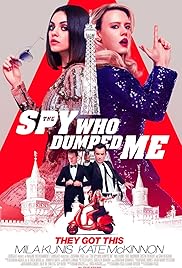
The Spy Who Dumped Me Poster
Trailer

Audrey and Morgan are best friends who unwittingly become entangled in an international conspiracy when one of the women discovers the boyfriend who dumped her was actually a spy.

Director:

Susanna Fogel


When the film title is a rip off of a rip off (Austin Power’s THE SPY WHO SHAGGED ME, the ripoff of 007’s THE SPY WHO LOVED ME), one would not have high expectations going into the movie.  True to instinct, THE SPY WHO DUMPED ME, which absolutely wastes the talents of SNL’ s Kate McKinnon and Mila Kunis is a totally painfully unfunny buddy, buddy spy movie that makes Paul Feig’s SPY starring Melissa McCarthy look like a masterpiece.

The number one mistake of director Susanna Fogel who co-wrote the script with David Iserson (LIFE PARTNERS) is the decision to make this comedy also an action movie.  Comedy and action do not usually go well together except for a few exceptions like KINGSMEN, and that film worked hard to achieve the correct blend between action and slick comedy.  THE SPY WHO DUMPED ME goes for lower-brow comedy, that despite sleek looking sets and looks still clings desperately to puke, vagina and fart jokes (in the Amsterdam hostel).

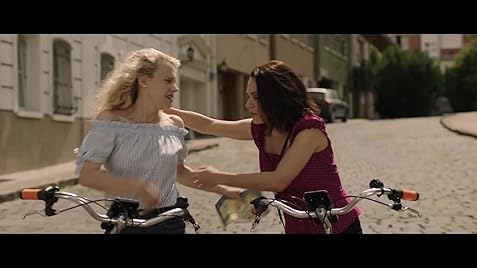
Kunis (the straight one in the duo) and McKinnon (the clown) play best friends, Audrey and Morgan.  When the film opens, Fogel intercuts comedy and action.  The comedy is  Audrey’s birthday celebration hosted by Morgan.  The action scene takes place in Lithuania where the boyfriend, Drew (Justin Theroux) who has just dumped Audrey is fighting off dozens of assassins in search for a flash drive that contains some important information.  It turns out, of course, that Audrey is in possession of the drive which puts her, and busybody best friend Morgan in trouble.  They encounter CIA agent Sebastian (hunky gorgeous Sam Heughan) who helps them.  Audrey and Sebastian have a thing going.

It only takes 10 minutes or so into the film when it can be observed that the film does not work.  McKinnon tries her utmost best to be funny.  Though she occasionally succeeds, she turns out more annoying than anything else, especially when she becomes loud and irritating.

The international locations of Prague, Paris, Berlin and others do not help either and it is doubtful that the film was actually shot in these cities.

Too much time is spent on car chases, actions sequences and killings which are below par in terms of excitement (audiences have seen much better in real action films like MISSION: IMPOSSIBLE – FALLOUT and the Marvel films) while being unfunny and out of place in a film billed as a comedy.  The story with an icy cool female boss or female villain has been done before as are so are the story twists.  Who is the real villain at the end?  Audrey’s new or old boyfriend?  A 5-year old would be able to guess.  For a comedy, the violent segments (such as the cutting off of a thumb for a thumbprint to use the cell phone; the tasers and stabbings) are hardly necessary and kind of uncool. 

Do not stay for the outtakes during the closing credits.  These are just more examples of the painful humour that do not work.

Trailer: https://www.youtube.com/watch?v=APL30ptgwvg
 Submit your Screenplay to the Festival TODAY

Film Review: THE DARKEST MINDS (USA 2018)

 Submit your Screenplay to the Festival TODAY

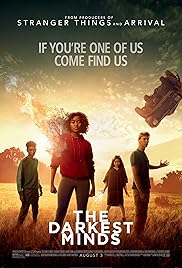
The Darkest Minds Poster
Trailer

Imprisoned by an adult world that now fears everyone under 18, a group of teens form a resistance group to fight back and reclaim control of their future.

Writers:

Chad Hodge (screenplay by), Alexandra Bracken (based upon the novel by)


The first of a trilogy, THE DARKEST MINDS is a young adult sci-fi action movie similar to films like the THE HUNGER GAMES, DIVERGENT series that made a whole lot of money for Lionsgate.  20th Century Fox (or Disney for that matter) obviously hopes for the same.  But THE DARKEST MINDS is quite the disappointment.

The premise  involves a devastating disease abbreviated IAAN, whatever it stands for.  

98% of the children are dead and the 2% surviving develop powers that no one understands.  The audience witnesses only one of these deaths though millions have occurred in the world in a school cafeteria of all places.  The film gets worse.  Poor African American Ruby (Amandla Stenberg) sees the poor girl die and the film suddenly focuses on Ruby.  Ruby has some powers that cause her to be taken, again like all the other children in the world to concentration camp like hospital centres to be cured of the powers.  Apparently the government wants to harvest these powers for their own army to fight against …..?  This part is never explained.  There are several levels of powers possessed by children, colour coded.  Ruby is orange which means she has the rare highest of the powers and those with orange are to be eliminated by death – a case of adults scared of the unknown.  (The future is orange!  Joke for the British.)

   One can hardly blame director Nelson whose other credits are the two KUNG FU PANDA animated features which were not half bad.  So one could blame the source martial or the kind of film she had been instructed to direct.  Based on the story described, THE DARKEST MINDS could be a real scary horror/satire involving the end of the world.  Instead, it turns out to be young adult fantasy that despite a few good ideas (like the colour coded powers) no one believes in.  

The film poses lots of unanswered questions.  Questions like: Why do all the parents not care about their children?  How did the disease originate?  What is the reason for the superpowers?  The synopsis in wikipedia describes a vicious bounty hunt by the name of Lady Jane which only appears briefly in the film.  The character must have been either edited out of the film or perhaps she appears in the sequel.

It is hard to describe the film’s best scene as there are none.  The film’s worst scene has the two leads declare their love for each other in a long 5 minute sequence that keeps them babbling sweet nothings to the audience’s yawns.

To the director’s credit, the film was made on a modest $38 million, looks acceptable and probably satisfies the studios.  She has some good images on screen, like the raised coloured hands at the end of the film signalling sequels to come.  I would like to quote a line used by the late Toronto film critic, John Harkness from NOW Magazine to describe the Hulk Hogan film he hated: “Recommended for backward children.”, a line that got him into a lot of trouble for writing, but for obvious reasons I will not use it for this film.  THE DARKEST MINDS shows a little promise and is interesting in certain parts, but could have been a much better start of the trilogy.

Trailer: https://www.youtube.com/watch?v=tN8o_E_f9FQ


 Submit your Screenplay to the Festival TODAY

Film Review: RYUICHI SAKAMOTO: CODA (USA/Japan 2017) ***

 Submit your Screenplay to the Festival TODAY

Ryuichi Sakamoto: Coda Poster
Clip

A portrait of genius music composer Ryuichi Sakamoto.

Director:

Stephen Nomura Schible (as Stephen Schible)


When I was teaching aerobics in my fit younger days,  I used movie themes from a cassette given to be at TIFF (Toronto International Film Festival) for the cool down session.  Two of the themes were from MERRY CHRISTMAS, MR. LAWRENCE and THE LAST EMPEROR.  Little did I realize that the musical score from these two films were composed by Ryuichi Sakamoto, the subject of the new documentary by director Schible.

One of the most important artists of our era, Ryuichi Sakamoto has had a prolific career spanning over four decades, from techno-pop stardom to Oscar winning film composer.  The evolution of his music has coincided with his life journeys.  As the film opens, the audience is sadly told that Sakamoto is suffering from cancer and no longer able to work as diligently into the long the hours he was used to.

Besides the musician, Sakamoto is revealed to be an environmentalist.  Sakamoto became an iconic figure in Japan’s social movement against nuclear power.  As Sakamoto returns to music following cancer, his haunting awareness of life crisis leads to a resounding new masterpiece.  This film is an intimate portrait of both the artist and the man.

The film’s most interesting segments involve Sakamoto’s work in film.  Film works comes suddenly, he says.  His work on films like Bertolucci’s THE SHELTERING SKY is outlined in detail.  Bertolucci told him to change the score for the introduction of the film that he did not like.  Ennio (Morricone) could do it, he was told.  If Ennio could do it, so can I, Sakamoto muses.  After re-writing the score within half an hour, Sakamoto himself was surprised at how great the music became.  Sakamoto also talks about the work he did for director Andrei Tarkovski (for SOLARIS), blending in environmental and nature sounds to the music.  Sakamoto has great admiration for Takorvski and likens him to be a composer as well.   Schible’s doc includes several shot from films that Sakamoto had worked on, such as SHELTERING SKY, SOLARIS and THE LAST EMPEROR.  These segments illustrate the perfect blending of sight and sound.

Needless to say, the film’s most inspirational moments are the ones where the audience gets to hear Sakamoto’s compositions.  Sakamoto incorporates natural sounds (like melting ice) into his music compositions.  Which are nothing less that incredible!  The audience also sees the composer a a human being, frail from his illness and talking about things that matter to him.  

Director Schible is an American Japanese film-maker who grew up in a bilingual and international household in Tokyo.  As he is actively involved in Japanese culture and media, he has found Sakamoto’s life-long struggle as an anti-nuclear activist to be awe-inspiring and brings the influence into the documentary.  especially for Japan, a country with tight control on political media, thesis a story that needs be told.

RYUICHI SAKAMOTO: CODA is a quiet yet comprehensive examination of a composer’s life at the end of his journey, full of insight and inspiration.

Trailer: https://www.youtube.com/watch?v=Fl-pKw5n0mI

 Submit your Screenplay to the Festival TODAY

Film Review: CHRISTOPHER ROBIN (USA 2018) ***

 Submit your Screenplay to the Festival TODAY

Christopher Robin Poster
A working-class family man, Christopher Robin, encounters his childhood friend Winnie-the-Pooh, who helps him to rediscover the joys of life.

Director:

Marc Forster

Writers:

Alex Ross Perry (screenplay by), Tom McCarthy(screenplay by) | 5 more credits »


Not to be confused with last year’s biography GOODBYE CHRISTOPHER ROBIN on the author of WINNIE THE POOH, A.A. Milne’s life, CHRISTOPHER ROBIN is the story of Christopher Robin, the little boy from the Winnie-the-Pooh stories.  Christopher Robin (Ewan McGregor) is now all grown up, married to Evelyn (Hayley Atwell) with a daughter, Madeline (Bronte Carmichael) but has lost all sense of imagination.  Pooh and his friends from the Hundred Acre Wood re-enter Christopher’s life to help him find joy again.

CHRISTOPHER ROBIN is not strictly the story of Winnie the Pooh (Jim Cummings), the beloved honey gulping bear but about Christopher Robin as the film title implies.  It is is a live-action/CGI extension of the Disney franchise of the same name.  The animated Pooh and friends, are true in appearance and motion to the beloved book and film, so this film will appeal and not disappoint the Pooh fans.

The screenplay by Alex Ross Perry and Allison Schroeder takes certain liberties.  Pooh suddenly appears in Christopher Robin’s home with no apparent logic.  The time of Robin growing up is glaringly absent in the story.  The film unfolds with Chapter 1 (“Leaving His Friends”) then jumps to Chapter 3 and so on, leaving out certain chapters of Robin’s life as if they don’t matter.  But begin a family film, these little omissions can be  forgiven.  One cannot forgive however is the repeated number of times the script tugs at the heartstrings.  Why has Christopher Robin disappeared?  Goodbye Christopher Robin?  Is Pooh’s red balloon more important that the briefcase of work notes?  Are the work notes more important that your daughter?  Why is the daughter then not with you?  These lines of dialogue can be quite trying.  On the upside. the humour comes off from Pooh’s friend as original, cute and fresh.

Pooh’s friends include Tigger, a boy tiger (also voiced by Cummings, who gets to sing one song as well) , a donkey, an owl, a piglet, a rabbit and a kangaroo.  Brad Garrett who voices the perpetually pessimistic donkey steals the show, with his gruff voice and the script’s best jokes.  When asked “How was your day today?”  His reply is: “Don’t get me started!”

What helps in creating the fairy tale atmosphere especially the colourful hundred acre wood where Pooh and his friends live is the cinematography by Matthias Koenigswieser coupled with the CGI effects.  The music by Jon Brion including a few catchy songs lifts the film’s mood.

The last Disney’s Winnie the Pooh animated feature was good but really slow.  In CHRISTOPHER ROBIN, the animated characters move just as slowly to keep with the expectations of the first film.  McGregor makes a believable grown up Christopher, and does well putting up a straight face while taking all the dialogue with great seriousness.  Christopher, when he realizes what is missing in life brings audiences right back to MARY POPPINS where David Thomlinson as Mr. Banks discards his frugality on saving a tuppence and begins feeding the birds.

Make sure you stay right up to the end of the closing credits.  Just when you think the film is over with the credits coming on, a nifty musical number appears right in the middle, a song on the play of words “Noting becomes Something” as performed on a piano in the middle of the beach with Pooh and friends lying on deck chairs enjoying the sun.  If that is not enough incentive to stay, this sequence is followed by another original Pooh song.

A bit sappy, but CHRISTOPHER ROBIN is entertaining enough and true to the mood of WINNIE THE POOH.

Trailer: https://www.youtube.com/watch?v=0URpDxIjZrQ

 Submit your Screenplay to the Festival TODAY

Film Review: BROTHERLY LOVE (USA 2016) ***

 Submit your Screenplay to the Festival TODAY

Brotherly Love Poster
A Brother in the Catholic Church must choose between his vow of chastity and the man he loves.


BROTHERLY LOVE (not to be confused with the 2015 Jamal Hill film with the identical title about an African American basketball player) is a gay romantic comedy about a brother (Brother Vito) who wants to become a Catholic priest as he navigates his love life and his true calling. 

Though the film sounds serious, it is definitely not.  It is totally fun, with a high joke hit/miss ratio that should have one, especially if one is gay laughing out loud every minute or so.  The reason the film is so funny is the way the film pokes fun at almost all the characters that are deliberately stereotyped – characters like the party boy, the old married queens, the new flamboyant young couples, the gay icons, dikes and more.

So, the questions posed in the film are: Which call do you answer?  The one from God? Or the one from your authentic self?  This is the dilemma at hand for Brother Vito (played by writer/director Anthony J. Caruso) as he must decide between becoming a brother or declaring his love for Gabe (Derek Babb).  Shot entirely in Austin, Texas and with a local cast and crew, Brotherly Love is a fresh take on the traditional gay love story.

The script is based on the novel ‘Seventy Times Seven’ by Salvatore Sapienza.  BROTHERLY LOVE has gone on to win many awards as:

 – GLITTER OKLAHOMA LGBT FILM FESTIVAL – Winner: Best Picture

– AUSTIN GAY & LESBIAN INTERNATIONAL FILM FESTIVAL – Official Selection

– NEVADA INTERNATIONAL FILM FESTIVAL – Winner: Best Feature Film

The film is not necessarily the best (straight) film by any standard, as evident in the lower than high production values, but it is thoroughly entertaining, and one can forgive a film for its flaws, if it makes one laugh.

The film’s exterior scenes, like a car pulling into the driveway look like something shot on a camcorder in a home video.  The acting is so bad, it is hilarious.  Main lead (and director) Caruso loves himself and gives himself unashamedly lots of glamour shots from start to finish.  He cannot stop rolling back his eyeballs whenever a gay remark is made or pretending to blush whenever sex is hinted yet.  It is this bad acting that adds to the film’s fun.  Anyone in the gay scene can appreciate the candour and behaviour of the actors and one cannot help but laugh at themselves.  Of the cast, the one that stands out is Chance McKee (what a name) who plays Tim, Vito’s best friend who tries his best throughout the film to convince Vito to indulge in sin and to leave the church.  Tim is the typical good-looking, campy queen ready at all times to please  any hunk of a man that comes his way.  At the White party he drags Vito along.  Who else can he ditch at the party so that the he can go back home with someone he will forget the next day?

The sex scene involving full nudity, that finally arrives after all that cock-teasing, is very erotic and necessary to show the strong bond between the two lovers.

Breaking Glass Pictures releases this tender coming-of-age drama BROTHERLY LOVE at the Laemmle Music Hall in Los Angeles on August 3, 2018 and on DVD/VOD worldwide on August 7, 2018.

Definitely worth a look!

Trailer: https://www.youtube.com/watch?v=k1rZIY9DTks&feature=youtu.be

 Submit your Screenplay to the Festival TODAY