Year: 2018




Film Review: THE FINAL YEAR (USA 2017) ***
Submit your Screenplay to the Festival TODAY
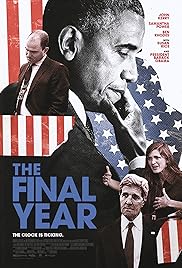
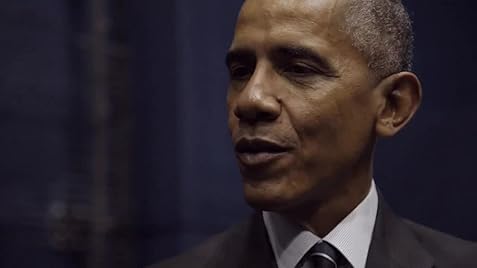
THE FINAL YEAR is a unique insiders’ account of President Barack Obama’s foreign policy team during their last year in office. Featuring unprecedented access inside the White House and …See full summary »
Director:
Stars:
As the film title implies, Greg Barker’s documentary is an eye-opening unprecedented look during the final year (actually 30 days of the final year) of US foreign policy by following key members of outgoing US President Barack Obama’s administration.
If all this sounds too political, the film is. The question then is whether it is necessary to watch a film on American policy. American policy as a stand-alone entity might not have any interest to non-Americans or even Americans. But the U.S. being the most influential country in the world therefore would have a policy that would have ramifications all over the world. So, unless one wants to live like a man in a cave and not wish to know what is going outside, this film will not affect you. It is also good to see the real goings-on in the Obama Administration besides just hearing the points of view of the news.
It is one year before Trump came into the U.S. Presidency. During 2016, filmmaker Greg Barker (SERGIO, MANHUNT: THE STORY OF THE HUNT FOR BIN LADEN) gained access to key members of outgoing US President Barack Obama’s administration — Secretary of State John Kerry, Ambassador to the United Nations Samantha Power, confidant and speech writer Ben Rhodes, and others — for an unprecedented look at the shaping of US foreign policy. While TV shows from The West Wing to Madam Secretary have invented dramas from this milieu, this documentary captures the real players so much in the moment.
The film begins inside the home of Power. The audience sees that these high profile state politicians are also ordinary people with kids and a family life.
The globe-spanning journey involves stops on multiple continents. Rhodes, who is described as sharing a “mind meld” with Obama, joins the President on historic visits to Ho Chi Minh City, Hiroshima, and Havana. Power seeks to put ordinary people at the heart of foreign policy in Nigeria and Cameroon. Kerry negotiates at the UN for a Syrian ceasefire and bears witness to global warming in Greenland. Every move they make stirs reactions from media, Congress, and the public.
Inevitable comparisons will made with the current Trump Administration. (The film ends with the unexpected Trump win as the new U.S. President.) Clearly, there are noticeable differences. One can likely see that there is more planning and cooperation with Obama. Also Obama is one to give good speeches. One in the film where he speaks to foreign young audience, Obama talks of stories that need be told and in this case, for America the importance of the Declaration of Independence in which all peoples are treated equal. This is to contrast to President Trump, who never gives a proper speech and talks in short phrases like: “No!”; “Wrong!” etc.
There are many best segments captured live on camera like President Obama’s Hiroshima and Power’s immigration speeches. But most important of all, the film reveals the true nature of the Presidential Aides, many of whom are inspirational in their duties.
I would like to see the equivalent of this film with the Trump Administration. That would be an eye-opener. But it would be highly unlikely seeing already that Trump already dislikes the media. Trump has already opted out of the climate change accord and the Iran Treaty, two policies Obama and his Administration have worked so hard to achieve.
Trailer: https://www.youtube.com/watch?v=l5tKa22hZGc
Film Review: SPETTACOLO (USA 2017)
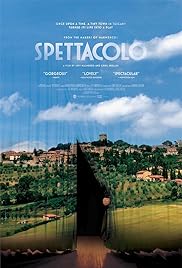
Once upon a time there was a tiny hill town in Tuscany that found a remarkable way to confront their issues – they turned their lives into a play. “Spettacolo” is a portrait of this 50-…See full summary »
Directors:
Stars:
The title of the film SPETTACOLO is the Italian for the word spectacle which refers to a performance or a play.
The documentary is about a small town by the hills called Monticchiello in Tuscany, Italy with inhabitants of 130, according to the film. The inhabitants practice a unique form of theatre called “autodrama”. By turning their lives into a play, they confront their issues of their past 50 years of existence. Their piazza becomes their stage and villagers from 6 to 90 play a part – the role of themselves. Every issue the town has faced in its history – their near annihilation by Nazis, the disappearance of their farming heritage, the commercialization of their land – every major event has been dramatized and debated by the villagers in the centre of town. The film tells the story of Teatro Povero (“Poor Theatre”), interweaving episodes from its past with footage from the present as the villagers turn a series of devastating blows – financial ruin, rising fascism, a dwindling future generation – into a play about the end of their world. The audience sees the townsfolk planning their play, debating issues as well as what to present at the performance. News of the play has also spread over the years so that Italians from all over is it Monticchiello to experience the play.
It all got started with the most crucial event in history of the town. It was when the Nazis wanted to kill all the inhabitants for supporting the rebels also known as partisans. But one woman pleaded to the German officer in charge that they were all innocent and never participated or collaborated with the partisans – which was a lie. And the townsfolk were spared.
One can hardly tell, to the filmmakers’ credit that SPETTACOLO is an American and not an Italian production. The film is shot largely in Italian, set in Tuscany and filmed between 2012 and 2016, using a Sony EX-1 camera and a portable Zoom audio recorder. The film crew also lived in Monticchiello, the small town in Tuscany for six months in 2012 to make the film. Not only that but they involved the town in their editorial process, showing several rough cuts of the film to the townspeople for feedback. The result is a very authentic and believable film in which the audience is completely immersed in the 130 population number of the town.
The film also tackles the universal problem of old versus the new, small versus big and tradition (50 years of it) versus the modern. Here, there is the compromise that benefits everyone.
The filmmakers sacrifices the town’s charm in place of problems and key issues resulting in a film more relevant than just entertaining.
The film’s climax hinges on whether the play will be staged despite all the problems. The actors are ill-disciplined, there are arguments and financial backers have opted out. Still, despite the doc’s good intentions and the filmmakers’ diligence, it is really difficult to get drawn into SPETTACOLO.
Film Review: HAPPY END (France/Germany/Austria 2017) ****
Submit your Screenplay to the Festival TODAY

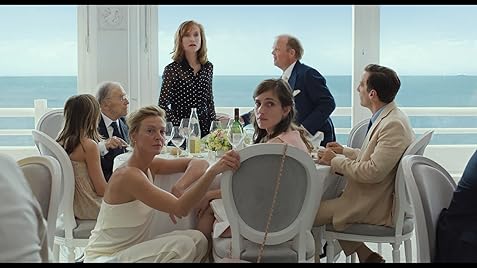
A drama about a family set in Calais with the European refugee crisis as the backdrop.
Director:
Writer:
Austrian director Michael Haneke, whose last film in 2012 AMOUR won both the Best Foreign Film Oscar and Cannes Palme d’Or returns with a sequel that continues the exploits of the Laurent family. Though critics at Cannes were generally unimpressed with HAPPY END, the film is still not without its artistic pleasures. For one, Haneke still shocks with this film, though on a lighter scale.
HAPPY END can be seen as a film that infuses many of the traits of Haneke’s previous films. When the film opens, the audience sees what is happening though the recording on a cell phone, the routine of a 12-year old (Fantine Harduin) similar to the video surveillance in Haneke’s film CACHE (HIDDEN). This 12-year old is not one to be tampered with. She has a mean streak, spying on her father’s (Matthieu Kassovitz) computer and discovering his affair and poisoning a girl she dislikes at camp and her pet hamster. This is reminiscent of the power of children in Haneke’s THE WHITE RIBBON. The bourgeois French family is held together by Anne Laurent (Isabelle Huppert), the father’s sister. But suicide is in the mind of Anne’s father, Georges (Jean-Louis Trintignant). In Hanake’s first film, THE SEVENTH CONTINENT, the whole family committed mass suicide after a banquet meal. The dysfunctional family is all reminiscent of FUNNY GAMES in which a family is disrupted by a home invasion.
HAPPY END follows AMOUR where Anne has taken over the family business from Georges. The business has also just suffered a mishap in which several employees were killed. The CEO of the company is Anne’s deadbeat son (Franz Rogowski) who is hot-tempered and mentally unstable. At the same time, Anne is being engaged to be married to her tolerant fiancé (Toby Jones). All the events are seen from the point of view of the 12-year old, which brings the film to a good focus.
HAPPY END is a film that looks at the entire Laurent family rather than one or two characters as in Haneke’s other films. It is also lighter and funnier with death often just brushed off. In the scene when the servants’ daughter is bitten by a dog, Anne arrives with a box of chocolates.
But HAPPY END is serious in its consideration of suicide. Georges, in a comical scene, asks his tailor of 20 years to help him with getting him a gun or poison to end his life. Georges has already made one attempt on his own life by driving his car into a tree, but the family and cops have suspicions as the car left no tire brake marks.
The film ends with the wedding celebration of Anne rudely interrupted by her unstable son, Pierre with refugees from a nearby camp in Calais.. Hanake cleverly places the European migrant crisis into the the film’s plot in the film’s climatic wedding scene . But Anne is able to deal with him, in a comical, unexpected way. (She breaks his finger.) The ending is just as funny and shows that life goes on, happy or not. What constitutes a HAPPY END, is the question Haneke poses.
HAPPY END flows so smoothly that it demands a second viewing to examine what one might have missed. The film is shot in French.
Trailer (en Francais): https://www.youtube.com/watch?v=W0hv8I9YbDk
 Festival Reviews