Synopsis:
“The Greatest Use” is a Dramatic Sci-Fi short about where we stand with forgiveness in the living and beyond.
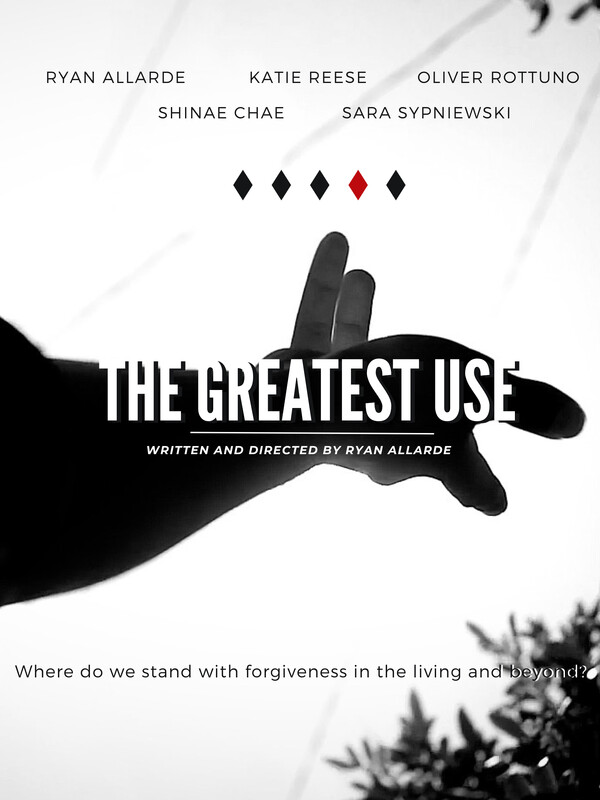
Review by Parker Jesse Chase
“The Greatest Use” delves deep into the complex concept of forgiveness, both in the realm of living and beyond. Directed by Ryan Allarde, this thought-provoking exploration challenges our perceptions of forgiveness and the role it plays throughout our lives.
The film opens with Roger (Ryan Allarde) waking up in a mysterious room, haunted by the remnants of a horrifying nightmare. As he gathers his thoughts, he discovers he is not alone; four strangers surround him in the room. Their confusion mounts as they realize they cannot leave, and their anxiety spikes when a fifth person presents them with a perplexing test. This test becomes the catalyst of the story, forcing the characters to confront their pasts, their presents, and the chance of a future. Keyword: chance.
Forgiveness is the central theme of “The Greatest Use,” and it is artfully woven into the narrative. The enigmatic fifth person pushes the four individuals to examine their attitudes towards forgiveness. Is it something given freely or extracted forcefully? Can forgiveness be weaponized, and how does it shape our past, present, and future? These questions hang in the balance, challenging both the characters and the audience to reflect on their own experiences with forgiveness.
The film poses a deeply personal question: Have you forgiven yourself for the life you’ve lived? This introspective theme runs throughout the narrative, urging viewers to consider their own capacity for self-forgiveness.
The story unfolds with a poignant line, “I miss you,” setting the tone for the emotional journey to follow. The characters, clad in white, awaken in a room symbolizing purity in death. Tension escalates as their initial exchanges turn heated, culminating in a dramatic gavel strike so to speak by the head of the table, Fawn, the Angel of Death.
The stakes become clear: the characters have been granted a singular chance to return to the realm of the living, while others may journey into the afterlife. The word “chance” takes on a significant weight. Fawn asserts her authority, labeling this encounter as an assessment, setting the stage for the characters’ stories.
Tuck (Sarah Sypniewski), recounts a story of murder driven by a desire to protect her niece from her lover’s brother’s molestation. Her willingness to sacrifice herself to save others pose profound questions about the nature of forgiveness. As she fades into death, the audience is left contemplating whether her actions will ever be forgiven by her lover Maria.
Sebastian Richardson (Oliver Rotunno), represents privilege and entitlement. His disdain for the situation clashes with the Angel of Death’s poignant reflections on trust and his role in his & potentially even his mother’s death. The film astutely critiques systemic societal issues of wealth and power. Richardson’s apology and transformation in the face of forgiveness are impactful, even leading the Angel of Death to utter the words, “I’m sorry.”
Shinae Chae’s portrayal of Christine takes us through the struggles of motherhood, forcing her to confront her role in a tragic car accident involving her ten month old daughter. Her journey towards self-forgiveness is poignant, reflecting the power of family in the process.
Ryan Allarde’s Roger takes center stage as he questions Fawn about forgiveness. In a powerful and emotional monologue, Roger’s character delivers a gripping performance, pondering the judgment he faced in life and now in death. His choice to be on the side of death raises the haunting question of whether forgiveness knows no bounds, even beyond the grave. In a surprising twist, Roger’s future hangs in the balance between life and death.
The film’s powerful performances and exploration of forgiveness make it a compelling watch. Ryan Allarde’s direction, combined with the exceptional acting talent of the cast, elevates the film’s message on a thought-provoking and memorable level.
 Festival Reviews