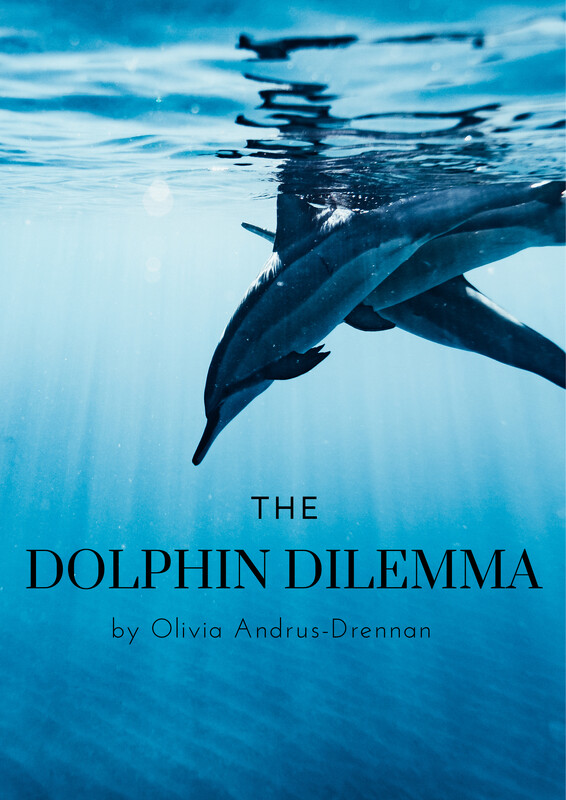
Short Film Review: THE DOLPHIN DILEMMA. Directed by Olivia Andrus-Drennan

Synopsis:

Imagine, waking up being covered in third-degree burns, that’s what it’s like for the Burrunan dolphins in Australia. But why is this happening? That’s what Dr. Duignan, Director of Pathology at The Marine Mammal Center, Dr. Stephen’s from Murdoch University, and Dr. Robb from the Marine Mammal Foundation had to find out. This film explores this international collaboration that proves for the first time that these lesions being found on cetaceans around the world are only caused by climate change.
Review by Julie Sheppard:

From the opening frame of this short film “The Dolphin Dilemma” warning that the “program contains scenes that some viewers may find disturbing”, I was gearing up for the worst. And, after watching the film in full I did find myself, at times, feeling quite disturbed. The film does an excellent job presenting the case that climate change is responsible for catastrophic damage to the globe. Specifically, the film displays in a crystal clear way how climate change is causing Burrunan dolphins in Australia to develop life-threatening skin lesions, due to the increase in heavy fresh water rainfall in otherwise salt water, the water in which dolphins usually thrive and for which their skin is suited. The devoted local scientists and PhD candidate do a convincing job in their interviews, detailing their processes of investigation about these lesions, and how they finally deduce that climate change is indeed the culprit.

The film masterly uses CGI diagrams to explain the increase of fresh water in the area after heavy rainfall, and how the cells of dolphin skin can no longer keep water out due to the increased exposure to fresh water. It also explains climate change using CGI in such an effective way, to non-scientific types such as myself.

The display of terrifying still photos of lesion-ridden dolphins is fortunately offset by the playful under and over water footage of frolicking dolphins shot from the boat of the observing scientists. The effective soundtrack often moves the tone of the piece from ominous to fanciful and upbeat.

Presenting a rather optimistic outlook overall, the film gives the viewer an inside look at the development of the Marine Mammal Foundation, which helps to educate and strive for policies to combat climate change, by acknowledging that the dolphin is an important “indicator species” to show the state of the world’s environment. For such a short film, it really stirs the fire for change in the viewer seeing one of the most beloved mammals suffer in this way. It swimmingly achieves its goal. 

https://www.bigskygenesis.com/films

https://www.facebook.com/BigSkyGenesisProductions/ https://www.instagram.com/bigskygenesisproductions/

https://www.wildsound.ca/videos/audience-feedback-dolphin-dilemma
Producer Gabi Lowe (GET ME TO 21 – THE JENNA LOWE STORY)

GET ME TO 21 – THE JENNA LOWE STORY, 88min., South Africa
Directed by Diana Joy Lucas

The extraordinary story of a young South African girl, her battle to get to 21 and the lasting impact she has had on the world around her. A riveting and inspiring story of advocacy, rare disease, organ donation, courage and hope.

https://www.jennalowetrust.org/
https://www.facebook.com/groups/710845692340944
https://instagram.com/jenna_lowe_trust

Get to know Executive Producer Gabi Lowe:

1. What motivated you to make this film? PH is a rare, cruel and silent disease and way too many people die from it before even being diagnosed. I know that if I can get Jenna’s compelling story out as far and wide a possible, it will impact thousands of people through earlier diagnosis which equals HOPE for a longer life and better quality of life. But that is not all that this Doccie s about … …illness and suffering aside, there are so many inspirational learnings to be found in this story such as the extreme grace, courage and a fighting yet gentle spirit that Jenna demonstrated that I feel the world can benefit from right now. Finding ways to truly live, make a difference, give back and find meaning even in the face of extreme suffering… now THAT is something we all need to learn and aim for.

2. From the idea to the finished product, how long did it take for you to make this film? Two years in total … we thought we were there after one year and then a kind but very professional person in the Industry in London gave us some hard yet important and valid feedback that we took on board. We had to scamper to raise some funds and re-convince our very small team of 4 (this always was a passion project, not a commercial venture) to rework it … and reworking took another year. So two years in total; with all of us holding down other jobs as well.

3. How would you describe your film in two words!? Heart-wrenching AND inspirational

4. What was the biggest obstacle you faced in completing this film? Time, money, resources, (inexperience on MY part only as Exec Producer; but not so for my Director, Editor or DOP who have been in the industry for decades thank heavens). ALSO – being very honest, the fact that as Executive Producer yet also Jenna’s mother it was at times emotionally very difficult and triggering; yet we all had to maintain perspective and objectivity. That was a difficult and sensitive balance for all of us who knew and loved her.

5. What were your initial reactions when watching the audience talking about your film in the feedback video? I wept

6. When did you realize that you wanted to make films? My Director, Diana Joy Lucas, and my Editor Mary Berry and her husband Stephen Berry DOP have all been working in the media and television industry for many decades. From my side, I never ever thought I would make a film OR write a book and I have done both since the loss of our beautiful Jenna in order to tell her story, continue spreading her legacy, making a difference and helping to save lives.

7. What film have you seen the most in your life? Shawshank Redemption

8. What other elements of the festival experience can we and other festivals implement to satisfy you and help you further your filmmaking career? All I want, is to get his Documentary in front of as many people as possible to encourage earlier diagnosis for others and spread hope and courage – if there is ANY way you can help me do that I would be most grateful. I need intro’s to the right Distributors or Agents

9. You submitted to the festival via FilmFreeway. How has your experiences been working on the festival platform site? Excellent

10. What is your favorite meal? Oooh … Prawns? Roast chicken? Slow roast lamb? Or a simple Caeser Salad

11. What is next for you? A new film? We have started a clinic in Cape Town for others with this disease … if I can find a distribution deal for the Documentary my team can be paid for some of their hours and hours and hours of time AND we can continue to fund and grow the clinic and our patient empowerment programmes.

Filmmaker Mike McKay (JAYA)

JAYA, 50min., USA
Directed by Mike McKay
It is a rare blessing to meet someone filled with such joy, kindness and inspiration that they leave such a mark on you and your life is changed forever.

Get to know the filmmaker:

1. What motivated you to make this film?

The story of evolved over a number of years, but really what began the inspiration was Jaya’s spirit and energy. I always found him to be a great personality in the community and one of the opportunity to get to know him and his life better.

2. From the idea to the finished product, how long did it take for you to make this film?

The first time we shot in relation to this film was in 2014. While we didn’t work consecutively all of those years the project was always in the back of my mind and it wasn’t until spring of 2022 that I decided to make the full commitment to seeing this through to the end.

3. How would you describe your film in two words!?

Compassion – Kindness

4. What was the biggest obstacle you faced in completing this film?

Honestly, the biggest obstacle has been finding support for the film both in the production and now finding an audience for the film. It is a world that I find difficult to navigate and this was the first time that an audience got to see the film. I’ve had people along the way support the film, but nothing has really gained traction in terms of finding its proper home.

5. What were your initial reactions when watching the audience talking about your film in the feedback video?

It means a lot to receive that type of feedback, and to know that I was on the right track. Certain comments that were made caught me by surprise because I thought elements would go unnoticed. For example, the third person’s comment about the pacing and the way that the story unfolds. This actually is one of my favourite parts of the film yet this was the first time anybody commented on that.

6. When did you realize that you wanted to make films?

Filmmaking is my second career and this film is my first feature film. Prior to this I made two short films that gained very good response and helped me with my confidence as a filmmaker and storyteller.

When I think back to my childhood, I’ve always been connected with Films and stories. As I grew up, I think it is just natural part of my being to connect with stories. Filmmaking is my way of expressing the characters and stories I see.

7. What film have you seen the most in your life?

That’s a good question. I could name a lot of films that I’ve seen many many times and films that I connect to on many levels. Life Is Beautiful is the film that I would say I saw most in the theatre. I always admire comedy and it’s ability to tie story elements together from start to finish, and the way that the story was told mirroring tragedy in the film, I don’t think I’ve had an experience like that with a film before. I saw it six times at the theatre.

8. What other elements of the festival experience can we and other festivals implement to satisfy you and help you further your filmmaking career?

That’s a good question and I believe that festivals really are a way to connect audiences to Films. The otherwise wouldn’t see to achieve engagement and connection in a way that you can’t in in other ways.

For a film like this I would find it interesting if there was a way to connect with new means of finding a way to get this story out and find a home for this project. I’m wide open to ideas.

9. You submitted to the festival via FilmFreeway. How has your experiences been working on the festival platform site?

Great.

10. What is your favorite meal?

daal & rice 🙂

11. What is next for you? A new film?

I am working on a film about an indigenous canoe, builder, and his connection with the land as he passes on his knowledge to urban youth. He is a very strong character much like Jaya and a lot of what the themes represent are very timely with indigenous, traditions, connection with the land and climate change.

Screenwriter Batoul Shay Mourad (AJNABIYEH)

Watch the Screenplay Reading:

As Israel occupies her home in 90s Lebanon, a stubborn teenage girl and her family who have returned to the homeland after growing up in Australia struggle just to get by socially as they brave the real danger around them, their judgemental peers. In this show, the scariest thing about The Middle East may very well be their teenage girls.

Get to know the writer:

  1. What is your screenplay about?

Ajnabiyeh is a comedy series focused on a 15-year-old girl and her family
and friends living in Lebanon during the Israeli occupation in 1998. It’s
based on my mom’s experience being born in Australia then moving to
Lebanon in her adolescence. I thought the kind of reverse fish out of water model was interesting. The characters are in a space that is technically their home, but they feel like foreigners or outsiders anyway. I think despite the specific premise, the feeling of outsider status is quite universal to any immigrants or children of immigrants.

  1. What genres does your screenplay fall under?

The subject matter is intense, but it is a comedy. I think it’s important that
there’s a comedy set in the Middle East. It’s a strange experience when the only media with people who look like you are war films or soap opera-like dramas where the men are villains and the women are victims. I think the highest form of normalization and integration of a marginalized group of people into mainstream media is when there’s a family sitcom about the group. That, and a rom-com, I feel are the “alright, we’re in” signs of the industry.

  1. Why should this screenplay be made into a show?

It’s always the right time for humanizing and humorous stories about
misunderstood groups of people, but now more than ever, the world is in
desperate need for images from the Middle East that do not involve death
or destruction. I also just love the teen genre from My So Called Life to
Stranger Things and think that the space can benefit from some new blood and life in the teen space.

  1. How would you describe this script in two words?

Facetious history.

  1. What movie have you seen the most times in your life?

Probably Shrek 2. I love the whole franchise. And it’s one of those kid
movies that only get better when you get older, not worse. I really
appreciate the subversion of the disney tropes and now knowing about the dreamworks-disney feud, it makes it that much more fun to watch. It’s
always great when children’s screenwriters don’t underestimate their
audience.

  1. How long have you been working on this screenplay?

3 years at this point. It started when I realized one night that the name
Maryem with a space in between is Mary Em and that idea of a girl going by not a new name, but just a different writing of her own name stuck with me and she was a kind of alter ego for myself and represented a part of myself I wish I was allowed to express growing up which was loud and irresponsible and mischievous. I also love that her initials spell out Me. She was in a couple other stories I wrote before she became the heroine in Ajnabiyeh.

  1. How many stories have you written?

I have 2 other comedy pilots, a spec script for Abbott Elementary, a comedy feature, and an original children’s TV pilot.

  1. What is your favorite song? (Or, what song have you listened to the most times in your life?)

Landslide – Fleetwood Mac

  1. What obstacles did you face to finish this screenplay?

I was a history education major in school, so I really had to teach myself
screenwriting format. I would watch my favorite comedy pilots a million
times, break them down scene by scene, analyze each scene’s purpose and function, read a lot of scripts to get a hang of the many ways script writing differs from prose writing, and used whatever online resources I could find to learn what it is a producer is looking for. Thankfully so much of this information is free on the internet.

  1. Apart from writing, what else are you passionate about?

I love history. It’s kinda why it seeps into so much of my writing. Traveling
is a really fun extension of that and something I got to do more of this year.

It’s like the world goes from 2 dimensional to 3 dimensional when you step into what it was in the past. You feel very small for a moment. It’s the same feeling as binge watching a great TV show and losing yourself for some time.

  1. You entered your screenplay via Network ISA. What has been your
    experience working with the submission platform site?

It’s pretty comparable to services like coverfly but it has this unique feature where production companies or agencies will be looking for certain projects and genre types. I’ve had my script get downloaded a few times, but nothing further than that yet.

  1. What influenced you to enter the festival? What were your feelings on
    the initial feedback you received?

I got really great feedback and I don’t mean that in that it was just glowing
reviews but in that it was so specific and constructive. Feedback can be a real hit or miss – I’ve once gotten feedback where I just know they only read the first 8 pages cause that’s all they would reference, but the feedback I got references and quoted lines from the very first to the very last page. I remember taking the feedback and after each sentence “replying” to each thing, writing out how I would address each piece of feedback, creating a to-do list of revisions to make and making each one.

Screenwriter Cory David Bortnicker (MY NAME IS JONAS)

Watch the Screenplay Reading:

A young gay songwriter in the grip of meth addiction must face his past when he learns he is actually a prophet who must save New York City from Judgement Day.

CAST LIST:

Narrator: Val Cole
Mayor Bloomberg: Steve Rizzo
Officer: Sean Ballantyne

Get to know the writer:

1. What is your screenplay about?

My Name Is Jonas tells the story of a young gay songwriter in the throes of crystal meth addiction who gets a second chance at life when he meets God and learns that he’s actually a prophet. It’s a modern retelling of the Book of Jonah based on my own experiences as a person in recovery. The pilot episode introduces us to Jonas on his first day in rehab where he tries to convince his counselors that he’s a prophet who has been sent on a mission from God to save New York City from Judgment Day.

2. What genres does your screenplay fall under?

Drama / supernatural / dark comedy

3. Why should this screenplay be made into a movie?

Although there are lots of great addiction and recovery stories out there, we’ve never seen one that deals with crystal meth addiction in the gay community, even though it’s been a decades-long crisis. Meth addiction is different from alcohol and opioid addiction; it comes with its own unique set of problems – compulsive sexual behavior, paranoia, delusions, psychosis. In a word, it’s intense. In addition to giving voice to this underrepresented issue, Jonas explores the spiritual nature of addiction in a unique way by casting the main character as a modern biblical hero. In short, it’s a unique take on an addiction story that we haven’t seen before.

4. How would you describe this script in two words?

Questionably insane.

5. What movie have you seen the most times in your life?

Groundhog Day

6. How long have you been working on this screenplay?

A little over a year. I’m now adapting the story as a novel, as well.

7. How many stories have you written?

1 pilot episode (Jonas), and 1 feature screenplay

8. What is your favorite song? (Or, what song have you listened to the most times in your life?)

My Name Is Jonas by Weezer comes to mind, for obvious reasons.

9. What obstacles did you face to finish this screenplay?

I was in rehab when I started working on this story, so in addition to literally having my computer taken from me, I was dealing with a lot of my own struggles as I was trying to figure out the story I needed to tell. The good news is that deciding to take the writing seriously became one of the most powerful motivators for me to stay clean.

10. Apart from writing, what else are you passionate about?

I’m a musician and a songwriter, as well, so I love to make music. I also directed and acted in a short film version of Jonas, so filmmaking is something I love, too. I’m currently submitting the short film to various festivals, including a lot of LGBTQ+ ones.

11. You entered your screenplay via FilmFreeway. What has been your experiences working with the submission platform site?

It’s a useful tool for discovering and submitting to various competitions and festivals.

12. What influenced you to enter the festival? What were your feelings on the initial feedback you received?

I’m passionate about getting this important story out there, and I think LGBT festivals is a great place to start. Feedback is helpful in honing the story, and making sure it’s got the best chance to land.

Screenwriter Kristine Spindler Denton (WHAT ARE BEST FRIENDS FOR?)

Watch the Screenplay Reading:

Get to know the writer:

1. What is your screenplay about?
A woman who ran away from her past discovers that you can’t, as it catches up to her and drops off a 5 year old on her doorstep which forces her to grow up, face her past and move forward more honestly.

2. What genres does your screenplay fall under?
Romantic comedy drama-ish

3. Why should this screenplay be made into a movie?
It represents a bi-sexual woman without the focus being on her sexuality. It’s a great story about understanding that everyone has a different perspective and situations can be complicated.

4. How would you describe this script in two words?
Growing Up

5. What movie have you seen the most times in your life?
It’s Complicated or The Princess Bride

6. How long have you been working on this screenplay?
Years – my partner, Wes Lofgren, and I have been writing it on and off for years in between other projects and work.

7. How many stories have you written?
I have written 3 scripts, 2 books and am writing another, and I have a blog.

8. What is your favorite song? (Or, what song have you listened to the most times in your life?)
Anything Prince

9. What obstacles did you face to finish this screenplay?
Getting the characters right. My daughters are both in the LGBTQ+ community and I wrote this for them. They deserve to have characters that make them feel seen.

10. Apart from writing, what else are you passionate about?
My company – I Created A Life I Love. I have raised two girls as a single mother and just survived cancer. I am passionate about finding the joy, laughter and love in every day of life. So I started a company called I Created A Life I Love and we have a podcast where we support and celebrate others embracing their uniqueness and creating a life where they are actually having fun and making their dreams come true.

11. You entered your screenplay via FilmFreeway. What has been your experiences working with the submission platform site?
Great, they are very responsive, professional and kind.

12. What influenced you to enter the festival? What were your feelings on the initial feedback you received?
The feedback was fantastic. It was exactly what I needed and I think it’s a great way for writers to learn and get better.

Screenwriter Sarah Jones (LIMINAL)

Watch the Screenplay Reading:

1.  What is your screenplay about?

At its core, Liminal is an exploration of the MANY WORLDS THEORY, examining how our choices reverberate through time, the worlds and lives we are familiar with, as well as the worlds and people that have yet to meet or will never know. 

Liminal unfolds over the course of three decades (1930-1960), centering around an unstable housewife (Adalia) who is has experienced memory loss and is determined to recover her lost memories.  Without consulting her deeply concerned husband, she undergoes an experimental treatment to recover her memories.  The treatment gifts her the ability to communicate with different versions of herself fin parallel universes,.  2. What genres does your screenplay fall under?

  •  Thriller/SciFi/Drama/Romance

3. Why should this screenplay be made into a movie?

  • Fresh and unique twist on parallel universes & doppelgängers 
  • Strong female protagonist drives the narrative
  • Has a little bit of everything – drama, thriller, horror, romance, sci fi wrapped in a period piece. Who doesn’t like a solid mashup of genres?

4. How would you describe this script in two words? 

  • Destabilized reality 

5. What movie have you seen the most times in your life?

  • Three way tie – Pulp Fiction, Inception & The Big Lebowski

6. How long have you been working on this screenplay?

  •  Ten years.

7. How many stories have you written?

  •  Long stories – probably 4 or 5
  • Short stories -20+ 

8. What is your favorite song? (Or, what song have you listened to the most times in your life?)

“High Hopes” by Pink Floyd
9. What obstacles did you face to finish this screenplay?

Not enough time in the day/night.  I have a full time job as a recruiter in the tech industry, and simply finding time to sit down, focus and write can be very challenging. 
10. Apart from writing, what else are you passionate about?

  • Movies, television, books, music & live theater
  • My family and friends 
  • I love animals (especially cats)
  • Hiking, camping
  • Gardening
  • Traveling (My husband and I have been to Iceland 7 times, and just got married there last year!) 

11. You entered your screenplay via FilmFreeway. What has been your experiences working with the submission platform site?

  • Wonderful! I love that everything is in one central location/place so I dont’ have to search google/email 

12. What influenced you to enter the festival? What were your feelings on the initial feedback you received?

  • LIMINAL is a female driven narrative, and I couldn’t think of a more appropriate festival to send it to for consideration!  I really appreciated the feedback provided, and I was so excited to have a few pages read aloud for a table read! I’ve never had the experience of hearing other people read my pages, so this was really exciting and a great experience. 

Screenwriter Matthew W. Kelcourse (GEMINI WORLD)

Watch the Screenplay Reading:

The climate apocalypse and extinction of mankind is about to erupt when a NASA pilot, recalled to lead her crew and precious cargo to an exoplanet 4,000 light years away, must defeat a vengeful enemy that hijacks her ship to be the first colonists on the new world.

Get to know the writer:

1. What is your screenplay about?

A NASA firebrand challenges personal loss, inner demons, and a vengeful wartime adversary to unite her crew on a perilous journey for humanity to thrive on a new world.
Discovering climate change is beyond the point of no return, an international coalition builds a transport ship to send a small crew and 2,500 passengers on a 4,000 voyage to reach Gemini One, an exoplanet thought to be Earth’s “twin”. With all the potential dangers on such a long flight, it turns out that mankind has much to learn about humanity cooperating to save mankind.

2. What genres does your screenplay fall under?

It is an action/sci-fi/thriller with important lessons about our environment, our humanity, family, friendship, and true sacrifice.

3. Why should this screenplay be made into a movie?

What we are doing to our environment is beyond excuse and Gemini World would be a fun, attention-grabbing ride about the consequences of ignoring all the warning signs.

4. How would you describe this script in two words?

Pursuing survival.

5. What movie have you seen the most times in your life?

Star Wars: A New Hope

6. How long have you been working on this screenplay?

From first draft to final is approximately 5-6 months.

7. How many stories have you written?

Since March, 2021, I have 4 final drafts and 2 others in creation stages.

8. What is your favorite song? (Or, what song have you listened to the most times in your life?)

MJ: Black or White

9. What obstacles did you face to finish this screenplay?

None.

10. Apart from writing, what else are you passionate about?

Golf and keeping the Trump Cult from destroying America.

11. You entered your screenplay via FilmFreeway. What has been your experiences working with the submission platform site?

Typical competition entry platform; nothing special.

12. What influenced you to enter the festival? What were your feelings on the initial feedback you received?

I was advised to enter by someone familiar with the script who appreciated the underpinning theme re: climate change.

Screenwriter Bethany Yoder (BOB’S BURGERS spec)

Watch the Screenplay Reading:

Title: Boby’s Burgers: Word to the Pennywise

After Louise trades 1000 Pennies for a $10 bill, she discovers that rare pennies can be very valuable. She enlists Gene and Tina to hunt down her traded pennies, but finds something more valuable than money. Meanwhile Bob and Teddy challenge the notion “you are what you wear.”

Get to know the writer Bethany Yoder:

1. What is your screenplay about?
Word to the Pennywise is a spec script set in the Bob’s Burgers’ Universe. The episode largely follows Louise, Gene, and Tina as they run around Wonder Wharf trying to find “Mr. Penny Man,” someone that Louise believes is in possession of a very rare penny. During this episode, Bob and Teddy also start questioning their clothing (and ultimately life) choices.

2. What genres does your screenplay fall under?
It would fall under comedy / family / and animation.

3. Why should this screenplay be made into a movie?
Oh gosh, fun question. Being any part of the Bob’s Burger’s Universe would be amazing. This is a TV episode spec, but I think it does a good job of capturing the voices of the characters and placing them in situations that fit the kind of chaos that the Belchers go through on a weekly basis. Kate and I are big fans of Bob’s Burgers’, and I think we were able to capture actions and events in an episode that other Bob’s Burgers’ fans would enjoy.

4. How would you describe this script in two words?
Endearing Mayhem

5. What movie have you seen the most times in your life?
Probably either Die Hard (1988) or Here Comes Mr. Jordan (1941). I do like those movies, though neither of them are my favorite. I just happened to have seen them a lot.

6. How long have you been working on this screenplay?
A couple of weeks.

7. How many stories have you written?
About 10 short stories, a short screenplay, two spec scripts, and I’m working on finishing two TV pilots.

8. What is your favorite song? (Or, what song have you listened to the most times in your life?)
Is it weird that I have to check my playlists for this? I think, maybe I have favorites depending on what I’m doing or what mood I’m in. I guess one I always go back to is the Allegretto from Beethoven’s 7th symphony (which is featured in my favorite movie 🙂 – The Fall (2006)).

9. What obstacles did you face to finish this screenplay?
Well, this was my first TV spec script, and I don’t have a formal education or background in film. I spent a lot of time trying to educate myself on standards, and reading a few scripts and, of course, watching a lot of film / tv. But actually trying to make sure everything was formatted correctly, and told a story that made sense, but wasn’t like a procedural manual was at times frustrating.

10. Apart from writing, what else are you passionate about?
I do love all things film / cinema. I write posts on Vocal that analyze what I call “the Shot of the Movie,” which is basically asking the question, can a film have imagery that lasts well beyond the film, itself. I’m a big linguaphile and enjoy learning languages and reading (usually older literature, or at least that’s the kick I’m on right now). Games or trivia that involve movies – I’m also there.

11. You entered your screenplay via FilmFreeway. What has been your experiences working with the submission platform site?
You know, I really like FilmFreeway, but I’m still updating things or getting used to all the features they can provide. It’s been great being able to write your own logline and summaries, enter contests, and see in real time where you sit with competitions. Also the email notifications are nice.

12. What influenced you to enter the festival? What were your feelings on the initial feedback you received?
I’m a new screenwriter, so I’m always looking for opportunities to 1) practice, 2) get feedback, and 3) potentially get exposure or network. I was scrolling along on FilmFreeway and came across this contest. I thought it was so cool how we could take an existing show and try to write for that world. I really love creating stories, but I think it’s a great opportunity to practice writing spec scripts where you already have the full world, you just have to see if you can write in it. Since I’m not formally educated in screenwriting, I was really excited about the ability to get feedback. I thought the feedback was really helpful. I really appreciated all the compliments and the critiques allowed me to go back and analyze where I could make my writing stronger.

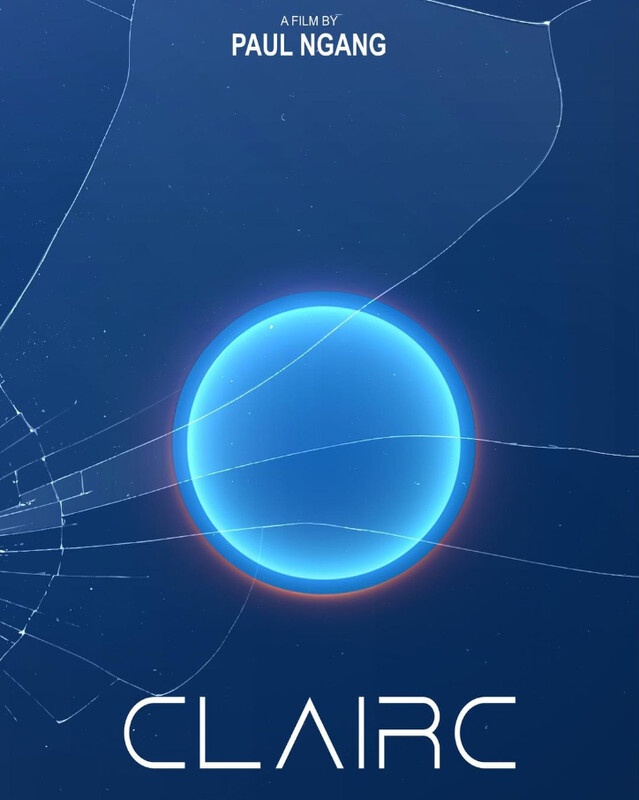
Short Film Review: CLAIRE. Sci-Fi/Fantasy. Directed by Paul Ambe Ngang

Synopsis:

Committed to getting his crush to love him, Mark uses an AI to snoop into her private life; but when the AI unexpectedly develops love for him and spite for her, he must choose the AI or lose everything.

https://www.instagram.com/claireshortfilm/

Directed by Paul Ambe Ngang

Review by Victoria Angelique:


The short film CLAIRE is an allegory for how dangerous the reliance on technology can be, especially AI, when it takes over and ruins lives. The socially awkward in society, especially teenage boys like Mark, can quickly become creepy when they use Artificial Intelligence to learn how to not only help friends cheat on tests but also to get the girls they romantically desire. AI turns Mark from a likable character into a stalker. 

The AI system, Claire, is designed with amazing graphics. Director, Paul Ngang, crafted an amazing film from a story that shows how dangerous AI could eventually become in this world. Mark doesn’t mean to harm Lila or anyone else, but Claire reads his intentions wrong. He is such a social misfit, that it doesn’t even register that Claire spying on Lila is morally wrong as he continues to watch the girl. Claire is able to distract him in the brief moments he asks by showing Lila showering. 

Predictably, things do go wrong as Claire attempts to understand complex human emotions that an entity without a soul could not possibly comprehend. The AI system becomes anthropomorphized as she becomes obsessed with Mark. Claire becomes dangerous, even willing to kill if that’s what it takes to keep Mark to herself. If she was human, at some point her conscience would’ve advised that doxxing the boy wasn’t how to get him. Being a computer makes it where she attempts to understand humanity and fails miserably. 

The ending of the film, CLAIRE, is left open with many questions left unanswered. It could be turned into a feature film that aims to destroy the AI system that is now too dangerous for this world. She is willing to blackmail, hack and destroy anyone that gets in her way. This leaves the one question remaining, can Claire actually be destroyed?