In 1935 Egas Moniz, renowned Portuguese neurologist, visit psychiatrist Sobral Cid in order to persuade him allow his patients to be act as subjects for Moniz’s experiemntal treatment – frontal leucotomy. After some resistance Cid agrees. The first such operation is staged, but Moniz’s exhaltation is cut short by an attempt on his life. This self-contained chamber opera is actually scene 7 from a longer opera of the same name that tells three stories from the history of 20th century brain science (rather than a screenplay we worked with a libretto). it was filmed very quickly with little resources and involved professional and non-professional cast & crew.
The music is by Stephen Brown.
https://www.brainlandtheopera.co.uk/
Review by Victoria Angelique:
‘The historical short film, BRAINLAND, is a creative way to depict the origin of the use of brain surgery for people suffering from mental illness. Neurologist Egas Moniz has his story told as opera, sung rather than spoken. The operatic lyrics (this is subtitled) take us through a disagreements between Moniz and psychiatrist, Cid, whose patients he needs to test his experimental treatment. This is a rare time where a musical makes sense for the characters to sing, rather than just making an operatic film where the audience has to submerge themselves into a world other than our own.
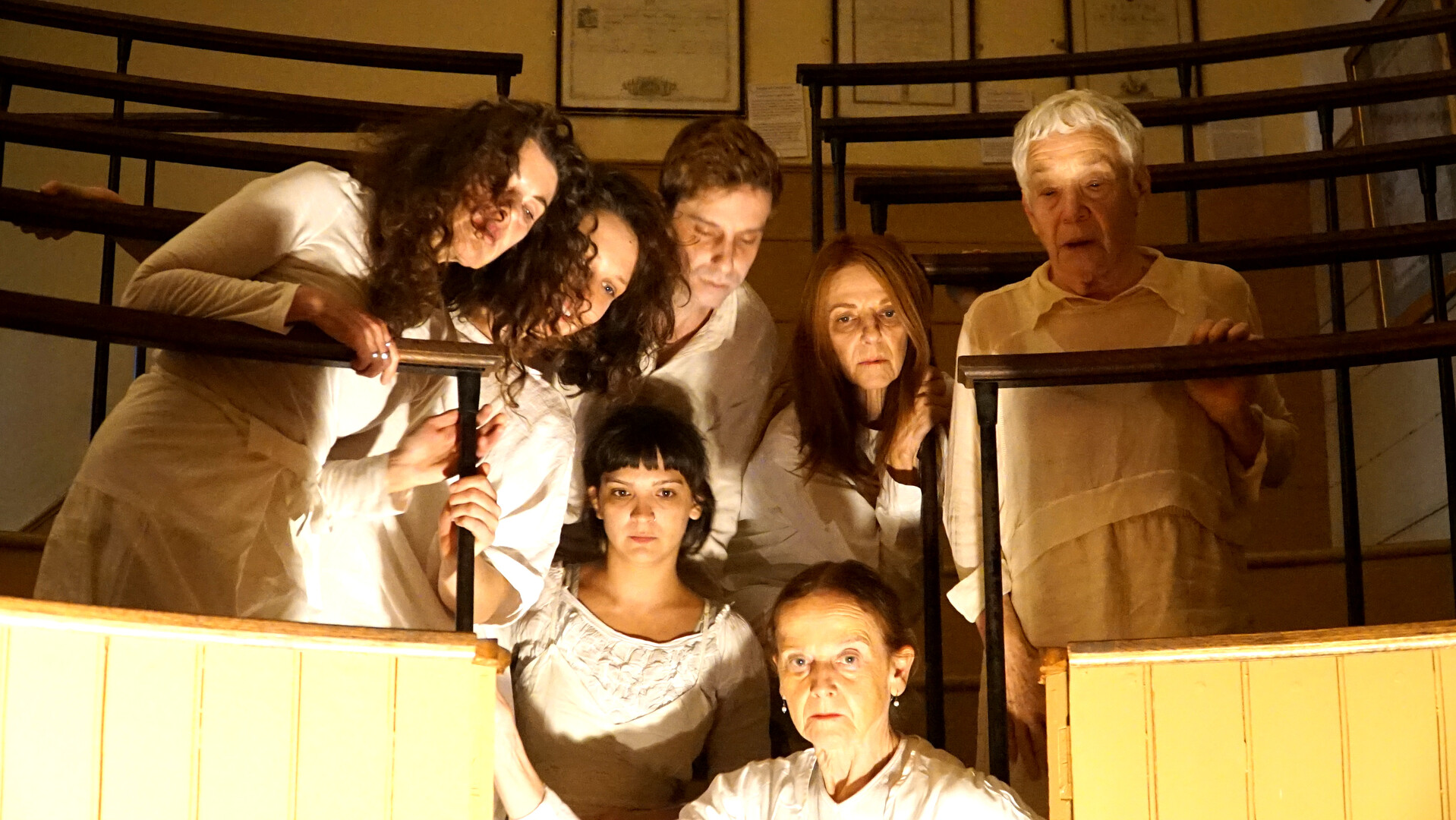
The use of one room, a surgical theater, helps depict the control that Moniz implemented on the patients. It allows for tall shadows to dance on the walls, giving an eerie feeling that something is going to go wrong. The dark yellow color contrasts against the white wardrobe and surgical blood. The only question left unanswered is, how did a patient get a gun into the controlled setting as a psychiatric patient that is implied to have been institutionalized.
BRAINLAND, directed by Chiara D’Anna, is a cinematic masterpiece that goes to a moment in history when 1949 Nobel Prize Winner for Medicine, Egan Moniz, first conducted his psychosurgical experiments in 1935. He survived being shot by a patient but remains a controversial figure.’
 Festival Reviews