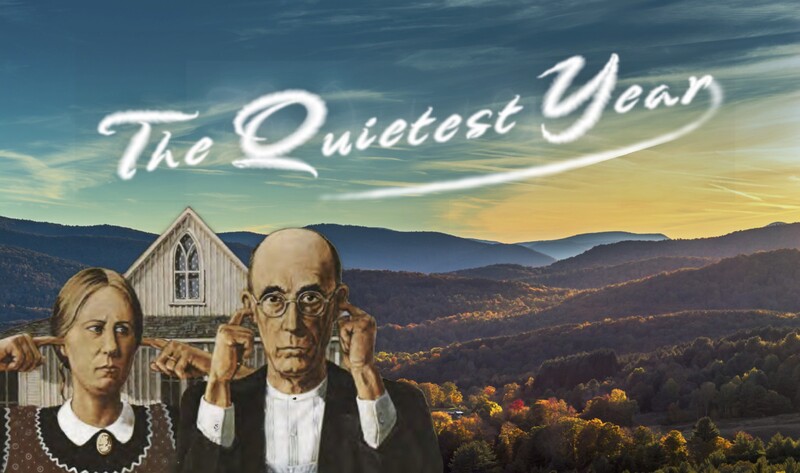
Filmmaker Karen Akins’ darkly quirky personal quest to curb noise pollution in her quaint Vermont village uncovers dire consequences for noise regulation not only in her home state but nationwide. From a libertarian-controlled village, upholding a rural neighbor’s right to “recreational shooting,” to the basing of an ear-piercing fighter jet in the most densely populated area of the state, the examples are unending. As she consults leading experts and activists, including Ben Cohen of Ben and Jerry’s, Akins marshals the facts to frame noise pollution as an urgent yet overlooked crisis for both public health and civil society.
Review by Parker Jesse Chase:
In “The Quietest Year,” filmmaker Karen Akins embarks on a deeply personal and unique quest to address noise pollution in her quaint Vermont town. Through this endeavor, Akins uncovers alarming consequences for noise regulation not only in her private home, but across the state. The film is an exploration of how noise affects public health and civil society, framed within the context of a libertarian-controlled village upholding a rural neighbor’s right to “recreational shooting” and the bases of ear-piercing fighter jets in Vermont’s most densely populated area.
The documentary opens with a relatable montage for filmmakers: pauses in front of the camera to capture sound quality, often disrupted by planes overhead. This sequence sets the tone for the film, highlighting the pervasive nature of noise pollution. Akins effectively demonstrates that only a small percentage of the Earth remains uninterrupted by human-made noises.
Vermont, known for its environmental consciousness and forward-thinking mentality, serves as the backdrop for Akins’ journey. The state is home to Ben and Jerry’s, a company renowned for its activism, and Bernie Sanders, a prominent political figure. Even the footage of the town evokes nostalgia and a sense of peace, emphasizing the stark contrast between Vermont’s serene landscape and the oncoming intrusive noise pollution.
Vermont is unique in its choices to ban billboard usage and its anti-litter laws, yet it remains a “Wild West” of sound ordinances. This part of the United States is highly sensitive to noise, as exemplified by the harmful effects on even the simplicity of delivery truck drivers’ passerby noise, which can cause ear damage over long periods (as measured by an Apple Watch). The film reveals the detrimental impacts of sudden, impulsive sounds at night, which can disturb deep sleep and harm health. Even street sweepers cause disturbances in this noise-conscious community.
Akins delves into the historical context of noise regulation, highlighting the defunding of the Noise Control Act and the subsequent freezing of federal regulations without enforcement resources, a legacy of Ronald Reagan’s administration. This has left towns to navigate noise issues independently, often hoping neighbors will resolve conflicts amongst themselves.
The documentary emphasizes the impossibility of “closing your ears,” sound being a fundamental survival skill, and compares the loudness of roosters to jet engines. The negative physical response to living with constant noise, such as the crowing of three roosters outside a bedroom window, is palpable. The World Health Organization’s recommendation of general daytime noise levels of 55 decibels or less to prevent adverse health impacts underscores the severity of the issue. This town on a regular basis has the lowest in the mid60s.
“The Quietest Year” captures the unprecedented quiet of 2020 due to the Covid-19 pandemic, which the community found delightful. Akins continues to document stories of disruption, from detained sheep crying to gunshots at all hours to Ben (of Ben + Jerry’s) getting arrested for a protest display, sending people into distressing physical and mental states. Honing in on the filmmaker’s belief and undeniable truth that repeated exposure to noise causes a priming effect, enlarging the amygdala and making it more reactive to noise events exposing them to higher risk for a heart attack or stroke.
The film strongly establishes the community and lifestyle within Vermont, highlighting the sensitivity to noise that permeates across the state. This sensitivity manifests in various ways: personally (ongoing noise disturbances with neighbors), physically (impact on the nervous system and heart health), and through military actions, such as the national guard’s plane activities.
Akins presents a nuanced portrayal of noise complaints, revealing the complexities and challenges of addressing them through legislative avenues when civil conversations fall short. The documentary is rich with information, both social and scientific, about the sensory effects of sound and what constitutes healthy versus unhealthy noise levels for humans.
“The Quietest Year” is a compelling and informative documentary shedding light on an often overlooked yet urgent growing crisis in this area of the United States. Akins’ personal quest resonates deeply, making a strong case for the need to address noise pollution for the sake of public health and civil society as a whole.
Project Links
 Festival Reviews