Filmmaker Britt Dallyn (THE HARDSHIPS OF SUMMONING A DEMON)

THE HARDSHIPS OF SUMMONING A DEMON, 14min., Canada
Directed by Britt Dallyn
In order to woo his school crush, a determined but highly misguided Stan attempts to summon a demon with the help of his sister stuck at home on Halloween night, by kidnapping a heavily intoxicated young man under the ruse of his own sacrifice being an after party.

https://www.instagram.com/summoning_a_demon/

Get to know the filmmaker:

1. What motivated you to make this film?

While attending Vancouver Film School, the course allows six story ideas to be voted on by the class to get made for our “final” projects. With these “finals” we are given our highest budget and longest shooting schedule to film our original 9 page scripts. I had made many short films in the past, but all with minimal (mostly zero) other people, less knowledge and no money. I saw this as a great chance to create a film to showcase my creative voice with the type of resources I never had before.

2. From the idea to the finished product, how long did it take for you

to make this film?

I came up with the initial idea in October 2022 and wrote numerous drafts till December. Once my script was chosen to get made in 2023 I worked on more drafts from March to April. Filmed May 4-6. Then edited picture and sound up to late September.

3. How would you describe your film in two words!?

Demonic Superbad

4. What was the biggest obstacle you faced in completing this film?

The shoot itself was incredibly challenging. As I said earlier, all the resources available for the shoot were so appealing, but it also made it very stressful as I didn’t want to mess up this chance. And my stress was pushed to its absolute limits with the amount of unforeseen obstacles that appeared. Working in a tiny room like a garage was way more time consuming than anyone realized, our plan for rigging lighting did not work, the homeowner went on a drunken rampage at the end of night two, leading us to change locations for day three having to rework the script and completely wing a shot list. It was easily the most stressful three days of my life.

5. What were your initial reactions when watching the audience talking about your film in the feedback video?

I loved how all the wide various tones and feelings I wanted to incorporate into the film came across to the audience. As they mentioned the light but dark humor with an underlying sense of menace, as well as the coming of age comparison with movies like “American Pie”. It was rewarding to see the film was successful in emitting all of the different moods I wanted it to. I was also very joyful to see one audience member in particular seem so excited by my movie. I feel I may be able to call that my first glowing review.

6. When did you realize that you wanted to make films?

When I was 12 and was given an iPad equipped with iMovie, I started making little shorts out of boredom to pass the time but it quickly became my lifelong passion.

7. What film have you seen the most in your life?

Probably Batman ’89 or Billy Maddison. Batman ’89 because it was one of those movies I relentlessly watched from birth through all of my childhood and still watch every few years now. Billy Maddison because I watched it, not as relentlessly, but very steadily since I was 8.

8. What other elements of the festival experience can we and other festivals implement to satisfy you and help you further your filmmaking career?

To always be searching for something unique and giving filmmakers the chance to promote themselves, as well as network with others.

9. You submitted to the festival via FilmFreeway. How has your experiences been working on the festival platform site?

It has been a great experience because everything about the site makes submitting projects as easy and convenient as it can be.

10. What is your favorite meal?

I’m really starting to love anything Mexican. I’m addicted to the spice.

11. What is next for you? A new film?

Right now I want to keep building my writer and director resume with short films. I’ve been working on writing my next project since January and am hoping to film it in the fall or early next year.
Filmmaker Juan de Dios Valdivieso (SOUTH PLUG: LATITUDES)

SOUTH PLUG: LATITUDES, 6min., Spain
Directed by Juan de Dios Valdivieso
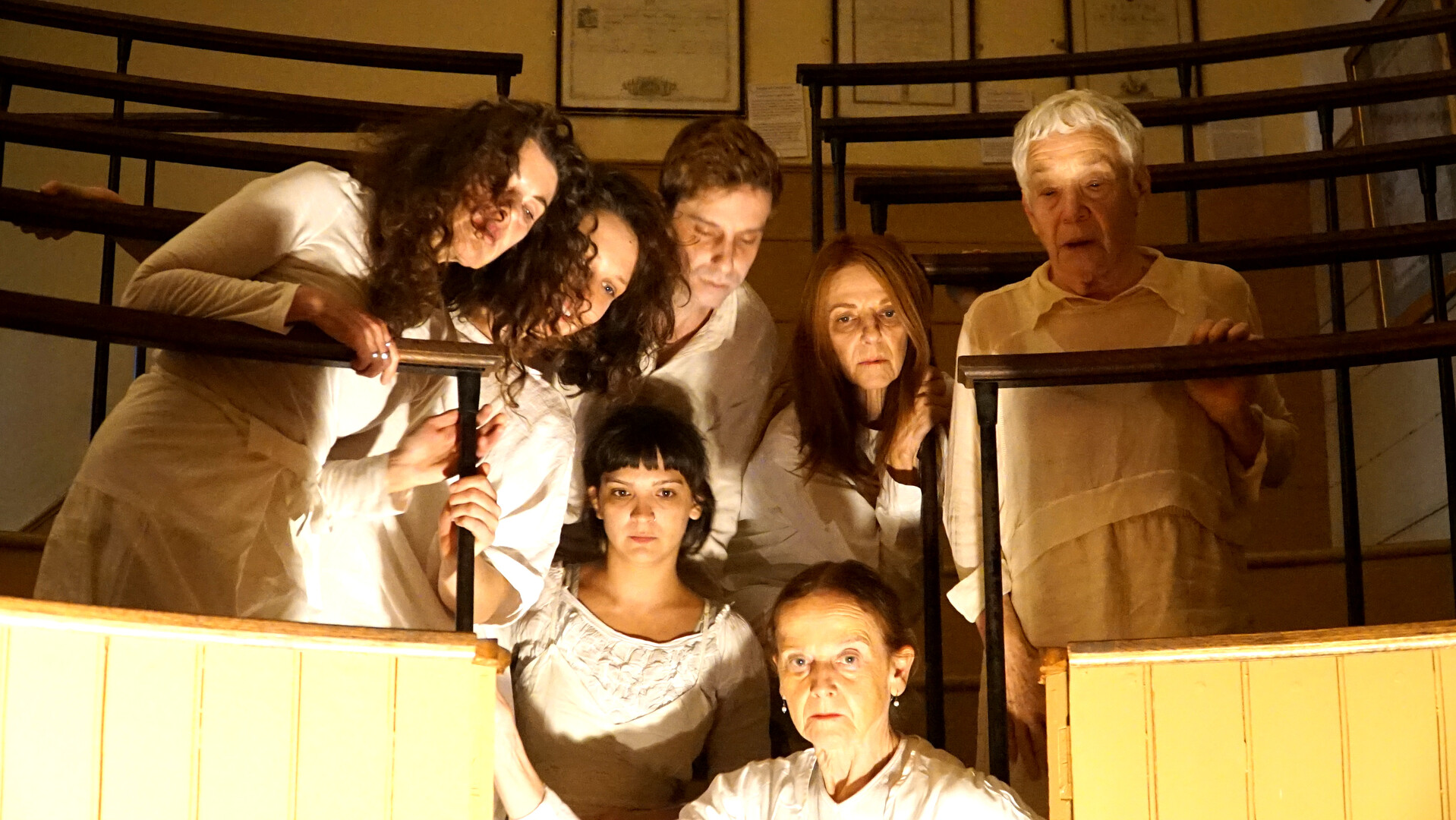
South Plug presents “Latitudes”, a documentary series that follows the lives of 5 artists from the Latin electronic music scene and Chile as country of origin. From different cities around the world and under their own gaze or lens, we follow them through an intimate journey through their lives. A tribute to the human spirit and its ability to adapt, a window into the reality of an artist.

https://southplug.com/en/south-plug-presents-latitudes/

Get to know the filmmaker:

1. What motivated you to make this film?
The motivation comes from the desire to learn more deeply about people’s inspirations, their creative worlds and realities. It seems to me that each character has a thousand and one things to tell, as well as each story and its possibilities.

2. From the idea to the finished product, how long did it take for you to make this film?
This project was financed and supported by Chile’s National Fund for Cultural Development and the Arts, and was ready to be produced in 2020, just when the pandemic arrived. So, of course, it has taken a while, 3-4 years, but more than anything it has been to understand, both on our side and that of the distributors, that this new reality presented an opportunity worth exploring.

3. How would you describe your film in two words!?
Artist Reality

4. What was the biggest obstacle you faced in completing this film?
Directing, possibly it was to achieve a fluid communication with each artist. Each line of conversation had its times and forms, which required a lot of order, firmness and empathy.
From the production side, gaining access to the distributor so that what was agreed upon could be fulfilled, looking for ways that suited both parties.

5. What were your initial reactions when watching the audience talking about your film in the feedback video?
It feels great to see that your work has been reviewed and commented on by others. I think that makes it all worthwhile.

6. When did you realize that you wanted to make films?
It has always been in me, to record and itnerés for lives, people. I guess it all became more serious about 10 years ago when I got more deeply into the art scene.

7. What film have you seen the most in your life?
It’s probably somewhere in between The Big Lebowski, Groundhog Day

8. What is your favorite meal?
Smalahove

9. What is next for you? A new film?
That’s right, working on a script for a dramatic fiction series (with some reality), a music video and always under the arm, documentary projects.

Filmmaker William Thibodeau (MORNING ROUTINE)

MORNING ROUTINE, 2min., Canada
Directed by William Thibodeau
Inspired by the epic true story. After sleeping in, Jack must go through his morning routine before it’s too late…

Get to know the filmmaker:

1. What motivated you to make this film?

I wanted to turn something seemingly boring into something exciting. We are all in a rush during our morning routine and I wanted to depict it in the most epic way possible.

2. From the idea to the finished product, how long did it take for you to make this film?

I had the idea when I was studying filmmaking back in 2022. Originally, I wanted to make a short to practice different camera techniques and had everything planned on that same year. But as school projects piled up, we were unable to do it then. But as time went on, this idea couldn’t leave my mind. I then asked different people I met on different film sets to help me make this film. From the idea to the finished product, it took about 2 years.

3. How would you describe your film in two words!?

Ridiculous and Relatable

4. What was the biggest obstacle you faced in completing this film?

Time. We had one day to shoot this film. The problem was that we were filming during wintertime, when the days were shorter, and we needed sunlight for most of our scenes.

5. What were your initial reactions when watching the audience talking about your film in the feedback video?

I was blown away by the extremely positive feedback. When I saw the feedback video, I had just learned that the film had won a prize and I cannot express the joy, the pride and the excitement I was feeling at the moment.

6. When did you realize that you wanted to make films?

Oof, that’s a hard one. I realized I wanted to work in the film industry when I was a kid, I’d say around 8 or 9 years old. I wanted to be an actor back then and I worked on a few sets as an extra. I took a break for years and realized in 2018 (I was 15 then) that I wanted to actually create the films.

7. What film have you seen the most in your life?

The Simpsons movie, it was a favorite in my family when I was a child. On long trips, me and my sister would watch it together.

8. What other elements of the festival experience can we and other festivals implement to satisfy you and help you further your filmmaking career?

I do not know what more your festival can do. You are helping to promote our films; you are helping us network with other filmmakers and to top it off you are also giving us feedback.

I believe that more festivals should provide feedback. In my opinion, feedback is what helps us understanding our mistakes and helps us improve as filmmakers.

9. You submitted to the festival via FilmFreeway. How has your experiences been working on the festival platform site?

So far, my experience with FilmFreeway has been good. The user’s interface is good, and I love the different filters they have while researching festivals. I also love how you can see in real-time the submission status of your projects.

10. What is your favorite meal?

Chicken wings and fries

11. What is next for you? A new film?

Excellent question. I do have a lot of project ideas that I am currently in the writing phase. I have an anthology series I would like to get started on, perhaps I’ll produce a pilot. But I have no idea on when I would be doing it since I work full-time as a crew member on film sets.

Filmmaker Christian Sweeney (DISSONANCE)

DISSONANCE, 8min,. Canada
Directed by Christian Sweeney
Caught stealing from her family’s safe, Marsha is confronted about her drug addiction.

http://www.sweeneyperspective.com/
https://instagram.com/sweeneyperspective

Get to know the filmmaker:

1. What motivated you to make this film?

I have personally struggled and have grown up around people who have struggled with substance abuse. Although I am not the most public about these details, I wanted to create something that acted as a testament to those who stood by me in my worst. With this film I wanted to highlight the strength required to care for someone with substance abuse, and remind an audience that they are not alone and to never take their support for granted.

2. From the idea to the finished product, how long did it take for you to make this film?

This script took about two years to write, going through over seven drafts. We shot it in two day’s with an incredible team. Post-Production took about two month’s to finalize this piece.

3. How would you describe your film in two words!?

Purposefully unconditional. A kind of love and support that stretches beyond our instincts but requires dedication and continuous effort.

4. What was the biggest obstacle you faced in completing this film?

In my past films I find I have always struggled to create a genuine and believable performance from my actors. This was something that I had put extra emphasis on while directing by being intimate with the actors and sharing my own experiences within the context of this script. It was definitely a change of pace for me as a commercial director to be vulnerable and give my actors room to explore their own understanding of the story. I feel this approach will lead the foundations to which I base the remainder of my creative projects. After all, directing is a collaboration between my vision and my actor’s presence and feelings within a scene. Through the creation of this film I have fallen in love with allowing my actors the space to bring their own vision to set.

5. What were your initial reactions when watching the audience talking about your film in the feedback video?

I found it extremely valuable to not only hear about the technical aspects that made up my film but further hear people relate and break down the physical dynamics that underlay it. I am extremely grateful for this deeper understanding of my film that was perceived by the audience and am glad to know the intention of playing with a long history between my two characters was felt.

6. When did you realize that you wanted to make films?

My whole life I have messed around with cameras however it wasn’t until 16 years old in my high school drama class that I realized this could be a viable career path. I fell in love with using my camera to tell stories from my perspective and I have never stopped since. Studying film at York University has only strengthened this continued belief in myself to trust in my creativity and continuously use it as an outlet for exploration.

7. What film have you seen the most in your life?

I have watched Galder Gaztelu-Urrutia’s The Platform (2019) more times than I can count. I love the film’s use of foreshadowing, pacing, and the larger than life effect that was created with such a limited space and budget. I admire the production team’s innovations in this sense and have always strived to create more with less.

8. What other elements of the festival experience can we and other festivals implement to satisfy you and help you further your filmmaking career?

I believe offering a public in person screening would be very valuable to a lot of filmmakers who aren’t so lucky to ever witness a live reaction to their film. While Wild Sound provides this with feedback which is undeniably valuable, I think there is always a sense of achievement when hearing an audience’s reaction live whether this be laughs, crys, sighs, etc.

9. You submitted to the festival via FilmFreeway. How has your experiences been working on the festival platform site?

So far so good! Although each festival has very different rules that can sometimes be conflicting, I believe having a universal platform for all festival submissions makes it a very inviting experience.

10. What is your favorite meal?

Penne alla Vodka is by far my top dish. I am an Italian after all, haha.

11. What is next for you? A new film?

I am currently writing a script for another 10-15 minute short film coming to festivals hopefully next summer! It is my final film at York University and I am going all out. Although still in its early stages of the script, we go to camera in late October!

Filmmaker Brandon Forgione (THE PUNISHER: NIGHTMARE)

THE PUNISHER: NIGHTMARE, 96min., USA
Directed by Brandon Forgione, Rahi Raval
After two years of trying to find solace, former vigilante Frank Castle, known as the Punisher, is forced back into action when his past is violently unearthed. Abandoning his quest for peace, he confronts a relentless war and battles the formidable demons that dwell within him.

https://www.instagram.com/punisher.nightmare.fanfilm/
https://www.facebook.com/brandon.forgione.1

Get to know filmmaker Brandon Forgione:

1. What motivated you to make this film?
I’ve always been deeply drawn to the character of Frank Castle since childhood, captivated by his complexities and moral struggles in the comics. Over the years, I’ve felt saddened by how this character hasn’t received the nuanced attention he deserves, often dismissed as overly violent. We aimed to create a fresh, emotional take on Frank Castle, humanizing him in a profound way. Our story places him in a world where he’s grappling with faith, feeling undeserving and lost. We wanted to craft a narrative that not only redefines him but also prompts viewers to reflect on themes of life and faith.

2. From the idea to the finished product, how long did it take for you to make this film?
The entire process, from conceptualization to the final cut, took about two years.

3. How would you describe your film in two words?
Emotionally Intense.

4. What was the biggest obstacle you faced in completing this film?
The most challenging aspect was working with a skeleton crew. Often, it was just the two of us handling everything, from moving gear to setting up shots. This made the stunt sequences particularly difficult, especially when filming on icy rooftops or in sketchy areas for fight scenes. Coordinating a car chase without permits while maintaining safety added to the complexity. Despite these hurdles, our passion and determination kept us going.

5. What were your initial reactions when watching the audience talking about your film in the feedback video?
I was overwhelmed with joy and excitement. As an artist, you often doubt whether your work will resonate after spending so much time on it. Hearing such positive feedback was incredibly validating and felt like music to my ears.

6. When did you realize that you wanted to make films?
My interest in filmmaking sparked during childhood, inspired by my dad’s home movies of family gatherings, events, and vacations. Those early experiences ignited my passion for storytelling through film.

7. What film have you seen the most in your life?
The 2002 Spider-Man movie. Watching it as a young kid profoundly impacted me and ignited my passion for filmmaking. It continues to inspire me every time I watch it.

8. What other elements of the festival experience can we and other festivals implement to satisfy you and help you further your filmmaking career?
Festivals could provide more opportunities for networking and collaboration among filmmakers, as well as workshops and panels that focus on various aspects of filmmaking and distribution. Greater access to industry professionals and mentors would also be invaluable.

9. You submitted to the festival via FilmFreeway. How has your experience been working on the festival platform site?
My experience with FilmFreeway has been very positive. The platform is user-friendly and has made the submission process straightforward and efficient.

10. What is your favorite meal?
Chicken enchiladas.

11. What is next for you? A new film?
I’m taking a short break to gain some perspective on my next steps. Filmmaking is in my blood and always will be, but I’m currently trusting in the right timing to start a new project.

Filmmaker Bethany Taylor-Goh (THE INTERVIEW)

THE INTERVIEW, 4min., UK
Directed by Bethany Taylor-Goh
Theo, a young man thrust into a surreal job interview, grapples with unsettling questions that peel back layers of his conscience. As the interview progresses, Theo confronts the harrowing truth of his past deeds, leading to a chilling revelation that challenges his perception of reality.

http://www.corryraymond.com/
https://www.instagram.com/coraymon/
https://twitter.com/corayfilm

Get to know the filmmaker:

1. What motivated you to make this film?
Some of my favourite pieces of work are those which create moral ambiguity, and those which leave you thinking. The aim of this short was to do just that, on the backdrop of the bigger questions about the afterlife, the ‘criteria’ for redemption, and how we measure remorse. I’ve always been interested in how human behaviour is influenced by these beliefs. I don’t think it’s ever a bad time to reflect on your actions, but the socio-political backdrop at the time in which we were making the film definitely influenced these themes.

2. From the idea to the finished product, how long did it take for you to make this film?
Four days! We had the incredible experience of creating a series of short films at Collective Acting Studio in London, where the cast, crew, and I all attend. This film is one of four shorts created during a ‘Short Film Project’ module, led by our producer, Corry Raymond. After being guided through the process of structuring a short film, we were given a couple of hours to develop and then pitch our ideas. I wrote the script that evening, and re-drafted and cast it the following day. We then spent half a day shooting and one day editing!

3. How would you describe your film in two words!?
Disquieting, Moralistic

4. What was the biggest obstacle you faced in completing this film?
We worked with no budget, extremely limited time, and location options restricted to our (beautiful) school building. But, the obstacles are always the path. These informed my design of the narrative to unfold predominately in one space – which itself is a single wall, cheated to look like an entire room. Creative constraints always breed resourcefulness too – for our car crash scene, all we needed was some fake blood and glass, lighting, and the audience’s imagination (and of course our actors’ willingness to lie on the cold, wet streets of London). Knowing how tight our limits were on this film made the final product that much more satisfying.

5. What were your initial reactions when watching the audience talking about your film in the feedback video?
I was shocked to see how many different interpretations there were of the film! It was incredibly satisfying to see that the open and ambiguous elements had the desired effect, and sparked such a range of reactions.

6. When did you realize that you wanted to make films?
I think I always knew I did – but it wasn’t until this year that I gave myself the licence to. Though I’ve always had stories, music scores, and scenes playing out in my head, it wasn’t until this film that I was able to watch something I’d visualised so clearly in my mind materialise in front of me. It’s an indescribable experience, and one I’m going to keep chasing.

7. What film have you seen the most in your life?
Probably Interstellar. Every time I even flick through channels and see it playing, that’s me glued to the screen for the next 3 hours.

8. What other elements of the festival experience can we and other festivals implement to satisfy you and help you further your filmmaking career?
It would be amazing to have had a written blog version of the audience reviews!

9. You submitted to the festival via FilmFreeway. How has your experiences been working on the festival platform site?
Overall it was a positive experience, especially with how overwhelming it can be with the sheer amount of festivals there are to apply to.

10. What is your favorite meal?
If Dim Sum’s involved, I’m there!

11. What is next for you? A new film?
I’m currently producing, co-directing, and acting in a TV Pilot, written and executive produced by Corry Raymond. I’m also in an upcoming performance of the play The Suicide (Suhayla El-Bushra) directed by Daniel Bailey, which will be showing at our Studio in July, and am working on a couple of new short film ideas.

Short Film Review: BRAINLAND. Directed by Chiara D’Anna

In 1935 Egas Moniz, renowned Portuguese neurologist, visit psychiatrist Sobral Cid in order to persuade him allow his patients to be act as subjects for Moniz’s experiemntal treatment – frontal leucotomy. After some resistance Cid agrees. The first such operation is staged, but Moniz’s exhaltation is cut short by an attempt on his life. This self-contained chamber opera is actually scene 7 from a longer opera of the same name that tells three stories from the history of 20th century brain science (rather than a screenplay we worked with a libretto). it was filmed very quickly with little resources and involved professional and non-professional cast & crew.

The music is by Stephen Brown.

https://www.brainlandtheopera.co.uk/

Review by Victoria Angelique:

‘The historical short film, BRAINLAND, is a creative way to depict the origin of the use of brain surgery for people suffering from mental illness. Neurologist Egas Moniz has his story told as opera, sung rather than spoken. The operatic lyrics (this is subtitled) take us through a disagreements between Moniz and psychiatrist, Cid, whose patients he needs to test his experimental treatment. This is a rare time where a musical makes sense for the characters to sing, rather than just making an operatic film where the audience has to submerge themselves into a world other than our own. 

The use of one room, a surgical theater, helps depict the control that Moniz implemented on the patients. It allows for tall shadows to dance on the walls, giving an eerie feeling that something is going to go wrong. The dark yellow color contrasts against the white wardrobe and surgical blood. The only question left unanswered is, how did a patient get a gun into the controlled setting as a psychiatric patient that is implied to have been institutionalized. 

BRAINLAND, directed by Chiara D’Anna, is a cinematic masterpiece that goes to a moment in history when 1949 Nobel Prize Winner for Medicine, Egan Moniz, first conducted his psychosurgical experiments in 1935. He survived being shot by a patient but remains a controversial figure.’

Feature Film Review: UNTYPICAL. Directed by Michael Jimmy DUPRET

The documentary is cameos of five neurodivergent adults who are witnessing the radical changes happening by being more and more in touch with their neurodiversity. Atypical adults in Europe are often undiagnosed and having to mask their whole lives. They face discrimination in their professional lives and often struggle with low self-esteem and feel worthless. Through their journeys they will see their neurodiversity not as a deficit or dysfunction but as a distinctive cognitive style, with its own strengths and benefits. An estimated 20 percent of the world’s population are thought to be neuroatypical.

Review by Andie Karvelis:

Neurodivergent. It’s an important word and one we should all familiarize ourselves with. This stunning documentary chronicles the lives and struggles of five amazing neurodivergent adults as they find their path and their confidence in a neurotypical world.

Writer Marion Vagner came up with the concept to do this documentary and it is educational, heartfelt and beautifully emotional. Director Michael Jimmy Dupret did an amazing job bringing this vision to life and allowing the audience to get to know each individual. It also helps the viewer understand the finer points of Dyspraxia, Tourette’s Syndrome, ADHD, Autism, and HIP.

Personally, I consider myself lucky because I have a cousin who is neurodivergent and I’ve spent so much of my life around him. Quite frankly, he is one of the most beautiful souls I have ever met and my life is richer because I know him. That’s why I’m lucky. To me, he is just a person like any other, but I know much of the neurotypical world reacts differently. It was gut wrenching to listen to the experiences that each person endured and wonderful to see them accepted for who they are by friends and family.


From a technical standpoint, the cinematography in this documentary was exceptional. Colors, lighting and certain camera angles that were chosen were all stunning. Pierre Dumoulin created a score that complimented this film so well. The entire documentary was not only visually stunning but emotionally moving.

Thank you for making such an important film.

Short Film Review: POET. Directed by Mofei Wei, Yang Sun

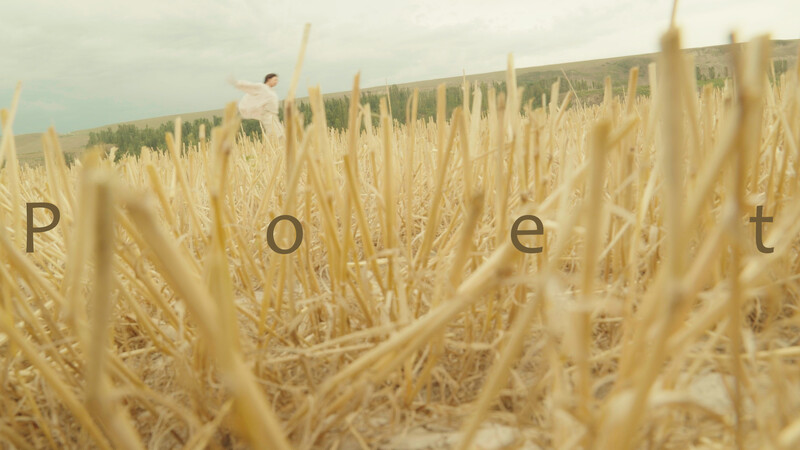
“Poet” is a dance film inspired by Chinese poet Yu Xiuhua, a rural woman with cerebral palsy, who recently became famous in China. Many started to know her works from her audacious Poem “Crossing Half of China to Sleep with You”. Living in a conservative rural village in southern China where prejudice against women, disability, and divorce are high, she managed to break free from an unwanted marriage and live her life as a writer despite the satirical voices around.

Review by Parker Jesse Chase

“Poet,” is a visual exploration inspired by the life and work of Chinese poet Yu Xiuhua. Known
for her bold and audacious poem “Crossing Half of China to Sleep with You,” Yu Xiuhua’s story
is one of resilience and triumph over societal prejudice. Living in a conservative rural village, our
leading lady breaks free from an unwanted marriage and pursues her passion for writing despite
the challenges posed by her disability and societal expectations.


The film begins with a striking black-and-white series of special insert b-roll shots. These close-ups—feet moving, a bundle of sticks, serene landscapes, wheat fields, and trains—set an intimate and contemplative tone. The inclusion of mundane objects like a mop across the floor juxtaposed with nature and movement creates imagery immediately drawing the viewer in.

As the scene shifts amidst the atmosphere of the company inside the train, we see the dancer amidst a group of passengers. In the confined space between two train carts, the dancer’s movements mimic the accelerating pace of the train, a metaphor for the poet’s journey and the momentum of her life. The choreography is tight, the movements deliberate, capturing the intensity and urgency of breaking free from societal constraints.


The transition to an open field is a pivotal moment in the film. Here, the pace slows, reflecting a shift to a more serene and introspective state. The night sounds—whistles and rustling—underscore the dancer’s movements, which now emulate the gentleness of the wind.

This segment beautifully contrasts the previous scenes, offering a sense of calm and freedom. The introduction of color marks a significant transformation in the narrative. A close-up of an insect and the accompanying rattling buzz symbolize the vibrancy and complexity of life. The dancer, now in a wheat field, moves with a sense of liberation, fluttering arms like a bird in flight. The sight of an actual bird passing overhead reinforces the theme of freedom and connection with nature.


The scene where the dancer cradles a haystack exudes joy and peace, capturing a moment of pure, carefree interaction with the natural world. The transition from the frenetic energy of the train to the tranquil beauty of the open field mirrors the journey from struggle to emancipation. The actor’s performance is exceptional, maintaining a dynamic pace through the dance transitions. The choreography effectively narrates the arc from the mechanical movements of the train, through the darkness of night, to the brightness of a new day. The dancer’s white attire likely symbolizes a new beginning, emphasizing themes of rebirth and renewal as color infuses the film in its latter part.


“Poet” is a moving homage to Yu Xiuhua’s work. Through its evocative imagery and dance sequences, the film not only celebrates her life and work, but also offers a universal message of hope and resilience.

Filmmaker Clara ZÄNGERLIN (ARACHNE)

ARACHNE, 4min,. France
Directed by Clara ZÄNGERLIN
Arachné is a famous weaver. One evening, as she thinks of a negative review of her work, her questions and anxieties appear in the form of a double spider that she fights throughout the night.

https://instagram.com/alfhilde

Get to know the filmmaker:

1. What motivated you to make this film?
I always liked fantasy, and I wanted to explore the psychology and fragility of a character. At school, I’d heard about the myth of Arachne. In ancient Greece, she was a famous weaver who was transformed by a goddess because of the pride she took in the success of her art. This story interested me because of the relationship between the artist, their art and the gaze of others. I also decided to adapt it to the 17th century, because it was the golden age of tapestry in Europe, and it’s an era with an aesthetic that I love.

2. From the idea to the finished product, how long did it take for you to make this film?
The film was a graduation film first, so it took me about a school year, a little more, to make the film. I started the film in September 2022 and finished it in January 2024.

3. How would you describe your film in two words!?
I would say insecurities and art.

4. What was the biggest obstacle you faced in completing this film?
The biggest obstacle was having to make the film alone. This was a choice made by my school. But I realized that it was many roles to manage at the same time: I had to be my art director, my background designer, my character designer, my 2D animator and the person managing exchanges with the voice actors and the composer, all at the same time. Fortunately, towards the end of production, some friends helped me with the clean of the animations.

5. What were your initial reactions when watching the audience talking about your film in the feedback video?
I think, at first I was a bit afraid of critics like Arachne. But right away, I was very pleased to find out what viewers thought of the film: what had caught their attention in the film and how they understood it. I would like to thank people who complimented the music choice. The composer, besides Bach, is Gorkem Agar, a talented Turkish composer who lives in France. About the color palette, it took time to figure out colors according to the story.

6. When did you realize that you wanted to make films?
I’ve always loved telling stories. It wasn’t long before my love of storytelling turned to drawing. So naturally, I decided I wanted to tell stories through moving pictures.

7. What film have you seen the most in your life?
The film I’ve seen the most is Across the SpiderVerse, which came out last year. I had a bit of an obsession with it and went to see it 4 times in the cinema.What I appreciated most was the film’s graphic richness, with varying artistic styles that correspond to different characters and yet find a way to work together.

8. What other elements of the festival experience can we and other festivals implement to satisfy you and help you further your filmmaking career?
It was great to hear all the positive reviews. I’m grateful for that. However, I think it would be good to help the filmmakers if people also brought up how they could have done things differently, without going into gratuitous nastiness of course.

9. You submitted to the festival via FilmFreeway. How has your experiences been working on the festival platform site?
I think the site is very well designed for updating the status of an application via the platform or the site.

10. What is next for you? A new film?
I would love to make new films, but this time as part of a team. We are already talking with some friends about animated shorts we would like to make as soon as possible.