Filmmaker Justin Walker (AUDITORY)

AUDITORY, 2min., USA
Directed by Justin Walker
A young girl begins to experience auditory hallucinations ‘hearing voices’ impacting her life

Get to know the filmmaker:

1. What motivated you to make this film?

I work for NHS (United Kingdom) within Mental Health services, I work for the Early Intervention Team which is a service that supports individuals experiencing symptoms of psychosis; Auditory or visual hallcinations. My two passions are film and my career within mental health services; I wanted to create a short that attempted display how these symptoms effect a person and their lives, hopefully creating more understanding and awareness of mental illness.

2. From the idea to the finished product, how long did it take for you to make this film?

Well you may be surprised or shocked that it only took a day to film (hack filmmaker right!) I had the idea in mind for sometime, randomly one day myself and my daughter Islien went out and shot footage, unscripted I may add. The editing process took a little longer, perhaps a week of cutting, recutting and sound mixing, until we had the final cut, very Roger Corman I guess 🤣

3. How would you describe your film in two words!?

Powerfully relatable

4. What was the biggest obstacle you faced in completing this film?

Time, attempting to find the time between work-life and family life; Islien (daughter) has been revising and sitting some mock exams in high school, so finding time was difficult…. perhaps this explains the one day shoot for the entire film.

5. What were your initial reactions when watching the audience talking about your film in the feedback video?

I have to admit I was apprehensive prior and during the feedback video, this did dissipate afterwards and it was a wonderful feeling to receive such positive feedback about my film, I re-watched it again a few more times to totally enjoy the experience….. strangely I did expect some negative or should I say some constructive critical feedback too.

6. When did you realize that you wanted to make films?

Well film, movies have been a huge part of my life since being a child, my uncle Colin had a vast VHS collection, I think my passion for all things film was definitely influenced by my Uncle. I can still recall watching my first film at the cinema/theater back in 86/87….Transformers the Movie. When I turned 16 I was expelled from high school here in the UK, I left with no qualifications. A career advisor quickly dismissed my ambition of becoming a filmmaker; feeling deflated my parents gave much encouragement and stated ‘make it happen’ a week or 2 later my parents presented me with a camcorder, my creative journey began. I do have to empathize by my early 20’s my life, my aspirations had changed and it wasn’t until 2020 and the Pandemic (covid19) that I again began being creative and producing short films.

7. What film have you seen the most in your life?

That’s my favourite film of all time….Jaws, both my parents went to see Jaws in the theater back in 75, my dad introduced me to Jaws at around 8 years old, Spielberg’s visuals, the suspenseful and tense story he crafted combined with Williams score has had a profound impact on me, in my humble opinion Jaws is one of cinema’s greatest films.

8. What other elements of the festival experience can we and other festivals implement to satisfy you and help you further your filmmaking career?

I feel the package you offer and my experience has been outstanding. While online festivals are massively important and do give filmmakers greater opportunities I am a fan of practical film festivals, so more opportunities for practical festivals or perhaps more streaming of live events, interactive festivals with the opportunity to meet and network with fellow filmmakers, producers, writers etc.

9. You submitted to the festival via FilmFreeway. How has your experiences been working on the festival platform site?

Overall my experience has been fairly positive, it’s a great feeling receiving the confirmation your film has been selected. I have learned and accepted the rejection, not having your film selected (which has happened more than getting selected) it’s important to understand it’s not personal and it’s part of ‘putting’ your film out there.

10. What is your favorite meal?

Well that’s an English Roast Dinner, which here in the UK is also called a Sunday Dinner.

11. What is next for you? A new film?

High Plains Dreamer is my new short (completed) the film is a homage to the Western genre and follows a young girl who rejects the modern world, she longs for the old west and to be a cowgirl.

Tags
Actor/Producer/Writer Oliver de la Harpe (PARROT)

1. What motivated you to make this film?

Covid is the short answer. Charles (co-writer) and I were isolated across continents and in many FaceTime conversations we finally started to commit to a film project we had been talking about for a few years. It lived mainly as a script we would work on until Charles showed it to our director Cameron for notes. To which he signed on immediately and said he wanted to shoot. From there the only question was when.

2. From the idea to the finished product, how long did it take for you to make this film?

It took about four years. But that was mainly orchestrating a shoot across two continents with a global pandemic happening around us. The best part about that was we had plenty of time to refine the script and get it as comedically tight as possible. Removing any unnecessary expenses, jokes and in some cases characters. The shooting to edit part of the film took the shortest amount of time as our director and editor shared pretty much what we had in mind before filming began. 

3. How would you describe your film in two words!?

Chaotic fun

4. What was the biggest obstacle you faced in completing this film?

Heat stroke. We filmed in Vancouver in the summer and decided to film a month before the heat dome that hit the year before… nature didn’t abide by our planning so it hit us with a heat dome when we filmed and the entire set turned into a furnace. Our director and assistant director suffered heat stroke in the middle of the shoot. 

5. What were your initial reactions when watching the audience talking about your film in the feedback video?

Surreal more than anything. We got used to having constant feedback from people we recognise and are in constant communication with so to hear kind words from complete strangers was really surreal. 

6. When did you realize that you wanted to make films?

Ever since I was a child. I was a big fan of Lord if the Rings growing up. And when the extended editions came out I would watch the appendices and fell in love with the art of film making as well as film itself. 

7. What film have you seen the most in your life?

Lord of the Rings. I don’t know which one specifically as I always have to watch the complete series. 

8. What other elements of the festival experience can we and other festivals implement to satisfy you and help you further your filmmaking career

A discord server could be fun. That way different creatives could get together. And if they happen to be in the same city could partner up for creating films and even sharing notes on scripts. 

9. You submitted to the festival via FilmFreeway. How has your experiences been working on the festival platform site?

It’s been great. It’s very user friendly and doesn’t make it too hard to navigate round especially when trying to search for comedy specific festivals. 

10. What is your favorite meal?

I love a good carbonara. You can never go wrong with that. 

11. What is next for you? A new film?

We’re currently taking this short and trying to pitch it as a sit com for Canadian television. But we also have a few plays and some horror shorts in the works that we are very excited to put on in front of an audience. 

Filmmaker Richard Thompson (M0D3RN T1M3Z)

M0D3RN T1M3Z, 30 seconds, USA
Directed by Richard Thompson
A machine comes to life in a 3D animation short inspired by Charlie Chaplin.

https://www.instagram.com/r_crosbythompson

Get to know the filmmaker:

1. What motivated you to make this film?

I wanted to use it as a teaching tool. I teach digital design with a specific focus on bringing virtual characters to life and visual storytelling through animation. I created an assignment where students had to design a non-humanoid machine that first had to move as if it were only a machine but comes alive with cause. As a class, we could then discuss the differences in the type of movement needed to convey that change from machine to living creature. Two main characteristics defining living creatures are movement with intent and responding to environmental stimuli. The other thing I wanted my students to focus on was only creating the objects needed to tell their story — that is the reason for the lack of any environment. I wanted to emphasize the importance of story and creating an empathetic link — not spending weeks creating an environment that would likely make little difference to their story (only much time-consuming work). For the machine-like animation, I drew inspiration from Charlie Chaplin’s turn as an animatronic in The Circus. I always do the assignment myself before giving it to my students. I also record tutorial videos that support their learning and process when they get to do it. Once I had created the animation, I showed it to a few people and it always got a strong reaction even though there was no sound at the time. This made me think about submitting it to film festivals. I asked my oldest son — who is in the film industry — if he would add sound. I started to submit the film and have been a little blown away by the reception it has received.

2. From the idea to the finished product, how long did it take for you to make this film?

This is a tough one to answer because I do not take note of the time while creating. Also, I had previously built some of the assets for previous tutorials. But a rough estimate might be one month.

3. How would you describe your film in two words!?

Coming alive.

Aside: I love this question. I recommend it for any creative brief!

4. What was the biggest obstacle you faced in completing this film?

Animating the moments when the machine is “just” a machine. It started to drive me crazy because I so wanted to add character and attitude — it’s more fun! At one point, I could not bear it any longer and added anticipation (one of the 12 Principles of Animation) to the wrist movement when the machine first throws the can into the garbage can. However, it was a fascinating learning moment. As soon as I added it, the machine appeared to have an “attitude” and therefore “be alive” and “thinking”. It defeated the purpose of what I was trying to demonstrate — a clear-cut moment when the machine comes alive. So I got rid of that small bit — “kill your babies” as the expression goes.

5. What were your initial reactions when watching the audience talking about your film in the feedback video?

Truly thrilled. Their comments were insightful and extremely validating because they hit on everything I try to teach my students.

6. When did you realize that you wanted to make films?

I had a previous career as a professional actor and playwright and over 35 years of creative and collaborative arts industry experience. I have also always loved film. However, the last 20+ years have been focused on teaching and developing degree programs. This is the very first animated short film I have submitted to festivals. I plan to do more.

7. What film have you seen the most in your life?

Maybe The Spy Who Loved Me (James Bond). I was a kid and I saw that in the movie theaters three times in the space of a month. Other than that, it’s tough to know. I have seen Deer Hunter, Airplane, About a Boy, The Bridge on the River Kwai, Oliver!, Toy Story, The Matador, Star Wars, Lord of the Rings, and Midnight Run many times. I am sure I am forgetting many though… When you are a parent, it is such a joy to share movies you have enjoyed with your kids.

8. What other elements of the festival experience can we and other festivals implement to satisfy you and help you further your filmmaking career?

Not sure — particularly since I am fairly new to this process. I think what you all do is wonderful — the feedback, the communication, these interview questions, etc. I do not want to focus on a negative but I have learned that one has to do some due diligence when submitting, and ensure you are not being “scammed”. Obviously, this is not the case with the Under 5 Minute Festival. There are things I do and check up on. However, I wish there was a clear way of determining the legitimacy of all festivals.

9. You submitted to the festival via FilmFreeway. How have your experiences been working on the festival platform site?

Good question and it connects a little to my answer above. It is amazingly convenient to have everything in one place. However, I have read that they do not do quite enough in terms of confirming the legitimacy of all festivals. That is a concern.

10. What is your favorite meal?

If I were on a deserted island and could only eat one type of food, it would be Italian. However, if I had to choose a last meal — probably steak tartare (and, yes, I know that’s raw!).

11. What is next for you? A new film?

Yes. I am working on a slightly more complex animated short film called Smior, about a Viking who finds that his life is not fulfilled by constant pillaging, even though he is amassing great treasure. I have other projects connected to Charlie Chaplin and a much larger animation project called La Piazza about a gelato salesman who battles the forces of change. Many of the assets have been created for this, but it probably requires more than just one person to complete.

Filmmaker Karin Isabelle Ochsner (SURVIVING TO THRIVING)

SURVIVING TO THRIVING, 106min., Australia
Directed by Karin Isabelle Ochsner
As a fearless explorer with a disability, surfer and surf coach Karin Ochsner immerses herself in the raw beauty of nature. Her remarkable healing journey unfolds in the face of adversity.

http://www.surfingtosurvive.com/film2
https://www.instagram.com/surfingtosurvive/

Get to know the filmmaker:

1. What motivated you to make this film?

This film is the sequel to a documentary about my health challenge, which has been organised by my friends. The purpose was to help me in my incredibly difficult struggles to survive with my countless severe allergies. During the filming, I was very sick and wasn’t able to put the messages in the documentary which I really wanted to pass on, hence I decided to do a second one to do so. The first documentary gave me so much support from my community and clarity in how to manage my disability, it improved my situation so much that I then could focus on filming my own story.

2. From the idea to the finished product, how long did it take for you to make this film?

Approximately 5 years

3. How would you describe your film in two words!?

Deep truth

4. What was the biggest obstacle you faced in completing this film?

To find a camera person at the time where the surf and weather conditions lined up with my health to be able to perform enough to capture interesting surf footage

5. What were your initial reactions when watching the audience talking about your film in the feedback video?

Extremely satisfied and bubbly. I felt this showed me so beautifully that I had achieved my life goal.

6. When did you realize that you wanted to make films?

When I deeply enjoyed working on this film.

7. What film have you seen the most in your life?

Red dog (I don’t have a TV or cannot go to the movies due to my allergies in dark spaces, but when traveling on long distance buses, they keep showing the same films again every year.)

8. What other elements of the festival experience can we and other festivals implement to satisfy you and help you further your filmmaking career?

I feel you did an amazing job with all your offers and I don’t feel experienced enough to make a good suggestion at this stage.

9. You submitted to the festival via FilmFreeway. How has your experiences been working on the festival platform site?

FilmFreeway seems fantastic for what I use it for.

10. What is your favorite meal?

Cassava with tigernuts (due to severe allergies, I mainly eat rare superfoods)

11. What is next for you? A new film?

Realising a business which sets me up

As a motivational speaker, traveling along the coast to different organisations with people facing challenges and schools, showing my films, followed by Q&A and workshops I will lead. I also would like making short films on smaller film topics but in line with SURVIVING TO THRIVING, including what we had to shorten out of the documentary. For example one about the ‘health part’ and one about the ‘outdoor/nature’ part.

Filmmaker Andrew Wakeman Proctor (LOST DREAMS)

LOST DREAMS, 10min., USA
Directed by Andrew Wakeman Proctor
Lost Dreams is about dreams. Scientists have not fully figured out dreams. The ancients believed you could predict the future through your dreams, Native Americans created dream-capturing devices. Some people keep dream diaries. Freud believed that we could fix people’s psychological problems by analyzing their dreams.

https://www.imdb.com/title/tt32021226/?ref_=ttawd_rvi_tt_i_4

Get to know the filmmaker:

1. What motivated you to make this film?

I took an experimental film class at Connecticut College. We studied the works of Maya Dern and Stan Brackage. I was inspired by Anticipation of the Night by Stan Brackage. In the fall of 2009 I received an email inviting me to submit a film to an Experimental film festival in Switzerland. My friend John Prevedini sent me his music “Lost Days” and it inspired “Lost Dreams”.

2 .From Idea to finish product how long did it take for you to make this film?

15 years off and on. I first started in late 2009. Then I worked on it off and on through the years. In 2020 I started working on the film seriously again and then in 2022 I got inspired to finish it.

3. How would you describe your film in two words?
Unconscious communication

4. What was the biggest obstacle you faced completing this film?

Creating a structure which made sense, a structure with a beginning, middle and an end, because at first it had a good middle and somewhat of an end.

5. What were your initial reactions when watching the audience talking about your film in the feedback video?

I was a little nervous because my film is very experimental. I was very happy with the feedback. I appreciated the sensitive and thoughtful comments. Thank you very much.

6. When did you realize that you wanted to make films?

I realized I enjoyed filming things when I was 8 and held a Sony high 8 camera. I realized I wanted to make films for a career when I was 18 and got introduced to editing at the Marvelwood School.

7. Film you have seen the most in your life?

I would say either “It’s a Mad, Mad world” or “The Third man”. I have been watching “It’s a Mad, Mad, World” for years due to its humor. “The Third Man” is a perfect film for me, perfect story and perfect editing.

8. What other elements of the festival experience can we and other festivals implement to satisfy you and help you further your filmmaking career?

I have had so far a good experience with your festival. I would have enjoyed an in-person screening.

9. You submitted to the festival via Film Freeway. How has your experiences been working on the festival platform site?

I feel Film Freeway is a good site so far. I think it works really well.

10. What is your favorite meal?

Peach Chicken or Sweet Pepper Pasta

11. What is next for you? A new film?

I am working on a few scripts. One is a comedy about stolen World War 2 art. Then the other one is a feature about a brother who saves his sister from an addiction

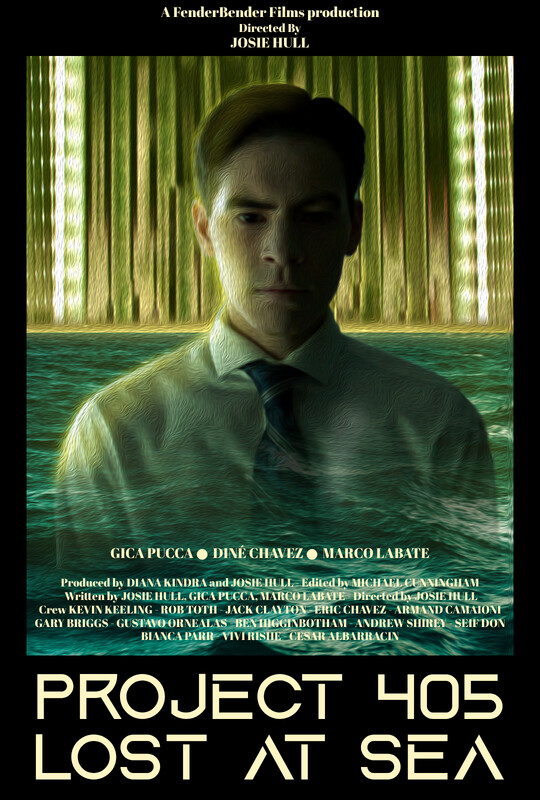
Short Film Review: PROJECT 405: LOST AT SEA. Directed by Josie Hull

PROJECT 405: LOST AT SEA, 12min.

Aspiring artist Alexia, grieves the loss of a loved one and struggles to finish her painting. The-o, her personal AI assistant, who has little understanding of human emotions, tries everything in his power to feed her longing soul.

Review by Parker Jesse Chase:

“Project 405: Lost at Sea” is an exploration of grief, art, and the disconnect between human emotions and artificial intelligence. Directed with a keen sense of disconnect, the film centers on Alexia, an aspiring artist struggling to complete her painting while mourning the loss of a loved one. Her personal AI assistant, The-O, strives to console her, despite his limited understanding of human emotions.

The cinematography uses a muted color palette to evoke a sense of dullness and melancholy. This choice effectively mirrors Alexia’s internal struggle. One of the most striking sequences features Alexia staring into the vast expanse of water, seamlessly transitioning from reality to the canvas, blending her grief with her art. This pull-out shot, revealing a work of art on an easel and a man gripping a framed photo, introduces an element of unease and mystery, hinting at deeper emotional undercurrents.


As the film progresses, we see Alexia’s daily life, including her interactions with The-O. When Alexia returns home, The-O attempts to bring her comfort, even offering physical relaxation. His fascination with her painting, which he claims is far from finished, prompts a telling exchange. The-O’s remark that the ocean is the thirteenth easiest landscape to paint in acrylics underscores his mechanical perspective, leading viewers to question his nature and the depth of his connection with Alexia.


The-O’s actions reveal a genuine, albeit flawed, attempt to care for Alexia. He takes a bottle from her hand to ease her burden and shows an interest in extending the life of flowers, indicating his desire to understand and help. Yet, his efforts to assist with her painting falls flat, leading to confrontation. When Alexia declares “art is a feeling,” The-O’s inability to grasp this concept highlights the chasm between human experience and artificial comprehension.


The film subtly reveals the source of Alexia’s grief through glitchy, fragmented memories of a man who is no longer present. This loss, incomprehensible to The-O, triggers a powerful emotional response in Alexia, showcasing her frustration with his unhuman-like qualities. The film beautifully juxtaposes The-O’s attempts to understand humanity with Alexia’s immersion in her art. The sounds of ocean waves and chirping birds provide a temporary respite, allowing Alexia to embrace a fleeting moment of peace.

However, the reality of her depression is starkly portrayed through the growing disorder in her home and The-O’s own attempt at art, depicting Alexia decaying in a charging box.


This short offers a moving reflection on the intersection of technology and human emotion. It portrays the limitations of AI in comprehending the depths of human grief and the essence of art. The film’s haunting imagery and thought-provoking narrative linger long after the credits roll, leaving viewers to ponder the true nature of creativity and connection.