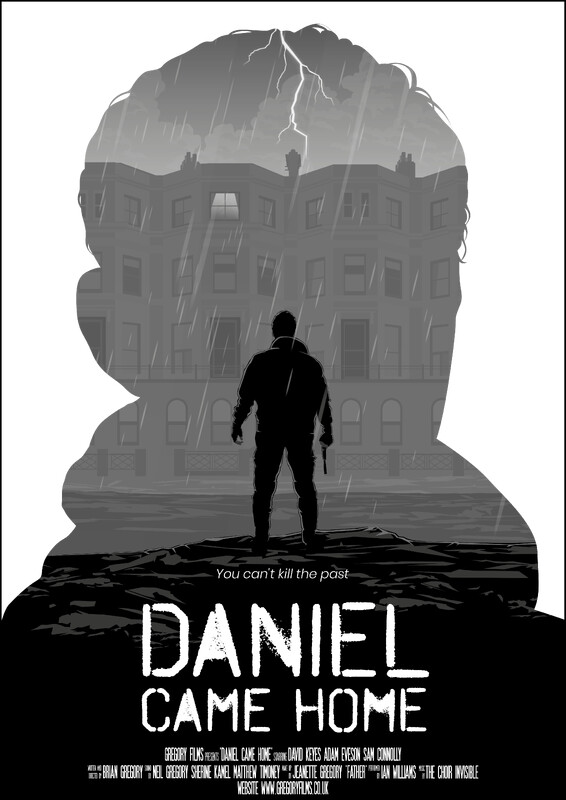
A dead soldier comes back from the grave to confront his abusive, fascist father.
Project Links
Review by Parker Jesse Chase:
In Daniel Came Home, written and directed by Brian Gregory, the opening words, “Daniel is down & I think he is dead,” immediately jolt the audience into a state of alertness. Before we can settle into what might follow, the title card appears, confirming Daniel is, indeed, alive. However, the journey that follows is not the homecoming one expects to be welcomed with.
Set in a stark, black-and-white world, we meet Daniel, played by Adam Eveson, as he rocks on a chair—an image as eerie as it is telling of his fractured mental state. The atmosphere of the film, almost suffocating in its minimalism, allows the tension to build slowly, and we soon learn the man sitting across from him is his father, Jack, portrayed by David Keyes. The film unfolds with a simmering, quiet intensity, where the past collides violently with the present.
The heart of the story lies in their confrontation—rooted in family traditions, military service, and ultimately, a son’s rage against the abusive, fascist authority of his father. Daniel’s physical appearance, marred by facial scars and a disquieting tension in his movements, reflects the trauma that haunts him. His identity as a soldier, shattered by war, has left him no longer human but something primal, monstrous. He refers to himself as the “angel of death,” declaring both he and his father will be dead by sunrise. This line delivers a gut punch, foreshadowing the inevitability of their tragic end.
The performances are intense, particularly in the verbal sparring between father and son. Jack’s accusation, “You’re a monster,” and Daniel’s chilling response, “You created me,” reveal the film’s core: the destructive inheritance of violence and trauma. The moment Daniel shoots his father, the film becomes less about the act itself and more about the cold, intimate aftermath. Daniel cradles his father’s corpse with an unsettling tenderness, as though the bloodshed has finally brought him peace.
Daniel Came Home delves into the ravages of war, not just on the body but on the soul, highlighting how both the battlefield and the domestic sphere can become arenas of violence. In Daniel’s final moments, as he army crawls out of the room—triggered by PTSD flashbacks—it’s clear this film is about the emotional toll of war and the inescapable grip of family legacies. Brian Gregory’s direction, combined with haunting musical compositions that distinguish both Daniel and Jack, adds layers of emotional texture to the short’s grim, inevitable conclusion. Based on Gregory’s story Daniel from “The Fifth BHF Book of Horror Stories”, the film offers a chilling exploration of familial ruin, revenge, and the unrelenting scars left by both war and patriarchal oppression.
Daniel Came Home leaves a deep, unsettling impression—a compelling narrative bearing witness to the psychological horrors of abuse and the devastation of unresolved trauma.
 Festival Reviews