Filmmaker Samantha Olschan (TEXTPOP)

TEXTPOP, 2min., USA
Directed by Samantha Olschan
Textpop is an experimental short that explores visible language, neurodivergence, and constructed meaning, through an innovative blend of color, imagery, and typography—texts, phrases, direct messages, fragments, lists. The animation, shifting every 2-5 seconds, mirrors our contemporary attention spans influenced by technology. The film invites viewers to experience text as a material, reflecting on information construction, retention, and delivery. It is a fractured poem, which meditates on grief, perception, and meaning, created without storyboarding or previsualization. Each scene developed in a continuous, unedited flow borrowing from the process of direct filmmaking and cameraless animation. Textpop investigates the interplay between digital animation, motion design, and traditional experimental practices.

https://www.samanthaolschan.com/projects/textpop
https://www.instagram.com/samanthaolschan

Get to know the filmmaker:

1. What motivated you to make this film?

I started making this film coming out of the pandemic when the majority of our interactions were mediated through screens, type, technology, and boundaries between workspace and personal space became blurred. I was interested in the language we use to visualize our narratives, communicating through text is a visual and tactile experience, punctuated now by memes and gifs. I was also drawn to cataloging the language we created in that time/space, whether it is intentional (cultural significance, slang, generational), genetic or innate (neurodivergent processing establishing unique meaning), or accidental (autocorrect errors, misspelling, mispronunciation).

I initially wanted to experiment with new tools and techniques I was using for brand identity and motion design, but it later became an expressive response to grief, trauma, and increasing empathy for others through the words themselves. I was taking fragments of text messages, emails, and dm’s from loved ones during this time, those I had lost physically or geographically, and those relationships where communication was failing or fractured. I wanted to see if there was a way to rewrite our narratives, imagine what their experience might be like, essential to take all the lemons and make lemonade.

I had also just produced another body of artwork, the $n@¢K/t!m£ series, a digital image series that overlaid conversations and dm’s from texts and dating apps with classical sculptures and glitches, and wanted to flip that structure. By making the text the visual narrative and the visual elements the encoded language framework. I was curious what this could do to our brains and if it could activate a sense of synesthesia.

2. From the idea to the finished product, how long did it take for you to make this film?

Two years.

3. How would you describe your film in two words!?

Technical description: Experimental Animation

Sensory description: Vibrant Noise

Cultural Description: Goldfish Brain

4. What was the biggest obstacle you faced in completing this film?

Giving myself the freedom to create without structure. Filmmaking, animation, and motion design rely on pre-production and a series of steps along a pipeline. This was an experiment in applying artmaking and direct filmmaking processes to motion design and storytelling. No script, no style frames, no storyboards. And then surrendering it to the interpretation of the audience. It was like an experiment in digital-dada-surrealist-automatism for the NFT age. The film was created straight-ahead, not by scene or phrase, and the materials used were applied to the type and image like paint on a canvas, layering video, image, color and texture, rather than the traditional digital workflow of building a model, texting with a digital painting, animating and rendering. Some images are created using only digital techniques, some are created using analog techniques and photography, and others are a combination of the two. This gave it an uneven aesthetic that I think truly activates the brain and also captures the emotional landscapes of joy, confusion, and the fleeting nature of focus in our modern digital lives.

5. What were your initial reactions when watching the audience talking about your film in the feedback video?

First I want to thank the audience members who took the time to review and enjoy the film. It was wonderful to hear and see your interpretation of the film. I loved seeing their eyes widen as they spoke about the diversity in color, language, and images.

I was really excited to hear that the audience response to the speed of the visual narrative was not negative, which was something that worried me initially, and that the nature of our digital culture and attention spans came across clearly. I was also pleased to hear that the audience was curious about, but couldn’t necessarily identify the “magic” that went into creating individual frames in the film. Film and animation at their core are about suspension of disbelief, the persistence of vision, and the brain seeking to make story and sense of the edit, so I was happy that the audience was actively wrapping their heads and hearts around what they had seen.

I think the audience reaction video brought up critical questions that I have always had in my work, which is: is it is art, a film, motion design? In my personal practice, I don’t categorically silo what I’ve made by the media or visual outcome, which is a departure from how I might work in a professional freelance capacity or in a production pipeline.

6. When did you realize that you wanted to make films?

I think I always understood conjuring something from nothing, visualization, and cause and effect of artmaking from a young age. I remember watching two films as a child, Snow White(1937) and West Side Story(1961) as a child and being just amazed by the movement, color, and storytelling. In the 1990’s the Walt Disney Animation Studios had an attraction at Disney World where you could watch animators drawing away in “the pit” (behind glass, how bizarre it seems now, like a zoo for artists!) but I have distinct memories of not wanting to leave. My whole life shifted when I realized single drawings can move over time, and I have been making art move ever since through film and animation.

I was introduced to conceptual art, video art, and animation when I attended Carnegie Mellon University, working with artists Suzie Silver, Lowry Burgess, Herb Olds, and Jim Duesing, and this led to getting my MFA at The School of the Art Institute of Chicago, working with animators Chris Sullivan and Lisa Barcy. I was lucky to have this inspiring cohort of amazing filmmakers and artists including Jodie Mack, Adebukola Bodunrin, Kyung Woo Han, Jon Rafman, Lori Felker, Alexander Stewart, Lillie Carre, Lucas Dimick, and so many more. This network expanded my understanding of what filmmaking could be, and to create in these environments that challenged and supported my experimentation was such a gift and inspiration. I also realized that I wanted to make films after the first leg of my career as a broadcast designer for international news networks and marketing firms. Working in media and advertising had a huge impact on my trajectory both in my skill level and narratives.

7. What film have you seen the most in your life?

Too many to count! But probably the Back to the Future films, Harry Potter films, Indiana Jones films, and The Young Girls of Rochefort.

8. You submitted to the festival via FilmFreeway. How has your experiences been working on the festival platform site?

My experience has been good so far. It’s been wonderful to find venues around teh world that are looking for experimental work like mine, that are outside of a traditional gallery setting.

9. What is your favorite meal?

Sushi ! Runner up: Spicy miso ramen

10. What is next for you? A new film?

I continue to explore and expand the boundaries of art, filmmaking, and design, fostering empathy, awareness, and critical conversations. I have two films that I’m working on right now- Everything Is Going So Well and Keep Running. Everything Is Going So Well animation and print series of 16 images. This experimental project explores interpretations of meaning versus message through illustrated responses to innocuous questions and casual conversation starters such as “How are you?” or “How is it going?” These responses are sourced from individuals grappling with mental health challenges and other non-visible disabilities. Keep Running, an animated short film based on the poem of the same name by actor Sterling Suliman, is a poignant response to the death of Ahmaud Arbery and the broader Black Lives Matter movement. By translating Suliman’s powerful poem into an animated narrative, Keep Running seeks to evoke emotional resonance and provoke thoughtful dialogue about Black joy, Black history, racial injustice, and representation in film and animation.

Beyond Keep Running, I am committed to continuing my interdisciplinary creative practice and sharing more of my films and artwork at various festivals and conferences around the globe. In June of 2025, I will be a resident artist at the Skopelos Foundation for the Arts in Skopelos, Greece where I will focus on creating a new body of work that combines traditional artistic techniques with emerging mediums and fractured storytelling.
Filmmaker Joey LaFrance (THE NEXT BELLS)

THE NEXT BELLS, 16min., USA
Directed by Joey LaFrance
In this musical, Lily is waiting for an important phone call and navigates life assuming the worst, leading her down a dance-filled, spiraling path of self-discovery.

https://www.instagram.com/the.next.bells_film/

Get to know the filmmaker:

1. What motivated you to make this film?
I was motivated to make “The Next Bells” for a few reasons in particular. First, it is a story about appreciating what you have in situations where you might be worried about something that might happen. This theme called to me because in this day and age, especially amongst the young people of the world, many people are engulfed in what their future is going to look like, or are dwelling on the past too much. It can be difficult to break that spell of spiraling thinking, which is something all of us have encountered at some point. I made this film to serve as a reminder to those people to try to live in the moment and not worry about things that are out of their control. Secondly, musicals have always been ingrained in me since I was young. The idea for a musical was the perfect way to put my own personal flair on this film. I could tell a realistic story through an impossible lens. I could show Lily’s deeper emotions in an authentic, expressive way that normally would be hidden. At the same time, I could pay homage to an under-appreciated genre of film that I love, creating an exciting project to summarize my film education thus far.

2. From the idea to the finished product, how long did it take for you to make this film?
About a year and a half. I started getting ideas in August 2022, and we finished the film in May 2024.

3. How would you describe your film in two words!?
Charmingly ambitious.

4. What was the biggest obstacle you faced in completing this film?
The biggest obstacle we faced making this film was scheduling. Since this is a student film, we were not paying anyone on the crew to work on the film. It was just friends helping each other out rather than employees working. Without the liberty of paying people for their time, combined with everyone having their own busy school schedules and project timelines, finding the right time for everything to work out was incredibly challenging. We lost an actor last minute, had to change shooting days and locations, and had many late-night meetings trying to figure it all out. But major credit goes to the whole team for pushing through and making it happen despite all the obstacles.

5. What were your initial reactions when watching the audience talking about your film in the feedback video?
It was so rewarding for me to see that people were grasping the themes and feelings that I was aiming for with the film. You can never be totally sure that the audience will understand what you’re going for, so it was exciting for me to hear people get it the way I intended them to. I was also surprised that everyone in the video seemed to really relate to the film. Since it’s a musical, I figured that some people may just not be able to connect to it at all. However, I was pleased that the audience members were responding to it in a positive way and thought that the musical genre enhanced the storytelling.

6. When did you realize that you wanted to make films?
I realized towards the end of high school that I wanted to make films. Initially, I thought I was going to be a VFX artist, but once I started applying to colleges and seeing what all the film schools offered, I knew I wanted to be a director instead. It was also around this time that I started expanding my taste in films, so combining these factors at the perfect time was essential for me to realize what my path was going to be.

7. What film have you seen the most in your life?
The film I’ve seen the most is probably Star Wars Episode III: Revenge of the Sith. I was the perfect age for the Star Wars prequel films growing up, so I would relentlessly rewatch Revenge of the Sith as a kid. I always liked how it was a film where the villains actually won in the end, which is something I had never seen in another film at that time. I have also rewatched a few times as an adult, so at this point there probably isn’t another film I’ve seen more times.

8. What other elements of the festival experience can we and other festivals implement to satisfy you and help you further your filmmaking career?
In my opinion, one of the best aspects of film festivals is getting the opportunity to meet other filmmakers like you who have the same goals. I think festivals should always be creating more events, Q+A sessions, and networking opportunities to help filmmakers push their careers forward.

9. You submitted to the festival via FilmFreeway. How has your experiences been working on the festival platform site?
I have had a great experience with the FilmFreeway site. It is such an awesome resource to be able to learn about so many film festivals and find which ones would be right for your film. It has a simple user interface and is easy to operate without having ever used the site before. I also enjoy how the film submission profile offers so many possible details about your film that you are able to add, giving festivals a greater understanding of your film as a whole.

10. What is your favorite meal?
Pizza, hands down. I come from the Pizza Capital of the World, New Haven, CT, so it’s an easy choice for me.

11. What is next for you? A new film?
I’m currently working on a new short film with my friend and collaborator, Brenden Mascherino (DP of “The Next Bells”). It’s called “So Long” and is about how an elderly couple operates in their day-to-day life, showing the intricacies of a relationship built over decades. Their experience mirrors the circle of life as they come to terms with the reality of having to move out of their longtime home. It will be a blend of narrative and documentary and, like “The Next Bells,” will be shot on 16mm. Brenden and I are very excited to begin filming in late August 2024.

Filmmaker Alexandre Diennet (THE NEW BEGINNING)

THE NEW BEGINNING, 2min,. France
Directed by Alexandre Diennet
In a world in decline, Gareth questions his own survival. Along the way, he meets Jim, perhaps the last ray of hope capable of persuading him to remain among the living.

Get to know the filmmaker:

1. What motivated you to make this film?

The origin of the short film is the Nikon Film Festival in France, which is a very popular short-film competition. This year, the theme was fire, and I wanted to put a special meaning on fire, what it represents in our evolution.

2. From the idea to the finished product, how long did it take for you to make this film?

The script was completed in October 2023, the shooting was at the beginning of December, and post-production was finished at the beginning of January 2024.

3. How would you describe your film in two words!?

I’d say inclusive and hopeful

4. Quel a été le plus grand obstacle auquel vous avez été confronté lors de la réalisation de ce film ?

Without a doubt the shooting conditions! We had rain, snow, icy ground, cold, and a flooded location. But despite all that, the team spirit made the day memorable, and the athmospere rendering gave the image that gloomy atmosphere.

5. What were your initial reactions when watching the audience talking about your film in the feedback video?

I was able to show the video to some friends, as we were celebrating my birthday that day, and we loved comparing the type of reaction to that in France. In France, we love genre cinema, but we prefer to focus on social or family dramas. It’s mainly for this reason that we sent the film to the U.S., where genre art is much more widely recognized.

6. When did you realize that you wanted to make films?

I’ve been interested in the world of cinema for a very long time, but it was during my teenage years that I experimented with fiction. And little by little, I forged my way into it.

7. What film have you seen the most in your life?

I think it’s Star Wars Episode 4. As a kid, I already loved science fiction, and even B-movies from the ’50s, because the low-budget designs of these films fascinated me. And I think Star Wars 4 fascinated me because of its design, but also because of its rendering, which I think is the basis of a good adventure film.

8. What other elements of the festival experience can we and other festivals implement to satisfy you and help you further your filmmaking career?

For the time being, I don’t see any drawbacks, as there are already some great elements in place.

9. You submitted to the festival via FilmFreeway. How has your experiences been working on the festival platform site?

very good, and good communication afterwards

10. What is your favorite meal?

Very difficult to choose, as I love to eat. But in honor of my region, Alsace, I’m going to say cordon bleu with munster.

11. What is next for you? A new film?

This year, I’m going to stop making short films for competitions, because you’re limited by time and it’s very frustrating. So my next project will be a short film where I don’t have a time limit, and still in a fantasy type, otherwise it won’t be as much fun!

Filmmaker Rachel Nemez (PIPPY AND THE TYPIST)

PIPPY AND THE TYPIST, 5min., USA
Directed by Rachel Nemez
Our protagonist, Pippy, discovers that a magical typewriter controls the events happening down below.

https://rachelnemez.com/
https://www.instagram.com/rachelnemez/

Get to know the filmmaker:

1. What motivated you to make this film?

My studiomates and thesis friends single handedly kept me going. I was going a little bit crazy at the beginning of the process, and I think the fact that I just wasn’t alone in a studio made all the difference. There were three of us in our studio sharing the space, and it was really awesome to be able to just pop in and chat for a bit and then go back to your separate working stations.

2. From the idea to the finished product, how long did it take for you to make this film?

From September 18th to April 24th? Roughly?? Technically I had another few weeks before that but I had a hard time knowing what I wanted to do.

3. How would you describe your film in two words!?

Interconnected silliness.

4. What was the biggest obstacle you faced in completing this film?

Honestly it was taking the photos that really got me by the end of it, because I had to set up lighting and gels and make sure everything was structurally sound. Like I built the sets from foam, wood, and grout, and it did a pretty good job for a while holding up, but I could’ve been more gentle with the walls so that the wood didn’t splinter off. Between running in between lighting and tweaking the camera and changing the gels, I just needed extra hands. It also doesn’t help that I tend to be extremely indecisive about my lighting. However, at the time, I met this guy on tinder who I brought into my school’s studio and I asked him to hold my set in place while I took photos and traded out colored gels for the lights. I would’ve asked my friends but everyone was in the thick of it at the time and I didn’t want to bother them.

5. What were your initial reactions when watching the audience talking about your film in the feedback video?

I was nervous to watch it back, because I just haven’t seen my own film in like a month, because I super needed a break from watching it multiple times a day during the final editing stage. My initial thought was that what caught people’s attention the most is the visual elements. Also not to mention the reviewers’ slightly different interpretations of the film. It was funny, because per my own observation, there are two energies of people that watch my film for the first time. Either like “omg crunchy texture!”, or “it represents the abominability of the human spirit.” And I was wondering if those two reactions only existed in the bubble of my school and local festivals, but I’m slowly learning that it’s a pretty vast reaction.

6. When did you realize that you wanted to make films?

Well I never really thought I’d be a filmmaker, I enjoyed animations as a kid and knew that I wanted to do that, and thankfully I had the resources and support to go pursue it. I just wanted to make cartoons!

7. What film have you seen the most in your life?

When I was a kid I think I watched Jim Carrey’s How the Grinch Stole Christmas once a week year round. I think that single handedly made it my most watched movie as a kid. But I will say, Adventure Time I think is my most watched piece of media of all time in a crazy way. I used to religiously watch the episodes as they came out when I was a kid, and it’s currently my goto comfort show. There are definitely bits and pieces that influenced me throughout making my film.

8. What other elements of the festival experience can we and other festivals implement to satisfy you and help you further your filmmaking career?

I’m not really sure, I’m pretty new to the film festival submission process and have only participated in 4 so far, and only 2 I was present for. I think a way for the filmmakers to come in contact so we can network a bit? But also, this festival has been very communicative and thorough about the process and giving a lot of exposure opportunities. So thank you!

9. You submitted to the festival via FilmFreeway. How has your experiences working on the festival platform site?

It’s been really straightforward and chill. It’s a great platform in my opinion.

10. What is your favorite meal?

I have a restaurant panic answer and a real answer. I panic order Chicken Caesar Salad every time I go to a restaurant that serves it, but also secretly I love it. However, that being said my real answer is mofungo con chicharron, it’s Puerto Rican food that consists of plantain and pork rind and it’s the best ever.

11. What is next for you? A new film?

If I’m being the realest right now, I’m trying to get a job. I told myself in two weeks I would start animating again, I’ve been on a little Summer break from it all since this last project was so all consuming. But ultimately yes I would like to get started on a new project within the coming month!

Filmmaker Amy Cheung (TIMEBANK: THE GAME)

TIMEBANK THE GAME – THE RECORD OF AN EXPERIMENT, 40min., Hong Kong
Directed by Amy Cheung
One hundred life forms received a distressing signal from the vanished civilization of Pharmakon, learning that Earth is on the verge of self-destruction. Time Lord has devised a way to destabilize time, propelled Earth beings to enter an alternate reality through “THE GAME” – a mysterious portal that reduces them to a single-cell form.

Get to know the filmmaker:

1. What motivated you to make this film?

TimeBank THE GAME initially expanded my MA research project in educational psychology, where I proposed an experimental treatment model fusing serious games and positive psychological principles with new technology to motivate young people to invest time in environmental repair. I then received funding from Hong Kong to implement the idea in the form of an alternate reality game within an immersive exhibition. The film initially documented the project to fulfill the funder’s requirements, but then AI video generation technologies emerged and became easy to use. I was incredibly curious to explore AI’s big data-driven answers, hoping to see where the “Artificially Intelligent” narrative twist could lead us. Speculating if one day in the future, the residues of our destroyed planet came back through a time portal (THE GAME) to tell us how to survive, would anyone believe that our extinction had been self-directed, and therefore vow to take action?

2. From the idea to the finished product, how long did it take for you to make this film?

About 2.5 years. The alternate reality game took 1.5 years, and editing and post-production in conjunction with the AI generator took another year.

3. How would you describe your film in two words!?

Speculative Realism.

4. What was the biggest obstacle you faced in completing this film?

Without a budget and limited manpower, as there were only 3 people working on it part-time – myself, my script writer/producer, and the cameraman/editor – at one time it seemed like we would never finish it, thanks for our 4th collaborator – the AI video-generator.

5. What were your initial reactions when watching the audience talking about your film in the feedback video?

They are very insightful and I was so touched that they got many of my ideas quite accurately.

6. When did you realize that you wanted to make films?

I always wanted to but I couldn’t quite be bothered to learn all the equipments and techniques.

7. What film have you seen the most in your life?

La Jetée. Every year or two, I rewatch it. In fact, the film’s exploration of memory, time, and human experience resonates strongly with the themes I sought to explore in my own film. Chris Marker’s ability to convey such a powerful narrative with minimal resources has been a significant inspiration for me. His innovative storytelling techniques deeply engage and provoke thought in the audience, a principle I strive to embody in my projects.

8. What other elements of the festival experience can we and other festivals implement to satisfy you and help you further your filmmaking career?

I would love to meet filmmakers, producers, and scriptwriters who are interested in topics such as the climate crisis, alternate reality games, positive psychology, time bank, non-material value of meaningful and what motivates our behavioural choices, environmental activism. Hopefully, there will be opportunities for face-to-face meetings in the future.

9. You submitted to the festival via FilmFreeway. How has your experiences been working on the festival platform site?

Very easy to use. Enjoy it.

10. What is your favorite meal?

My favorite meal is a “food+live performance” I created with my partner, where we ambushed a morning TV show (we were invited, but they didn’t know we were going to perform). Instead of just explaining the dish, we acted out the poetic ingredients in silence and orchestrated the colors, shapes, and forms of the food as if we were painting. The host didn’t know what we were doing and panicked. That was my favorite and most unforgettable meal.

11. What is next for you? A new film?

Yes, I am planning a new alternate reality game set under the ocean—TimeBank THE GAME 2.0: Bill-the-Lion—a film hopefully created entirely underwater over the course of a year, focusing on THE GAME’s portal and temple. I would also like to research the sonic soundscape in order to compose an oceanic interspecies opera as a soundtrack for the film.

Filmmaker Holland Kerr (DISSIMULATOR)

DISSIMULATOR, 3min., Australia
Directed by Holland Kerr
An astronaut, investigating the crash of a space station on a distant desert planet, receives a signal that water has been found. Sweaty and exhausted, she eagerly follows the signal deep into the belly of a mysterious cave.

Get to know the filmmaker:

1. What motivated you to make this film?

I wanted to create a gender bent version of mermaids. Instead of beautiful women suffocating wayward men in the sea, the illusion of home and a loving husband could suffocate a woman in space.

As the animating process chugged along, the work became a reflection on somewhat suffocating relationships I’ve had in life as well.

2. From the idea to the finished product, how long did it take for you to make this film?

All up, 25 weeks spread out across 1 year.

3. How would you describe your film in two words!?

Trust Nothing.

4. What was the biggest obstacle you faced in completing this film?

Making the work through the RMIT Masters program gave me the tools and encouragement I needed to create the work, but also gave me an extremely strict time limit to create it in.

Originally the work was about twice its current length, was coloured in and contained the protagonist’s son. The final version is much more abstract, which I leaned into and I think makes the work much more open and absurd, some of its final version’s more enjoyable qualities.

5. What were your initial reactions when watching the audience talking about your film in the feedback video?

I needed to make it clearer who the protagonist was and her relationship to her husband who she encounters as an illusion later in the work. That being said, people enjoyed the abstraction of the work, so I need to strike a better balance between over and under explaining.

6. When did you realize that you wanted to make films?

I’ve been filming and animating for as long as I can remember. Some time around age 5, I starred as a cowgirl in a family friend’s home movies, and this gave me the film-bug I think. Around 6, my rich neighbors made the enormous mistake of letting me use their video camera. With it, my friends and I filmed a lot of BluesCluesesque songs which I had written, which my neighbors dutifully transferred onto full sized video tapes for my mom. Around age 7, I had somehow managed to get myself banned from borrowing that silver beauty (there was an incident involving a can of whipped cream I think) and I moved on to animating in Microsoft Paint and Windows Movie Maker, which I pursued well into highschool.

7. What film have you seen the most in your life?

Ooooh that’s tough. Either Blazing Saddles or Amadeus, as I grew up watching both.

8. What other elements of the festival experience can we and other festivals implement to satisfy you and help you further your filmmaking career?

This is my first festival season, and this experience has been terrific so far, so I don’t have a sense of what could be missing.

9. You submitted to the festival via FilmFreeway. How has your experiences been working on the festival platform sites?

A lot of rejection thus far, but a very enriching experience overall.

10. What is your favorite meal?

A big greek salad made by my Mom.

11. What is next for you? A new film?

A new film or possibly a comic book. I honestly have so so many ideas, the tough part is choosing which thing to make next

Filmmaker Erin M. Aler (NAVIGATING THE NIGHT)

NAVIGATING THE NIGHT, 10min., USA
Directed by Erin M. Aler
A young Soldier participates in a routine training mission, where her failures lead to a predicament for her morals to come to question

https://www.instagram.com/navigating_the_night

Get to know the filmmaker:

1. What motivated you to make this film?

The major motivation was wanting the experience of directing. I really enjoy the creative process of developing an idea into a full fledged concept. As I dedicated more time and energy to the project, the more I was determined to see it finished. At one point I found myself saying “if I can’t do this live action, I’ll just animate it myself.”

2. From the idea to the finished product, how long did it take for you to make this film?

Three years over all, bordering on four years. There were many drafts throughout the years, and the fund raising took some time as well. Luckily when we filmed everyone was available due to the writers strike.

3. How would you describe your film in two words!?

Real-world Horror

4. What was the biggest obstacle you faced in completing this film?

Funds. Funds were a major obstacle. We had to overcome a lot. It delayed our original shoot dates. Everyone was out of work because of the strikes. I ended up having to turn to starting a Kickstarter campaign. A lot of work went into just promoting, creating content, and raising awareness for the Kickstarter. Luckily we were able to reach our campaign goals and were able to pay for the equipment, cast, crew, and provide food and lodging for them.

There are always obstacles when it comes to filming itself. We found a few ourselves during and post shoot. I think our team worked so well together that when there was an issue we worked through it and found a solution.

5. What were your initial reactions when watching the audience talking about your film in the feedback video?

Building up to watching the audience feedback I was really nervous. It’s really vulnerable putting yourself out there like this. I wasn’t sure if the message I wanted to get across would be picked up or received well. When watching the audience feedback, I was pleasantly surprised, almost over joyed, to hear how they really resonated with the film and its message. It made me feel confident in the product we produced.

6. When did you realize that you wanted to make films?

Around middle school. Growing up, because my family is so big, going to the movies together was a treat. For Christmas my family would go see a movie. It really bonded us. I realized that film is something that brings people together, and later on that it is one of the best art platforms for collaborating. As I got older and older, I’ve found a passion for telling stories and expanding my imagination.

7. What film have you seen the most in your life?

The Lord of the Rings Trilogy, specifically the extended edition. When I go home for the holidays it is now tradition that we watch the whole thing. We even debate if we should add The Hobbit into the mix.

I feel like it’s that or A Christmas Carol from 1984 with George C. Scott. Just because that’s our Christmas tradition to watch since as long as I can remember.

8. What other elements of the festival experience can we and other festivals implement to satisfy you and help you further your filmmaking career?

I really enjoyed the audience feedback portion of this festival. It was really enlightening hearing what they thought about the film, and their critique. If there were to be any other elements added, possibly the judges critique about why they chose the films. Overall I had a wonderful experience with Horror Film & Screenplay Fest.

9. You submitted to the festival via FilmFreeway. How has your experiences been working on the festival platform site?

FilmFreeway has made it so easy to submit to all different types of festivals. Which has been so helpful. Especially with this being the first film festival run I’ve ever done. I highly recommend anyone trying to get their film out there to use the platform.

10. What is your favorite meal?

As of right now, yellow Thai curry with mango sticky rice for dessert.

11. What is next for you? A new film?

As of right now I do have a few projects in the queue that I want to develop and produce. I have another completed short film script that’ll soon be in the works, and I am currently working on my first full length feature script. If you’re interested to see how they develop, stay tuned because more to come.

Filmmaker Derek Bensonhaver (THE HIGHWAYMAN)

THE HIGHWAYMAN, 11min., USA
Directed by Derek Bensonhaver
As a killer indiscriminately stalks the highways of America, he could be any face, any look, anybody, anywhere and you wont know him until it is too late.

Get to know the filmmaker:

1. What motivated you to make this film?
– In the USA, a consistent problem here is gun violence, and road rage, and often times those intersect. I’ve witnessed road rage before, that and unfortunately gun violence are both prevalent where I live in New Mexico. I wanted to tell a story about those issues, but encase it in a serial killer thriller/horror setting. Filmmaking is my passion and I am particularly drawn to darker subject matter, typically making various genres of horror films. This time I wanted to steer the direction of the story more into a thriller category, as that is more realistic in a very real subject matter.

2. From the idea to the finished product, how long did it take for you to make this film?
– This was a large undertaking and done by an amazing team throughout, even though it was all volunteer, so that puts the project on all of our back burners for swiftly finishing. I wrote the idea about two years ago, then during the strikes revitalized it for myself and started the motions forward finally to make it come to life. Took us five filming days which included a day of just myself and my DP getting plate shots for the killers montage, and then reshooting one single shot to make it just perfect for the final cut. All in all from actually shooting through final product, about six months.

3. How would you describe your film in two words!?
– Actually Possible.

4. What was the biggest obstacle you faced in completing this film?
– As I mentioned every one of us did this for free, every cent spent where needed was out of my own pocked with no further funding. So the time it took to complete was a little slow, but so worth it. We’re all very proud of it. Money always makes things go faster, and I wish I had the funds to pay everyone for their time, and hopefully will be able to make that leap in the next project.

5. What were your initial reactions when watching the audience talking about your film in the feedback video?
– I was very excited to see it, and quite grateful for the positive feedback! Understandably, I was expecting a little confusion about the ending and why. The film is extremely ciclical, from start to finish. everything is replicated visually or verbally from the first half into the last segment, even down to the victim and the killers final resting positions. I don’t want to spoonfeed the audiences, but it does move quickly once the pickup of aggression happens, and thats the actual point; despite there being a serial killer out there, i’m making the point that people lose their cool over nothing, and are quick to react with anger, violence, and even the concept of anothers life means nothing out there on the road. So even our loving happy family can fall apart at nothing, and any other driver out there is just as dangerous as a supposed serial killer right now.

6. When did you realize that you wanted to make films?
– In high school a friend found an old vhs camera and some blank tapes. we started messing around making ‘short films’ or whatever you’d like to call those attempts, but man it was fun. Eventually that led us to a local monthly film competition and meeting other people who took it more seriously and that we could learn from working with them. At that point, being involved with the festival and these other filmmakers, I knew that this was what I wanted to do. I’ve always been a movie fan growing up, but having the chance to actually craft and tell my own stories was, and still is, everything.

7. What film have you seen the most in your life?
– Tough question, and I dont think I can narrow it down to one specifically, but off the top of my head i’d say…. Airheads, Waynes World, Scream, Nightmare on Elm Street, Friday the 13th pt. 3 and Evil Alien Conquerors are probably all equal.

8. What other elements of the festival experience can we and other festivals implement to satisfy you and help you further your filmmaking career?
– You all run an interesting thing by offering more than most do, including with the feedback videos. I think if its possible to run a nightvision camera during screenings to capture peoples actual reactions/screams/gasps/cheers etc would be truly amazing and inspiring for every filmmaker, especially as we arent able to attend every screening we have.

9. You submitted to the festival via FilmFreeway. How has your experiences been working on the festival platform site?
– I actually really like the way filmfreeway is laid out, it makes it all pretty simple and easy to find festivals you may not know about to submit, as is I stumbled across your festival initially, but now have it saved for future projects to submit.

10. What is your favorite meal?
– Pizza, i’m always in the mood, especially if its thin and has meatballs on top.

11. What is next for you? A new film?
– The Highwayman is submitted to many festivals, so promoting this is current priority, but i’ve got one script that is a horror/drama in competition at Monkey Paw to try to secure funding for it to be made, as its just not feasible solely out of my pocket this time. And I’ve got two other scripts in the early stages right now, one straight horror, and another that is a dramedy. Seeing the Highwayman do well at the festivals currently is definitely motivating to keep plucking away at more ideas and more stories and pre planning, and keeping me excited even more to make them and show them to the world.

August 2024 – MOVIE Trailers GENRE Festival

AUDIENCE Awards:

Best Movie Trailer: THE PRIESTHOOD
Best Crime Film: JIM RICKS
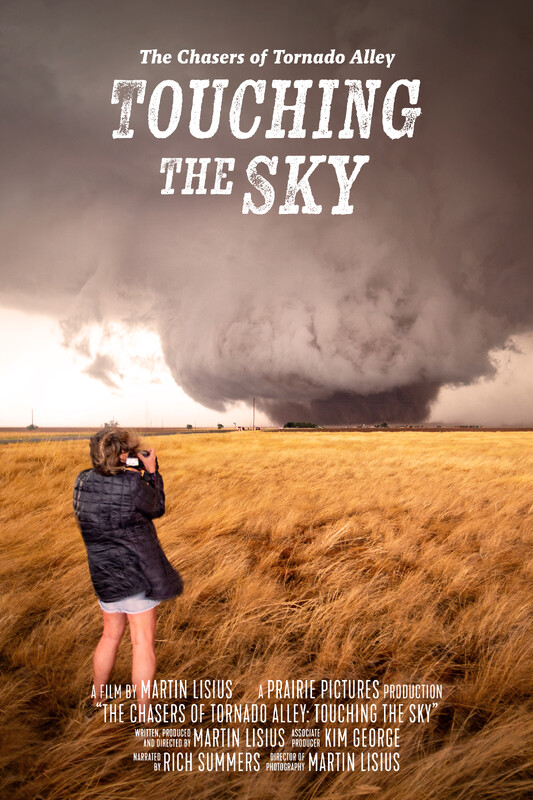
Best Documentary: THE CHASERS OF TORNADO ALLEY
Best Edited Trailer: THE FOREST THROUGH THE TREES
Best Environmental Film: ELIJAH RICHARDSON: TRUST YOUR WILD SIDE
Best Experimental Film: I AM LIFE
Best Horror Film: CRY ME AN OCEAN
Best Human Interest Film: WHAT ABOUT THE CHILDREN
Best Sci-Fi Film: CHASING ZOMBIES

Watch the Movie Trailers Festival: https://www.wildsound.ca/videos/movie-trailers-festival-august

See the Full lineup of Trailers:

THE CHASERS OF TORNADO ALLEY, 1min., USA
Directed by Martin Lisius
The official trailer for the documentary film “The Chasers of Tornado Alley: Touching the Sky” (2024) written and directed by Martin Lisius.

https://facebook.com/Chasers2

I AM LIFE, 2min,. USA
Directed by Julie Castro
Celebrating the first 40-weeks of life through the arts – dance, music, and dialogue.

http://www.thirstnomore.tv/
https://www.facebook.com/thirstnomoreproductions
https://www.instagram.com/thirstnomoreproductions

CRY ME AN OCEAN, 1min., Netherlands
Directed by Bob Yothers
Answering a distress call from a missing cruise ship, First Nations warrior, Shaunta Bear Heart, and the crew of the Ocean Warrior run aground on the Great Pacific Garbage Patch only to discover it teeming with new life. But it isn’t friendly…

http://www.studio-b-ams.com/

THE FOREST THROUGH THE TREES, 3min., USA
Directed by Jason Pitts
This is the first trailer for the demon cult horror movie, The Forest Through The Trees

http://www.lucidlakepictures.com/
https://facebook.com/theforestthroughthetrees

CHASING ZOMBIES, 3min., USA
Directed by Mike Ancas
This documentary was shot at the George A. Romero Filmmaking Program, with special effects by Tom Savini’s Special Make-up Effects Program. The story involves iconic zombie extras from the original Dawn and Day of the Dead who, decades later, find themselves in demand at Pop Culture Comicons. We chase down these zombies to see why these early Romero films resonate so much with fans. Meanwhile, the crew shooting this film set out on a horrifying adventure of their own

https://www.imdb.com/title/tt26920161/

THE PRIESTHOOD, 3min., UK
Directed by Graeme Thomas Campbell
A dark, dystopian thriller set in Scotland. Two opposing forces, right wing Christianity and left wing atheism, fight for the soul of an island nation.

https://www.glassbulletpictures.co.uk/
https://www.facebook.com/glassbulletpictures
https://twitter.com/glassbulletpics
https://www.instagram.com/glassbulletpictures

ECHO RHYME, 2min., USA
Directed by Caleb Johnson, Jeff Johnson
Trailer: for the feature film Echo Rhyme

JIM RICKS, 3min,. USA
Directed by Devin Hylton
A former police detective investigates mysterious paranormal events in his town and the dubious criminal activities of a local crime family.

WHAT ABOUT THE CHILDREN, 1min., USA
Directed by Cortez Mack
An inspirational youth film about the neglect our children face from their parents in the areas of love, affection, attention and security.

ELIJAH RICHARDSON: TRUST YOUR WILD SIDE, 1min., USA
Directed by Brian Gregory
Trailer for the documentary on Elijah Richardson, the first youth ambassador for CoralWatch.

https://www.primitiveplanet.com/trust-your-wild-side
https://www.instagram.com/primitiveplanet

Short Film Review: THE NEW BEGINNING. Directed by Alexandre Diennet

In a world in decline, Gareth questions his own survival. Along the way, he meets Jim, perhaps the last ray of hope capable of persuading him to remain among the living.

Directed by Alexandre Diennet

Review by Parker Jesse Chase:

In this compelling two minute short, “The New Beginning,” takes us into a world on the brink of collapse. Gareth, the protagonist, grapples with his will to live within this desolate landscape he’s been suddenly forced to know until he meets Jim, a symbol of hope who might just persuade him to continue the fight for survival.


The film’s opening is particularly noteworthy. In a mere eight seconds, the filmmakers establish a sense of urgency and intrigue, pulling the audience into Gareth’s harrowing reality. Alarming sounds and sudden flashes bridge the gap between fiction and reality, immediately engaging viewers and making them question the nature of the imminent threat.


The cinematography, paired with a haunting musical score, ensures the story resonates on an emotional level, transcending language barriers. The editing heightens the tension, creating a sense of thrill and urgency. As Gareth flees from an unknown evil, the audience is thrust into a mystery, captivated by the character’s desperate bid for survival.


The film’s cinematography is nothing short of breathtaking. The desolate, yet stunning apocalyptic scenery is captured with a keen eye, creating an almost ethereal beauty amidst the ruin. The lighting design complements the natural surroundings perfectly, enhancing the film’s visual appeal and drawing the audience deeper into this decaying world.


The production design is exceptional, transporting viewers into an immersive and convincing apocalyptic setting. The attention to detail gives the impression of a high-budget production rather than an indie short film. The world is convincingly portrayed as both devastated and beautiful, with nature reclaiming the remnants of human civilization. Snow-covered buildings and a stark white landscape suggest a sterile, unforgiving environment where survival is often a solitary endeavor. Reinforcing the film’s themes of isolation and the enduring power of nature. The visuals are meticulously well-thought out down to the building blocks to the characters themselves. Gareth’s disheveled appearance, complete with dirt-streaked cheeks, starkly contrasts with Jim’s clean-cut and composed demeanor. This visual dichotomy underscores their differing psychological states and adds depth to their interactions.


As the film reaches its conclusion, viewers are left with more questions than answers. The introduction of a community of survivors hints at new possibilities and challenges, leaving the audience eager for more.


“The New Beginning” is a masterful blend of stunning cinematography, meticulous production design, and emotionally resonant storytelling. It offers a poignant exploration of hope and survival in a world on the edge, leaving a lasting impression on its audience of wanting more.