Screenwriter Naz Tokgoz (CHRYSALIS)

“Chrysalis” navigates the story of Deniz, an enigmatic alien who, upon arriving on Earth, assumes the form of a 20-something girl. Driven by loneliness and curiosity, she becomes captivated by the vibrant Turkish culture. Alternating between the euphoria of her love with a Turkish woman, Melisa, and the aftermath of a tragic loss caused by homophobia in modern Turkish society, the narrative weaves subtle hints alluding to Deniz’s true nature, inviting contemplation on whether she is an extraterrestrial or a representation of someone who feels like an outsider within their own country. The story delicately portrays the healing journey of both Deniz and Melisa’s grieving mother within a city so capable of profound love, yet at times challenged to extend that love to others.

Get to know the writer:

1. What is your screenplay about?

The screenplay explores what it means to love in a city like Istanbul- a place that is both beautiful and complicated. Growing up in this country (as with any country), you can find love in every corner within its people. However, there’s also a heartbreaking cycle of hate that seeps through, especially towards the LGBTQ community.

Istanbul is naturally a loving city, but the struggle to embrace all forms of love has persisted for years. This paradox inspired me to create a story that highlights the loneliness and complexity of being part of a community like this in Istanbul. Despite the hate, I believe the city is and will always be filled with love- sometimes, all it takes is a shift in perspective to see that love in its purest form is universal. My love is no different than your love.

2. What genres does your screenplay fall under?

Chrysalis falls under romance and drama.

3. Why should this screenplay be made into a movie?

This screenplay touches on deeply important themes, but the beauty and complexity of Istanbul cannot fully be captured in words alone. To truly understand its essence—the contrasts between love and hate, beauty and struggle—it must be seen visually. A film would allow audiences to immerse themselves in the vibrant, raw, and emotional world of this story.

4. How would you describe this script in two words?

Unyielding love.

5. What movie have you seen the most times in your life?

I’m not ashamed to say La La Land! It has a magical atmosphere, vibrant storytelling, and a beautiful love story that draws me back in every time.

6. How long have you been working on this screenplay?

About six to seven months.

7. How many stories have you written?

Unofficially, I’ve written about seven stories since I started pursuing writing seriously.

8. What is your favorite song?

Somebody to Love by Queen. There’s a bit of cheesiness and irony, but I embrace it wholeheartedly!

9. What obstacles did you face to finish this screenplay?

One of the biggest challenges was believing in myself. I struggled with confidence and went through several major drafts before finding the right one. Ultimately, I realized that I wasn’t telling this story for myself- I was telling it for my community. That shift in mindset gave me the courage to finish.

10. Apart from writing, what else are you passionate about?

When I’m not writing, I’m passionate about reading! Diving into other people’s worlds is one of my favorite ways to spend time.

11. What has been your experience working with FilmFreeway?

FilmFreeway has been a fantastic resource. It introduced me to so many festivals I never knew existed, many of which are perfect matches for Chrysalis. It’s an invaluable tool for emerging artists.

12. What influenced you to enter the festival? What were your feelings on the initial feedback you received?

I actually submitted an earlier draft of this screenplay once before. I knew it wasn’t ready, but the feedback I received motivated me to keep improving until I felt confident in the story. This festival stood out to me because of its international reach and its celebration of LGBTQ stories- its very existence is inspiring to me.

Screenwriter Josip Pozgaj (LOVE UNVEILED)

Love Unveiled explores the collision of two different worlds. Sophie, a driven and self-centered woman, dreams of a political career in Washington, D.C., but her plans derail when her father’s gambling debts entrap her with Drago, a ruthless mafia boss in Split, Croatia. Forced into a marriage with Drago’s son, Ivan, Sophie finds herself in a world of crime and moral uncertainty.

Get to know the writer:

1. What is your screenplay about?
Love Unveiled follows Sophie, an ambitious young woman determined to build a successful political career. Her life gets derailed when she has to marry a conflicted Croatian mobster to settle her father’s gambling debt. The film explores themes of love, sacrifice, redemption, and self-discovery.

2. What genres does your screenplay fall under?
Romance
Crime
Drama

3. Why should this screenplay be made into a movie?
The screenplay offers a fresh take on the collision of two vastly different worlds. Currently, there isn’t a film similar to Love Unveiled released in the past 6 years which makes it a unique selling point. Love Unveiled explores universal themes that are compelling to the worldwide audience.

4. How would you describe this script in two words?
Unexpected destiny

5. What movie have you seen the most times in your life?
The Passion of the Christ, I watch it on every Good Friday.

6. How long have you been working on this screenplay?
I got the idea in November 2023 and I wrote my 1st draft in January, so for a year more or less.

7. How many stories have you written?
I’ve written a few scenes ahead of this, but you could say this is my first real story and screenplay.

8. What is your favorite song? (Or, what song have you listened to the most times in your life?)
I can’t say I know the answer, I love music. Currently, it’s Les Barricades Misterieuses. A beautiful classical piano piece.

9. What obstacles did you face to finish this screenplay?
Trying to put my creative vision in the number of pages I can operate with whilst also maintaining the audience’s engagement.

10. Apart from writing, what else are you passionate about?
I’m extremely versatile, from singing and playing instruments to working on a farm or being a firefighter.

11. You entered your screenplay via FilmFreeway. What has been your experiences working with the submission platform site?
Easy, it’s a great site to find the competitions and festivals you’re looking for and apply your project.

12. What influenced you to enter the festival? What were your feelings on the initial feedback you received?
I entered the festival to showcase my work, but also to see if what I do is good enough for the industry. The feedback was insightful, affirming the strengths but also my doubts about the script and giving me an idea I didn’t remember before.

Screenwriter Lewis Nevin Papier (Jerusalem Idol)

In ancient Israel, an aspiring stand-up comedian and self-proclaimed prophet must navigate fame, rivalries, and a mad Procurator’s wrath to save his runner-up competitor—and himself—after winning the wildly popular reality show, ‘Jerusalem Idol.’

Get to know the writer:

1. What is your screenplay about?

The screenplay is a satirical comedy set in ancient Israel, where a young wannabe stand-up comedian and self-proclaimed prophet, Yoni ben Solomon, embarks on a chaotic journey to save his family’s business and achieve fame by competing in “Jerusalem Idol,” the #1 reality show of the time. Along the way, he assembles a ragtag group of misfit disciples, confronts his fear of lepers, and battles a corrupt Roman procurator while hilariously grappling with themes of public health, power, and self-delusion.

2. What genres does your screenplay fall under?

Satire, Comedy, and Adventure

3. Why should this screenplay be made into a movie?

This screenplay is a fresh, irreverent take on historical and religious themes, blending absurdity with modern parallels that critique societal issues like medical tyranny, blind faith in authority, and the dangers of ego. Its unique premise, comedic tone, and topical themes make it a film that can entertain while sparking meaningful conversations about freedom, dissent, and individuality.

4. How would you describe this script in two words?

Hilariously subversive.

5. What movie have you seen the most times in your life?

It’s a Wonderful Life

6. How long have you been working on this screenplay?

On and off for about 10 years.

7. How many stories have you written?

Two screenplays, Two Musicals and Approximately 200 Songs

8. What is your favorite song? (Or, what song have you listened to the most times in your life?)

She Loves You by the Beatles

9. What obstacles did you face to finish this screenplay?

Originally conceived as a straightforward satire of fame and ambition, the pandemic brought new relevance to themes of public health, authority, and societal control. I found myself reworking the script to incorporate these parallels, exploring the absurdities of blind trust in institutions, the clash between dissent and conformity, and the concept of “safety” as a tool for compliance. Balancing these heavier undertones with the humor and irreverence of the original concept was challenging but ultimately gave the screenplay a sharper satirical edge.

10. Apart from writing, what else are you passionate about?

Medical Freedom; Songwriting

11. You entered your screenplay via FilmFreeway. What has been your experiences working with the submission platform site?

A good way to find out about new contests.

12. What influenced you to enter the festival?

I felt I had a stronger chance since the festival’s focus is strictly on comedy.

Screenwriter Matthew Clark (MADE IN PHILADELPHIA)

The untold true story of Phil Leonetti, the youngest underboss in mafia history, and how he brought down the mob. Set in one of the most brutal eras of the Philadelphia Crime Family, young Phil Leonetti rose through the ranks to become second-in-command to his uncle, Nicodemo “Little Nicky” Scarfo, and eventually turned government witness. His cooperation turned convictions against his own family, John Gotti, Vincent Gigante, and countless others. The downfall of La Cosa Nostra as it was began with Phil Leonetti.

Get to know the writer:

1. What is your screenplay about?

Philadelphia Crime Family in the 1980s (I’ll expand on this)

2. What genres does your screenplay fall under?

Crime/Thriller

3. Why should this screenplay be made into a movie?

It has not been done before, in any capacity, and there is an audience for this kind of work. It’s an untapped story with incredible potential

4. How would you describe this script in two words?

Untold and engrossing

5. What movie have you seen the most times in your life?

The Godfather

6. How long have you been working on this screenplay?

7 months

7. How many stories have you written?

Three full-feature screenplays, over 100 short sketch comedy skits

8. What is your favorite song? (Or, what song have you listened to the most times in your life?)

Let It Be by The Beatles

9. What obstacles did you face to finish this screenplay?

Cutting out the fat and really keeping the story concise without missing any important events pertinent to the story

10. Apart from writing, what else are you passionate about?

podcasting, music, environmentalism. religion/spirituality

11. You entered your screenplay via FilmFreeway. What has been your experiences working with the submission platform site?

It’s been fantastic. The streamlining and functionality are great

12. What influenced you to enter the festival? What were your feelings on the initial feedback you received?

I am trying to get this script produced, and am getting out to as many meaningful festivals as possible.

Filmmaker Senda Maud Bonnet (TURN IT OFF)

TURN IT OFF, 7min., USA
Directed by Senda Maud Bonnet
A woman races through the woods, hiding from an unseen threat. After injuring her leg, she finds refuge in a house, but we see a girl curled up on her couch, safe at home watching the same film we are. As the woman hides, the girl realizes the events on-screen are linked to her world. Terrified, she turns off the TV but hears a cry from upstairs. Drawn by fear, she approaches her closet…

Get to know the filmmaker:

1. What motivated you to make this film?

We were joking with my producing partner what the film you are watching comes in real life.

2. From the idea to the finished product, how long did it take for you to make this film?

10 months

3. How would you describe your film in two words!?

Fucking awesome

4. What was the biggest obstacle you faced in completing this film?

after editing, the end did not work; I reshot the end several times

5. What were your initial reactions when watching the audience talking about your film in the feedback video?

The audience talking about the film was such a joy. You make a film to make people feel emotions, and the fear and anticipation they felt is the best gift for me.

6. When did you realize that you wanted to make films?

When I was 15

7. What film have you seen the most in your life?

Blade Runner and Groundhog day

8. What other elements of the festival experience can we and other festivals implement to satisfy you and help you further your filmmaking career?

Meeting other passionate filmmakers and sharing ideas

9. You submitted to the festival via FilmFreeway. How has your experiences been working on the festival platform site?

It’s super easy to use; in two clicks, I can submit my film to any festival and also do the follow-up for you.

10. What is your favorite meal?

Nutella brioche toast

11. What is next for you? A new film?

We are developing a new story with my producing partner and writing two other projects, one of them is the adaptation of Turn it Off in long form.

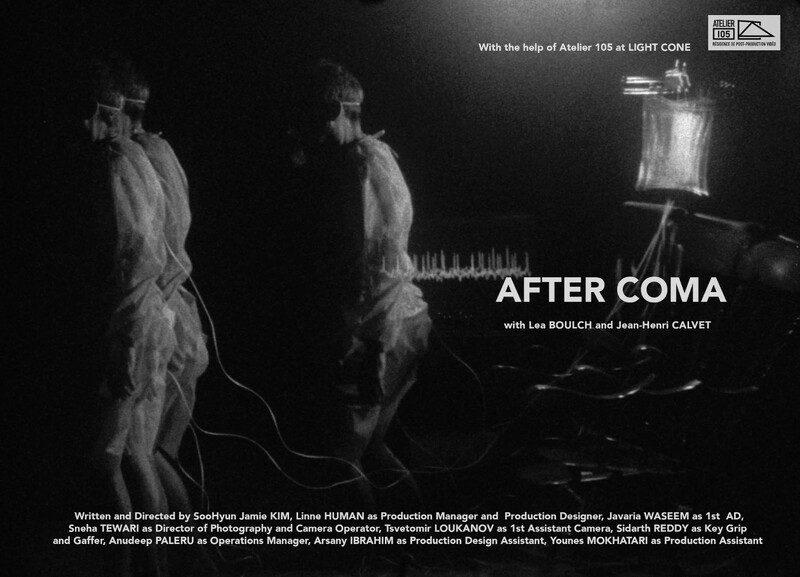
Filmmaker Soo Hyun Kim (AFTER COMA)

AFTER COMA, 2min., South Korea
Directed by Soo Hyun Kim
This film is composed of 7 poems that take the viewers into the journey of spending the last moment with the loved one as a views of both people who leave and who is left. Each poems are represented with symbolic image and sound.

Get to know the filmmaker:

1. What motivated you to make this film?
= The death of my father made this knot in my heart and throat, to be able to tell other stories, I had to get rid of that knot.

2. From the idea to the finished product, how long did it take for you to make this film?
= About 2 Years

3. How would you describe your film in two words!?
= common yearning (?!)

4. What was the biggest obstacle you faced in completing this film?
= being in a limbo of trying to remember his death for filmmaking sake and trying to move on of his death for my mental health sake.

5. What were your initial reactions when watching the audience talking about your film in the feedback video?
= Overwhelmed

6. When did you realize that you wanted to make films?
= High school.

7. What film have you seen the most in your life?
= Maya Deren’s Meshes of the Afternoon and Yukio Ninagawa’s Snakes and Earrings

8. What other elements of the festival experience can we and other festivals implement to satisfy you and help you further your filmmaking career?
= Wish I would have attended the festival!

9. You submitted to the festival via FilmFreeway. How has your experiences been working on the festival platform site?
= Easy and fast.

10. What is your favorite meal?
= Right now, my new food obsession is Malatang (Sichuan style)

11. What is next for you? A new film?
= Working to pitch a new short film.

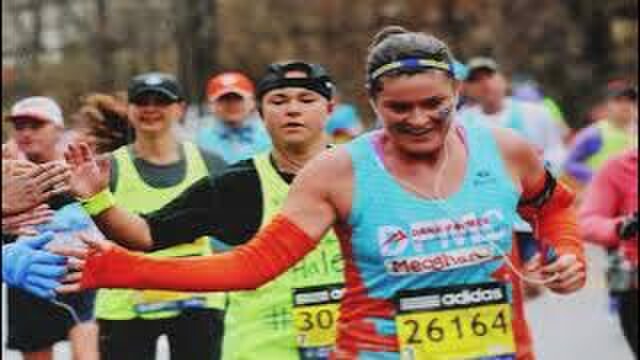
Filmmaker Bryan Cote (THE BOSTON BULLDOGS)

THE BOSTON BULLDOGS, 96min., USA
Directed by Bryan Cote
“The Boston Bulldogs” is a 90-minute documentary film interviewing 5 people from a running club for addiction recovery, interconnected by one woman’s story from finishing the Boston Marathon after her first full year of sobriety to her relapse 24 hours later, and now her recovery 10 years later. The filmmakers follow Meaghan on a run at the site of her first day with the club in 2014, talk with her sister who saw her addiction at its worst and helped her to recovery, interview Meaghan and her husband Conan about their relationship, their hope for their kids, and Conan’s path, interview Ashley who talks about her low self-confidence on the way to addiction and recovery and how Meaghan saved her life, return to Meaghan and Ashley’s sober living house, and hear why the club formed from its founder. The film is intended to show people in recovery in a positive, hopeful light, providing guidance for those dealing with addiction now, their family and for youth and families dealing with the pressures that come from coming of age in the 2020s.

https://www.thebehavioralhealthhour.com/

Get to know the filmmaker:

1. What motivated you to make this film? I

‘m a lifelong journalist and love to tell stories and wanted to work with my son on a project to marry our two interests – mine writing, his more broadcasting and film. This was an easy story to want to tell because addiction affects so many people worldwide and is misunderstood, and the running club is a great way to address addiction and recovery, particularly at a public health level but very much so at a local level. I wanted to try to tell this story in a different way than on paper…

2. From the idea to the finished product, how long did it take for you to make this film?

A full year – I did an initial visit to the club anonymously for a run, w/out really telling anyone. I ran, talked with some of the members and then after getting support from the club to do a documentary, we started doing interviews and some filming. Most of the work was weekend sessions my son and I did just editing down footage. It was like a puzzle. 3-4 hours of content and film footage, tried to boil it down. Took about 1 year where we felt good enough. Candidly we could have spent another year tweaking and tightening…

3. How would you describe your film in two words!?

Redemption Heals

4. What was the biggest obstacle you faced in completing this film?

Realizing that I had done the interviews for the film like I would any normal interview for a newspaper or magazine written story – which is good for written pieces, but not exactly for documentaries – so that made it harder to structure the film and edit and cut and put the pieces together in a way where I wasn’t so front and center as the interviewer, and in a way that made it easy to follow. Had we taken more time we might have set up the filming and questionning somewhat differently I suppose but then again, I am new to this…telling a story through film is not easy but maybe there’s not one uniform way to do it.

5. What were your initial reactions when watching the audience talking about your film in the feedback video?

Rewarding and validating. It was great to hear the reviewers mention things like the questions we asked and how the film impacted them. I also appreciated one of the reviewers acknowleding that the film is long – probably too long – which I get and I agree with candidly….I found it difficult to organize and package the content in a film compared to a written story. Much easier with words. Harder with images, video.

6. When did you realize that you wanted to make films?

I’ve thought about documentary because a lot of my feature stories are of real people overcoming or interesting human interest stories but not until I realized my kid — now 21 – had the chops to film, did I think I could do a film. And this story – maybe more than any I’d written about, had the wider appeal and potential to make an impact on educating many people, or at least showing people who’ve dealt with addiction or are in the throes of it with family or friends, that they are not alone, and that there’s a way to get throught it.

7. What film have you seen the most in your life?

Probably a tie between The Natural, which had maybe the single greatest line in a movie when Redford’s Hobbs asks the bat boy to “go pick me me out a winner Bobby” – it’s a line that stands in time because you know Bobby will pick out the bat they carved together, because Hobbs is bleeding, and because we know the ending…we hope for it. Moonstruck is the other – maybe my favorite because this one just makes me laugh, reminds me of my family.

8. What other elements of the festival experience can we and other festivals implement to satisfy you and help you further your filmmaking career?

It’s been amazing so far as a firstime filmmaker just trying to get exposure. Perhaps adding more information or guidance on how to get films that are winning awards shared on a broader scale and perhaps help directly get them eligible to be shown to movie companies or TV companies that want to offer films.

9. You submitted to the festival via FilmFreeway. How has your experiences been working on the festival platform site?

Rewarding and easy to do (and I’m not too smart with uploading or things like that). It was super easy and it’s been nice to see how things stand w/ each festival we entered. It would help to understand more about process from getting selected to nominated to the potential to being shown at the actual event. It’s sometimes not easy to discern which, if any of the festivals we’ve been selected for will actually show the film at a live event that we might attend.

10. What is your favorite meal?

A bowl of spinach, mozzarella cheese and a lot of Italian dressing.

11. What is next for you? A new film?

Yes – hopefully – thinking through a film to tell one of two stories, one related to a group of young women who came to the US as refugees and have made an incredible impact. But one thing at a time…

Filmmaker Patricia Shih (UNDOCUMENTED)

UNDOCUMENTED, 72min., USA
Directed by Patricia Shih
No matter where you stand on the hot button topic of immigration, this true story — of one man’s journey from the world’s most dangerous city to where he is today at the top of his profession — will not fail to touch your heart on the most human level.

http://www.undocumenteddoc.com/
https://www.facebook.com/undocumenteddoc/

Get to know the filmmaker:

1. What motivated you to make this film?

I read an autobiography of a man whose daughter was taking guitar lessons from my husband. My hubby and I are both professional musicians, BTW. The man had given copies of his book to both of us one Christmas. I read it three times because it was so compelling, and thought it would make a great film because I feel a movie can reach a wider audience than a book. However, although I had made short music videos of my songs I had never made a feature film before. I just felt this man’s story HAD to be made into a film and I wanted to be the one to do it.

2. From the idea to the finished product, how long did it take for you to make this film?

5 months. Being a newbie filmmaker I was so naive! I didn’t know what I didn’t know. I had NO IDEA how long a feature film would take, nor how much money. I pulled a figure out of thin air, raised the money in a month, then set out to making it.

3. How would you describe your film in two words!?

Immigrant advocate.

4. What was the biggest obstacle you faced in completing this film?

My own ignorance.

5. What were your initial reactions when watching the audience talking about your film in the feedback video?

I was very proud! Because despite my initial naivete and ignorance I and my assistant producer pulled off a multiple international award-winning documentary that audiences LOVE. At every screening I watch the audience’s reactions, which are always very spot-on, strong and gratifying. And when given the opportunity they often give it standing ovations (especially when the subject of the film Dr. Harold Fernandez speaks afterwards), many glowing reviews and ask insightful questions.

The reviewers in the feedback videos got every little thing I was hoping audiences would “get” and notice, and they praised how we handled and portrayed the story.

6. When did you realize that you wanted to make films?

During the actual making of “Undocumented.” Even though it was very, very hard being such a newbie with very little knowledge (thank you to my associate producer!) and with a very short and tight deadline (we wanted to premiere it before the 2016 election with Trump vs. Clinton, so I barely slept during those 5 months) I loved the process and realized how truly impactful films are if a great story is told well. However, being a songwriter, performer and visual artist I already knew how important and impactful it is when the arts are used to convey ideas. Perfect vehicles, and film engages so many of the senses so it’s particularly powerful.

7. What film have you seen the most in your life?

I don’t totally understand this question. But for films that I’ve seen more than once, I guess the answer would be the classics like “The Wizard of Oz,” “Gone with the Wind,” “It’s a Wonderful World”, like that.

8. What other elements of the festival experience can we and other festivals implement to satisfy you and help you further your filmmaking career?

First off, I need help in distribution. Since filmmaking is a new “industry” for me I don’t know what the next best steps are to get my film out into the world. Perhaps an agent?

Secondly, I need to know the best ways of raising funds to make more movies. My first film was financed through a Kickstarter campaign but I don’t want to use that again; too nerve-wracking and I don’t like the all-or-nothing thing.

Thirdly, I love to actually attend screenings no matter where in the world they are. So far I’ve only been able to attend ones in the US in-person or via Facetime/Zoom. Help with finances to attend international festivals and screenings would be BIG.

9. You submitted to the festival via FilmFreeway. How has your experiences been working on the festival platform site?

Great! Having access to so many festivals all over the world makes it easy to pick and choose. I have to say it certainly gets pricey when submitting to as many as I’d like.

10. What is your favorite meal?

Another odd question! I love seafood, Chinese or Japanese food, French. But I’d rather make art (music, film, books, visual art, dance) than eat and sleep.

11. What is next for you? A new film?

I want to make a documentary about my own family’s immigrant experience from China, set in the context of the difficult history of the Chinese in America. How they overcame racism and sexism and all the discrimination to succeed so much. Maybe a series about success stories of immigrants despite all odds. It is a perennial issue but especially important and needed in the Trump eras. Maybe it’s a TV series? I don’t know.

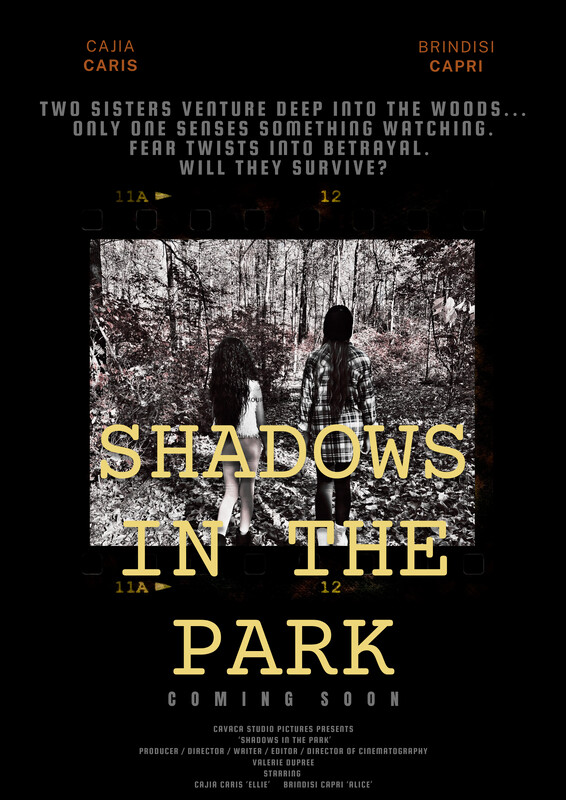
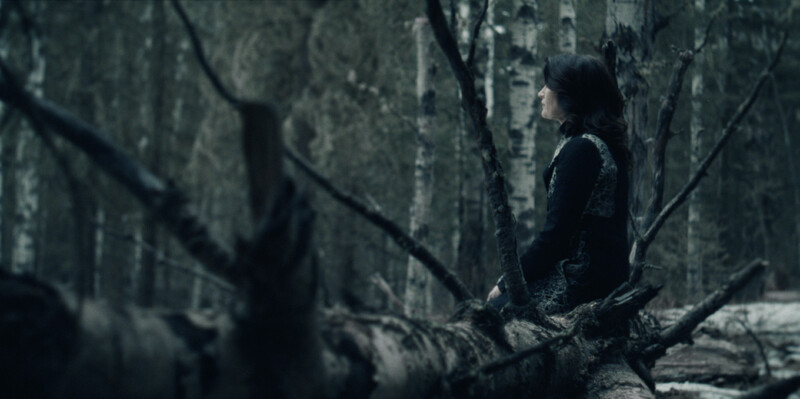
Filmmaker Valerie DuPree (SHADOWS IN THE PARK)

SHADOWS IN THE PARK, 6min., USA
Directed by Valerie DuPree
Two sisters venture deep into the woods…only one senses something watching. Fear twists into betrayal. Will they survive?

http://www.cavacastudiopictures.com/

Get to know the filmmaker:

1. What motivated you to make this film?
This started as a class challenge and a way to see if I could bring a story to life on screen. One of the things my class teaches us is to not wait for the work to come to us, but to go out and create our own work. That lesson stuck with me, and I drew from a deeply personal experience to create something authentic.

Several years ago, I had a paranormal experience while hiking. In all my decades of hiking, I’d never felt anything like it—amd it unnerved me. The woods have always been my happy place, my refuge. But that one time, on that one trail, something not from this realm was there. It left me with a familiar feeling that shaped me as a child, from growing up in a haunted house. That lingering feeling planted itself in my subconscious and it finally found its way out through this film.

Filmmaking has this uncanny way of making you confront those little whispers in your mind, turning them into something tangible. I guess I was motivated by the need to understand, or at least explore, that experience. And now, I can’t stop—I’ve realized this is the best way for me to make sense of the world.

2. From the idea to the finished product, how long did it take for you to make this film?

I was on a tight deadline so it took just one week from the spark of an idea to completion—which, looking back, feels both insane and oddly perfect for how I approach things. I brought the idea to my actresses, who gave the script the green light after the youngest made one non-negotiable request: she absolutely had to hit her sister in the head during filming. No animosity—she just thought it would be the ultimate fun. The older actress, being the consummate professional, agreed to the hit, and we were off!
We filmed late afternoon over two days, right before the woods got that mysterious dusky glow. One day was scouting and filming “B” roll and the other for the meat of the film. Editing was a marathon—two days of being glued to my editing room. And then came the movie poster and going over the film again and again which took another day because I can’t resist obsessing over every little detail.

It was a whirlwind, and I loved every chaotic second of it. It was one of those magical experiences where I now want to keep doing it, even if I can’t always put into words why.

3. How would you describe your film in two words!?

Intensely suspenseful.

4. What was the biggest obstacle you faced in completing this film?

The biggest obstacle was me. I was terrified to make this film, yet I felt this quiet but constant voice inside, telling me that I absolutely had to do it, no matter how much it scared me.

I had to get out of my own way. Once I let go and just let the creative process flow, it was like opening a floodgate. It was raw and real and it was mine.

5. What were your initial reactions when watching the audience talking about your film in the feedback video?

I was so excited to hear the feedback —then, out of nowhere, I felt this teen-like nervous energy creep in…amazing how vulnerable you can feel putting your art out there.
Thankfully, the feedback was encouraging, thoughtful and the constructive critiques felt supportive. It was exactly what a first-time filmmaker like me needed—beginner-friendly and insightful to help me grow.

6. When did you realize that you wanted to make films?

I’m fascinated with storytelling. I write and I act in films…not once did I ever think I could produce a film. I’ve been immersed in the film world for decades…I was a therapist on major film productions and even when my daughters became actresses and I found myself shuttling them to sets all across the U.S., the thought of me making a film never crossed my mind.
Making films has now become this love I don’t have the words for!

7. What film have you seen the most in your life?

I couldn’t narrow this down to one…

Casino (1995)

Rebecca (1940)

Alive (1993)

Texas Chainsaw Massacre (1974)

8. What other elements of the festival experience can we and other festivals implement to satisfy you and help you further your filmmaking career?

Yours was the perfect landing spot for my first-ever film and film festival showcase. I cannot be more grateful for this experience. The fact that my actresses were awarded Best Performances on top of it all is beyond my wildest imaginings of being a filmmaker. It’s been such a validating moment in this crazy journey I’m on.

As for other festivals—compared to some I’ve encountered, I’d like to see even more categories for awards.

Also, creating opportunities for first-time filmmakers to have their work paired with more seasoned writers, directors or mentors in whatever capacity could really help. This could be in the form of a pay service you offer – workshops, classes, one-on-one coaching for all their future projects and films. It’s all about getting that feedback, the kind that pushes you forward and challenges you to be better.

Ultimately, it’s experiences like your film festival that keep the fire burning. So, thank you again for everything you offered—I’m excited to keep creating and to see where this next chapter takes me.

9. You submitted to the festival via FilmFreeway. How has your experiences been working on the festival platform site?

I’m still pinching myself that I’m even on FilmFreeway. I never thought that was possible either. It’s a platform I first learned about while traveling coast to coast, taking my daughters to their bookings. It feels like a total wild ride to be here, and I’m just thoroughly enjoying every twist and turn along the way.

So far, it’s been great—no complaints at all. The process has been fairly seamless and everything has run pretty smoothly without a hitch.

10. What is your favorite meal?

It’s a meal I refer to as pure love. My mom would make it all the time growing up but this ONE time, it was just total pure love. I had been through a lot at this particular point in my life and she arrived to help. On top of everything, I was sick with the worst illness. I hadn’t taken care of my own needs in a really long time. The meal was so simple – rotini pasta, sauteed onions and sausage. I’ll never forget the feeling it left me with that I finally had real nourishment again. I truly felt loved and cared for at that moment in time. That meal meant so much to me and really makes me miss my mom.

11. What is next for you? A new film?

Absolutely. My next film is already shot and in post. It’s a deeply emotional story about two sisters who escape a harrowing SA situation. The older sister, desperate to protect her younger sibling from the abuse she’s endured, decides they have to run away. They find refuge in an abandoned house, but survival isn’t easy—especially when the older sister has to sneak out at night to find food and supplies. Meanwhile, the younger sister is cold, hungry, and sick. She doesn’t understand why they can’t just go back home and that tension between them builds as they struggle to stay safe and keep going.

It’s a story of resilience, love, and the lengths we go to for those we care about. Editing this one feels like a new challenge, but I can’t wait to see how it unfolds on screen. Making this kind of film is messy, raw, and real—and I’m excited to see how it resonates with viewers.

Filmmaker Craig Wrobleski (THE MOMENT)

THE MOMENT, 7min., Canada
Directed by Craig Wrobleski
A poem about resilience and strength as a path to peace. The film follows one woman’s extraordinary journey.

https://instagram.com/cwrobleski

Get to know the filmmaker:

What motivated you to make this film?
I received the poem that the film is based on as a text message from my friend Irina Lytchak. It arrived at the end of a rough day and the message of the poem really resonated with me. It felt like a universal message that could help others so I thought I’d make a film inspired by it.

2. From the idea to the finished product, how long did it take for you to make this film?
Well, that’s a difficult question to answer. From the idea to finishing the one-day shoot was about 3 weeks and then the edit took another couple days. It then went to the composer who spent a couple weeks working on the score and then the mix took another couple weeks. So that process took about 3 months. That is when things get complicated as I then became very busy on a number of projects, lost two close family members and basically had a lot of life happen. For that reason it took about a year and a half to complete the final colour and send the film out to the world. It was a long and difficult time but one in which the message of Irina’s poem became all the more resonant.

3. How would you describe your film in two words!?
Finding peace

4. What was the biggest obstacle you faced in completing this film?
The actual process of making the film was fairly straightforward but my “day job” as a cinematographer, the busy lives of my collaborators and all of the life events that occurred meant the process took longer than it required. It took two years to finish a film that I thought would be finished in about two months tops.

5. What were your initial reactions when watching the audience talking about your film in the feedback video?
It was gratifying and humbling to watch the audience reactions and hear how the message resonated. It was very fulfilling to heart that, despite its short duration and minimal locations, the film seemed to take the audience on the emotional journey I hoped it would.

6. When did you realize that you wanted to make films?
I have always been creative and originally wanted to do something with music as a career but then, at college, I discovered the camera and became obsessed with visual storytelling.

7. What film have you seen the most in your life?
Baraka is a film I could watch over and over.

8. What other elements of the festival experience can we and other festivals implement to satisfy you and help you further your filmmaking career?
I think most festivals do all they can to get the films in front of an audience. Once there, it’s the film’s job to keep them there.

9. You submitted to the festival via FilmFreeway. How has your experiences been working on the festival platform site?
The site is very simple to use and seems reliable.

10. What is your favourite meal?
Any meal shared with great people in a beautiful room.

11. What is next for you? A new film?
Off to Prague to work on a new series for Amazon.