So excited to be part of this festival. They were very helpful and encouraging. I especially love the feedback section and how quickly they communicate with you so you are right on top of it all. The festival offers valuable extras designed to boost your film’s visibility and reach a wider audience. It has so far been a very positive experience and highly recommend them. Thank you,
Submit your FAMILY short story to the festival here, and we will automatically have it performed by a professional actor and turned into a promotional video.
Get FULL FEEDBACK on either the 1st chapter or entire novel book from our committee of Professional Writers, and Writing Consultants. Get your novel performed by a professional actor at the festival.
NEW OPTION: Or, just submit for an actor performance reading transcript of your novel (any 5 pages of your book). Great way to promote the sales of your book if you’re already published. (see examples on the video playlist below)
This festival has a guaranteed 4-tier set up for each accepted script. (No matter what, all screenplays submitted receive FULL FEEDBACK on their work.) 1) Full Feedback on your script 2) Actors performance video reading of your script 3) Blog interview promotion. 4) Podcast interview on the Film Festival ITunes show.
Produced by Inge le Cointre & Robin Lionhar van Zutphen
The inspiring journey of Benjamin Feliksdal began in a humble yet determined manner. At the tender age of just six, he discovered his calling in the world of dance. His talent quickly caught the attention of none other than Sonja Gaskell, an iconic figure in the Dutch dance scene. Under her tutelage, Benjamin blossomed into a talented dancer with a passion for expression and movement.
At the pinnacle of his career, Benjamin shone as a soloist at the National Ballet during 1960-1971, sharing the stage with legends like Rudolf Nureyev. His performances were acclaimed, and his elegance and virtuosity made him one of the most admired dancers of his time.
However, following a questionable dismissal, Benjamin chose to chart his own path. He ventured across the Atlantic to New York, where he began anew as a humble apprentice. In the vibrant dance scene of the Big Apple, he embraced new styles and techniques. He took classes at the most prestigious dance schools and expanded his repertoire to encompass modern dance and jazz dance, which held a special place in his heart.
Back in the Netherlands, Benjamin cherished the knowledge he had gained and founded “Benjamin’s Modern Jazz Dance Center.” His dance school became a breeding ground for talented artists, and many of his students went on to become famous performers in their own right.
At the age of 83, Benjamin Feliksdal remains a radiant exemplar of dedication to the art of dance. He has not only molded bodies but also inspired hearts. This documentary pays tribute to Benjamin’s lifelong commitment to the world of dance, serving as a testament to his impact and celebrating a life that danced to the rhythm of music, touching the hearts of many.
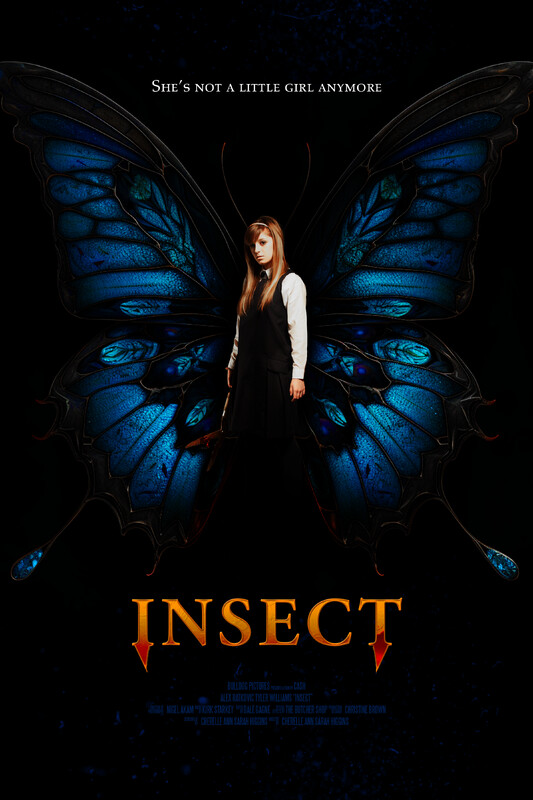
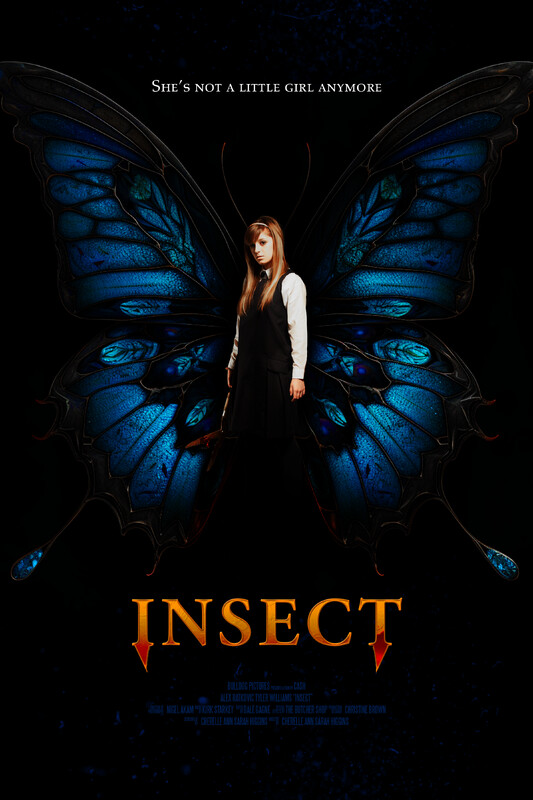
INSECT, 8min, Canada, Fantasy Directed by Cherelle Ann, Sarah Higgins In a subterranean prison, a bitter young girl and her supernatural ally hold a strange and beautiful man captive to avenge the crimes he has committed against her.
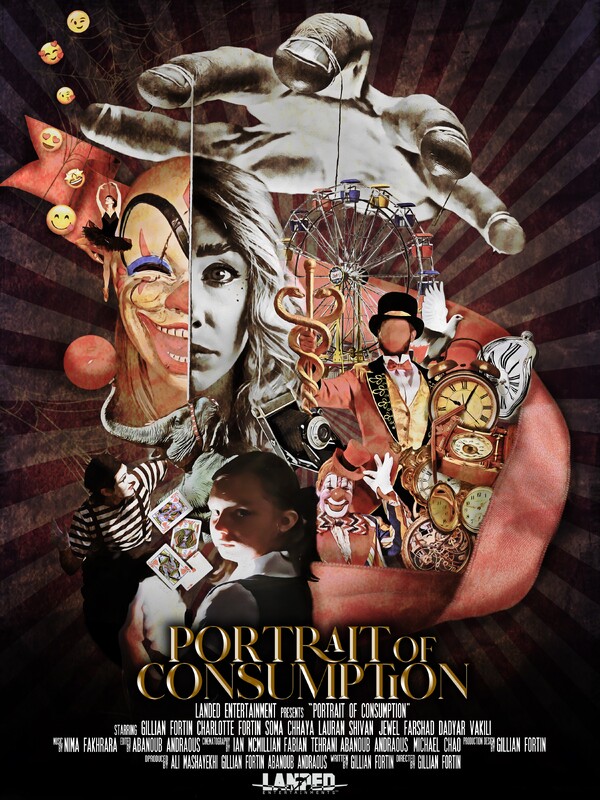
PORTRAIT OF CONSUMPTION, 8min,. Canada, Experimental Directed by Gillian Fortin Expressed in a metaphorical universe; a young woman named Jane Doe’s entire existence depends on the interactions of her social following as if she is a mere puppet on strings desperately seeking approval through the digital form of likes, comments and emojis. When she is hit with a wave of cyber bullying following a post she made, Jane Doe begins to spiral into a dark descent where the very fabric of her reality begins to fray. In one final act to regain her social status, Jane performs a grand gesture for her audience just as the curtain closes.
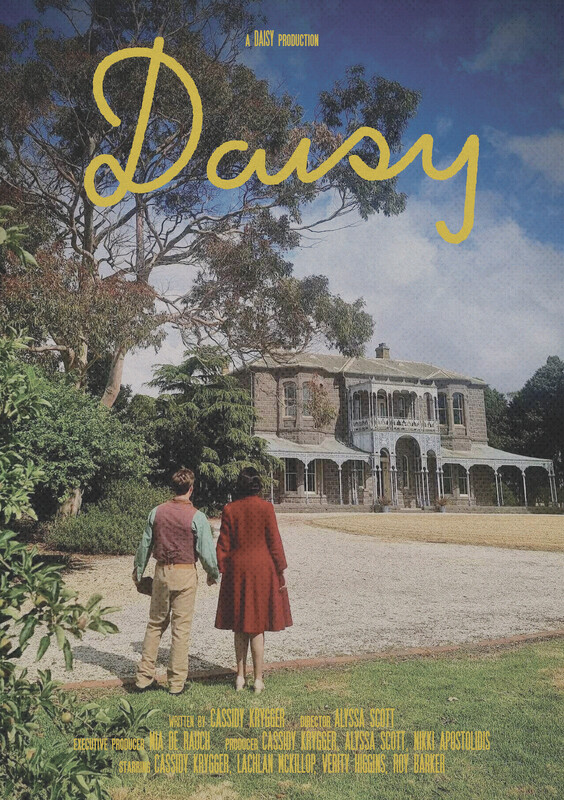
DAISY, 11min,. Australia, Romance/Period Drama Directed by Alyssa Scott “Daisy,” inspired by the real-life tale of our writer’s great-grandparents in 1930s Australia, unfolds the courageous journey of a young woman who defies societal expectations and risks losing everything as she embarks on a forbidden love affair, challenging the boundaries of family, faith, and the pursuit of true happiness.
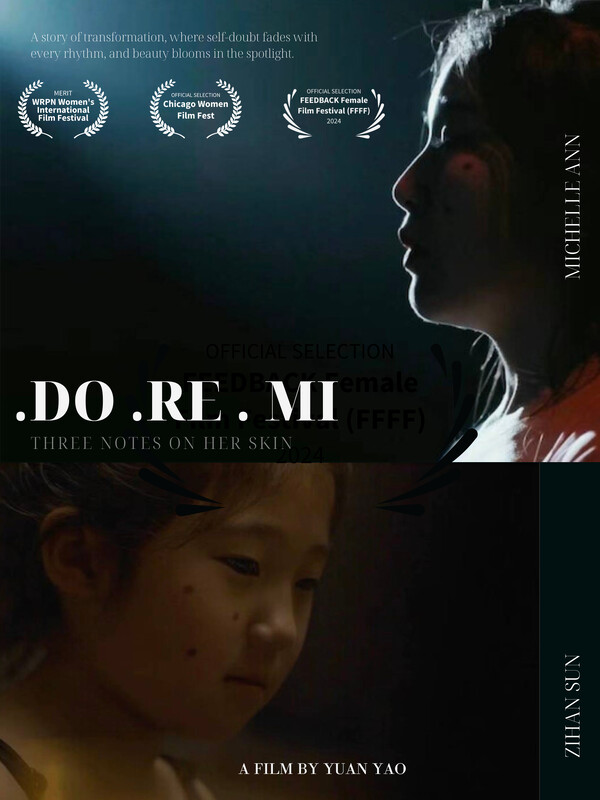
.Do .Re .Mi, 9min,. USA, Drama Directed by Yuan Yao A girl with a talent for dance is about to face one of the most important auditions of her life, but on that day an accident happens…
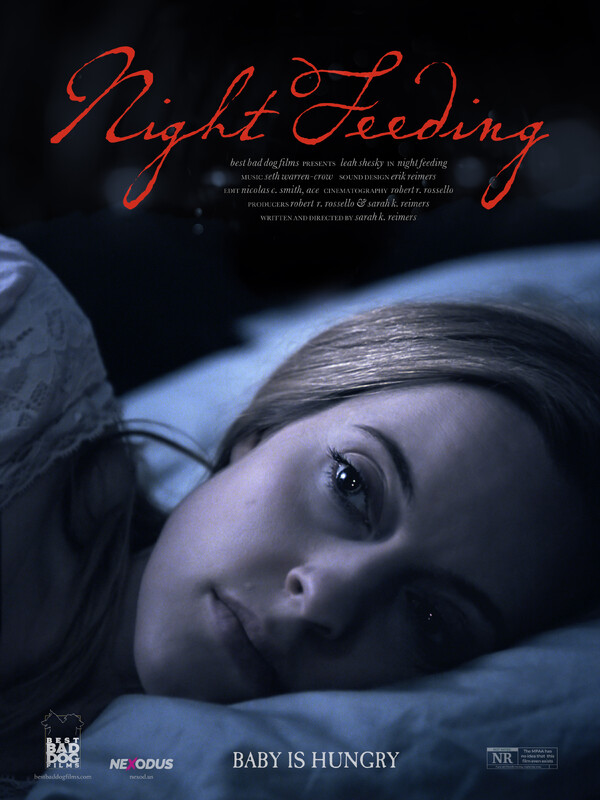
NIGHT FEEDING, 6min, USA, Horror Directed by Sarah K Reimers Exhaustion and sleep-deprivation begin to take their toll on a new mother, who struggles through the strange, dark stillness of the 4am feeding.
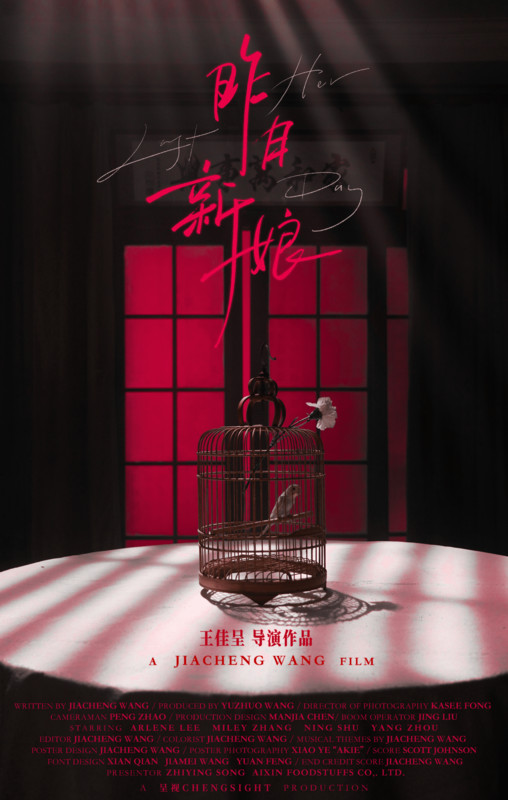
HER LAST DAY, 14min,. China, Drama Directed by Jiacheng Wang A woman “Meizi” with her child who has lived in domestic violence for years travels back to her past wedding with her abusive husband while facing the decision to change her marriage.
Afrolistic: Black Healing From Zimbabwe to the Bay, 22min., Zimbabwe, Documentary Directed by Nekia Wright, Shylet Ndarambwa Black American healer shares about her practice and explores traditional healing, music, and dance in Zimbabwe.
DAISY, 11min,. Australia, Romance/Period Drama Directed by Alyssa Scott “Daisy,” inspired by the real-life tale of our writer’s great-grandparents in 1930s Australia, unfolds the courageous journey of a young woman who defies societal expectations and risks losing everything as she embarks on a forbidden love affair, challenging the boundaries of family, faith, and the pursuit of true happiness.
HER LAST DAY, 14min,. China, Drama Directed by Jiacheng Wang A woman “Meizi” with her child who has lived in domestic violence for years travels back to her past wedding with her abusive husband while facing the decision to change her marriage.
INSECT, 8min, Canada, Fantasy Directed by Cherelle Ann, Sarah Higgins In a subterranean prison, a bitter young girl and her supernatural ally hold a strange and beautiful man captive to avenge the crimes he has committed against her.
NIGHT FEEDING, 6min, USA, Horror Directed by Sarah K Reimers Exhaustion and sleep-deprivation begin to take their toll on a new mother, who struggles through the strange, dark stillness of the 4am feeding.
What Is A Film Director? How do you run an independent film casting call? How do you get the best out of the actors you’ve chosen to bring your film to life?
Whether you’re running your first independent film casting call or into your millionth day of shooting, you may find some useful ideas here. Below, we investigate some of the techniques you can use and pitfalls you may face in casting and directing actors. A good resource for actors as well as directors!
We’ll be posting more articles all the time, so make sure you come back and check every now and then.
What is a film director? More than anything, the person responsible for bringing together the technical aspects of capturing performances with the actors who will bring a story to life. One of the most important aspects of a director’s job is to have a rapport with the actors, and it’s not any easy thing.
INSECURITY is the evil heart of a bad performance.
You need the actor to feel SAFE and COMFORTABLE in the creative process. They need to be relaxed.
Ask the actors to do something, not be something.
The presence of a camera should never change people, it only changes the aspect or degree of a person’s response.
The main job is to prepare the ground for inspiration. You can’t decide to be inspired. If you try it, it only creates tension, taking you farther and farther away.
The DIRECTOR is the viewer and the ACTOR is the viewed.
Let the actors help out with blocking. It solves all kinds of problems.
Actor and Director must respect each others creative territory.
Adjusts your beliefs about a character if the actor sees something different.
WHAT DO ACTORS WANT FROM DIRECTORS? – Not to give up until you get the performance – To make sure it’s the best take before moving on – Must have confidence that you understand the script – Need clear, brief, playable direction – They want to be pushed to grow and learn DON’T TELL ACTORS TWO DIRECTIONS THEY CAN’T PLAY TWO THINGS AT ONCE.
LISTEN to the actors and hear what they have to say.
Actors need insight, in language that is experiential, not descriptive. Adjectives are generalizations. USE VERBS Actions speak louder than words.
Verbs describe what someone is doing. They describe experiences rather a conclusion about experience.
USE THESE PHRASES To believe To fear To accuse To confront To convince To beg To complain To punish To tease To soothe
VERBS are also important to the basic understanding of a character
Acting should be a performance of the simple physical actions that tell the story.
Movies are made out of very simple ideas – A good actor will perform each small piece as completely and as efficiently as possible.
All good work requires self-revelation. The talent of acting is one in which the actors thoughts and feelings are instantly communicated to the audience. The instrument the actor is using is himself.
DON’T REPRODUCE LIFE CREATE IT
CONFIDENCE is an important element in an actor’s performance
LEARN FROM ACTORS SEE: -What stimulates them? -What triggers their emotion? -What annoys them? -How’s their concentration? -Do they have a technique? -What method of acting do they use?
An actor’s personality always comes out in their performance.
Tell them to go as far as they feel. Never be negative.
MOVMENT OF THE ACTOR You can always tell if an actor is truly in character by looking at his or her feet.
Actors need to have a GOOD EAR
Sometimes they need to just speak and try not to hit the furniture.
They need to trust the script, and you have to guide them if they want to stray from it. Unless they have an absolutely brilliant idea that serves the story BETTER than the original script, they should stick with the words as written. It’s tempting for actors to add or subtract words. That’s seldom a good idea.
Most actors need to know the technology that is around them. -Where is the camera? How are they being framed – close up, mid-shot, long shot?
NEVER JUDGE A CHARACTER
Acting is not pretending, is not faking something. It’s honesty. A director’s job is to recognize that and facillitate it.
For an artist there are two worlds the social realm, where we live and work day to day and the creative realm.
To enter the creative realm one must be free of the social realm, uncensored in the moment, away from concerns with result, following impulses, obeying only the deepest and most private truths.
An actor can’t lose trust in the process. As an actor, you need to: 1) Stay in the moment 2) Feel your feelings 3) Don’t move or speak unless you feel like it 4) Forgive yourself for your mistakes 5) Connect to the deepest and freshest meaning of the script 6) Turning themselves on and capturing their imagination 7) Connect with emotional honesty and get to the places they need to go
The best moments usually come from mistakes!
The scene is the event the words are the clues
Eye contact is very helpful to listening
ACTOR CHOICES Choices create behavior. The behavior dictates the way the lines are said
THE SPINE IS WHO THE CHARACTER IS Discover what is person’s great need in life. Michael Corlene To please his father Andrew Dufrane To get out of prison Every choice actors make about their character relates to their spine
AN ACTOR HAS TO THINK How does my character see the world?
WHAT DOES A DIRECTOR WANT IN AN ACTOR?
MEMORY (Personal Experience) – Each individual is essentially unknown to all others – Actors allowing their memory to occur physically 5 senses rather than intellectually
OBSERVATION
RESEARCH – Know the character – Know their history and back story – Know their habits and mannerisms, physical and spoken
IMAGINATION
IMMEDIATE EXPERIENCE – Energy and confidence to pull off a performance and scene
SENSORY LIFE – What they observe through their senses
CONCENTRATION – Performances are usually more successful when actors play against whatever feeling they have
PROFESSIONALISM – Camera technique – hitting marks – not blinking – ability to repeat successful performances and built on successes – able to alter what’s not working SCRIPT ANALYSIS – Finding the subworld of behavior and feeling in the script – Understanding the whole arc of the story to know how to play the scene
As a DIRECTOR you must stop JUDGING and begin to engage
Actors should remember that characters are real people. They don’t always tell the truth. They don’t always know the truth.
Certain questions an actor should ask about every character? 1) What is this person smart about? 2) What does this character find funny? 3) Where is his pain? 4) How does he play? 5) In what way is he an artist? 6) What does he most fear? 7) What profession has he chosen or does he aspire to? 8) What does he look up to? 9) Whom does he look up to? 10) What is the biggest thing that has ever happened to him? 11) How does this character differ at the end of the story from the beginning?
WHAT IS THE CHARACTER NOT SAYING?
FOUR AREAS OF IMPORTANCE IN CASTING 1) Actor’s ability 2) Whether he/she is right for the part 3) Whether you can work well together 4) Casting the relationship as well as the roles
AREAS OF A REHEARSAL PLAN 1) Ideas of what the film is about, what it means to you personally 2) Spines and transformations of all the characters 3) For each particular scene, its facts, its images, the question is raises 4) What the scene is about, its emotional event and how the scene fits in the arc of the script 5) Candidates for each character’s objective 6) The beats of the scenes, how you might work each beat 7) The scene’s physical life and its domestic event 8) Research you have done and research you have left to do 9) Your plan of attack 10) Blocking diagram
No matter how small the role is, the actor should read the entire script several times. They need to be aware of the function the author intends for the character in terms of overall storyline.
REMEMBER: The actor is playing someone with a HISTORY, not a FUTURE
FILM ACTING IS BROKEN DOWN INTO FOUR CATEGORIES 1) Extras 2) Non-professional performers 3) Trained Professionals 4) Stars
Know the skills and potentials of the actors you’re working with, and frame your suggestions according to their level of experience. What is a film director? Someone with the ability to help all actors grow. A good film director is someone who knows the power they have on set and uses it to guide a film to the best possible completion.
THINGS THAT MATTHEW TOFFOLO LOVES AN ACTOR TO DO
Matthew Toffolo loves actors to: 1) Arrive on set with their business planned and rehearsed and knowing their lines 2) Add extra ideas and business to the shoot, understanding what is possible and not 3) Do the same business on the same syllable of a speech in every take 4) Automatically ease themselves into the right position so that they fill the screen. Their two-shot is maintained or they come to a perfect three-shot 5) Understand the craft of screen acting and make additions and suggestions within the framework or what is possibly both technically and in the time available













 Festival Reviews