Overall a great experience. The work that went into creating the feedback video was much appreciated, and the website interview and podcast were a nice bonus. I highly recommend this festival.
This was a great experience for my under 5 minute short on climate change. I was so surprised by the awards! (won best music and best sound editing) A lot of effort went into their feedback, and I’m so grateful for the footage! Thank you so much.
Absolutely amazing! Really loved my experience with this festival.
Excellent ,very serious festival . Thank You for Best story and everything what You done to promote my short film “V” . Recomanded
Thank you for selecting and Awarding ‘Until We Meet Again’. The feedback from audience members was so insightful and rewarding to hear. It was a very special experience for me!
This festival has a guaranteed 4-tier set up for each accepted script. (No matter what, all screenplays submitted receive FULL FEEDBACK on their work.) 1) Full Feedback on your script 2) Actors performance video reading of your script 3) Blog interview promotion. 4) Podcast interview on the Film Festival ITunes show
The art of conveying both your story’s concept and theme, and tell the full arc of the story.
LOGLINES
Here is a template LOGLINE you can use – just fill in the blanks:
(TITLE) is a (GENRE) about a (DESCRIPTION OF HERO), who after (INCITING EVENT), wants to (OUTER GOAL) by (PLAN OF ACTION). This becomes increasingly difficult because (OBSTACLES AND COMPLICATIONS)
OR
(TITLE) is a (GENRE) about a (DESCRIPTION OF HERO) who must (OUTER GOAL) or else (DIRE THINGS WILL HAPPEN)
To pitch your screenplay effectively, you need to have a compelling and clear LOGLINE and SYNOPSIS. In order to write one, you must have a clear understanding of your script.
When writing your logline, try to answer these questions:
1) What is my concept? My main conflict and story?
2) What is my theme? What am I trying to say with this script?
3) What is the genre?
4) What is the beginning, middle and end?
Overall, the LOGLINE needs to convey the full arc of your story. Three sentences, max.
SYNOPSIS
A slightly longer telling of your story. You add more plot detail and character development than the logline. Using words to suggest tone, it introduces the main characters, the conflict and the overall arc of the story. You should always write it in the structure of your script, so it will reveal the pacing of the film. Visual images are necessary. Go here to read notes on writing proper loglines and synopses for professionals to read
When writing your SYNOPSIS, try to answer these questions: 1) Who is your main character?
2) The audience will relate to your main character because…?
3) Your main character’s objective is…?
4) Who is your antagonist?
5) Your antagonist’s objective is…?
6) What is the main conflict of the script?
7) The catalyst is…?
8) The climax is…?
9) What is your beginning, middle and end?
Overall, when writing your SYNOPSIS, use visual images to convey the story as much as possible.
How to Write a Screenplay? PART 3 – PLOT Screenwriting
For most writers, PLOT is the most interesting part of screenplay writing, and why they begin to write to write the script in the first place. They have a good idea for a story, and they want to write it.
PLOT Screenwriting is a mixture of two things: 1) What happens to the characters 2) What they do because of WHO they are
Most PLOTS wouldn’t happen if it wasn’t for the CHARACTERS. A CHARACTER(s) should drive the story, and vice versa.
You always know you’re watching a BAD FILM when any human being can insert themselves into the film. The UNIQUE character has to drive the PLOT.
The last thing you want is for you, the writer, to be a character in the plot.
“The stuff that I got in trouble for, the casting for The Godfather or the beginning scene I wrote in Patton, was the stuff that was remembered.” -Francis Ford Coppola Writer/Director (Godfather Trilogy, Apocalypse Now)
LET’S TALK ABOUT THE BASICS
Every story has a BEGINNING, MIDDLE and END, and every story has to come from a certain point of view. It can come from the point of view of a character (or characters from scene to scene) OR it can come from the audience’s point of view. WE the audience are looking into the story and seeing what is happening.
Think about reading a NOVEL. Either it’s written in the first person, where the character is telling the story, OR it’s in third person, where the actions are telling the story. The same goes for a script.
KNOW WHAT’S AT STAKE IN THE MOVIE – WHAT IS THE CONFLICT?
1) SURVIVAL – Many good films are about survival – human instinct – do-or-die situations. If you’re into Hollywood scripts and stories, think about the top-grossing films of all time. 99 out 100 are stories with characters in DO-or-DIE situations.
2) SAFETY AND SECURITY – Need to find a secure/protected setting once again. 3) LOVE AND BELONGING – Someone longing for connection – wanting to feel LOVED. 4) ESTEEM AND SELF-RESPECT – Wanting to be looked up to, and be recognized for their skills. 5) THE NEED TO KNOW AND UNDERSTAND – Curiousity, and understanding how things happen and what they have to go through to get answers. 6) THE AESTHETIC – Trying to be connected with something greater than themselves – a higher power. 7) SELF-ACTUALIZATION – The characters need to express themselves – to communicate who they are. The audience roots for someone to succeed. A lot of comedies have this plot. RAISING THE STAKES WHILE THE CHARACTER GOES AFTER THE GOAL: PRESSURE AND ROADBLOCKS
SCENE DESIGN
SCENES are unified around DESIRE, ACTION, CONFLICT and CHANGE
Each scene has to be a minor, moderate, or major turning point
The effects of TURNING POINTS are fourfold: SURPRISE INCREASED CURIOUSITY INSIGHT NEW DIRECTION
You need to lead the audience into EXPECTATION, make them think they understand, then CRACK and open a SURPRISE
SURPRISE and CURIOUSITY always bring the audience into the story
Give the audience the pleasure of discovering life, pains and joys at a level – and in directions – they have never imagined
SETUPS/PAYOFFS-Setup is layering-in knowledge-Payoff is closing the gap and delivering the knowledge to the audience
THREE POINTS YOU NEED FOR THE AUDIENCE TO FOLLOW YOUR STORY 1) Empathy with the characters. We don’t need to like them, but understand them and feel for them. 2) We must know what the character wants and let the character have it. 3) We must understand the values at stake in the character’s life.
The more often the audience experiences something, the less effect it has.
EMOTION peaks and valleys rapidly in a great story. It’s the catalyst for the PACE of the story.
THE LAW OF CONFLICT – Nothing moves forward in a story except through conflict.
As long as conflict engages our thoughts and emotions, we travel through the hours unaware of the VOYAGE that is leading us.
Make sure to check out WILDsound’s Screenplay Festival where you can submit your script and get it read in front of hundreds of industry people.
“Usually when you have a block, it’s because you’ve lost the motor of the story.” – Amy Holden Jones, Screenwriter (Indecent Proposal, Mystic Pizza)
“The singular image is what haunts us and becomes art.” -Julia Cameron, Author (The Artist Way)
REMEMBER, THE SCENE IS NEVER WHAT THE SCENE IS ABOUT 1) Define Conflict -Who drives the scene, motivates it and makes it happen? -Look at the character; what does she/he want? Then ask: -What blocks that which they want? -What do the forces of the Antagonist want? 2) Break the scenes into BEATS -A beat is an exchange of action/reaction in character behavior
3) Survey BEATS and locate the Turning Point -Find the ARC in each character’s transaction 4) Note what begins the scene and what ends the scene -The great industry cliche is to LEAVE THE SCENE EARLY and ENTER THE SCENE LATE
RHYTHM AND TEMPO – Set by the length of scenes. How long are we in the same time and place? Two or three minutes average for a scene (but come on – it’s not always that easy).
UNITY AND VARIETY – Because something happens in the beginning, something has to happen in the end.
PACING – Rhythm, serenity, harmony, peace, revelation. But we desire change – challenge, tension, danger, FEAR – never repetition.
JUST LET THE STORY BEGIN IMMEDIATELY, THEN LET THE CHARACTERS BRING NEW PEOPLE ON BOARD.
TRUST YOUR CHARACTERS TO TELL YOU HOW THE PLOT CAN EVOLVE IN THE RIGHT DIRECTION. THERE’S ALWAYS SOMEONE IN YOUR STORY WHO CAN BE INTRODUCED TO SEND THE ACTION TOWARD THE CLIMAX.
One of the greatest aids when writing a screenplay is to BELIEVE in the story – believe you are discovering it, instead of creating it. If you believe it already exists somewhere in your head in its entirety, there is no problem you can’t solve with a little detective work.
When writing a SCREENPLAY, it’s all about CHARACTER, PLOT, and THEME – the three cornerstones to telling a great story.
Below is Part One of NOTES you need to think about when writing a script. Whether you’re a seasoned script writer or just a beginner, these notes should be insightful for all – and it beats reading those long drawn-out books on the subject.
“A good film script should be able to do completely without dialogue.”-David Mamet
FOUR STAGES OF ANY SCREENPLAY.
1. THE STORY CONCEPT – A single sentence telling who the hero of the story is and what he/she wants to accomplish 2. THE CHARACTERS – The people who populate the story 3. PLOT STRUCTURE – The events of the story and the relationship of the characters; determines what happens in the story and when it happens 4. THE INDIVIDUAL SCENES – The way the words are laid out on the page – the format, and how one writes action, description and dialogue to increase emotional involvement. STORY ALWAYS BEGINS WITH A WHAT IF? QUESTION What if this happened? What if that happened
IT IS STORY ABOUT A _____________ WHO _____________
Every movie needs THRILLS, LAUGHS and TEARS
QUESTIONS YOU NEED TO ANSWER BEFORE YOU BEGIN TO WRITE Who is your main character? What is he/she trying to accomplish? Who is trying to stop him/her? What happens if he/she fails?
AND DON”T FORGET….. Whose story is it?
Who do I care about, identify with, follow in this film?To what extent do I see the story through a specific person’s point of view?
Where do I start the scene/end the scene?
What is the point of the scene?Why include the scene at all?
What’s the most important information the audience needs to get from the scene?
What is the scene’s focus?
Where is the scene heading?
Does the scene move the story further?
Does the scene have a direction? A sense of going somewhere? A point to make?
Do I get out of the scene after the point is made?
Have I remembered that scenes are about images?
Have I remembered to play the image, to play the conflict, to play the emotions, rather than simply play the information?
Is the relationship of my scenes interesting?
Are my scenes repetitive? Flat? Boring? Or is there something dramatic and fascinating happening?
Will the audience be entertained?
ELEMENTS FOR A SUCCESSFUL SCREENPLAY 1) Marketability 2) Creativity 3) Script structure
PEOPLE ALWAYS WANT TO CONNECT TO A FILM
CREATIVE STEPS IN WRITING A SCREENPLAY
RESEARCH
Research of MEMORY -Explore my own past, relive the memories and then write them down.
Research of IMAGINATION -The creativity of your own inner thoughts and feelings. What do you dream?
Research of FACT-Research the setting and character you’re writing about.
CREATIVITY MEANS CREATIVE CHOICES ABOUT WHAT TO INCLUDE AND WHAT TO EXCLUDE
“I steal from every movie ever made.”-Quentin Tarantino
* * * *
Interviewer Matthew Toffolo is currently the CEO of the WILDsound FEEDBACK Film & Writing Festival. The festival that showcases 30-50 screenplay and story readings performed by professional actors every month. And the FEEDBACK Daily Festival held in downtown Toronto. Go to www.wildsound.ca for more information and to submit your work to the festival.
Using his tech capabilities, Matt puts a team together to help build a virtual reality world that is a mirror if the real world, however, lack of funding needs they need to find some way get the project off the ground. Matt decides to impress the Dean of Engineering by telling him about a special chip and code he has written that has affects in the virtual reality and in the real world.
Get to know the writer:
What is your screenplay about?
An outsider graduate student attempts to create a digital mirror of his brain by building a custom VR world. He soon discovers that in order to achieve success, he must believe his VR creation is real life. Which, of course, is ridiculous . . .
Why should this screenplay be made into a movie?
The Fold offers a story about a human/digital melding and the birth of generalized artificial intelligence without resulting in catastrophe for humans or machines. It can be produced as either a stand alone feature or the opening salvo of a limited series exploring stories and conflicts in and between both VR and IRL. I feel this is minimally explored narrative territory.
DEADLINE TODAY: Submit to the Festival via FilmFreeway:
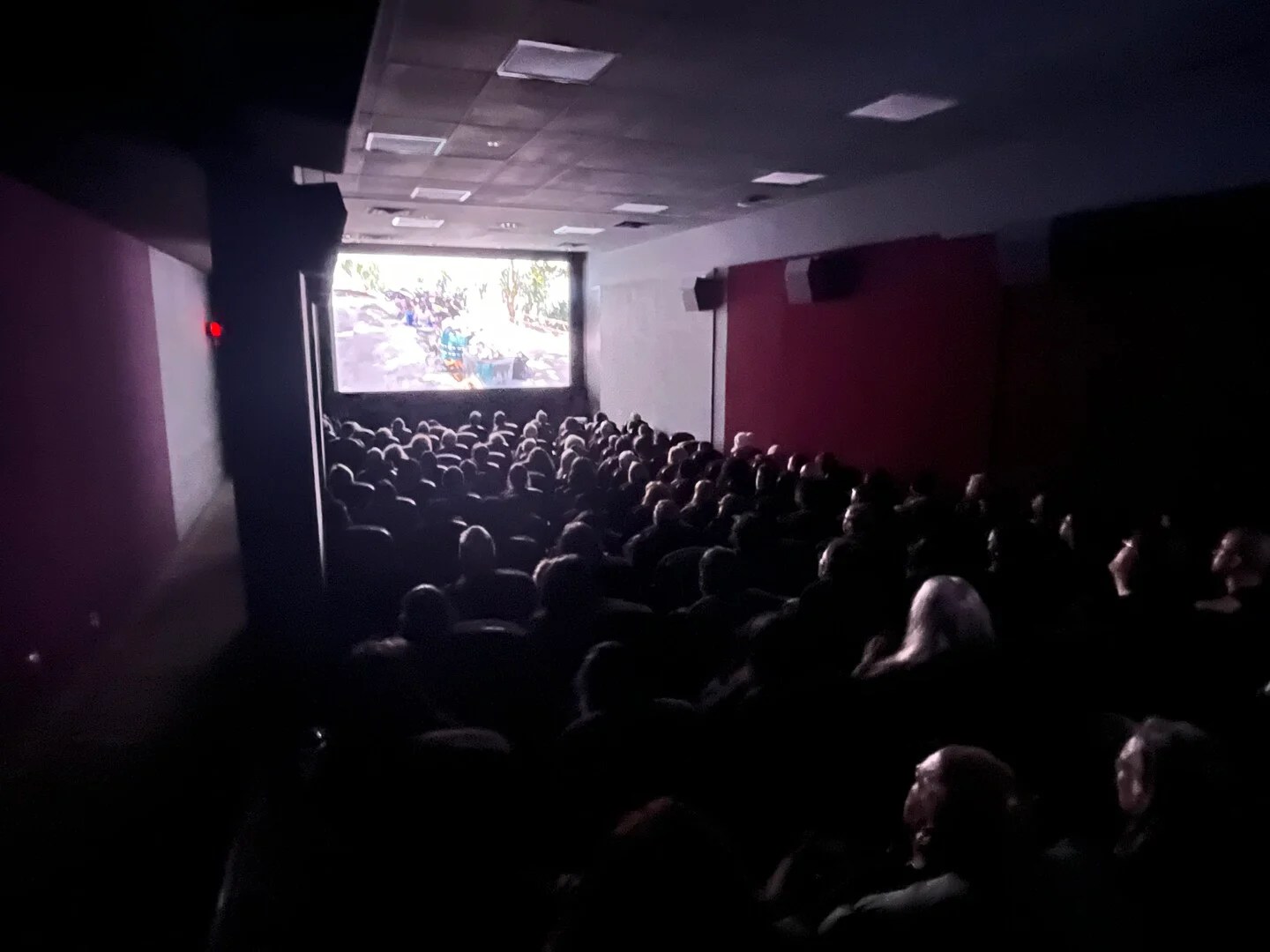
We love the format of this festival. The video interviews of the festival audience is tremendous fun. And most importantly the festival and the audience totally get it!! Gratitude !
This festival experience has been fantastic. The feedback videos were outstanding, and the podcast interview was delightful. The communication was excellent, and the value provided was exceptional. Thank you for celebrating Tararau S-K 😊
I would highly recommend this festival. Not only was the communication solid throughout, but getting feedback from the judges who watched our documentary was invaluable. Thank you for honoring our film, Burton Rocks Calling!
One of the most incredible festival experiences. Thank you Toronto Documentary Feature and Short Film Festival for such a positive experience. Your out of the box four tier screening & promotion option for filmmakers is truly unique and sets you apart as a festival. Heartfelt gratitude to the festival team members, audience and reviewers for awarding my short film MITTI (discovering Ikigai) as the best environmental film at the festival.
What an unusual and helpful festival! We make these films obviously to share with an audience, and to ideally hear how it resonates with them— so it was very special to be able to receive several people’s articulate responses to our film! And thanks so much for the good communication and the honor of Best Human Interest Film!
Submit your TRUE CRIME Short Story to the Festival here and we will automatically have it performed by a professional actor and turned into a promotional video for yourself.
A young adult (YA) novel is a fictional work written for readers aged 12 to 18 that usually explores the experiences and challenges of adolescence.
Get FULL FEEDBACK on either the 1st chapter or entire novel book from our committee of professional writers and writing consultants. Get your novel performed by a professional actor at the festival.
NEW OPTION: Or, just submit for an actor performance reading transcript of your novel (any 5 pages of your book). Great way to promote the sales of your book if you’re already published.
This festival has a guaranteed 4-tier set up for each accepted script. (No matter what, all screenplays submitted receive FULL FEEDBACK on their work.) 1) Full Feedback on your script 2) Actors performance video reading of your script 3) Blog interview promotion. 4) Podcast interview on the Film Festival ITunes show











 Festival Reviews