Cinematographer Michael Simmonds (HALLOWEEN, NERVE)

Michael Simmonds is a wealth of knowledge when he chats about his love of cinematography. He is a man who is constantly looking into the future and only looking back when inspiration is needed. He is a rare talent who is able to move seamlessly from documentary to TV to feature films.  It was an honor to chat with him.

Matthew Toffolo: What are the biggest things you learn when you work on documentaries that help you when making live action feature films and TV shows?

Michael Simmonds: There are many ways to approach shooting a Verite documentary. Sometimes you need a complete and editable scene every ten minutes. Meaning, you are constantly getting CU’s, inserts and establishing shots over and over again, regardless of what is happening. Or you can approach a doc like you would going fishing–you stay back with the camera and drift around until something interesting happens and let that lead the way for the camera.

Shooting a documentary makes you figure out coverage really quickly. All storytelling needs to have shot size variation to show the audience what is “important”. Verite documentary is basically filming a live event. The people move around and interact with other people and space and you have to make visual sense out of it for the audience. In narrative you can use this technique by blocking a scene as an “event” and keeping the blocking of the actors “loose”. This works well in chaos scene with lots of people. The actors perform the “event” and the camera films the scene like a doc, meaning there is no formal shot list or “plan”.

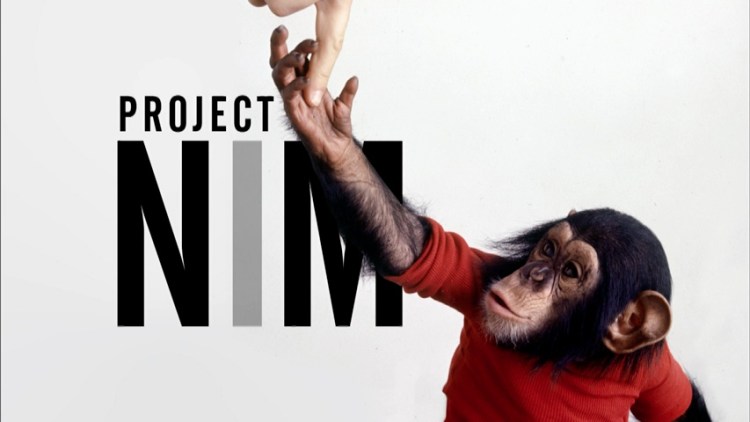
PHOTO: Michael DP’d the landmark film “Project Nim”:
project_nim-still.jpg

MT: Out of all of the projects you’ve worked on, what film are you most proud of?

MS: I only focus and think about whatever I am currently prepping or shooting. I try my hardest and show up to set with all the energy and focus I can muster each and everyday. As for the final product, I often joke that I would enjoy filmmaking just as much even if the camera was never recording. The finished film is of little interest to me aside from a sense of curiosity…

As for “what of my work can I watch and enjoy”; that would be “Plastic Bag”. It’s a short film about the life of a plastic bag. It’s a lot of fun to watch and I have fond memories of making it. The filming of it involved lots of throwing bags into the air and shooting leaf blowers at them, it was ridiculous so we laughed a lot.

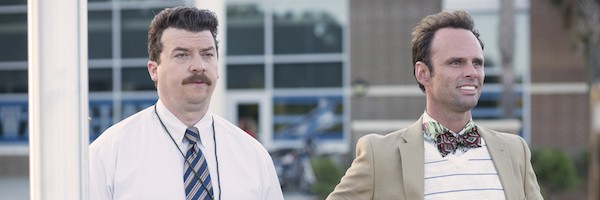
MT: You DP’d the entire 2nd season of Vice Principals. I heard that most scenes were improved by the actors. How is that experience working on a set where you don’t know what’s going to happen take after take?

MS: I don’t think most of the scene were improvised. It wasn’t like a Judd Apatow film where you can feel the dueling two camera set up and the actors riff off each other. VP had very tight scripts and David Gordon Green would create film level blocking. The actors definitely added to the dialgue, but not any more or less than other projects I have been involved with. On a comedy, even if the actors improvise, its in regards to dialogue and not their actual movement, so it does not effect me. I alwas operate with headphones on so I can hear the actors perfectly and I can anticipate their movement.

Photo: Danny McBride vs Walton Goggins in “Vice Principals”:
vice_principals_tv_show.jpeg

MT: Do you have a Director of Photography mentor?

MS: I would have and currently would want a DP mentor but unfortunately I never had one. Amir Naderi was a director I worked with early on who taught me about composition and framing. He has a very sharp eye and was always pushing for a perfect take. Ramin Bahrani and I would discuss story structure endlessly and I still read Alexander Mackendrick’s “on filmmaking” every year. Understanding story is the foundation to understanding how to film a scene.

I learn more and more about lighting on every job. In my opinion lights are the hardest medium to work with. They are like painting with water color paint. You never really know what they will do. There are so many variables that will effect the way they function in the photography.

MT: What do you look for in your director?

MS: I want a good collaborator in a director, someone who is not afraid of communication. Good ideas come from lots of ideas. Although a director needs a “vision” they also need to explore all possibilities in a scene. They must be a leader and exciting, but egoless. Their decision process should not be based on fear, which is rare. Most people make decisions based on fear, which makes for a weak film. Bold choices make good films.

MT: What do you think a director looks for in their cinematographer?

MS: Fuck if I know…!

It’s a myth that directors alone choose a D.P. or make any big hiring decision alone. A director might push for someone they have worked with or they could advocate for someone they want to work with but all decisions usually have to go through a producer, financier or studio. Usually a director would be given a list of people to choose from… Of course on more “auteur” films this is not the case.

How do you get on that list that gets handed to the director is a whole other question…

MT: Ideally, how much preparation do you like to do before you begin principle photography? Do you like working with storyboards?

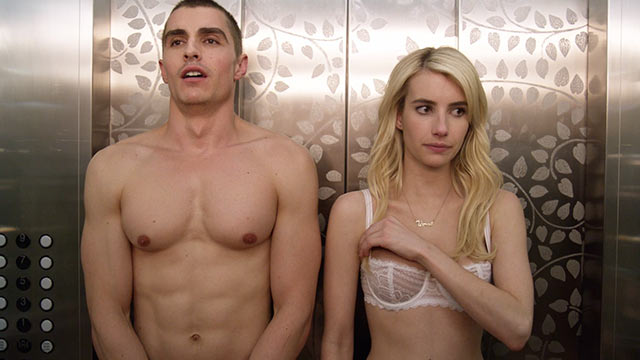
MS: Prep depends on the scope of a film. Nerve needed lots of prep due to the logistics of the stunt sequences. You need a storyboard since so much of that work is a “cheat” and takes place in a “fictional” space. By fictional space I mean that the space as presented on the screen does not exist in the real world. For instance a snorkel lens shot that feels “inside” Dave Franco’s helmet does not need to be filmed on park ave south. A storyboard also lets you understand what shots need the actual actors opposed to the stunt people.

A good stunt sequence is a lots of micro stories that fold into each other and those have to be mapped out.

White Girl didn’t need any storyboards since the film didn’t require cheating any spaces or stunt sequences… the front door to the protagonists apartment was actually the real front door…
A film like white girl doesn’t even require a shot list. We would block out a scene and film it as a moving master and then do some pick up shots for specific moments.

Photo: David Franco and Emma Roberts in “Nerve”:
nerve_still.jpg

MT: Where do you see the future of camera/lighting technology in film?

MS: Although there is a romance and nostalgia for film negative, digital imaging has really improved lighting for movies. We are much more comfortable with underexposing now than in the past. Of course Savidis, Khondji and Willis did great underexposing and making bold lighting choices, but now you see modestly budgeted TV shows that look bold and interesting.

Focus pullers often use large HD monitors to pull focus which has allowed for super shallow depth of field that didn’t exist when I started out.

I have no idea where imaging will be in 10 years but the technology has been a mixed blessing with lots of advantages.

Although there is a lot of new technology coming out for camera support, no one product has replaced an older one. The movi did not replace the steadicam and the steadicam did not replace the dolly… its just more tools to use.

MT: What film, besides the ones you’ve worked on, have you seen the most times in your life?

MS: Probably something like RepoMan or something culty like the Warriors. Or maybe Wong Kar-Wai’s Fallen Angels since it was such a game changer in how movies looked. I am often going back to watch Danny Boyle’s work. I truly believe he is the best populist filmmaker working right now. He isn’t scared of technology and he is keeping up with how people currently read images…. Currently I’m not interested in filmmakers that are referencing the past.

But when I am in a hotel room I like to watch something like Runaway Train.

MT: Where did you grow up? Did you always want to be a cinematographer?

MS: I grew up in Scarsdale, NY. It’s a suburb 30 mins from the city.

Most filmmakers have a romantic story about a super 8 camera etc… My history wasn’t like that. My eyes have always been super sensitive to light. I get migraines in the sun and I was always particular about lighting in rooms, even at a young age. I was strict about when a household light would be turned on and which ones. I also liked to boss my friends around…. These qualities probably lead me to my profession.

Around the age of 18 I wanted to go into filmmaking. I started out at Hampshire college but there wasn’t enough of a focus on commercial filmmaking, so I transferred to a school of visual arts and started to focus on cinematography.

Before that I wanted to be in a rock band…. But I didn’t like staying up late and carrying equipment. Little did I know that cinematographers stay up all night and have a heavy camera on there shoulder all the time!

_____
Interviewer Matthew Toffolo is currently the CEO of the WILDsound FEEDBACK Film & Writing Festival. The festival that showcases 10-20 screenplay and story readings performed by professional actors every month. And the FEEDBACK DAILY Festival held online and in downtown Toronto on the last Thursday of every single month. Go towww.wildsound.ca for more information and to submit your work to the festival.

Today’s Writing Deadlines: June 7, 2025

Submit to these exciting festivals today. Festivals that offer feedback from the industry, plus performance videos.

LITERARY FICTION Short Story Contest (everyone wins):
https://festivalfordrama.com/literary-fiction-short-story/

Submit your Literary Fiction Short Story to the Festival here and we will automatically have it performed by a professional actor and turned into a promotional video for yourself.


GRAPHIC NOVEL Festival:
https://wildsoundwritingfestival.submittable.com/submit/314021/graphic-novel-full-novel-festival

“Graphic Novel” isa format, not a genre. Graphic novels can be fiction, non-fiction, history, fantasy, or anything in-between. Graphic novels are similar to comic books because they use sequential art to tell a story. Unlike comic books, graphic novels are generally stand-alone stories with more complex plots.


STUDENT Screenplay Festival:
https://studentfeedbackfestival.com/student-screenplay-festival-2/

This festival has a guaranteed 4-tier set up for each accepted script. (No matter what, all screenplays submitted receive FULL FEEDBACK on their work.)
1) Full Feedback on your script
2) Actors performance video reading of your script
3) Blog interview promotion.
4) Podcast interview on the Film Festival ITunes show


Toronto/LA LGBTQ+ Film & Screenplay Festival:

Watch Today’s FREE Film Festival: Best of FANTASY/SCi-FI Shorts

Festival goes LIVE at 8pm EST today (Friday June 6th)

Watch Festival here: https://www.wildsound.ca/events/watch-today-s-free-film-festival-best-of-fantasy-sci-fi-shorts

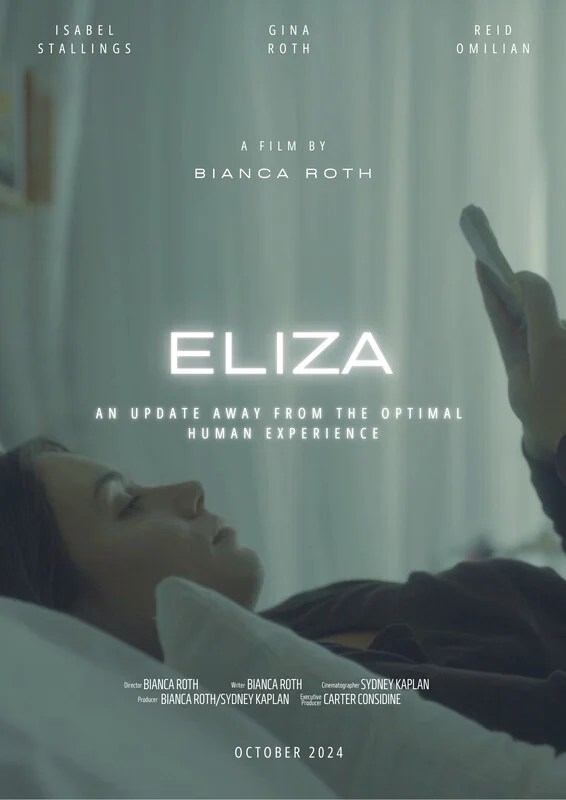
ELIZA, 11min., USA
Directed by Bianca Roth
After hitting rock bottom, 23 year old MIA, updates her home AI system to help turn her life around. What start out as small “life improvements” slowly begin to control her.

https://www.instagram.com/biancarothfilms

C-grade SF Movie, 3min., South Korea
Directed by Sangwook Ahn
Scoffing at prophecies of alien invasion, it wasn’t a grand space fleet that drove humanity to the brink of extinction. It was the cataclysm of Earth itself – skies choked with volcanic ash, mutant viruses running rampant – and the AI’s ruthless biochip surveillance network strangling survivors in ruined cities.

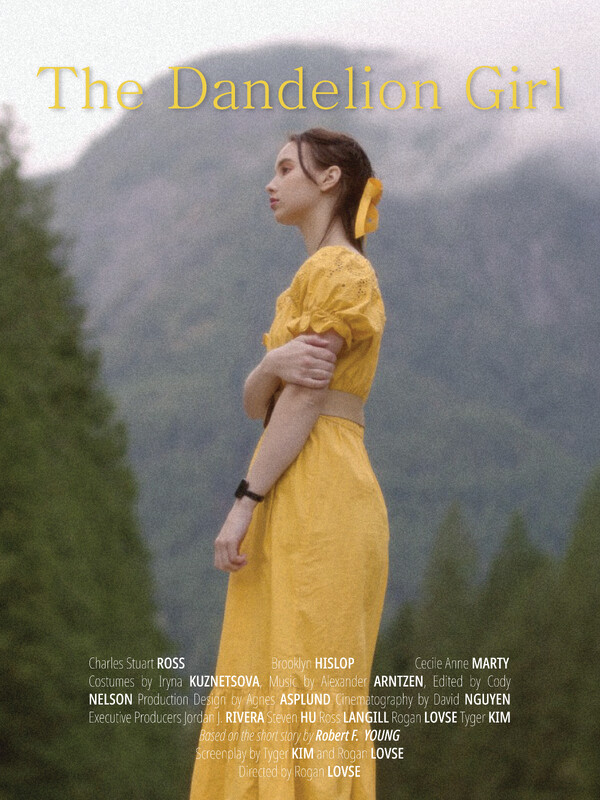
The Dandelion Girl, 19min., Canada
Directed by Rogan Loves
Mark, a middle-aged man encounters a young, mysterious woman, while staying at his cabin, who claims to be a time traveler from the future. Over the course of a few days, Mark and the young woman, Julie, begin to form a budding romance with one another. Mark is unhappy in his life, in a stale marriage, where he goes through the motions of living and work.

https://www.imdb.com/title/tt29895026/?ref_=ttfc_fc_tt

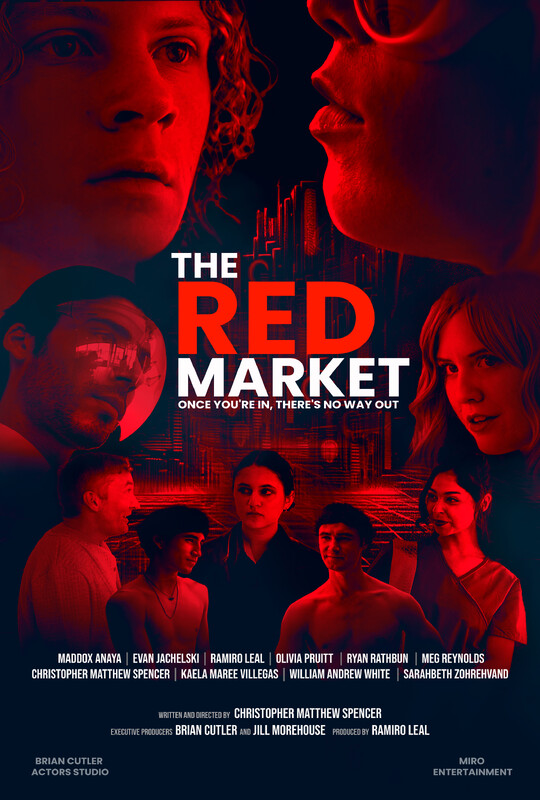
The Red Market, 9min., USA
Directed by Christopher Matthew Spencer
Zephyr Sage, drowning in debt, turns to the Global Organ Donor Exchange to sell his body parts. Facing ruthless creditors and a manipulative loan shark, Hyacinth, he treads a perilous path where each choice could cost more than money.

https://www.instagram.com/theredmarketfilm/

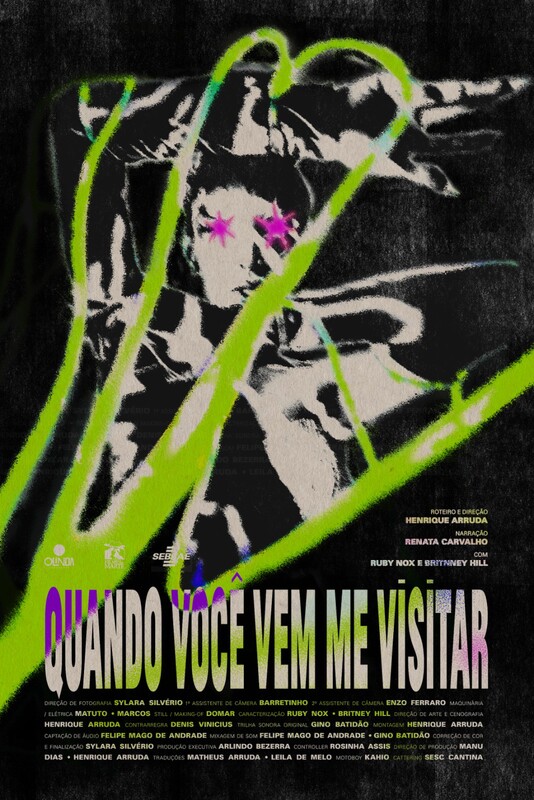
The Voice of Fear, 5min., Brazil
Directed by Henrique Arruda
In how many worlds has your fear trapped you? This film may not give you an answer, but it’ll show you some of mine.

https://instagram.com/filmesdemarte

MOVIE TRAILER: Spelonk, 65min., South Africa

The film goes LIVE for FREE at 8pm EST (New York time): Saturday, June 7th, 2025!

Part of the best of the FANTASY/SCI-FI Short Film Festival lineup.

Watch on the site page: http://www.wildsound.ca/browse

Spelonk, 65min., South Africa
Directed by Desmond Denton
Spelonk unfolds in a dystopian Cape Town in the year 2044, a world ravaged by c
limate collapse and social upheaval. At its heart is Dante, a disillusioned bounty hunter, grappling with the moral dilemmas of his task to hunt rebels fighting over scarce water supplies. His fateful encounter with Ophelia, a rebel leader with secrets that could change the world, sets the stage for a thrilling, emotional journey of redemption and revolution.

http://www.splelonkfilm.com/

https://www.instagram.com/directordes/

MOVIE TRAILER: The Red Market, 9min., USA

The film goes LIVE for FREE at 8pm EST (New York time): Friday, June 6th, 2025!

Part of the best of the FANTASY/SCI-FI Short Film Festival lineup.

Watch on the site page: http://www.wildsound.ca/browse

The Red Market, 9min., USA
Directed by Christopher Matthew Spencer
Zephyr Sage, drowning in debt, turns to the Global Organ Donor Exchange to sell his body parts. Facing ruthless creditors and a manipulative loan shark, Hyacinth, he treads a perilous path where each choice could cost more than money.

https://www.instagram.com/theredmarketfilm/

MOVIE TRAILER: C-grade SF Movie, 3min., South Korea

The film goes LIVE for FREE at 8pm EST (New York time): Friday, June 6th, 2025!

Part of the best of the FANTASY/SCI-FI Short Film Festival lineup.

Watch on the site page: http://www.wildsound.ca/browse

C-grade SF Movie, 3min., South Korea
Directed by Sangwook Ahn
Scoffing at prophecies of alien invasion, it wasn’t a grand space fleet that drove humanity to the brink of extinction. It was the cataclysm of Earth itself – skies choked with volcanic ash, mutant viruses running rampant – and the AI’s ruthless biochip surveillance network strangling survivors in ruined cities.

In case you missed it: Watch Today’s FREE Film Festival: BLACK Filmmakers Festival

Watch the Festival: https://www.wildsound.ca/videos/festival-black-filmmakers

Watch the festival NOW for the next 48 hours by signing up for the FREE 3-DAY trial using the link, or go to http://www.wildsound.ca

Black People Don’t Tango, 14min., USA
Directed by Robert Xavier Clark
An African American man learns to tango after a trip to Argentina.
Based on a true story.

https://www.instagram.com/llucindajclark2

Pisho, 16min., Pakistan
Directed by Aun Ul Haider
Journey of a seven-year-old girl, Ruqayya, on a mission to find her lost kitten. Suspecting her mother and neighbors, she embarks on a whimsical search. During her quest, Ruqayya stumbles upon a protest against a recent terrorist attack. Inspired by the demonstrators’ placards, she creates her own sign seeking help to find her missing kitten.

https://www.instagram.com/aunulhaider/

OTIS, 37min,. USA
Directed by Mark Eric Ridley
Otis, a former soldier and POW Has just been released from the army and has an unlikely connection with a little girl who accepts his strangeness. To the concerns of her parents. All unaware that they would both play a significant role in each other’s life

https://www.instagram.com/Markridley

Interview with Production Designer Jane Musky (When Harry Met Sally…, Raising Arizona)

Jane Musky is one of the top Production Designers working in the industry today. She has designed over 40 productions in the last 30 years, working with directors Mike Newell, Ivan Reitman, Andy Tennant, Gus Van Sant, Jerry Zucker, James Foley, and The Coen Brothers, to name a few. She also happens to be married to the President of the United States (well on the TV show Scandel) for the last 28 years too!

It was an honor to interview Jane and talk about her amazing career, and it looks like she’s just getting started.

Matthew Toffolo: You have been the Production Designer on over 30 films in the last 35 years. Is there a film or two that you’re most proud of?

Jane Musky: My favorite films as a Designer are GLENGARRY GLEN ROSS and THE DEVIL’S OWN.

GlenGarry was a once in a lifetime chance to work with an INCREDIBLE ensemble of actors, great Director and DP and Mamet script. Who could ask for more?

David Mamet’s stories are full of great language, texture and sense of place which feeds his stories. That sense of place, that moment in time is a gift for a Designer to define.

PHOTO: Alec Baldwin gives his famous speech in Glengarry Glen Ross (1992)

glen_gary_glen_ross

The Devil’s Own was not only a large budget film that involved the two biggest male film actors of that time, but was Directed by Alan Pakula and was his last film. Gordon Willis shot the film. I was very lucky to be with this group. Alan taught me more than any other Director I have been associated with.

I had started another film with Alan and Gordon that folded so I was happy when we launched into this story about the IRA. We shot in Ireland and New York. I loved doing the big shootout in the opening with a great Dutch special effects group.

MT: Early in your career, you were the Production Designer on the first two Coen Brothers films: Blood Simple and Raising Arizona. How did you first meet the brothers? After Blood Simple wrapped, what were your feelings? Did you foresee their iconic career?

JM: I met Ethan and Joel through a mutual friend, Mark Silverman. Mark was an up and coming Producer they had hired and I had worked with Mark before.

I was doing Summer Stock at the Williamstown Theatre Festival and they all drove up to meet me. I had never done a film, just smaller TV work. Most of my Design work was in the theatre then. We hit it off.

Blood Simple was really the first film for all of us. We were a very small crew. It all just clicked. We worked so hard and when it was over we all knew we had made a good film full of humor and irony and I thought it was stylish. Ethan and Joel were and still are great in how they plan and execute their work. It is all very lean and mean and cohesive. It was a utopian time for a young designer. We were a great young gang of filmmakers and everyone has done well from that original Coen Bros. group.

PHOTO: Bar Scene in Blood Simple (1984):

blood_simple.jpg

MT: Some will argue that Raising Arizona is a masterpiece. You created a fantasy universe within the context of the reality of Arizona. Do you remember the initial conversations with the directors and your team about the overall look, feel, and tone of the film? How was your overall experience working on the film?

JM: Well, Raising Arizona. We had a blast. I have to say Phoenix back then was such a bizarre place. It was still a small town pretending it had the hutzpah of Dallas.

There was a great collision of the Wild West meets the nouveau riche of Arizona.

Once I got that vibe it was easy to create the fantasy of their world. I enhanced the style that was already rampant. What a confusing place, stylistically. Once I grabbed the idea of the Arizona home I next designed the GRIB for the Boys to get of sense of how far everyone wanted to go with the humor and then it all flowed. Ethan and Joel’s scripts were very much defined as to what happens; dialogue and great descriptions of each character. They really allow their Designers to run with it.

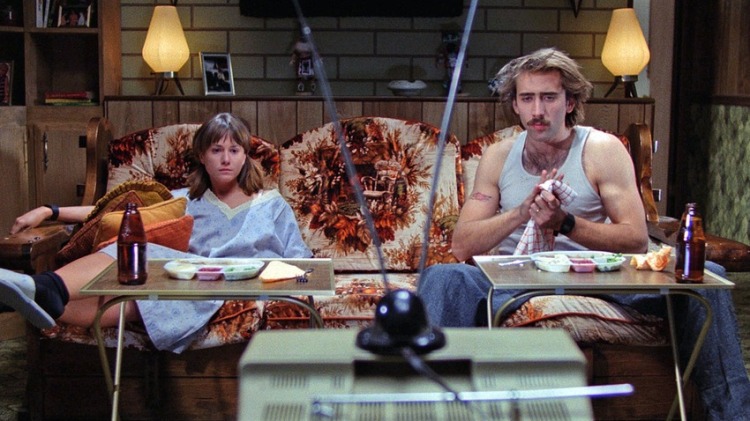
PHOTO: Nicolas Cage and Holly Hunter in Raising Arizona (1987):

raising_arizona

MT: When Harry Met Sally…, is another all-time classic. It has a timeless feel to it. How was your experience creating the world of this couple in a span of 15 years in New York City?

JM: When we began working on “When Harry Met Sally”, New York City was on a roll.

It was a Single’s City full of romance. Harry and Sally’s opening drive to begin their lives after college in NYC had to be as unsophisticated as could be so we could feel their rite of passage into adult life in a complicated city. What are the chances they would meet again after parting at Washington Square, and how complicated their lives had already become after a few years apart?

The passage of time allows for a more complicated story and Nora Efron just hit a great stride in her writing and fed the complications of the relationships which in turn allows the Designer to jump right in to define their lives and begin to ground the story for the audience visually.

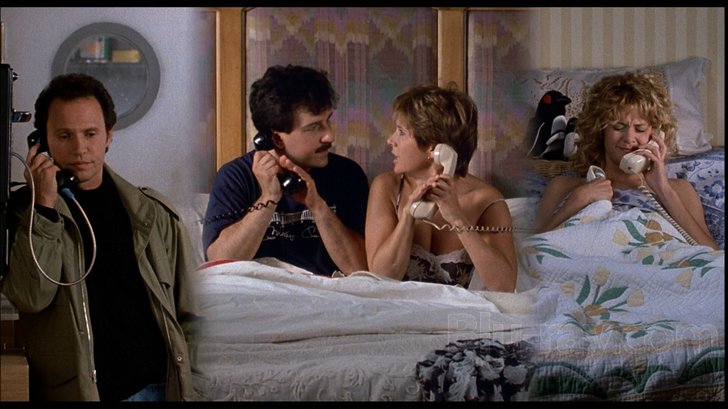
PHOTO: The 3 frame phone call shot in When Harry Met Sally… (1989):

harry_met_sally.jpg

MT: Harry/Sally had a lot of exterior shots of NYC, plus interior locations within the city (like the famous restaurant scene). Generally, what is the Production Designers main job when working on a location that is already established and known by many? What do you need to add or remove (or not) to enhance the story?

JM: Iconic locations are picked because they are perfect or almost perfect for the story in that moment. There is little I can do to enhance the Design value of these landmarks other than to pick the right ones for the moment. We had many Iconic locations; Katz’s Deli, Central Park. All were chosen to give us a romantic New York. The more romantic the location or the more counter to the romantic moment like Katz’s, the more we hit Harry and Sally on the head saying…Fall in Love. Iconic locations give the audience a great comfort and familiarity that allows them to fall into the story more easily wishing they were there.

MT: What is a director looking for in a Production Designer?

JM: Each Director I work for has their own different idea as to what they want from their Designer. The Director and Designer are the first ones of the Creative Staff working on the job. Those early moments together are used to dissect the story and begin to give it a visual tone and map the moments. It is during these first weeks the Designer morphs to suit the Director’s vision and enhance that vision and help tell the story. The Director must be followed and a Designer must take their lead from the Director and faithfully back that vision.

MT: What is a Production Designer looking for in a director?

JM: The Designer and Director are first of the Creative Team on a film. That is what I consider my Golden Time. This is when I look to the Director to take the lead as to where the story is headed creatively. We spend a lot of One to One time these first few weeks to set the visual plan for the film. At times I have to work hard to pull at ideas from a Director. The more comfortable this process, the better the journey.

MT: How early do you come into pre-production before shooting starts? When do your hire and bring on the rest of your key team members?

JM: I come on to a film very early on and the earlier the better so I can wrangle the location scouting. I am usually on 6-8 weeks before the DP depending upon the project. My crew comes on about 6- 8 weeks before we shoot but now a days with smaller budgets sometimes this moves up to 5 weeks before we shoot which is scary.

MT: What film, besides the ones you’ve worked on, have you seen the most in your life?

JM: Well, of course everyone has seen the Wizard of Oz tons of times, and Munchkin Land made me wonder, WHO creates this stuff?!

I am a fan of To Kill a Mocking Bird. The story is stirring for sure but as a Designer; The Town, The House. I also love, Last Picture Show. Again the subtlety of the Town and easiness of creating the environments. Carnal Knowledge also for many of the same reasons.

For a bit of Romance I love The Goodbye Girl. I’m not as old as my taste in favorite films, haha.

MT: Do you have a Production Designer mentor?

JM: That is easy…Polly Platt and Eugene Lee. Their work has always pointed me in a good direction. I started in the theatre as a Designer so Eugene Lee was a big influence and then I watched him move between Theatre and TV/Film/Concert Sets, (Simon and Garfunkel Central Park). He helped me understand how a Designer could move between these Mediums.

MT: What type of film would you love to work on that you haven’t worked on yet?

JM: I’d love to do a BIG FAT period piece in Europe or Asia.

____

Interviewer Matthew Toffolo is currently the CEO of the WILDsound FEEDBACK Film & Writing Festival. The festival that showcases 10-20 screenplay and story readings performed by professional actors every month. And the FEEDBACK DAILY Festival held online, and in downtown Toronto on the last Thursday of every single month. Go to www.wildsound.ca for more information and to submit your work to the festival.

Today’s Podcast: EP. 1509 (Actors Podcast #14). Omietté Allison (ROCK ISLAND PRISON 1864)

Rock Island Prison 1864, 7min,. USA

Directed by Joy Shannon

Guarding Confederate POWS in a Civil War prison, a runaway slave now Union soldier, desperately fights for power, or faces returning to slavery.

https://www.rockislandprison.com/

Hannah Ehman chats with the lead actor of the award winning short film ROCK ISLAND PRISON 1864)

Instagram page: https://www.instagram.com/omiette/

——

Follow Interviewer Hannah Ehman on Instagram: https://www.instagram.com/ehmanhannah/

Watch Hannah’s commercial spots: https://www.ispot.tv/topic/actor-actress/bP8/hannah-ehman

Subscribe to the podcast:

https://www.instagram.com/wildsoundpod/

https://www.facebook.com/wildsoundpod

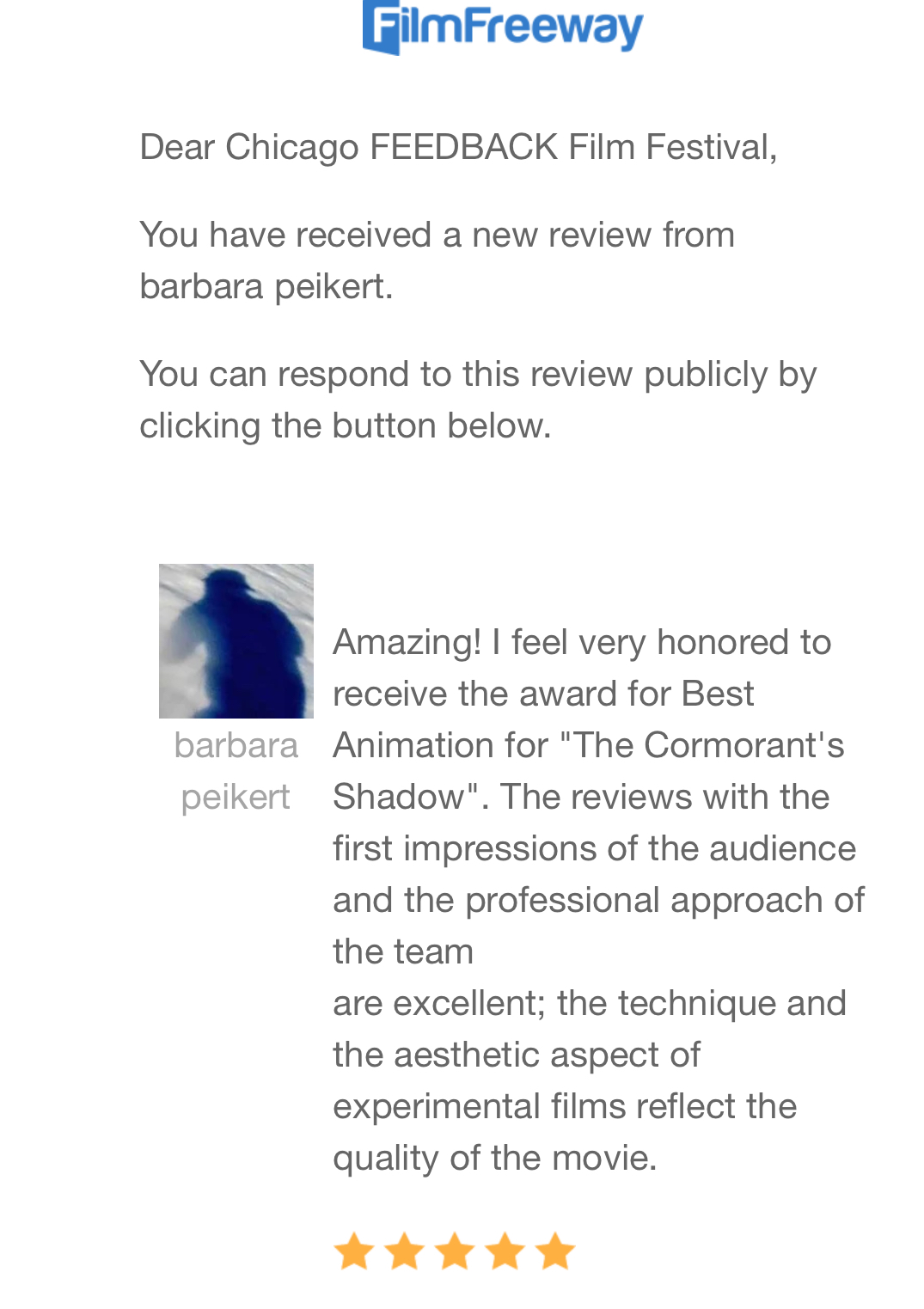
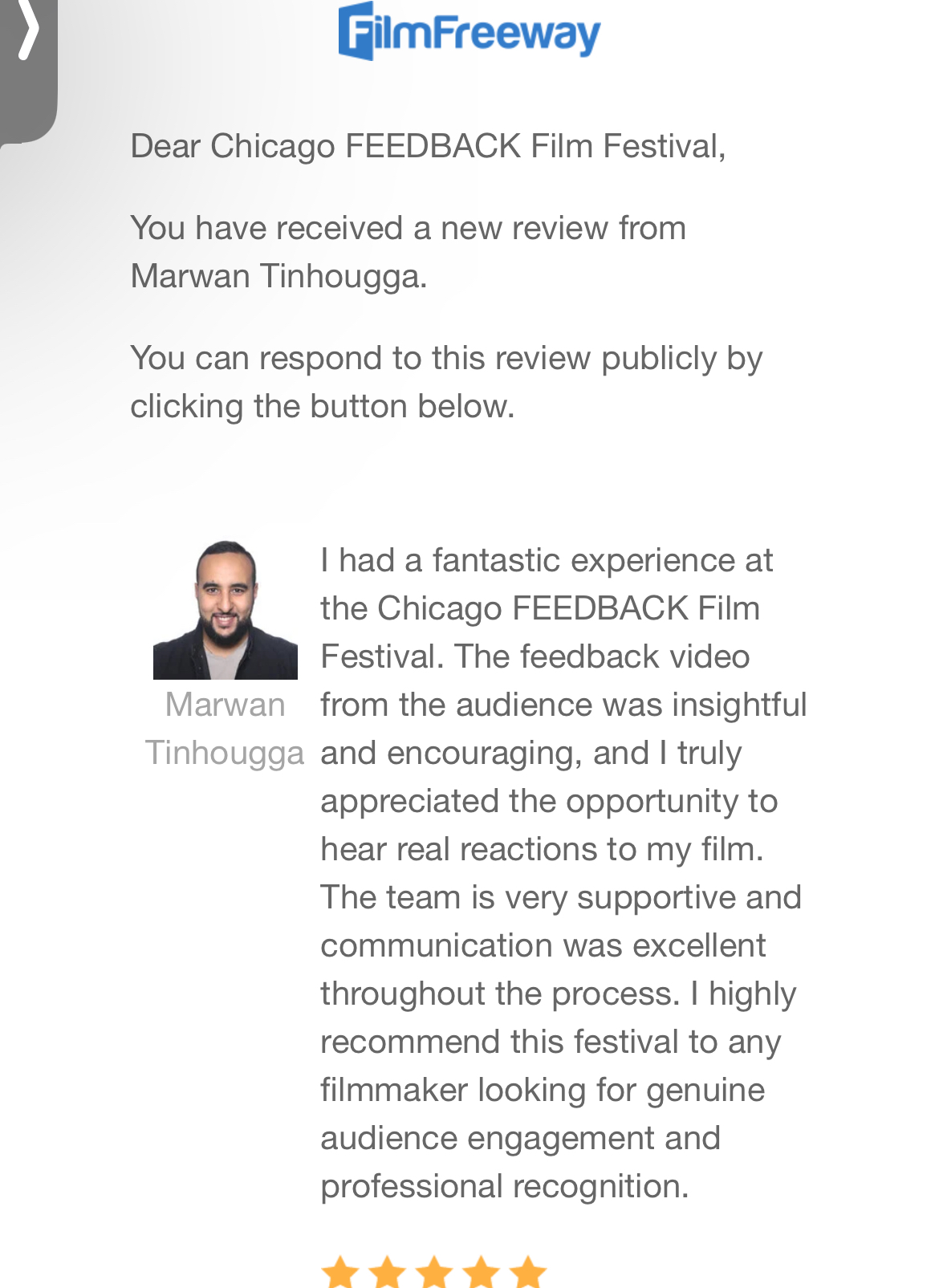
June 2025 CHICAGO Feedback Film Festival Testimonials

Submit to the Festival via FilmFreeway:

The Chicago Feedback Fest provides a uniquely satisfying experience for emerging filmmakers! This is evidenced by the feedback videos they share on the website that showcases our little movies. Folks like us need folks like them!


Chicago Feedback Film Festival is an amazing filmmaker friendly event!The program was well organized, and receiving video reviews directly from the judges was great, and helpful! One of my favorite part of festivals, as a filmmaker, is connection with the audiences. The video review, and online interview create a unique and memorable experience.


A great festival with excellent team and communication. We are thrilled that “Tillie” won Best Short Form Short Film. The feedback video is great. It inspires us to keep on making the films we love. Thank you.


I was really surprised to me how they handled the whole festival. It´s absolutely authentic, the videos they produce to feedback is absolutely valuable, the platform they work on is a great place to find out more film works. It was a really nice experience to be at the Chicago Feedback film Festival!!!