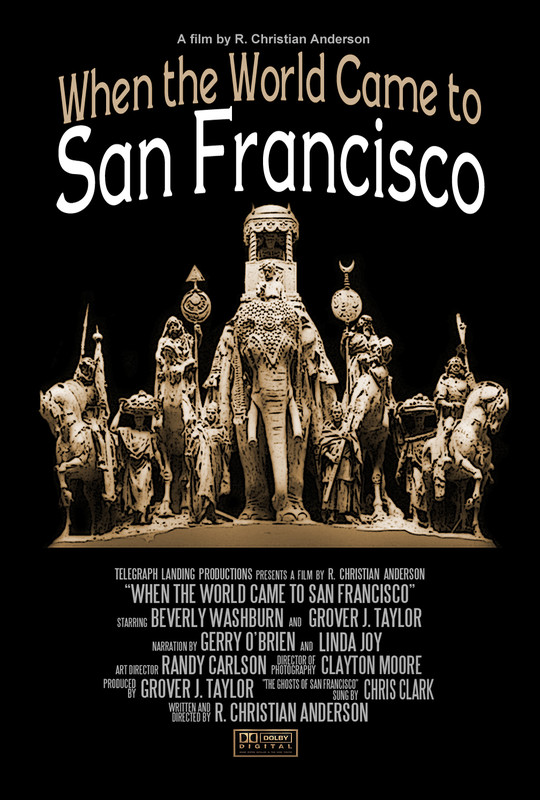
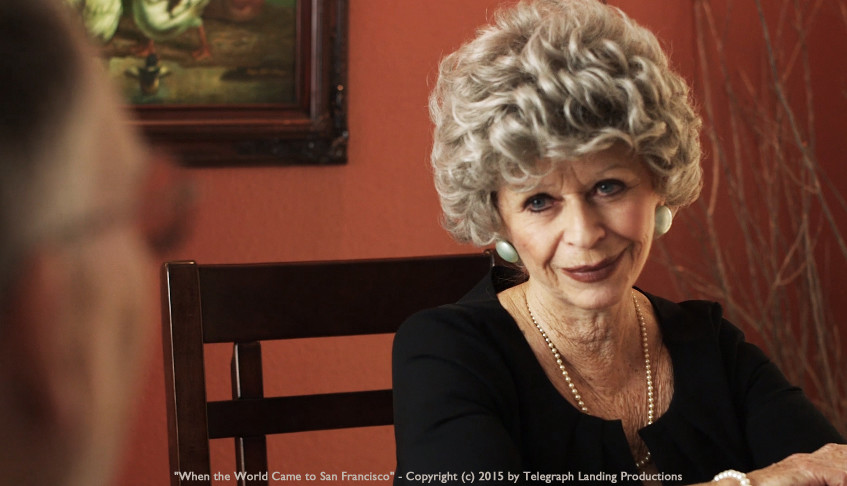
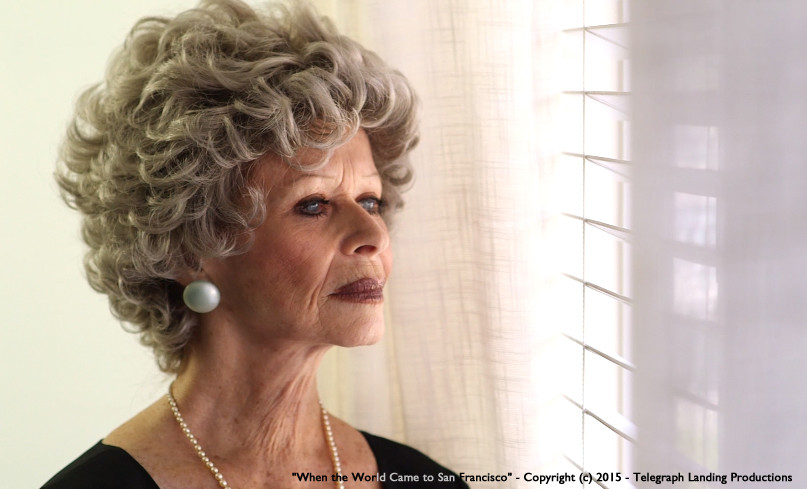
When the World Came to San Francisco, 70min., USA Directed by R. Christian Anderson A documentary-drama about a woman’s visit to the 1915 Panama-Pacific International Exposition in San Francisco. The film tells the story of the exposition through actual images and vintage film clips. Over 2 years in the making, this film was a labor of love for filmmaker R. Christian Anderson.
STAYCATION, 93min,. USA Directed by Russell Emanuel How is the world affected by a catastrophic event? Everyday people live through a government mandated quarantine during a global pandemic while desperate scientists race to find a cure before it’s too late.
It was the Covid Pandemic. Everything was shut down so my late filmmaking partner Emile Haris (who unfortunately passed away during post-production in July 2023) and I went about to create a film about a pandemic against what seemed insurmountable odds (nothing was open).
From the idea to the finished product, how long did it take for you to make this film?
Emile Haris and I started with a short film called “Routine” which we filmed in April 2020 at the start of the pandemic when even SAG-AFTRA was shut down and we couldn’t go outside. So he and I took it upon ourselves to film a 5-minute proof of concept prequel called “Routine” at my condo with a non-SAG-AFTRA actress Paige Laree Poucel and we hired an amazing DC/Marvel Comics Artist Dave Beaty to “draw” the third act which took place outside and hired two amazing voice actors Bill Victor Arucan and Alan Courtright. Due to the success of this film, along with head executive producer Bill Victor Arucan (who reprised his role of ‘Rob Peterson’ from “Routine” and the Peterson name itself is a running gag in all my 6 feature films), we successfully raised the money to do “Staycation” and started filming in November 2024 when SAG-AFTRA was re-opened but with severe Covid restrictions. We then filmed piecemeal over 2 years, finally completing shooting in November 2022.
Watch the festival NOW for the next 48 hours by signing up for the FREE 3-DAY trial using the link, or go to http://www.wildsound.ca
Directed by Kurt Poersch
Those who stayed constantly talk about the future.
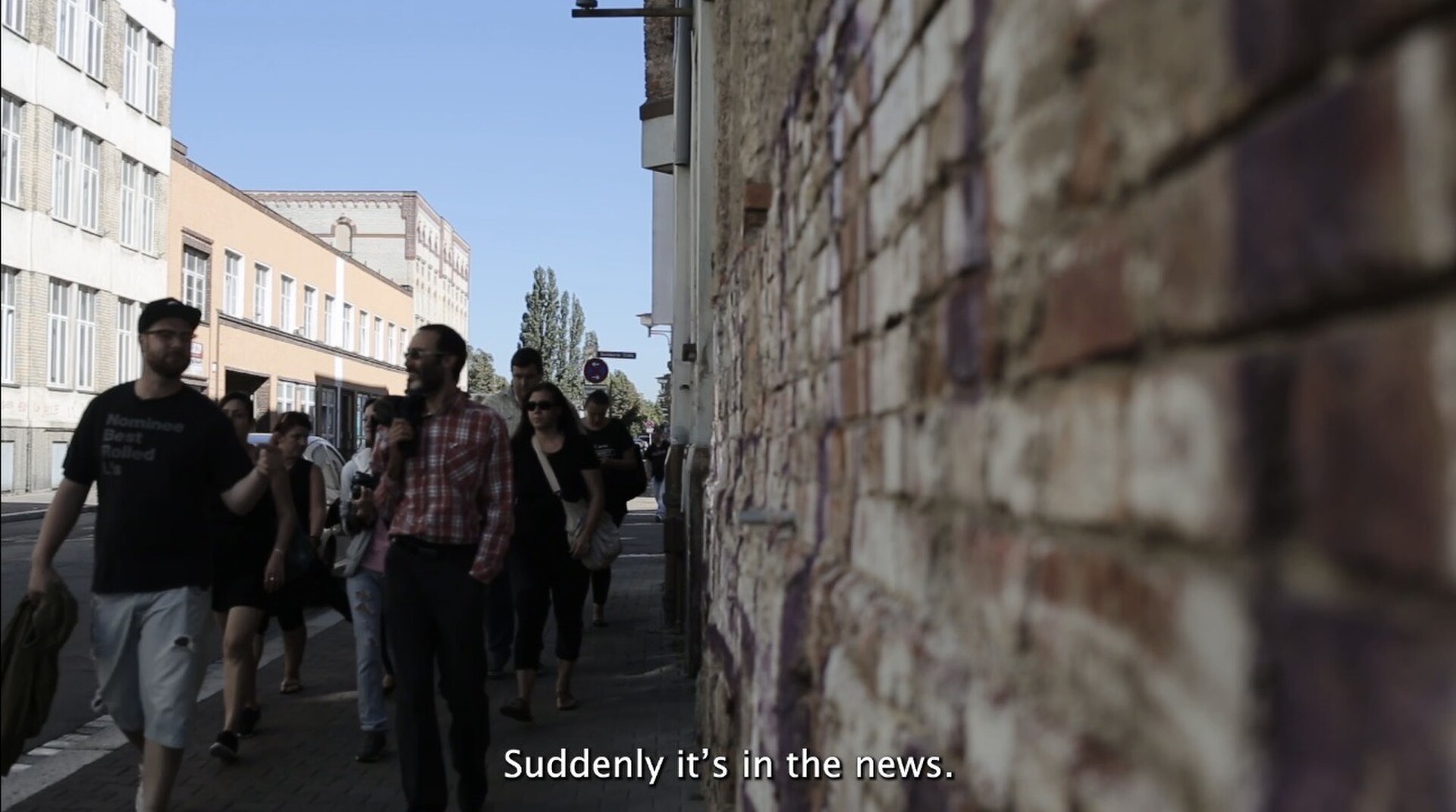
Every other house in Freimfelde, a former working-class neighbourhood, is empty. The lack of jobs, the absence of local suppliers, and the presence of decay are long-term effects of structural decline: in these parts of former Eastern Germany, the reunification of 1989 led to the closures of vital companies, caused high unemployment rates, and resulted in massive out-migration.
In Freiimfelde, people’s sense of the present is challenged by two absent levels of time: the no-longer of the past, which everybody remembers differently, and the not-yet of a future – fragile and in contradiction to the municipality’s vision of the seemingly empty neighbourhood.
An intimate portrait of five residents, “The Painters of the Future” examines current living conditions in Freiimfelde, tensions between post-industrialization and gentrification, and the ubiquitous call to “participate” in urban development.
I really enjoyed chatting with Stunt Performer/Actor Hannah D. Scott about her profession. She was very open about everything and you can feel her passion for the industry and what she does in her answers. Enjoy!
Matthew Toffolo: What job has been your most valuable experience?
Hannah D. Scott: I think that part of the answer lies in not actually working, but watching people work. The set is such a massive machine and being able to take a step back to listen and learn is priceless. I was once asked, a long time ago, to step in as kind of intern of sorts. Understanding the camera, understanding how the director communicates with actors in order to get the right result, what cues to give to help them understand and so on was incredibly valuable. I could see how different lenses worked, how framing could make or break a shot, how timing is essential as are reactions. I watched how gags were set up and every detail that goes in to even the simplest of stunts. Even for a small trip to the ground, the area has to be checked for hazards like glass for example, but someone outside of stunts might not think of those things because they never have to be the ones hitting ground.
Perhaps the most valuable experience was making a mistake on a job an realizing that that sort of stunt is not something I want to do, and being honest with myself about it. Why try and do something and risk not only yourself but others. We all have things we thrive at and fail at.
PHOTOS of Hannah fighting. Swords & Training:
MT: Have you suffered a lot of injuries doing stunts? If so, what has been your worst injury?
HDS: Funnily enough everything has been outside of work. My Mirror fell off of my windowsill and went through my foot when I was at home…doing nothing. I always expect to get a little bruised even though I have pads for safety, but it comes with the territory. There have been some terrible accidents, perhaps some were avoidable and some were just simply tragic accidents, but we are all aware in going to work that we stand the chance of being hurt and maybe seriously. Everything in our power and the power of those working with us is done to keep things safe. I don’t think the general public realize how much danger there is involved and how much of the physical stuff we actually do without it being CGI or some such thing.
MT: Has there been a stunt that you love to perform that you haven’t performed yet?
HDS: I haven’t done burns yet, being set on fire. There are full and partial burns, each with their own skill set and risks. For some reason that’s high on my list of things I’d like to learn and have the opportunity to do.
MT: How did you get into the stunt performer game? Was there extensive training involved?
HDS: This is always a hard one to answer as there in no one ‘way’ in. Personally I was picked to work on a film as I had a background in martial arts, gymnastics and fighting. I very much had to learn as I went that day because the most I had was stage combat for a base in understanding reactions and so on, but it’s a whole different world with a camera, pretty much polar opposite. I was lucky enough to be hired, do a good job and keep connections in order to find out how to progress once I’d made a choice to commit to stunts.
There is no ‘training’ for stunts in a way, you can’t go to a school and then come out with a range of skills and find recruiters. There are workshops available and they’re certainly more frequent in NY now. It has been very hard in the past to attend workshops without already being ‘in’ the working community and without a resume. Most were private invites and with good reason. Things are becoming more open to those starting out now and giving people a chance to learn. It’s a catch 22. How do you get into stunts without training but how do you get training and invited without already being in stunts? Who should even be teaching it is another story and sometimes cause for friction, but at the end of the day it’s about keeping each other safe and using the best skills we have individually, working together to make the best picture possible.
We all train regularly at various sports complexes and in teams. You have to keep the muscles moving, work reactions and timing and watch yourself back all the time on video to make sure you’re not catching yourself for example, putting a hand down being shot in the head where in life you’d just collapse…if that makes sense. Conditioning is always important so you’re fit enough to do multiple takes and have the ability to take the impact, are prepared for it.
MT: Where do you see the future of green-screen stunt performing in the motion pictures?
HDS: I’m not sure I”m experienced enough to answer that, but I think that technology will obviously continue to grow in ways we can’t even imagine yet. Look at animation, it’s mind-blowing. But, I do think there will always be a need for physical bodies and work, so hopefully non of the advances will take jobs away.
MT: What’s the biggest high risk stunt you’ve performed to date?
HDS: I’ve done a dog stunt, which could easily go wrong should the animal decide he wants to do what he wants, but I’d say high-fall holds some of the highest risk. Falling off buildings, cliffs, over balconies and so on into boxes, airbags or porta-pits. There are so many factors that could go wrong either from the miscalculation of the person jumping or the people on the ground spotting or prepping the air-bag, it’s a very risky stunt and a speciality. It’s certainly not for everyone.
MT: Do you have a stunt performer mentor?
HDS: Yes, I am very lucky and honored by the people I’ve been surrounded and guided by. I think it’s somewhat essential in this part of the entertainment industry as it can be so hard to navigate. I was incredibly lucky on the first major job I did having the chance to work with some of the longest working members of stunt community, their generosity astounds me.
Whenever I’m confused about anything from a contract to what I might need to work on or where I can find who and what I need, they are all there. It’s never too much to check in and there’s never a question that’s too silly to ask. I feel like they all remember what it’s like to have had that first day and remember where they started. I would love to name them, should I name them? Manny Ayala, Elliot Santiago, Chazz Menendez and Joanne Lamstein are all those I consider it an absolute honor that I have them in my life.
MT: What movie, besides the ones you worked on, have you seen the most times in your life?
HDS: Oh boy…honestly? Probably ‘Pete’s Dragon’, no kidding. I know every part of that script and gutted they have made a new one. I’ve never wanted dragons to be so real in my life!
Interviewer Matthew Toffolo is currently the CEO of the WILDsound FEEDBACK Film & Writing Festival. The festival that showcases 10-20 screenplay and story readings performed by professional actors every month. And the FEEDBACK DAILY Festival online, and in downtown Toronto on the last Thursday of every single month. Go to www.wildsound.ca for more information and to submit your work to the festival.
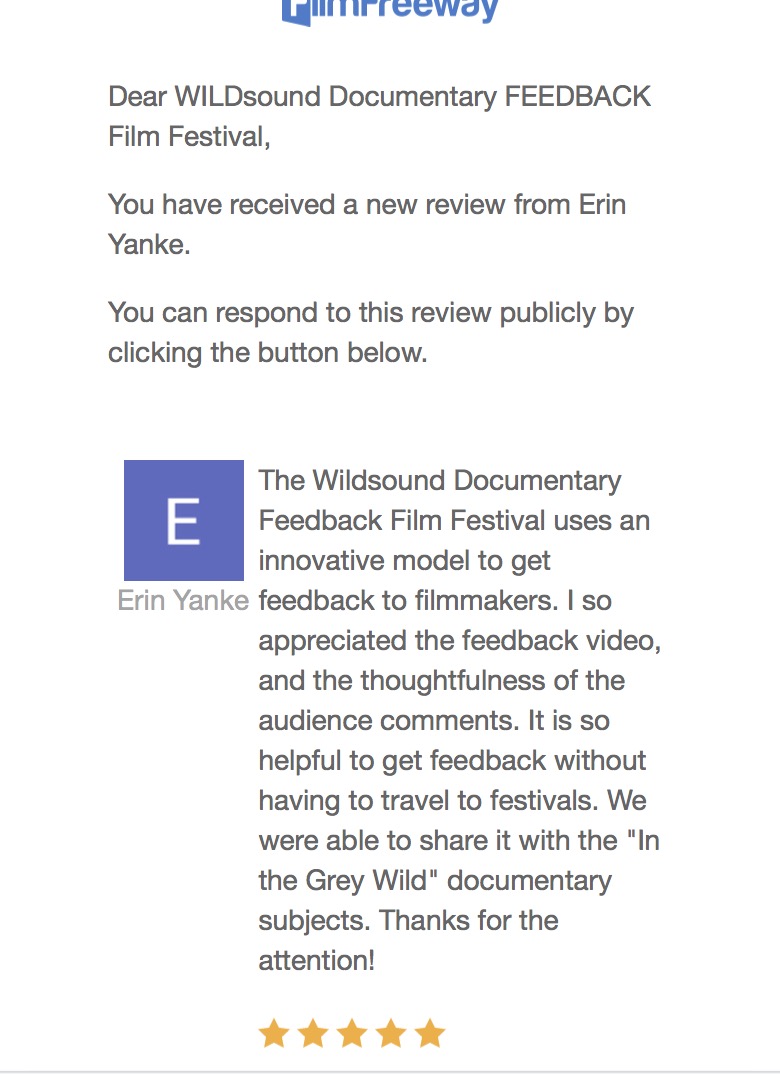
WILDsound is a wonderful film festival: special and unique – filmmakers get the chance to hear feedback on their films! That’s really cool! I loved this festival and i’ll be submitting my next film to the WILDsound Festival ✨
One of the best festivals out here! Honored to be a part of it. Special shout out to Allison!
Great festival, this is our third time submitting and they always have great insightful feedback and the audience feedback videos are very helpful. Thank you for having us!
The WILDsound Feedback Festival has to be one of the most groundbreaking festivals because the reviews are always from a diverse perspective on the body of work submitted. We appreciate this festival and how it incorporates all film producers to submit their work from varying backgrounds. I enjoy spending time watching the many short films submitted on their platform. Congratulations to WILDsound Feedback Festival and their team! All great work being done here!
I really enjoyed being a part of this festival! The feedback was amazing, they were very responsive and doing everything in their power to help the filmmakers shine!
Loved the feedback scenario – comments from unrelated parties is especially interesting. Thanks!
This is my second time screening a film with Matt and his team. They have been wonderful to work with, and they clearly have a heart for supporting and empowering filmmakers. They go above and beyond to provide us a platform for our work!
Submit your TRUE CRIME Short Story to the Festival here and we will automatically have it performed by a professional actor and turned into a promotional video for yourself.
A young adult (YA) novel is a fictional work written for readers aged 12 to 18 that usually explores the experiences and challenges of adolescence.
Get FULL FEEDBACK on either the 1st chapter or entire novel book from our committee of professional writers and writing consultants. Get your novel performed by a professional actor at the festival.
NEW OPTION: Or, just submit for an actor performance reading transcript of your novel (any 5 pages of your book). Great way to promote the sales of your book if you’re already published.
This festival has a guaranteed 4-tier set up for each accepted script. (No matter what, all screenplays submitted receive FULL FEEDBACK on their work.) 1) Full Feedback on your script 2) Actors performance video reading of your script 3) Blog interview promotion. 4) Podcast interview on the Film Festival ITunes show





 Festival Reviews