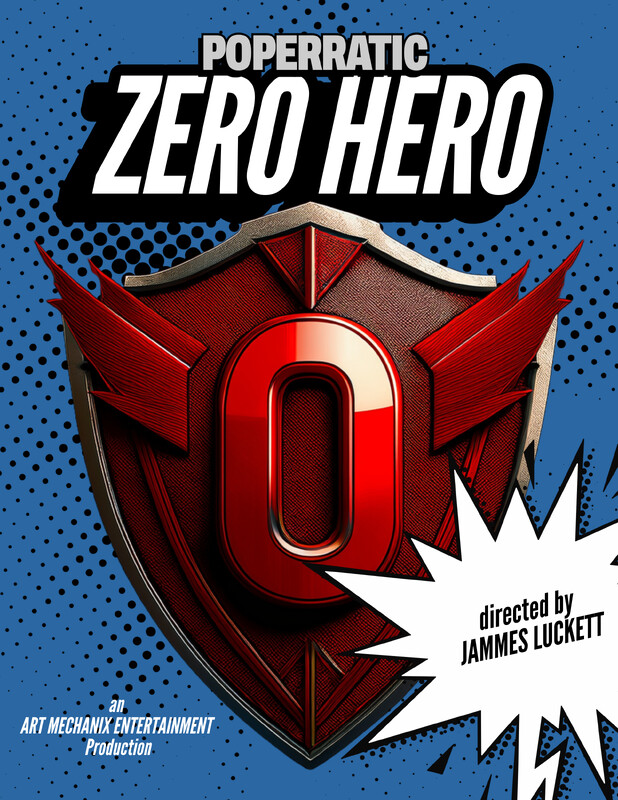
Poperratic: Zero Hero, 4min., USA Directed by Jammes Luckett “Zero Hero” is a layered new indie music video animated by the solo artist behind alternative rock project Poperratic. The clip marks the song’s 25th anniversary (after multiple appearances in film and TV soundtracks). The video offers a visually dynamic and layered exploration of the human condition through a metaphorical superhero origin story.
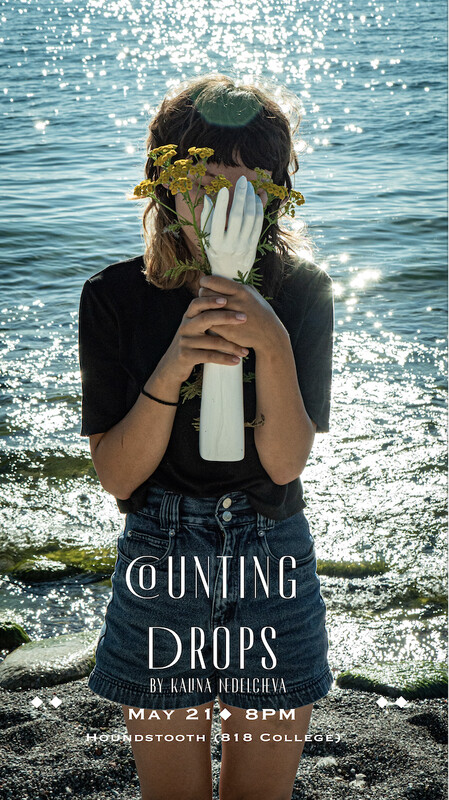
Counting Drops, 19min., Canada Directed by Kalina Nedelcheva “Counting Drops” is an audio-visual sensory poem that explores themes of intimacy, sexuality, and love through symbols, gestures, and textures. The experimental film’s three cantos depict different relationships to love—sensual love, sustainable love and heartbreak, and self-love, respectively. The first canto, filmed in Cape Chignecto Provincial Park (Nova Scotia), is a visual sequence of the awakening body as it morphs into the sensual shapes and textures of cliffs at low tide. The second canto, shot at Tommy Thomson Park (Toronto), works through themes of sustainable romantic love and growing apart on the background of the industrial lakeside. The third canto, filmed in the artist’s bathtub, presents a more contained picture of self-discovery and confronting the practice of self-love on a deeply intimate level.
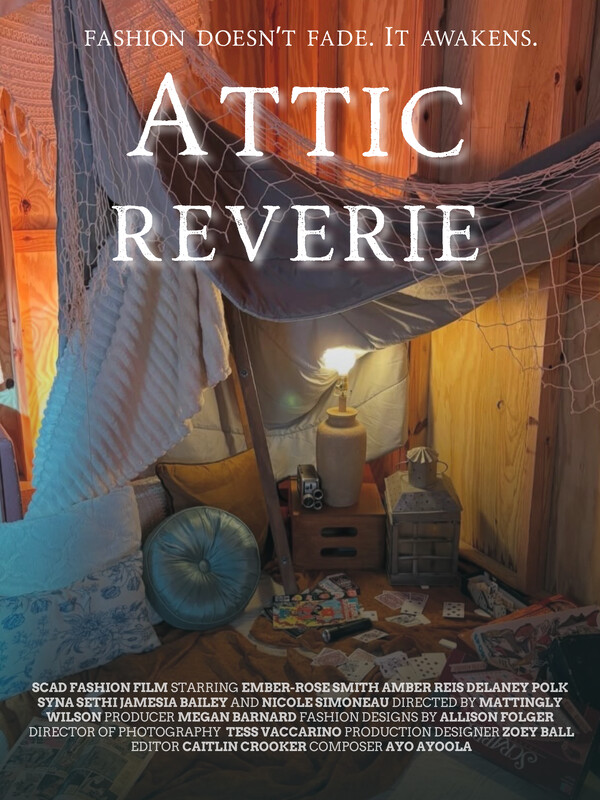
Attic Reverie, 1min,. USA Directed by Mattie Wilson A Child wonders into her families attic, only to watch the world come to life around her
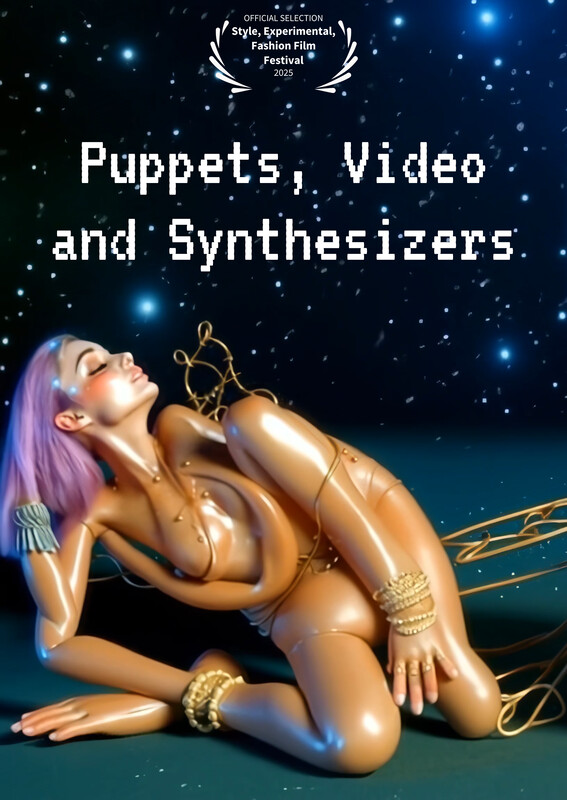
Puppets, Video and Synthesizers, 6min., Portugal Directed by Leonel Vieira Coelho Puppets, Video and Synthesizers is a surreal meditation on mimicry, media ritual, and recursive identity. Set in a hyper-stylized, dollhouse-like world of glistening surfaces and analog devices, the film loops through layers of screen-bound selves, where puppets watch puppets watching television. With ritualistic mantras, flickering broadcasts, and an eerie stillness pierced by absurdity, the film becomes both stage and screen, performance and playback.
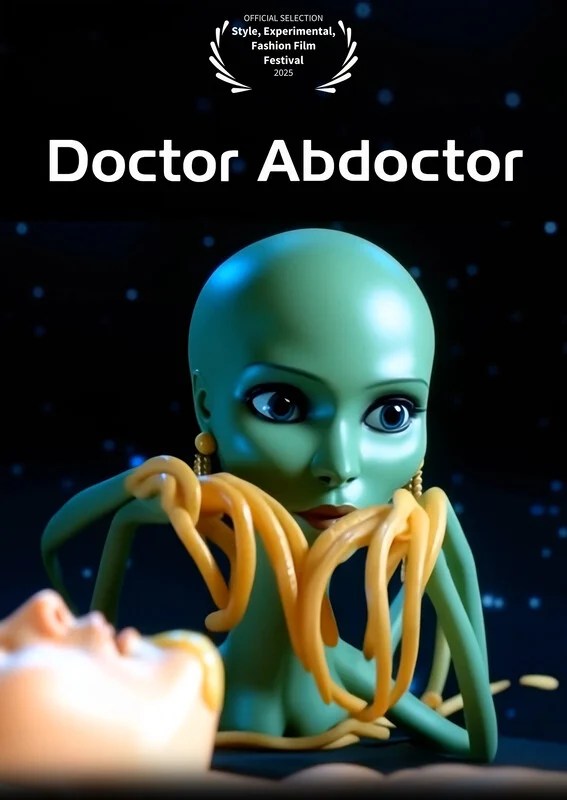
Doctor Abdoctor, 5min., Portugal Directed by Leonel Vieira Coelho Doctor Abdoctor is a poetic meditation on identity, perception, and the porous boundary between embodiment and thought. The film blurs the line between alien abduction and philosophical awakening. Visually arresting and philosophically charged, Doctor Abdoctor explores the strange beauty of being—when memory flickers, and consciousness drifts between the imagined and the unknown.
In Warsaw, 1min., Poland Directed by Dominika Machel “In Warsaw” uses the unique, historic interiors of a traditional stucco workshop as the backdrop for a fashion film. The main shot, captured in a heritage stucco studio in Warsaw, serves as a tribute to material culture and architectural heritage. The installation blends aesthetics, history, and new media, creating a bridge between physical and digital space, while the fashion-driven narrative brings a contemporary context to the classical setting.
Wall unit, 10min., Poland Directed by Joanna Polak A ramshackle wall unit is a symbol of the monotonous life of a certain 40-year-old man living in a grey, dirty post-communist block of flats district. Right after his birthday, suffering from the midlife crisis, the man decides to change his dull and routine-based existence. Alas, his wife stands in the way.
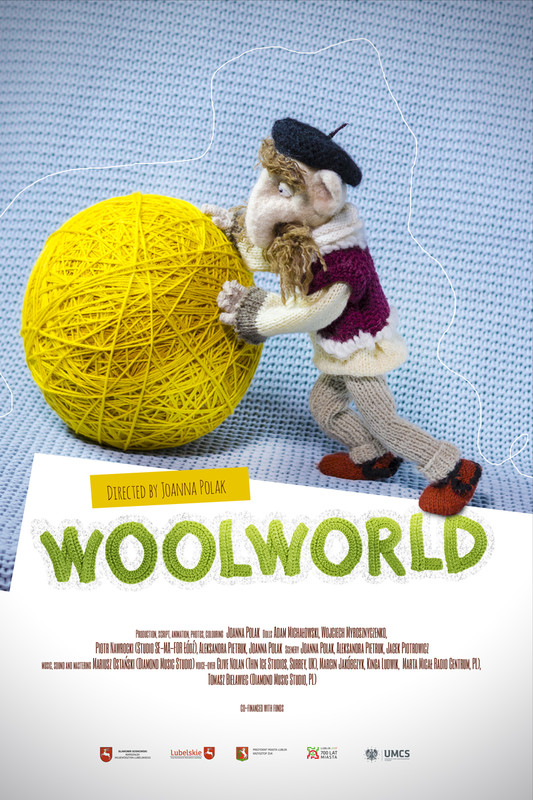
WOOLDWORLD, 10min., Poland Directed by Joanna Polak Have you ever wondered what live would be in a world made of wool? In Woolworld, people, animals and everything that surrounds them is made of wool and all is closely tied together. The only person capable of making sure that Woolworld functions smoothly is Mr. Wooly. He is, however, old and tired and he wants his life to change. Unfortunately… his wish gets granted.
Pied-à-terre, 30min., Nigeria Directed by Badewa Ajibade When Florence receives a letter from her lover, Agnes, she tries to process its contents in a way that only her subconscious can help her. As she reads on, the lines between her conscious and subconscious mind start to blur until she finds it almost impossible to tell them apart.
Warriors Beyond The Battlefield: African Americans in the Armed Forces, 26min., USA Directed by Dave Messick A documentary highlighting the untold stories from multiple generations of brave African American soldiers who have served in the United States military since the Civil War.
The Power Of One, 17min., USA Directed by Cortez Mack A story about a community coming together to save the life of a broken teenager.
Creating Memory Lane, 5min. USA Directed by David Carroll Justin “XO Valentine” Smith CEO of XO Records; takes us behind the scenes and gives insight to his creative process of his Memory Lane single. Mr. Smith also gives us some sound advice that could potentially help change the music careers of indie artists.
In his brief career, Adam Stone has already established himself as one of the top DPs in the industry today. It was an honor to sit down with him to talk about his craft.
Matthew Toffolo: You have worked with director Jeff Nichols on many films. Where did you first meet? Why does your working relationship work so well?
Adam Stone: Jeff and I worked on a total of 5 films (Shotgun Stories, Take Shelter, Mud, Midnight Special, and Loving). We met in film school at the UNC School of the Arts in the late nineties. I shot 2nd unit for a few of David Green’s early films (George Washington and All The Real Girls) and I guess Jeff liked what he saw. He asked me to come out to Arkansas to shoot Shotgun Stories in the summer of 2005. The project had absolutely no money but we convinced a core group of friends and family to crew-up and Joe Dunton Camera essentially gave us a Moviecam and some anamorphic lenses for free. We were fortunate to have talented people that believed in us. Without them the film would have never seen the light of day.
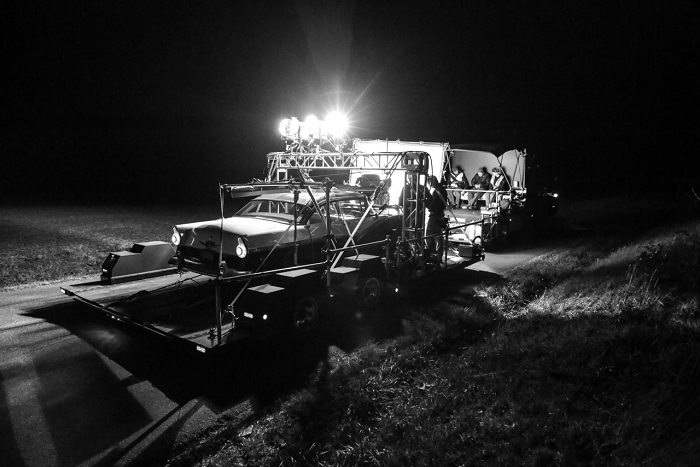
PHOTO: Cinematography for the film “Midnight Special”
While working on Shotgun Stories, Jeff and I found we had quite a bit in common. Aesthetically we liked to shoot in the South against a backdrop of kudzu, rusted out cars and interesting characters. We also shared a love of widescreen cinema with simple, yet stately, camera work. We combined those ingredients into a form of southern cinema people seem to enjoy. We have definitely come along way since the days of Shotgun Stories. It has been a great evolution with a true friend and mentor.
MT: Tell us about working on the landmark film Midnight Special?
AS: Midnight Special is a unique movie that’s kind of hard to categorize. It’s a genre bending mash-up of a road movie and sci-fi flick that pays homage to Perfect World, Starman, and Close Encounters. The movie starts without much explanation or backstory, all we know a man is on the run with his son. As the movie progresses we learn the boy has special powers and is dying. His father must keep him alive while the government and a religious sect are in pursuit. Despite all of the characters, themes, VFX events, and unanswered plot points the film is very simple. At the core, it’s a story about a father’s love for his son and how he will do anything to save his boy.
MT: Another film with Jeff, “Loving”, hit theaters in 2016. It’s set in the 1950s. When DPing period pieces, what type of research do you do? Was there another film(s) that was the inspiration to the cinematic design of the film?
AS: To be honest, Loving is the first period piece I’ve had the pleasure to shoot. Jeff’s script was based on a true story about a Supreme Court case so there was plenty of material to unearth. One of the greatest treasure troves was the work of Grey Villet. He was a super talented photographer that documented the story of Richard and Mildred Loving for Time Magazine in 1965. The pictures he took influenced the script, production design, costumes, and the cinematography.
I really fell in love with the objectiveness of Villet’s work. He always employed a wide lens so he really had to campout and wait for candid shots. Jeff and I adopted this technique and let a number of scenes play out in wide observational shots. We also recreated several of Villet’s photos in the movie. It was really cool to see his black and white work come to life in vibrant moving color. To be honest, Jeff and I had to get acclimated to dailies since we had been referencing Villet’s work for so long.
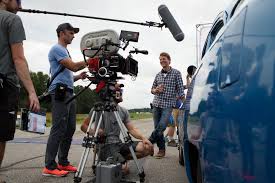
PHOTO: On set for film “Loving”:
MT: Do you have a favorite experience in your work as a Director of Photography? What film are you most proud of?
AS: Most of the projects I shoot, whether features or commercials, don’t ‘really’ contribute to the greater good of society. They might be artful or compelling but they do not teach or enlighten. That’s why I’m proud to have worked on Loving. Loving sheds light on an important part of history while telling a meaningful story.
I’m also proud how Loving looks. The camerawork is very simple and the lighting is very organic. My main goal was to let the cinematography be an afterthought. I wanted the audience to pay full attention to the story, characters, and locations – not the camera.
MT: You have Dp’d a few documentary films. What is the general difference between the working on a documentary in comparison to regular narrative film?
AS: I have always had a deep fascination and love of documentary films. The cinematography of Ron Fricke and the still photography of Dan Eldon compelled me to get behind a camera in film school. At that point in life, I wanted nothing more than to travel the world and shoot amazing people and locations at golden hour (to be honest I still have that desire and wanderlust).
Production-wise documentary work and features are not too different. Both utilize similar equipment, call sheets, tons of planning, long hours, and figuring out a creative way to shoot the story. The biggest difference between the two is the time it takes to complete a documentary. Many docs enlist several shooters because of the length and sporadic nature of the schedule.
Advertisement
MT: What type of film would you love to work on that you haven’t worked on yet?
AS: That’s a great question. I’d love to work on a film where the camera is constantly on the move and has the ability to effortlessly traverse every spatial plane. That approach totally goes against how I usually shoot a film where the camera is moored, grounded, and is always someone’s point of view. Seldom do I move a camera for the sake of moving a camera – I guess that’s why I have a fascination with moving it.
I believe my lust for camera movement is directly attributable to the amount of the Red Bull Channel I consume. I really love to veg-out and watch how they fly the camera. Fortunately, I might shoot a film this summer that begs for some fun full-throttle camera movement and I’d love to incorporate more techno crane and steadicam into the equation.
MT: What does a DP look for in a director?
AS: Before I take on a project I have to be intrigued by the script and most importantly believe in the director. The director is the captain of the ship and must have a clear vision and game plan to lead the film from its inception to the very end. Besides being a strong leader the director should be compassionate, open-minded, and have a sense of humor. If all these qualities align, I’m more than enthusiastic about taking on the project and working with the director.
MT: Do you have a Director of Photography mentor?
AS: I had a dear friend that was my cinematography teacher and mentor in film school. His name was Robert Collins and he really taught me to be a compassionate filmmaker. One of the biggest lessons I learned from him was to surround myself with good people on set. He always said the friends you make in film are more important than anything you shoot. I totally agree with his sage advice. Unfortunately, Robert passed away several years ago and he is deeply missed.
MT: What do you look for when hiring your main team? Gaffer. Key Grip. Camera Operator. Etc…
AS: I’ve been very fortunate in my career to work over and over with same core group of individuals. The crew I work with are my best friends and co-creators. On occasion, when I hire a new member he/she must share the same attributes as the rest of the crew. He/she should be kind, artistic, hard working, honest, and most importantly soulful. It can also be noted, I rather hire someone that is green and enthusiastic over someone more experienced and jaded.
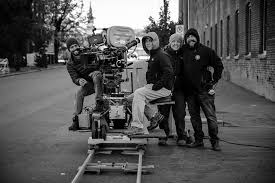
PHOTO: Adam and the camera department from the film “Midnight Special”
MT: Where do you see the future of camera/lighting technology in film?
AS: Though I’m a proponent of celluloid I love where digital filmmaking is headed. Digital filmmaking has come a long way over the past decade. Camera sensors have gotten better and the lenses look more filmmatic and less clinical. I really admire films such as Revenant that use digital cinema in a smart way. Lubezki made a beautiful movie harnessing the best attributes of digital. He used great equipment (Alexa 65 and Panavision Master Primes), shot in amazing light that accentuates a digital sensor, and flew lightweight digital cameras. That coupled with jaw dropping landscapes, a simple story, and seamless VFX work made for a movie that really resonated with me. I truly love when movies use technology to advance a story instead of letting technology overtake the story.
Lighting has also come a long way in the past 10 years. LED, plasma lights, and iPad enabled dimmer boards have evolved and become onset staples. The ability to control all of the lights on set, whether on a stage or location, from a tablet is amazing. With just a few finger swipes you can audition lights (even dim and recalibrate the color temperature). This is a great timesaver when lighting a big exterior night scene.
MT: What film, besides the ones you’ve worked on, have you seen the most times in your life?
AS: I really don’t watch the films I shoot once they are released – since I see them so many times in post. I guess the two films I’ve seen the most is Some Like It Hot and Baraka. I have a weird ‘thing’ for old screwball comedies and I have always been obsessed with Baraka. I guess if I was stuck on a deserted island those would be my go to films.
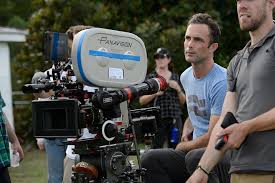
PHOTO: Adam Stone at work:
_____
Interviewer Matthew Toffolo is currently the CEO of the WILDsound FEEDBACK Film & Writing Festival. The festival that showcases 10-20 screenplay and story readings performed by professional actors every month. And the FEEDBACK DAILY Film Fesival held online and in downtown Toronto on the last Thursday of every single month. Go to www.wildsound.ca for more information and to submit your work to the festival.
Shame, 5min., USA Directed by Kelly Lynn Warren When a woman is sexually assaulted by a mutual friend the night before, her confrontation with her best friend leads to tragic consequences.
I was a peer counselor in college and know of people in my life who have been sexually assaulted. I wanted to raise awareness of the issue and show it from the perspective of two friends instead of focusing on the assailant. The ultimate goal of Shame was to take it to universities and spark dialogue among students.
From the idea to the finished product, how long did it take for you to make this film?
9 months
How would you describe your film in two words!?
must-see, impactful
What was the biggest obstacle you faced in completing this film?
One of our actors had an emergency and had to back out of filming on Day 1, so I had to recast the same night because we were shooting the next day. Our actor, Sophia Cofino, stepped in and nailed the part.
We have created a hybrid festival with 4 tiers to enhance your film and your festival experience. All accepted films receive all four tier options:
Tier #1 – Your film plays at a public film festival event where the audience will record their comments/reactions to your film on their camera or phone, then we edit them and send you a promotional video. No matter what you will receive a promotional video of your film of people commenting on your film.
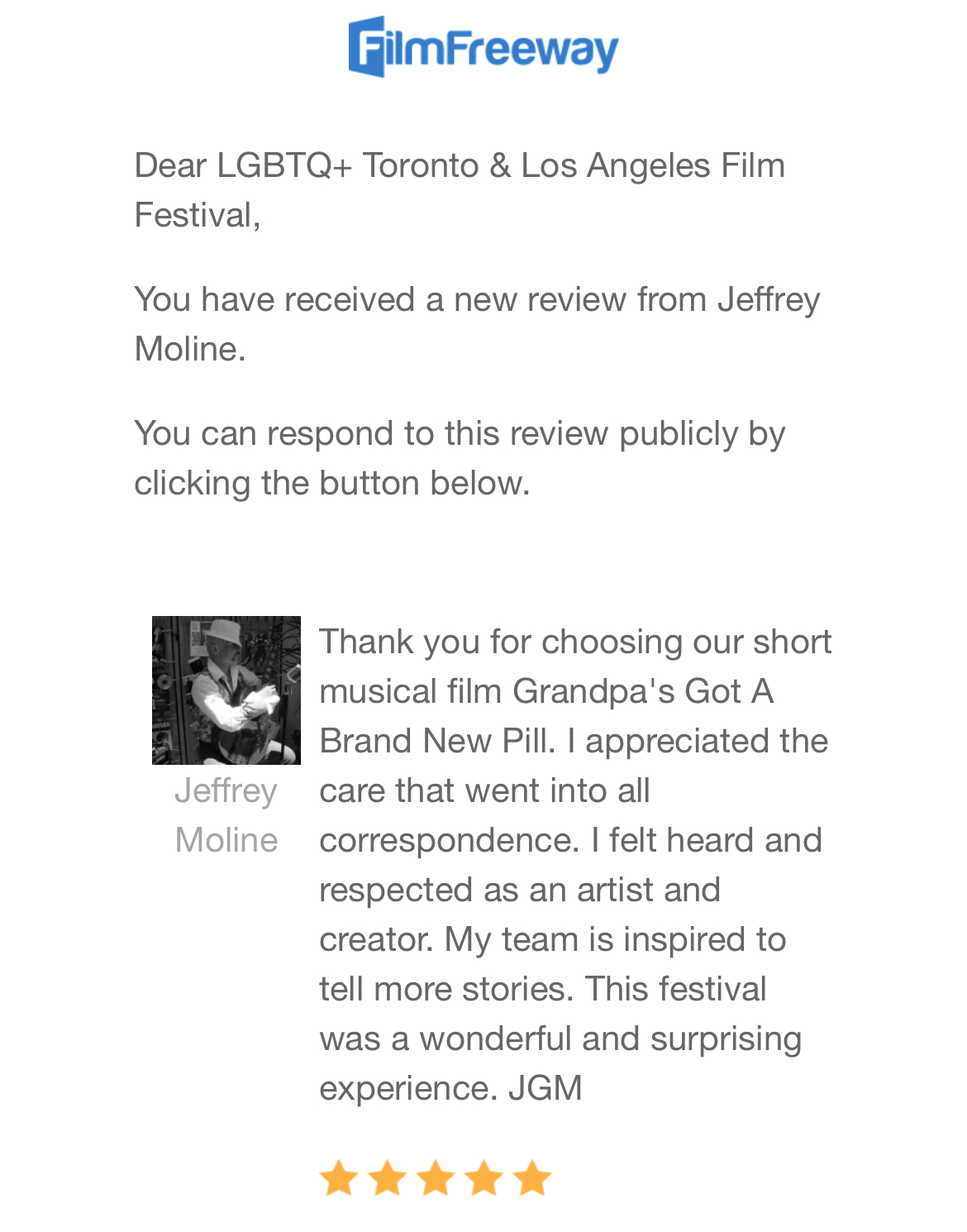
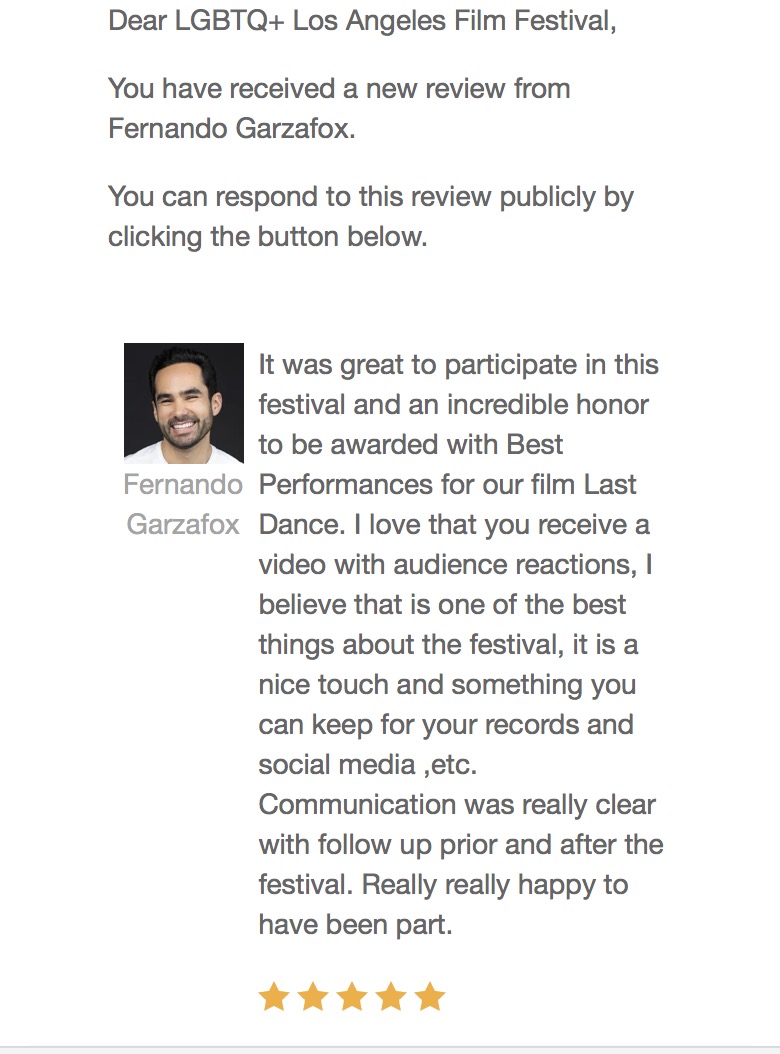
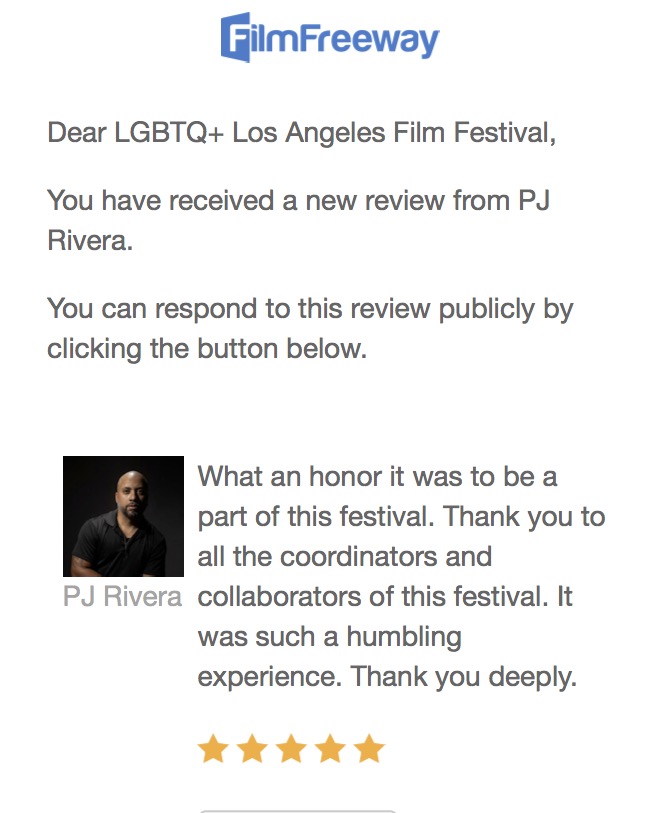
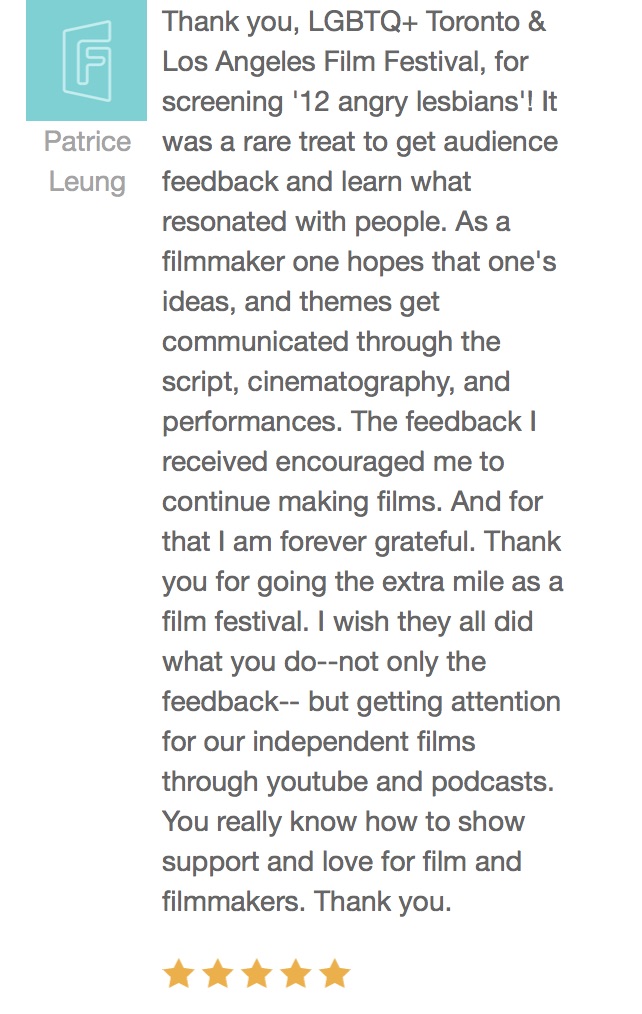
Tier #2 (optional) – Your film plays on the Film Festival streaming service for 30 hours and invite a select industry audience to watch it. With this system, some films have already received a distribution deal as many platforms are looking for solid feature and short documentaries. We can not guarantee anything of course but this has been very helpful to many in the past. (see testimonials below)
Then (Tier #3) we will send you a list of questions to answer for our blog interview that will promote you and your film. Then after that (Tier #4) we will set up a podcast interview on our popular ITunes show where will we chat with you about the process of how the film was made.
A festival designed to showcase the best of new environmentally themed films (shorts, features) and screenplays (shorts, features, TV pilots) from around the world. We accept any genre (animation, comedy, experimental, horror etc.) as long as it has an underlying environmental thematic. We seek to advance public understanding of the environment through the power of film and storytelling; which is why this festival has been created.
Accept only stories that fit into the MAGICAL REALISM genre. Magical realism stories feature fantastical elements that seem ordinary and blend into the story.The focus is on what the magical elements mean for the characters, rather than the elements themselves.
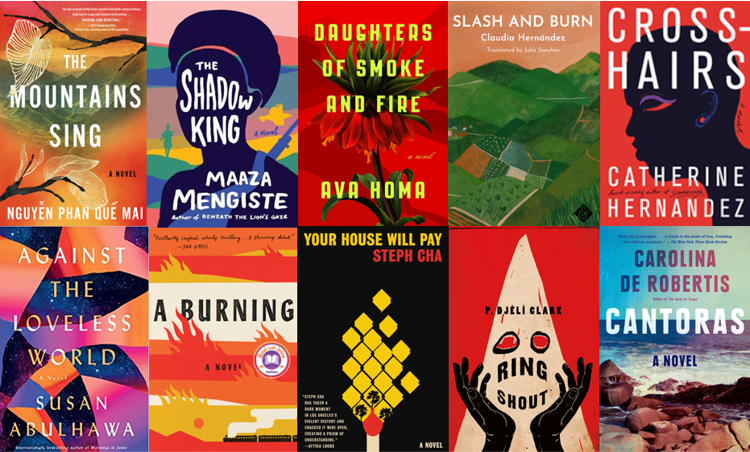
3 options to submit: full novel. 1st chapter. Novel performance reading.
This festival has a guaranteed 4-tier set up for each accepted script. (No matter what, all screenplays submitted receive FULL FEEDBACK on their work.) 1) Full Feedback on your script 2) Actors performance video reading of your script 3) Blog interview promotion. 4) Podcast interview on the Film Festival ITunes show
Submit your POLITICAL short story to the festival, and we will automatically have it performed by a professional actor and turned into a promotional video for yourself.
Warriors Beyond The Battlefield: African Americans in the Armed Forces, 26min., USA Directed by Dave Messick A documentary highlighting the untold stories from multiple generations of brave African American soldiers who have served in the United States military since the Civil War.
Pied-à-terre, 30min., Nigeria Directed by Badewa Ajibade When Florence receives a letter from her lover, Agnes, she tries to process its contents in a way that only her subconscious can help her. As she reads on, the lines between her conscious and subconscious mind start to blur until she finds it almost impossible to tell them apart. badewa.ajibade@outlook.com
Pied-à-terre, 30min., Nigeria Directed by Badewa Ajibade When Florence receives a letter from her lover, Agnes, she tries to process its contents in a way that only her subconscious can help her. As she reads on, the lines between her conscious and subconscious mind start to blur until she finds it almost impossible to tell them apart.
Warriors Beyond The Battlefield: African Americans in the Armed Forces, 26min., USA Directed by Dave Messick A documentary highlighting the untold stories from multiple generations of brave African American soldiers who have served in the United States military since the Civil War.
The Power Of One, 17min., USA Directed by Cortez Mack A story about a community coming together to save the life of a broken teenager.
Creating Memory Lane, 5min. USA Directed by David Carroll Justin “XO Valentine” Smith CEO of XO Records; takes us behind the scenes and gives insight to his creative process of his Memory Lane single. Mr. Smith also gives us some sound advice that could potentially help change the music careers of indie artists.













 Festival Reviews