Spiritual and religious stories are narratives that convey spiritual and religious themes, and can be found in sacred texts, oral traditions, and personal experiences.
3 options to submit: 1st chapter. full novel. performance reading.
This festival has a guaranteed 4-tier set up for each accepted script. (No matter what, all screenplays submitted receive FULL FEEDBACK on their work.) 1) Full Feedback on your script 2) Actors performance video reading of your script 3) Blog interview promotion. 4) Podcast interview on the Film Festival ITunes show
Submit your DRAMA Short Story to the festival here, and we will automatically have it performed by a professional actor and turned into a promotional video for yourself.
Self discovery, healing from trauma and beating the ubiquitous “imposter syndrome”. It is a comedic and sometimes horrific, plant medicine fueled, spiritual journey of self awareness for 3 diverse yet troubled Americans where they emerge victorious and more god-like.
It is a prescient story that reminds viewers of the importance and power of Mexican culture. It also represents a very different story for gay and trans people. One is battling depression and PTSD due to police abuse, and the other, impostor syndrome. Conditions that are the most prevalent mental health challenges today. They are both battling for self-love instead of societal abuse (which does happen). It also reinforces the importance of plant medicines for healing our minds and spirits, which is experiencing more mainstream acceptance. Many cities in America and across the globe are realizing the life-changing healing properties of Psilocybin and Ayahuasca and are legalizing them for use in healing depression and PTSD.
3. How would you describe this script in two words?
Self Love
4. What movie have you seen the most times in your life?
The Wizard of Oz because it’s about an individual’s spiritual journey towards enlightenment. I read a book that covered the back story on L. Frank Baum’s inspirations for the Wizard of OZ and how the author created the story as an allegory for Buddhism. The yellow brick road was written as a metaphor for an individual’s “golden path” to enlightenment. I love the character development and the world-building. Also love how the story totally immerses you and takes you on an unexpected journey. I feel Pueblo is similar in structure. Basically, the hero’s journey.
5. How long have you been working on this screenplay?
So the seed of the story happened about 10 years ago. I had written many notes over that period. The time to write the actual screenplay took about 3 months. It was after a day trip to the ruins of Ek Balam near Cancun Mexico. My best friend and I planned to go visit the ruins but after many unexpected events getting there we felt like we went through some kind of 5th dimensional portal where time and space didn’t exist. Weed aka “The Devil’s Lettuce” was involved so that helped but going through the jungle was many levels of surreal, kind of like Dorothy when she goes into that nightmare forest. We saw so many strange things and once we got to the ruins it had just closed so we never got to see them but the small town adjacent to the ruins was also creepy and a bit of a time portal and we couldn’t find a way out for a bit. Add to this while on the way driving through the jungle on a one lane highway, my best friend shared a story of a past-life regression he had where he saw that he was a Mexican peasant that died a miserable death as an alcoholic. Needless to say, my creative juices started imagining a story that incorporated this wild experience and my favorite ancient culture – the Mayans with their rich mythologies.
6. How many stories have you written?
I have 4 features. 1 is titled The Cuban American Dream, which coincidentally just placed as a top 10 finalist in Screencraft family Contest on the same day I received the email for this win. I also have 2 short film screenplays and 4 TV pilots with 2 pilots having 2 episodes completed. 2 published children’s books (Harper Collins) for ages 3-8 about nutrition and coping with fear. Finally, I am currently pitching a fictional spiritual adventure manuscript that explores benevolent beings from across the galaxy and the Universe written for Middle Grade to Young Adults. It’s kind of like a prequel to The Little Prince.
7. What motivated you to write this screenplay?
So I have a list of stories that I am constantly developing, and I factor in current events and the zeitgeist of our time on whether I complete one screenplay over another. With the current trend of authoritarian governments using LGBT+ individuals and immigrants as scapegoats to gain support, I felt this specific story needed to be born now. It is a story of two LGBT individuals who are successful financially and not battling any of the issues we see in most LGBT+ films (coming out, abuse, etc). They are battling for a full and absolute, unconditional self-love. The other main character, Jahari, who is a heterosexual male, is best friends with Wallace, a gay man, which mirrors a normal situation where many heterosexual males have at least one gay friendship. Jahari is trying to achieve the “American Dream”, battling his materialistic, money-hungry ego that mirrors the psyche of most Americans today. Most films show a female with a gay best friend. I wanted to break stereotypes across the board, especially with Odys, who is a gorgeous, dynamic Trans woman who passes for a biological woman. She owns her own business and is thriving, but her only demon is herself.
The other social issue I wanted to shine a spotlight on was Mexican culture and its many contributions to society today. It seems to be a focus point for our current President Trump to attack and characterize them as rapists and evil people as well as going after trans individuals. I wanted to honor the Mexican culture. To remind Americans that the Mayan civilization was highly sophisticated, making advances in mathematics, agriculture, astronomy and architecture that lasted for over 3000 years and left many contributions to our society today. They invented the number zero, cultivated cacao (chocolate) as a food source, and their calendar was more accurate than the European one at the time. Their cities were more populous and sophisticated than Europe’s largest capital cities. The only thing they didn’t have were guns. That and immunity to foreign diseases ultimately led to their downfall. Being an archaeologist who has studied their rich culture for decades, I used the Mayan Hero Twin Myth as a structure for Pueblo. Our main characters are led down the same path as the Hero Twins in the Mayan underworld (Xibalba) where they are tested in underground houses inside a subterranean cavern system and eventually come out more god-like. Pueblo is essentially like Disney’s Coco, a homage to Aztec and Mayan culture and how their lessons can be applied to modern people of today. I wanted people to remember the importance of Mexico and its fallen empire as a mirror to the United States, which seems to be an empire in decline.
8. What obstacles did you face to finish this screenplay?
Not many. Like I said, I have a lifetime of research on the subject of the Maya so that really helped make sure I was getting their story right. I also hired Rhys Ernst, a trans producer of HBO’s Transparent, for a sensitivity read to make sure the trans character was correct in every way, and he added a few notes that improved Odys overall. Being a gay man myself, I didn’t need help getting Wallace right.
9. Apart from writing, what else are you passionate about?
Anthropology and Archaeology. I’ve done a few digs in Egypt and Bosnia and am a freelance journalist for Popular Archaeology magazine. History overall fascinates me because as they say the past is prologue and we are destined to repeat the same mistakes until we learn the lessons of our past. History is a rich repository for fascinating myths and stories.
10. What influenced you to enter the festival? What were your feelings on the initial feedback you received?
To be honest, there aren’t many LGBT focused screenplay festivals out there, so you came up in my Coverfly feed, and I really love Toronto, so an alarm bell went off to enter.
11. What movie have you watched the most times in your life?
Come to think of it, it’s a tie between The Fifth Element and The Wizard of OZ.
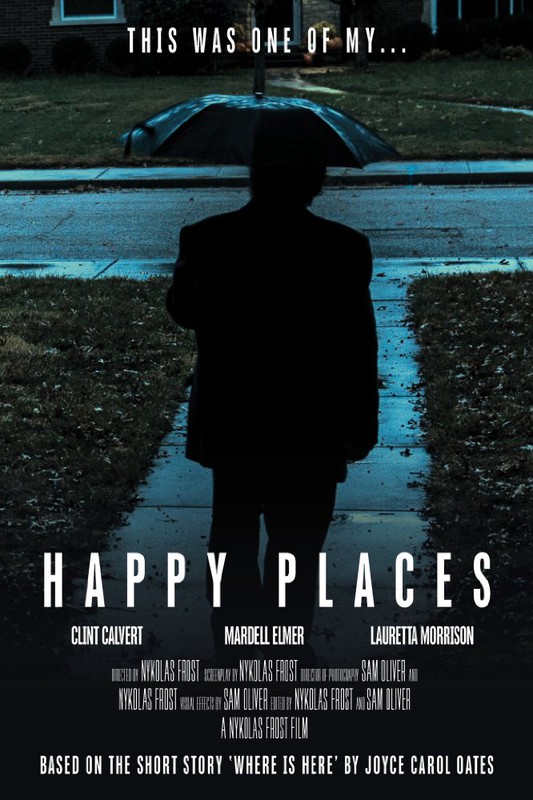
HAPPY PLACES, 20min., USA Directed by Nich Frost A mysterious stranger interrupts the evening of a seemingly normal family to visit his childhood home. But his presence progresses towards a possibly ominous outcome.
A CRYING DOLL, 10min., USA Directed by Karan Lines Marvilyn Eugene has been a captive along with her 9 year old son most of her life by her sexually abusive husband. On a cold mysterious dawn, she decides to break the sacred vow by brutally murdering her husband and runs away along with her son and escape such nightmares.
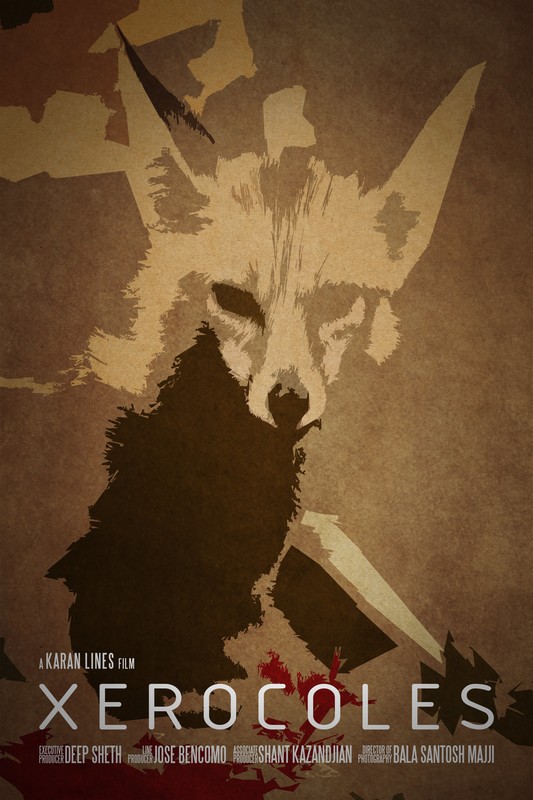
Xerocoles, 4min., USA Directed by Karan Lines A USBP car is driven down the Texas desert road on a hot steamy august day with country music being played on a backdrop. Across the horizon, a bandit sits on the mountain aiming his sniper at the car. A shot is fired and hits the BP officer. The car wiggles down the ditch. The sniper Bandit comes down the terrain and steals all the money from the USBP. He approaches the USBP car to steal when suddenly a surprising element appears from the trunk of the car. Xerocoles shares the story of the three deserter characters with the taste of an indie crime cinema in a pseudo-western world.
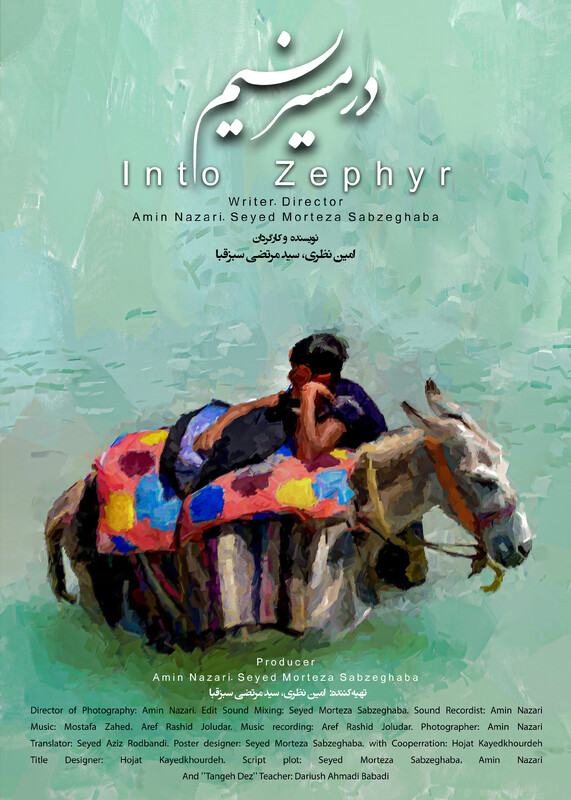
Into Zephyr, 30min., Iran Directed by Seyed Morteza Sabzeghaba, Amin Nazari The teacher of “Tengeh Dez” village spends a sweet but difficult experience every week on a walk and a trip in nature, and by being with the people of this deprived village. In order to cross the raging river in order to educate the children of this village, he has no other tools at his disposal except his feet, body and life.
Akashic Spheres, 11min., USA Directed by James Scott Mystical orbs hold the power to control the multiverse are being sought by dark forces who plan to use them for evil. Captain Everest must find them first to save mankind.
Anomie, 24min., Iran Directed by Reza Javanshir A middle-aged man drives his car to an abandoned hospital. The man’s behavior shows that he has made an appointment with someone. He enters there and closes his eyes with a blindfold according to the appointment he made. A man comes to him and knocks him unconscious by injecting him with an ampoule. Every time he regains consciousness, he sees ghosts of little girls, and then he is knocked unconscious again by the same man by injecting him with ampoule.
The Middleground, 16min., Nigeria Directed by Olumide Kuti In this faith-based supernatural drama, Joromi finds herself trapped in a void between life and death, but she refuses to transition. With years of unanswered prayers and relentless suffering, she demands an audience with the one being who has remained silent through it all—God.
What an honor it was to sit down with Director of Photography Julio Macat. Julio has DP’d most of the top comedy films in the last 25+ years. His list of credits include: Home Alone 1, 2 & 3, Ace Ventura: Pet Detective, The Nutty Professor, The Wedding Planner, Wedding Crashers, Winnie the Pooh, Pitch Perfect, and the upcoming comedy The Boss, starring Melissa McCarthy.
Matthew Toffolo: You have worked in the Hollywood Film Industry scene for the last 36 years. What has been the biggest change in the filmmaking process from 1980 to present?
Julio Macat: The biggest change in our industry has been the choice of material that studios and most independent financing companies green light, as what films are made. It used to be that a film like ORDINARY PEOPLE would have no problem going forward, especially with a good director attached. Now, great films like that rarely get made anymore. I miss that.
MT: Of all the productions you’ve worked on, what film are you most proud of?
JM: Without hesitation it’s HOME ALONE, it was a rare combination of all the elements of film making coming together harmoniously with a result better than expected.
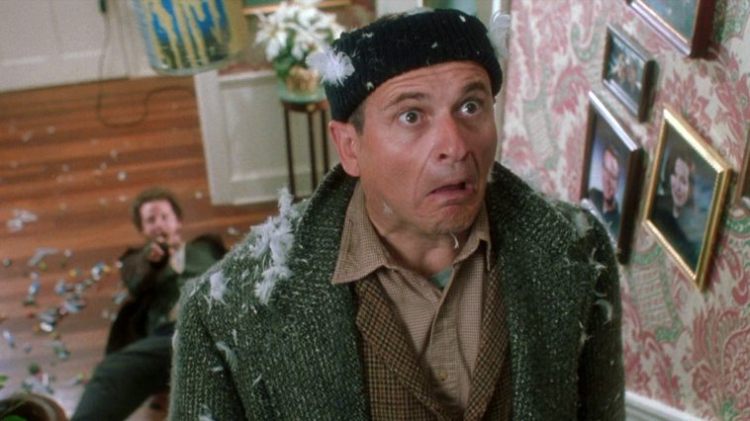
PHOTO: Cinematography in the film Home Alone:
MT: Home Alone is one of the most successful films in movie history, and it’s a film that really stands the test of time. During filming, did you ever imagine that this film would be as iconic as it was?
Advertisement
JM: No I didn’t. My hope was that it would be liked as much as I liked A CHRISTMAS STORY and that kids could relate to and be empowered by it. But It’s unusual to sense that you are doing something that special because you are in a vacuum, trying to do the best you can in your department (the visuals) and just hope that everyone else had their act together as well…Fortunately our young director Chris Columbus, had a great vision of what “it could be” and he guided us all in a great direction. The film was that unique circumstance where every layer that was added made the film even better…and John Williams’ score was truly icing on the cake.
MT: You’ve definitely been a part of some of the most successful films in the last 25 years (Home Alone, Wedding Crashers, Pitch Perfect to name a few). Is there a film that you worked on that didn’t do well at the box office that you consider a terrific film that people should see?
JM: Yes In comedy, I loved MY FELLOW AMERICANS which came out at an odd time and no one saw and the drama CRAZY IN ALABAMA which was a bit too long and did not connect with American audiences.
PHOTO: Crazy in Alabama. Starring Melanie Griffith:
MT: You just wrapped “The Boss” starring Melissa McCarthy, Peter Dinklage, and Kristen Bell. Can you give us a sneak peak as to what to expect?
JM: I have not been this excited about a comedy coming out since I photographed WEDDING CRASHERS!
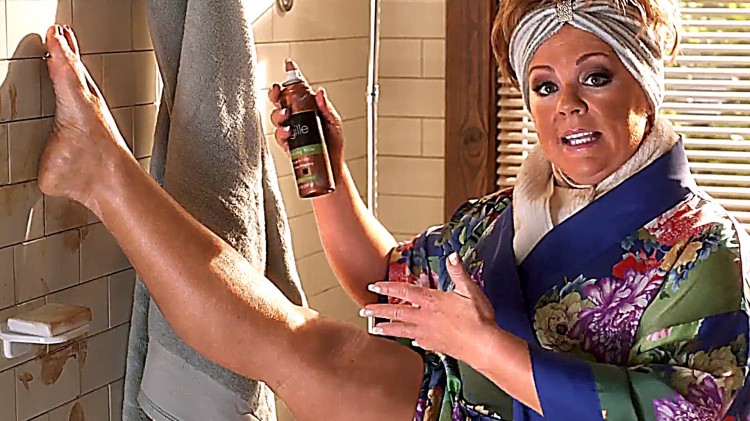
JM: THE BOSS is the perfect vehicle to show Melissa McCarthy’s incredible talent. I think she is the present day Lucille Ball, someone who can and will do ANYTHING for a laugh and unlike other comedians, it’s ALWAYS really funny. She has the uncanny ability to step outside herself and correct situations to make them hilarious without being self conscious! There is a scene in which she puts on a teeth whitener to have Kristen Bell clean her teeth and holds a conversation while they are being cleaned. I assure you that this will have the people in theatres roaring with laughter! We had to start the scene again repeatedly, because the other actors and the crew could not stop laughing during the takes.
PHOTO: Melissa McCarthy in THE BOSS:
MT: Some of the comedies you work on the director demands the actors stick to the script, whereas other films, like Wedding Crashers, there is a lot of improvising occuring. Do you have a preference when shooting? How does the scene lighting setup change when you know the actors are going to go off script?
JM: It’s been my experience that comedy is an imperfect and individual science. The best results come when you leave an opening for great accidents to happen. So I try to not lock in actors with blocking that is too precise, and for example, if the scene develops into being filmed in an area that we had not anticipated, well, that then turns into a fun challenge!. Hopefully this adds to the piece. Ben Falcone and Melissa were eager to want overlaps in dialogue and action in some of our scenes, to be a part of the looseness of the jokes, so they asked that I cover these scenes with three angles simultaneously. It was challenging photographically, but the results were worth the effort and we got many “improvised “ moments with the proper intercut coverage.
Advertisement
MT: Since you started in the camera department, do you prefer operating the camera yourself? Or does this all depend on what type of film (budget/Union guidelines) you’re working on?
JM: I love operating the camera myself, and on some productions I prefer it.
But since I’ve now done 17 films with first time directors, lately, I find that all can go faster when I spend more time by the director’s side and away from the camera. I do love stunts, however, and I love operating on the tough shot …so that we get it in one.
MT: What’s the main thing you look for from your main crew members? Gaffer, Key Grip, Camera Operators etc…
JM: My most important criteria in choosing crew is PERSONALITY. After this many years in the film industry, I found that many people are qualified for the job description, not as many have the agreeable, kind and respectful personality that I require to be in my crew.
I like to be the example of being respectful to actors, directors, producers and other crew members. I expect my crew to do the same.
It’s amazing how much you can achieve with a hand picked crew that has a positive attitude and general kindness toward each other, I am always amazed at this, especially when we work under such tough circumstances that we often encounter. With this approach, when the pressure mounts with things like weather challenges, not enough time, locations changing, etc. etc. which by the way, are actually the daily obstacles of filming, one can rely on the crew to process it, deal with it professionally and find a solution with kindness achieving much better results.
MT: What do you look for in your working relationship with your director?
JM: A collaboration, Hopefully I look for this person to be someone who will do their homework, roll their sleeves up along with me and work as hard as I do.
I look for the director to be considerate of my craft and the elements I may need in order to help them realize their vision for the film And finally, maybe most importantly, a sense of humor.
MT: What movie, besides the ones you worked on, have you seen the most in your life?
JM: It’s a three way tie: In this order though…
IT’S A WONDERFUL LIFE LOST IN AMERICA JERRY MAGUIRE
Cheers JULIO MACAT, ASC
_____
Interviewer Matthew Toffolo is currently the CEO of the WILDsound FEEDBACK Film & Writing Festival. The festival that showcases 10-20 screenplay and story readings performed by professional actors every month. And the FEEDBACK DAILY Festival held online and in downtown Toronto every Thursday. Go to www.wildsound.ca for more information and to submit your work to the festival.















 Festival Reviews