What does the phrase: “You Can’t Go From Cock to Donkey” mean?
Unpacking the art of making a great documentary film in today’s era.
Conversation with Swiss filmmaker Herve Marcotte (ALONG THE THREAD OF THE OTHER) on making his documentary film and getting “reality” from his subject.
Herve Marcotte is back on the podcast chatting about his next experimental feature documentary. Without getting TOO flaky, Herve and Matthew take a deep dive into the meaning of life and the human psyche.
Along the Threat of the Other synopsis:
After my first long documentary, “Encounter with remarkable souls”, with focus on the meaning of life, I am exploring the concept of self-realization with two 25 years old young adults. The film is a quest for an unknown treasure that cannot be found alone. Like the red thread of a fulfilled life !
A tightrope walker, a physiotherapist, a sculptress, a researcher and several adults take turns talking about the inner life… and their relationship with others. Throughout the film, fictional scenes resonate with their words. The film is constructed in the manner of an adventure.
Director Statement
In my films, there’s a symbiosis between the “actors” (not in the traditional sense) and the director, creating an authentic truth that would otherwise remain undiscovered by them.
I enjoy incorporating elements such as animation, improvisation, experiments, games, self-thoughts. For examples, in “Encounter with Remarkable Souls,” I incorporate scenes inspired by the emperor Marcus Aurelius, in “Fraternity is Contagious !” improvisational segments, in “Along the Thread of the OTHER” fictional scenes shot in black & white. Philosophical says constellate my films. I am meticulous in ensuring these elements resonate harmoniously with the documentary’s themes, which originate from my thoughts but are never told during filming.
My films, directly or indirectly, revolve around universal love, portrayed by young characters (either in age or spirit), who offer viewers another perspective. I plan to give even more space to the Divine in my future works.
I film alone.
All my documentaries, under small budgets, are of cinematic quality, edited with the assistance of a professional team, including professional editing, music composition, sound design, and mixing.Last but not least, all my films are films of faith.
Composer/Filmmaker Daron Hagen name-drops his friend Noah Baumbach in the WILDsound Podcast and admires how he is changing the landscape of cinema. And how Daron wants to do the same with the Opera.
Discussion on the art of the “Barbie” film and how he compares it to Fellini’s 8 1/2 film.
The conventions of documentary, musical theater, and magical realism are combined and subverted to address issues of personal, national, and artistic identity through the eyes of a composer desperate to pull off one final backer’s audition whilst hounded by a disdainful documentarian named Charon.
This film is the final installment of a project called “The Bardo Trilogy,” which begins with “Orson Rehearsed,” and continues with “9/10: Love Before the Fall.” In the trilogy of features I explore, from the stance of an auteur composer-director-screenwriter-editor, the concept of “operafilm” — a fusing of the procedures and tropes of lyric theater and cinema in a comprehensively correlative fashion in order to achieve a new form of “gesamtkunstwerk.,
Military veteran and award-winning screenwriter Hannah Augenstine (PRIORITY ONE) chats about how she taught herself to write scripts while on a US military base in Italy.
Three interconnected teams – firefighters, police officers, and 911 dispatchers – face relentless emergenies in Indianapolis, balancing personal struggles with the split-second decisions that determine life or death.
“Krisis” is a short movie that follows the emotional journey of a woman facing mental and physical illness and the isolation caused by painful events. Through the contact with nature, she transforms suffering into a new interpretation of life, discovering the inner strength to overcome pain and embrace joy. An ode to human resilience and the healing power of nature.
Review by Parker Jesse Chase
Krisis sits in the quiet space between solitude and loneliness. It follows Zoe, a woman living with the way pain reshapes her inner world. This is not a story told through plot, but through feeling, rhythm, and repeated return.
We meet Zoe alone. At home. In nature. By the shore. Loneliness feels less like an enemy and more like a constant companion, woven into her daily routine. Her mind spirals, fears creep in, and heavy hurdles are forthcoming. There is rest here, but also confinement. Shelter offers breath, yet it also holds an illusion of safety.
The film moves gently between the cycles of battles and rebuilding, always circling back to the past. A rocking chair sways. Music flows with a calm pulse. Close shots of flowers, hands, feet ground us in the body. Nature and human presence begin to blur. Zoe stands firm on the rocks, facing the ocean, rooted for a moment.
Then comes the break. Zoe at a computer, nearly frozen, wrapped in a yellow raincoat. The color feels loud against her stillness. Misery settles in. She scrubs grout clean, as if trying to erase what came before. The narration drifts in, poetic and spare, speaking of leaves and peace.
A striking image follows. Zoe walks across hills carrying a wooden cross. The weight is clear. Double exposures spin the land around her. Draped in white, she appears almost suspended, like she is walking on water. When she finally throws the cross aside, she reaches toward the camera and faces another version of herself, still bent under its weight.
Among roots and branches, a quiet ritual unfolds. Zoe gives in, not in defeat, but in release. She lies in the sun as the narrator speaks of trying to find her smile again. The light softens. The sea sings.
The final moments linger. Zoe watches the sunset as a path of light stretches across the water, lining up like a way forward. Her hair moves with the wind. A bird crosses the sky in layered images. The feeling is not triumph, but acceptance. Pain does not vanish, yet joy becomes possible.
Krisis, directed by Luca Mazzara, with Zoe Mara Calvo and narration by Gianfranco Migliorelli, is a quiet meditation on isolation and the slow return to oneself. Reminding us that nature does not fix us, but it can hold us long enough to breathe again.
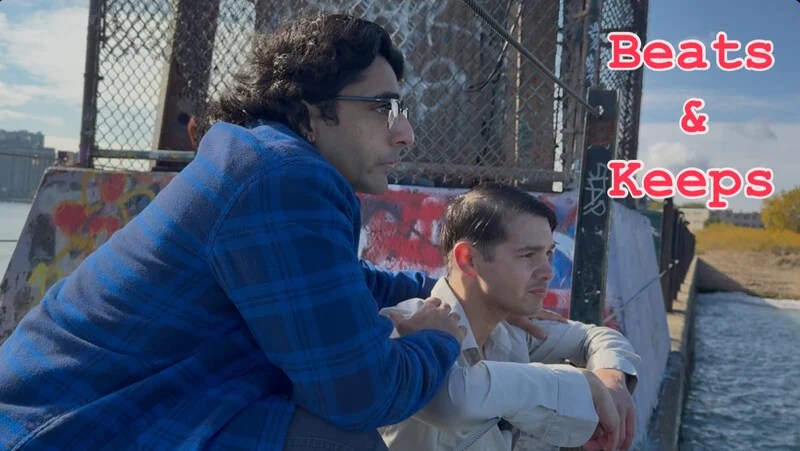
Two friends, engineers, deal with some social mores in 1951 Chicago, while coming to terms with their pasts and looking forward to the future all in the hopes to live free, happy and in peace. Some themes: Immigrant experience in the US, English as second language, interracial marriages, the beat generation, actions and consequences, gentrification, pursuit of happiness, fight for freedom and its personal cost.
Review by Julie C. Sheppard:
Freedom without fear is one of the overarching themes of this compelling short, Beats and Keeps. Convincingly set in Chicago in the fall of 1951, the film captures the period with thoughtfully chosen wardrobe of the era. Royalty-free jazz music from just before the film’s date listed on screen also sets the atmosphere.
The film’s screenplay digs down deeply about the trauma deriving from war, conflicts and political uprising in two different areas of the world, Puerto Rico and Pakistan. This shared experience of trauma is a bond that unites the two central leads – – the performances of these actors are sensitively done. Each actor delivers text with reflective deliberation. You can sense their struggles of trying to move on, despite great pain and loss of loved ones, in their respective parts of the globe. It is also clear why they are friends given their care and fondness for one another.
Other supporting performances of the cast are also subtle and respectful. The cinematography is close and intimate, notably when the leads make heartfelt admissions about their past relationships. Prefaced by a philosophical intro on the origins of happiness, it predicts a project that delves into the human response to past political strife and loss, and the resulting euphoria of being able to move past fear, and escape to freedom.
Haunted by both a past transgression and the unsolved murder of his hero-cop father, a biracial Philadelphia detective with a reputation for losing his cool sets out on a quest to take down a criminal kingpin, but as the investigation unfolds, he realizes he might not be prepared for what he uncovers or the sacrifices he has to make.
Get to know writers Greg Sawicki, Brian Miller:
1. What is your screenplay about
At its core, this is a gripping tale of power, corruption, and the fragile line between justice and survival. The story plunges into a city caught in the stranglehold of a ruthless criminal syndicate – and organization whose influence seeps into every corner of urban life, from the back alleys to the highest offices of authority.
On the other side stands the police force, weary yet determined, locked in a relentless struggle to dismantle the gang’s empire. Their pursuit is not just a battle against crime, but against the shadows of betrayal and compromise within their own ranks.
Hovering above it all are the politicians – calculating, opportunistic, and driven by ambition. They shift allegiances like pieces on a chessboard, siding with whichever faction promises them greater control. Their hunger for power fuels the chaos, blurring the boundaries between protector and predator, justice and exploitation.
This is not simply a conflict of law versus lawlessness. It’s a layered exploration of loyalty, morality, and the price of ambition. Every character is forced to confront the question – In a city where corruption reigns, whose side are you truly on?
2. What genres does your screenplay fall under?
Police and crime drama, with a little bit of mystery sprinkled in. We have a lot of misdirection set up in the pilot that will keep the viewer guessing throughout the first season (and beyond).
3. Why should this screenplay be produced?
The screenplay delivers a timeless yet revitalized narrative – the battle between law and lawlessness – infused with fresh twists that elevate it beyond the familiar police/crime drama. While the audience would recognize the genre, what sets this story apart is its layered complexity: a criminal empire with roots deep in the city’s foundations, a police force fighting not only external factions but internal fractures, and politicians whose shifting loyalties blur the line between justice and corruption.
It’s a proven story type, but reimagined with unpredictable turns that keep the viewer on edge, constantly questioning who truly holds power and which sides the characters are really on. Our dual perspective – seeing the world through both sides of the law – creates a gripping tension that would resonate with audiences hungry for something more than the standard “good vs bad” formula.
The built-in audience for crime dramas ensures commercial viability, while the screenplay’s originality holds more promise. It offers the perfect blend of familiarity and innovation – it’s a genre people love, presented in a way they’ve never seen before. This is not just entertainment, it’s a provocative exploration and thought-provoking dive into law enforcement in a post-George Floyd era from all angles.
But what separates this even further is the characters. While the ever-evolving story may hook the viewer initially, it’s the complexity of the characters that will keep them coming back for more. Viewers will want to see how these characters will fare and what their fates will be. That’s ultimately what makes a show successful – and therefore marketable – and this pilot lays that foundation.
4. How would you describe this script in two words?
Uncompromising and thought-provoking
It’s uncompromising because it refuses to show the simple “good vs evil” narrative. Every character is flawed, layered, and forced to make choices that test their integrity. As a result, everyone is at risk. It’s thought-provoking because it presents different angles of crime and its impact on everyone and everything. We try to present a realistic, no-holds-barred portrayal while not slanting toward any one political side.
5. What movie have you seen the most times in your life?
Brian – LA Confidential, Back to the Future, Braveheart
Greg – Star Wars, Goodfellas, Dumb & Dumber
6. How long have you been working on this screenplay?
The original story came about over 10 years ago, and started with just a simple premise for a feature film. As we started to come up with subplots to fill in the blanks, we realized we had way too many good ideas. We thought about doing a film trilogy, but quickly realized that was not a wise move since we were completely unknown and unbankable writers, and that wasn’t realistic. So, we pivoted to TV. Once we did that, it felt like things started to take off. As a television pilot, it’s been at least four years in the making, with so many rewrites and changes we lost count.
7. How many stories have you written?
We’ve had ideas for easily 50 or more, but actually put pen to paper on 10 screenplays.
8. What motivated you to write this screenplay?
It really did start with just a concept that was interesting. As we filled in the blanks, we started to realize we had some intriguing plot twists – things we could subtly set up for a huge payoff. Coming up with different ways to do that was really the initial driving force.
Around the same time that foundation was laid, the political divide in our country widened. Rather than skew our story to promote one side or the other, we wondered if we could effectively present both sides of an issue evenly, thus allowing the viewer to come to his or her own conclusion based on a fictitious scenario. At the very least, maybe that would foster a level of understanding and would hopefully lead to some healing. We knew this was an ambitious endeavor, but one we felt was much needed.
9. What obstacles did you face to finish this screenplay?
One of our greatest challenges was shaping the story into a format that balanced clarity with depth. We knew what we wanted to present, but were we doing that effectively? The vision for the project was always a bot ambitious – layered characters, political intrigue, and the clash between the law and corruption – but translating that vision into a screenplay demanded precision. Every scene had to be succinct enough to keep the narrative sharp, yet expansive enough to preserve the complexity of the atmosphere that makes the story unique … all while keeping it interesting to the viewer.
This balancing act led to countless rewrites and structural adjustments over the years. Each draft became a test of discipline. We had to trim excess without sacrificing nuance. We needed to refine dialogue while keeping the emotional core intact. We had to ensure the pacing carried the weight of the drama properly. The process was long and often painstaking, but it ultimately strengthened the script, sharpening its focus while preserving the integrity of the original story.
Through all of that, we still had families and jobs and other responsibilities to maintain. Rather than finding time, we needed to make time. And we had to do that without sacrificing other areas of our lives.
10. Apart from writing, what else are you passionate about?
Brian – Sports have always been a major passion of mine. I’m not just a fan of watching them, I thrive on staying active and athletic by participating whenever I can. Whether it’s team competition or individual training, I enjoy the energy, discipline, and camaraderie that sports bring into my life.
Greg – I’m also a big sports fan, and have continued to coach and play when I can. Unfortunately, injuries in my old age have limited by ability to participate lately. However, that has fueled my other passion – my family. I have a stepdaughter who just turned 21 and a daughter who just turned three, so they keep my wife and I on our toes (for different reasons). But, I wouldn’t have it any other way.
11. What influenced you to enter the festival? What were your feelings on the initial feedback you received?
We were looking for something that was genre-specific, and this festival has a stellar reputation and impressive reviews. We felt it would give us a real good feel for where we stacked up against similar pilots that would be vying for the same attention.
As far as the feedback was concerned, there is one thing that stood out and separates this feedback from what we’ve received from other festivals and contests – the “Questions about the pilot” section. I don’t know if this was just something the reader included or if it’s done for all feedback, but it really allowed us to get valuable insight into the reader’s thoughts. Some of these questions would be answered in later episodes – most plan to be answered/covered in Episode Two … if we ever get that far – but there were other questions that really got us thinking about areas we could enhance or things we could call out better. It also let us know the reader was clearly giving this an honest read and paying attention to details we tried to subtly present. We truly appreciated the effort put forth by the reader. Knowing what’s going through the reader’s mind is such a huge bit of information.
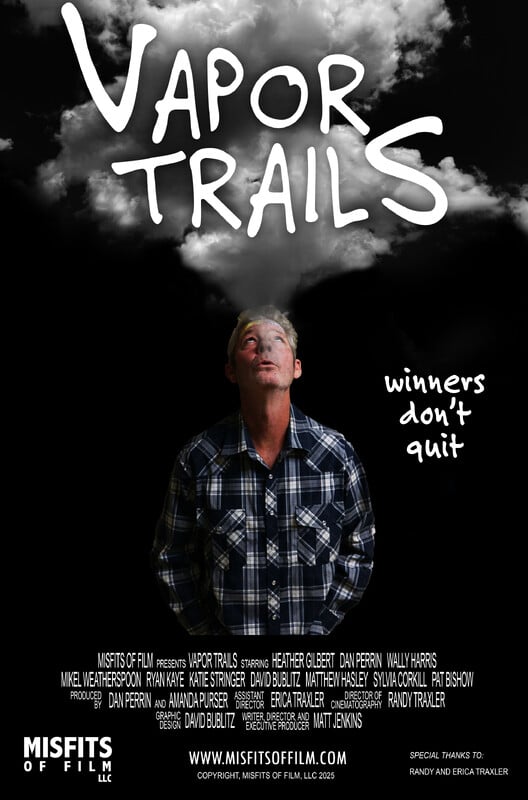
Vapor Trails, 11min., USA Directed by Matt Jenkins Mandy has just given Jethro an ultimatum, quick vaping or else. His friend Chuck thinks its going to be easy to quit.
With our group of production people an actors we strive to create one movie a year. With the flow of people coming and going it just worked out a short would be more feasible to produce this year.
From the idea to the finished product, how long did it take for you to make this film?
About six months if you don’t count the two months we had to delay because of the flooding. See answer 4.
3. How would you describe your film in two words!?
Comedic fun
4. What was the biggest obstacle you faced in completing this film?
We originally wanted to shoot in April but Southwest Oklahoma experienced an enormous amount of rain which caused extreme flooding, including our location – my home – twice. So we had to put it off until August which was the first time everyone could get back together. I’m thankful for Randy and Erica Traxler, members of my production team who stepped up and provided locations, props and a place to hang out while we were shooting – in addition to everything else they were doing on the shoot.
5. What were your initial reactions when watching the audience talking about your film in the feedback video?
Happily surprised! The people responding really seemed to enjoy the movie and got a lot from it.
6. When did you realize that you wanted to make films?
I was 12 and I had taken my father’s 8mm camera to make a stop action movie of chess pieces moving around a chess board.
7. What film have you seen the most in your life?
Dr. Strangelove or How I Learned to Stop Worrying and Love the Bomb. I originally watched it as a little kid and it scared me terribly. When I was older and watched it again, I realized it was satire, a comedy and now it is a regular to watch for me.
8. What other elements of the festival experience can we and other festivals implement to satisfy you and help you further your filmmaking career?
You guys are fantastic!
9. You submitted to the festival via FilmFreeway. How has your experiences been working on the festival platform site?
I don’t have any problems with submitting to festivals on Film Freeway.
10. What is your favorite meal?
Ice cream
11. What is next for you? A new film?
My daughter wrote a script which is most awesomely good. We are shooting it next spring.
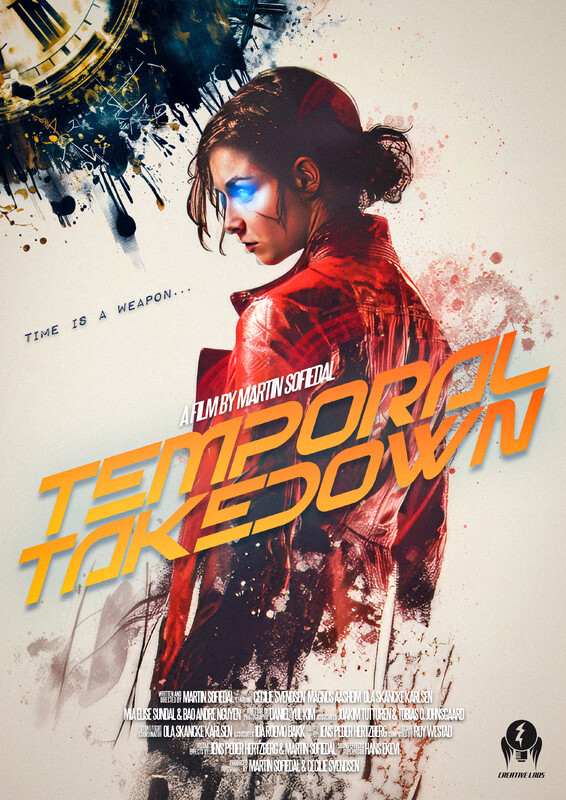
Temporal Takedown, 8min., Norway Directed by Martin Sofiedal A woman with mysterious time freezing powers infiltrate a dirty car workshop in hopes of gaining information about a nefarious gangster. The mechanics are not compliant to her request and an epic and time-bending fight ensues.
I love action, especially close quarter hand to hand action (The Raid-films are a big influence). I want to do a proper action film in that vein, but prior to this short film I had only dabbled in action set-pieces. I wanted to challenge myself and really spend alot of time to do a really proper action set-piece. It is always easy to say you want to do a an action film, but if you don’t have any experience with it it is harder to sell yourself as an action-director. So I wanted to do this short film as a sort of proof-of-ability in a sense, mostly proving to myself that I am able to do it. If I succeeded is another story, I will have to let the audience decide that part 😛
2. From the idea to the finished product, how long did it take for you to make this film?
From inception to finished film it took roughly two years, but it must said that this was a major side project for everyone involved, so we had to work on the film whenever everyone had time. Had it been a fully financed film I imagine the time would be significantly shorter.
3. How would you describe your film in two words!?
Temporally kickass
4. What was the biggest obstacle you faced in completing this film?
Scheduling. When you do a film like this, with big ambitions but basically no budget, you have to rely on peoples time, which is challenging when you work with talented and busy people, both in front and behind the camera 🙂
5. What were your initial reactions when watching the audience talking about your film in the feedback video?
It was really fun, it is always great to hear people respond positively to your work, and here you get to hear specific things people respond to. A compliment is always nice, but a specific and analytical compliment is even better. You feel even more seen that way, since you put some much time and effort in details whenever you make a film, and to hear people see those details and explain how it made the film experience greater because of them is really lovely.
6. When did you realize that you wanted to make films?
Second year in high school. I bought a miniDV camera (that is basically dinosaur technology now, haha!) and a cheap editing software. After filming and editing my first film (which was basically just me making noodles I think) there was no going back, it was just nothing else compared to the powers of the creative energy I felt in those first filmmaker days. I had always had a big interest in films and filmmaking from a young age, but it was never anything I took seriously until I tried it myself. Haven’t looked back since.
7. What film have you seen the most in your life?
I think it must be a tie between Shaun of the Dead and the first Sherlock Holmes (the Downey Jr one). Proably sums up my filmmaker sensibilities pretty well.
8. What other elements of the festival experience can we and other festivals implement to satisfy you and help you further your filmmaking career?
Some form of bigger distribution opportunity and getting industry people’s eyes on the films
9. You submitted to the festival via FilmFreeway. How has your experiences been working on the festival platform site?
Great! Always easy and accessible.
10. What is your favorite meal?
Chicken adobo
11. What is next for you? A new film?
Currently writing an american action feature and a norwegian creature feature. Also just finished my first super hero children’s book.
The Ballad of Sloth Shot, 20min., Canada Directed by Simon Rasmussen A sharp-shooting cowgirl must stop a time-travelling supervillain from destroying her town.
I’ve always had a soft spot for westerns, but it was a TV show called Buffalo Girls that hooked me. Instead of shootouts and train robberies, it told the stories of historical figures like Calamity Jane and Annie Oakley struggling to adapt as the Wild West they knew came to an end. The women in Buffalo Girls were adventurous and fun, but also compassionate and vulnerable. They felt like real people – which they were. I wanted to create my own cowgirl with an authentic, independent spirit, set in a modern context fused with a streak of sci-fi.
2. From the idea to the finished product, how long did it take for you to make this film?
From the first draft to final editing took almost five years, but the initial concept dates back almost 30 years.
3. How would you describe your film in two words!?
Action/adventure!
4. What was the biggest obstacle you faced in completing this film?
The biggest challenge was fitting the action and science-fiction elements into a micro-budget, which wouldn’t have been possible without the generosity and dedication of the volunteer cast and crew. Because of them, the story I always wanted to tell has finally come to life, and I hope I have properly expressed my deep gratitude to each of them.
5. What were your initial reactions when watching the audience talking about your film in the feedback video?
I was very pleased with how much they enjoyed it! It meant a lot to have the quality of the writing recognized.
6. When did you realize that you wanted to make films?
Back in high school, while my friends found jobs, went on dates, and learned important social skills, I spent every free minute making home movies that transformed forests, ponds and empty garages into fantastical backdrops for grand science fiction adventures. After a 20+ year break for career and family, I rediscovered my love of filmmaking and set to work on this movie.
7. What film have you seen the most in your life?
I’ve always been a big fan of Star Trek, so probably one of those, but the non-Trek film I’ve seen the most is Baraka. If you ever get a chance to watch it in a theatre, go!
8. What other elements of the festival experience can we and other festivals implement to satisfy you and help you further your filmmaking career?
I hope the festival experience provides me with opportunities to network with industry-savvy producers. The opportunity to make my next film with that kind of support would be amazing.
9. You submitted to the festival via FilmFreeway. How has your experiences been working on the festival platform site?
No complaints! It’s easy to use and seems very secure.
10. What is your favorite meal?
I’ve always been partial to a good lasagna.
11. What is next for you? A new film?
Yes! I have several ideas in the works, but I’m very excited to build on what I’ve learned from this filmmaking experience. Stay tuned!
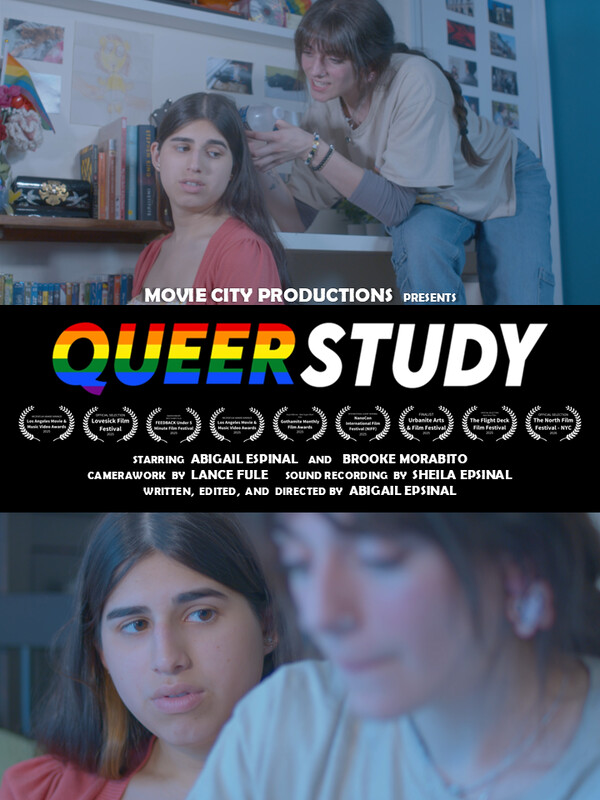
This film was my final project for a Queer Theory class, specifically based on the idea of “flagging” for the sake of finding queer community. Why it was a comedy, well, I just enjoy writing funny movies, so naturally, I filled it with jokes! If you must know, I did get a passing grade. 🙂
2. From the idea to the finished product, how long did it take for you to make this film?
This film was shot in six hours by a team of four (myself as actor/writer/director/editor, my friend as the other actor, another as the camera operator, and my mother of all people as the sound mixer). The finished edit took an additional two days as we had an extremely tight turn around deadline before the end of the semester.
3. How would you describe your film in two words!?
I would say my film is “awkward” and “gushy”.
4. What was the biggest obstacle you faced in completing this film?
Time! We only had one day to shoot and two days to edit. If I could change anything, I would love to add music–maybe I will in a future edit!
5. What were your initial reactions when watching the audience talking about your film in the feedback video?
I felt honored that people enjoyed me work! I honestly felt very unsure about this project, so I am glad and astonished people adored it so!
6. When did you realize that you wanted to make films?
I knew as soon as my professor assigned a creative final project–I had to make something queer, fun, and creative, so of course I decided to make a film!
7. What film have you seen the most in your life?
Without a doubt, “Raiders of the Lost Ark”. It was the first movie I ever saw at the age of three (which I admit is way too young) and I have seen it about a billion times since.
8. What other elements of the festival experience can we and other festivals implement to satisfy you and help you further your filmmaking career?
I would adore further networking opportunities! I love meeting other filmmakers and watching their work; building community is always beautiful!
9. You submitted to the festival via FilmFreeway. How has your experiences been working on the festival platform site?
FilmFreeway is a wonderful platform with a great, easy-to-use UI. I adore everything about it, minus the crazy prices some festivals require for one short entry.
10. What is your favorite meal?
I love a good soup–kind does not matter, as long as it is soup!
11. What is next for you? A new film?
I am currently cast in several films, theatre plays, and even a musical! But by far the coolest project I am working on is my next film “Boo-Haul”, a lesbian, slasher, horror comedy about a dead lesbian haunting a U-Haul. It is stupid, silly, and crazy-gory fun!


 Festival Reviews