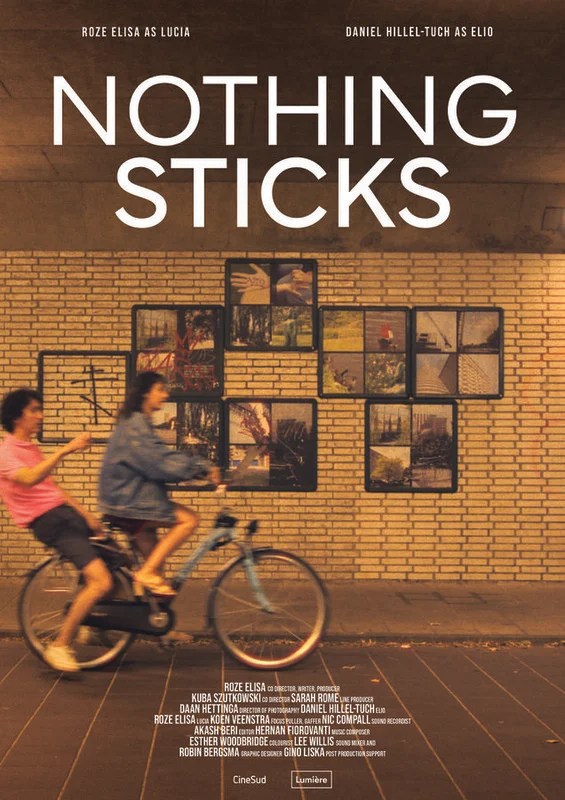
Nothing Sticks, 1min., Netherlands Directed by Roze Elisa, Kuba Szutkowski
Get to know co-writer/writer/actor Roze Elisa:
1. What motivated you to make this film?
I wanted to make something funny that we can all relate to – awkward dates and missed opportunities. I signed up for a 1-min film challenge, got selected and developed the awkward dance between the two along the way.
2. From the idea to the finished product, how long did it take for you to make this film?
About 2 months. The actual sourcing a crew, filming, editing and making it ready only took a month.
3. How would you describe your film in two words!?
Missed opportunity
4. What was the biggest obstacle you faced in completing this film?
Getting the perfect crew in the timeline we had: a month. I wanted this to be as good as it could be, and we all know that the crew makes the movie. I ended up with incredible people, and I am very grateful.
5. What were your initial reactions when watching the audience talking about your film in the feedback video?
So fun!! Really glad to hear the words “relatable” and “funny”. That was actually what we wanted and seeing that people can relate is a blessing and a curse (we all want you to have good dates!).
6. When did you realize that you wanted to make films?
I’ve always known I wanted to be in this industry: I was two when I proclaimed I was going to be an actress. The dream of actually making films and being part of the creative team started when I was in drama school, about 10 years ago.
7. What film have you seen the most in your life?
Ooofff, not sure. If I had to guess it would be Pride & Prejudice, the Keira Knight version. Love that film!
8. You submitted to the festival via FilmFreeway. How has your experiences been working on the festival platform site?
Really good – great platform, makes it easy to find great film festivals.
9. What is your favorite meal?
Poke bowls and mochi – yum.
10. What is next for you? A new film?
Yes! Currently in development for 2 shorts – they will be longer and I’m excited to make a 20-min film.
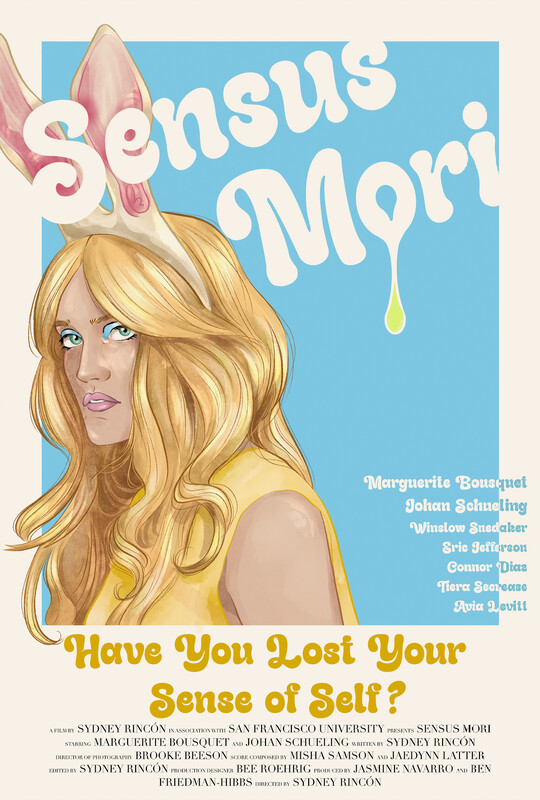
Sensus Mori, 8min., USA Directed by Sydney Rincón When an elusive society agrees to be interviewed, a journalist must contend with their ideologies or risk falling prey herself.
Sensus Mori actually originated from a political science paper I wrote in university on idealogical conditioning and social influence on identity.
2. From the idea to the finished product, how long did it take for you to make this film?
My undergrad thesis program was 1 year but I think I started workshopping 8 months prior to that— I couldn’t wait to start. The character masks alone took me 5 months to construct.
3. How would you describe your film in two words!?
A lot.
4. What was the biggest obstacle you faced in completing this film?
Definitely the time constraints of being a student, working, and directing; having a tight schedule meant every moment was precious when it came to giving Sensus Mori the attention it deserved. My cast and crew were incredibly savvy when it came to working around the quick deadline.
5. What were your initial reactions when watching the audience talking about your film in the feedback video?
I had a pen and paper ready to take notes. It’s a bit nerve wracking watching someone react to the project you put so much life into. But hearing people connect to the art and message of the film? That lets me know I did my job as a director.
6. When did you realize that you wanted to make films?
I was an actor first actually, I studied theatre for four years before pursuing film— so I wanted to see a film project from the very first draft to the big screen and directing gave me that opportunity. It’s like playing pretend professionally.
7. What film have you seen the most in your life?
Probably Fantastic Mr. Fox. The Family Stone is a close second.
8. What other elements of the festival experience can we and other festivals implement to satisfy you and help you further your filmmaking career?
I’m very appreciative of the support I have received for my film, I hope moving forward I’m able to attend more festivals and connect directly with audiences and fellows creatives, making festivals accessible is always a plus.
9. You submitted to the festival via FilmFreeway. How has your experiences been working on the festival platform site?
The opportunities are almost overwhelming, having a distribution team has made a world of difference and FilmFreeway makes navigating festival entries easy.
10. What is your favorite meal?
My mom’s tacos, there’s nothing like them.
11. What is next for you? A new film?
Since graduating, I’ve performed in an upcoming short film, Brain Spiders (2026), and I will be starting pre-production for my next film this coming spring. I hope everyone enjoys it as much as they’ve enjoyed Sensus Mori.
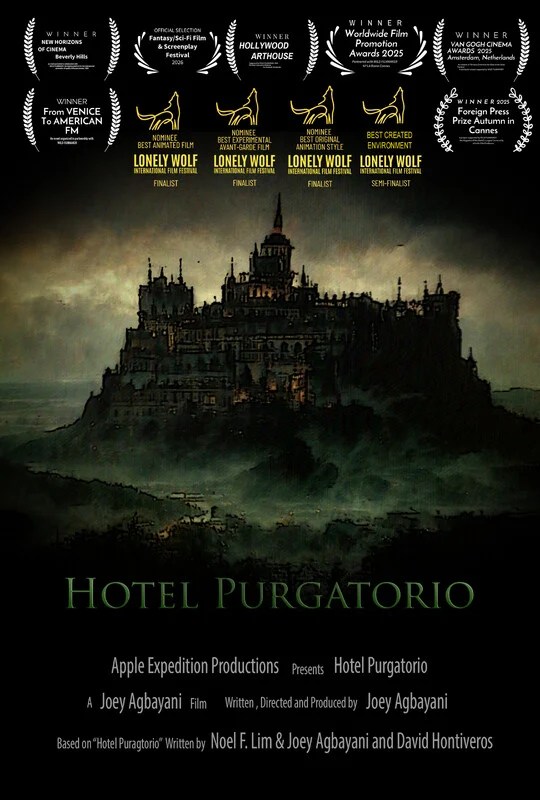
Hotel Purgatorio drops us into a strange old hotel where escape is possible only by moving forward, room by room, through fear, doubt, and tests of the soul. The title is literal and symbolic. This is purgatory, an in-between state shaped by suffering, waiting, and the slow burn of reckoning.
The film opens with our lead arriving alone in an elevator, stepping into a lobby that feels polished yet wrong. The animation carries a refined, painterly quality, like a digital canvas brought to life. It is graceful, but stiff enough to unsettle. The sim-like movement keeps the viewer slightly removed, which works at first, though smoother motion could have helped this world feel easier to sink into.
Our lead has no memory of who he is or how he arrived. The lobby attendant offers help with a eerie smile, telling him he may check into any room. Any room, no key required. Just speak the number. The rule is simple, and immediately strange. The hotel feels populated by ghosts, guests and staff alike, all carrying private knowledge. Their smirks and quiet laughter suggest the joke is on him.
He chooses room 917, whispered to be a room of doom. Inside, he meets a mysterious man who offers what sounds like a miracle. A cure for his body, while he is free to roam during the repair. The cost is a temporary body swap. With no clear reason to agree, he does anyway. The deal turns sour fast. The body he enters has a heart defect, and the man who promised healing reveals his real aim, to steal a healthy body for himself.
What follows is a tense exchange of identities, desperation, and uneasy teamwork. Everyone wants their body back. Survival means cooperation. Room 917 becomes a test not just of fear, but of trust. When they finally defeat the room, it becomes clear that others are watching. Some want him to fail. Some want him to win. His fate is entertainment, a wager placed on his soul. Each room offers a new trial, yet all roads point to the same truth. This hotel is the afterlife. This is his purgatory, a gray space between judgment and release.
The story softens when a meet-cute appears, bringing warmth into an otherwise cold maze. Temptation follows close behind. Seduction, comfort, and escape all beckon. In the end, it is sacrifice that opens the door. By choosing others over himself, he earns peace, and possibly a new ghostly love. The final moments carry a quiet magic, a sense of calm and fresh beginnings. Fans of Dante’s Inferno or horror stories built around isolated trials will recognize the structure, but Hotel Purgatorio finds its own voice by focusing on human insecurity. It asks what keeps us stuck between heaven and hell. Fear, selfishness, and the refusal to change.
The film argues that our choices shape what comes next. Even in death, where we land still depends on who we are. There will be temptation. There will be figures who invite us to sink to their level. The harder path is persistence.
The message is simple and earned. Protect your heart. Keep going. Do not stay lingering in the lobby.
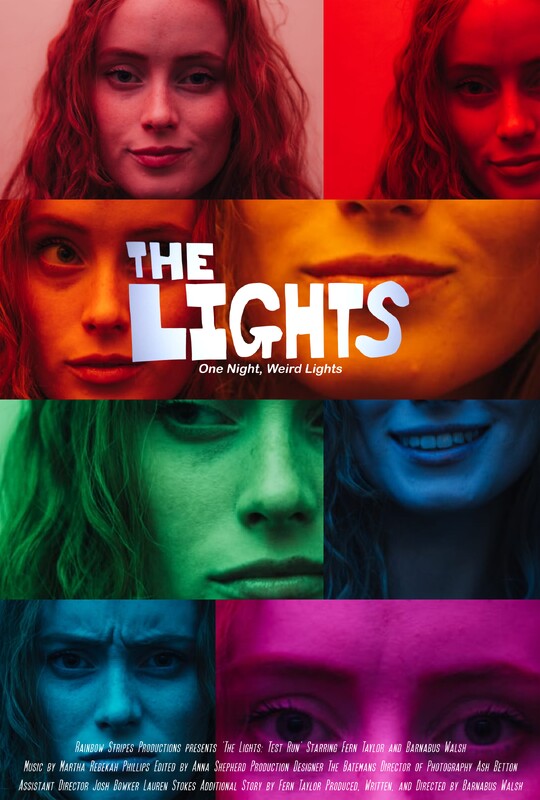
Jaz is an agency worker given a simple task, to stay overnight at a student housing accommodation. There are just two problems; the weird lighting, and the unexpected coworker.
I’ve been in love with horror films since I was far too young to be in love with them (namely A Nightmare on Elm Street, I got in young enough to consider Freddy’s Dead a highlight of the series.) The full-length version of The Lights was born when I grew tired of horror protagonists never being believed in their films, and wanted to create something where they actually had a support network.
2. From the idea to the finished product, how long did it take for you to make this film?
From the original idea? It’s probably been seven years, after I met the best leading lady you could ask for in Fern Taylor. For the short film itself, between one and two years.
3. How would you describe your film in two words!?
Weird Lights.
4. What was the biggest obstacle you faced in completing this film?
Our DoP/Cinematographer/Technical Boy Ash Betton is also in a pretty successful band and was called away to the other end of the country after the session musician his band was using dropped out. Thankfully we had a fairly long scene with a fairly simple set-up to shoot next and our Sound Operator Lauren Stokes knew Josh Bowker, who was more than happy to help out.
5. There are 5 stages of the filmmaking process: Development. Pre-Production. Production. Post-Production. Distribution. What is your favorite stage of the filmmaking process?
I think development was the only one without the looming threat of insanity or a mental breakdown so by process of elimination it would be that one. I like to wear a lot of different hats but if I could only do one part of the filmmaking process going forward, it would be writing.
6. When did you realize that you wanted to make films?
Probably as young as six or so years old. I remember wanting to be a part of the Scooby Gang watching the 2002 film on VHS.
7. What film have you seen the most times in your life?
In the early days of DVD you just rewatched what you had, so probably X-Men 2, but as an adult it’s probably Anna and the Apocalypse, my favourite film! (It’s a Scottish zombie Christmas musical and if you think that sounds cool, then you’re cool too and I think we could be friends.)
8. In a perfect world: Who would you like to work with/collaborate with on a film?
Emma Laird is an absolutely incredible upcoming actor who made her debut in Mayor of Kingstown, and has played some small roles in The Brutalist and the upcoming 28 Years Later film. I’m probably slightly too late to realistically work with her as she’ll probably blow up once people see her performance in Satisfaction.
9. You submitted to the festival via FilmFreeway. How has your experiences been working on the festival platform site?
Every festival has their own unique and very specific process, so you can be accepted or considered an award winner without anything actually happening to your film. Then again, I’ve made some really strong professional and personal connections through a festival that had a gala awards evening, and the same from a festival that screened everything from a dodgy projector in the meeting room of a Novotel, so I guess you could say a mixed bag.
10. What is your favorite meal?
Lasagne. There are so many versions of good, no two lasagnes taste the same. The worst I’ve ever had? Takeaway lasagne using donner meat. The best? Any authentic Italian restaurant that serves it in that lemon-shaped ceramic dish. Also, I’m flexitarian so I can comfortably tell you the rainbow lasagne from Zizzi is absolutely stunning.
11. What is next for you? A new film?
Hopefully some wonderful soul with a spare 20k in their pocket likes The Lights enough to help me out with a full-length version! Failing that, there’s a comedy short called Another Audition I would like to make for a much more manageable amount of money.
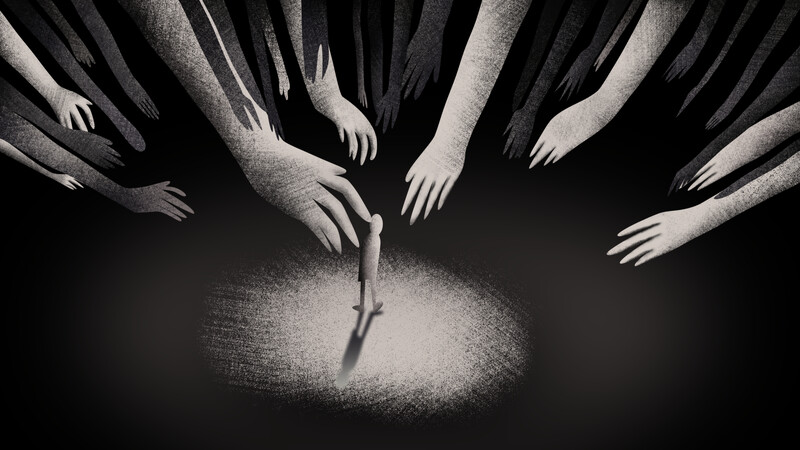
My project, “Pieces of Me”, is a self-reflection of my emotional journey from self-doubt to self-acceptance. There are always moments in life where we feel confident we can complete something, but then encounter an obstacle and feel self-doubt. Eventually, we accept the weaknesses in ourselves, overcome the obstacle and gain confidence again.
1. What motivated you to make this film? *Answer:* Coming from a medical background, it took a tremendous amount of effort to transition into the design and animation field. There were many moments when I struggled to keep up with other artists and questioned whether I belonged in this industry. That emotional vulnerability during periods of transition is what inspired the film. It became a way for me to express how self-identity can shift, break, and ultimately reform through personal experiences—showing that every struggle contributed to shaping me into the stronger person I am today.
2. From the idea to the finished product, how long did it take for you to make this film? *Answer: *Took me quite some time! I illustrated and animated the textures, and this part of the process required the most effort. Overall, the film took about three months to complete.
3. How would you describe your film in two words!? *Answer: *Melancholy and surreal.
4. What was the biggest obstacle you faced in completing this film? *Answer:* I guess the biggest challenge was figuring out the transitions. I designed each frame individually based on the script, so connecting them in a way that felt coherent and emotionally fluid was difficult. I ran into several technical hurdles when animating, which added to the complexity.
5. There are 5 stages of the filmmaking process: Development. Pre-Production. Production. Post-Production. Distribution. What is your favorite stage of the filmmaking process? *Answer: *Post-production. I just love animating and seeing my designs come to life. It’s incredibly rewarding. It’s the moment when everything finally feels real. It’s the stage that makes me the proudest.
6. When did you realize that you wanted to make films? *Answer: *I think it started after I graduated from college. I knew I didn’t have a true passion for the medical field, and I wanted a career that is more creative. I’ve always loved watching Pixar and Disney animations, and that planted the idea that I wanted to create something just as magical. As I explored deeper, I discovered motion graphics and realized how broad and expressive the field is – there were so many more possibilities than I ever imagined. That’s how my path as a motion designer began, and honestly, I’ve never looked back.
7. What film have you seen the most times in your life? *Answer: *Home Alone 1! Though it’s not an animation. I absolutely love it! I watch it every year end near Christmas – the humor and vibe always cheer me up. It’s one of those films that makes me feel less scared or alone.
8. In a perfect world: Who would you like to work with/collaborate with on a film? *Answer: *Wes Anderson. I admire his distinctive visual style, color palettes, and storytelling approach. Collaborating with him would be a dream—his worlds are so meticulously crafted, and I would love to bring motion design and animation into that kind of cinematic universe.
9. You submitted to the festival via FilmFreeway. How has your experiences been working on the festival platform site? *Answer:* It’s been smooth and easy to use. I appreciate how organized the submission process is and how communication with festivals is integrated directly into the platform.
10. What is your favorite meal? *Answer: *Pad Thai. Thai food never goes wrong in NYC, and pad thai is always my go-to.
11. What is next for you? A new film? *Answer: *Taking a rest first! And then maybe a new film. The next one will be energetic and a little silly. Something fun that shows a different side of my creative voice.
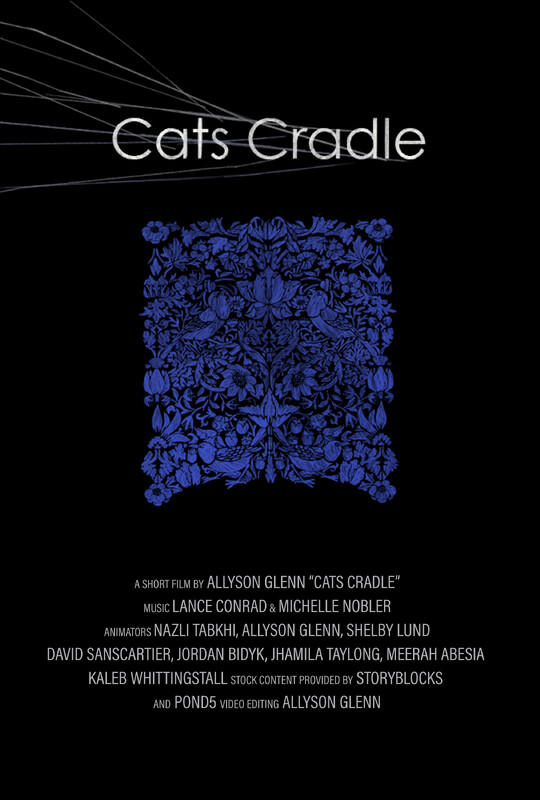
Cats Cradle is inspired by the Greek myth Ariadne and her journey from Crete to Naxos. Like The Fates, she is associated with the symbol of the thread, which she uses to help Theseus kill the Minotaur. Central to Ariadne’s story is her deification, her transcendence from mortal to divine through a union with Dionysus. By revisiting this ancient myth, Cats Cradle invites viewers to reflect on how they navigate their own inner labyrinths of identity and transformation.
I was preparing for a solo art exhibition called Date with Hermes: Journeying between Dreams and Reality for the Vorres Museum in Greece (2024). The curator, Dr. Katerina Pizania, suggested I create an animation to connect the Greek myth themes. While the show focused on large-scale paintings and works on paper, the film became a companion piece to my series on Ariadne and Dionysus.
2. From the idea to the finished product, how long did it take for you to make this film?
I only had two months to develop the animation for the first exhibition, so the first version was more of an “outline.”Completing the film took a year and a half.
3. How would you describe your film in two words!?
Intense!
4. What was the biggest obstacle you faced in completing this film?
Time! As a full-time Associate Professor at the University of Saskatchewan, Canada, I worked on the animation during weekends with invaluable help from students and alumni.
5. There are 5 stages of the filmmaking process: Development. Pre-Production. Production. Post-Production. Distribution.
What is your favorite stage of the filmmaking process?
Production. More broadly, I always find creation to be the most rewarding stage of my artistic process.
6. When did you realize that you wanted to make films?
Once I gained a solid foundation in painting and drawing, expanding into other mediums made sense. My first animation was 3D (Unity) for a musical performance. After that I found other ways to merge drawing with time-based media.
7. What film have you seen the most in your life?
It’s a tie between The Wizard of Oz and Little Women.
8. What other elements of the festival experience can we and other festivals implement to satisfy you and help you further your filmmaking career?
Animation and time-based media are a new medium for me. Cats Cradle is my fourth animated 2D film, and I realize that my strategies may require depth. Feedback is essential to inform what changes I should make and if I should submit the film to other festivals.
9. You submitted to the festival via FilmFreeway. How has your experiences been working on the festival platform site?
Excellent. I joined when I released my first two films, Above the Deluge and In the Fray, both of which had strong festival runs. Film Freeway made my work visible to directors worldwide, though the volume of requests eventually became overwhelming. Overall, it has been a worthwhile investment.
10. What is your favorite meal?
Any meal cooked for me!
11. What is next for you? A new film?
Yes. I am gathering resources for a new project inspired by wildlife and nature around the Krydor Redberry Lake region in Saskatchewan. I have collected footage, particularly of migratory birds, and while the story is still emerging, I anticipate it will take shape as I animate the opening scenes. My focus will be on experimenting with representation and abstract imagery through layered videography.
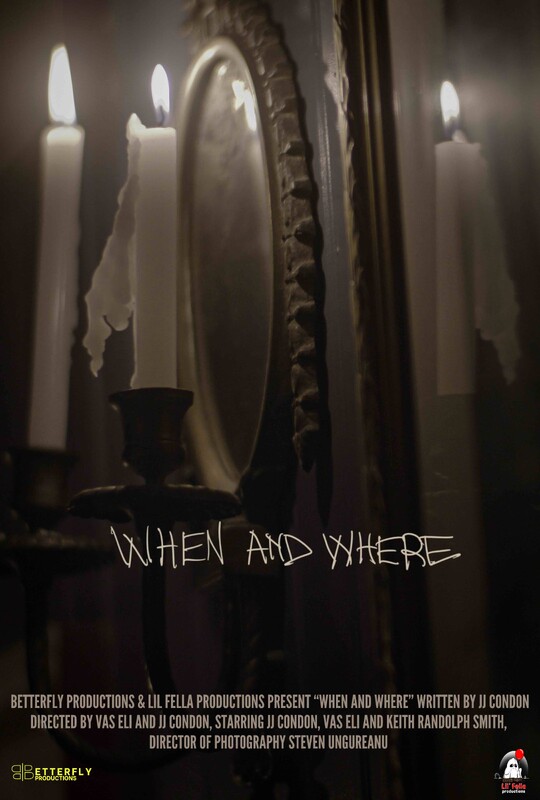
In a near-future world, enormous, enigmatic monoliths appear in the sky, periodically abducting large swathes of humanity in seemingly random events. No one can stop them, and society is divided: some believe these mysterious entities are divine forces of God, while others fear they are hostile extraterrestrials. As the next cycle begins, three men find themselves in a quiet, deserted, candlelit bar, grappling with their own fears and conflicting beliefs, searching for meaning in a world teetering on the edge of chaos.
1. What motivated you to make this film?
Two things. First: everyone starts somewhere, so I just had to go for it and make something. This was my starting point. Second: we were drawn to the idea of “how do people deal with loss, how do they process grief and the unknown?” I thought wrapping that in a sci-fi setting would be interesting. We hope other people find something in that story to connect to.
2. From the idea to the finished product, how long did it take for you
to make this film?
This film took about a year and half from first draft to final cut.
3. How would you describe your film in two words!?
Sci-fi thriller
4. What was the biggest obstacle you faced in completing this film?
I think the biggest obstacle was creating the big alien moment. It pushed my editing skills to new heights, and I think that’s the great thing of indie movie making: budget and skill constraints facilitate opportunities for you to grow.
5. There are 5 stages of the filmmaking process: Development. Pre-Production. Production. Post-Production. Distribution. What is your favorite stage of the filmmaking process?
That is tough. I’m Primarily an actor (we both are) so production holds a special place in my heart. This being my first film as a multi-hyphenate, it gave me a new appreciation of all stages. Though post production can be tedious, it is very rewarding to try and put all the pieces of the puzzle together.
6. When did you realize that you wanted to make films?
I’ve always loved storytelling, it’s only in the past few years have I realized that I have the power to create the stories I want to tell.
7. What film have you seen the most in your life?
Ghostbusters
8. What other elements of the festival experience can we and other festivals implement to satisfy you and help you further your filmmaking career?
I think making connections with other artists and producers is a huge aspect of the circuit, so anything that can help facilitate that.
9. You submitted to the festival via FilmFreeway. How has your experiences been working on the festival platform site?
It has been smooth and straight forward.
10. What is your favorite meal?
Another tough question! I love a good slice or banh mi, but I think my favorite is, and not to be cheesy, one shared with good friends.
11. What is next for you? A new film?
I just wrapped shooting another short film that I wrote about a man dealing with O.C.D as he tries to make it to his own wedding: what should be the best day of his life turns into a nightmare. It has been shot and we are hoping to complete post production in 2026.
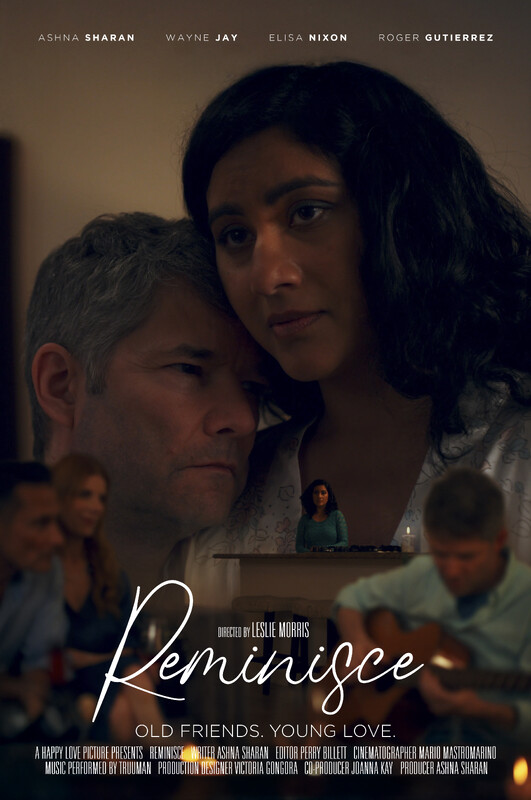
As Monica gets ready to host her older husband’s college classmates, a phone call from her estranged sister puts her mind at unease. With the age gap and her questioning the one sacrifice she made for love, she feels like an outsider in her own home. As the evening continues, tensions run hot as truths come to light. After the friends leave, she questions the perfection of her marriage and the power imbalance as her loving husband struggles to rein her in.
1. What motivated you to make this film? The original idea was for a feature film drama so I wrote a short film version in order to be able to get funding / show investors what the feature film would be about. The film is loosely inspired by my own life. I’m married to someone ten years older in real life. My husband and I both got judgment for the age gap, but we ended up deciding to move forward anyways. Having realized that it affected some of my friendships and relationships with others, I can only imagine what a large age gap like 25 or 30 years would do so that’s why I exaggerated the age.
As for the professor-student relationship, my grandparents met in a student-tutor capacity so I tied that into the love story of Reminisce. Power imbalance and a generational gap amidst the #metoo movement added an interesting dynamic to the story.
2. From the idea to the finished product, how long did it take for you to make this film?
I had written it towards the end of 2023. We began casting in the spring and ended up doing a crowdfunding campaign over the summer. We shot it in October 2024 over two days in Los Angeles. Post-production was done by April 2025. So all in all, about a year and a half.
3. How would you describe your film in two words!?
Layered and Lovely
4. What was the biggest obstacle you faced in completing this film?
Casting for this was particularly tricky so Leslie Morris (the director) and I spent a lot of time with that. I was playing Monica and I had written the role of Brian for Wayne Jay. Since Diana and Patrick were Brian’s friends from college, we had to cast people who looked like they could have gone to college with Wayne, but also had the chemistry of long-time friends. We received a lot of submissions so we did self-tapes, virtual callbacks and then an in-person chemistry read. Elisa Nixon and Roger Gutierrez were cast and they did a tremendous job.
5. There are 5 stages of the filmmaking process: Development. Pre-Production. Production. Post-Production. Distribution.
What is your favorite stage of the filmmaking process?
My favorite stage is the production aspect because I finally get to be on set with other actors and make art!
6. When did you realize that you wanted to make films?
It began in 2020 during the pandemic shutdown. Since auditions were scarce, I started writing short films. Eventually, I decided to actually make them into a 14 episode anthology web series by collaborating with other people I knew. We did it all remotely so everyone was safe and healthy. It was a large undertaking but I am really grateful for the community it built while we were lonely and stuck at home.
From that experience, I realized I had a knack for writing and producing. I realized that I no longer want to direct so I like finding directors to attach to my scripts.
7. What film have you seen the most times in your life?
Jurassic Park
8. In a perfect world: Who would you like to work with/collaborate with on a film?
My ultimate dream would be to get to work with Steven Spielberg, Christopher Nolan, JJ Abrams, and Aaron Sorkin. The list goes on.
However, in the interim, I want to work with people who love art, exude professionalism and have talent.
9. You submitted to the festival via FilmFreeway. How has your experiences been working on the festival platform site?
I’ve used Film Freeway for years for previous films. I like how easy it is to all be in one place.
10. What is your favorite meal?
I love all food…but if I had to pick, it would be Malai Kofta and Garlic Naan
11. What is next for you? A new film?
I have another proof-of-concept, Eggnog, that will be coming out in early 2026 that should hit the festival circuit soon.
On September 22, 2025, Chef Matthew Biancaniello embarked on one of the greatest challenges of his life: a 21 mile swim from Catalina Island to Palos Verdes, CA. While his journey is inspiring on its own, he didn’t do it just for himself. The swim was a vehicle to raise money and awareness for Indivisible Arts, a nonprofit dedicated to teaching consciousness and creativity to kids.
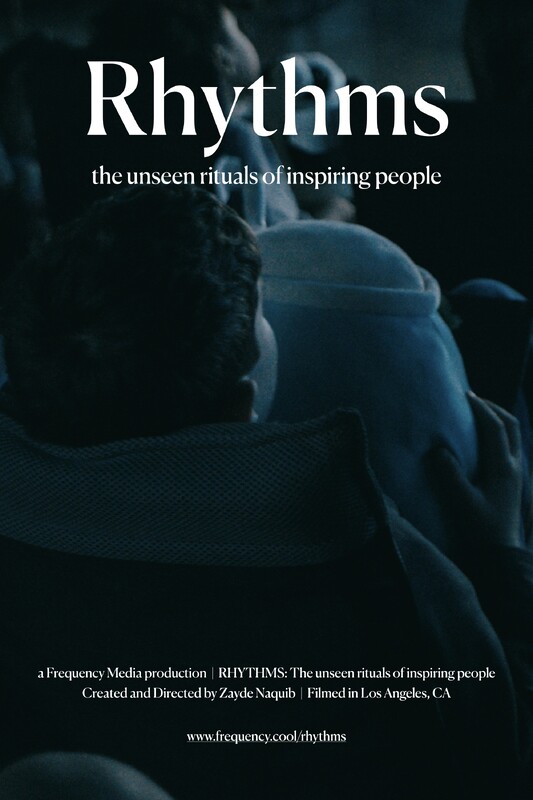
This is the 2nd film in a documentary series I’m directing called Rhythms, which is all about the unseen rituals of inspiring people. I learned about Matthew Biancaniello’s marathon swim to raise money for Indivisible Arts through Robert Wemischner, who’s both a friend and was the subject for the first Rhythms film.
I was immediately intrigued, but then I spoke to Matthew as well as Rafael McMaster, the founder of Indivisible Arts, and I was so inspired. I knew I had to tell this story in some way, and thankfully everyone was excited to have me involved in this capacity. Indivisible Arts is a remarkable organization, teaching creativity and consciousness to kids. The first time I went to their space in Hermosa Beach I was taken aback. These kids are able to explore their own sense of self in a way that’s rare, as well as build vital mindfulness and emotional intelligence skills. Coupling that story with Matthew’s intense swim, 2 years after major back surgery, was something I felt deeply moved by.
2. From the idea to the finished product, how long did it take for you to make this film?
I learned about the September 2025 swim in July. By early September we were confirmed to shoot, with production beginning on September 22. We completed the film and released it online on November 2, so it was about 4 months in total.
3. How would you describe your film in two words!?
Inspiring. Grounding.
4. What was the biggest obstacle you faced in completing this film?
The logistics for the swim itself, as well as the end of the swim, were the biggest practical concerns. Most of the swim took place in the dead of night, and the swim concluded at an alcove that was not accessible to the public, meaning it wasn’t a place I could drive to with a camera and meet him. We were very fortunate that one of Matthew’s kayak support team, Angela Lee, is a documentary filmmaker herself. Angela shot the swim sequence as well as the emotional arrival onshore. Much of the film was shot at 50mm on a Super 35 sensor to feel the intimacy of Matthew’s journey, while the sequence at Indivisible Arts of the kids creating in the moment was shot with a 75. For the swim itself, we switched to a super wide perspective to feel the epic scale of what Matthew was actually accomplishing. It started as a huge obstacle but became an opportunity that deepened the experience of the film.
5. There are 5 stages of the filmmaking process: Development. Pre-Production. Production. Post-Production. Distribution.
What is your favorite stage of the filmmaking process?
It depends on the piece to a large degree. I find shooting to be meditative in a way, so if I had to choose today I’d say Production, but I could easily make an argument for Post. Seeing something take shape is special, and being a musician too the rhythm of editing a piece is its own delight.
6. When did you realize that you wanted to make films?
14. I learned quickly that I love cinema as a form. I took a wonderful cinema class while in high school but also shot all the time on my own, dabbled in photography, and then started taking on freelance gigs while still in high school. It was an amazing way to spend those years.
7. What film have you seen the most times in your life?
It’s a toss up between an unlikely pair, Annie Hall or Star Wars. When I was a freshman in high school I came down with pneumonia and was out of school for a long stretch, which is when I first watched Annie Hall. It became both comfort and inspiration. For the month I had pneumonia I watched it once a day. That led me down paths that led to Fellini, Godard, Bergman, and more. Star Wars, on the other hand, was something I loved as a kid, owning the original trilogy on VHS. Fast forward to a few years ago. I have an African Grey parrot named Prudence, and one day I watched The Empire Strikes Back with her, and she flipped out hearing R2-D2, Yoda, and Chewbacca, all of which she can emulate to an uncanny degree now. She asks to watch Star Wars every day, so it’s on constant rotation in the house!
8. In a perfect world: Who would you like to work with/collaborate with on a film?
I wish I could have met or done anything work-wise with David Lynch. He operated on his own plane of existence in both work and life that will always inspire me. I would have been happy just to make coffee for him on-set!
9. You submitted to the festival via FilmFreeway. How has your experiences been working on the festival platform site?
FilmFreeway makes everything really simple and easy. Being able to upload all the information of your film, track submissions, find festivals that fit your film specifically – all of these are huge.
10. What is your favorite meal?
I love a really early dinner, between 3 and 4. I don’t like to eat much in the mornings, apart from some years when I was baking for work in which I consumed more than my fair share of day-old chocolate chip cookies and olive oil cake.
11. What is next for you? A new film?
Yes! I’m just about to start production on a feature documentary called The Frequency of Jazz, a project I’ve been developing for the last year. At its core, the concept will explore jazz improvisation through the lenses of physics and neuroscience. While being a documentary, the intent is to craft something that visually is an experience unto itself. I’ve been talking to some amazing people in the worlds of music and science, I can’t wait to start shooting!
In addition, Rhythms: An Indivisible Marathon Swim will be screened at Indivisible Arts in the new year and I’m developing more filmed entries in that series, which I’ll be shooting in the new year.



 Festival Reviews