Interview with Screenwriter Andy Carpenter (YOU WERE WRONG ABOUT THE JELLYFISH)

When an unnamed virus begins to kill off human males, a family takes refuge on a sailboat in hopes they can escape the virus.

Get to know the writer:

1. What is your screenplay about?

This story, like all of the stories I seem to write, is about my daily agony knowing one day I will have to say goodbye to my only Son, and figuring out how to make the most of the little things in life that bond us and my family.

The story itself is about an unnamed, new virus that is causing a mass die-off of human males. A father takes his wife and young daughter to his own father’s sailboat on the Atlantic Ocean to try and evade the virus.

2. What genres does your screenplay fall under?

Drama.

3. Why should this screenplay be made into a movie?

If I can pull this film off, it has the potential to be visually stunning, relying on the simplicity of a sailboat, human drama, moments of levity, grief, and elation. My attached actors, the stellar and criminally underutilized John Conway and a fantastic tiny powerhouse of an actress, Mila Rose, have the ability to push you far into the reaches of emotion. I am looking forward to working with a very intriguing, talented actor, Heidi Danea Crane who is also signed on.

This story will give the audience a heartfelt, intense and beautiful drama that will hopefully generate deep emotional resonance and stronger appreciation for the people closest to them.

4. How would you describe this script in two words?

Contained heartbreak.

5. What movie have you seen the most times in your life?

The Outsiders (of course).

6. How long have you been working on this screenplay?

Completed in about ten days.

7. How many stories have you written?

About 13 features, most with Recommend coverage, many festival placements, several optioned, several in development, several I don’t want anyone ever reading again, plus a short I directed, another short that was produced, and a collaboration on a feature in post production.

8. What motivated you to write this screenplay?

I am constantly on the hunt for just the right 1987 Hunter 23 sailboat. One morning while searching for one I came across a one of a kind, 75 foot, steel hull sailboat in disrepair. I reached out to the owner, asked if I could write a movie that takes place on his boat. He said yes, and that was all I needed.

I was also looking to write something for my favorite actors, wanted to write a project I could direct, and would be low budget.

9. What obstacles did you face to finish this screenplay?

Often times I just can’t type fast enough to roll a script out between the worst moment of every school day (when I drop my son at school) and the best moment of my day (when I pick him up); so the main obstacle always seems to be time.

10. Apart from writing, what else are you passionate about?

Currently I am intensely passionate about my distaste (aka abject fear of) for AI…

11. What influenced you to enter the festival? What were your feelings on the initial feedback you received?

The very first script I wrote, a short called “Throwaways” was a winner at Wildsound. Mathew interviewed me; I loved the experience! Sadly I haven’t made that movie (it will be very complicated), but I love Wildsound and am happy to support it when I feel I have an appropriate project.

The feedback was definitely constructive and gave me food for tnought; I know the reader “got” the story, and offered insight into an audience perspective.

Interview with Filmmaker Paul Thompson (STALKERS)

STALKERS, 107min., Canada
Directed by Paul Thompson
When a former porn star returns to her quaint hometown to raise the now teenage daughter she gave up for adoption, their fragile reunion is shattered by stalkers, secrets, and a string of murders — turning a hopeful second chance into a harrowing fight for survival in a story with a dark twist on a Hallmark story.

https://instagram.com/stalkersmovieofficial
http://stalkersthemovie.com/

Get to know the filmmaker:

What motivated you to make this film?

STALKERS was an idea I had quite a long time back, in around 2013. It was initially a teaser for Cinecoup film accelerator competition, in which one film would receive $1M in funding. The film has changed a lot from that early teaser, but the core thought behind it was inspired by the ways that many of my favourite genre films stand out as being good films in other regards first – in this case I felt like the story of Kate meeting her daughter Charlotte as a teenager was a movie in itself. Then we twist it a little with our slasher and thriller elements.

2. From the idea to the finished product, how long did it take for you to make this film?

As indicated above, the idea for the film was conceived way back in 2013. Coming out of the pandemic, it became clear that too many things in life are uncertain, and if I were going to see this film made, it would probably take me just going out and making it happen. The process of filming started in early 2022, but even that was beset with challenges, such as some COVID stoppages, and Olivia (Stadler, our lead) having an unfortunate incident with her foot and a kitchen knife at home which stopped filming for months. Principal was finally completed around February 2023, and pickups and flashbacks completed in March of 2024.

3. How would you describe your film in two words!?

Family terror

4. What was the biggest obstacle you faced in completing this film?

Since it was self-funded and produced, the toughest thing was just staying the course throughout the various challenges. Having to cancel a week, or shutting down for months knowing that we still had half a film left to shoot, can be really disheartening. I had to tell myself – not to mention the cast and crew – that we would get to the finish line. And amazingly, even when I was wrestling with doubts, our team really had faith in the film and in me, I guess.

5. There are 5 Stages of Filmmaking: 1) Development. 2) Pre-Production. 3) Production. 4) Post-Production. 5) Distribution.
What is your favorite stage of the process and why?

I’m pretty sure there is nothing quite like being on set making something. It’s a physically exhausting, emotionally draining speed run on adrenaline, but for those few minutes a day when the lights are on, the camera is rolling, and the actors are doing their thing supported by the cinematographer and the crew, it’s magical.

6. When did you realize that you wanted to make films?

Sometime in high school. I was not very advanced in my understanding of how it all worked, but I had a friend who was really into shooting things with his video camera, and somehow I got involved and it was pretty quickly all consuming.

7. What film have you seen the most in your life?

There are probably 3 that are in the mix for that title. Star Wars: A New Hope (back when I first saw it in the late 70s as a kid, it was just called Star Wars), The Wizard of Oz, and Halloween.

8. What other elements of the festival experience can we and other festivals implement to satisfy you and help you further your filmmaking career?

Overall my favourite part of festivals is real screenings with real audiences. The best festivals give the filmmakers a chance to watch their film on a proper screen with a live audience, and hopefully take some questions and get feedback after the movie’s over.

9. You submitted to the festival via FilmFreeway. How has your experiences been working on the festival platform site?

Film Freeway has been great. I thing searching and narrowing down festivals could be improved a little, and clarity on whether festivals are real screening festivals or just virtual events or awards only would help.

10. What is your favorite meal?

New York Pizza.

11. What is next for you? A new film?

Still working on some new film ideas. When we started STALKERS I wasn’t sure if this was one and done, but the festival experiences have made me really want to make another film and show it to festival audiences. What that film will be is still up in the air and a couple of years away.

Interview with Screenwriter Sarantos (X9)

In a near-future world ravaged by the memory-wiping virus X9, brilliant young scientist Andrea Santiago discovers a suppressed cure hidden by the powerful Biotech Pharmaceuticals. Having once been recruited into the system she now seeks to dismantle, Andrea grapples with betrayal, moral compromise, and the overwhelming cost of truth.

https://www.instagram.com/sarantosmelogia

Get to know the writer:

1. What is your screenplay about?
X9 explores what happens when the boundaries between human emotion and artificial intelligence blur. It’s a sci-fi thriller wrapped around a deeply human question: what defines love, loyalty, and consciousness when technology begins to feel? Beneath the futuristic setting lies a story about redemption, sacrifice, and the fragile line between creator and creation.

2. What genres does your screenplay fall under?
It’s primarily a sci-fi thriller with strong psychological and emotional drama elements. Think Ex Machina meets Blade Runner 2049, but with the emotional core of Her.

3. Why should this screenplay be made into a movie?
Because X9 reflects where we are right now — standing at the crossroads of ethics, emotion, and evolution. It’s a visual and emotional experience that invites audiences to question their relationship with technology and each other. It’s thrilling, thought-provoking, and cinematic in a way that blends spectacle with soul.

4. How would you describe this script in two words?
Hauntingly human.

5. What movie have you seen the most times in your life?
Good Will Hunting. Every time I watch it, I’m reminded that truth and vulnerability are the most powerful special effects in storytelling.

6. How long have you been working on this screenplay?
The concept first came to me years ago, but I began shaping X9 seriously about two years ago. It’s gone through multiple rewrites — each draft peeling back another layer of its emotional and moral complexity.

7. How many stories have you written?
Over 60 screenplays, plus novels, poems, and hundreds of songs. Writing is simply how I process the world. Whether it’s a lyric or a scene, I’m always chasing emotional truth.

8. What motivated you to write this screenplay?
As a board-certified plastic surgeon, I’ve spent my life studying both the beauty and imperfection of humanity. Given the recent pandemic, paranoia and the fear about big Pharma and corporate greed, this idea was born from that paradox — how we create, repair, and sometimes destroy in pursuit of perfection. I wanted to explore what happens when our desire to improve humanity leads us to challenge what humanity even means.

9. What obstacles did you face to finish this screenplay?
Time. Between music, medicine, and storytelling, every day demands balance. But I’ve learned that creativity isn’t about waiting for the right moment — it’s about making one. The emotional depth of X9 also challenged me; it pushed me to confront parts of myself I didn’t expect to find on the page.

10. Apart from writing, what else are you passionate about?
Music is my heartbeat. I’ve released a new song, poem, and chapter every month since 2014. I’m also passionate about empathy — whether through surgery, songwriting, or screenwriting, I try to heal in my own way.

11. What influenced you to enter the festival? What were your feelings on the initial feedback you received?
I entered because Fantasy Sci-Fi Thriller Festival celebrates the kind of storytelling that blends imagination with emotion. The feedback was incredible – insightful, validating, and energizing. To have X9 recognized for its depth and cinematic potential means the world to me. It reminds me why I keep creating: to move people, to connect, and to remind us all that even in the future, the heart still matters most.

Filmmaker Steven Kumala (Heavens Apart)

Film Synopsis: After serving time in prison for a crime that shattered her family, a mother returns to reconnect with her estranged daughter for the first time in fifteen years, only to realize that her daughter is on the verge of moving overseas to start her own family.

Project Links

1. What motivated you to make this film?

It initially started with me, wanting to challenge myself to craft a short film with emotional depth and compelling characters. As a director, I am always interested in exploring relationships on-screen in unconventional settings. I also had almost nothing to show for my work before that other than a short 3-minute scene I directed during COVID, so I was eager to prove myself. After brainstorming, I became interested in exploring the theme of forgiveness and the relationship between a mother and a daughter. As the script developed, I felt a deep connection to the story, and that further pushed me to make the film.

2. From the idea to the finished product, how long did it take for you to make this film?

The screenplay itself took me almost 10 months to write and re-write. The pre-production and production were about 6 months due to so many scheduling conflicts, and post-production for about 6 months. So almost two years! 

3. How would you describe your film in two words!?

Relationship Study

4. What was the biggest obstacle you faced in completing this film?

We had to endure a lot of logistical and scheduling issues. We were working within strict budget constraints, and the film wouldn’t work unless we could find the right cast to play the principal roles due to the film being performance-heavy, an affordable location that fits the story, and equipment to shoot the film.

What is your favorite stage of the filmmaking process?

– I love Pre-Production the most because I love the process of discovery… I love talking to each collaborator and exploring character, story, and other aspects of the film. Production comes second because it is stressful, but you get the rewarding feeling of seeing the film come to life.

6. When did you realize that you wanted to make films?

I was in my second year of film school when I watched YouTube videos about film directing and instantly felt that was my calling

7. What film have you seen the most in your life?

It would have to be Denis Villeneuve’s Sicario.

8. What other elements of the festival experience can we and others festivals implemented to satisfy you and help you further your filmmaking career?

More opportunities to get honest feedback from working directors, producers, and filmmakers, and mentorship on how to advance filmmaking career.

9. You submitted to the festival via FilmFreeway. How has your experience been working on the festival platform site?

Pretty good.

10. What is your favorite meal?

It has to be a full English Breakfast

11. What is next for you? A new film?

I am working on a romance short film, a struggling comedian falling in love with a woman funnier than him.

Short Film Review: PIECES OF ME. Directed by Tzuyu Tung

A self-reflection of the filmmakers emotional journey from self-doubt to self-acceptance. There are always moments in life where we feel confident we can complete something, but then encounter an obstacle and feel self-doubt. Eventually, we accept the weaknesses in ourselves, overcome the obstacle and gain confidence again.

Project Links

Review by Julie C. Sheppard;

While the film Pieces of Me is quite brief at less than two minutes, it covers a wide timeline, acknowledging several transitional periods of an individual’s life. The animation is bold, depicting a series of geometric shapes that suggest humanness, from a tiny round seed to fragmented objects, notably shattered body parts. This imagery is chaperoned by poetic text which describes a seedling finding purpose, to dealing with the inevitable judgments of society, and the self-doubts that this can cause. 

It seems a wise choice to start with black and white shading of items and then to present a colourful kaleidoscope when the central figure is exposed to the outside world. Other striking imagery involves being trapped in a cage, holding back the pressure of walls closing in, and many hands of influence pulling focus. Fortunately, the figure eventually seizes the moment in a brightly illuminated bottle, finds independence, and is now on a self-sufficient journey. 

This brief but strikingly dramatic tale is well told by the talented voice artist who possesses a full-bodied, resonant sound. By the end of the piece, confidence is further exuded by the voice artist’s captivating emphasis and increased pace in speech. Pulsing instrumentals are punctuated by the reverberation of the firm piano notes, which rise to a crescendo – – the central figure is now ready to take on the world, after many struggles and transitions.

Short Film Review: The Boy Prince and the Bear (Animation). Directed by Patricia A. Burke

From the award-winning director, Patricia A Burke, comes a captivating parable that explores the journey of a young boy prince and his profound connection to his teddy bear. To find true happiness, William embarks on an inward journey. Guided by a wise shaman, he learns valuable lessons about himself and the world around him. This story delivers a timeless message about the importance of discovering belonging within a community.

Review by Julie C. Sheppard:

The Boy Prince and the Bear is a delightful coming-of-age animated short in the style of a medieval fairy tale, complete with an enchanting castle and costumes. The animation is charming, using defined bright colours for characters in the forefront, and soft, muted watercolours in the background. The plucky acoustic guitar under the narration has a renaissance chamber music feel to it, which works perfectly for this period piece. 

Melodic screenplay reading is provided by the talented narrator who has a fitting British accent and the ability for multi-character depiction, much as a parent would when reading a child a bedtime story. Of course, the film begins with the classic opening phrase of “In a distant land…”. 

Also, in the style of many a fairy tale, there is a strong character arc. The Boy Prince meets a wise mentor, and gains insight and maturity. By shedding a childhood attachment, he learns how to deal with life’s inevitable challenges on the path to growing up.

Feature Film Review: NEVER TOO LATE (Environmental DOC).

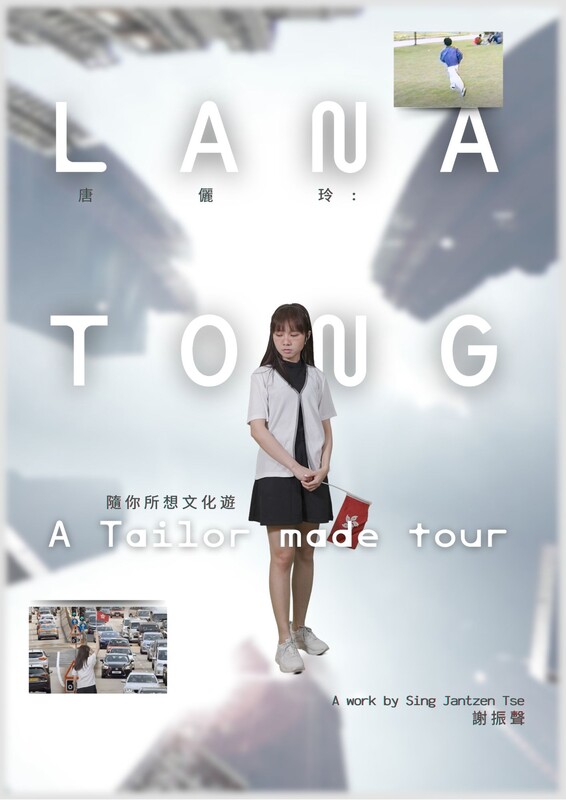
In Hong Kong, the boundary between city, mountain, and ocean is blurred. Four Hong Kongers, who are strangers to one another, each facing their own life challenges, simultaneously choose to delve into nature in search of themselves. In the depths and peripheries of the city, amidst mountains, fields, the ocean, and shores, they explore their own connection to nature. Different questions converge onto a single issue, leading to a journey of reflection and redemption. If human development and the destruction of nature have become a reality, what else can we do? Is it too late to take action? This is their journey, and ours too, through the spirit of the mountains and oceans.

Review by Julie C. Sheppard:

As with other nature documentaries that strive to inspire human change and to build awareness of the importance of protecting Earth’s ecosystem, the feature Never Too Late also ascribes to these noble goals. We are privileged to meet four people who share a common love for the flora and fauna in the Hong Kong area. The very fact that they want to be part of this film reveals their reverence for the environment, and they capture nature with such talents as fine painting, photography and videography, on land and under the water. 

Breathtaking cinematography in the film shows magnificent mountains and forests – – we get to enjoy the lush tropical feel of the area, in addition to close ups of artistic depictions. Impressive sound recording of creatures lets viewers immerse themselves in this natural utopia. The camera is also observant of the massive skyscrapers and residences in the heart of the city – – its frenetic energy and loud traffic is in strong contrast to the peace and tranquility of the rustic areas. The film also offers some social commentary with captivating interviews of rural locals – – they explain their sentiments about newcomers and city folk who have moved into their area to escape life in the frantic heart of Hong Kong. 

The central figures prove to be realists. They know it is hard to stop the progress of city developments, but they also recognize that they can make a difference, given their abilities and perseverance. This project proudly shows that Hong Kong has a thriving ecosystem beyond its skyscrapers, and it is worth observing, depicting in art, and preserving.

Short Film Review: VYR collective (Documentary). Directed by Ellada Ludogovska

“VYR” is a 10 minute poetic short documentary exploring the ancestral power of creativity among Ukrainian artists in exile. Set in London, the film follows a theatre collective founded by a Ukrainian woman, Vyr, as its members engage in intimate conversations, folk rituals, and symbolic visual practices. Through circles, songs, and meditative gestures, the documentary reflects on how artistic energy becomes a refuge, a connection to cultural memory, and a source of resilience far from home. Combining lyrical observational cinematography with traditional lullabies, ambient sounds, and abstract visual motifs, VYR presents creativity as a living, ancestral force that unites generations and sustains identity in displacement.

Review by Andie Kay:

This beautiful short film centers around Victoria Mushtey who is the founder of the VYR Collective. This group of artists and creatives have built a community to support their projects and their passions. To listen to Victoria talk about VYR with such joy and enthusiasm, you cannot help but become as invested as she is in this wonderful group.


Directed by Ellada Liudohovskaia this film explores the impact of the war in Ukraine with some emotional interviews with the artists. As well as the sense of hope they felt finding this community. Cinematographer Panos Vlassas did such a stunning job. I loved the black and white segments with just hands creating images within flour and finally seeing the bread being shared by the group. Not to mention the dance performance was incredible.

The background music was perfectly chosen for this film. Plus the way it began with one of the members singing was incredibly moving, her vocals were stunning. This film is a must watch!

Interview with Screenwriter Eric Lotter (NEXUSm)

A family, torn apart by a past tragedy, must unite and overcome internal and external conflicts to reclaim their advanced starship from a fanatic general who plans to use its unique capabilities to trigger a galactic-scale “reset” and fulfill an ancient prophecy.

Get to know the writer:

1. What is your screenplay about?
NEXUS is a high-stakes sci-fi political thriller about a fragile galactic peace shattered when an ancient cosmic machine, responsible for erasing entire civilizations, awakens again. As two rival powers spiral toward war, a damaged but revolutionary starship, the Thermidome, becomes the last line between survival and annihilation. At its center is Commander Trice Webb, an engineer desperate to solve the mystery that consumed his brother, uncover the truth behind the catastrophic Citadel attack, and stop a fanatical general determined to trigger the universe’s next “Prime Event.”

2. What genres does your screenplay fall under?
Science Fiction
Space Thriller
Political Thriller
Action-Adventure
Mystery / Conspiracy

3. Why should this screenplay be produced

NEXUS blends the cinematic sweep of The Expanse and Interstellar with the tension and layered political intrigue of Andor. It delivers spectacle without sacrificing character stakes, giving audiences a universe that feels both epic and personal. It introduces a fresh mythology, the Prime Event cycle, anchored by a diverse, emotionally rich cast and a world with franchise potential. Strong action, grounded science, and morally complex storytelling make it both commercially resonant and creatively unique.

4. How would you describe this script in two words?

Epic Catastrophe

5. What movie have you seen the most times in your life?

Star Wars. Did you have to ask that?

6. How long have you been working on this screenplay?

Off and on for 30 years. BUT: the last two years was the focus. I learned a few things and applied them world-building, story engineering, iterative drafts, and structural refinement based on coverage and competition feedback.

7. How many stories have you written?

I’ve written over a dozen screenplays, spanning sci-fi, thriller, crime, adventure, and psychological drama—from features like Guardrails, Frozen Lies, and The Devil’s Cut to shorts and TV pilots. This has helped me develop a strong command of structure, character, suspense, and thematic clarity.

8. What motivated you to write this screenplay?

I wanted to explore how civilizations confront extinction—not through a villain, but through knowledge, and how ordinary people respond to cosmic-scale inevitability. I was inspired by the idea of a family caught between science, prophecy, and political manipulation. The emotional core—Trice trying to uncover what really happened to his brother RJ—grounds the entire saga. On a thematic level, the story examines cycles of conflict, inherited trauma, and whether we can break patterns we don’t understand.

9. What obstacles did you face to finish this screenplay?

Balancing the scope of the world with the intimacy of the characters was the biggest challenge. The political layers, military tension, and scientific mysteries all had to interlock cleanly without overwhelming the story’s emotional drive. Structurally, it required multiple rewrites to ensure the mystery of the Prime Event, the Dark Corridor, and the conspiracy behind Imma’s attack revealed themselves at the right pace. Finding that balance—and maintaining clarity—was both the struggle and the breakthrough.

10. Apart from writing, what else are you passionate about?

I’m passionate about technology, space science, and real-world aerospace engineering, which heavily influences the grounded feel of my sci-fi scripts. I also love history, real-world geopolitical conflict analysis, and storytelling across film, games, and serialized formats. All of which shape the depth of the worlds I build.

11. What influenced you to enter the festival? What were your feelings on the initial feedback you received?

I entered because I’m committed to improving the craft and testing NEXUS against industry standards. Festivals offer invaluable external perspective, visibility, and potential to connect with producers seeking ambitious sci-fi projects. The initial feedback was energizing. It highlighted what was working and pinpointed areas that could become even stronger. It confirmed the script’s potential while giving me a clear path to elevate the next iteration.

Interview with Filmmaker Paco Herrera C. (San Esteban: Freedom, Mysticism and Nopales)

San Esteban: Freedom, Mysticism and Nopales, 27min., Mexico
Directed by Francisco Herrera
At the foot of the mountains of Zapopan, Mexico, lies San Esteban — an indigenous town whose identity has been shaped for generations by agriculture, ritual, food, and an intimate bond with the land. Sheltered for centuries by valleys and canyons, the community now stands at the edge of an expanding metropolis, caught between preservation and transformation.

http://www.pacoherreraphoto.com/

Get to know DP/Producer Paco Herrera C.:

1. What motivated you to make this film?

I was motivated by the need to document a community at a moment of quiet but profound transformation. San Esteban is a place filled with history, resilience, and identity, yet often overlooked. I wanted to show how indigenous traditions and modern influences coexist, collide, and reshape each other. And honestly, I wanted to give something back to the people who welcomed me — to help their stories, their land, and their work be seen.

2. From the idea to the finished product, how long did it take for you to make this film?

The project unfolded over roughly a year. I spent significant time in San Esteban, filming as the community’s rhythms revealed themselves. Then we realized we needed to integrate the “outsiders” — the adventurers and nature-driven visitors who are now part of the town’s reinvention — and following them extended the shooting period. Post-production took several months, especially the sound design, because capturing the essence of the place meant treating sound almost as another character.

3. How would you describe your film in two words!?

Rural Resilience

4. What was the biggest obstacle you faced in completing this film?

The biggest challenge was staying invisible enough to allow the community to be themselves. We worked with a very small crew to maintain intimacy, which also meant long days and wearing many hats. Another challenge was finding the right balance between respecting traditions and portraying the changes happening around them without judgment. Balancing the presence and influence of both communities — the indigenous farmers and the new adventurers — in the construction of a new identity was also complex.

5. What were your initial reactions when watching the audience talking about your film in the feedback video?

It was incredibly moving. As filmmakers, we spend so much time immersed in our own intentions that hearing what resonates with others is both surprising and rewarding. Seeing people pick up on the emotional undercurrents — the land, the identity, the tension between past and future — made me feel the film reached what it was meant to reach.

6. When did you realize that you wanted to make films?

Pretty early. I started experimenting with analog video when I was very young, long before I knew it would become a career. Film school confirmed it: cinematography, storytelling, and connecting with people through images felt like home. From there, I never really stopped.

7. What film have you seen the most in your life?

I have a daughter, so lately I’ve been watching the same animated films more than a dozen times — and I love them.

Before that, in film school, I dissected films to learn from them. Cinema Paradiso, Empire of the Sun, and Apocalypse Now were favorites, along with Amores Perros and Fight Club. In documentaries, Baraka, Bowling for Columbine, Del olvido al no me acuerdo and En el hoyo were major influences.

8. What other elements of the festival experience can we and other festivals implement to satisfy you and help you further your filmmaking career?

I really value festivals that create meaningful interaction between filmmakers, local communities, and audiences — whether through conversations, roundtables, or small workshops. Opportunities to connect beyond the screening room, especially around the themes of the films, make a huge difference. Practical development labs and networking spaces are also incredibly helpful for independent filmmakers like myself.

9. You submitted to the festival via FilmFreeway. How has your experience been working on the platform site?

FilmFreeway has been very straightforward and efficient. For independent filmmakers juggling multiple projects, the platform makes submissions, materials, and deadlines manageable. It’s a tool I rely on for most of my festival strategy.

10. What is your favorite meal?

I love tacos! And ramen!

11. What is next for you? A new film?

Yes — the plan is to continue this line of work by creating another short documentary about a neighboring community. Every town has its own story, its own way of facing change, and I want to build a series of portraits that highlight these unique identities. The goal is to replicate the San Esteban experience and keep exploring the relationship between land, tradition, and modern life.

San Esteban is the second in this series, and I hope to produce a first season of six films.