Emily suffers from extreme anxiety. Her younger sister, Meredith, is the only one who can calm her but when Meredith dies unexpectedly, Emily’s anxiety takes a dark turn exposing terrifying secrets from her family’s past and creating a sinister way of dealing with her fears.
Get to know the writer:
1. What is your screenplay about?
After witnessing a gruesome family death, a single mother and her twin daughters are haunted by terrifying events—where past trauma, buried family secrets, and a thirst for vengeance begin to blur the line between mental illness and a supernatural nightmare.
2. What genres does your screenplay fall under?
Horror
3. Why should this screenplay be produced?
My film, Anxiety, is a tightly written, low-budget project that delivers high emotional impact with an unexpectedly terrifying edge. It’s a story that resonates on multiple levels, can be produced efficiently, and leaves audiences with a powerful, lingering experience.
4. How would you describe this script in two words?
Beautifully Distrubing
5. What movie have you seen the most times in your life?
Parenthood or The Princess Bride
6. How long have you been working on this screenplay?
2 Years
7. How many stories have you written?
10
8. What motivated you to write this screenplay?
A film producer asked me to write it for him.
9. What obstacles did you face to finish this screenplay?
After finishing the script, the producer who asked me to write it got hired to produce a children’s show so he was unable to produce a horror film. It then sat for a year before I picked it up again and began reworking it.
10. Apart from writing, what else are you passionate about?
Personal growth. I’ve worked in personal growth for over 10 years and am now co-teaching a course at UVA’s business school on making intentional life decisons that create joy and purpose while minimizing regret.
11. What influenced you to enter the festival? What were your feelings on the initial feedback you received?
It looked like a great festival that helps writers get their work seen.
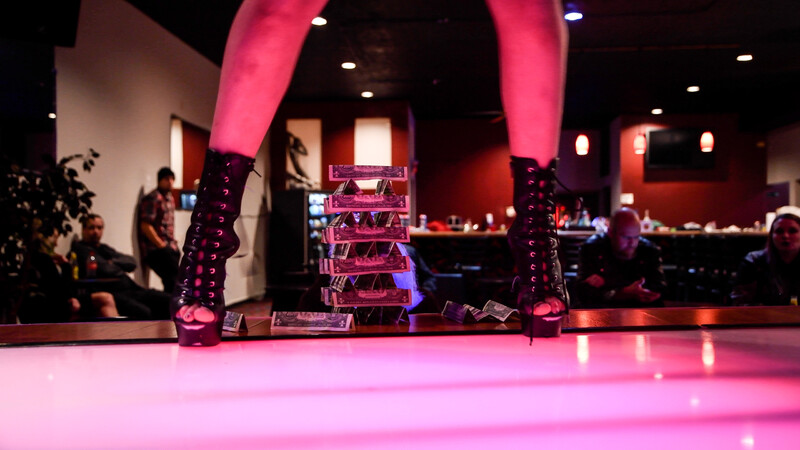
BEAUTIFUL DISASTERS, 14min., USA Directed by Trisha Lynn Furhman Of all people exotic dancers understand money can’t buy happiness. So where does it come from? This question sets Robin on a personal journey that takes her deep inside her desires and across the country; encountering hurricanes and personal loss of people she thought were just clients and coworkers. These events cause her to accept some hard truths not only about herself, but also about her industry.
Get to know the filmmaker:
1. What motivated you to make this film?
This story needed to be told to help remove the stigma from exotic dancing. Not everyone who dances is doing it as a side hustle to prostitution or to scam men out of thousands of dollars. We are performers in every sense of the word; we are here to entertain people in our magical world where problems and inhibitions are left at the door. Strippers are perfectly capable sales professionals who capitalize on gender roles while exploiting society’s natural appetite for the female body and attention. Because of our job we are comfortable with nakedness and naturally shy away from honesty for the safety of ourselves and our families. This is out of the norm and incredibly intriguing to the outsiders, therefore my goal was to bring in outsiders and help them understand exotic dancers because I feel that if we all just took the time to listen to one another we would be able to grow closer and stronger.
2. From the idea to the finished product, how long did it take for you to make this film?
I started pre-production in May of 2020 and finished post-production June of 2025; 5 years and 1 month.
3. How would you describe your film in two words!?
Unhinged….Raw
4. What was the biggest obstacle you faced in completing this film?
I might be my biggest obstacle. Being a post production crew of 1 there was no one to be accountable to, no one was waiting on me to finish my part so they could do theirs. No investors asking for an update or pressuring me to provide a return on their investment. There was just me and the commitment I made to myself that everyday I’d do something to progress my film forward, one step everyday toward my goal.
5. What were your initial reactions when watching the audience talking about your film in the feedback video?
I felt seen. As a first time filmmaker I have gotten a lot of feedback, most of it came from people who aren’t my target audience. Getting feedback from my target audience has been so encouraging and valuable.
6. When did you realize that you wanted to make films?
When I was 9 years old playing Barbies. Each Barbie had a backstory that I would have to tell my friends about when they came over to play. Someone said, “It’s like a movie!” and the seed was planted.
7. What film have you seen the most in your life?
Shawshank Redemption, I love it so much!
8. What other elements of the festival experience can we and other festivals implement to satisfy you and help you further your filmmaking career?
The Female Film Festival has so many helpful and useful elements it’s hard to find something that it’s lacking. If I had to nitpick (and I am) I’d say keeping submitters up to date. Maybe an estimated date that we should expect to hear something by and if that date is pushed back send an email with some explanation instead of just a notice stating the date has been pushed back. I’ve heard a lot of people voice this concern, feeling forgotten about or left out of the loop.
9. You submitted to the festival via FilmFreeway. How has your experiences been working on the festival platform site?
FilmFreeway is a Godsend, I love how easy it is to find festivals and submit to them. To have vetted festivals all in one place along with filters and a rating system is so incredibly helpful and such a time saver.
10. What is your favorite meal?
Pastries! A cupcake and my homemade spinach smoothie I get all the nutrients I need along with sweet yummy goodness to satisfy my soul.
11. What is next for you? A new film?
Beautiful Disasters is a proof of concept, I’m going to continue to market the idea into the hands of interested parties who want to see t
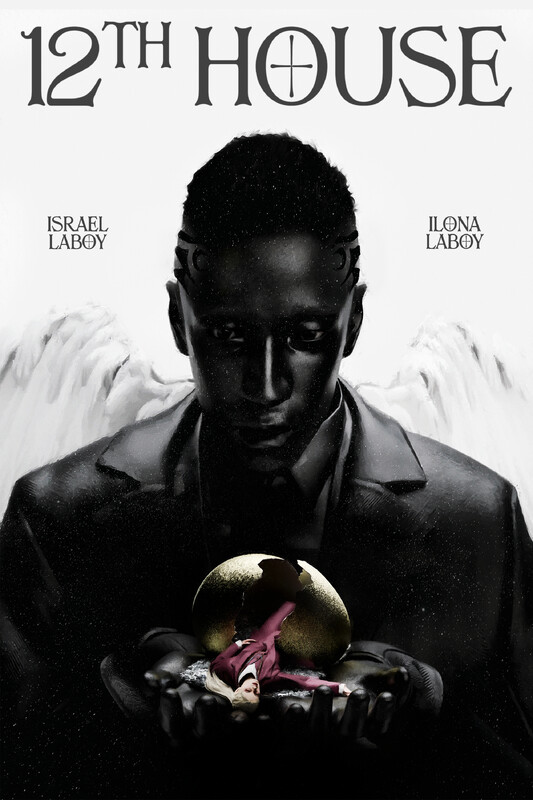
12th House, 13min., USA Directed by Ilona Laboy 12th House is a surreal meditation on grief, identity, and spiritual transformation. After losing her husband, a woman descends into a liminal dreamworld where memory fragments and archetypes guide her inward. Haunted by illusion and tethered to love, she confronts her shadow through symbolic rituals of self-loss and rebirth. Blending myth, psychology, and visual poetry, 12th House explores the sacred undoing required to become whole—and the alchemy of carrying love beyond death.
Initially, my late husband and I shared a dream of creating films together, to build a life doing what we love. After losing him, this project became my way of keeping that dream alive. Israel has been my motivation throughout this entire process. Finishing this film was a way to carry him forward, to honor his legacy, and to keep him present in everything I do.
2. From the idea to the finished product, how long did it take for you to make this film?
The new storyline and the entire post-production process took a little over four months. It was an intense, concentrated period of rebuilding, editing, and reshaping the film into what it is now.
3. How would you describe your film in two words!?
Dream Shattering
4. What was the biggest obstacle you faced in completing this film?
Losing my husband and having to finish without him. It was the heaviest emotional challenge of my life, trying to create through grief, while the person this film was meant to be made with was no longer here.
5. What were your initial reactions when watching the audience talking about your film in the feedback video?
It was powerful to watch real audience reactions. Their responses were exactly what I hoped for, the speechlessness, the impact, the inability to categorize what they’d just seen. I wanted the film to feel immersive and unsettling in a way that lingers. Hearing people say it stayed with them and sparked conversation meant everything to me.
6. When did you realize that you wanted to make films?
I think I always knew on some subconscious level. Growing up, I would enter creative contests and cast myself in every role simply because I had no one else, so I learned to create everything myself. Later, films like Requiem for a Dream shattered me in a way that made me think, “I want to make people feel something this deeply.” I was also obsessed with transformations, the characters, the voices, which made me realize how much I loved performance and creative direction. All of that eventually merged into filmmaking.
7. What film have you seen the most in your life?
It’s hard to pick one, because I revisit films for different moods and reasons. But I’d probably say King of New York. I can watch Christopher Walken as Frank White endlessly, he’s great. I also really loved rewatching Suspiria (2018) many times.
8. What other elements of the festival experience can we and other festivals implement to satisfy you and help you further your filmmaking career?
I’m a filmmaker who built everything from scratch with my late husband, with a skeleton team and no industry safety net. What festivals can do to support artists like us is to give us continuity beyond the screening. Industry matchmaking to connect emerging filmmakers with distributors, curators, galleries, or labs that actually showcase experimental cinema. Opportunities for continued artistic development, like residencies, grants, or partnerships with VFX houses, post studios, or cinematography labs.
9. You submitted to the festival via FilmFreeway. How has your experiences been working on the festival platform site?
Very smooth and organized. FilmFreeway has been a great platform for submitting my work.
I’m currently developing the feature-length version of 12th House. There’s so much unreleased footage to shape into a larger narrative. I also have a list of projects that Israel and I planned to make together, and once the feature is complete, it would mean everything to bring those to life.
Three interconnected teams – firefighters, police officers, and 911 dispatchers – face relentless emergenies in Indianapolis, balancing personal struggles with the split-second decisions that determine life or death.
Get to know the writer:
1. What is your screenplay about?
Priority one is a one-hour network procedural in the style of 911 meets Southland, where we follow three co-equal protagonist from police, fire, and dispatch all with hearts for pursuing justice, but very different ideas about what that means. The series follows their high-stakes professional lives and messy personal lives as they work together to keep the city of Indianapolis safe one episode at a time.
2. What genres does your screenplay fall under?
Procedural Drama
3. Why should this screenplay be produced
Procedurals are having a resurgence, but the ones that hit hardest are grounded in reality — not just in action, but in location, economics, and character. Priority One brings that. It’s not trying to be prestige TV. It’s a network-ready, franchise-capable series built for longevity. The show reflects the reality of modern American cities: stretched responders, escalating crises, and the human cost behind the call. If there’s ever a time for a series like this to land — it’s now.
4. How would you describe this script in two words?
Human Resilience
5. What movie have you seen the most times in your life?
A Promise (2013)
6. How long have you been working on this screenplay?
Four months now. It’s in its ninth and final draft.
7. How many stories have you written?
This is my fifth screenplay. I have two in development at any one time.
8. What motivated you to write this screenplay?
I’m active-duty military with three deployments under my belt. I’ve lived the high-stress, high-stakes environment that Priority One captures — and I know how people in these roles actually talk, think, and break. The characters are built from real personalities I’ve worked with, mentored, or clashed with. I’m not guessing how the job feels — I’ve lived it. This isn’t a dramatization from the outside looking in. It’s built on real-world intensity, sarcasm, burnout, and loyalty.
In truth, I watched a show and connected with a character in a way that I never wanted to. His grief, guilt and his struggles, I at first could only sympathize and then a year later was able to empathize. He was killed off this year for realism but I disagreed creatively about how it was done. So instead of just being angry, I wrote Priority One. I sat back and I listened to the fans of that show that I watched, and I wrote Priority One for myself and for them.
9. What obstacles did you face to finish this screenplay?
The difficulty of taking in as much feedback as I possibly could from so many different people and sitting down and taking those meetings. Then having to go through all of that feedback at each draft and decide what amplified the voice of this script and what was going to take it out applying that information. These were all people who have been doing this a whole lot longer than I have so it was a matter of absorbing everything that they told me and then deciding for myself what was going to work and what was not. What was going to service the script and what was going to tear it down? Because in truth, we’re all biased and what one person is telling me might not be what somebody else is telling me. I have to, ultimately, decide for myself what is going to help the script to move forward and what isn’t.
10. Apart from writing, what else are you passionate about?
My day job is working on weapon systems. Ultimately, the other thing that I enjoy doing is teaching weapons safety, and ensuring that people know how to safely handle them and properly handle them.
11. What influenced you to enter the festival? What were your feelings on the initial feedback you received?
I hadn’t seen any specifically female competitions before I ran across this one, and so that is ultimately what influenced me to submit to the festival.
My initial feelings towards the feedback I received was fairly neutral just because at that point, I was already two drafts of ahead of what I had submitted. I was on draft five when I submitted to the festival and by the time I received feedback back, I revise very quickly, I was already on draft seven. Now I’m on draft nine, and that is the finished draft.
A young man attends the final session of his compensated work therapy program. The therapist remains ever oblivious as his lies begins to swallow the room whole.
Get to know the screenwriter;
1. What is your screenplay about? – Shrink is an original story about a young man (Ashton) attending his final therapy session through his employer’s Employee Assistance Program. As the session progresses, his lies about his trauma to protect his abuser begins to bleed into his own perception of reality. He can only sit and watch as the space around him shifts before his very eyes, as his therapist remains ever oblivious to the changes in the room, and the changes in Ashton.
2. What genres does your screenplay fall under? – Thriller / Drama
3. Why should this screenplay be produced? – Shrink provides a distinct voice from the tragic perspective of an abused victim who experienced having their gender fetishized. This voice also sheds light on the inner fears and mindset of a victim who tries to protect their abuser, and how those lies can consume a person whole. Shrink provides an experience that many young, impressionable adults who fall into abusive relationships can relate to, highlighting themes like over empathy/rationalizing abuser behavior, brushing off their true problems, and the pain of trying therapy and realizing the therapist isn’t really connected to you. Logistically, producing Shrink would require minimal location scouting, requires a max of only 3 characters, and very achievable set designs.
Through my personal practice of Butoh and its bodily methods, I often experience a sense of the “unseen world”—what Japanese aesthetics call yūgen. I wanted to share that sensation with more people. The film became an attempt to preserve the traces of that invisible realm, which I see as a contemporary form of ritual or prayer. My aim was to translate its purity and quiet clarity into cinematic form.
2. From the idea to the finished product, how long did it take?
The whole process took about five months: one month for planning, one month for shooting, and roughly three months of editing. It was a very compressed schedule for a first-time director, but I worked full-time on it. I felt that a concentrated timeline would allow me to seal the sense of stillness we captured during the shoot directly into the film.
3. How would you describe your film in two words?
“Sacred Silence.”
4. What was the biggest obstacle you faced in completing this film?
As a first-time director, everything—from shaping a visual language to managing a small production team—was a challenge. The hardest part was finding a cinematic form that could convey the invisible, ritualistic dimension without distorting it. Editing was especially demanding; I had to balance the presence of the dance and the music so that each would enhance the other.
5. What were your initial reactions when watching the audience talking about your film in the feedback video?
I felt deeply grateful. Many viewers perceived the ritualistic and spiritual qualities we intended, and that confirmed for me that non-verbal expression really can cross borders and reach people directly.
6. When did you realize that you wanted to make films?
There wasn’t a single turning point. Performing Noh roles as an actor and assisting film directors on set gradually led me toward filmmaking. At the same time, I had long been exploring how to express the world seen through one’s “inner nature.” When I met the dancer Mizuki Gojo, I felt that filming her could allow mythic images—stories older than language—to be recreated through cinema.
7. What film have you seen the most in your life?
The Star Wars series. It’s thrilling entertainment, yet it also weaves together multiple cultural elements and even touches on Taoist philosophy. That blend has always fascinated me.
8. What other elements of the festival experience can we and other festivals implement to satisfy you and help you further your filmmaking career?
Festivals that treat non-verbal, movement-based works with care are significant to me. Opportunities for dialogue with fellow directors, and guidance on distribution methods that preserve the integrity of the viewing experience, would be extremely valuable.
9. You submitted to the festival via FilmFreeway. How has your experiences been working on the festival platform site?
Very smooth and easy to use. For independent filmmakers working with small teams, the ability to connect with international festivals through a single platform is a major advantage.
10. What is your favorite meal?
Sushi, sukiyaki, tonkatsu.
11. What is next for you? A new film?
Yes. I’m currently preparing my first feature film. It will have a clearer narrative while maintaining a ritualistic and refined sensibility—what I call “ceremonial entertainment.” For the next project, I hope to expand the team and elevate the level of cinematography, costume design, music, and art direction to create a truly high-quality art film.
Prayer of the Sea, 6min., Germany Directed by Martin Gerigk A composer recounts a dream from his youth that inspired the slow movement of his first string quartet, Prayer of the Sea. The dream, depicting a peaceful dissolution into the sea and wind, symbolized his future death. Decades later, rediscovering a drawing from the quartet’s premiere – perfectly capturing the dream’s essence – revived its emotions. Now older, he reflects on the dream’s message: a serene acceptance of life’s inevitable end.
As a music composer, I occasionally dream of complete compositions. When I wake up, I simply write them down. When I was about 20 years old, I dreamt of such a piece for a string quartet. In the dream, I was standing in the surf of a cold sea, facing north. Then, I dissolved into the wind and the sea. It was clear that the dream symbolized my own death in the future. Yet, there was nothing sad about it; it felt good and liberating. It was like a vision, a gentle prophecy.
This led me to reflect: on one hand, I wanted to bring closure to the dream’s experience and sensation for myself; on the other, I hoped to make it emotionally tangible for others – a calm perspective on what lies ahead for us all. The calmness of a gentle passing, something we can only hope to experience one day.
2. From the idea to the finished product, how long did it take for you to make this film?
About one year.
3. How would you describe your film in two words!?
Audiovisual elegy.
4. What was the biggest obstacle you faced in completing this film?
The technical merging of the photos and their subsequent animation.
5. There are 5 stages of the filmmaking process: Development. Pre-Production. Production. Post-Production. Distribution.
What is your favorite stage of the filmmaking process?
Development and post-production.
6. When did you realize that you wanted to make films?
After that dream 30 years ago, I struggled repeatedly with making the film, as the subject of one’s own death is not an easy one. But at some point, I knew it was the right time and began to finish the film.
7. What film have you seen the most in your life?
Star Wars…
8. What other elements of the festival experience can we and other festivals implement to satisfy you and help you further your filmmaking career?
You are already doing a great job in my opinion!
9. You submitted to the festival via FilmFreeway. How has your experiences been working on the festival platform site?
Always positive.
10. What is your favorite meal?
Shakshuka.
11. What is next for you? A new film?
My current film project is called Spheres. This time an homage to life. It’s a poetic essay that drifts through a series of expanding spheres, each revealing a different layer of our shared reality, from the microscopic to the mythical. To me the new film is a breathing meditation designed to remind us of the wonders of our incomprehensibly beautiful world.
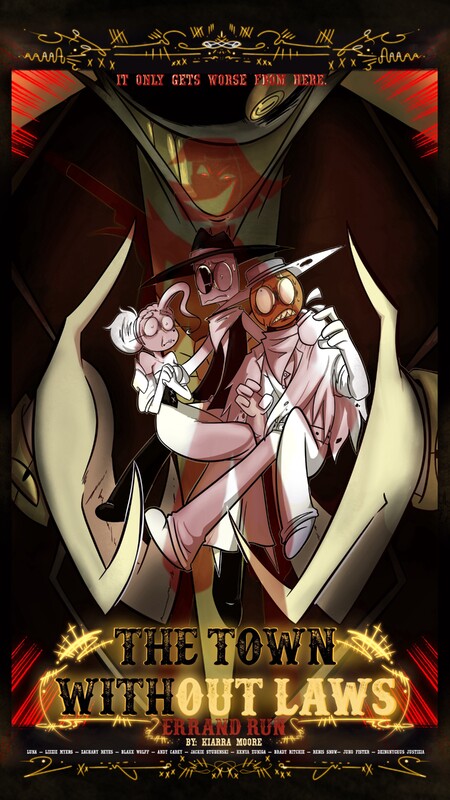
This was my college thesis, and my passion project I have been working on for several years. What motivated me was the characters I crafted along the way, and ths wonderful preformances the Voice actors gave to the characters.
2. From the idea to the finished product, how long did it take for you to make this film?
It took me around 10-11 months of work.
3. How would you describe your film in two words!?
Questionable Protagonists
4. What was the biggest obstacle you faced in completing this film?
My biggest challenge was making time on top of other classes. As a transfer student my senior year I was doing 3-4 animation classes on top of my Thesis. So time management was super hard when you have to do over hundreds of frames for different projects.
5. There are 5 stages of the filmmaking process: Development. Pre-Production. Production. Post-Production. Distribution.
What is your favorite stage of the filmmaking process?
That’s difficult to say, as I love the whole process. But if I had to, I really enjoyed the pre-production, and the production. Once I get my idea I love to tweak and edit it. Polishing and getting all the assets and characters done. I want to say once I got the ok by my professor, I just ran off leash. Made tons of work for the pre-production book, as well as completing the backgrounds.
6. When did you realize that you wanted to make films?
When I was 8 I knew I wanted to do animation. Ever since I saw what people could create and produce, the amount if creativity and imagination used for an animated movie or a kid show. It always blew me away, and I want to be able to share my love for the medium the only way I know how. But animation.
7. What film have you seen the most in your life?
Ohh.. That’s hard. I’d have to say “Sin City” or “Freeway”.
8. What other elements of the festival experience can we and other festivals implement to satisfy you and help you further your filmmaking career?
9. You submitted to the festival via FilmFreeway. How has your experiences been working on the festival platform site?
It has been a wonderful experience! I have been able to send my film and network with others. It was a great opportunity to connect with fellow artists.
10. What is your favorite meal?
Phò I can’t get enough! I could eat it for every meal.
11. What is next for you? A new film?
More passion projects. I am currently working on a pilot of this series. “The Town Without Laws: What Comes Around” its about the trio coming back home after a massacre only to be treated to karmic justice. I’m hoping with this film I will be able to explore the world, and show the brutality during the wildwest.
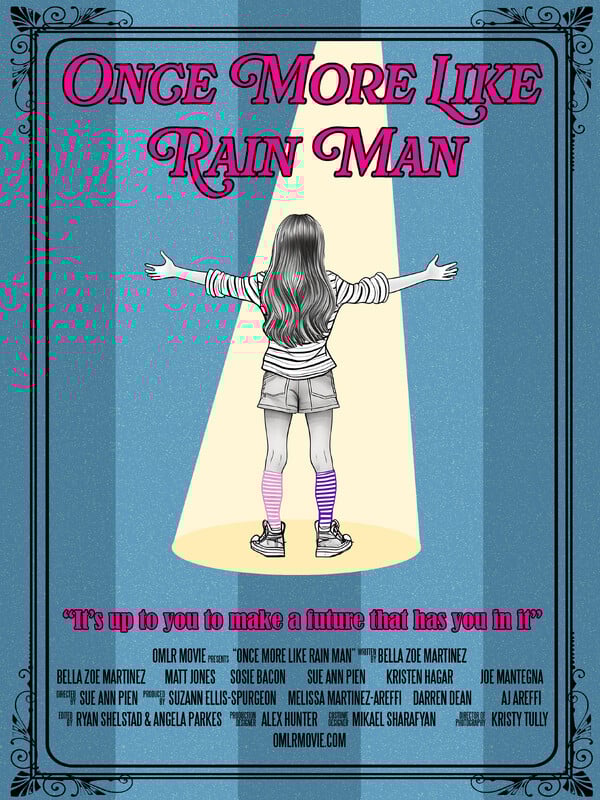
Once More, Like Rain Man, 15min., USA Directed by Sue Ann Pien ‘It’s up to you to make a future that has you in it…’ We follow Zoe (Martinez) and her dad, Gerry (Jones) in a ‘day in the life’ of an autistic actress running the gambit of stereotypes she has to deal with – and her dad’s battle in supporting her forging that path for herself – in a funny, frustrating, painful and sometimes triumphantly sarcastic kind of way.
I was tired of not wising myself or girls like me in media and wanted to do something about that.
2. From the idea to the finished product, how long did it take for you to make this film?
It was a little over 2 1/2 years. I had the idea near the end of lockdowns in CA, because I wasn’t allowed to go back to high school in person – and it was very hard. My parents encouraged me, and helped me flush it out into a script. From the time we shared the script with producers Suzann Ellis and Darren Dean to shooting – and met and had Sue Ann Pien come of board to direct, it was almost a year to the date. Part of the delay was because of the strikes – but it was also meant we got such an amazing cast. Everyone was unemployed. We signed the SAG and DGA contracts – so were one of the only approved productions at the time.
3. How would you describe your film in two words!?
Ice cream. I don’t know
4. What was the biggest obstacle you faced in completing this film?
Casting Gerry. We went back and forth with Jason Segal’s people – who knows if he got to read it – and it was super cool to say that we were out to Jason Segal! – for like a month on whether he would be able to do it. Then word got out that the strike was ending. The best thing to happen was Matt Jones being available and willing to play Gerry. We didn’t get any rehearsal time before shooting – we met for the first time IRL 30 minutes before the first scene – so everyone was holding their breath on that first shot of day one – until Matt and I had the Batman scene. And we knew the suit fit.
5. There are 5 Stages of Filmmaking: 1) Development. 2) Pre-Production. 3) Production. 4) Post-Production. 5) Distribution.
What is your favorite stage of the process and why?
We haven’t done distribution yet, so not sure.
My favorite part was production. We had a very chill vibe on set – since about 40% of the cast and crew were autistic or living with a different disability, we had accommodations built in – which made it go much smoother than any set anyone had been on – even for the “normal’ people.
6. When did you realize that you wanted to make films?
I kinda always wanted to. My siblings and I would make films together with our toys – and my sister would direct – and she was actually really good. Then I realized you get could get paid to do it – which was amazing.
One of the funniest things was when she made an homage to “Reservoir Dogs’ – just the song at the beginning since we weren’t allowed to watch the movie yet – she used Angry Birds plushies and our Girl Scout troop with the birds on sticks with a green screen. One time one of the birds feel out of the frame and she yelled CUT! That was fantastic just a little. Can we try it again with the bird in the frame?
But it was also my coping mechanism for being severely bullied in middle school for my autism.
7. What film have you seen the most in your life?
Only one!? The Great Race. It’s a family tradition – especially the pie fight scene. The Nightmare Before Christmas – my sister memorized the entire movie before she could talk – and so did I. My siblings are also autistic, so my family ended up with a kind of code speak, in movie quotes for context. I didn’t realize that we did that until I was in like middle school.
8. What other elements of the festival experience can we and other festivals implement to satisfy you and help you further your filmmaking career?
I’m not sure. Every festival has been so unique.
9. You submitted to the festival via FilmFreeway. How has your experiences been working on the festival platform site?
Actually, really good. They made it a lot easier to find and submit to festivals. We’d have been totally lost without them.
10. What is your favorite meal?
Mac and cheese and chicken.
11. What is next for you? A new film?
We are in pre-production for the feature version of this film. And incredibly, everyone on the cast and crew are excited to come back!
Also developing a supernatural western, a sci-fi, and a complete animated universe. And working on my new original song. (I wrote the song Distant Goodbyes” that I sing in the film.
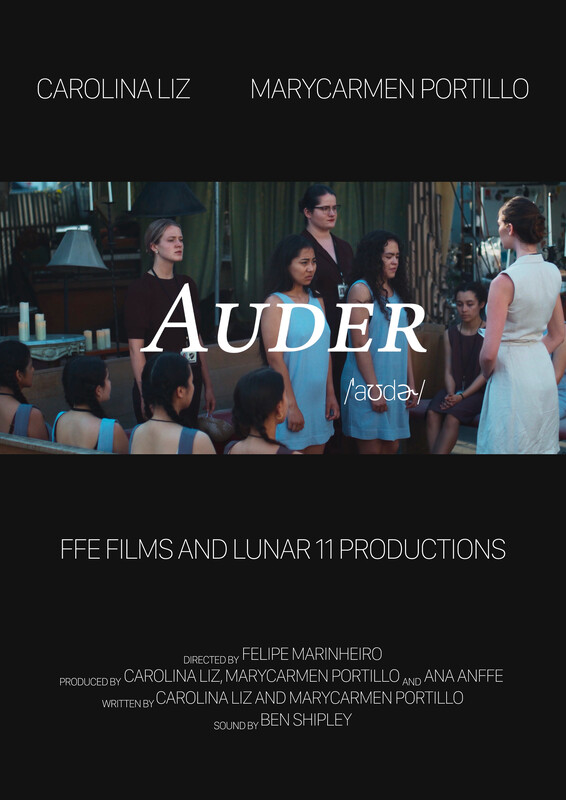
After being kidnapped and forced into a brutal assimilation camp where the English language is used as control, two teenage girls from different countries must find a way to escape, before they are stripped of their identity.
1. What motivated you to make this film?
I think from my personal experience being an actress and having to deal with cultural differences, how Hollywood wants you to lose your accent. That was the main thing for me and Mary when we wrote it.
2. From the idea to the finished product, how long did it take for you
to make this film?
We started writing in February this year and by the time we finished the script by the end of March, we started to look for the crew and fundraiser parties. Post-production wrapped up at the end of July.
3. How would you describe your film in two words!?
Harsh Reality
4. What was the biggest obstacle you faced in completing this film?
Definitely budget. This short was very independent. But I was extremely grateful that we found a team passionate about telling this story, and together we made it happen.
5. There are 5 stages of the filmmaking process: Development.
What is your favorite stage of the filmmaking process?
As a writer, I love the development part because it’s when you get to be so creative and imagine how this world is going to be. As an actress, I love being on set and trying different things in the scene. I like being there ready to play with my scene partner.
6. When did you realize that you wanted to make films?
I’ve always wanted to create and tell stories since I was little, but when I decided that I wanted to do this professionally, I was 13, and I tried every possible way to convince my family to let me pursue this career.
7. What film have you seen the most in your life?
Amélie directed by Jean-Pierre Jeunet. I absolutely love that movie and I’ve probably seen it more than 100 times at this point.
8. What other elements of the festival experience can we and otherfestivals implement to satisfy you and help you further your filmmaking career?
I am so happy Felipe (our director) recommended WildSound. I found you guys to be more than a festival, but a community ready to support artists.
9. You submitted to the festival via FilmFreeway. How has your
experiences working on the festival platform site?
It has been easy and helpful so far. I love the way it’s very organized.
10. What is your favorite meal?
I am so cheesy, but I have to say Brazilian food.
11. What is next for you? A new film?
I’m co-writing this next short called Miss Porcelana, and it explores women in this beauty contest world. I’ll also gonna be starring in it.


 Festival Reviews