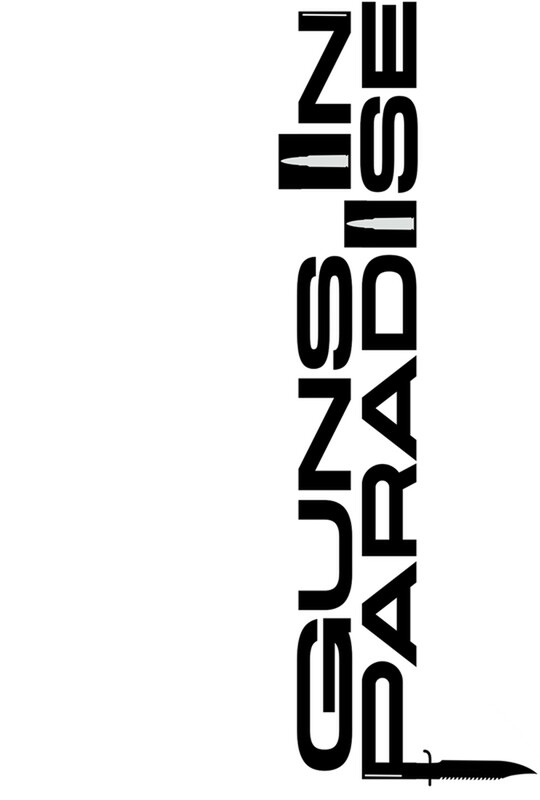
Guns in Paradise is a South Korea–set short film that blends fantasy, action, and romance through a metafictional lens. Trapped in routine, a DVD store clerk imagines a violent, passionate love story between two doomed assassins — unaware that the fantasy she’s creating might hold the key to rewriting her own life.
Get to know the filmmaker:
1. What motivated you to make this film?
In my recent projects, I’ve been deeply hands-on, taking on nearly every imaginable role within the filmmaking process. Over time, I’ve worn almost every hat—except one: set design. That gap stayed with me. Wanting to push myself further and expand my visual language, I decided to build a set for the first time.
This wasn’t just about learning a new skill. It was about deepening the knowledge I’ve accumulated over the years and becoming a more complete filmmaker. While I don’t intend to keep doing everything myself forever—I’m very aware that this approach isn’t sustainable long-term—I do believe strongly in understanding every department at a fundamental level. That understanding is what allows meaningful collaboration. When I work with seasoned professionals in the future, I want to communicate my vision clearly, elevate their strengths, and create work that feels unified rather than fragmented.
That creative momentum was amplified when I acquired a dream camera: the Canon C700 shooting RAW. I’ve been a Canon user my entire life, and finding an affordable C700 at auction felt like a sign—fuel added to an already growing desire to create something ambitious and uncompromising in quality.
At its core, this project is a love letter to cinema itself. It reflects my personal relationship with movies—the inspiration they’ve given me, the hope they still represent, and the quiet sadness I feel about the current state of the medium. It’s both a tribute and a reckoning, born out of admiration, concern, and an enduring need to create.
2. From the idea to the finished product, how long did it take for you to make this film?
This project took two years to make. In general, my short films come together in about two months, featurettes take closer to two years, and full-length features require a minimum of four years.
3. How would you describe your film in two words!?
Passion, Rebirth.
4. What was the biggest obstacle you faced in completing this film?
At every step, I’ve faced seemingly unimaginable obstacles. In many ways, I’m used to it—because from the very beginning, I’ve consistently made films that lived in the realm of the “impossible,” largely due to budget constraints. To make them happen, I took on nearly everything myself as a way to survive creatively and financially.
I always find a way to get the job done. Along the way, many people—including myself at times—have questioned my sanity. I often hear, “You can’t do that. That’s impossible.” But somehow, I figure it out and move forward anyway. For example, my first feature film was post-apocalyptic, and I needed locations that felt genuinely destroyed and deteriorated. To achieve that, I traveled to Burma—now known as Myanmar—and filmed exterior shots there. The decision ultimately led to me being removed from the country for capturing images of areas the government didn’t want shown. I don’t think I can do that type of gorilla filmmaking anymore.
5. There are 5 stages of the filmmaking process: Development. Pre-Production. Production. Post-Production. Distribution.
What is your favorite stage of the filmmaking process?
I don’t think I have a favorite stage of the process. Every phase is incredibly challenging, and without genuine passion and motivation, I don’t think I could get through any of them. That said, if I had to choose the opposite, distribution is probably the stage I struggle with the most—not because it isn’t important, but because by the time the film is finished, I’m often too exhausted to fully engage with it or give it the attention it deserves.
6. When did you realize that you wanted to make films?
When I was 16, I suffered a pneumothorax that left me hospitalized for six weeks, with my lung attached to a tube. The recovery was long and difficult, and during that time, movies became my escape. They gave me a place to go when my body was confined and my future felt uncertain.
Films also became a way for me to connect more deeply with my friends—we began living our lives as if it were part of a movie, framing experiences through story and imagination. Before the surgery, I was a martial arts instructor and champion, but afterward I was forced to give it up. That loss ultimately redirected me toward the arts.
I started with graphic design, then moved into multimedia and visual effects, and over time, that path naturally led me to filmmaking. Along the way, I trained in acting and theater, and somehow all of these disciplines—each skill accumulated over the years—converged into cinema.
There was also a pivotal moment early on: a show called Project Greenlight, which offered emerging filmmakers the chance to make a feature with a million-dollar budget. I entered the competition with virtually no experience and somehow made it into the top 50. That moment felt like a sign—confirmation that I should commit fully and dive deeper into filmmaking.
7. What film have you seen the most times in your life?
This is a difficult question to answer. I watch a lot of films, and my answer changes all the time. There are simply too many great movies, and as a filmmaker, I’m able to appreciate them on many different levels.
8. In a perfect world: Who would you like to work with/collaborate with on a film?
The first name that immediately comes to mind is Hans Zimmer. His music has a rare power to elevate a film beyond the screen.
9. You submitted to the festival via FilmFreeway. How has your experiences been working on the festival platform site?
It’s been a great experience so far—extremely well organized. A well-run festival is what matters most to me.
10. What is your favorite meal?
Through my travels, I’ve found that Vietnamese and Korean food resonate with me the most—rich in variety, bold in flavor, and endlessly satisfying.
11. What is next for you? A new film?
From here on, I plan to focus on feature films, primarily at a larger budget scale. I genuinely love the indie process, but doing everything alone can be both exhausting and overwhelming. The upside, of course, is total creative control—and the fact that you’re actively building the film from day one, which removes the lingering anxiety of whether it will ever actually get made.
With bigger-budget projects, I’ve seen the opposite challenge: films collapsing after years of development due to financing issues or actors dropping out. Watching a project unravel after so much pre-production can be devastating. That said, I’m ready to take on something more ambitious—projects that require collaboration at scale, deeper resources, and a longer runway, but with the creative clarity and resilience that only comes from having gone through the indie trenches first.
 Festival Reviews