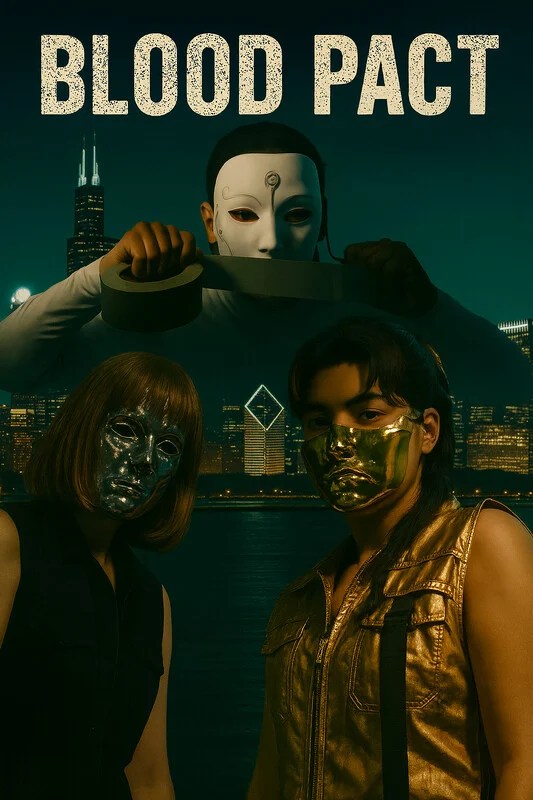
In modern day Chicago, three women operate as covert vigilantes targeting hidden human trafficking networks. After discovering a young woman left to die in a locked dumpster, they trace the crime through tagged drop sites, sanitation routes, and corrupt intermediaries. Their investigation leads to a violent confrontation that exposes a larger exploitation ring, forcing them to confront the moral cost of justice when the system fails the vulnerable.
Writer/Producer: Taylor Chayil McMullan
Director: Phillips J.H. Payton
Review by Parker Jesse Chase:
Set in modern-day Chicago, Blood Pact drops us into a city where violence hides in plain sight and survival depends on who is watching. The film follows three women operating as a covert unit, moving through sanitation routes, tagged drop sites, and backdoor deals to intercept human trafficking networks the system refuses to see.
The inciting moment is blunt and chilling. A young Black woman is found barely alive, sealed inside a dumpster. The timing matters. These women do not arrive early, they arrive in time. What follows is less a procedural and more a reckoning. The film shows how trafficking moves through everyday infrastructure, trash collection in broad daylight, and quiet handoffs that no one questions.
One of the film’s sharpest choices is its opening sequence. A man calmly drugs food before serving it, the space clean and controlled, almost clinical. When the cameras roll, the danger is already in motion. This sense of interruption, of stepping into harm mid-act, stays with the story throughout.
As the investigation unfolds, the women connect patterns others ignore. Dumpsters are not random. Trash routes are not neutral. Power shields perpetrators. The trail leads to a politician, a man who treats exploitation like a business model. When the masks come off during the break-in, the film makes its stance clear. This is not sanctioned justice. This is vigilante action shaped by lived knowledge.
The interrogation scene is tense and unsettling. The man leans on threats and manipulation, dismissing the women’s evidence as fantasy. When pain is introduced, the truth surfaces fast. He claims ignorance of how victims are chosen, framing himself as a middleman, a seller. The banality of his cruelty is the point. Trafficking does not require monsters, just men willing to profit.
Parallel to the violence is a quieter story. One of the vigilantes recounts a medical experience of having her wisdom teeth removed without pain medication. It is not a throwaway anecdote. It grounds the group’s motivation in bodily memory, neglect, and the long aftermath of harm. Revenge here is not loud. It is deliberate.
The rescue is swift. The fallout spills into the open. Survivors are freed. News reports surface. The pact between these women is sealed not in bloodlust, but in shared responsibility.
Blood Pact is clear about its politics without grandstanding. Human trafficking generates billions of dollars annually in the U.S., with Black and brown women making up the majority of victims. The film does not try to explain everything. It shows enough to make clear how little most people want to know.
At its core, Blood Pact is about women watching out for each other in a violent world, when institutions fail and mercy has to be made by the femme fatale hand.
 Festival Reviews