Interview with Filmmaker Peter Hriso (INTERSECTING PATHS)

1. What motivated you to make this film?

This film grew out of my ongoing exploration of repetition, movement, and rhythm in digital space. Working with 3D animation software, I’m fascinated by how simple geometric forms can build into intricate visual landscapes—layered systems of shapes and tiles that balance structure with subtle irregularities.

2. From the idea to the finished product, how long did it take to make this film?
The process took several weeks from concept to completion. The core idea came together quickly, but most of the time was spent refining the visuals, pacing, and composition to make sure everything felt clear and cohesive within such a short runtime.

3. How would you describe your film in two words?
Intersecting Paths.

4. What was the biggest obstacle you faced in completing this film?
Finding consistent time to work was the hardest part. Balancing a full-time professional role with an active creative practice meant I had to be very intentional about prioritizing. Time for experimentation and focused artistic work is limited, but absolutely essential for the project to grow.

5. What is your favorite stage of the filmmaking process?
I love the moment when the animation starts to come together, when lighting, materials, and motion all click and the piece begins to feel alive.

6. When did you realize you wanted to make films?
My interest in animation really developed in college, though I’ve always loved film and knew I wanted to work in media. What draws me to animation is the ability to be involved in the entire process—integrating design, motion, sound, and narrative into one expressive medium.

7. What film have you seen the most times in your life?
That’s a tough one. Blade Runner is a film I return to often for its stunning world-building and philosophical depth—every viewing reveals something new. I also revisit CasablancaIt’s a Wonderful LifeThe Maltese Falcon, and pretty much all the Studio Ghibli films. Hard to pick just one!

8. In a perfect world, who would you like to collaborate with on a film?
I’d love to work more with musicians and sound designers. Audio isn’t my area of expertise, but I’m fascinated by how sound can transform visuals and create emotional connections. It’s such a powerful force in storytelling.

9. You submitted to the festival via FilmFreeway. How has your experience been with the platform?
FilmFreeway has been great—simple, efficient, and accessible. The streamlined submission process and clear communication tools make it a valuable resource for independent filmmakers.

10. What is your favorite meal?

That’s a tough one! I’d probably say BBQ—it’s hard to beat. But I also really enjoy seafood, especially a well-prepared salmon or grilled fish.

11. What’s next for you? A new film?
I’m continuing to develop short-form works that explore abstraction, visual metaphor, and atmospheric storytelling. These projects build on the ideas behind Intersecting Paths while pushing into new formal and conceptual directions.
The Shifting Paradigm of Success: Bullies Win, Geeks Struggle?

The BULLY wins and the GEEK loses in life!

Award winning screenwriter Jesse Speer (BITTER) talks about his belated coming-of-age comedy script. About a valedictorian, slated for success. Now, 10 years later, she’s just a bitter waitress, struggling with resentment and unmet potential, all while PARKER, her high school bully, lives the good life as a prominent influencer.

Is this the world we live in now?

—–
LISTEN to the full podcast: https://youtu.be/LDDc9iCiutc
—–

Watch the best scene reading: https://www.youtube.com/watch?v=GncsGI4_L3o

Get to know the screenwriter:

What is your screenplay about?

Bitter is a belated coming of age story for anyone that feels like the paradigm of success has shifted. It takes the traditional geek vs bully high school sub-genre and basically turns it on its ass, focusing on WILLOW, a once-hopeful two-time valedictorian, slated for success. Now, 10 years later, she’s a bitter waitress, struggling with resentment and unmet potential, all while PARKER, her high school bully, lives the good life as a prominent influencer.

What genres does your screenplay fall under?

Bitter is definitely a comedy. When developing this story, it felt necessary to look through a humorous lens. The plot tackles a lot of socially-relevant themes and issues we all deal with on a daily basis: comparison culture, scam-influencers, toxic personalities—things that can absolutely consume a person. So, I thought it was important to craft the story and its characters from a place of comedy. I wanted to avoid the perception of whining or lecturing, and write a story that has something to say, but also has audience wanting to listen because they’re getting to laugh along the way.

Why should this screenplay be made into a movie?

Movies have changed drastically over the last decade—some changes good, some bad, but I think a gap has been created for some of the sillier, more light-hearted comedies that can still pack a punch—that have something to say, but do it in a way to invites, not divides. I think Bitter recaptures this approach, in line with early-2000’s movies like Mean Girls, Bruce Almighty, Miss Congeniality. The themes are there. The lessons are there. But so is the fun.

Subscribe to the podcast:

https://www.instagram.com/wildsoundpod/

https://www.facebook.com/wildsoundp

Making a Cinematic Album: Best way to make one & WHY you should make one if you have recorded one

Justin Gray chats about making a classic cinematic album of his composed work. How to turn music into an emotional experience for the audience, plus tell a story using just the music and visuals.


LISTEN to the full podcast: https://youtu.be/tPdT0-4HB1E

Immersed – A Cinematic Immersive Album by Justin Gray, 60min,. Canada

Directed by Justin Gray, Michael Fisher

Justin Gray’s Immersed is a groundbreaking cinematic album that transforms how audiences experience music. Composed, recorded, and produced as an immersive audio experience, the album features 38 artists from Toronto and around the globe, placing listeners at the center of a three-dimensional global orchestra.

https://www.instagram.com/justingraysound/

Subscribe to the podcast:

https://www.instagram.com/wildsoundpod/

https://www.facebook.com/wildsoundpod

How you make an AI film now (and why people really hate it)

Architect-turned-filmmaker Peter Schackl-Horn talks about making an AI film about AI and sustainability and his process for making it. Telling a story about the future using future technology to do it. And the reactions to his film when he put it on socials like Instagram (people HATED that he did it in AI)

—–
LISTEN to the FULL Podcast: https://youtu.be/BnyGDFKXMO0
—–

sustain, 5min., Austria
Directed by Peter Schakl

sustAIn is the Idea to combine sustainibility and artificial intelligence. Openess is to show generally ideas of sustainibility.

https://www.instagram.com/peter.shackl.horn

http://www.instagram.com/clementineclmtn

Get to know the filmmaker:

What motivated you to make this film?

First in 1994 I was awarded with this multifunctional furniture at a competition of 500 Architecture students named „Openess“ – called by the famous Architect and Designer Mark Mack from Los Angeles, USA!In 2024 I was awarded by the jury of the Vienna Design Week and the furniture was presented at the exhibition! There occured the idea to show the multifunctionality and the idea of „Openess“ also as open minded, cradle to cradle, upcycling, so sustainability in general… with a short movie!

And then all together to show a senseful usage of AI!

From the idea to the finished product, how long did it take for you to make this film?

It took from the first Design in 1994, the exhibition at the VIENNA DESIGN WEEK in 2024 finally to the realized Short Film, the finished product, in 2025.

How would you describe your film in two words!?

Sustainability & AI

What was the biggest obstacle you faced in completing this film?

There haven`t been any obstacles at all!

What were your initial reactions when watching the audience talking about your film in the feedback video?

Completely overwhelming and really touching!

Subscribe to the podcast:

https://www.instagram.com/wildsoundpod/

https://www.facebook.com/wildsoundpod

Finding the Perfect Tone: Balancing Seriousness and Silliness in Filmmaking

Conversation with award-winning filmmaker Peter Gabriel Gagnon on the making of an action film that has moments of humor in it. How to find that balance of TONE and make sure you don’t lose your audience by mixing seriousness and silliness in the same scene.

This is NOT an easy thing to pull off but Peter does is well in his award winning short film “Wukong Couriers”.


LISTEN to the full podcast: https://youtu.be/wvXIrpf8kp4

Wukong Couriers, 15min., USA
Directed by Peter Gabriel Gagnon

An unwitting bicycle messenger is chosen as the mystical hero to save the city from an ancient horror.

http://www.instagram.com/wukong_couriers

Subscribe to the podcast:

https://www.instagram.com/wildsoundpod/

https://www.facebook.com/wildsoundpod

From Novel to TV: The Genesis of turning your book into a Television series.

Conversation with novelist Barry Lindstrom on the process of writing his book into a TV pilot. From hiring others to do it, to finally realizing that he needs to do it himself.


LISTEN to the full podcast: https://youtu.be/HhrOOovsoww

Watch the screenplay reading: https://www.youtube.com/watch?v=CyAJad2rPlg

Based on, Concepts from the novel Considering Someplac Else
By Barry B.L. Lindstrom

Get to know the writer:

What is your screenplay about?

The Galactic Council has seen enough and has voted 8 to 1 to eliminate all humanoid Earthlings. Padrin, the lone dissenter, an expert extra-terrestrial world saver, must now save humanity using only the positive actions and interactions of individual humans as evidence. In this, the pilot episode, Padrin’s android, Facto, unexpectedly connects with the plight of suddenly, violently, orphaned 18 year old Charlene and her 12 year old sister, Jennifer who, apparently, are being forced into a polygamist cult run by their only next of kin. Padrin, sensing that Facto’s discovery is something far beyond coincidence contemplates invoking Galactic Assertion 5: There MUST be something that moves a system from its current state to one that is better for the planet and its population, in defiance of all probabilities, patterns and past behaviors.

We Earthlings call it Fate, Destiny, Faith, Luck and Random Chance, but the rest of the galaxy calls it: NaturalAwe.

What genres does your screenplay fall under?

Consider, if you will, “the twilight zone” as genre.

Half hour serialized Character driven episodes centered around the idea that: The Galactic Council has been monitoring the behavior of planet populations for eons.Whenever a planet’s ecosystem is threatened or a planet’s population threatens other planets, the council, after following due process can directly intervene without warning, Unless, of course, there is significant evidence of NaturalAwe.

Why should this screenplay be made into a TV show?

Sometimes it seems like things have never been worse, That we are incapable of fixing that which is broken, That those who blame everything on those not-like-us are in control, That the doom and gloom dystopian vision of our entertainment depicts our destiny. As one who was raised on lessons gathered from Good-triumphs-over-Evil 50s and 60s Broadcast Television, (Occasionally impacted by exemplary public education), built a highly successful Information Systems career based on Richard Feynman’s “Perspective is worth 80 IQ points”, and has extensive experiential evidence that there is no such thing as coincidence, I feel we need to deliver SOMETHING that might just move us to ways that are better for the planet and its population, in defiance of all probabilities, patterns and past behaviors.

Subscribe to the podcast:

https://www.instagram.com/wildsoundpod/

https://www.facebook.com/wildsoundpod

Twists, Trauma, and Timelines: Unpacking the Ending and Visual Choices when making a short film

Conversation with award-winning filmmaker B.T. Goldman on the making of his Thriller/Suspense short film TEA TIME. B.T. chats about his choices making an effective ending when directing a short film. How do make an impact while staying true to the story you’re telling.


LISTEN to the full interview here: https://youtu.be/koy-giJNuzw

TEA TIME, 9min., USA

Directed by B.T. Goldman

A detective interrogates a strange elderly Englishman about a missing person in his neighborhood.

https://www.instagram.com/cybereggproductions/

https://www.instagram.com/b.t.goldman/

Get to know the filmmaker:

What motivated you to make this film?

I hadn’t directed a project of my own in over a year, and I was at a wrap party for a short film that I was an extra in (SPRINKLES, directed by the Andrew Korzenik, written by Riley Stockard, and produced by Sky Mattioli, all great talents). I tend to be off in my own world a bit at parties, and the image of a wild, tuxedo-laden man forcing tea on a guest at a table in an empty room came into my head. It was kind of out of nowhere, and seemed like a really simple, filmable idea for an unsettling story. It was an eerie, but also amusing to me since I grew up with an English father (who naturally was cast as the Englishman in this film).

From the idea to the finished product, how long did it take for you to make this film?

I initially had the idea around September 2023, we filmed in February 2024, and I had the final edit in December 2024, so it was a total of about 15 months from conception to completion.

How would you describe your film in two words!?

Uncomfortably funny.

What was the biggest obstacle you faced in completing this film?

It was probably the audio editing. It really felt like everything came together fairly easily, everyone who worked on the film is a close friend or relative. Eric Alcaraz, our incredible cinematographer, is well educated in audio engineering and really saved me with that when I was editing.

Subscribe to the podcast:

https://www.instagram.com/wildsoundpod/

https://www.facebook.com/wildsoundpod

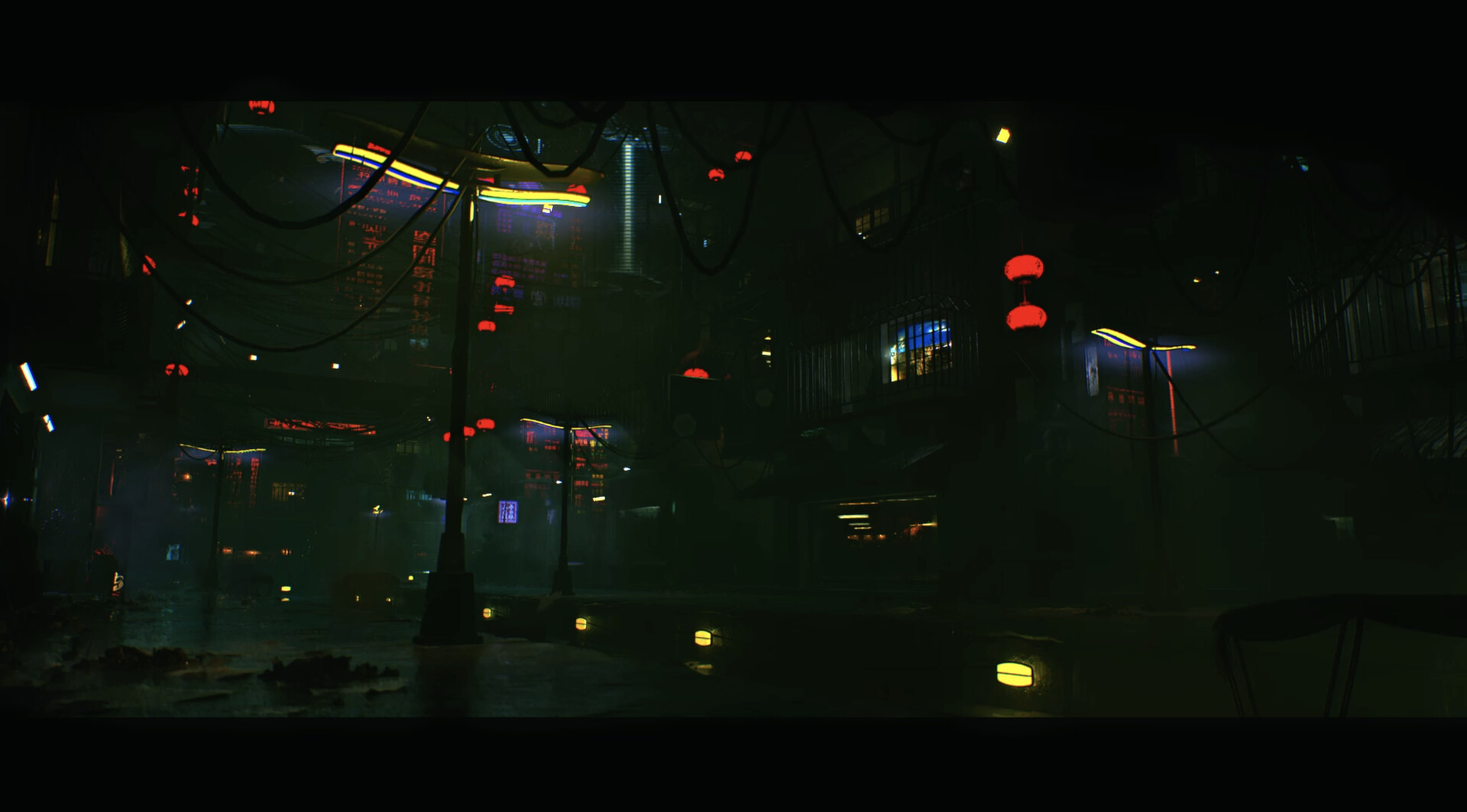
Interview with Filmmaker Richard Hamilton (BuddhaMachine=HMA)

Music Video made entirely in Unreal Engine 5 for the song “BuddhaMachine=HMA” and based off of the short story “Rain Drops”

The plot of the music video pulls and expands upon the short story, whose plot is as follows: a worn out detective in future Beijing attempts to solve a series of bizarre murders that involve a street drug called ‘Rain Drops’, that purports to send people directly to heaven after use.

1. What motivated you to make this film?

After I finished my album, I planned on writing short stories for each of the songs. At the same time my fascination with the workflow and possibilities of Unreal Engine 5 started to grow. I work in film production and have seen people implement it before, but it never crossed my mind that I could do it. So one day the need for a music video crossed with the desire to learn a new skill/program, and I decided to embark on my Unreal Engine journey. I tried to keep it simple at first, use premade assets, touch them up here and there for specific shots. But mostly my goal was to learn the camera and rendering system and see if I could make something compelling and interesting with it.

2. From the idea to the finished product, how long did it take for you to make this film?

It took longer than I hoped! My day job is a sound mixer/designer and composer for film. I think from idea conception to final exports and uploads it took me about 9 months. I could only work on it in my spare time however so it took a while.

3. How would you describe your film in two words!?

Meditative Cyberpunk

4. What was the biggest obstacle you faced in completing this film?

Besides learning a whole new workflow (I’ve never worked with a 3D rendering system or video game engine for that matter), I think the hardest part was understanding and utilizing UE5’s complex rendering engine. It took many many tries in some cases to get it to pump out the shots I needed. Many YouTube tutorials were watched and many a coffee was drunk.

5. There are 5 stages of the filmmaking process: Development. Pre-Production. Production. Post-Production. Distribution.

What is your favorite stage of the filmmaking process?

For me, if this was shooting out in the real world and not in UE5, I would say all of the stages except for production are my favorite. I used to direct music videos when I was younger and the development/pre-production process was always fun and exciting. It’s where the psych was the highest and you came up with all your brilliant and wacky ideas before production time showed up with a wet blanket to tell you what you were actually going to get. I never felt like on any project I directed that I got everything like I hoped it would be. People tell me that’s normal, but I hated the feeling. It was like pulling valuables from a burning building. In post production you can finally go into a dark room with just a few people and finally have some alone time with the pieces you’ve collected. There is when, what you actually made, starts to take shape and you get to be creative again. It can be a cold wet blanket as well, but I’ve always preferred the delicate and exacting lessons post shows you (PUs, color, sound design) to the chaotic and panic-y lessons you learn on set. When you work with UE5 though you get to direct from the comfort of your own home in your pajamas! Nothing better than that!

6. When did you realize that you wanted to make films?

Probably when I was around 8 or 9? I don’t remember exactly when the moment was, but I always was fascinated with cameras and making movies with my action figures in my spare time as a kid.

7. What film have you seen the most times in your life?

Great question! It’s a deep cut, but probably the 2002 cult movie The Mothman Prophecies I’d say. It may not be on anyone’s top 10 lists, but it had a huge impact on me growing up. Especially in my sound design career. The director Mark Pellington used to direct all these weird and surreal spots for MTV back in the day as well as direct some incredible music videos. On the film, they even went so far as to hire the sound designer and composer before the DP so they could make sounds, music, and atmospheres that they could play on set and cut against. This movie really solidified in my mind that films are a marriage of sound and image together, and that cinema’s true power lies in the tango between those two elements. It’s what separates it from all other art forms. Also, if you look back at some of Mark Pellington’s old work you can see that his style certainly had an impact on this video.

8. In a perfect world: Who would you like to work with/collaborate with on a film?

As a sound designer I’d say I’d love (but would also be very nervous) to work with David Fincher, his attention to detail and allowance for his collaborators to dig deeper is something I crave on a lot of the projects I work on. As a film composer I’d love to work with Lynne Ramsay or Zach Cregger. As a director I am not sure! Just people whose work I respect and are great to be around, in this business there is so much chaos that can happen at any step of the process that it’s imperative to have your people around you.

9. You submitted to the festival via FilmFreeway. How has your experiences been working on the festival platform site?

Easy peasy!

10. What is your favorite meal?

At the moment I love a good Poke Bowl

11. What is next for you? A new film?

On top of running my post production business Dragonfly Audio Post with my friend Ben. I am working on two short films and writing a lot! One short film is a UE5 live action hybrid thing and the other is all live action. It is a blessing and a curse sometimes that my brain likes to keep myself this busy. But if I get psyched about something I try to allow myself to embark and follow it wherever it leads! The discovery is part of the fun.

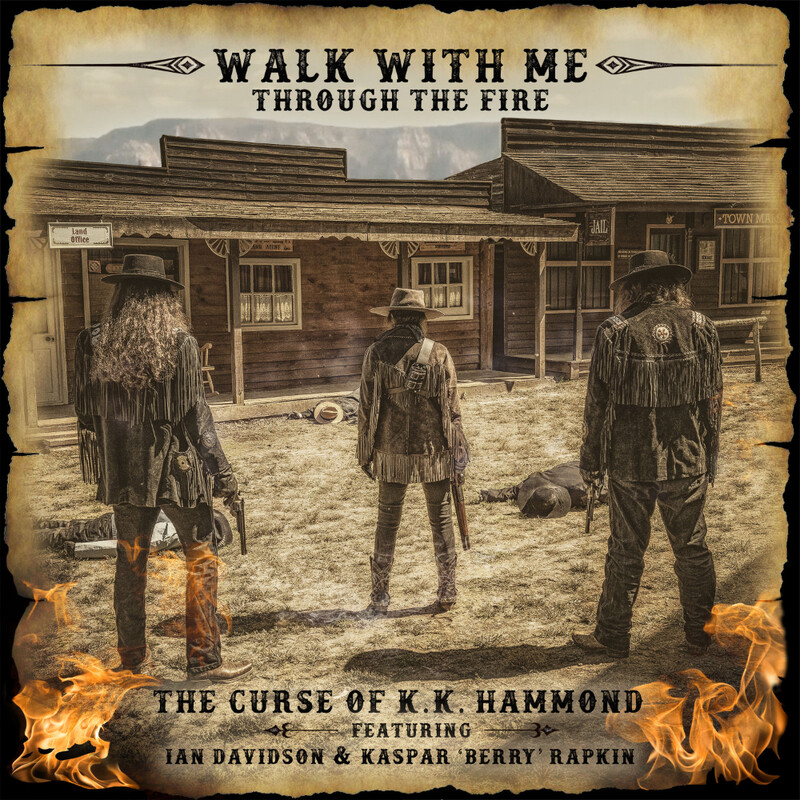
Interview with Filmmaker K.K. Hammond (WALK WITH ME THROUGH THE FIRE)

Spaghetti Western meets horror music video from slide blues guitarist and friends.

  1. What motivated you to make this music video?

As a musician who also loves cinema, a music video gives a powerful visualizer to accompany the music. It’s a great way for an artist to further share the vision which motivated the song and its lyrics with their audience. Film is also a huge passion of mine and creating a music video is a fantastic way to realize that whilst creating a piece which will make the music all the more marketable.

2. From the idea to the finished product, how long did it take for you  to make this film?

This was the most involved project I have ever worked on. From the planning stage to completion, it was a couple of years! A great deal of people came together to make this project happen from costume and makeup teams to drone operators, expert equestrian teams and special effects teams both during filming and post. The most gruelling part of the process were the post production special effects and extensive rotoscoping in order to entirely transpose a Western movie set situated in the UK to a desert in Southwestern USA!

3. How would you describe your video in two words!?

Western Horror.

4. What was the biggest obstacle you faced in completing “Walk with Me  Through The Fire”?

The post production special effects were a real learning curve and incredibly involved and labor intensive. During the filming itself, it would have to be capturing the bolting horses! Animal actors of course have a mind of their own and don’t always do what you want or expect. Sometimes this works to your advantage but other times you have to try a few different things to capture the shot you have in mind.


5. There are 5 stages of the filmmaking process: Development. 
Pre-Production. Production. Post-Production. Distribution.


What is your favorite stage of the filmmaking process?

I have a love/hate relationship with post production. While it’s often hard, frustrating and incredibly labor intensive, seeing the ideas come together is incredibly satisfying, especially when the end product is gradually developed and built into something so different from the original shot. I especially enjoy seeing special effects transformations. For example, in Walk With Me Through the fire, our excellent prosthetic artists did an incredible job turning myself and my fellow musicians into living skeletons. However, in post our eyes, necks and mouths were removed and we were lit just so in order to bring the idea I had for the characters to completion. Often, it’s the tiniest details that satisfy me most, for example when my character “drinks” the shot and you see the whiskey gradually disappear from the glass. Obviously this was not possible to do for real due to my skull prosthetics so was done in post. It’s a tiny fraction of time in the video but just so satisfying to see those little details!  


6. When did you realize that you wanted to make this kind of music  video?

As long as I have made music videos, I have always harnessed a Southern gothic horror vibe and have gradually become more and more adventurous with the scale of my projects. I have always loved Westerns and was waiting to be inspired to write just the right song to enable me to create a music video of this theme. One day when noodling on guitar, I happened upon a riff that I knew was the one! As I wrote the song I knew it would be to accompany a Western music video so both the song and the film concept were developed concurrently in order to compliment each other.

7. What film have you seen the most times in your life?

It’s a toss up between Django Unchained, Sinners and The Exorcist (1973).

8. In a perfect world: Who would you like to work with/collaborate with  on a film?

It may be a bit obvious but Quentin Tarantino and Ryan Coogler. Also, probably a bit more surprising considering my usual style but I think Danny McBride is quite the genius. 

9. What is your favorite meal?

Chargrilled oysters from Drago’s in New Orleans followed by more chargrilled oysters from Drago’s in New Orleans! Haha!

10. What is next for you? A new video?

Creating the Walk With me Through the Fire music video was an incredibly experience but it was very exhausting and took a great deal out of me and my team. I am going to return to working on my music and writing album number 2! Once that is well underway I will likely turn my attention to another music video but Walk With me will be a very hard one to follow and outdo!

Interview with Poet Kewayne Wadley (MY STORM IN A BOTTLE)

Performed by Val Cole


Get to know the poem:

1) What is the theme of your poem?

At its core, My Storm in a Bottle is about loving someone who’s unpredictable, expressive, human – someone who’s been through things and not afraid to be themselves. It explores devotion from a different angle, not lock and key or possessive, but a little zaney in the best kind way. It pays homage in a bluesy jazz cadence and depending on the circumstance it’s definitely learned and lived with but with personality.

2) What motivated you to write this poem?

I wanted to write about intimacy but wanted it to feel alive. Something different. It’s been a while since I’ve written like this and wanted to revisit it. I didn’t want everything to happen at once or feel predictable. I wanted to write something that’s alert, watchful, but doesn’t take itself too seriously.

This version came from two rewrites. The first was focused on a house that creaks when the wind blows. The second played with the weather and how it could make the house creak. Somehow, a bottle of Jack Daniels got involved. That sense of drawing lines from the center of the page outward is something one of my favorite art teachers, Becky McRae, encouraged me to experiment with as I mentioned one of our interviews before.

3) How long have you been writing poetry?

I’ve been writing poetry for quite some time, though the way I write now is totally different than from when I first started. Over time my work has become more intentional. Some of my early pieces, what I sometimes call doodles or quick sketches are still online. I still make mistakes, and I encourage them. Nowadays I tend edit more, a whole lot more. But I’m still learning. Always learning.

4) If you could have dinner with one person (dead or alive), who would that be?

I’d love to have dinner with all my little cousins. It’s actually been a while since we’ve all gotten together, and sharing that time would be really cool.

5) What influenced you to submit to have your poetry performed by a professional actor?

I’m fascinated by voices and how they tend to bring out things we might have unintentionally missed or bring attention to things, especially when it comes to ourselves. With My Storm in a Bottle, I read it aloud, but I didn’t experience it with the same intensity that a professional actor like Val Cole brings. Hearing her perform it gave it more depth and more clarity. I could visualize everything and it made me smile.

6) Do you write other works? scripts? Short Stories? Etc..?

Yes. I write short prose and narrative driven pieces, most of my work leans towards storytelling, even when it’s poetic. I’m currently working on a new book called Sideshow, which is more than halfway done, and I’m looking forward to releasing it sometime in 2026.

7) What is your passion in life?

Connection – noticing the small moments of how people and experiences touch us.

—-
POEM:

My Storm in a Bottle

She rises over my house,
like the sun, or the moon.
The stars have tried to tell her,
but she won’t listen.

Just as she rises,
She calls my name like thunder
rolling slow
through every inch of my house.

Even if I am sleep,
I wake up and say
“Baby I love you.”
But that won’t be love
not without her peeking through
my window,
Before she says it back.

I see her eyes looking left, then right.
She don’t mean no harm
the way she pops up out the blue.
Sometimes saying it outright
only makes things worse.
I tell her “lord, ain’t no other woman here.”
Sometimes she grins and smiles.

She rises over my house.
Her smile can make the night
turn to day.

But before she nestles her head
deep in my chest,
she raises it one last time
to see if anything is out of place.

This woman you made, lord.
Half honey, half storm in a bottle.
Roofers don’t come out no more
I love her just the same.
My storm in a bottle.