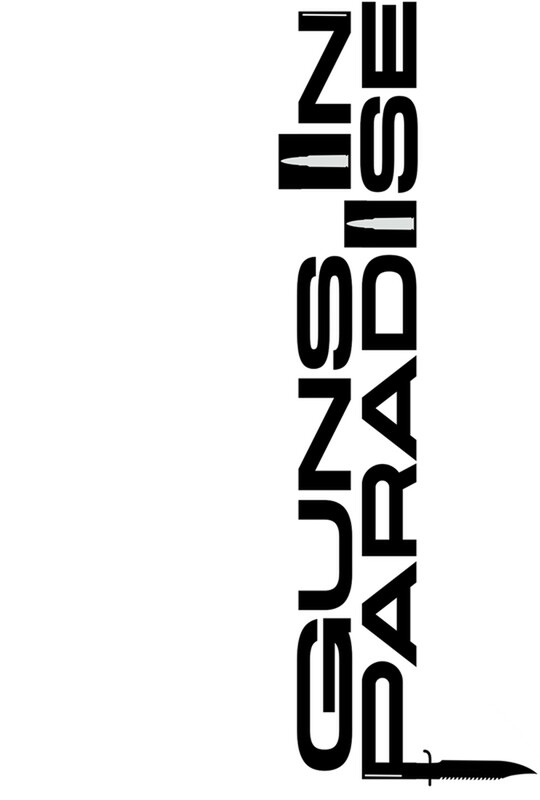
Interview with Filmmaker James Boss (GUNS IN PARADISE)

Guns in Paradise is a South Korea–set short film that blends fantasy, action, and romance through a metafictional lens. Trapped in routine, a DVD store clerk imagines a violent, passionate love story between two doomed assassins — unaware that the fantasy she’s creating might hold the key to rewriting her own life.
Get to know the filmmaker:

1.     What motivated you to make this film?

In my recent projects, I’ve been deeply hands-on, taking on nearly every imaginable role within the filmmaking process. Over time, I’ve worn almost every hat—except one: set design. That gap stayed with me. Wanting to push myself further and expand my visual language, I decided to build a set for the first time.

This wasn’t just about learning a new skill. It was about deepening the knowledge I’ve accumulated over the years and becoming a more complete filmmaker. While I don’t intend to keep doing everything myself forever—I’m very aware that this approach isn’t sustainable long-term—I do believe strongly in understanding every department at a fundamental level. That understanding is what allows meaningful collaboration. When I work with seasoned professionals in the future, I want to communicate my vision clearly, elevate their strengths, and create work that feels unified rather than fragmented.

That creative momentum was amplified when I acquired a dream camera: the Canon C700 shooting RAW. I’ve been a Canon user my entire life, and finding an affordable C700 at auction felt like a sign—fuel added to an already growing desire to create something ambitious and uncompromising in quality.

At its core, this project is a love letter to cinema itself. It reflects my personal relationship with movies—the inspiration they’ve given me, the hope they still represent, and the quiet sadness I feel about the current state of the medium. It’s both a tribute and a reckoning, born out of admiration, concern, and an enduring need to create.

2. From the idea to the finished product, how long did it take for you to make this film?

This project took two years to make. In general, my short films come together in about two months, featurettes take closer to two years, and full-length features require a minimum of four years.

3. How would you describe your film in two words!?

Passion, Rebirth.

4. What was the biggest obstacle you faced in completing this film?

At every step, I’ve faced seemingly unimaginable obstacles. In many ways, I’m used to it—because from the very beginning, I’ve consistently made films that lived in the realm of the “impossible,” largely due to budget constraints. To make them happen, I took on nearly everything myself as a way to survive creatively and financially.

I always find a way to get the job done. Along the way, many people—including myself at times—have questioned my sanity. I often hear, “You can’t do that. That’s impossible.” But somehow, I figure it out and move forward anyway. For example, my first feature film was post-apocalyptic, and I needed locations that felt genuinely destroyed and deteriorated. To achieve that, I traveled to Burma—now known as Myanmar—and filmed exterior shots there. The decision ultimately led to me being removed from the country for capturing images of areas the government didn’t want shown. I don’t think I can do that type of gorilla filmmaking anymore.

5. There are 5 stages of the filmmaking process: Development. Pre-Production. Production. Post-Production. Distribution.

What is your favorite stage of the filmmaking process?

I don’t think I have a favorite stage of the process. Every phase is incredibly challenging, and without genuine passion and motivation, I don’t think I could get through any of them. That said, if I had to choose the opposite, distribution is probably the stage I struggle with the most—not because it isn’t important, but because by the time the film is finished, I’m often too exhausted to fully engage with it or give it the attention it deserves.

6. When did you realize that you wanted to make films?

When I was 16, I suffered a pneumothorax that left me hospitalized for six weeks, with my lung attached to a tube. The recovery was long and difficult, and during that time, movies became my escape. They gave me a place to go when my body was confined and my future felt uncertain.

Films also became a way for me to connect more deeply with my friends—we began living our lives as if it were part of a movie, framing experiences through story and imagination. Before the surgery, I was a martial arts instructor and champion, but afterward I was forced to give it up. That loss ultimately redirected me toward the arts.

I started with graphic design, then moved into multimedia and visual effects, and over time, that path naturally led me to filmmaking. Along the way, I trained in acting and theater, and somehow all of these disciplines—each skill accumulated over the years—converged into cinema.

There was also a pivotal moment early on: a show called Project Greenlight, which offered emerging filmmakers the chance to make a feature with a million-dollar budget. I entered the competition with virtually no experience and somehow made it into the top 50. That moment felt like a sign—confirmation that I should commit fully and dive deeper into filmmaking.


7. What film have you seen the most times in your life?

This is a difficult question to answer. I watch a lot of films, and my answer changes all the time. There are simply too many great movies, and as a filmmaker, I’m able to appreciate them on many different levels.

8. In a perfect world: Who would you like to work with/collaborate with on a film?

The first name that immediately comes to mind is Hans Zimmer. His music has a rare power to elevate a film beyond the screen.

9. You submitted to the festival via FilmFreeway. How has your experiences been working on the festival platform site?

It’s been a great experience so far—extremely well organized. A well-run festival is what matters most to me.

10. What is your favorite meal?

Through my travels, I’ve found that Vietnamese and Korean food resonate with me the most—rich in variety, bold in flavor, and endlessly satisfying.


11. What is next for you? A new film?

From here on, I plan to focus on feature films, primarily at a larger budget scale. I genuinely love the indie process, but doing everything alone can be both exhausting and overwhelming. The upside, of course, is total creative control—and the fact that you’re actively building the film from day one, which removes the lingering anxiety of whether it will ever actually get made.

With bigger-budget projects, I’ve seen the opposite challenge: films collapsing after years of development due to financing issues or actors dropping out. Watching a project unravel after so much pre-production can be devastating. That said, I’m ready to take on something more ambitious—projects that require collaboration at scale, deeper resources, and a longer runway, but with the creative clarity and resilience that only comes from having gone through the indie trenches first.
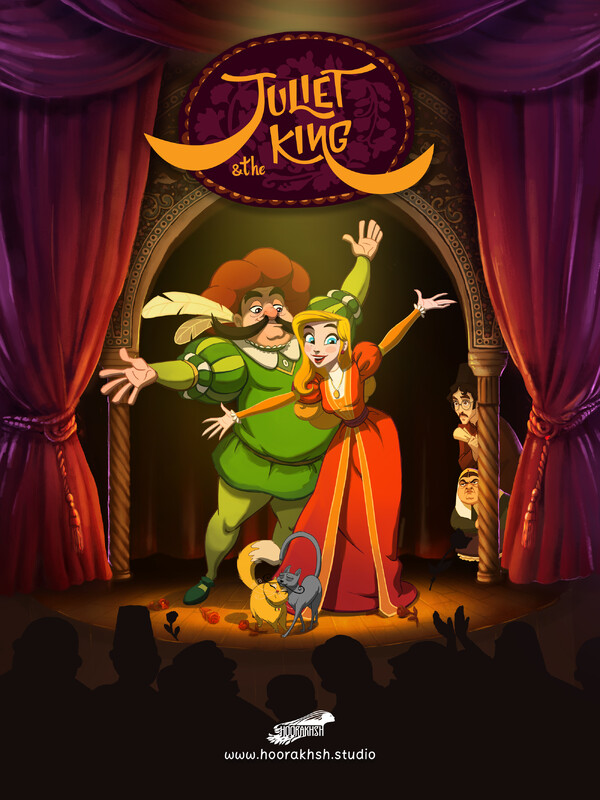
Interview with Filmmaker Ashkan Rahgozar (JULIET & THE KING)

JULIET & THE KING, 92min., Iran
Directed by Ashkan Rahgozar
The Iranian King gets an invitation to visit France. While visiting a “Romeo and Juliet” play in Paris, the actress catches his eye. He falls in love with her so deeply that he asks her to perform the same play in Tehran, so he can impress her and win her heart. Julie, the actress, decides to take this chance with the help of her friend Jamal. But she suddenly finds herself among jealous court ladies.
https://hoorakhsh.studio/works/juliette-and-the-king/

Get to know the filmmaker:

1. What motivated you to make this film?

My motivation for making Juliet goes back to my upbringing. I grew up in a family where history was an inseparable part of everyday life. My father had a large personal library, and I would say that about two-thirds of it consisted of history books, especially books focused on the Qajar period. His own field of study was largely centered on Qajar history.

At the same time, the form of this period—the way Iran began to enter modernity from a traditional structure—was always fascinating to me. Alongside my father’s studies, I was exposed to many of these books; sometimes he would recommend them to us, and we would read them. Gradually, through this process, the historical trajectory of Iran, its cultural interactions with both the West and the East—particularly with the West during the Qajar era—became very interesting to me. These interactions played an important role in shaping Iran’s cultural development and its transformation from tradition toward modernity.

All of this stayed with me, and eventually I felt it would be meaningful to explore these ideas within the framework of a film, and to give them form through a cinematic idea.

2. From the idea to the finished product, how long did it take for you to make this film?

From the initial idea to the completion of the film, it took around seven years. During this period, about a year and a half was spent moving forward at a very slow pace due to financial difficulties. After we were able to resolve these issues, we managed to continue the production with a much better and more consistent speed.

3. How would you describe your film in two words?

Love and Art

4. What was the biggest obstacle you faced in completing this film?

The biggest obstacle we faced during the production was a legal dispute with the project’s investor. Due to the economic conditions in Iran, the significant devaluation of the national currency and the sharp rise in production costs, the project experienced a serious financial shock. Our investor was not willing to accept this situation, which led to a very heavy legal conflict.

This dispute lasted for about a year and a half. During that time, we were under intense financial pressure while also dealing with a prolonged legal process. Eventually, we were able to reach an agreement, and part of the necessary investment was secured, which allowed us to complete the film.

5. There are 5 stages of filmmaking. What is your favorite stage of the process and why?

I really enjoy the development stage. It is the phase where an idea starts from vague mental images and written notes—at first, it exists only as text and unclear images in my mind. These images are usually not very sharp at the beginning, but gradually they take on a concrete form.

During this stage, a very interesting synergy happens between me and the artists who are working on the initial concepts and the early visual development of the project. This process of turning something abstract into something tangible is the part I enjoy the most, and it is also the most exciting stage for me.

6. When did you realize that you wanted to make films?

I realized quite early that I wanted to become an animation filmmaker, probably around the age of 15 or 16. The reason was that I was interested in many different things at the same time—I loved dinosaurs, history, drawing, and music.

I came to the conclusion that if I wanted to pursue all these interests together—developing ideas alongside drawing, music, and many other elements—animation was the best medium for that. From that age, around 15 or 16, I genuinely knew that this would be my profession.

7. What film have you seen the most in your life?

Princess Mononoke is the film I have watched more than any other in my life.

8. What other elements of the festival experience can we and other festivals implement to satisfy you and help you further your filmmaking career?

I think the most important thing that motivates a filmmaker at a festival is how much the film is actually seen. If a festival can attract a larger audience and give the filmmaker more exposure, along with meaningful feedback—sometimes positive, sometimes negative—that can greatly increase the value and impact of the festival.

The more a festival is able to draw audiences and create real engagement with the films, the more attractive and meaningful it becomes for filmmakers.

9. You submitted to the festival via FilmFreeway. How has your experience been working on the festival platform site?

FilmFreeway is probably the best platform for submitting films to festivals. It is very good, highly functional, and fast to use. The main issue, however, is that it can be quite expensive at times. For us, especially when submitting to international festivals from Iran, these costs can become significant.

Beyond the fees themselves, there are also challenges related to payment transfers, as we do not have access to international accounts or full connectivity to the global banking system. This makes the process more difficult for us. That said, in terms of usability and functionality, FilmFreeway itself is a very effective platform.

10. What is your favorite meal?

My favorite meal is Iranian kebab, specifically koobideh kebab.

11. What is next for you? A new film?

I am always engaged in various projects. I work as a co-producer on different projects from around the world, and I also direct several animation projects. Regarding my own film work, I am currently developing a new project that I am very excited about. I hope to complete it and be able to present it within the next two years.

Watch the Audience Feedback Video:

Interview with Poet J. Amber Griffin (FOOTSTEPS)

Performed by Val Cole

—–
Get to know the poet:

1) What is the theme of your poem?

The theme of Footsteps is the exploration of humanity’s deep connection to nature.

2) What motivated you to write this poem?

I was raised in the forests of Northern California, where my life was always intertwined with nature, yet every time I interact with the natural world I discover more of its magic and I feel the connection strengthen.

3) How long have you been writing poetry?

I have loved writing and creating poetry since I was a child, and though I put my creative writing on hold for some time in order to get a BA in Journalism, I came back to writing poetry throughout my 30’s.

4) If you could have dinner with one person (dead or alive), who would that be?

Without hesitation I will say my mother. She passed away when I was 16 and she was an incredible woman who lived an amazing life. I wish everyday that I could get to know her now that I am the age that she was when she was raising me.

5) What influenced you to submit to have your poetry performed by a professional actor?

I believe there is something very beautiful and profound about the spoken word as a form of art. Poetry read out loud is unique; it fills a space between music and literature read out loud.

6) Do you write other works? scripts? Short Stories? Etc..?

Besides poetry, of which I had a published book released last year called WildLife, most of what I write tends to be more journalistic in nature. I create works such as blog posts on sustainability or other specific topics, and editorial pieces regarding travel and living abroad.

7) What is your passion in life?

The best way to put it would be that my passion in life is to be a present, positive, loving, compassionate, conscientious & sustainable human being.

—-
POEM:

FOOTSTEPS, by J. Amber Griffin

Footsteps beneath the branches
lead to
a descension into deepness

A haze of heaviness clears
revealing
contemplative consciousness

Sensations of fervor
writing
the beginning of the story

Noting the colors, textures, shapes
inviting
all of us are welcomed

Curiosity and admiration
adorning
the kinship between us

Flowers grow, petals fall
planted
are new seeds of growth

Rising up together
not fickle
determined by the delight

Continue chapter by chapter
cyclical
until death it doesn’t part

Where sunlight lacks
shadows
protect another haven

Often unseen is the balance
the perfection
too often strived for

Connection bears witness
intrinsic
a feeling of the truth

Staring at starry skies
release
and simply remember

Before ego was eco

Interview with Filmmaker Justin Walker (THE ANCIENT TIME PIECE)

The Ancient Time Piece, 5min., UK
Directed by Justin Walker, Islien Walker
Lily, a teenage girl is stuck in a monotonous cycle, perhaps this is connected to an old eerie clock she found in her family’s basement, a clock that was still ticking when she found it…. how long had this ancient Time Piece been ticking!


https://www.instagram.com/illy_pheebs_productions2012

Get to know filmmaker Justin Walker:

1. What motivated you to make this film?

My daughter Islien (co-director and lead actress) wrote the short story The Ancient Time piece when she was 11 years old, now she is 13….the short story was published in the compilation book ‘The glitch twisted tales’ which resides in the national library, London UK. Myself and my daughter had discussed making a short film based on her story for sometime… eventually we commenced production this summer.

2. From the idea to the finished product, how long did it take for you to make this film?

Haha, well shooting only took 2 days, post production, editing, effects, score sound design took approximately 2 months.

3. How would you describe your film in two words!?

Time Reflective

4. What was the biggest obstacle you faced in completing this film?

Well being amateur/smartphone filmmakers who produce short films on a zero budget you are always working with restrictions and limitations…..often you ‘think’ big during concept/pre production but find in reality you have to work within your means….however you do tend to be more creative due to these restrictions. The major obstacle is finding the time between my full-time job and family life to shoot and complete post production is always a challenge. Obviously there is a challenge in having the final product look a quality piece/semi-professional on limited resources.

5. What were your initial reactions when watching the audience talking about your film in the feedback video?

Apprehension, I think it’s human nature to want positive regard, you want your work to be well received and liked, so it was a relief to see positive feedback.

6. When did you realize that you wanted to make films?

At age 15, I had always had a love for film from an early age, I have always been fascinated by the process of film and how they were made…I have never been academic or good with my hands but have always been creative and had an active imagination.

7. What film have you seen the most in your life?

Jaws….Jaws is my all-time favourite film

8. What other elements of the festival experience can we and other festivals implement to satisfy you and help you further your filmmaking career?

Wow…this festival has so much to offer…what more could we as filmmakers ask for… nothing!

9. You submitted to the festival via FilmFreeway. How has your experiences been working on the festival platform site?

Filmfreeway has always been professional with good communication, very easy to navigate with an extensive catalogue of film festivals.

10. What is your favorite meal?

That would be an English roast dinner.

11. What is next for you? A new film?

We have just finished post production on ‘The Girl Who Haunted Herself’ the short was unscripted and an impromptu production, we are hoping to release the film in the new year.

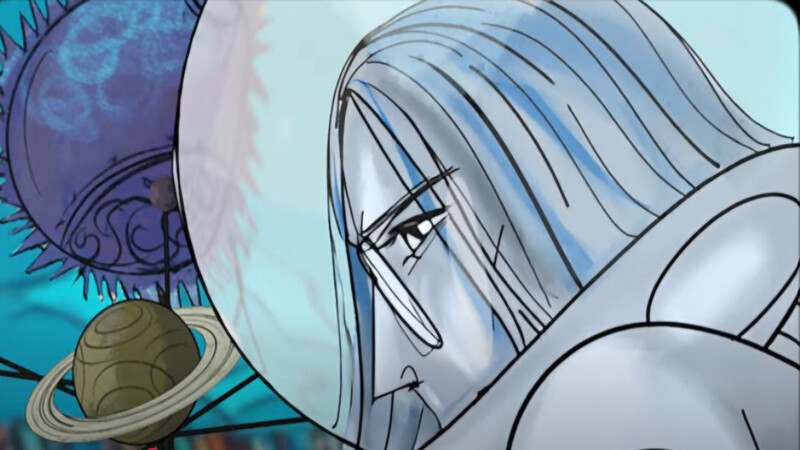
Interview with Filmmaker Nadav Embon (THE PLANET THE DOESN’T EXIST)

The Planet That Doesn’t Exist, 8min., Israel
Directed by Nadav Embon
Professor Star l’Etoile set at her desk, her notes, were packed into spiral leather bound notebooks, stacked one atop of the other.

Get to know the filmmaker:

1. What motivated you to make this film?

First and foremost, the motivation was to commemorate a young artist whose life was taken in a tragic and violent way. Honoring Navy Bird and preserving her voice felt essential.

As I began working with the material, the connection became deeply personal. As a child, comic books were one of my great passions, and science fiction in particular shaped my imagination. Encountering Navy’s work felt like rediscovering something intimate and formative.

Another strong motivation was the trust Navy Bird’s mother placed in me. The fact that she accepted my creative proposals and vision carried a great responsibility. After meeting her, I felt a clear commitment: to do justice to the work, and to create something she could feel was respectful, thoughtful, and true.

2. From the idea to the finished product, how long did it take you to make this film?

Roughly ten months.

It could have been shorter—perhaps closer to eight—but a significant amount of time was devoted to pre-production. I wanted the storyboard to feel cinematic while remaining deeply connected to the source material. Finding that balance between fidelity to the comic and creating a film language of its own took time, but it was essential.

3. How would you describe your film in two words?

Poetic tragedy.

4. What was the biggest obstacle you faced in completing this film?

Beyond the usual production challenges, the core difficulty was emotional.

The producing and initiating figure of this project was the writer’s mother. This was not a conventional creative collaboration—it was a commemorative work, created within the first year of profound grief after a terrorist attack. Emotions, memories, and visions naturally carried immense weight.

In any creative process there are tensions, but here those tensions were amplified by loss, responsibility, and the sense of mission we carried. Navigating that emotional landscape with sensitivity, honesty, and care was the greatest challenge.

5. What were your initial reactions when watching the audience talk about your film in the feedback video?

It was deeply moving.

Seeing viewers grasp the atmosphere, connect emotionally, and articulate the obsessive drive of the main character was incredibly powerful. The audience understood her tenacity—her relentless pursuit of a personal “holy grail”—and also the inevitability of where that pursuit leads.

Realizing that this emotional journey was successfully conveyed to the audience was profoundly validating.

Watch the Audience Feedback Video:

6. When did you realize that you wanted to make films?

I don’t remember a specific moment—it feels like something that was always there.

As a child, I watched films obsessively, often rewatching the same ones again and again. Animation played a huge role in my upbringing. Even as a teenager, I continued watching cartoons intensely. My mother once asked me if I was trying to hold on to my childhood.

Only when I was accepted into animation school did she say, “Now I understand—you were researching your career.”

Much of my inspiration came from animation, fantasy, and adventure films of the 1980s.

7. What film have you seen the most in your life?

The NeverEnding Story.

Growing up, I watched it on VHS so many times that the tape eventually wore out and stopped working. I probably still know the film by heart to this day—if you want to test me.

8. What other elements of the festival experience can we and other festivals implement to satisfy you and help you further your filmmaking career?

The experience was meaningful and generous, and I appreciate the way the festival created space for conversation and reflection around the film. Continued opportunities for dialogue between filmmakers and audiences are invaluable.

9. You submitted to the festival via FilmFreeway. How has your experience been working with the platform?

FilmFreeway remains a clear and accessible platform that makes the submission process straightforward and transparent, allowing filmmakers to focus on the work itself.

10. What is your favorite meal?

If I had to choose one: asado.

As someone of Argentinian descent, a well-cooked steak shared as part of an asado dinner will always feel like home.

11. What is next for you? A new film?

Yes.

This project sparked the development of another short animated film based on Navy Bird’s larger and more complex graphic novel, Arlequino and Pierrot. I am part of the production team, and we are very excited about its potential.

The project is more ambitious, with many moving parts. It leans toward fantasy with touches of science fiction and carries the symbolic richness that defined Navy Bird’s work. At the moment, we are seeking support and resources, including crowdfunding, to bring it fully to life.

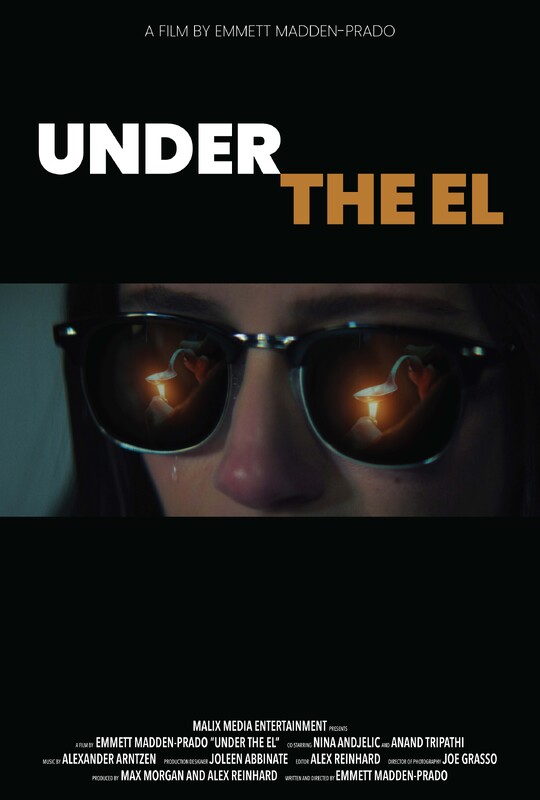
Interview with Filmmaker Emmett Madden-Prado (UNDER THE EL)

Under The El, 7min., USA
Directed by Emmett Madden-Prado
In the open air drug market of Kensington, Philadelphia, an unhoused addict is tricked into participating in a new form of rehabilitation, virtual reality, only to be released back to the streets for the results of her rehab to take hold.

Get to know the filmmaker:

1. What motivated you to make this film?

Working in Kensington Philadelphia at a production studio, there were hundreds of unhoused, often drug addicted individuals who roamed the streets by our studio. I interacted with them daily, many times to ask them to leave our streets for the sake of our business but that ultimately transitioned into a much more compassionate relationship. As I began to learn names and more about their backgrounds, we often had conversations about their addictions and origin stories. Many people had families and careers that were lost due to their addiction. In speaking with the police who patrolled the neighborhood, their options for protected the streets were limited to city policy. It created a hectic and unsanitary environment for any resident of the area. There were also organizations like Project Home who cared for the unhoused, and supplied them with food and necessities from time to time. But obviously the issue was deeper than any organization could address given the resources available and political climate that limited action. I made the film to take a far fetched approach to rehab, and to show that every person has an alternate path that could inspire them to use as a North Star. And that this North Star could be stronger than their addiction.

2. From the idea to the finished product, how long did it take for you to make this film?

About 2 Years.

3. How would you describe your film in two words!?

Thought provoking.

4. What was the biggest obstacle you faced in completing this film?

Filming in the neighborhood of Kensington. I wanted this to be an authentic Kensington experience. Which was great for the film, but production logistic wise made for many unfortunate run in throughout our production that jeopardized the completion of scenes and the amount of takes we could roll on.

5. What were your initial reactions when watching the audience talking about your film in the feedback video?

I was thrilled to see a group of people really analyze the film and get deep into the concept. That was one of the coolest things. When I made the film, I was concerned that people unfamiliar with that environment would not grasp the depth of the character, and was so pumped that the audience here took to El like that.

6. When did you realize that you wanted to make films?

When I was a Freshman in high school I went to a film production camp that really got me excited about filmmaking. I always loved writing and film gave me a new way to write and create. From there I knew it was what I wanted to do, and through the years I’ve found ways to make a living in adjacent avenues to filmmaking.

7. What film have you seen the most in your life?

Maybe ET? Just because it was one of the only movies my grandparents had as a kid.

8. What other elements of the festival experience can we and other festivals implement to satisfy you and help you further your filmmaking career?

I wish other festivals provided the same level of audience feedback.

9. You submitted to the festival via FilmFreeway. How has your experiences been working on the festival platform site?

Hit or miss.

10. What is your favorite meal?

Let’s say a Philly Cheesesteak.

11. What is next for you? A new film?

I would love to turn Under the El into a feature film.

Watch Audience Feedback Video:

Interview with Documentary Filmmaker Rob Herring (GREENFIELD)

Greenfield is an intimate look into the mind and mission of Robin Greenfield — one of the world’s most radical environmentalists. Known for his bold eco-experiments, including wearing a month’s worth of trash through Times Square, living a full year on only homegrown and foraged food, and giving up every possession, Robin challenges what it means to live in harmony with the Earth. As he walks barefoot from Canada to Mexico with nothing to his name, his radical simplicity invites us to question what we truly need to be free, fulfilled, and human.

Project Links

1. What motivated you to make this film?
I’ve always been drawn to the overlap between human health and environmental health, and this story sits right at that crossroads. The more I uncovered the real-world consequences of our everyday choices – and the hidden systems driving them – the more I felt a responsibility to bring Robin’s story to light, as he is one of the most committed activists in modern history. His life is a demonstration of what is possible in terms of living connected with the Earth, in a way that harmonizes with a regenerative future. 

2. From the idea to the finished product, how long did it take for you to make this film?
Like most documentaries, it wasn’t linear. The seed of the idea started about 2 years ago, as a completely different plot, with our main character focusing on another experiment from the journey covered in our film. These stories tend to grow and evolve, leading you as the filmmaker to trust and follow with intuition, and ours certainly did.

3. How would you describe your film in two words!?
Radical alignment.

4. What was the biggest obstacle you faced in completing this film?
When you’re telling a story of something as extreme as Robin’s life, and how our everyday choices directly affects people’s health and the ecosystems we rely on, you carry a lot of weight to make sure it is not preachy, or guilt tripping the audience. Balancing the urgency of the message, with the personal storytelling is a bit of a delicate balance.

5. Favorite stage of the filmmaking process?
I’m torn between filming interviews and watching the editing magic unfold. Production is where you connect with your subjects looking them right in the eye and exploring our collective shared humanity that you can bring into the film… but post-production is where the soul of the film itself finally is revealed, and when those moments click in the edit, you know you have done something special. If I had to choose, I’d say refining the edit with my creative partner Ryan Wirick, only because that’s where all the threads and big ideas finally start weaving into something which you can see having meaning to your viewers.

6. When did you realize that you wanted to make films?
I didn’t grow up thinking I’d be a filmmaker. I was more of a performer and singer. But once I saw how powerful storytelling could be in shifting culture, especially around health, environment, and the things we take for granted, I knew I had a responsibility to put these inspiring people into documentaries. It felt less like a career choice and more like a calling.

7. What film have you seen the most times in your life?

Probably Home Alone, only because I watch it every year as a tradition. And because it’s perfect.

8. In a perfect world, who would you like to collaborate with on a film?
The first person that comes to mind is Ólafur Arnalds. He’s an Icelandic richly talented composer who creates atmosphere that pulls you in emotionally. I believe music to be one of the most important components of documentary filmmaking, or all filmmaking in general. 

9. You submitted via FilmFreeway. How has your experience been with the platform?
FilmFreeway makes submissions pretty painless. It’s incredibly over-priced for most submissions, but it is streamlined, intuitive, and takes a lot of the logistical friction out of the process. As a filmmaker juggling a lot, I appreciate the ease, do not appreciate how many festivals are taking advantage of filmmakers who do not have a lot of extra capital for that stage of the process.

10. What is your favorite meal?
Anything my wife makes. She is the most talented chef, always focusing on local, nutrient dense, organic high-quality ingredients. We are fortunate to know our farmers and that makes me happy to support the decentralized solutions that are the core to most of my film work.

11. What is next for you? A new film?
Yes. There’s always multiple stories brewing. I’m currently working on Farmacy of Light, a project exploring how photonic (light) energy works within plants and within our bodies. I’m continuing to develop companion impact resources for our latest films. The mission stays the same – helping people reclaim their health by reconnecting with the natural world.