Short Film Review: IMBROGLIO. directed by Ian Sciacaluga

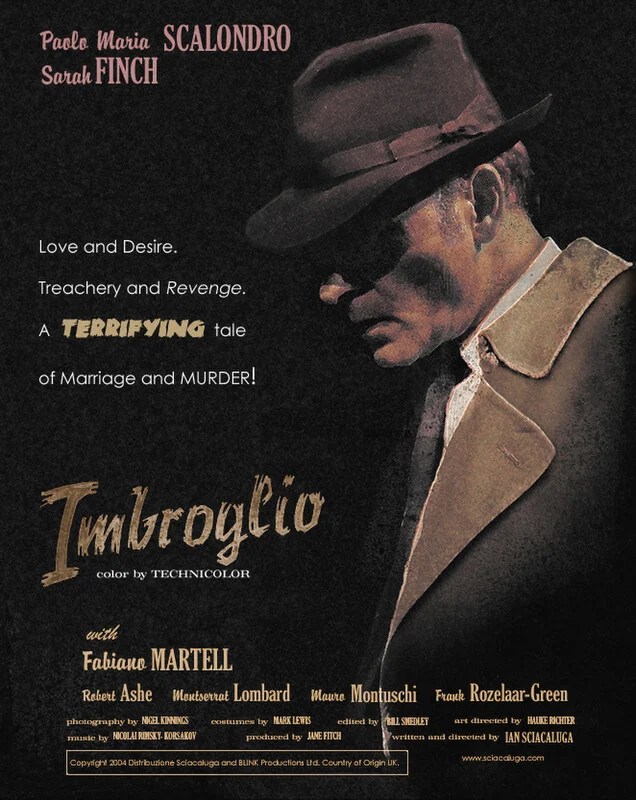
“Imbroglio” is set in a timeless and imaginary Italian world and is a loving nod to the arch Hollywood and European film noirs of the forties and fifties.

https://www.instagram.com/iansciac/
Review by Parker Jesse Chase:

Imbroglio drops you into a noir-filled dream of the 1940s and 50s, where every shadow hides a secret and every glance feels loaded. The film signals its lineage from the first frames. A musical score leans perfectly in suit. Even the title font feels lifted from a nostalgic essence. You are placed exactly where the director wants you, right away, inside a world shaped by suspicion
and longing.


The film opens in a bathroom, a classic confessional space. In noir tradition, the bathroom is not just a setting, it is a metaphor. A place where masks slip. A place of private rot beneath public polish. The conversation plants seeds of the central story, a missing student by the name of Sebastiano Santini who lives across from a bar. The bar, of course, becomes our battleground searching for secrets.


Enter Georgio. He is the man investigating the disappearance, though the film withholds clarity about his role. Is he a detective, or something more personal, more volatile? Noir thrives on unstable identity, and Georgio embodies that trope. He moves with quiet intensity, his motives opaque.


At the bar, the patrons speak in riddles. “None of us see anyone. And when we do, we don’t pay much attention to each other.” They call the bar a church, a place to forget themselves. This line lands like a thesis. The bar is absolution without confession. Community without accountability. In classic noir fashion, everyone knows something, and no one wants to say it.


When Georgio’s background nods at him being a tax inspector, it feels like a wink to the genre’s love of false fronts. Then he states in plain sight he intends to kill the missing man. The room barely flinches. A bartender asks only that he not do it there. Violence is expected, just not bad for business. One patron studies him and says he does not look like the killing type. Noir often toys with that tension, the ordinary man who carries fatal resolve.


Information loosens. The missing student left three nights ago with a girlfriend. The suggestion hangs in the air. Is his wife the woman with the man in question? At home, Georgio’s marriage is fractured. His wife returns late from class, changed by what she has learned. He sleeps on the couch. Their apartment feels colder than the streets. The domestic space mirrors the emotional distance. Marriage here is not a sanctuary, it is a battleground begging to be free.


The next morning unfolds in a travel montage that nods to the restless pulse of French noir. The camera drifts and pans with intention. Double exposures blur time and place, turning movement into memory. The city becomes a character, indifferent and watchful. The montage is not filler, it is metaphor. Georgio is untethered, drifting between roles, husband, hunter, victim.


When his wife asks for a divorce, the power dynamic flips. She is loud, desperate, and clear. He is calm, almost hollow. “Don’t look at me like a dog you’re about to put down,” she says. The line is brutal. In noir, women are often cast as femme fatales or tragic lovers. Here, she resists both. She demands agency. She breaks his dinner plate. She refuses to belong to him. There is no
“save the cat” moment for Georgio. The film denies us a reason to root for reconciliation. Instead, it leans into moral decay.


At work, a note waits on his desk, from the very man he is hunting. The cat and mouse game becomes explicit. Georgio follows the bait.


They meet in a diner, another classic noir stage. Fluorescent lights replace shadow, but the tension remains. Sebastiano Santini arrives on crutches, handsome and disarming. He orders beer and strawberry tart, a detail that unsettles expectations. The dessert softens him, complicates him. Noir loves to fracture archetypes. The supposed villain is charming, even vulnerable.


Santini claims the affair is over. He came to apologize. Georgio responds that his wife does not want him either. Love becomes a hollow word between them. “What do you know about love?” hangs heavy, not as a question but as an accusation.


As food arrives, Georgio places a gun on the table. Panic erupts. He tells everyone to calm down, then turns the weapon on himself. This inversion is key. The revenge plot collapses inward. In a genre built on external violence, the film locates the true target within. The extreme close up of Santini’s eyes, the spray of blood, his arms rising too late to shield himself, fulfills Georgio’s vow, till death do us part. The marriage becomes a death pact he enacts alone.


The film closes where it began, in the bathroom. Gossip resumes. There is no room for chatter now. The mirrors that once reflected secrets now reflect consequence. By framing the story between two bathroom scenes, “Imbroglio” turns the space into true noir fashion where no one is clean.
Short Film Review: Hawkeye: The Broken Arrow. Directed by Thomas Howe Meehan

Hawkeye: The Broken Arrow is a non-profit, non-monetized passion-project, that has been in production for over three years. No profit is generated or derived from this fan film making this film completely legal to be shown existing in a legal grey area between the category of fair use and/or parody law.

https://www.youtube.com/@THMstudios

https://instagram.com/ronin_hawkeye_

Review by Andie Kay:

This was a massive undertaking for Thomas Meehan who wrote, directed, produced, edited and handled cinematography. A fan fiction short film surrounding Marvel Avenger Clint Barton, aka Hawkeye, aka Ronin before he was ever recruited by Nick Fury for S.H.I.E.L.D.


The premise of the story is a solid idea and Thomas starts this film out strongly, setting up Hawkeye’s backstory and places the audience in the past. Joshua White did some really nice camera work and cinematography here and we have Thomas portraying a
young Clint Barton. Abruptly we experience a smash cut to Ronin without knowing the year or any context.

If you are a major geek girl like myself, you will know the canon and find it odd that Ronin is so young. I do love the idea of
exploring a young Clint Barton’s life and what led to his recruitment with S.H.I.E.L.D. I wish it was focused more on that.


The attention to detail in the costuming and props was fantastic. I was really tickled they added in the Tracksuit Mafia and what the filmmakers did with the stunt work was really great. The VFX and special effects that were used were integrated so well and it helped sell the film.


You can tell that these filmmakers really care about Hawkeye/Ronin and how can you not? Jeremy Renner is amazing. His performance and the MCU inspired such awesome creativity with this film and I hope that Thomas and his crew keep creating.

Watch the FILM:

Short Film Review: Peace Wilderness Man. Documentary. Directed by Tim Millard

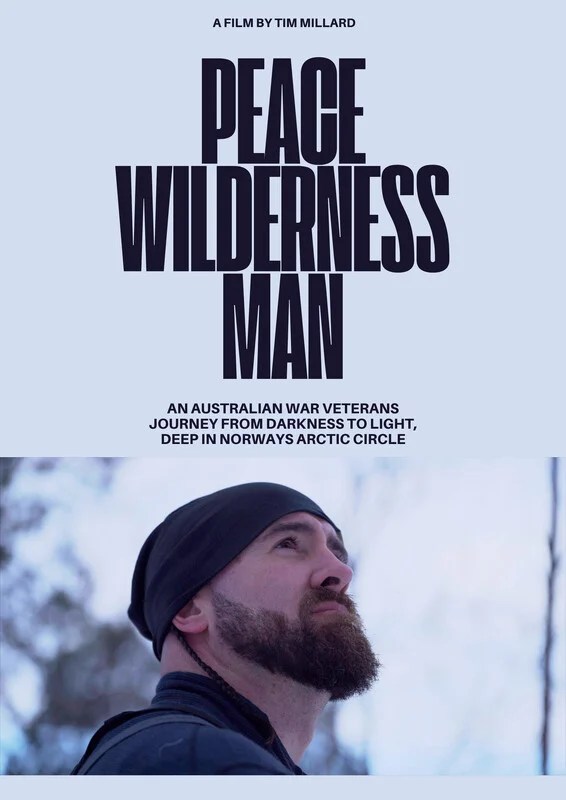
An Australian war veterans journey from trauma to inner peace in Norways remote Arctic Circle.

Review by Victoria Angelique:

The story of Lex Reilly in PEACE WILDERNESS MAN is one that shows endurance is a skill that comes from deep within the soul. This begins with Lex starting in his childhood, showing that his need to protect himself began as a boy when he grew in a household filled with substance abuse as both of his parents were alcoholics as he recounted a story of a party where his father failed to protect him from a predator. Lex believes this led him to join the Australian Army.

Lex served his country by being sent to fight in Afghanistan, but this came with invisible battle scars in the form of PTSD. This powerful documentary showed that war doesn’t just affect the soldier, but the entire family, as Lex ended up divorced and separated from his children. He even stated that his kids needed psychological help that they never received. This leaves a powerful message that the militaries of the world need to do better by those who serve their countries and their families. War affects everyone.

It was only when Lex retreated to nature, he began to find his spiritual side. It took taking a community job at a surf club by rescuing a boy from drowning to realize his life still had meaning and that he still had a purpose. His connection to the importance of divinity came when Lex got the opportunity of a life, the chance to join an Arctic expedition. 

It was in Norway’s wilderness that Lex began to finally understand that humans are part of nature and through the land’s indigenous people, he learned that wisdom comes through nature. Returning to nature can connect a person closer to divinity. This helped Lex find his true purpose in life, which means he will be able to help other people.

Short Film Review: A BREAK. Directed by Jill Corvelli

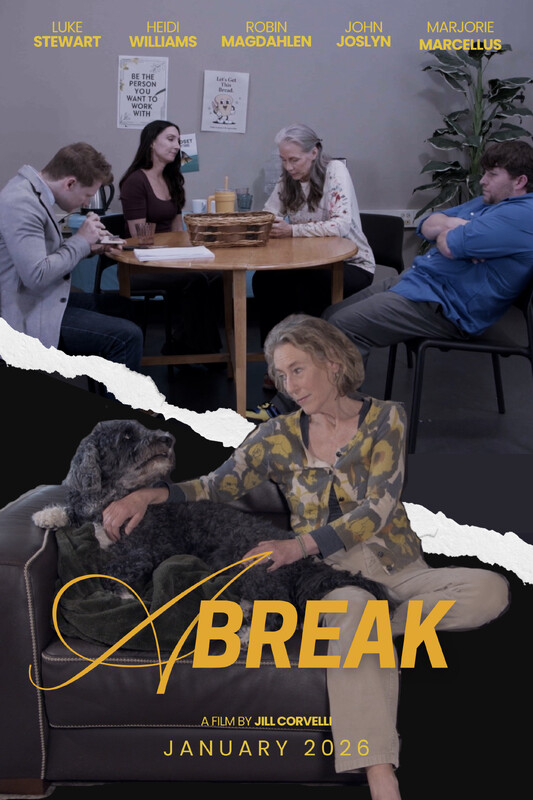
A Break is a symbolistic narrative film. We all have multiple parts that make up who we are. It is so easy for all of our parts to be in disalignment, especially when we need then aligned the most. I have found that getting total alignment within yourself requires relentless effort, but that practice is a beautiful part of what it means to be human.

Review by Parker Jesse Chase:

A Break opens with an apple farm, clean and still. Apples drop into buckets. One falls and lands already sliced into four equal parts. The image says everything without speaking. We are fractured. We are portioned. We are trying to gather ourselves.


The film introduces Maria, a copywriter submitting herself for experimental treatment in Turkey. A narrator describes her as quirky, but Maria compares herself to a contortionist. When limbs do not bend, they tear. The line lingers. Her body has limits. Her mind pushes anyway. There is an unease in her hope to be chosen for treatment, a yearning that feels both desperate and rehearsed.


Then the film shifts. A workplace. Co-workers. Posters with cheeky slogans. A break room that feels like a stage set for breakdowns. At first, the connection between Maria and this office ensemble is unclear. We meet Brody and learn about EDS and a liver filled with cysts. Tuna deals with chronic gas unknowingly blamed on blueberries. The tone borders on mockumentary, though there are no confessionals. It feels like we are flies on the wall, watching people manage their private chaos in public spaces.


The animated sequences, used for flashbacks, are some of the strongest moments in the film. We see Brody’s childhood struggles, from being told how to sit properly in school to navigatingintimacy with a lover whose expectations her body cannot meet. The animation softens the pain while sharpening its truth.


Ultimately, The film leans into this culture of self medication and online research, threading in the presence of AI as both helper and threat. Maria eventually discovers her condition is sleep paralysis, identified with the assistance of artificial intelligence. It saves her from chasing costly treatment abroad. It also costs her career. As a copywriter, she is replaced by the very technology that helped her name her illness.


That irony lands hard.


The film becomes a satire of man versus machine, but not in a loud way. It is more about adjustment than battle. The internet was built with good intentions, the film suggests, and so was AI. Yet both reshape who gets to survive creatively. Doctors keep their salaries while creatives watch their roles dissolve. A break in one area becomes a fracture in another.


What holds the film together is its humor. The gas jokes. The rediscovery of guitar playing. Painting. Exercise. Aimless biking that leaves a farmer’s tan. These small acts of self-care are not mocked. They are offered as proof that connection can grow in odd soil.


A Break understands that being human means holding contradictions at once. Technology can wound and heal. Work can connect and isolate. A diagnosis can feel like salvation and loss in the same breath.

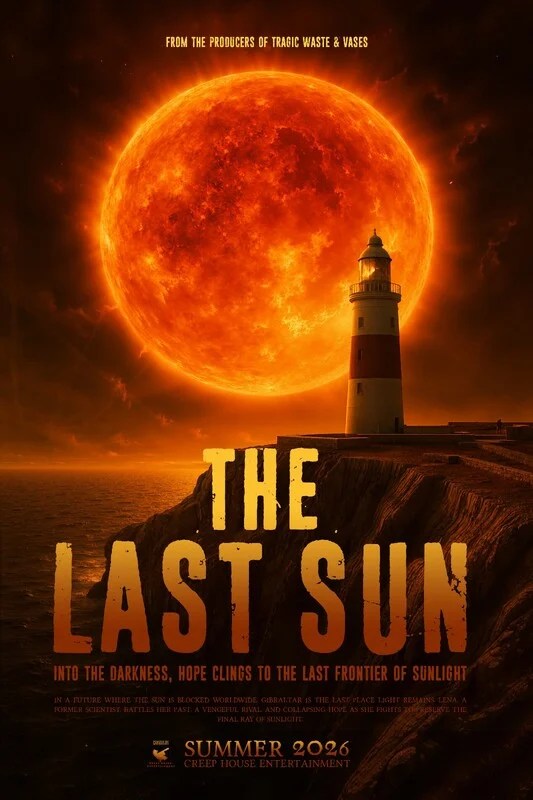
Short Film Review: THE LAST SUN.

In a future where the sun is blocked and humanity is forced underground, Gibraltar holds the last light. Lena, a former scientist, strives to bring back the sun. One day, a stranger arrives with ancient knowledge and new hope.

Project Links

Review by Parker Jesse Chase:

In the not-so-distant future where the sun has been labeled a threat The Last Sun builds a quiet dystopia rooted in fear. Governments, led by the towering Luma Corporation, push a single message: sunlight is going to be deadly. The solution, they insist, is exile underground. Humanity obeys.


The film opens in sirens of panic portrayed by the media. Families are fleeing the city. A scientist wearing bold red stands against the tide, urging calm in the sense of great alarm. She calls it what it is, propaganda. Other scientists have confirmed the sun poses no harm. She asks her husband and daughter to stay three days, just three, to see the sky does not strike them down. By morning, they had disappeared.


Eight years later, Lena lives alone in a lighthouse along Gibraltar’s coast, one of the last places where natural light still breaks through. The lighthouse becomes both refuge and relic, a monument to her former life. She studies the sky through a telescope, tracking sunlight as if it were an endangered species. Drones sweep overhead, reminders that even in isolation, power watches.


Nature persists. Flowers bloom between stones. Birds glide across the horizon. Their presence feels intentional. Scientists often look to bird populations as a sign of environmental health, and here they act as silent witnesses, proof that life resists extinction even when systems collapse. Flashbacks drift through the lighthouse like ghosts. It once held laughter, conversation, and community. Now it holds equations and unanswered questions. Lena’s research suggests a terrifying possibility: the sun may not return at all.


Then a stranger washes ashore.


He is injured, overwhelmed not by pain but by light. When the sun touches his face, he weeps in gratitude. Lena approaches with caution, slingshot raised. He claims to be a former slave, held for years within slave ships. Of four captives, he alone survived.


Their dynamic is careful at first. He carries a spiritual weight, speaking like a shaman guided by forces beyond data. She is all numbers and proof, a geophysicist who once believed she could restore the sun through science. She calls her work a lost cause now. Her husband abducted their daughter to join the colony. Hope, for her, has been expensive.


Yet her equation is incomplete. Something small is missing.


The film’s production design grounds its world with subtle precision. Newspaper clippings, salvaged tech, handmade devices pieced together in a dystopian landscape. Nothing feels overstated. It is simple enough to believe.


Lena’s contraption can coax the sun back for ten seconds. No more. And by her calculations, after tomorrow, not even that.


The stranger offers what she cannot calculate. He warns her that the path he walks would poison her, even if it’s an ally to him. Still, he studies her work, eats the berry to go on his spiritual journey, and etches the missing variable into her formula. She hesitates. He does not. What are you waiting for?


They test it.


Thunder cracks the sky. The air clears. Light floods the coast. Lena smiles, a flicker of triumph breaking through years of solitude. For a moment, it works.


Then the world darkens again.


The final sequence is restrained and human. They sit by the ocean as the sun fades, grief settling in without melodrama. In the distance, the lighthouse sparks to life, hinting at change, or perhaps just the illusion of it. Lena remains by the water while the shaman walks back toward the tower. Leaving the discovery open ended for us all.


At its core, The Last Sun wrestles with control. How fear can be manufactured to reshape society. How propaganda can turn a life-giving force into a weapon. It asks what happens when institutions rewrite reality, and how easily people comply when safety is promised.


This film studies something softer. The tension between science and faith. Between fighting for answers and accepting limits. Between fixing the world and simply sitting with it.


In the end, the film suggests that the moments we chase, the light we believe will save us, might already exist in smaller forms. In the warmth on your face. In birds crossing a sky no one was meant to fear. Sitting by the water as day fades, even if tomorrow promises darkness.

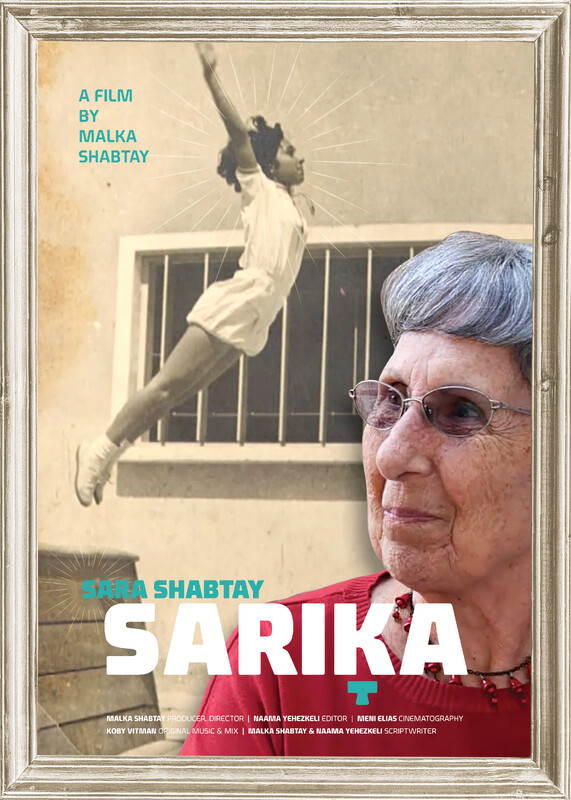
Feature Film Review: SARIKA. Directed by Malka Shabtay


This is a story about a woman named Sarika, my mother – “the lady who records”… “Addicted” to documenting her life in photos and video, and to the memories they bring up for her, over and over again.

Review by Parker Jesse Chase:

Morning light. Birds in the background. Soft music guiding us into a home stacked high with photo albums. The 86 year old woman calls herself a photo freak. Her name is Sarika, but within her family she is known as the lady who records.


This documentary is built around holding on to memory before it slips away.


Sarika documents everything. Calendars thick with notes. Margins of old photo albums filled with handwriting. Detailed captions behind printed photographs. Pens gifted to her like sacred tools. If I do not write it down, I question what I wanted, she says. Writing helps her remember. Photos help her remember.


The film frames her habit not as obsession, but as preservation. Memory, especially in old age, can shrink. Sometimes it disappears. Sarika fights back with ink and tape.


Through conversations with her daughter and the people who’ve grown alongside her, the film becomes both personal and generational. She’s the type to wake at 4 am, stirred by a memory, reaching for a notebook in the dark so the thought does not vanish. She recalls schools, childhood in Egypt, songs from decades past. There is joy in her voice when she realizes she can still reach those early years. Documentation, for her, is not just record keeping. It is proof life happened.


One of the film’s most moving threads follows her return to her childhood neighborhood. Street names have changed. Buildings look unfamiliar. But the community gathers around her search. They ask elders. They knock on doors. Eventually, they find someone who remembers her. Two women who once shared classrooms begin singing in Ladino, trading songs that survived migration and time. It is an intimate, almost fragile moment. Music unlocks something words cannot. Sarika weeps, not from sadness alone, but from recognition. Culture that feels close to fading sparks back to life through melody.


The rediscovery expands. She reconnects with the woman who taught her to sew. Old friends gather. They laugh about being tomboys, about mischief, about those who are no longer here. The camera lingers on faces lined with time, voices still carrying youth when they sing. Home is finally located, not just through maps, but through memory shared aloud.

The film also weaves in archival family footage. A grandson’s birth. Hills and gatherings. Her daughter jokes that once Sarika bought a Sony camera, the madness began. Yet it becomes clear that this instinct to record did not start with her. It runs in the family. They have long been historians of their own lives.


There are heavier chapters too. Sarika speaks about working in the ER during her military service, admitting and discharging wounded soldiers. Some images still disturb her. The documentary touches on the 1948 War of Independence, on life in a kibbutz, on political tension and compromise. At times, these shifts feel abrupt, moving quickly from intimate family portrait to national history. Yet they also underline how personal memory and collective memory are always intertwined.


We see tanks at entrances in both old photos and present day footage. Living in Israel, she says, is about compromise. Do not take everything to heart. It is not worth it.


The film returns often to love. How she met her husband. How small habits, like always adding dill to a dish because someone once suggested it, become threads that tie decades together. Love thy neighbor. Remember the goodbye.


At its core, Sarika is about the act of remembering as resistance. Against time. Against erasure. Against the quiet fading that can happen within a single mind.


The camera treats her notes and photo albums like sacred texts. These are her memoirs, written in fragments. Midnight entries. Margins filled with ink. Songs carried across continents.


By the end, one thing feels certain. Sarika will continue to record for as long as she can. Not because she fears death, but because memory gives shape to a life. And if she writes it down, if she captures it on tape, it will live a little longer, for her, and for everyone who comes after.

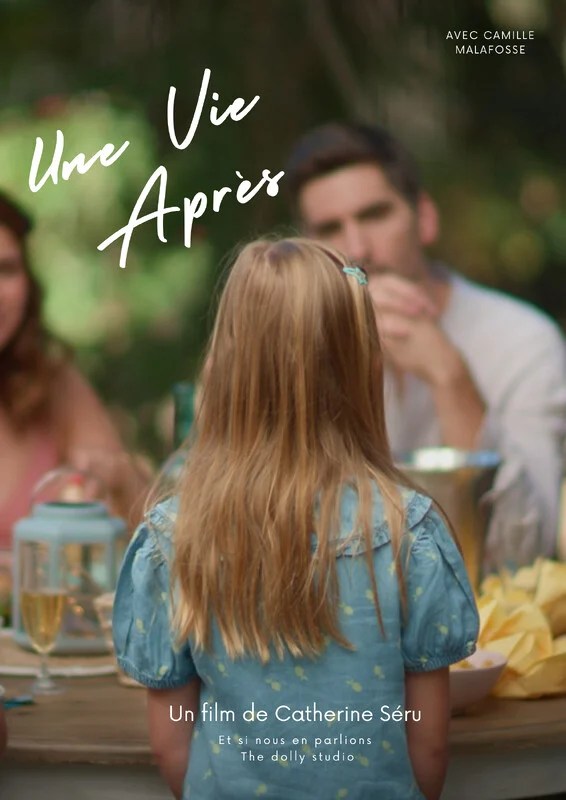
Short Film Review: Une Vie après. Directed by Catherine Seru

Mira, a curious and impish six-year-old girl, has a fundamental need in order to explore and understand the world: to feel loved by her mother.

Review by Victoria Angelique:


Abuse lingers on a child’s brain and can impact the interactions with other people even when placed somewhere safe. This is what is depicted through 6-year-old Mira in UNE VIE APRÉS, a film that will have moments that has the audience gasping out loud at the trauma this sweet child endures before she is removed from her abusive situation. 

The film begins on a sweet moment of Mira being a typical kid, in what the audience will assume is a moment where the child is staying out of trouble. The spectacular cinematography shows the point of view from Mira throughout the narrative, beginning with a literal view from the binoculars where the girl is observing nature. It’s a moment typical of most children, one filled with curiosity and wonder. This changes quickly when Mira is displaced by being locked in a shed. The cinematography changes with the change in scenery, what was beautiful turns ugly, as Mira looks at cobwebs and spiders in the dusty shed. 

The story delves into what abuse, both psychological and physical, can do to the brain. Mira is able to daydream about the places and people that make her feel safe. It is often interrupted by her abusive mother, where the film delves straight into the child’s brain by showing neurons changing from the calm blue to a warning red. Red slowly begins to cover up the blue, as Mira is always on guard. She is not able to recite a poem at a gathering of her parent’s friends, embarrassing both of them, only made worse when she drops chocolate cake on her new dress. Red fires at all cylinders, Mira knows she’s not safe from her mother’s biting words. 

The final gasping moment is when the neurons are almost completely red as Mira’s mother chases her with a whip that hangs on the wall. The audience knows what is coming, even though the film doesn’t depict the child being beaten, the firing neurons state how bad this physical form of abuse is hurting Mira. The words were bad enough, but the beating only adds to the damage. Fortunately Mira’s mother is drunk, so she falls down the stairs unconscious. Mira’s father ignored the entire situation, which allows the small child to be whisked to safety by social services to live with her Nanny.

This is the moment where the film shows the brain is healing, but a small red warning light remains tucked in the corner of Mira’s brain. She is beginning to heal and words of encouragement cause the neurons to fire like fireworks. This indicates that it will take awhile to heal, but healing is possible. 

This short film shows the true impact of abuse on children’s delicate minds. It is powerful and will leave a lasting impact on anyone that watches Mira’s story. 

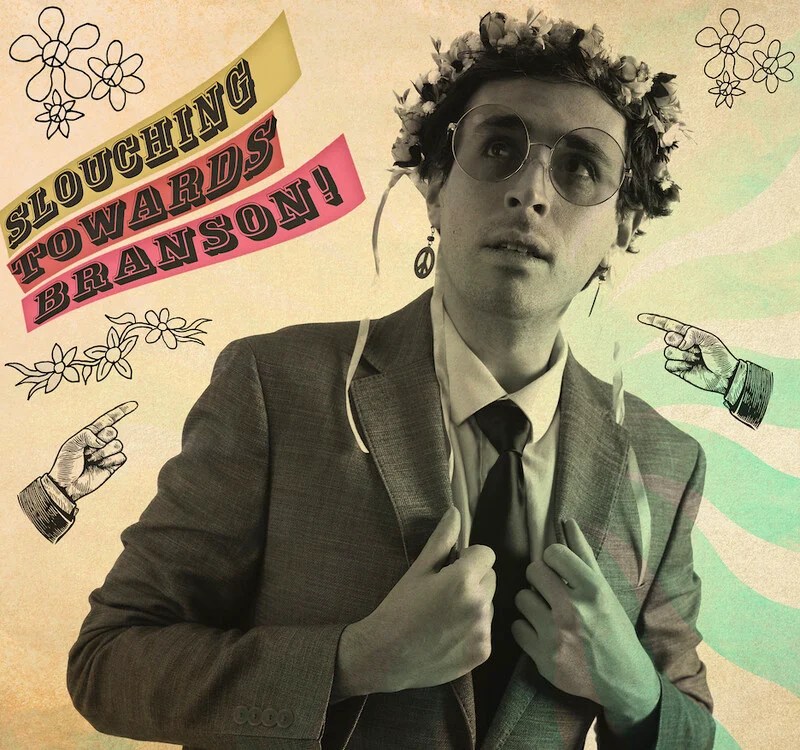
Feature Film Review: Slouching Towards Branson. Directed by Will Wood

In his new comedy special “Slouching Towards Branson,” singer-songwriter and alt-comic Will Wood performs for audiences across the U.S., intertwining songs from his discography with a drug-addled, rat-filled, spiritually confused “about as true as a true story can be while still being a story” story about accidentally going viral, timeshare presentations, and the end of the world. The special has received glowing reviews from independent outlets and critics as well as from both fans and newcomers to his work alike, and has been winning a variety of awards and nominations on the independent film festival circuit.

Project Links

Review by Andie Kay:

This full length feature follows Will Wood across several comedy venues and is reminiscent of a Netflix Comedy Special. The difficulty in filming anything performed live on stage is going to be lighting. Not to have your performer in shadow or completely over-exposed. Director of photography Jacob Feldman really nailed that balance and the film had beautiful cinematography.


It was incredibly smart to have several camera operators filming from different angles. It really helped the “at home” audience feel connected to what was happening on stage. Since this was filmed in various venues, the switch to a new venue was a little jarring but the graphic text of the chapter cards helped alleviate some of that.

There is absolutely no doubt that Will Wood is a wonderful musician and singer-songwriter. Musically speaking the songs delivered great hooks and Will’s vocals have such a nice timbre to them. I really found myself looking forward to the next song and where he was going to vocally go with it.

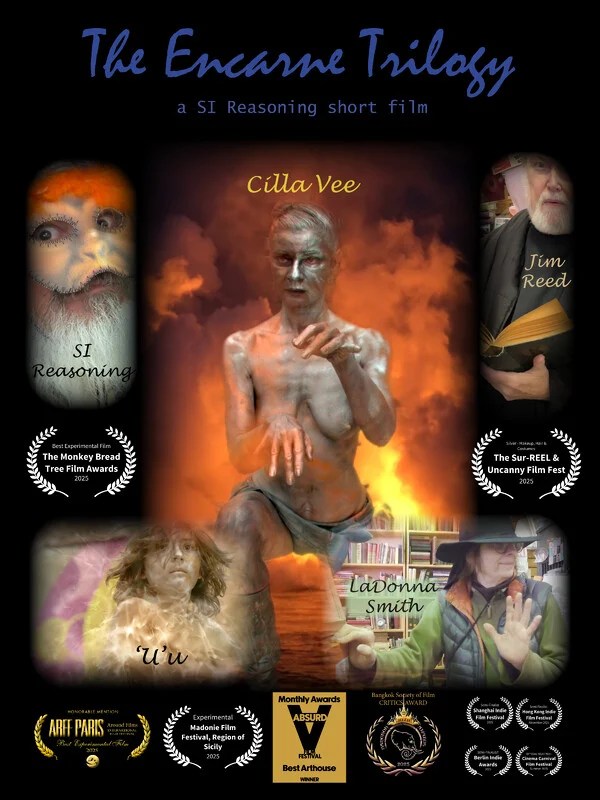
Short Film Review: The Encarne Trilogy. Directed by SI Reasoning

The Encarne Trilogy is a series of no-budget shorts regarding the creation of my son and his entrance into the physical plane. It won Honorable Mention for Best Experimental Film at the 2025 Paris Around Films International Film Festival (ARFF), Best Arthouse in the Absurd Film Festival Monthly (Milan) July 2025, and Bangkok Society of Film Critics Award for Experimental Film at the Bangkok Movie Awards for July 2025.

Review by Andie Kay:

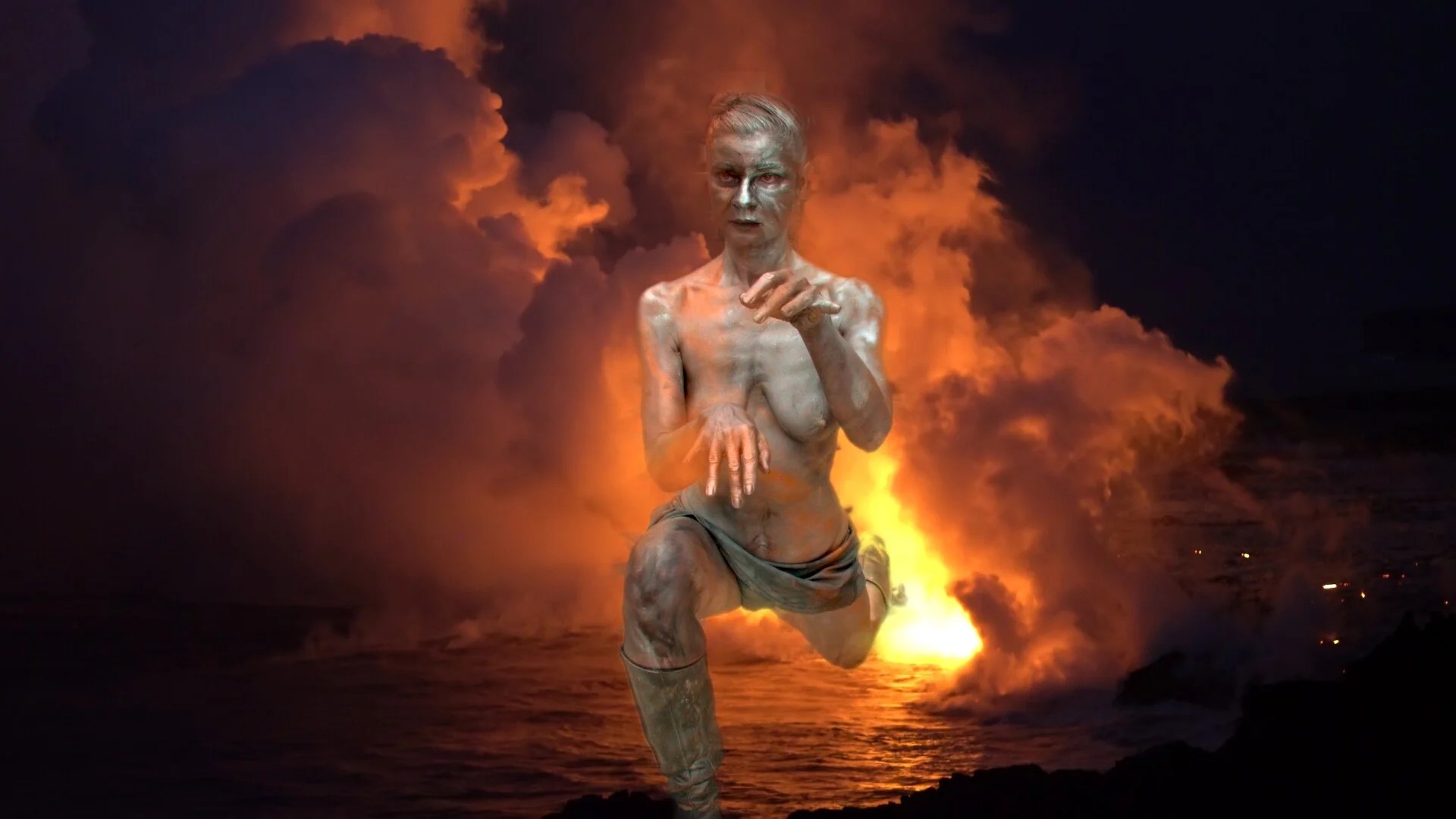
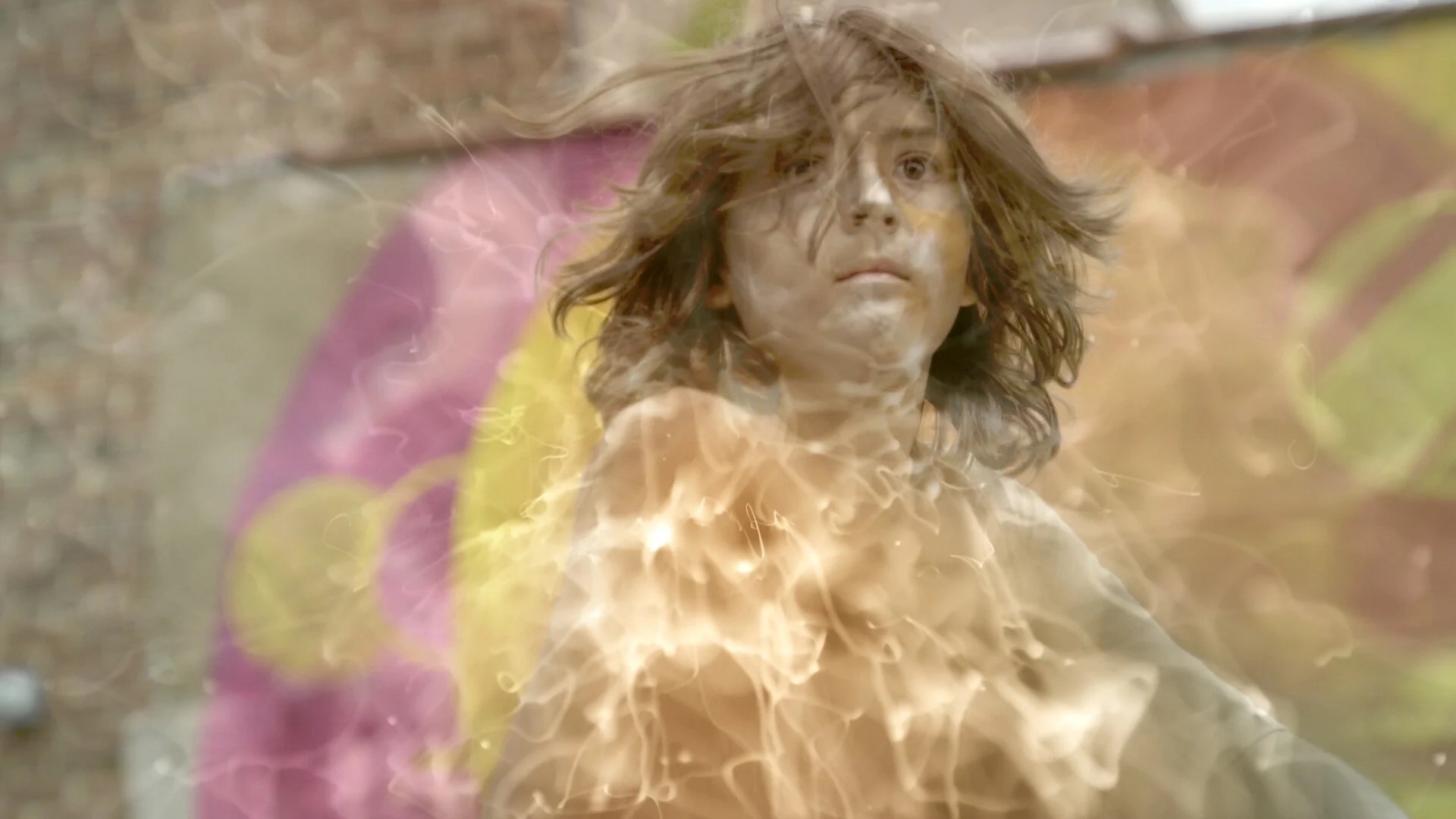
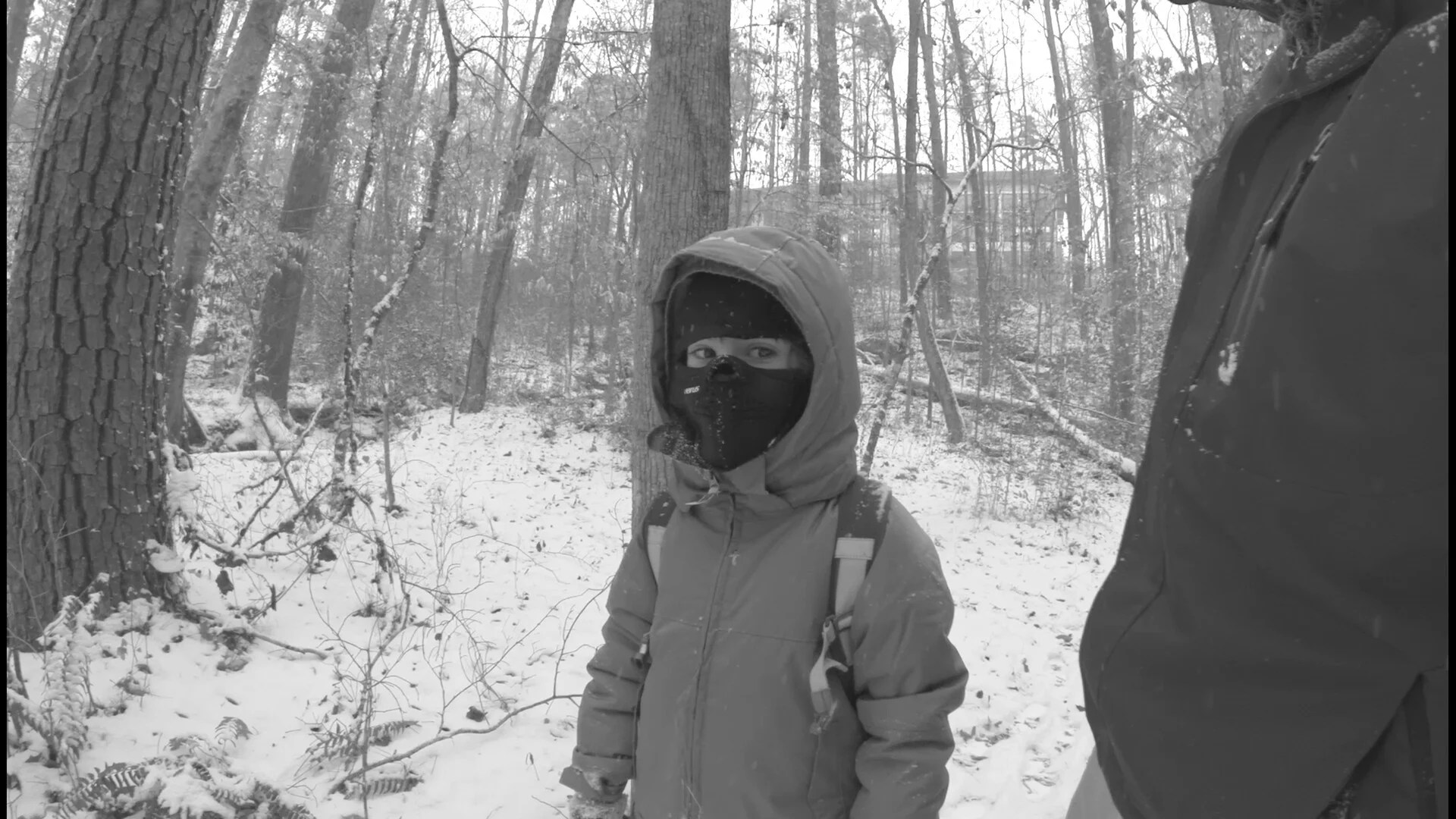
This zero budget short film from SI Reasoning is an award winning surrealist short film split into multiple acts. It’s very experimental, avant garde and definitely surreal. What impressed me was the quality of the cinematography for this short as well as the make up application on the actors. Even the blending of superimposing one image onto another was decently done for not having a budget.

Musically this had a very apocalyptic feel and quickly became a cacophony of sound. Having that degree of repetitive dissonance without resolve is auditorily uncomfortable. Perhaps that was the idea all along, to create discomfort through music? Either way it works great as you can’t keep your eyes and ears off the film. There is a magnificent blend of a visual design, mixed with the music, that gives the viewer a new emotion. This is what experimental film is all about. There is a great story here, but in many ways it’s all about what the individual thinks and feels. And they’ll interpret their own story.

I am aware that this is SI Reasoning’s first film – can’t wait to see what he does next.

Podcast: EP. 1684: Filmmaker Jason G. Mercado (UNDER THE STARS)

In the forgotten corners of the city, a young homeless addict named JD drifts through nights haunted by silence, addiction, and disconnection. Alongside Max, a hardened street survivor, and Luna, a mentally ill woman caught in a cycle of delusion and innocence, JD stumbles through a grim urban purgatory. When tragedy strikes under the glow of streetlights and stars, JD is forced to confront the cost of invisibility — and the fragile spark of hope that may still exist.


“Under the Stars” is a haunting, poetic portrait of those society ignores, where even in the darkest moments, humanity flickers like a lighter in the night.

Conversation with filmmaker Jason G. Mercado, with his assistant Nadine Emrich.

Subscribe to the podcast:

Tweets by wildsoundpod

https://www.instagram.com/wildsoundpod/

https://www.facebook.com/wildsoundpod