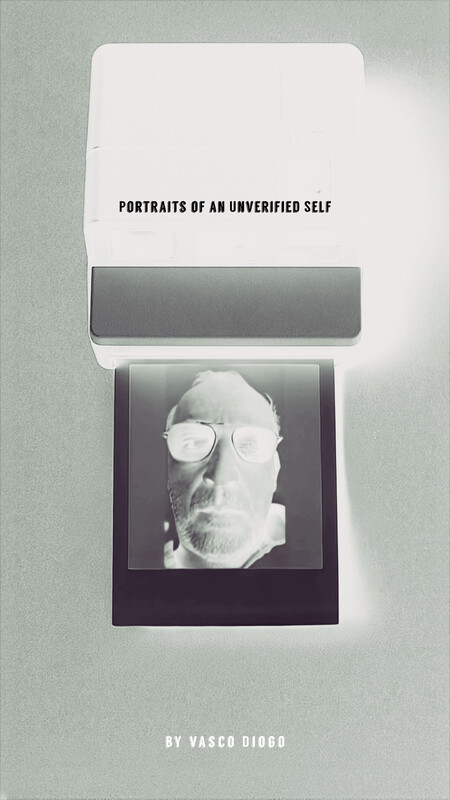
Portraits of an Unverified Self operates in the unstable interval between identity, play, and technology. The vertical film/installation proposes a succession of figures that do not fix a subject, but rehearse multiple possibilities of presence, recognition, and failure. From the author’s own image, mutant figures emerge—visual heteronyms—that oscillate between recognition and estrangement, maintaining a fragile connection to the original body.
Project Links
Review by Parker Jesse Chase:
Portraits of an Unverified Self by Vasco Diogo, feels like a fever dream exposed to the internet. The film lives in the space between identity, play, and tech, where the self is never fixed and never safe. What we see is one body, one face, endlessly shifting. Not improving. Not resolving. Just mutating. The artist’s own image becomes raw material. From it come doubles, distortions,
and visual stand-ins that almost resemble him, then slip away. Recognition keeps failing. That failure is the point.
Shot vertically, the film borrows the language of phones, selfies, apps, filters. It looks familiar at first, like portrait tests or casual snaps. Then it breaks. Faces inflate like balloons. An older man turns into a baby. Construction workers dig into a human face. The same figure becomes packaged meat, a stress toy, on display at a gallery. He shifts eras, genders, roles, and symbols without warning.
AI is clearly in play here, but not as a tool for polish or control. It acts more like a prankster or a glitch. It mutates rather than explains. The images refuse to settle into one story or one truth. They feel closer to a fever dream than a tech demo. Like a stack of Snap filters pushed too far, edited together until the self collapses under the weight of its own versions.
There’s humor, but it’s uneasy. There’s beauty, but it never lasts. The body keeps getting squished, stretched, erased, praised, consumed. Strong, toy-like sound effects make the transformations feel physical, almost cartoonistic with their violence. The gallery on the wall turns the human in the portrait into skin and bone. The viewer shifts with it. Watching starts to feel like participation.
Power, fame, desire, and worship all brush past the same face. None of it sticks. Some images repeat. Others return with small changes, like the system is testing variations and failing each time.
Near the end, the only clear text appears: “What do you see?” It lands like a challenge, not a prompt. By then, the question is less about the figure on screen and more about the viewer. About how badly we want coherence. About how quickly we accept distortion when it wears a familiar face.
Portraits of an Unverified Self does not offer answers or closure. It shows a self treated as data, toy, myth, and mistake all at once. A human experience pushed into forms that should not be possible, yet feel uncomfortably close to daily life online. The film understands that in a world of constant self-display, identity is no longer proven by clarity, but by how much instability it can
survive.
 Festival Reviews