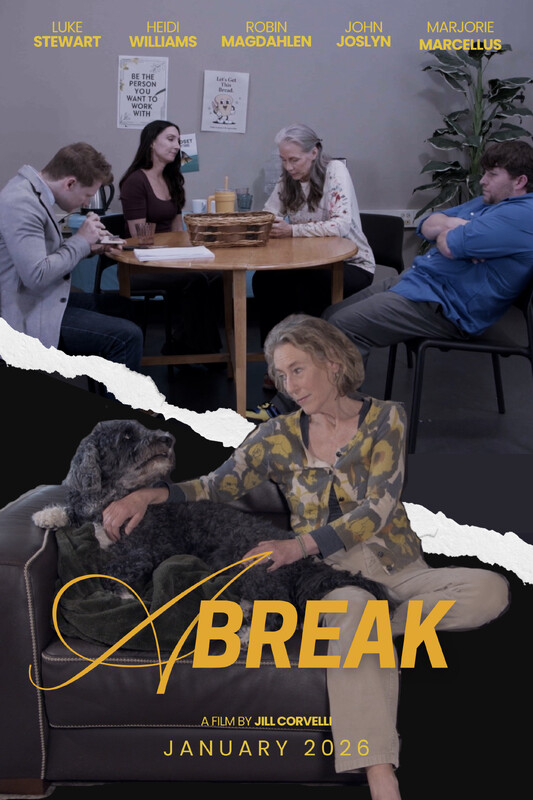
A Break is a symbolistic narrative film. We all have multiple parts that make up who we are. It is so easy for all of our parts to be in disalignment, especially when we need then aligned the most. I have found that getting total alignment within yourself requires relentless effort, but that practice is a beautiful part of what it means to be human.
Review by Parker Jesse Chase:
A Break opens with an apple farm, clean and still. Apples drop into buckets. One falls and lands already sliced into four equal parts. The image says everything without speaking. We are fractured. We are portioned. We are trying to gather ourselves.
The film introduces Maria, a copywriter submitting herself for experimental treatment in Turkey. A narrator describes her as quirky, but Maria compares herself to a contortionist. When limbs do not bend, they tear. The line lingers. Her body has limits. Her mind pushes anyway. There is an unease in her hope to be chosen for treatment, a yearning that feels both desperate and rehearsed.
Then the film shifts. A workplace. Co-workers. Posters with cheeky slogans. A break room that feels like a stage set for breakdowns. At first, the connection between Maria and this office ensemble is unclear. We meet Brody and learn about EDS and a liver filled with cysts. Tuna deals with chronic gas unknowingly blamed on blueberries. The tone borders on mockumentary, though there are no confessionals. It feels like we are flies on the wall, watching people manage their private chaos in public spaces.
The animated sequences, used for flashbacks, are some of the strongest moments in the film. We see Brody’s childhood struggles, from being told how to sit properly in school to navigatingintimacy with a lover whose expectations her body cannot meet. The animation softens the pain while sharpening its truth.
Ultimately, The film leans into this culture of self medication and online research, threading in the presence of AI as both helper and threat. Maria eventually discovers her condition is sleep paralysis, identified with the assistance of artificial intelligence. It saves her from chasing costly treatment abroad. It also costs her career. As a copywriter, she is replaced by the very technology that helped her name her illness.
That irony lands hard.
The film becomes a satire of man versus machine, but not in a loud way. It is more about adjustment than battle. The internet was built with good intentions, the film suggests, and so was AI. Yet both reshape who gets to survive creatively. Doctors keep their salaries while creatives watch their roles dissolve. A break in one area becomes a fracture in another.
What holds the film together is its humor. The gas jokes. The rediscovery of guitar playing. Painting. Exercise. Aimless biking that leaves a farmer’s tan. These small acts of self-care are not mocked. They are offered as proof that connection can grow in odd soil.
A Break understands that being human means holding contradictions at once. Technology can wound and heal. Work can connect and isolate. A diagnosis can feel like salvation and loss in the same breath.
 Festival Reviews