“Imbroglio” is set in a timeless and imaginary Italian world and is a loving nod to the arch Hollywood and European film noirs of the forties and fifties.
https://www.instagram.com/iansciac/
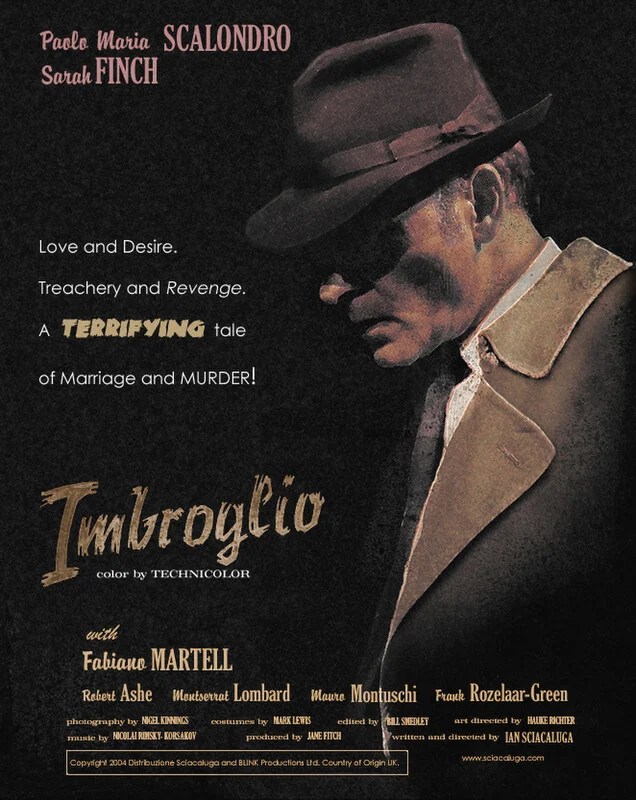
Review by Parker Jesse Chase:
Imbroglio drops you into a noir-filled dream of the 1940s and 50s, where every shadow hides a secret and every glance feels loaded. The film signals its lineage from the first frames. A musical score leans perfectly in suit. Even the title font feels lifted from a nostalgic essence. You are placed exactly where the director wants you, right away, inside a world shaped by suspicion
and longing.
The film opens in a bathroom, a classic confessional space. In noir tradition, the bathroom is not just a setting, it is a metaphor. A place where masks slip. A place of private rot beneath public polish. The conversation plants seeds of the central story, a missing student by the name of Sebastiano Santini who lives across from a bar. The bar, of course, becomes our battleground searching for secrets.
Enter Georgio. He is the man investigating the disappearance, though the film withholds clarity about his role. Is he a detective, or something more personal, more volatile? Noir thrives on unstable identity, and Georgio embodies that trope. He moves with quiet intensity, his motives opaque.
At the bar, the patrons speak in riddles. “None of us see anyone. And when we do, we don’t pay much attention to each other.” They call the bar a church, a place to forget themselves. This line lands like a thesis. The bar is absolution without confession. Community without accountability. In classic noir fashion, everyone knows something, and no one wants to say it.
When Georgio’s background nods at him being a tax inspector, it feels like a wink to the genre’s love of false fronts. Then he states in plain sight he intends to kill the missing man. The room barely flinches. A bartender asks only that he not do it there. Violence is expected, just not bad for business. One patron studies him and says he does not look like the killing type. Noir often toys with that tension, the ordinary man who carries fatal resolve.
Information loosens. The missing student left three nights ago with a girlfriend. The suggestion hangs in the air. Is his wife the woman with the man in question? At home, Georgio’s marriage is fractured. His wife returns late from class, changed by what she has learned. He sleeps on the couch. Their apartment feels colder than the streets. The domestic space mirrors the emotional distance. Marriage here is not a sanctuary, it is a battleground begging to be free.
The next morning unfolds in a travel montage that nods to the restless pulse of French noir. The camera drifts and pans with intention. Double exposures blur time and place, turning movement into memory. The city becomes a character, indifferent and watchful. The montage is not filler, it is metaphor. Georgio is untethered, drifting between roles, husband, hunter, victim.
When his wife asks for a divorce, the power dynamic flips. She is loud, desperate, and clear. He is calm, almost hollow. “Don’t look at me like a dog you’re about to put down,” she says. The line is brutal. In noir, women are often cast as femme fatales or tragic lovers. Here, she resists both. She demands agency. She breaks his dinner plate. She refuses to belong to him. There is no
“save the cat” moment for Georgio. The film denies us a reason to root for reconciliation. Instead, it leans into moral decay.
At work, a note waits on his desk, from the very man he is hunting. The cat and mouse game becomes explicit. Georgio follows the bait.
They meet in a diner, another classic noir stage. Fluorescent lights replace shadow, but the tension remains. Sebastiano Santini arrives on crutches, handsome and disarming. He orders beer and strawberry tart, a detail that unsettles expectations. The dessert softens him, complicates him. Noir loves to fracture archetypes. The supposed villain is charming, even vulnerable.
Santini claims the affair is over. He came to apologize. Georgio responds that his wife does not want him either. Love becomes a hollow word between them. “What do you know about love?” hangs heavy, not as a question but as an accusation.
As food arrives, Georgio places a gun on the table. Panic erupts. He tells everyone to calm down, then turns the weapon on himself. This inversion is key. The revenge plot collapses inward. In a genre built on external violence, the film locates the true target within. The extreme close up of Santini’s eyes, the spray of blood, his arms rising too late to shield himself, fulfills Georgio’s vow, till death do us part. The marriage becomes a death pact he enacts alone.
The film closes where it began, in the bathroom. Gossip resumes. There is no room for chatter now. The mirrors that once reflected secrets now reflect consequence. By framing the story between two bathroom scenes, “Imbroglio” turns the space into true noir fashion where no one is clean.
 Festival Reviews