A man, reeling after a serious breakup, reflects on his past relationship and finds a new perspective.
Project Links
Review by Parker Jesse Chase:
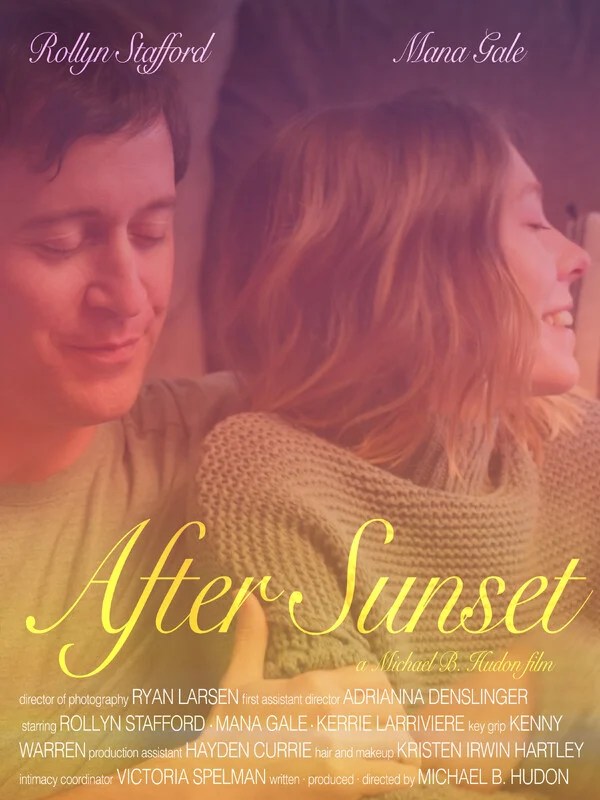
After Sunset opens on warmth. Two lovers stand close, both dressed in green, a quiet visual cue that speaks to growth, care, and the ease of being together. They hold one another in a way that feels nurturing and sincere. From the beginning of their story, the film frames their relationship as a sincere love.
This is Max’s story, told through reflection over the course of therapy sessions. The film introduces their love through small shared memories rather than grand gestures. We learn who they are through the rhythms of everyday life. Cooking together in the kitchen. Fearing about dentist visits. Finding courage in small moments. Sitting through scary movies. Even the kind of late night debate couples have about whether the bedroom door should stay open or closed, finally settling on a compromise with it left cracked.
These fragments build a quiet portrait of intimacy. Pillow fights give way to long conversations about dreams and the future. Max often looks at her with a sense of wonder, captivated the way someone might watch a sunset slowly fall across the sky. The film quite literally frames these memories almost like brushstrokes on a canvas, bright colors layered across time. Then the sun begins to set.
As the relationship shifts, the visual language changes with it. The warmth fades and shadows begin to take over the frame. Tears replace laughter. The film uses costumes again to underline the emotional turn. Where the couple once matched in green, they now appear dressed in black. Playing as a funeral for the relationship itself.
Max often describes her through images of light, which makes the title After Sunset feel especially fitting. He lingers in the space where the sun has already dipped below the horizon, wishing for morning to come again. The film lingers there too, in that still and quiet place where someone must learn to move forward.
One of the film’s most striking sequences takes place during Max’s therapy session. The lighting turns moody and restrained. Stripes of shadow from the blinds cut across his face as he reflects on the last conversation they shared. The scene feels heavy but honest, capturing how difficult healing can be when love still exists.
When the two reconnect after the breakup, the moment is softer than expected. He arrives holding a box of her things. She tells him she’s sorry it didn’t work out. She still loves him, but she cannot continue the relationship. Max accepts this truth without anger. Together they watch the sunset one final time.
What After Sunset captures so well is the quiet pain of a healthy breakup. There is no shouting match, no betrayal, no villain in the story. The love between them is real, but love alone cannot hold everything together. Sometimes two good people simply cannot make a relationship work. That truth is often harder to face than a dramatic ending.
Because the film is a short, we are not given every detail of what led them here. Yet the emotional core remains clear. These two care deeply for one another and want the best for the other person. The decision to separate comes from that care rather than resentment.
The film leaves us with the sense that endings do not have to erase the beauty that came before. If anything, After Sunset suggests that recognizing when to let go might allow the memory of love to remain bright, rather than fading into darkness.
 Festival Reviews