Interview with Filmmaker Fuzhi Zhao (FEET DON’T FAIL ME NOW)


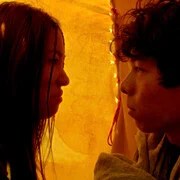
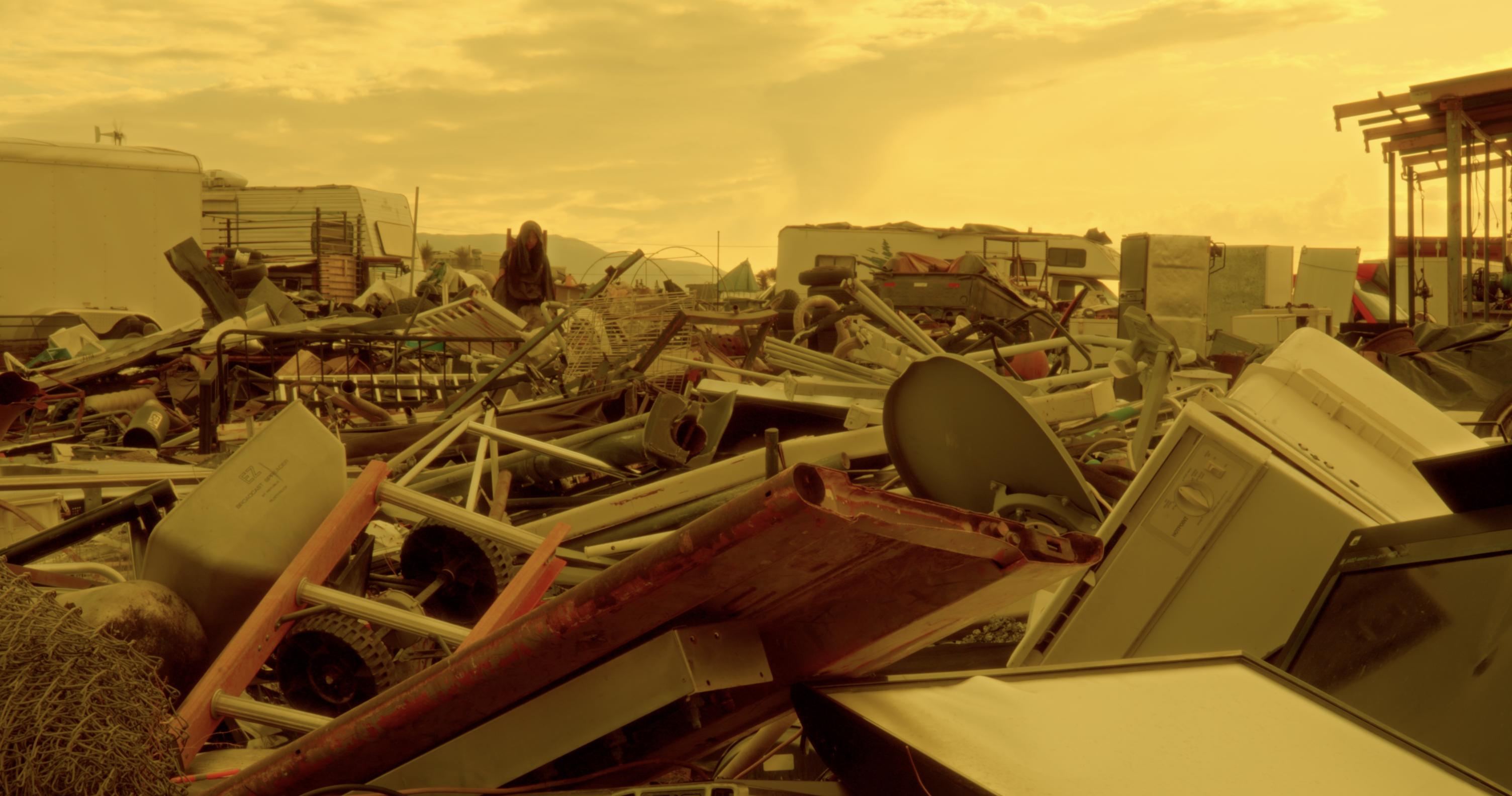
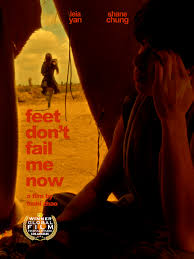
Feet Don’t Fail Me Now, 7min., USA
Directed by Fuzhi Zhao
The sun will erase your memory. If you don’t want to become nobody, you have to keep running.

Get to know the filmmaker:

1. What motivated you to make this film?

Part of this idea stemmed from the fear of the unknown, which is deeply embedded in human nature. We are scared of what we don’t know. The universe is so vast that it might not have a limit, and the ocean is so expansive that we only know a tiny portion of it, and nobody can tell you what death is like. There are countless things in the world that work this way.
Just like us, my protagonist Noe can’t stop running away from “the Sun,” something that everybody on the planet fears because it will erase your memory quicker than death. Noe embraces the experience at the end, because she is small and the universe has more power over her. She can never outrun her fate. With acceptance comes peace and new experiences; she has never seen anything quite as strange and beautiful as “the Sun.”

Noe believes “the Sun” will be the end of everything for her. Is it actually true? The other half of the story is also my feelings about these “learned truths,” the things we are told to do or not to do, and if these “truths” serve a function. Noe’s stopping to look at “the Sun” is also her act of defiance.

2. From the idea to the finished product, how long did it take for you to make this film?

I’ve had this idea for a few years. After revisiting this concept, it took me about three months, from the first draft to the edits, to make this film.

3. How would you describe your film in two words!?

Dystopian haiku?

4. What was the biggest obstacle you faced in completing this film?

Everything felt kinda stressful at the time, but now I think about it, it’s really not that bad. I guess one thing is communication. Coming from an animation background, I didn’t have much experience collaborating with a bunch of people. Talking to people about what’s in my head is still something I am practicing.

5. There are 5 stages of the filmmaking process: Development. Pre-Production. Production. Post-Production. Distribution.

What is your favorite stage of the filmmaking process?

I love development because that’s where I can get crazy with my ideas, I can write stories and see them in my head, and then I wish other people could see it as I do. And then there is production, where I get to see the story slowly coming alive. It’s also chaotic in a way that requires you to come up with a solution on the spot when you have a problem, and I find some of the interesting things I’ve done are like that.

6. When did you realize that you wanted to make films?

I’ve always been into drawings, and at some point in high school, I thought that it’d be cool if the drawings moved. And then I realized that behind the scenes of movies is not at all what we see as the audience. And that I can construct different realities than the one I know.

7. What film have you seen the most times in your life?

Her by Spike Jonze

8. In a perfect world: Who would you like to work with/collaborate with on a film?

Yuasa Masaaki

9. You submitted to the festival via FilmFreeway. How has your experiences been working on the festival platform site?

The festival platform site is easy to navigate.

10. What is next for you? A new film?

I’m working on a new project right now. It’s a retro-futuristic sci-fi about a scientist named Tommy trying to fix his ill Mother, who despises him.

Interview with Filmmaker Max Neace (SHIFT)

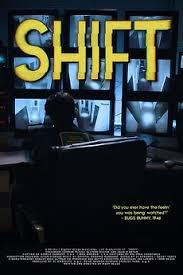
1. What motivated you to make this film? – I had produced a few features prior to this, and figured it was time to try my hand at directing one of them. I knew it would be low budget—lower than most projects I had produced up to that point—so wanted to think of something contained and unique. SHIFT was born pretty quickly into that process: one room, security monitors, a potential murder. The rest of the world was colored in after that simple premise rose to the top.

2. From the idea to the finished product, how long did it take for you to make this film? – It took about two and half years. From script to screen, only about a year, but post we took our time. I think more independent films should take their time in post-production. Almost no one is really asking for it, so there’s no pressure to rush the film except for the pressure you put on yourself.

3. How would you describe your film in two words!? Hitchcock In-Skinny-Jeans.

4. What was the biggest obstacle you faced in completing this film? – The security monitors! Everything on the monitors is practical—we used no screen replacement or VFX to create the effect. We shot the movie twice: silently with the monitors, cut those scenes together, and then played them back live in the room for the actors to react to on set. It was a real song and dance of piecing those together well enough to sell the action when actors leave the room and appear on the monitors. It works really well, almost too well, because no one asks about them and assume it’s really happening. But that was not the case!

5. There are 5 stages of the filmmaking process: Development. Pre-Production. Production. Post-Production. Distribution. What is your favorite stage of the filmmaking process? Post-Production. Everything up until that point is just potential. It’s when you really start to craft the film in post-production that get to write it one last time and adjust your story.

6. When did you realize that you wanted to make films? – Grade school. My parents took me to the movies to keep me quiet, I think, and from there I always wanted to learn how to make my own. And am now doing so.

7. What film have you seen the most times in your life? Starship Troopers and Little Shop of Horrors (1986)

8. In a perfect world: Who would you like to work with/collaborate with on a film? – Martin McDonagh.

9. Besides movie-making, what else are you passionate about? Reading and Magic: the Gathering.

10. What is your favorite meal? – Mexican.

11. What is next for you? A new film? – I’m primarily producing these days, with the occasional short thrown in. Directing another feature will manifest sometime in the future, but right now producing is where I’m focused.

Short Film Review: Q 1. Directed by Silvano Perozic

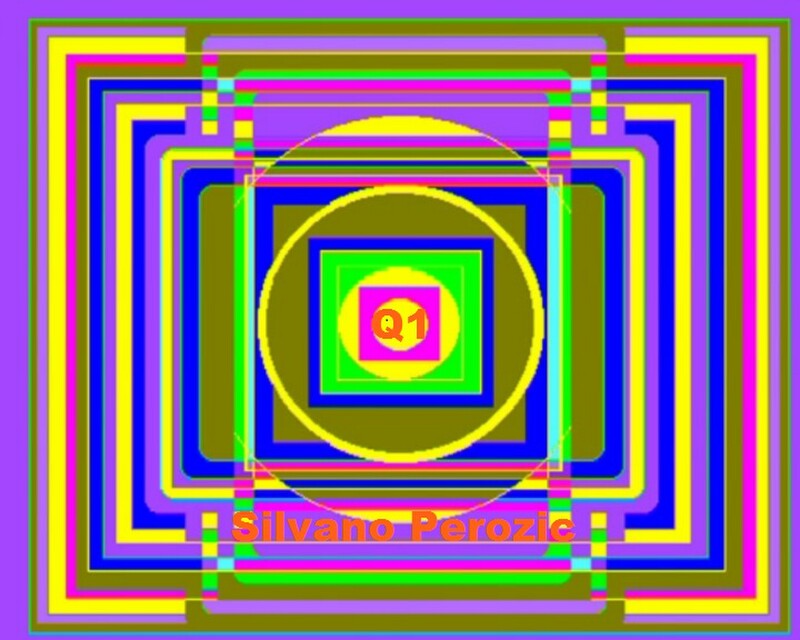
Moving mandala what I started with a simple circle . I was interested what are the possibilites of such simple basic programme as Windows paint . First picture I named Q by case ,subconsciously or * upconsciously* ,later found in literature that Q is letter Qof in Jewish alphabet ,represent the Sun ,number 19 in Tarot .

http://www.silvano.hr/

Review by Parker Jesse Chase:

What begins as a single yellow dot at the center of the frame slowly expands into a living mandala, growing piece by piece through color, symmetry, and repetition.


The film leans into asking what can be made from simplicity, and answering by building shapes and colors into movement. Yellow gives way to green, then to hot pink and purple, each color introduced as a new layer of thought. Shapes begin to stack, forming patterns that feel less like a kaleidoscope and more like a system building itself in real time.

The title Q carries a quiet weight. Echoing the letter “Qof” from the Hebrew alphabet, often tied to the sun and symbolic cycles. That connection reframes the piece, turning the mandala into something more than visual play. It becomes a kind of orbit, a slow meditation on repetition, energy, and transformation.

The electronic synth score grounds the experience in a distinctly 90s digital texture, matching the raw, Microsoft Paint-based aesthetic. It feels nostalgic without being ironic, embracing the visual language of early desktop art.

As the mandala evolves, it doesn’t just expand, it shifts. Mandalas open like doors, giving way to new configurations, new centers. Nothing stays fixed for long. Even the structure itself feels temporary, always on the verge of becoming something else. The final transition into a full red screen, pierced by a forming yellow beam, lands like both an ending and a reset, a return to origin with the memory of everything that came before.

Q 1 is a hypnotic synth in creation. It watches something come into being, not all at once, but gradually over time. Where color and shape carry meaning without ever needing to explain it.

Short Film Review: When Fighting Monsters. Directed by Sherill Quinn

A seasoned detective struggles to make sense of his daughter’s untimely death.

Project Links

Review by Julie C. Sheppard:

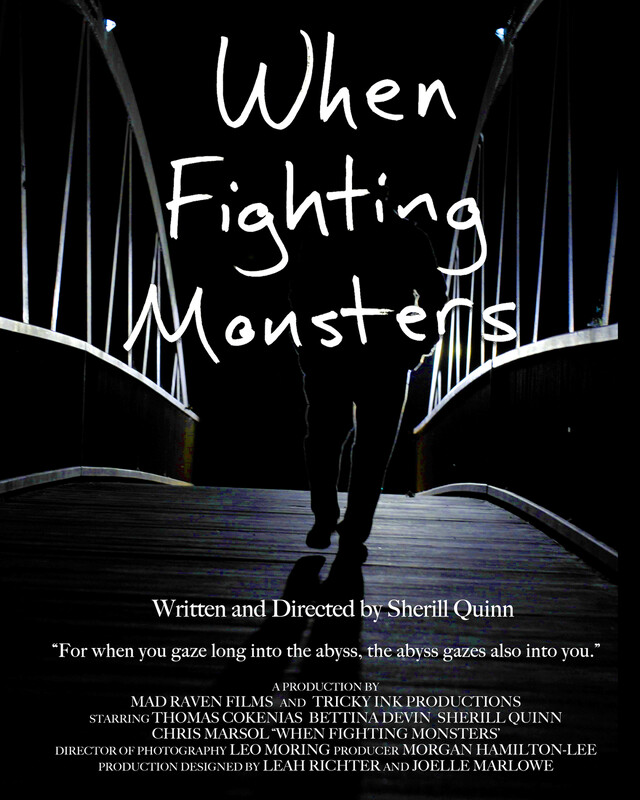
At the outset of this gripping short, When Fighting Monsters, there is an astute onscreen quote of warning by Nietzsche – – to paraphrase, when attempts are made to fight evil, unjust deeds, you must to be careful that the darkness of revenge does not take you over, so much so that you are eventually just as corrupt as the original perpetrators. The actor playing the central figure convincingly portrays a character who falls into this dangerous psychological trap.

The screenplay makes use of pointed dialogue between characters where subtext is king. What is left unsaid is even more powerful than what is said, as the story unfolds. The main character attempts to control the narrative of innocence, but things start to close in on him.

Much of the film is engulfed in darkness, both physically and psychologically, with disconcerting nighttime scenes and emotional moments riddled by bitterness and anger. Swirling, eerie music and rhythms frame the highly dramatic moments. The warning off the top is prophetic, as revenge and madness come together with tragic results.

Short Film Review: DELUSION. Directed by Kenneth Christopher Muller

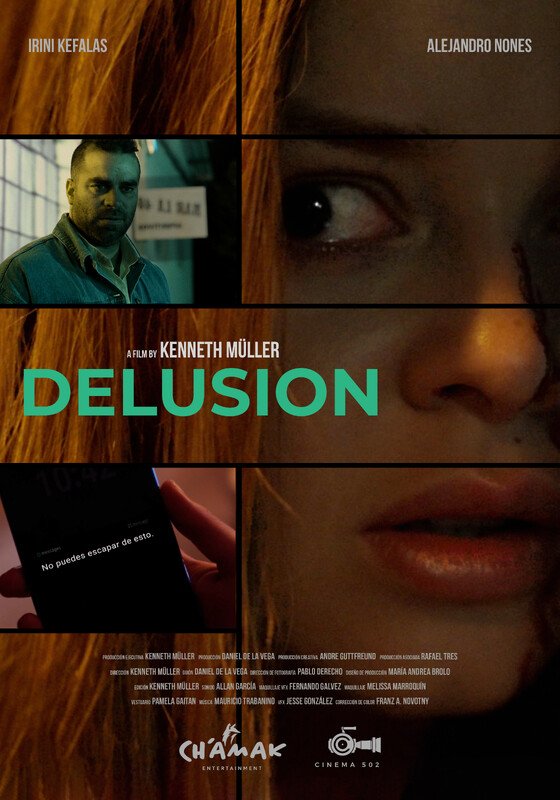
After her cell phone is stolen, Laura, a pregnant dentist, commits a desperate act: she attacks a stranger, convinced he’s the thief. But what seemed like a passing impulse opens a rift in her perception of reality. The cell phone reappears. The messages don’t stop. The images show impossible things.

Review by Parker Jesse Chase:

Delusion opens with the sound of a lighter flicking open and closed. No context is given, but anxiety builds. This directorial choice sets the tone before any visual or narrative is shared. When we finally see Mauricio, lit by a harsh red glow, it frames him in ambiguity. Is he a threat, or just a man caught in the wrong moment? The film never gives us a clean answer, and this uncertainty fuels everything that follows.


As the film continues to follow Laura, a pregnant woman whose phone is stolen on a dark roadside. What should be a moment of inconvenience turns into something far more dangerous. She locks onto a stranger, Mauricio, and decides he is the one who took it. That decision becomes the film’s core fracture point. From there, reality begins to slip.


Lighting plays a major role in the psychological shifts at play. The early warm tones of the gas station give way to sickly greens, reds, and yellows by the time we reach outside the bar. The world starts to feel contaminated, like reality itself is turning against Laura. It’s not just a visual queue, it mirrors her internal state.


This is a story about perception under pressure. About how fear, isolation, and vulnerability can lead to abrupt decision making. Laura’s pregnancy adds weight to every choice she makes. Her body is not just her own, and that amplifies the urgency, the protectiveness, the paranoia. When she says, “I’m not going to let them take anything else,” it lands as both maternal instinct and a
warning sign. Protection turns into projection.


Sound design carries much of the emotional weight. The escalating notifications, the persistent ringing, the layering of a heartbeat tied to her pregnancy, all build a sense of pressure that never releases.


Delusion is defined by its refusal to bend, even when confronted with its very truth. Laura embodies this. There is no real evidence that leads to Mauricio taking her phone in the first place, yet she builds a case in her mind and acts on it. The stabbing is not just violence, this is conviction made physical. Once Laura crosses this line, the film refuses to let her step back. The phone returns to her hand. Messages flood in. Images appear that should not exist. It becomes less of an object and more of a force. Something invasive. Something that cannot be discarded.


The phone reads like a stand-in for our relationship with constant connection. It doesn’t just demand attention, it traps it. Laura tries to throw it away, destroy it, escape it, but it always returns to her hand. That loop mirrors the way we engage with our own devices. The need to check, respond, stay plugged in. Even when it harms us.


Then the film sharpens its edge. Laura receives a video of herself committing the crime. She is being watched. Not just observed, but consumed. A message comes through: she is being live-streamed. People are watching her unravel in real time.


That’s where the film lands its most unsettling idea. Suffering turned into entertainment. We scroll through pain every day. We watch breakdowns, violence, and public shame. There is a distance that makes it easy. Delusion collapses this distance. It puts Laura inside that loop, turning her fear into content. The audience within the film becomes a reflection of us outside it. The performances ground the film. Laura’s unraveling feels physical. Her hands shaking, her breath tightening, the way panic lives in her body. Mauricio, in contrast, is quiet and human, which makes the violence against him hit harder. He feels like someone who could have walked away from the story entirely, if not for her belief.


The final image, a wide pullback revealing her bloodied and alone, lands with a kind of cold distance. It echoes the earlier surveillance shots. We are no longer close to her. We are watching, just like everyone else.

Feature Film Review: CUBA COOCUYO REMIX

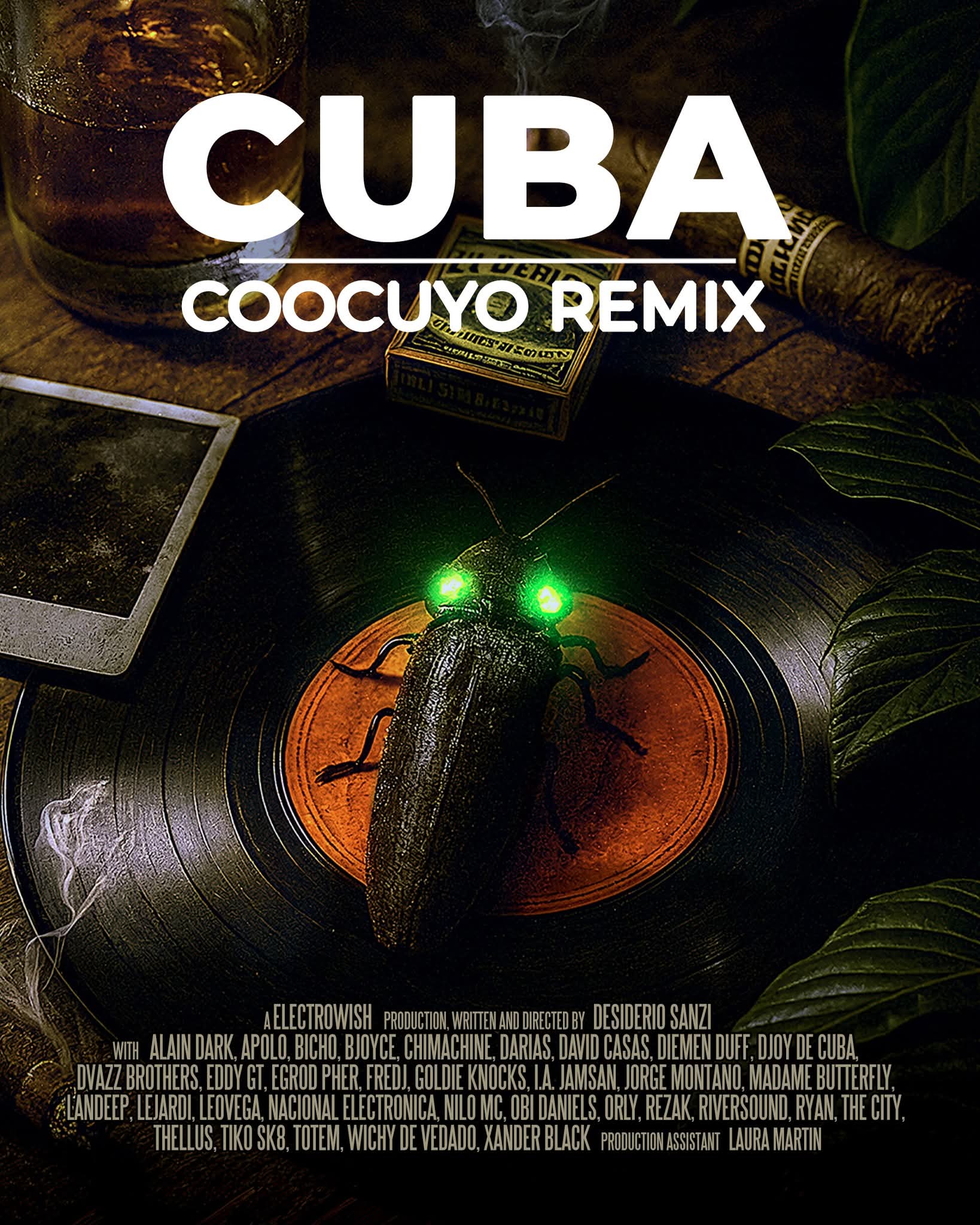
In a nocturnal Cuba, lit only by the tiny lights of the cocuyos, the island’s DJs and electronic music producers become a living metaphor: like those glowing insects, they come alive at night, illuminating the city with their energy and restlessness.

Project Links

Directed by Desiderio Sanzi

Review by Julie C. Sheppard:

This film, Cuba Coocuyo Remix, is a solid tribute to the electronic music coming from nighttime venues of this colourful, historic island. The film captures the rhythm of the language, and the sites and sounds of the place – – the cinematographer does a fabulous job including scenes of people of all ages and walks of life going about their days. 

Despite the obvious challenges of living in Cuba with its old cars and rather crumbling infrastructure, the DJs are not at all deterred when making plans to create lively, upbeat musical entertainment. The refrains of music we do hear give us a strong clue to what the high energy events of the night will bring. It is also inspirational to hear the thoughts, plans and dreams of a local DJ, and a confident voice discussing the available equipment and software.

The comfortable interactions between city folk give the pace of the film a gentleness, as time almost seems to stand still as we wait for the evening to come and the music and dancing to begin. Film viewers no doubt wish they could join in this electrifying dance.