Linked is a surreal dark comedy about Jordan, a man slowly losing his identity to the performative chaos of LinkedIn. Comment wars turn passive-aggressive, emojis become weapons, and the platform bleeds into reality.
Get to know the writer:
1. What is your screenplay about?
At its core, Linked is about how we shape our identities in a world that is constantly watching us. It looks at the pressure to be seen, liked, validated, and how that slowly starts to change who we are. It is funny on the surface, but underneath it is really about insecurity and control.
2. What genres does your screenplay fall under?
I would say comedy first, but it definitely has satirical and psychological elements. I like using humor as a way in, and then letting the deeper themes sneak up on you.
3. Why should this screenplay be made into a movie?
Because it feels timely. We are all living inside this constant loop of connection and performance. I think audiences would recognize themselves in it pretty quickly. It has humor, but it also has that uncomfortable feeling of truth, which is usually where the best conversations start. It’s also the one social media platform that hasn’t been leaned into for storytelling.
4. How would you describe this script in two words?
Uncomfortably honest. OR Performative leadership.
5. What movie have you seen the most times in your life?
Good Will Hunting. It’s the one movie that I saw growing up that made me feel multiple emotions. I also loved seeing two young men write such an incredible first screenplay at the time.
6. How long have you been working on this screenplay?
The idea had been sitting with me for a while. Once I locked into the concept, the first draft came together fairly quickly. The real work was refining the tone and making sure it did not become too heavy handed.
7. How many stories have you written?
Quite a few at this point. I have written features, pilots, and shorts across different genres. Storytelling has always been part of my professional life as well through advertising, so understanding and writing longerform scripts feels like a natural extension of that.
8. What motivated you to write this screenplay?
I’ve been working in advertising for 20 years and that was my introduction to these types of professional social platforms and the types of messages I’ve seen. I always found it facinating to see how the community would post and engage. I was thinking a lot about how much of our lives are curated now. We present versions of ourselves constantly. I wanted to explore what happens when that version starts to feel more real than the person underneath it.
9. What obstacles did you face to finish this screenplay?
Tone was the biggest one. Satire can easily go too broad, and psychological stories can get too internal. Finding that balance where it is entertaining but still grounded took some rewriting. Also, at some points while I wrote the script I was worried it might be too niche and not everyone would understand it
10. Apart from writing, what else are you passionate about?
I am passionate about creativity in general. Building brands, building ideas, understanding culture. I am especially interested in how technology and AI are reshaping how we tell stories and create things.
11. What influenced you to enter the festival? What were your feelings on the initial feedback you received?
While I currently live in Miami, I grew up in Toronto and was motivated to see a comedy festival for a historically funny city. I liked the idea of hearing the script performed. When actors read your words, you learn very quickly what works and what does not. The feedback was encouraging. It is always reassuring when the themes you care about actually resonate with other people.
A hot-shot Crystal Magician puts domestic life on pause to strike back against the big business that ordered a mercenary “hit” on her Animist Kijutsu Temple…and, really, to send a message to all the Atzlan “haves”: nature and Ancient wisdom are more powerful than any human law.
Female Braveheart with crystals and …mostly… non-violence
2. What genres does your screenplay fall under?
Fantasy / Sci-Fi
3. Why should this screenplay be made into a movie?
From a producer’s standpoint: you’d have a chance to tap into a billion dollar+ industry. And it’s only growing. I don’t know that the film industry has ever really catered to this crowd…so the audience potential is untold.
From a writer’s standpoint: my hope is that it would re-awaken ancient memories. Seeing things on film, to me, is like seeing things in your day-dreaming or imagination or visualization…it’s such a unique medium in that way.
So seeing Vai and the Animists activate crystals on screen, and them sensing vibration through the trees and communicating that way…it might awaken something long-forgotten in you. But if it would instead actually lead to pillaging Mother Earth to sell more crystals and just commercializing them…then I hope the movie never gets made.
4. How would you describe the script in two words?
“Power-with”
5. What movie have you seen the most times in your life?
Either Spaceballs or Three Amigos… Me and my brother were obsessed with those two movies growing up so our parents would be popping in one VHS or the other, countless times…until we grew out of that phase.
6. How long have you been working on this screenplay?
Crystal Magician of Atzlan….since about March 2023. But it’s part of a bigger storyline that I’ve been working on since 2019.
Ithyllaya, who is a toddler in this one, was actually the main character (as an adult) from when I started writing this…but in one version of the rewrite she started having mommy issues. Because I had realized at that point that she’d gotten her zuisho (crystal wand) from her mom. So I had to find out who her mom was! (And her dad…)
7. How many stories have you written?
Maybe five short stories when I was younger? Since 2019, I wrote and re-wrote the Ithyllaya –
Aaru storyline (which I call “The Dream-Maker’s Crystal” storyline) in at least four different screenplay incarnations. And then this one is the fifth screenplay.
8. What motivated you to write this screenplay?
Vai is the superhero I always wanted to be. She came from me feeling so powerless…with all the things I don’t agree with going on in this world, and then, personally, with my own back injury.
So I put it on the page.
What I can’t seem to do, Vai can ;] She can take down a mine and free the enslaved prisoners there and give a big F U to the people who think they hold all the cards.
And…she guided me through some real tough times. Because in order to write her character I had to become as strong as her.
9. What obstacles did you face to finish this screenplay?
The deadline! And it was a self-imposed one … sort of.
I consulted with an Intuitive before setting out to finish it (and self-publish it as a book, hehe). I wanted to ask advice because…when a story keeps coming to me, I feel like I need to give voice to it. And get it out there.
I had been writing and re-writing and entering contests for five years and still not getting it out there, so I figured, heck, why not just publish it… But was I just being delusional?
The Intuitive told me that I had been trying to communicate this story for many lifetimes.
(Hehe – still trying!). She advised me to make a commitment. I was squeamish, but said okay.
Then she told me: “But don’t go past the three months.”
That was January 10, 2025.
I only had maybe five draft scenes and a half-baked treatment to work with on that day. But in the next three months, I got to viscerally experience what it means when they say “The obstacle is the way” because whenever I needed an answer…I received guidance. I got to reconnect with the Universe in a way I hadn’t in a very long time. And I didn’t go past the three months. Publication date was April 10, 2025.
10. Apart from writing, what else are you passionate about?
I like to oli! [Hawaiian chanting]
11. What influenced you to enter the festival?Feelings on initial feedback you received?
I so wanted to hear a scene from my script performed…and when I learned that FEEDBACK Female Film Festival offered that option…I was in!
Honestly, it was a sweetbitter experience reading the critique. Nothing wrong with the feedback…I agreed with most of it. But it was New Year’s Eve 2025. And there had been a lot of disappointments, especially in the latter half of the year….stuff like reoccurrence of my back injury, and losing my job because of that reoccurrence…
…so part of me felt like I just hadn’t done a good enough job again, and well, this is just going to be another lifetime where I don’t give voice to the story…
…but part of me was just so happy to be in story-space again! I had had to set writing aside to deal with material concerns for a while at that point…so hearing someone engage with the work and find some powerful moments and fun in the magical system…it felt like hearing from an old friend…
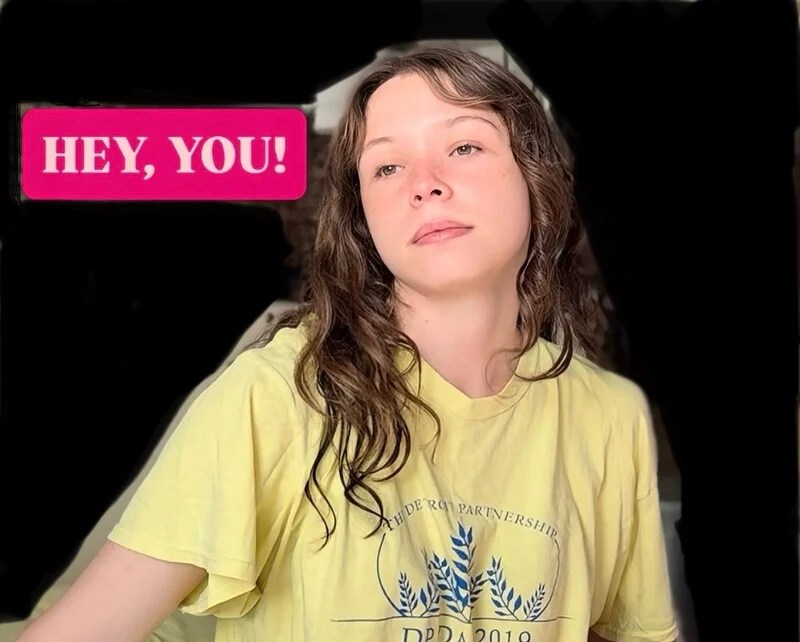
A young woman in Chicago needs to make a decision through the course of a day in her life. This story is an attempt in feminist cinema as the main character acquires full agency at the end of the film to make her decision.
I wanted to make a short film centered around a female protagonist. I was inspired by the many strong women models in my life. My goal with the script was to highlight the resilience and tenacity of women when making big life decisions, while layering a bit of comedy in the mix.
2. From the idea to the finished product, how long did it take for you to make this film?
A couple of days to brainstorm the story and write the script, two days of filming, and around two weeks in post-production.
3. How would you describe your film in two words!?
The title says it all – “Hey, You!” Kidding aside, I would say, “facing challenges.”
4. What was the biggest obstacle you faced in completing this film?
The biggest obstacle came during post-production. We used natural light when filming, which worked great while filming. However, when rendering the final movie file, it was overexposed. This was the first time this had happened to me, and took me some time to troubleshoot in the end.
5. There are 5 stages of the filmmaking process: Development.
What is your favorite stage of the filmmaking process?
I like ‘em all. I just love to make movies and be involved. To me, each one is a stand alone chapter with its characters, plot twists, story lines and arcs. The connecting thread is the final product! If I had to choose one, it would be “production” as that stage is where the story comes to life, collaborating with everyone, at least in my opinion.
6. When did you realize that you wanted to make films?
When I was around 15 or 16, my parents and grandparents all chipped in to buy me a video camcorder. I would dictate scripts while my brothers wrote them down, and then we would film.Years later, we did my first feature film. We had a premiere and viewing party. I still treasure the memories of those early days.
7. What film have you seen the most times in your life?
That is a tough one, as there are just too many. I would say: Back to the Future, Jaws, The Godfather, and Anchorman.
8. In a perfect world: Who would you like to work with/collaborate with on a film?
I admire the work of Francis Ford Coppola so I would choose to work with him. In addition, I would work with my brothers because creating stories with them started it all.
9. You submitted to the festival via FilmFreeway. How has you experiences been working on the festival platform site?
Terrific and efficient! It is nice to have an online platform where your films can reach multiple festivals without the need to be constantly uploading files.
10. What is your favorite meal?
Caldo Gallego (Galician broth), or pizza from a place back home in Puerto Rico called: Faccio.
11. What is next for you? A new film?
Last year, I did four short films. I started this year with a fun passion project. I am currently working on a new script for another short film. Next for me is to continue to network and collaborate with like-minded filmmakers in Chicago. My goal is to continue to grow as a filmmaker and for the production value of my films to improve with each new film. I would also like to try my hand in acting and see how that goes.
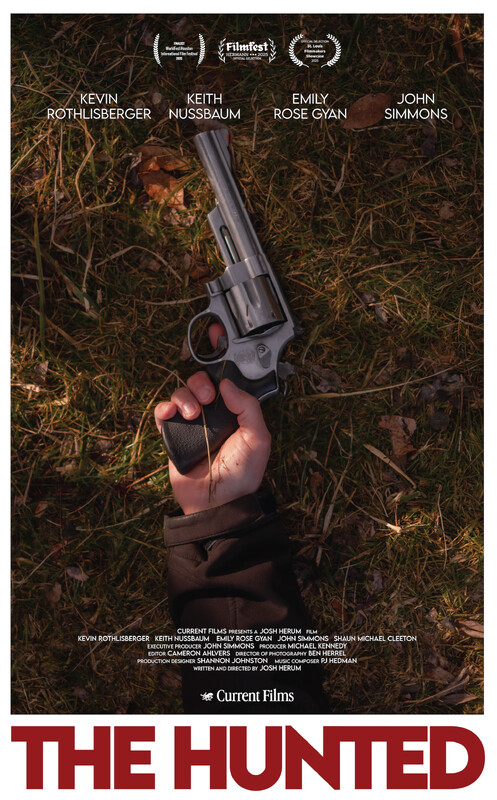
THE HUNTED, 23min., USA Directed by Josh Harum A suspense thriller set in the world of doomsday preppers. John, a devoted follower, joins Gary, a conspiracy theorist Youtube personality, to establish an off-the-grid commune called the ‘True Way.’ When nothing changes in the world, John’s commitment to the cause wavers, leading to betrayal, paranoia, and finally a fatal confrontation.
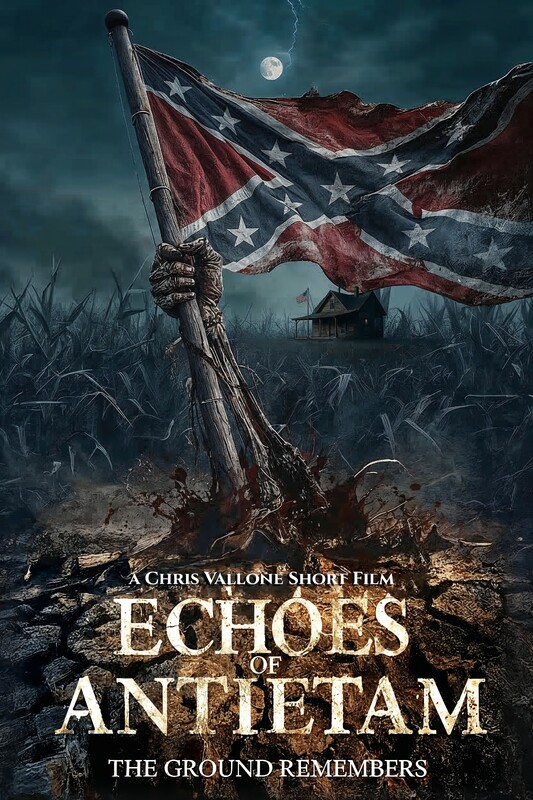
Echoes of Antietam, 6min., USA Directed by Christopher Vallone Echoes of Antietam is a haunting post–Civil War horror short film set on the blood-soaked farmlands of Maryland.
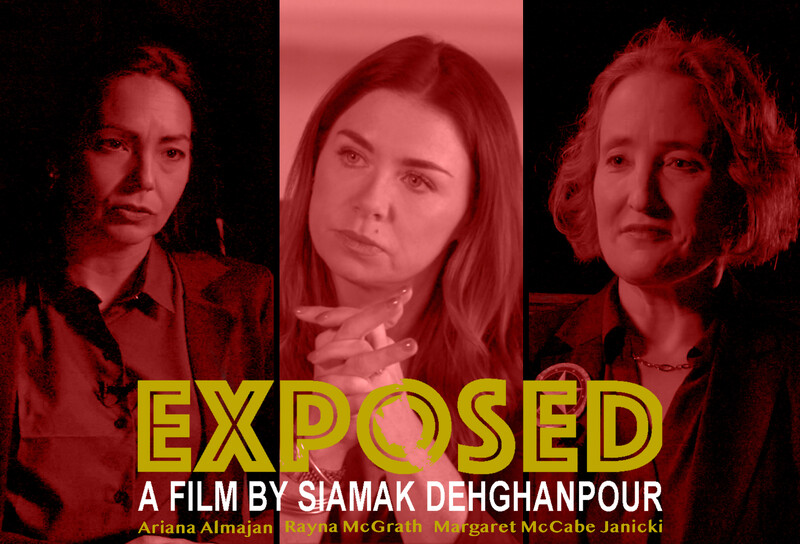
EXPOSED, 13min., USA Directed by Siamak Dehghanpour A young, ambitious journalist will have her first high-profile live interview with the President. The country is on the verge of a significant war, externally and internally. After a series of questions, the interview takes a dangerous course.
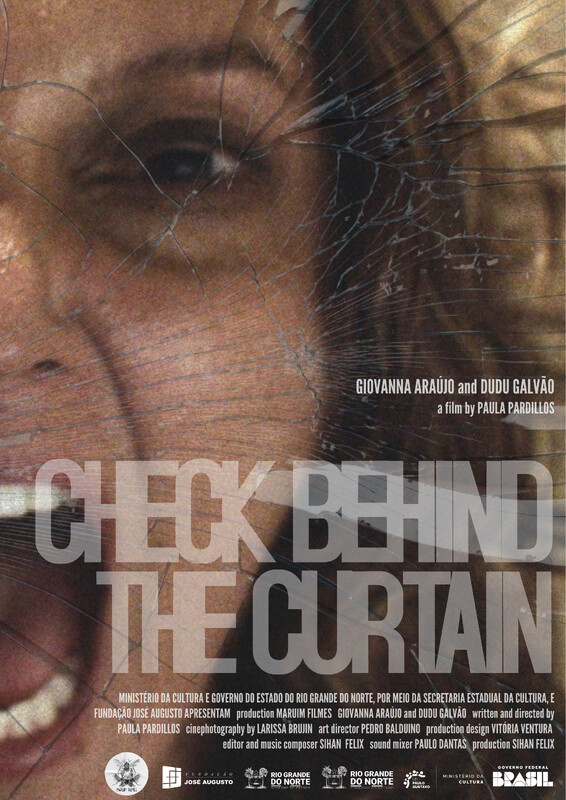
Check Behind the Curtain, 17min., Brazil Directed by Paula Pardillos While spending the night at a road motel, a woman gets suspicious of a mysterious hole, but her partner does not seem to be bothered by it.
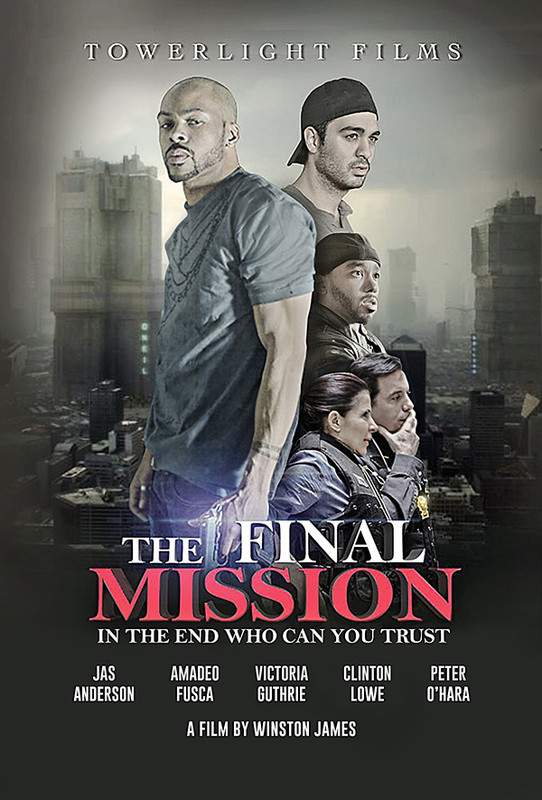
THE FINAL MISSION, 17min., USA Directed by Winston James Three unruly friends on the run from the law try to find out who among them may have provided secret information to law enforcement.
Three unruly friends on the run from the law try to find out who among them may have provided secret information to law enforcement.
Review by Andie Kay:
The Final Mission brings us into a criminal gang where everything isn’t as it seems. Written and directed by Winston James this story is a dramatic thriller that will have you on the edge of your seat. The gorgeous cinematography, making it gritty and realistic. Perfect locations and a storyline that draws you in and keeps your attention as you try to figure out what will happen next.
Jas Anderson and Amadeo Fusca did such an amazing job in their roles of Lex and Crane. You felt the rapport and history between them. Each of them delivers such stellar performances with believability and honesty. The musical choices were fantastic and it only heightened the suspense. Production Designer Aliona Paulionak was awarded Best Visual Design at the Thriller/Suspense Festival.
Winston James definitely knows how to weave a story and inspire his actors to wonderful performances. This film is a must see!
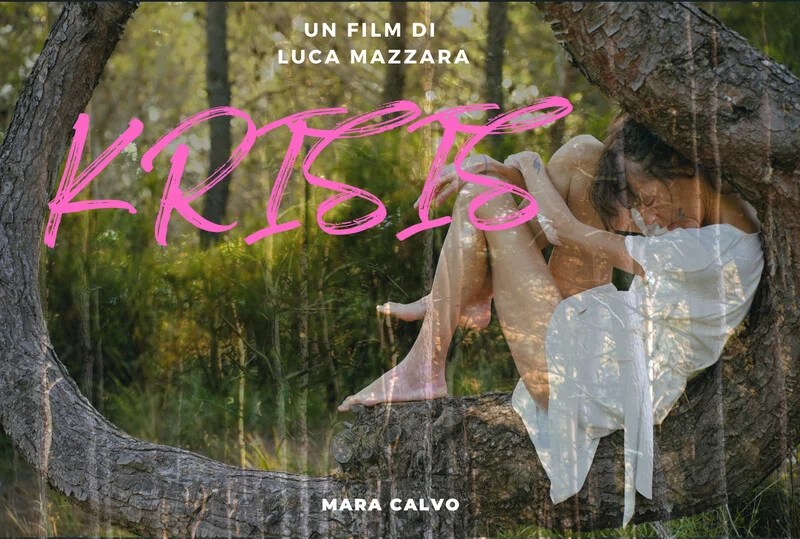
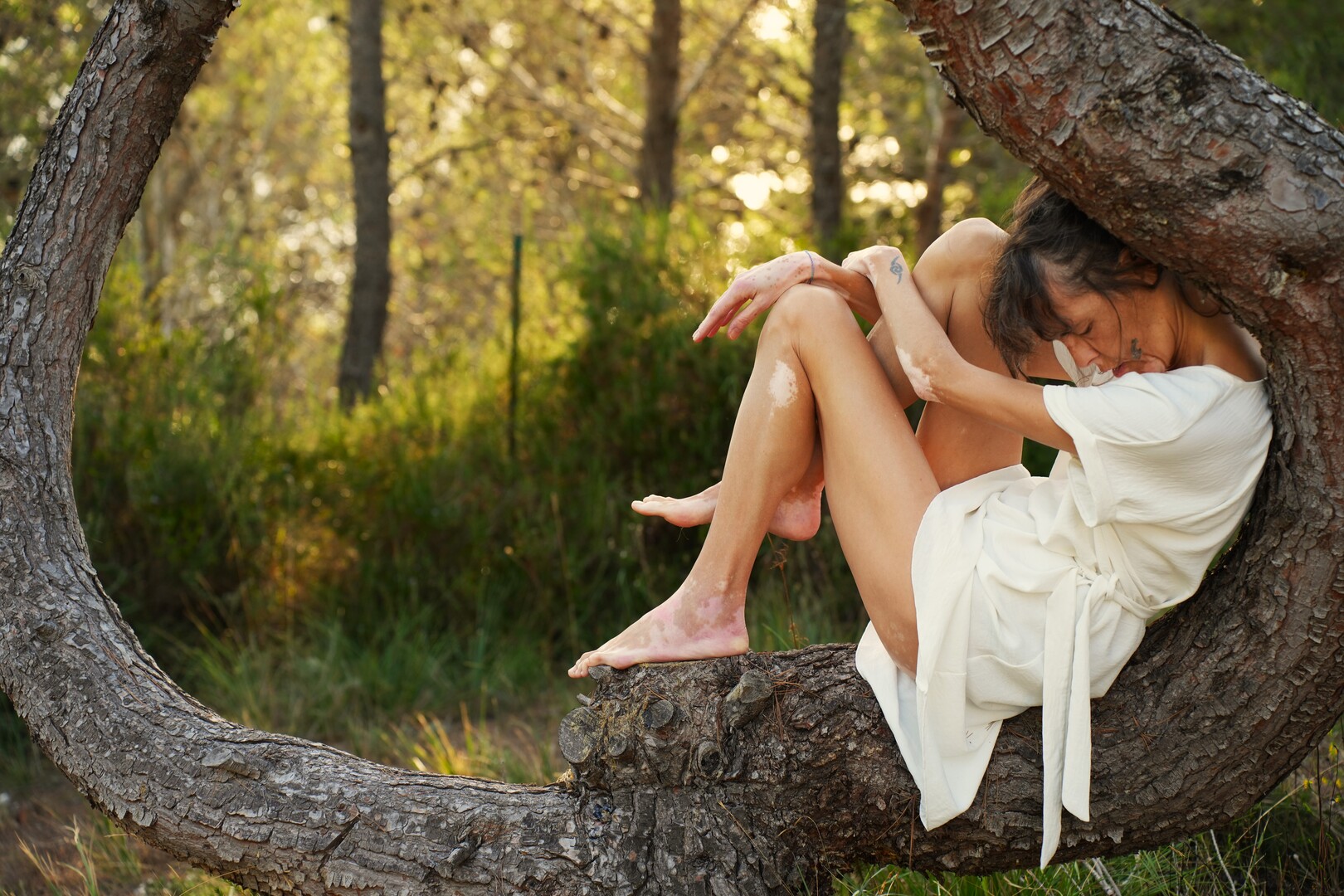
“Krisis” is a short movie that follows the emotional journey of a woman facing mental and physical illness and the isolation caused by painful events. Through the contact with nature, she transforms suffering into a new interpretation of life, discovering the inner strength to overcome pain and embrace joy. An ode to human resilience and the healing power of nature.
Review by Parker Jesse Chase:
Krisis sits in the quiet space between solitude and loneliness. It follows Zoe, a woman living with the way pain reshapes her inner world. This is not a story told through plot, but through feeling, rhythm, and repeated return.
We meet Zoe alone. At home. In nature. By the shore. Loneliness feels less like an enemy and more like a constant companion, woven into her daily routine. Her mind spirals, fears creep in, and heavy hurdles are forthcoming. There is rest here, but also confinement. Shelter offers breath, yet it also holds an illusion of safety.
The film moves gently between the cycles of battles and rebuilding, always circling back to the past. A rocking chair sways. Music flows with a calm pulse. Close shots of flowers, hands, feet ground us in the body. Nature and human presence begin to blur. Zoe stands firm on the rocks, facing the ocean, rooted for a moment.
Then comes the break. Zoe at a computer, nearly frozen, wrapped in a yellow raincoat. The color feels loud against her stillness. Misery settles in. She scrubs grout clean, as if trying to erase what came before. The narration drifts in, poetic and spare, speaking of leaves and peace.
A striking image follows. Zoe walks across hills carrying a wooden cross. The weight is clear. Double exposures spin the land around her. Draped in white, she appears almost suspended, like she is walking on water. When she finally throws the cross aside, she reaches toward the camera and faces another version of herself, still bent under its weight.
Among roots and branches, a quiet ritual unfolds. Zoe gives in, not in defeat, but in release. She lies in the sun as the narrator speaks of trying to find her smile again. The light softens. The sea sings.
The final moments linger. Zoe watches the sunset as a path of light stretches across the water, lining up like a way forward. Her hair moves with the wind. A bird crosses the sky in layered images. The feeling is not triumph, but acceptance. Pain does not vanish, yet joy becomes possible.
Krisis, directed by Luca Mascara, with Zoe Mara Calvo and narration by Gianfranco Migliorelli, is a quiet meditation on isolation and the slow return to oneself. Reminding us that nature does not fix us, but it can hold us long enough to breathe again.
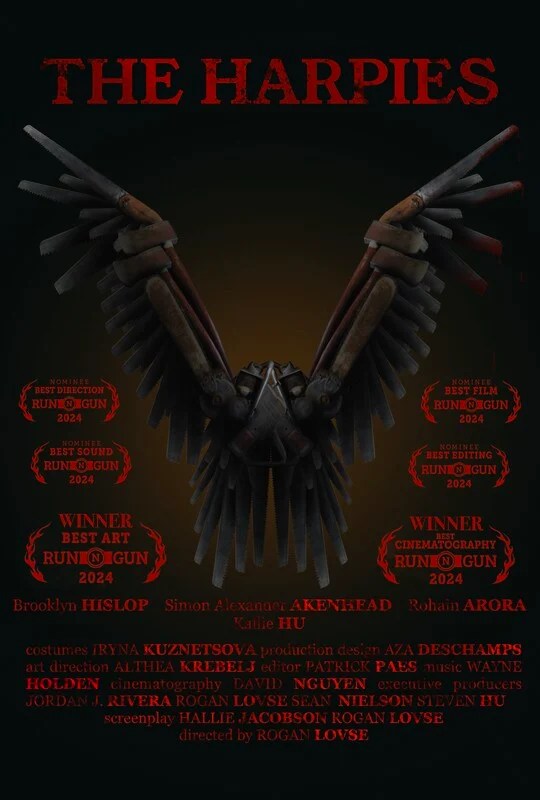
The Harpies was written, filmed, and edited in 48 hours as part of the 2024 Run N Gun: Vancouver’s 48 hour Film Competition. Winner of the Run N Gun’s Best Cinematography and Best Art awards, as well as, being nominated for Best Picture, Best Editing, Best Sound, and Best Direction.
Aura is on the run from her ex-boyfriend. She is accompanied by her friend, Matt. Matt has always had an uncomfortable crush on Aura. The pair find themselves seeking shelter in an abandoned lumber mill. Unbeknownst to them; a dangerous harpy calls the mill home.
The spine-tingling short The Harpies came out of a 48-hour film competition and was rightly decorated with both awards and nominations. This success is not surprising. From the first second, the viewer is pulled into a gripping narrative as the camera pivots dizzily on its axis. The grey post-apocalyptic setting of the rundown, yet rather modern industrial area immediately immerses the viewer into an anxious gloom.
The two aptly performed main characters Aura and Matt exist in this dark world and, despite their current wardrobe and vocal cadence, their references to the existence of fearsome mythological creatures take us out of modern day and back to ancient times. Visceral suspense is in the air, brought on by the couple who senses that dangerous creatures are afoot, in addition to a wickedly, ominous soundtrack of siren-like vocals, and heavy synth and percussion.
Any review of this thrilling piece would be amiss not to mention the wardrobe, make up and prosthetics and grisly sound effects of the harpy, a ravenous mythological figure that is half bird and half human and who, in this case, seeks revenge against misogyny. For such a short time to conceive and create this fearsome film, the whole production is remarkably professional and worthy of its accolades.
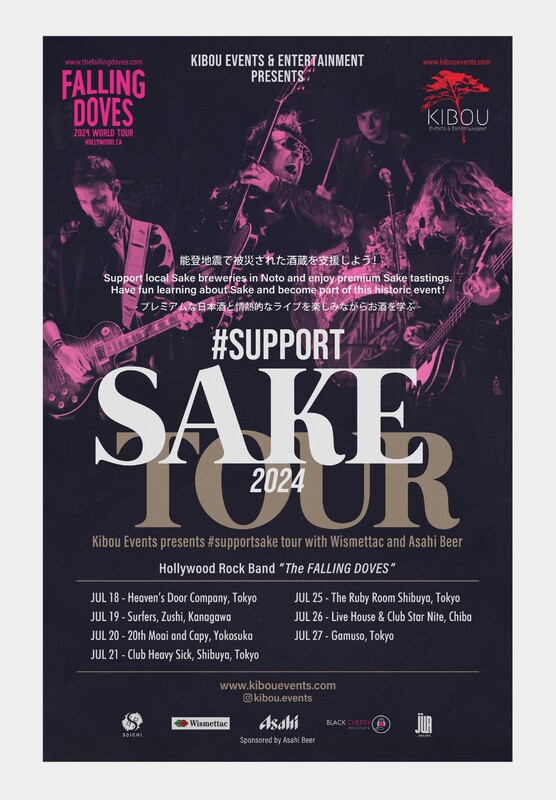
When a catastrophic earthquake devastates Japan’s Noto Peninsula, San Diego business owner and mother Raechel is compelled to act. After learning that Seiko Kinshichi has lost both her home and her historic family brewery, Raechel—who once endured a similar loss—feels a profound connection and becomes determined to help a stranger rebuild her life.
This uplifting documentary centers around the devastating 2024 earthquake that destroyed the Matsunami Brewery and many others in Noto Town. The filmmakers were smart in how they started this film with information about sake and how it’s steeped in Japanese culture, but also how the art of crafting sake is dying out.
Raechel Kadoya has her own personal experience living through an earlier earthquake in Japan and she couldn’t ignore what was happening to Seiko and the Matsunami Brewery. Her desire to help is nothing short of inspiring and it ignited this wonderful chain reaction of getting people on board to help raise money for Seiko’s business. The rock band The Falling Doves joined in and with Raechel went to Japan to tour, donating the proceeds to Seiko.
Seeing the devastation from this earthquake was heart wrenching. Kelli Hayden and Christopher Leyva were the cinematographers and Christopher directed this film and it was incredibly impactful. The use of past footage from various media outlets also helped drive home how terrifying and awful it must have been for the residents of Noto Town.
There was so much creativity in the way this film was edited, I really appreciated the split screen and special effects the filmmakers used in the transitions. Mostly, I loved how very inspiring this story was and what could be accomplished when people come together to make a positive difference.
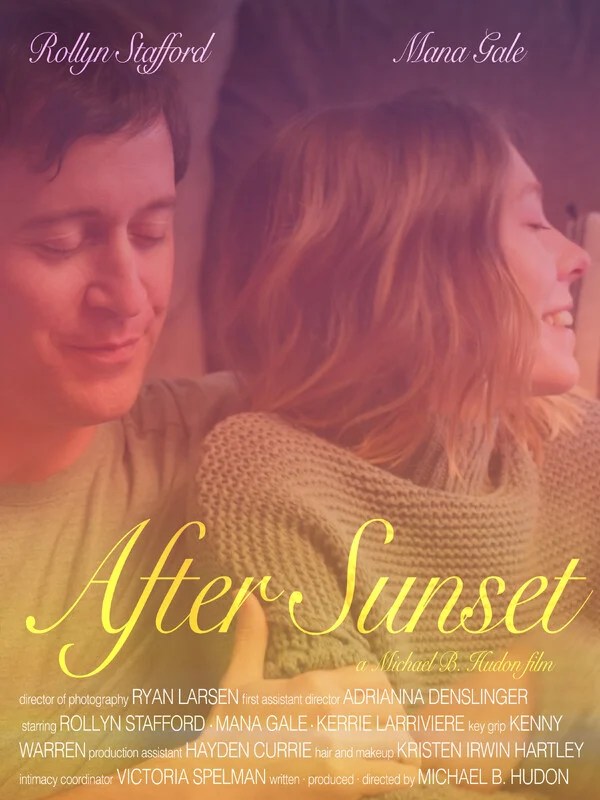
After Sunset opens on warmth. Two lovers stand close, both dressed in green, a quiet visual cue that speaks to growth, care, and the ease of being together. They hold one another in a way that feels nurturing and sincere. From the beginning of their story, the film frames their relationship as a sincere love.
This is Max’s story, told through reflection over the course of therapy sessions. The film introduces their love through small shared memories rather than grand gestures. We learn who they are through the rhythms of everyday life. Cooking together in the kitchen. Fearing about dentist visits. Finding courage in small moments. Sitting through scary movies. Even the kind of late night debate couples have about whether the bedroom door should stay open or closed, finally settling on a compromise with it left cracked.
These fragments build a quiet portrait of intimacy. Pillow fights give way to long conversations about dreams and the future. Max often looks at her with a sense of wonder, captivated the way someone might watch a sunset slowly fall across the sky. The film quite literally frames these memories almost like brushstrokes on a canvas, bright colors layered across time. Then the sun begins to set.
As the relationship shifts, the visual language changes with it. The warmth fades and shadows begin to take over the frame. Tears replace laughter. The film uses costumes again to underline the emotional turn. Where the couple once matched in green, they now appear dressed in black. Playing as a funeral for the relationship itself.
Max often describes her through images of light, which makes the title After Sunset feel especially fitting. He lingers in the space where the sun has already dipped below the horizon, wishing for morning to come again. The film lingers there too, in that still and quiet place where someone must learn to move forward.
One of the film’s most striking sequences takes place during Max’s therapy session. The lighting turns moody and restrained. Stripes of shadow from the blinds cut across his face as he reflects on the last conversation they shared. The scene feels heavy but honest, capturing how difficult healing can be when love still exists.
When the two reconnect after the breakup, the moment is softer than expected. He arrives holding a box of her things. She tells him she’s sorry it didn’t work out. She still loves him, but she cannot continue the relationship. Max accepts this truth without anger. Together they watch the sunset one final time.
What After Sunset captures so well is the quiet pain of a healthy breakup. There is no shouting match, no betrayal, no villain in the story. The love between them is real, but love alone cannot hold everything together. Sometimes two good people simply cannot make a relationship work. That truth is often harder to face than a dramatic ending.
Because the film is a short, we are not given every detail of what led them here. Yet the emotional core remains clear. These two care deeply for one another and want the best for the other person. The decision to separate comes from that care rather than resentment.
The film leaves us with the sense that endings do not have to erase the beauty that came before. If anything, After Sunset suggests that recognizing when to let go might allow the memory of love to remain bright, rather than fading into darkness.
 Festival Reviews