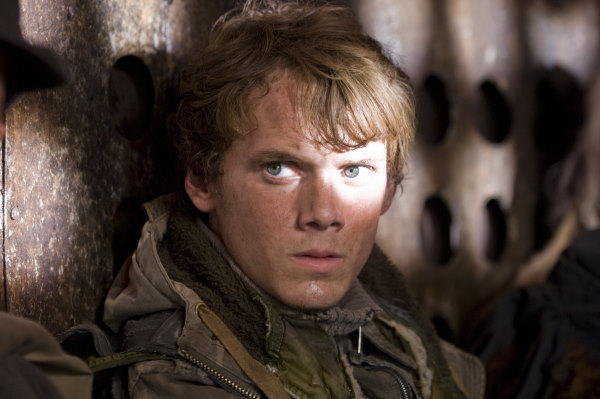
INSECT, 8min, Canada, Fantasy Directed by Cherelle Ann, Sarah Higgins In a subterranean prison, a bitter young girl and her supernatural ally hold a strange and beautiful man captive to avenge the crimes he has committed against her.
NIGHT FEEDING, 6min, USA, Horror Directed by Sarah K Reimers Exhaustion and sleep-deprivation begin to take their toll on a new mother, who struggles through the strange, dark stillness of the 4am feeding.
What Is A Film Director? How do you run an independent film casting call? How do you get the best out of the actors you’ve chosen to bring your film to life?
Whether you’re running your first independent film casting call or into your millionth day of shooting, you may find some useful ideas here. Below, we investigate some of the techniques you can use and pitfalls you may face in casting and directing actors. A good resource for actors as well as directors!
We’ll be posting more articles all the time, so make sure you come back and check every now and then.
What is a film director? More than anything, the person responsible for bringing together the technical aspects of capturing performances with the actors who will bring a story to life. One of the most important aspects of a director’s job is to have a rapport with the actors, and it’s not any easy thing.
INSECURITY is the evil heart of a bad performance.
You need the actor to feel SAFE and COMFORTABLE in the creative process. They need to be relaxed.
Ask the actors to do something, not be something.
The presence of a camera should never change people, it only changes the aspect or degree of a person’s response.
The main job is to prepare the ground for inspiration. You can’t decide to be inspired. If you try it, it only creates tension, taking you farther and farther away.
The DIRECTOR is the viewer and the ACTOR is the viewed.
Let the actors help out with blocking. It solves all kinds of problems.
Actor and Director must respect each others creative territory.
Adjusts your beliefs about a character if the actor sees something different.
WHAT DO ACTORS WANT FROM DIRECTORS? – Not to give up until you get the performance – To make sure it’s the best take before moving on – Must have confidence that you understand the script – Need clear, brief, playable direction – They want to be pushed to grow and learn DON’T TELL ACTORS TWO DIRECTIONS THEY CAN’T PLAY TWO THINGS AT ONCE.
LISTEN to the actors and hear what they have to say.
Actors need insight, in language that is experiential, not descriptive. Adjectives are generalizations. USE VERBS Actions speak louder than words.
Verbs describe what someone is doing. They describe experiences rather a conclusion about experience.
USE THESE PHRASES To believe To fear To accuse To confront To convince To beg To complain To punish To tease To soothe
VERBS are also important to the basic understanding of a character
Acting should be a performance of the simple physical actions that tell the story.
Movies are made out of very simple ideas – A good actor will perform each small piece as completely and as efficiently as possible.
All good work requires self-revelation. The talent of acting is one in which the actors thoughts and feelings are instantly communicated to the audience. The instrument the actor is using is himself.
DON’T REPRODUCE LIFE CREATE IT
CONFIDENCE is an important element in an actor’s performance
LEARN FROM ACTORS SEE: -What stimulates them? -What triggers their emotion? -What annoys them? -How’s their concentration? -Do they have a technique? -What method of acting do they use?
An actor’s personality always comes out in their performance.
Tell them to go as far as they feel. Never be negative.
MOVMENT OF THE ACTOR You can always tell if an actor is truly in character by looking at his or her feet.
Actors need to have a GOOD EAR
Sometimes they need to just speak and try not to hit the furniture.
They need to trust the script, and you have to guide them if they want to stray from it. Unless they have an absolutely brilliant idea that serves the story BETTER than the original script, they should stick with the words as written. It’s tempting for actors to add or subtract words. That’s seldom a good idea.
Most actors need to know the technology that is around them. -Where is the camera? How are they being framed – close up, mid-shot, long shot?
NEVER JUDGE A CHARACTER
Acting is not pretending, is not faking something. It’s honesty. A director’s job is to recognize that and facillitate it.
For an artist there are two worlds the social realm, where we live and work day to day and the creative realm.
To enter the creative realm one must be free of the social realm, uncensored in the moment, away from concerns with result, following impulses, obeying only the deepest and most private truths.
An actor can’t lose trust in the process. As an actor, you need to: 1) Stay in the moment 2) Feel your feelings 3) Don’t move or speak unless you feel like it 4) Forgive yourself for your mistakes 5) Connect to the deepest and freshest meaning of the script 6) Turning themselves on and capturing their imagination 7) Connect with emotional honesty and get to the places they need to go
The best moments usually come from mistakes!
The scene is the event the words are the clues
Eye contact is very helpful to listening
ACTOR CHOICES Choices create behavior. The behavior dictates the way the lines are said
THE SPINE IS WHO THE CHARACTER IS Discover what is person’s great need in life. Michael Corlene To please his father Andrew Dufrane To get out of prison Every choice actors make about their character relates to their spine
AN ACTOR HAS TO THINK How does my character see the world?
WHAT DOES A DIRECTOR WANT IN AN ACTOR?
MEMORY (Personal Experience) – Each individual is essentially unknown to all others – Actors allowing their memory to occur physically 5 senses rather than intellectually
OBSERVATION
RESEARCH – Know the character – Know their history and back story – Know their habits and mannerisms, physical and spoken
IMAGINATION
IMMEDIATE EXPERIENCE – Energy and confidence to pull off a performance and scene
SENSORY LIFE – What they observe through their senses
CONCENTRATION – Performances are usually more successful when actors play against whatever feeling they have
PROFESSIONALISM – Camera technique – hitting marks – not blinking – ability to repeat successful performances and built on successes – able to alter what’s not working SCRIPT ANALYSIS – Finding the subworld of behavior and feeling in the script – Understanding the whole arc of the story to know how to play the scene
As a DIRECTOR you must stop JUDGING and begin to engage
Actors should remember that characters are real people. They don’t always tell the truth. They don’t always know the truth.
Certain questions an actor should ask about every character? 1) What is this person smart about? 2) What does this character find funny? 3) Where is his pain? 4) How does he play? 5) In what way is he an artist? 6) What does he most fear? 7) What profession has he chosen or does he aspire to? 8) What does he look up to? 9) Whom does he look up to? 10) What is the biggest thing that has ever happened to him? 11) How does this character differ at the end of the story from the beginning?
WHAT IS THE CHARACTER NOT SAYING?
FOUR AREAS OF IMPORTANCE IN CASTING 1) Actor’s ability 2) Whether he/she is right for the part 3) Whether you can work well together 4) Casting the relationship as well as the roles
AREAS OF A REHEARSAL PLAN 1) Ideas of what the film is about, what it means to you personally 2) Spines and transformations of all the characters 3) For each particular scene, its facts, its images, the question is raises 4) What the scene is about, its emotional event and how the scene fits in the arc of the script 5) Candidates for each character’s objective 6) The beats of the scenes, how you might work each beat 7) The scene’s physical life and its domestic event 8) Research you have done and research you have left to do 9) Your plan of attack 10) Blocking diagram
No matter how small the role is, the actor should read the entire script several times. They need to be aware of the function the author intends for the character in terms of overall storyline.
REMEMBER: The actor is playing someone with a HISTORY, not a FUTURE
FILM ACTING IS BROKEN DOWN INTO FOUR CATEGORIES 1) Extras 2) Non-professional performers 3) Trained Professionals 4) Stars
Know the skills and potentials of the actors you’re working with, and frame your suggestions according to their level of experience. What is a film director? Someone with the ability to help all actors grow. A good film director is someone who knows the power they have on set and uses it to guide a film to the best possible completion.
THINGS THAT MATTHEW TOFFOLO LOVES AN ACTOR TO DO
Matthew Toffolo loves actors to: 1) Arrive on set with their business planned and rehearsed and knowing their lines 2) Add extra ideas and business to the shoot, understanding what is possible and not 3) Do the same business on the same syllable of a speech in every take 4) Automatically ease themselves into the right position so that they fill the screen. Their two-shot is maintained or they come to a perfect three-shot 5) Understand the craft of screen acting and make additions and suggestions within the framework or what is possibly both technically and in the time available
Sequoia, 15min., Switzerland Directed by Michelle Künzler Sequoia, a diligent AI maid, works for the captivating yet mysterious Mrs. Terrance. Although not designed to harbor any emotions, Sequoia starts developing sentience, when a certain sound triggers a feeling inside her that feels oddly familiar – and human. Forced to conceal her newfound emotions to evade shutdown, Sequoia embarks on a dangerous quest for truth, tearing at the seams of her own identity and re-evaluating the intricate power dynamics that govern her place within the household.
What motivated you to make this film? I started writing ‘Sequoia,’ when AI tools like ChatGPT were rapidly gaining traction and the Hollywood strikes were unfolding, motivating me to explore the ethical implications and potential dangers of AI. The film was also deeply inspired by my personal experience. Growing up in a traditional household with a stay-at-home mom, I didn’t initially grasp the value and scope of unpaid domestic labor until I got older. As a feminist filmmaker, I wanted to pay tribute to housewives like my mother and shed light on that often overlooked, gendered work while connecting it to the theme of AI. I was particularly interested in the way modern technology intersects with gender roles—given that today’s AI assistants like Siri, Alexa, and Ameca are still predominantly female in name, voice, and/or appearance.
From the idea to the finished product, how long did it take for you to make this film? It took 20 months. The idea for ‘Sequoia’ first came to me in April 2023, and I completed the film in November 2024.
How would you describe your film in two words!? Feminist dystopia
What was the biggest obstacle you faced in completing this film? There were quite a few challenges throughout the entire project—from budget and time constraints to assembling the right crew. However, the biggest hurdle came during production as we fell behind schedule due to constant noise disruptions during exterior filming and a stunt scene that look longer to shoot than expected, resulting in an unplanned pick-up shoot. With some key crew members no longer available for the reshoot, it was difficult to find replacements and maintain continuity. Still, I’m proud to have persevered and overcome this obstacle. I’ve certainly learned and grown a lot from this experience.
What were your initial reactions when watching the audience talking about your film in the feedback video? Hearing the audience talk about my film, when it’s usually the other way around, felt like a rare and special moment. It was incredibly rewarding and refreshing to just listen to their honest feedback and kind words, and it was especially satisfying to learn that the twist at the end genuinely surprised them.
eadline Today to Submit to the Festival via FilmFreeway:
Thank you so much for awarding our music video »FRAGILE« with Best Experimental. We are thrilled!
Marvelous festival, excellent communications and other opportunities to expand your network as a filmmaker. So honored to have won for Iku Ma Pa Mi
Great Festival. A must for experimental indie art.
The folks behind this festival really go out of their way to support the artists. They’re personal and involved, and I love their audience feedback videos. I’m really grateful to have been a part of this festival.
Excellent festival! So honored to have my Video Music « I don’t love my mother » be apart of it !
This was my first time submitting to this festival, and I was just so pleasantly surprised and excited of the professionalism, the communication, and also the feedback and opportunities! HIGHLY recommend hands down.
Thank you so much Experimental, Dance & Music Film Festival for selecting us. This was our first submission and we are so happy we did. There are so many opportunities for exposure if you are selected into the festival. Very professional, and helpful in setting future filmmakers on the right path to discovery. We had such a great experience working with you. We were overjoyed to find out we won Best Performance. That wouldn’t have been possible without the opportunity they gave us by sharing our film with multiple audiences. Thank you again, we will be submitting again in the future!
Overall great experience. Thank you for what you do.
This festival has a guaranteed 4-tier set up for each accepted script. (No matter what, all screenplays submitted receive FULL FEEDBACK on their work.) 1) Full Feedback on your script 2) Actors performance video reading of your script 3) Blog interview promotion. 4) Podcast interview on the Film Festival ITunes show
Submit you HISTORY short story to the festival here, and we will automatically have it performed by a professional actor and turned into a promotional video for yourself.
History is a narrative that describes, analyzes, and questions past events, and examines the patterns of cause and effect. It’s a collection of stories told by many different people, and is subject to constant revision and reinterpretation. Accept only stories that fit into the HISTORY genre.
Get FULL FEEDBACK on either the 1st chapter or entire novel book from our committee of Professional Writers, and Writing Consultants. Get your novel performed by a professional actor at the festival.
NEW OPTION: Or, just submit for an actor performance reading transcript of your novel (any 5 pages of your book). Great way to promote the sales of your book if you’re already published. (see examples on the video playlist below)
Iku Ma Pa Mi (Death Don’t Kill Me), 9min., Nigeria, Musical Directed by Akintunde Oluwaseyi Smith Iku Ma Pa Mi is a modern take on a Yoruba death elegy in which the supplicant hails the mothers and spirits that control death and pleads for their mercy so that they live a long and fulfilling life before the eventuality of death. Performed by Ariky, it is the soundtrack to upcoming movie Ifihan Ika (Manifestation of Wickedness.)
1. What motivated you to make this film? Ans: We were shooting a short film ‘The Crying Edema’ and we had Ariky record some vocals ahead so we could sort of have a certain consciousness of the soundtrack as we shot. When we heard her vocals we were inspired to shoot a music video at the same locations where the movie was shot, it seemed like a perfect opportunity we didn’t want to miss.
2. From the idea to the finished product, how long did it take for you to make this film? Ans: About 6 months
3. How would you describe your film in two words!? Deep, Intriguing
4. What was the biggest obstacle you faced in completing this film? Ans: Hauling our equipment to the hill tops
5. What were your initial reactions when watching the audience talking about your film in the feedback video? Ans: Excitement, Gratitude and Encouraged
6. When did you realize that you wanted to make films? I saw Ferris Beullers day off as a kid and I thought, this is what I wanted to do,
7. What film have you seen the most in your life? There Will be Blood
8. What other elements of the festival experience can we and other festivals implement to satisfy you and help you further your filmmaking career? Ans: Festivals like yours are already doing so much we are grateful for
9. You submitted to the festival via FilmFreeway. How has your experiences been working on the festival platform site? Ans: Very Satisfying
10. What is your favorite meal? Ans: Jollof Rice
11. What is next for you? A new film? Yes, always conceiving and trying to improve
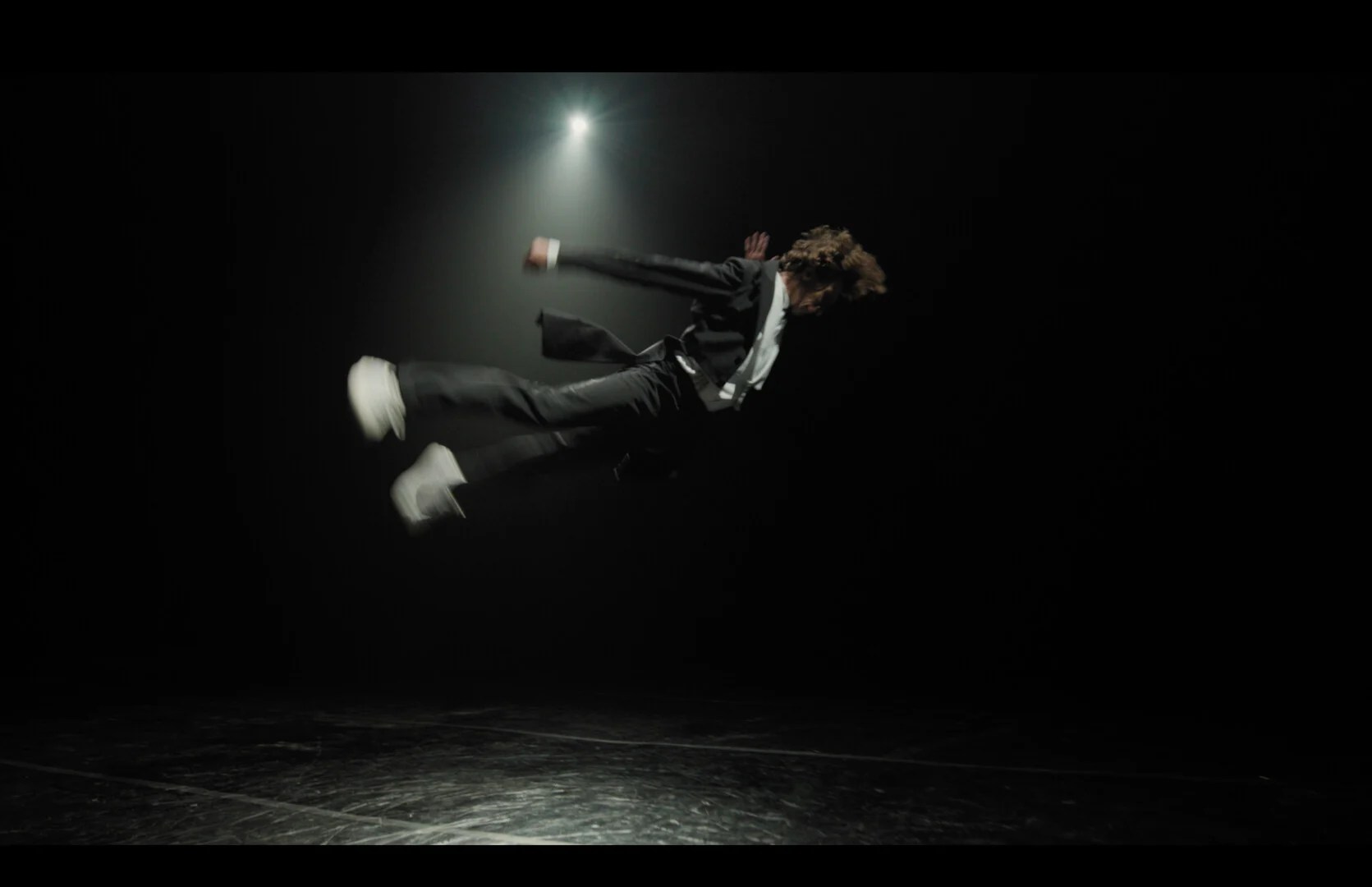
SPARKS, 2min,. France, Dance Directed by David Ravel Alone on a vast stage, a dancer moves through a space sculpted by light. He observes, senses, letting the sensations guide his body. An instinctive dance emerges, visceral, almost organic. Each movement becomes an exploration, a silent quest in resonance with the luminous pulses enveloping him.
Get to know the filmmaker:
1. What motivated you to make this film?
I wanted to make a film about the energy of Krump and work in an original location with lights and flashs.
2. From the idea to the finished product, how long did it take for you to make this film?
It all happened very quickly. We had the location at our disposal. We had worked on a few gestures with the dancer, but we improvised almost everything directly on the set. The shoot lasted one night.
3. How would you describe your film in two words!?
inside struggle
4. What was the biggest obstacle you faced in completing this film?
Time
5. What were your initial reactions when watching the audience talking about your film in the feedback video?
It’s always very special, very emotional.
6. When did you realize that you wanted to make films?
When I realized I loved having a camera in my hands to capture faces
7. What film have you seen the most in your life?
SOLARIS / Steven Soderbergh.
8. You submitted to the festival via FilmFreeway. How has your experiences been working on the festival platform site?
Very good experience.
9. What is your favorite meal?
Pasta al Ragù
10. What is next for you? A new film?
Always filming, always meeting people, always falling in love with a work of art.
Composing Big Sur: John Wineglass’ Concerto for Violin and Orchestra, 35min., USA, Musical Directed by Douglas Mueller Composer in Residence John Wineglass’ creative process of his most recent Monterey Symphony commission, Sacred Land: Concerto for Violin and Orchestra.
Get to know the filmmaker:
1. What motivated you to make this film? I watch a lot of live classical music and a certain amount of multi-cam concert videos and I’ve always wanted to make something that felt authentic but unlike other I’d seen.
2. From the idea to the finished product, how long did it take for you to make this film? When we interviewed composer John Wineglass and violinist Edwin Huizinga it was more than a year before the concert. And at that interview, they had been already working for a few months. The concert footage we shot over four days.
3. How would you describe your film in two words!? Kinetic and beautiful
4. What was the biggest obstacle you faced in completing this film? I had never had the ‘luxury’ of so much coverage- I think we shot three different performances with four cameras each. So with the rich music, you’d build and pear back a lot of options based on the flow.
5. What were your initial reactions when watching the audience talking about your film in the feedback video? Watching the feedback video was surprisingly awesome. So much time is spent on the work of making a film, I love being able to hear about it.
6. When did you realize that you wanted to make films? I was a senior in high school and my best friend said he wanted to and we both found a way that film spoke to us.
7. What film have you seen the most in your life? Maybe ‘2001?’
8. What other elements of the festival experience can we and other festivals implement to satisfy you and help you further your filmmaking career? This is already a high bar and I’m not exactly sure as you already do a great job.
9. You submitted to the festival via FilmFreeway. How has your experiences been working on the festival platform site? Always been a good experience.
10. What is your favorite meal? Deep dish pizza or some California sushi rolls
11. What is next for you? A new film? I’m working on a cinema verite documentary I shot over ten years ago about the historic renovation of one of California’s oldest buildings. I’m a big fan of Frederick Wiseman, so it’s exciting.
UNTIL DEATH DO US PART, 15min., USA Directed by Joseph Kandov A wife’s dark secret unravels late one night, binding her husband to an intense conversation that may take a turn for the worst.
Get to know the filmmaker:
1. What motivated you to make this film?
I thought of the opening scene first. It sort of came to me, and I thought it was a killer opening for a story, but I wasn’t sure what I’d use it for at that moment, be it a feature or short film, an episode of a series, ect. I just knew I had an awesome opening that could be used for something, so I wrote it down and put it away until I figured out what to do with it. Over time, as I went back to it and thought about where the opening could go, how it could be used, ect. I had more ideas come to me such as the ending. And after I had the opening and ending figured out, I knew it could be something special, and decided that a short film format for the story would best for the time being, with the potential to become a feature length should the story garner significant interest from audiences. From there, I slowly but surely fleshed out the remainder of the story that would connect the opening and closing scenes.
2. From the idea to the finished product, how long did it take for you to make this film?
From concept to finished product, it took several years.
3. How would you describe your film in two words!?
Thought-provoking and haunting!
4. What was the biggest obstacle you faced in completing this film?
The biggest obstacle for me were budgetary restrictions
5. What were your initial reactions when watching the audience talking about your film in the feedback video?
My reaction was quite a surreal and moving experience. To see people react so positively, give such great commentary on aspects of the storytelling (much of which I fully intended with the film, so I was ecstatic to see that it came across successfully!), give their own perspective on the themes, depth, and substance, which were all quite fascinating, and ultimately give unanimously fantastic ratings, was such an exciting joy and something I truly appreciated. Honestly, I didn’t know what to expect from people when I came up with this story, and how they’d react to it, as it’s quite a dark, intense story with a subject matter that very few would find uplifting lol. So I was a bit nervous when thinking of the feedback I might get. But to see people truly enjoy it for what it is as much as they did, and find it powerful and thought-provoking, despite its darkness, was more than I could’ve hoped for and I’m extremely humbled and grateful for the feedback.
6. When did you realize that you wanted to make films?
I realized my love and passion for filmmaking during my high school years, and thus, seriously decided to pursue it professionally upon finishing high school and choosing to attend Digital Film Academy afterward to learn the art of filmmaking.
7. What film have you seen the most in your life?
Hmmm, it’s quite tough to pin down what film I’ve “actually” watched the most, but I’d say the top most viewed content that I can recall is the Lord of the Rings trilogy, The Dark Knight, and Bad Boys 2. For pure entertainment value, I think I “low-key” watched Bad Boys 2 a bit more than the rest lol.
8. What other elements of the festival experience can we and other festivals implement to satisfy you and help you further your filmmaking career?
The festival circuit experience has been quite an interesting one, as I’ve never really taken part in it as much with my previous projects. With most of my previous work, the producers I’ve worked with were the ones that were more active in the festival process and pushing our projects through, ect. But because I was my own main producer this time around, you could say this is really my first time dealing with festivals directly. Wildsound has been fantastic with its communication, credibility, and results, so those things are very much to your credit! But I’d say that some elements that could certainly improve for many festivals, are first of all, legitimacy. Letting filmmakers know exactly how official the festival is with multiple links and avenues of credibility, videos and testimonials from festival events, attendees, sponsors, ect. Because I’ve found many festivals I’ve come across that lack these factors, and it makes filmmakers like myself who do their due diligence slightly suspicious of whether it’s a legit festival worth submitting to and not just one masquerading as such to make money. Second is transparency, which ties into the legitimacy factor. A lot of festivals aren’t so clear about the behind the scenes aspect, such as people running the event, who the judges are, the selection process, the types of content they’re looking for, ect. Either they don’t have much information on the actual people running the show, or choose to keep those things hidden, and I think filmmakers have a right to have access to all that information, so they can determine if the festival is operated by efficient, credible people and that their project will be in good hands. If a festival intentionally preys on naive filmmakers, then these are all red flags they give off, but if they are a good festival with nothing to hide, then they need to make a bit more effort to have easily accessible aspects of verification for all submitter curiosities. The last thing, and this is something Wildsound has done wonderfully which is again, to your credit, would probably be a better social and networking aspect that a lot of festivals can try to muster to make it more worthwhile for submitters. Things like mixers, chat groups (which Wildsound offered to my most pleasant surprise!) and general events or ways for filmmakers to come in contact with each other and make connections, other than the “show up to the festival to network” deal. Sometimes, filmmakers can’t attend for whatever reason, and if a festival doesn’t have other roads of networking, then they basically missed the only shot they had to connect with other creatives that attended. But if the festival made an effort to have ways of connecting and networking other than just having to physically attend, then filmmakers/creatives would see it as a more attractive opportunity to submit. So those three things are what I’d say could be improved for a lot of festivals I found. This is the example here, that Wildsound was pleasantly refreshing in these aspects, and it made me want to choose to submit to the festival.
9. You submitted to the festival via FilmFreeway. How has your experiences been working on the festival platform site?
This ties a bit into my previous answer I think. Filmfreeway is incredibly convenient as a crossroads for submitters to festivals. But some of the issues I mentioned remain. I don’t know how much the site can do to address them really, but as far as convenience goes, it’s been a great tool for a first timer! The communication and ease of use are all great, and there are a few things about the site that are quite fun such as the congratulatory notes they send you when your film has been selected. All in all, using the site has been a good and user-friendly experience so far.
10. What is your favorite meal?
I don’t have a favorite, but I certainly gravitate toward Sushi and Italian cuisines.
11. What is next for you? A new film?
Yes. I’m currently writing the script for my next film, which will be a feature. Other than that, I have a series I’m developing, and ideas for more films and even a few documentaries. A potential for a feature length version of Until Death Do Us Part is also a possibility down the road 😉