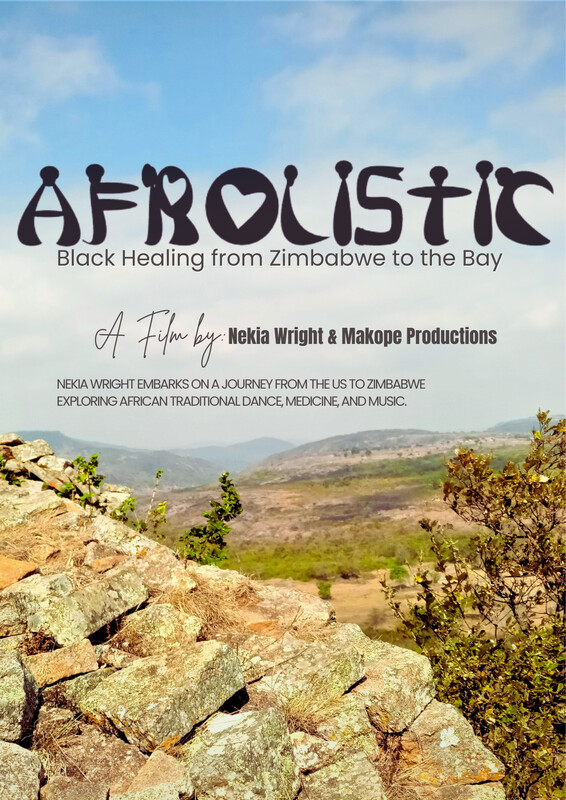
Short Film Review: Afrolistic: Black Healing From Zimbabwe to the Bay

Synopsis:

Directed by Nekia Wright, Shylet Ndarambwa

Black American healer shares about her practice and explores traditional healing, music, and dance in Zimbabwe.

Review by Julie Sheppard:

This joyful short, “Afrolistic: Black Healing From Zimbabwe to the Bay”, was produced as a real labour of love and discovery by healer Nekia Wright, who travelled from the US to Zimbabwe in 2021. The film was beautifully framed near the beginning and the end with exuberant youth dancers from Zimbabwe, which set a lively and celebratory tone to the piece. These young people displayed their incredible talents for dance, singing and percussion, and their stunning costumes were both versatile and culturally representative in nature.

Other remarkable talents were displayed throughout the film during interviews of many intuitive and compassionate healers in the area. There was a real sense of pride and confidence in these healers, who offered assistance using both traditional religion and such things as ancestral and spiritual communication. The drone footage of the massive stone mountains and welcoming village homes was breathtaking. Another well-done technical element was the crystal-clear sound recordings of community singing and rhythmic beats. 

Congratulations to healer Nekia who courageously took on this project to connect with the spirit of her ancestors, to learn more about her heritage and, in turn, to find healing herself.   

Short Film Review: TIMEBANK THE GAME – THE RECORD OF AN EXPERIMENT

Synopsis:

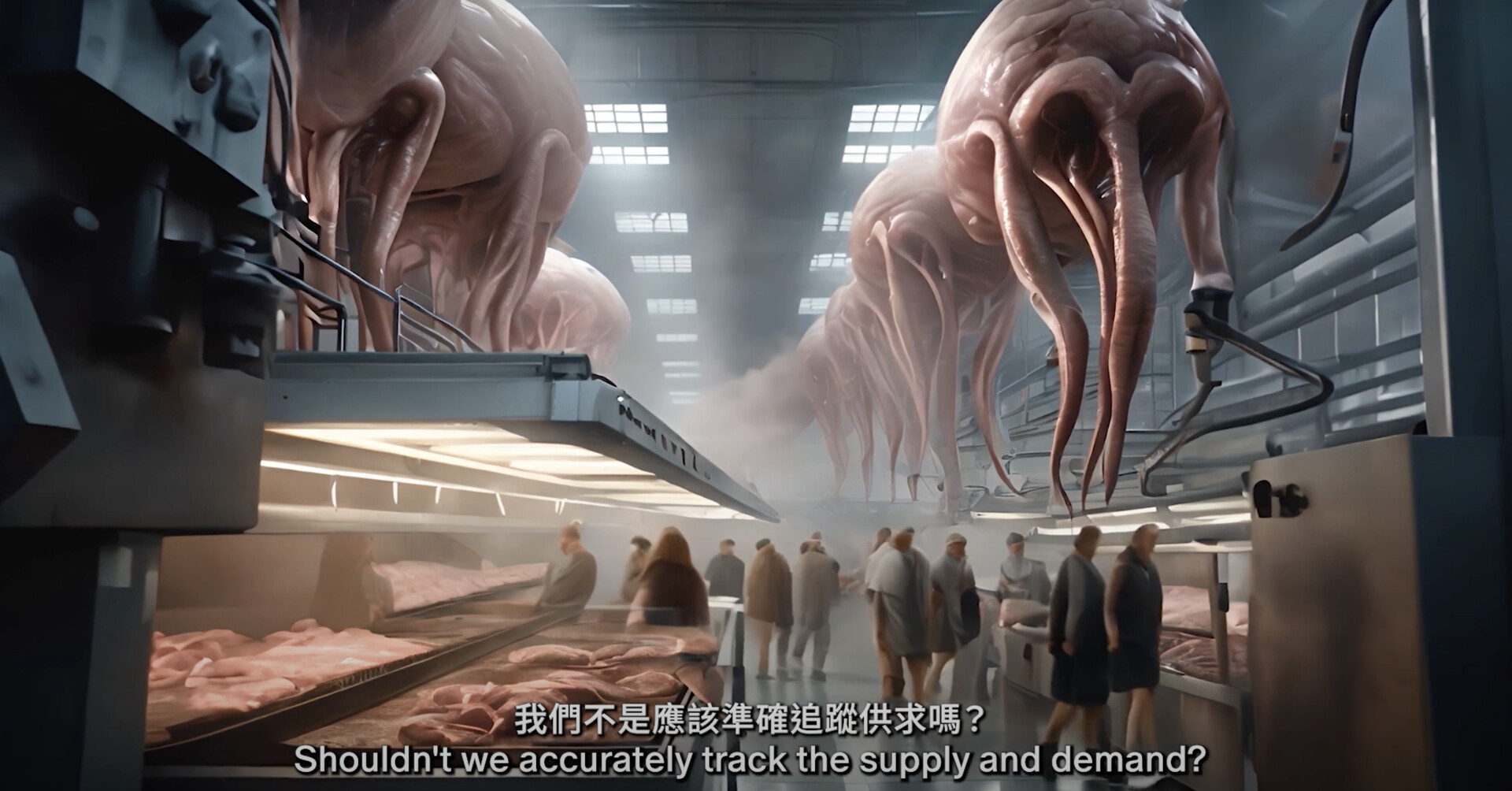
One hundred life forms received a distressing signal from the vanished civilization of Pharmakon, learning that Earth is on the verge of self-destruction. Time Lord has devised a way to destabilize time, propelled Earth beings to enter an alternate reality through “THE GAME” – a mysterious portal that reduces them to a single-cell form.

Directed by Amy Cheung

Review by Andie Karvelis:

It’s important to realize this was presented as part of the Hong Kong Shenzhe Bi-City Biennale of Urbanism/Architecture. A six week alternate reality game took place between 27, August to 26, November 2022. This very unique experience was written by Wing Yan Ng and writer/director Amy Cheung.


In true video game fashion you need to have a computer generated realm, this was thanks to Shence Mao for their 3D game design work, Erkka Nissinen ( 3D effects ) and Jeff Yiu who was responsible for the cinematography, A.I. motion and the editing. All of the A.I. and computer generated imagery was stunning and seamless. Amy Chueng and Jeff Yiu also handled the voice over for the A.I. robot and the visual effects which were exceptional.


However, TimeBank ( the game ) wasn’t just solely computer generated with A.I. There were some very impactful live action sequences that addressed serious issues concerning our eco systems, solar energy and food waste. Personally, I would have enjoyed more time spent on what each individual group was doing to help with these environmental concerns.


This film is a great educational tool that would fit perfectly in schools to spark the interest of our youth to become more involved in protecting this little blue rock we all call hom

Filmmakers Michael Jimmy DUPRET, Marion VAGNER (UNTYPICAL)

UNTYPICAL, 95min., Belgium
Directed by Michael Jimmy DUPRET, Marion VAGNER
The documentary is cameos of five neurodivergent adults who are witnessing the radical changes happening by being more and more in touch with their neurodiversity. Atypical adults in Europe are often undiagnosed and having to mask their whole lives. They face discrimination in their professional lives and often struggle with low self-esteem and feel worthless. Through their journeys they will see their neurodiversity not as a deficit or dysfunction but as a distinctive cognitive style, with its own strengths and benefits. An estimated 20 percent of the world’s population are thought to be neuroatypical.

Get to know the filmmakers:

MV Marion Vagner) and Michael’s (MD Michael Dupret) :

1. What motivated you to make this film?

MV : As a journalist, I love telling people’s stories but I find documentaries in which people tell their own stories extremely powerful.
“Untypical” is about people having a different cognitive style and thinking outside the mold. I really wanted to meet neuroatypical adults, because we often talk about atypical children and the difficulty of raising atypical children but there is less talking about what these children become.
When the topic is neurodiversity, there is no one else than neuroatypical people themselves able to explain what their lives are made of.
Having a few neuroatypical persons in my life, I also knew many diverse conditions are misunderstood at best, and mostly stigmatized. It is hard to relate to it and hard to explain. Hard to get the big picture.

MD : This project interested me as soon as Marion proposed it. The first thing I love about a documentary is the discovery: showing viewers another side of a societal issue and also being able to learn new things myself. I was also attracted by the opportunity to offer our interviewees the chance to present themselves as they truly are. Working in fiction as well, I love the truth in documentaries: it’s “real life.” What I enjoy most when working on a documentary is being able to show the daily lives of the people we follow. I want to be able to transport the viewer alongside the witnesses we follow to better understand what they are going through.

2. From the idea to the finished product, how long did it take for you to make this film?

MV : It took me 2 years to find 5 adults representing the 5 different ways of thinking or functioning which are ADHD Autism, dyspraxia, Tourette’s syndrome and giftedness. Then we started filming in August 2022 and finished in May 2023. Editing took us a month or so. We were a very very small team which made the whole process very special.

3. How would you describe your film in two words!?

MV : If I have to pick up two words to describe the film I would say “all different”. I am hoping that at the end of the film, it is understood that brains can process information differently without it being an issue. We are all different in the way we think, solve problems, love, understand. That makes us as humankind a community.

4. What was the biggest obstacle you faced in completing this film?

MV : The 5 persons I filmed had issues with their professional or educational environment. None of their employers or schools agreed on being part of the documentary and on telling one of their employees were neuroatypical. One of them has even been fired. There is such a lack of awareness about neurodiversity among employers and even healthcare professionals. It is part of the problem.

MD : With this subject, there was a challenge: showing the invisible, showing without staging, showing to create change. I love when the camera disappears, when the technique fades away to highlight the people we are following. The idea was to make visible to the viewers what our interviewees experience from the inside.

5. What were your initial reactions when watching the audience talking about your film in the feedback video?

MV : I was really really moved. First because they watched the film which I find amazing ! And also because the message we wanted to pass on was understood. The stories are relatable.

MD : I was really happy that all these people watched our film. It’s also interesting to see that so many people are concerned by this topic.

6. When did you realize that you wanted to make films?

MV : At 13 I was fascinated both by journalism and cinema. I was not allowed to watch TV or the news, so I still find it amazing that there was way to mix both my teenage passions.

MD : I was 7 when I watched the movie Poltergeist. I was not supposed to watch this movie at that age, but I was totally fascinated by it, by the emotions we can feel and share while sitting on a couch.

7. What film have you seen the most in your life?

MV : It would be the first movie I have ever seen, “Le grand bleu”. It moved me so much at the time it remains my cult classic.

MD : “Jaws”. I love the way the “monster” is shown by Spielberg. The music, the shark’s point of view. I’ve always been fascinated by how we can be so afraid of something we almost don’t see in the movie.

8. What other elements of the festival experience can we and other festivals implement to satisfy you and help you further your filmmaking career?

MV : I think feedback are what we thrive as filmmakers. Being selected or not, having an award or not, we progress with feedback.

MD : As Marion said, feedbacks are definitely great. It would be nice to get pictures from the movie projection.

9. You submitted to the festival via FilmFreeway. How has your experiences been working on the festival platform site?

Great, it is the second documentary we present, and it is so easy and a great way once the film is over to give it a life.

10. What is your favorite meal?

MV : I would say a French dish called quenelle. Is is a mixture of creamed fish and breadcrumbs and I am crazy about it.

MD : Definitely Quenelle!!! It’s a specialty from Lyon in France.

11. What is next for you? A new film?

MV : I am working on a documentary about Sanda Dia, a Belgian student who died in 2018 as a result of a fraternity hazing ritual. I work with his family to raise awareness on hazing, class-based justice and systemic racism.

MD : I just finished a documentary about the 1989 Tour de France, the biggest cycling event in the world. 1989 was a remarkable year when the American Greg Lemond made an incredible comeback. He won the race over the French favorite, Laurent Fignon, by 8 seconds on the last stage. It’s a kind of sports thriller. Now, I’m working on my second feature film, a horror movie.
Filmmaker Abigail Mascher (PEACE IN MY NIGHT)

PEACE IN MY NIGHT, 13min., Canada
Directed by Abigail Mascher
“Peace in my Night” is a compelling documentary that follows the extraordinary life of Elsie Mascher, a woman whose unwavering faith in God guided her through the darkest chapters of World War II.

Get to know the filmmaker:

What motivated you to make this film?

This film is one I have been wanting to create for a while. I recently moved to Canada for university. While I’ve been here I have been living with my grandmother (Oma) and I have been able to have many conversations with her. She has taught me a lot and it’s been interesting to hear her perspectives on life. I always felt her story would be one that could encourage others. Although it wasn’t easy for her, there was hope within the difficult experiences. Many people today struggle a lot in life. I wanted to share my Oma’s story so that those who watch it may feel encouraged and realise there is hope even in the darkest of times.

From the idea to the finished product, how long did it take for you to make this film?

It took me a whole year, two semesters, to make this film. It was a capstone project for my degree. The first semester was spent on pre-production while the second semester was spent filming and editing.

3. How would you describe your film in two words!?

Emotional but hopeful

4. What was the biggest obstacle you faced in completing this film?

One of the biggest obstacles I faced was trying to cut down the huge amount of my Oma’s story into a short twelve minute film. She has so much to say and has experienced many things. There was a lot I wanted to include in the film but wasn’t able to due to time. But she is working on writing her story so hopefully soon there will be a book out to find out in more detail all the things she went through. 🙂

5. What were your initial reactions when watching the audience talking about your film in the feedback video?

My first thought was, “I can’t believe all these people I don’t know watched my film and actually enjoyed it!” 🙂

I was encouraged by the comments and it was interesting to see all the different interpretations. I am mostly glad that my Oma’s story could make a positive impression on the people who watched it.

6. When did you realize that you wanted to make films?

I started making films during the pandemic. I was bored and wanted to use my time so I began making short videos on my two dogs. I enjoyed the process so much I decided to study it in school. I want to make films because I love telling stories in a creative way. I feel like I can make a difference with the stories I share through film.

7. What film have you seen the most in your life?

A film I love is the Sound of Freedom. Although it is very intense, I love the way it was made. The visuals and music are beautiful and draw you in. But my favourite part was how they were able to share a true story and use it to raise awareness. I want to make films like that, where I share stories that have meaning and make a difference in the world.

8. What other elements of the festival experience can we and other festivals implement to satisfy you and help you further your filmmaking career?

I honestly do not have much to say. The Toronto Documentary Feature & Short Film Festival has been incredible. I never expected all the opportunities given to continue showcasing my film. Thanks for sharing all the extra resources to increase the popularity of my film and share it with more people.

9. You submitted to the festival via FilmFreeway. How has your experiences been working on the festival platform site?

FilmFreeway has been amazing. A professor first told me about it. I had never even heard of it before when I was searching for places to showcase my work. I love how it’s a reliable place to connect with festivals and share my films with the world.

10. What is your favorite meal?

I grew up in Kenya so one of my all time favourite meals is a Kenyan dish called mukimo. It is basically made by mashing green peas, potatoes, maize, and spinach leaves altogether. You can have it with stew and chapatis (flatbread). It is so yummy! The crunch of the maize with the softness of the potatoes mixed with stew will always be a nostalgic meal for me. 🙂

11. What is next for you? A new film?

I am actually heading to the University of British Columbia next year to complete an education degree to become an elementary teacher. I wanted to give myself as many options as possible and my dream would be to teach during the year and make films over the summer. That being said, I have started working on the script for a narrative film I hope I can make once I have finished school. 🙂

Filmmaker Evan Jackson Leong (THE BRIDGE)

THE BRIDGE, 85min., USA
Directed by Evan Jackson Leong
Fifty years ago, our country grappled with widespread discrimination. In Los Angeles, neighborhood leaders challenged these barriers by establishing a community-focused bank, aiming to deliver the American dream to all. The East West Bank Foundation commissioned director Evan Leong to create The Bridge, which explores the struggles, perseverance, and successes of this remarkable journey.

http://www.thebridge-film.com/

Get to know the filmmaker:

1. What motivated you to make this film?

As a 6th generation Chinese American I’ve been fortunate to tell the stories of my community. The Bridge is a story about a humble Chinatown bank that not only grew the community but became a global influence furthering our place in society. For me, I’d be happy to tell these stories for the rest of my career. I was not only inspired but blessed to collaborate with the East West Foundation and Dominic Ng.

2. From the idea to the finished product, how long did it take for you to make this film?

This project took about a year and a half to completion.

3. How would you describe your film in two words!?

Bridging Communities

4. What was the biggest obstacle you faced in completing this film?

I think the biggest obstacle was finding a way to portray the bank as a character and give this film a heart. By definition, banks are financial institutions not community centers. But East West Bank’s story was different because its journey mirrored Asian America for the last 50 years. But to be fair once I started, there were such a wealth of beautiful ways the institution touched the community that the narrative revealed itself.

5. What were your initial reactions when watching the audience talking about your film in the feedback video?

Just a lot of awesome feels! As a director, you’re constantly working in a silo with your editor and small team, so when you get positive feedback from your peers it affirms your own journey. Also, the feedback really highlighted underlying themes that I tried to subtly explore. Its great when the audience gets it!

6. When did you realize that you wanted to make films?

I never thought being a filmmaker was a viable career choice growing up. Hollywood just felt so unattainable. But fortunately for me, while I was a UCLA undergrad I took a documentary class called Ethnocommunications. This program gave students the opportunity to learn about documentary filmmaking while telling stories about their own community. My first documentary was about a Chinese American historian from San Francisco who did the research that no one else was willing to do. I never felt so passionate about a process and I was hooked.

7. What film have you seen the most in your life?

My first narrative film SNAKEHEAD

2nd would be Chungking Express

8. What other elements of the festival experience can we and other festivals implement to satisfy you and help you further your filmmaking career?

I think you’re doing a great job! It’s just nice to have an invested audience in this era of multitudes of content.

9. You submitted to the festival via FilmFreeway. How has your experiences been working on the festival platform site?

Using FilmFreeway has been intuitive and experience using the festival platform site has been positive.

10. What is your favorite meal?

My wife’s Sun DuBu-jjigae

11. What is next for you? A new film?

A feature length documentary about LPGA phenom Rose Zhang.

A docuseries on IMSA racing featuring Daniel Wu.

Filmmaker Eduardo Robalo (O palhaço que há em nós)

O palhaço que há em nós, 18min., Portugal
Directed by Eduardo Robalo
“He says he will be a clown until his last day, but father, you will be a clown, forever. An actor in soul, a clown at heart.”

https://blackcastle.pt/en/project/o-palhaco-que-ha-em-nos-en/
https://www.facebook.com/blackcastle.pt/
https://twitter.com/BlackcastlePt/status/1611799462908665861
https://www.instagram.com/blackcastle.pt/

Get to know the filmmaker:

What motivated you to make this film?

This film is not just a story; it is a tribute to my father who, besides being a professional clown, is the main actor. Despite his career not achieving the success he deserved, I am determined to immortalize him through my film, aiming to win awards to show him that it was all worth it, which makes this project profoundly special to me.

From the idea to the finished product, how long did it take for you to make this film?

The concept, cinematography, and almost all of the pre-production were developed roughly between May 2023 and July 2023. However, we put the project on hold until January 2024 with the goal of investing in more material for a better final result. In February 2024, we had five days of shooting, and it took us about a month to edit and finalize the project.

How would you describe your film in two words!?

Eduardo prefers not to answer this question.

What was the biggest obstacle you faced in completing this film?

The biggest obstacle was undoubtedly my inexperience. Despite having a communication company and creating videos for companies and other artists, this was the first film I made, and since I never attended a film school or university, I had to learn a lot of new things as I encountered needs I didn’t know how to address.

What were your initial reactions when watching the audience talking about your film in the feedback video?

Receiving feedback from the audience is incredible. They reflect intense months of work, so I believe it is important to enjoy this phase, listening to them and feeling what they want to convey. After all, without them, there would be no cinema.

When did you realize that you wanted to make films?

After finishing “The Clown Within Us”.

What film have you seen the most in your life?

“Joker” by Todd Phillips.

What is your favorite meal?

Eduardo prefers not to answer this question.

What is next for you? A new film?

In September of this year, we will be shooting our second short film to be released later in 2024. Additionally, I have already started writing my first feature film, which I intend to produce in 2025. However, we will face a new challenge of finding executive producers and investors who believe in the project. It will be our first high-investment project, and we aim for it to be recognized globally (the film’s foundation has everything for this to happen).

Filmmaker Victor Amaro (The story and forgiveness of José and Maria)

The story and forgiveness of José and Maria, 15min., Brazil
Directed by Victor Amaro
After 50 years, José and Maria definitively break off their marriage and agree to give statements to their grandson, for the first time, about the reasons that led them to make such a decision. A story about love, pain and forgiveness.

http://filhounicofilmes.com/
https://www.instagram.com/filhounicofilms

Get to know the filmmaker:

1. What motivated you to make this film?

I always found it sad the way the Brazilian family is portrayed in Brazilian cinema. There are countless layers that are never addressed, when I saw my grandparents’ situation I couldn’t think differently. I needed to document this, but I didn’t know I was capturing their last moments.

2. From idea to final product, how long did it take you to make this film?
The entire process took more or less 1 year. It was a very challenging process, finding a good narrative that respected both parties

3. How would you describe your film in two words?
Raw and real

4. What was the biggest obstacle you faced in completing this film?
It was definitely my emotional side, being able to complete the story without getting emotional and wanting to drop everything. Even though it’s work, seeing my grandfather being completely weakened by cancer and my grandmother’s emotions with this situation is something that hurts a lot.

5. What were your initial reactions to watching the audience talk about your film in the feedback video?
It’s impressive how cinema unites cultures, even though I’m a young Brazilian from the countryside, the public’s observations spoke in a cultural way with my artistic proposal. My family was moved and it even became an article in my city’s newspaper.

6. When did you realize you wanted to make films?
Since I was a child, I always wanted to watch films whenever possible, when I discovered that there was a profession as a projector, I fell in love. This triggered me observing that no film seemed like my life, that is, there were many narratives that had never been addressed in national cinema. This culminated in my profession.

7. Which film have you seen the most in your life?
Definitely Fight Club. It was the first experience I had on internet forums, we discussed and debated as much as possible about it. This awakened me to the fact that a raw film can have its fantasy side, losing its essence.

8. What other elements of the festival experience can we and other festivals implement to satisfy you and help you advance your film career?
I believe it helps with publicity and industry relations. Brazilian cinema urgently needs support and encouragement from large industries.

9. You registered for the festival via FilmFreeway. What has your experience been like working on the festival platform website?
Perfect, thank you for being so kind.

10. What is your favorite meal?
Pizza for sure!

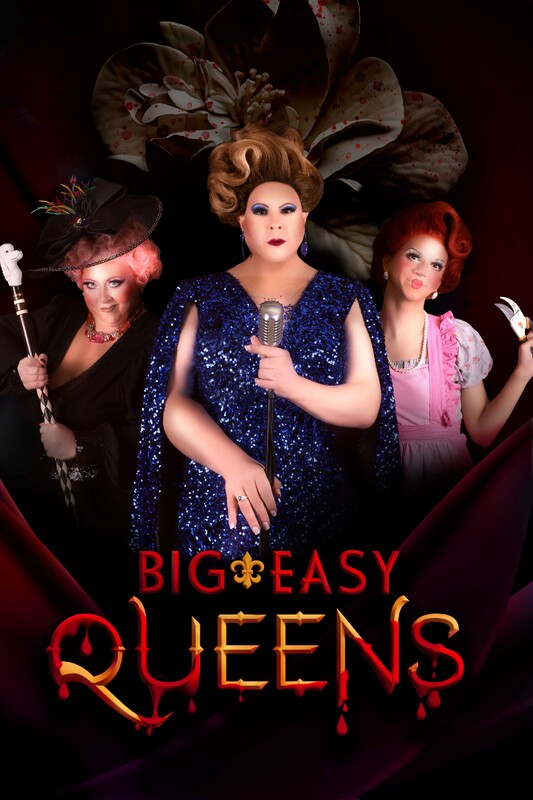
Feature Film Review: BIG EASY QUEENS. LGBTQ+ Documentary

Synopsis:

Eighty minutes of pure horror queer celebration with original musical numbers, voodoo, zombies, Drag Queens, and campy neo-giallo delight soaked in blood, gristle, and glitter, oh my! In this “glam horror” righteous extravaganza, a battle for territory requires the Bouvèé sisters to set aside their differences to become the “Big Easy Queens!” Entirely made-in-Florida and set in the steamy underworld, BIG EASY QUEENS follows Minnie Bouvèé, Mob Queen of the Quarter, and her rivalry with her arch-nemesis, Poodles Makenzie. After Minnie Bouvèé has Poodles Makenzie’s crew brutally slaughtered, she braces for the blowback; what she doesn’t expect, however, is to be stalked by a creepy masked figure who leaves behind bouquets of gardenias and terrifying notes. Is this Poodles’ revenge, or the work of Minnie’s estranged sister who stole her man years ago and has suddenly reappeared in her life?

Directed by Erynn Dalton

Project Links

Review by Parker Jesse Chase:

“Big Easy Queens” is a musical celebration of queer horror, blending blood, gristle, and glitter into a unique spectacle. The film revolves around a battle for territory forcing the Bouvèé sisters to set aside their differences and unite as the “Big Easy Queens.”


The story follows Minnie Bouvèé, Mob Queen of the Quarter, as she contends with her arch-nemesis, Poodles Makenzie. After having Poodles’ crew brutally slaughtered, Minnie braces for retaliation, but is instead stalked by a creepy masked figure who leaves behind bouquets of gardenias and threatening notes. The mystery deepens as Minnie wonders if this is Poodles’ revenge or the work of her estranged sister, who reappears in her life after years of animosity.


From the title card, it’s clear “Big Easy Queens” promises a bloody tale. The film draws cinematic inspirations from iconic films such as “The Birdcage”, “The Producers”, and “Chicago”, with a touch of “Austin Powers” thrown in (the gun bra scene is particularly memorable). A threatening letter attached with white gardenias—a personal touch for Miss Bouvèé—adds an eerie layer to the plot. The musical numbers delve into the characters’ complicated histories, especially involving Jackson, who left Minnie for her sister, Mimi. Jackson’s constant scheming for money reveals the emotional manipulations at play.


Mimi makes a deal with Poodles, agreeing to be her “pet” in exchange for limitless cash to keep Jackson. Just as Mimi thinks she’s getting what she wants, a surprising twist keeps her desires just out of reach.


The bloody covered gardenias are the most artistically cinematic element, and the kaleidoscope sequence is killer—pun intended. The film’s play on witchcraft, in a scene reminiscent of “I Love Lucy” and “Scooby-Doo”, showcases the sister duo’s plot to outsmart Poodles.


As the story unfolds, the villain behind the crime isn’t who we expect. The thrupple of men planning to take over the Quarter is revealed to be led by Giuseppe, Miss Bouvèé’s right-hand man, who witnessed his mother’s accidental murder at Minnie’s hands with Poodles’ right hand man and Jackson by his side. The revenge plot comes full circle, with the sisters uniting to take down the thrupple and rise in power.


In the end, the two sisters find their happy ending not with a man, but by rediscovering their bond and performing together at the club. The production design, costumes, and setting perfectly capture the glitz and glam of the LGBTQ Queen lifestyle with a mob boss twist. This blend of high camp and gangster drama is rare, making the film’s storytelling experience truly unique.


Directed by Erynn Dalton, with a screenplay by Robert Leleux and an original score by Geoffrey Short, “Big Easy Queens” is a blood-soaked, glittering joyride through queer horror. Eric Swanson as Miss Bouvèé and Jennifer McClain as Poodles MaKenzie deliver standout performances, making this film a must-watch for fans of the genre.

Filmmaker Vanessa Mariveles (ECHOES OF DREAMS)

ECHOES OF DREAMS, 84min., USA
Directed by Vanessa Mariveles
Reyna, a struggling DJ in Silicon Valley, has to pivot her career in order to survive. Having the worst year ever, she is forced to join the “gig economy” so she can pay rent while living with her pushy mother. While dating women for the first time, she finds herself in comical situations. Through determination, self-discovery, and the power of faith, Reyna learns to overcome adversity and finds her true calling and love.

http://marivelesproductions.com/
https://instagram.com/mariveles.productions

Get to know the filmmaker:

1. What motivated you to make this film? What motivated me to make Echoes of Dreams was wanting to tell an underdog story mixed with romance and comedy since those are my favorite genres. I wanted to write something quickly and get it made in 2023 so I decided to tell my own story.

2. From the idea to the finished product, how long did it take for you to make this film? It took 7 months to make the film from idea to finished product. I had the idea to write this story early July 2023 and wrote the first draft on 4th of July weekend, started casting in parallel, then shot my first scene July 28th. Editing took most of the time from October to end of January 2024.

3. How would you describe your film in two words!? Lesbian Dramedy

4. What was the biggest obstacle you faced in completing this film? The color correction and post-production audio were the biggest obstacles I faced, because I did it myself with limited experience. Then I had to come up with funds to hire a Post-audio/music score person and collaborate with them and give them direction on how I wanted the final product to sound.

5. What were your initial reactions when watching the audience talking about your film in the feedback video? My initial reaction from the audience feedback was that I am glad they enjoyed the story and the stop-motion animation. I’m glad the feedback was also about technical things that should be re-visted like color-correction and audio.

6. When did you realize that you wanted to make films? I realized I wanted to make films in high school.

7. What film have you seen the most in your life? I have watched Avatar 3 times in the theaters. Also, Home Alone is one of my favorite movies even now.

8. What other elements of the festival experience can we and other festivals implement to satisfy you and help you further your filmmaking career? I your festival does a great job in promoting filmmakers through interviews and social media posts. If there was a virtual networking event that your festival could host at the end of the year, that would be great for filmmakers to collaborate.

9. You submitted to the festival via FilmFreeway. How has your experiences been working on the festival platform site? My experience with FilmFreeway is great and seamless. Makes it easy to search for specific festivals.

10. What is your favorite meal? I love Italian food and Thai food.

11. What is next for you? A new film? I am currently writing an action feature film titled Bad Ryder that is a blend between Baby Driver and Thelma & Louise.

Writer/Actor Paul Pecorino (THE DESTRUCTION OF JANE)

THE DESTRUCTION OF JANE, 12min,. USA
Directed by Drue Pennella
The Destruction of Jane is a campy, over the top, erotic, outrageous comedy which follows Miss Jane Parker to the African Jungle where it all began. Witness Tarzan and Jane’s first encounter, in what now has become a rather heralded expedition in the African Jungle, and one of our greatest love stories.

http://www.youtube.com/@thedestructionofjane9756
https://www.instagram.com/destructionofjane

Writer/Actor Paul Pecorino:

Q1: What motivated you to make this film?

A1: I was motivated by an unstoppable combination of caffeine, an overactive imagination, and a jungle of weeds in my backyard that screamed “cinematic masterpiece.” I thought, why not turn my backyard chaos into a hilarious, campy adventure? Plus, playing both a gorilla and a damsel in distress was just too good to pass up.

Q2: From the idea to the finished product, how long did it take for you to make this film?

A2: It took about as long as it takes for a banana to ripen and then over-ripen. In human years, that’s roughly a few years of juggling, retooling, and bribing friends with pizza to help me get this thing off the ground. But hey, great things come to those who wait… and wait… and wait!

Q3: How would you describe your film in two words!?

A3: Jungle Madness.

Q4: What was the biggest obstacle you faced in completing this film?

A4: The biggest obstacle? Convincing everyone that shooting in my backyard jungle with a budget of two coconuts and a dream was a good idea. That, and trying to keep a straight face while acting opposite a very confused neighborhood cat who wandered onto set.

Q5: What were your initial reactions when watching the audience talking about your film in the feedback video?

A5: I was ecstatic! Seeing people laugh and react to my jungle antics was like winning the lottery… if the lottery involved wearing a gorilla suit and running around with a fake vine. It was pure joy and relief that our banana-fueled efforts paid off!

Q6: When did you realize that you wanted to make films?

A6: I realized I wanted to make films when I found myself directing epic backyard productions with my friends as a kid. It was either that or become a jungle tour guide, and let’s just say I’m better at handling a camera than a machete.

Q7: What film have you seen the most in your life?

A7: Hands down, it’s The Rocky Horror Picture Show. I’ve watched it so many times, I could probably do the Time Warp in my sleep. There’s something about a campy musical that speaks to my soul.

Q8: What other elements of the festival experience can we and other festivals implement to satisfy you and help you further your filmmaking career?

A8: More banana-themed snacks would be great. But seriously, creating more opportunities for networking and collaboration would be fantastic. Also, maybe a category for “Best Backyard Jungle Film”? Just a thought!

Q9: You submitted to the festival via FilmFreeway. How has your experiences been working on the festival platform site?

A9: FilmFreeway has been like a trusty vine in the jungle – reliable, supportive, and didn’t snap under pressure. It made navigating the festival submissions a breeze, even for a filmmaker swinging through the chaos like me.

Q10: What is your favorite meal?

A10: Anything that can be delivered to a backyard jungle set. But if I had to choose, I’d say a giant bowl of spaghetti – easy to eat between takes and perfect for a post-shoot carb fest!

Q11: What is next for you? A new film?

A11: Next up, I’m considering a sequel: The Destruction of Jane 2: Return to the Jungle. Either that or a much-needed nap. But seriously, more films are definitely on the horizon, so stay tuned for more campy adventures!