Movie Review: THE CHAMPION (2016)

  MOVIE POSTERTHE CHAMPION, 17min, USA, Documentary
Directed by Patrick McGowan

A former Iraqi boxing champion, Estaifan Shilaita overcomes tremendous hardships as he builds a special bond with his family and taxi cab customers in Chicago.

Shown at the September 2016 DOCUMENTARY FEEDBACK Film Festival

Movie Review by Kierston Drier

The Champion, a powerful short film hailing from the USA, directed by Patrick McGowan, is the story of Estaifan Shilaita, former Iraqi boxing champion turned taxi driver. The story follows Estaifan in his pursuit for a better life for himself in Chicago. Full of stunning re-enactments, brilliant cinematography, powerful composition and above all, breath taking humanity in its’, The Champion is all at once heartbreaking and humorous, compelling and inspiring.

Estaifan may seem on the outside like any other metropolitan taxi driver- friendly, smiling, overtly chatty. But under his ever-calm and ever beaming face is a story of rich history and deep roots. Achieving great fame in his youth in Iraq as a light weight boxer, Estaifan fled to find a better life for himself. He fell in love in Greece and took his new wife to Chicago under refugee status, where they began raising their four children under the American dream.

This film boasts excellent production value, rivaling any highly acclaimed feature. But it is not the visual beauty of the film that makes it sing- it is the honesty, the heart and humanity of Estaifan’s life. His resilience and happiness in the face of conflict is nothing less than a testament to human triumph. As a film, The Champion, glosses over the political and economic tensions that propelled our hero’s to flee Iraq. It glosses over the struggles a young refugee family must have faced in a new country. The film only briefly touches on the pain of loss that Estaifan and his wife feel, at having spent nearly forty years in the USA without ever being able to access their family in Iraq. It glosses over all of these things so that is can focus on joy. For Estaifan’s life is so utterly full of his own encapsulating joy it is tangible. The audience cannot help but be uplifted by it. And it makes this film spectacular.

Watch the Audience FEEDBACK Video of the short film:
Film Review: MISS HOKUSAI (Japan 2014-2015) ***

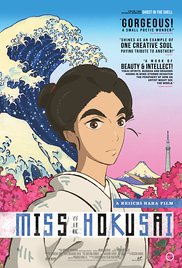
miss_hokusai_poster.jpgMISS HOKUSAI (Japan 2014-2015) ***
Directed by Keiichi Hara

Starring: Yutaka Matsushige, Anne Watanabe, Erica Lindbeck

Review by Gilbert Seah

The Japanese animated feature MISS HOKUSAI is set in 1814 in Edo,where peasants, samurai, merchants, nobles, artists, and courtesans live together in apparent harmony. It is also just the time that marked the end of the samurai era when Edo was renamed Tokyo – an important period for the Japanese, that unfolds here for the education of the westerners.
The artist is the film’s subject.

Accomplished artist Tetsuzo spends his days creating astounding works, from a giant Dharma portrayed on a 180-metre-wide sheet of paper to a pair of sparrows painted on a single grain of rice. Short-tempered and with no interest for saké or money, he (Hokusai) would charge a fortune for any job he is unwilling to undertake. But it is his daughter, O-Ei who is sane and completes the work her father leaves unfinished.

As all of Edo flocks to see the work of the revered painter Hokusai, the artist’s daughter O-Ei toils inside his studio, creating masterful portraits and erotic sketches that — sold under her father’s name — are coveted by aristocrats and journeyman printmakers alike. Shy and reserved in public, in the studio O-Ei is brash and uninhibited, but despite this fiercely independent spirit she struggles under the domineering influence of her father and is ridiculed for lacking the life experience that she is attempting to portray in her art. This film is her story (the young woman behind one of history’s most famous artists) and it shows her coming-of-age in a precarious and difficult situation.

Based on the manga Sarusuberi by Hinako Sugiura, MISS HOKUSAI is carefully crafted animation, similar to the type Ghibli Studio produces. The animation is impressive especially during the fire and water (very difficult to animate) scenes but the film lacks dramatic drive. The characters often appear just coasting around, like the objects of a painting. The fact that a lot of mythical elements are introduced does not help the film’s credibility either.

The film was first screened during the Real Asian film festival in Toronto in 2015 and is finally getting a screening run at the TIFF Bell Lighbox. There are two versions – I saw it in the original subtitled version. The other is the inferior dubbed version.

Trailer: https://www.youtube.com/watch?v=3nj1rwo_d-s

SUBMIT your TV PILOT or TV SPEC Script
Voted #1 TV Contest in North America.
FILM CONTESTSUBMIT your SHORT Film
Get it showcased at the FEEDBACK Festival
writing CONTEST1st CHAPTER or FULL NOVEL CONTEST
Get full feedback! Winners get their novel made into a video!
SCREENPLAY CONTESTSUBMIT your FEATURE Script
FULL FEEDBACK on all entries. Get your script performed

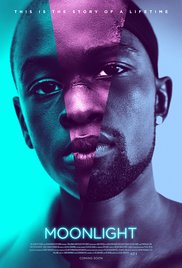
Film Review: MOONLIGHT (USA 2016) ***

moonlight_poster.jpg


MOONLIGHT (USA 2016) ***
Directed by Barry Jenkins

Starring: Mahershala Ali, Shariff Earp, Duan’Sandy’ Sanderson

Review by Gilbert Seah

MOONLIGHT is one of the most talked about African American films screened at the Toronto International Film Festival. It has garnered rave reviews based on its raw content and originality. And indeed, this film deserves all accolades.

MOONLIGHT is Barry Jenkins’ second feature after MEDICINE FOR MELANCHOLY.

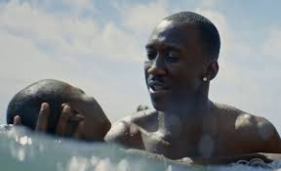
It is s very strange feature, low-budget, very originally told (in three parts; each part titled by each of the three names the protagonist is given) of the life of Little or Chiron or Black from childhood to adulthood. His real name is Chiron, but is called Little in school due to his small stature. Little is ‘adopted’ by a local thug and his girlfriend when he is not living with his drug addicted mother.

Bullied and beaten up frequently because of his small stature and curly hair (he looks very much like a girl), Little cannot take it anymore and is arrested after he finally breaks a chair over his bully right in the middle of a class. The scene deserves quiet cheers.

Little grows up, surprisingly into a big muscled guy and meets back with his school buddy who gave him the nickname of Black. He obviously had the thug of his childhood as his mentor. Kevin and Black have a gay sex encounter which Black can never forget.

Jenkins’ film feels like it is all over the place though it is obvious he is leading his audience somewhere. One good thing about Jenkins film is that you never know where he is leading the audience. Though slow moving at times, Jenkins film is never boring and a compelling watch for start to end when the audience finally figures out the purpose of MOONLIGHT.

Trailer: https://www.youtube.com/watch?v=5fYFIj16YC0

Free logline submissions. The Writing Festival network averages over 95,000 unique visitors a day.

SUBMIT your TV PILOT or TV SPEC Script
Voted #1 TV Contest in North America.
FILM CONTESTSUBMIT your SHORT Film
Get it showcased at the FEEDBACK Festival
writing CONTEST1st CHAPTER or FULL NOVEL CONTEST
Get full feedback! Winners get their novel made into a video!
SCREENPLAY CONTESTSUBMIT your FEATURE Script
FULL FEEDBACK on all entries. Get your script performed

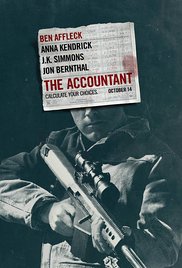
Film Review: THE ACCOUNTANT (USA 2016) ***

the_accountant_poster.jpgTHE ACCOUNTANT (USA 2016) ***
Directed by Gavin O’Connor

Starring: Ben Affleck, Anna Kendrick, J.K. Simmons, Jon Bernthal, John Lithgow, Jeffrey Tambor

Review by Gilbert Seah

Directed by Gavin O’Connor (WARRIOR, PRIDE AND GLORY) and written by Bill Dubuque, THE ACCOUNTANT is a action thriller that strives to be stylishly different. For one, it centres on an accountant, one that cooks the books for dangerous drug cartel members. He is hunted down by Revenue Federal agents. Is THE ACCOUNTANT a good or bad guy? How can he be made into an exciting action hero? How can he be made into a more than special human being? All these factors are infused into Dubuque’s script, which often appears to be trying too hard, resulting in a film more confusing and complex than need be.

As the film stars Ben Affleck who plays a human fighting machine, the film feels like a BATMAN with numbers.

Christian Wolff (Ben Affleck) is a mathematics savant (autistic) with more affinity for numbers than people. His childhood is traced, in flashback till the present. As a child, Christian’s military father believes that difference is perceived as a threat to most people. To protect his son, he forces Christian to better himself in martial-arts.

Grown up, Christian is a top-notch accountant who uses a small-town CPA office in a strip-mall as a cover. He makes his living as a forensic accountant for dangerous criminal organizations. With a Treasury Revenue Agent, Ray King (Oscar winner J.K. Simmons from WHIPLASH ) hot on his heels, Christian takes on a state-of-the-art robotics company as a legitimate client. As Wolff gets closer to the truth about a discrepancy that involves millions of dollars, the body count starts to rise. With the help of a new Revenue recruit, Median (Cynthia Addai-Robinson) who Ray blackmails into helping, Wolff’s identity is revealed. The showdown finally takes place in the mansion of the company owner (John Lithgow) who turns out to be the villain of the piece.

Besides Dubuque’s clumsy script, the film contains too many unintentional funny moments. The result is the promo audience laughing at too many parts during the climax. Median’s character could also be eliminated from the script for a leaner film, without much effect.
Affleck delivers an almost perfect low-key performance as the stoic accountant, whose body movements are basically stationary unless absolutely necessary as in the action scenes. Of the remainder of the cast, Jeffrey Tambor shines as Wolff’s cellmate, who was also involved with the drug cartels. Thankfully, the audience is spared the torture scenes, though a few hints (like the sight of a blow torch and damaged face) are enough to make anyone shudder.

Near the end, the film suddenly decides that it has to provide some message on autism. This results in one of the film’s most awkward segments with the music tuned to ‘melancholy’. For a film supposedly positive towards autism, the film contains some really disturbing scenes involving strobe lights and loud sounds.

Despite all its faults, THE ACCOUNTANT is a well-mounted film, with very exciting actions segments aided by crisp editing that conveys the accountant’s martial-arts training. THE ACCOUNTANT at least, attempts to put in some originality into the well-worn action genre.

Trailer: https://www.youtube.com/watch?v=DBfsgcswlYQ


SUBMIT your TV PILOT or TV SPEC Script
Voted #1 TV Contest in North America.
FILM CONTESTSUBMIT your SHORT Film
Get it showcased at the FEEDBACK Festival
writing CONTEST1st CHAPTER or FULL NOVEL CONTEST
Get full feedback! Winners get their novel made into a video!
SCREENPLAY CONTESTSUBMIT your FEATURE Script
FULL FEEDBACK on all entries. Get your script performed

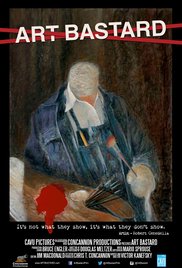
Film Review: ART BASTARD (2016)

art_bastard_poster.jpgART BASTARD (USA 2015) ***
Directed by Victor Kanefsky

Starring: Robert Cenedella

Review by Gilbert Seah

“Art from day one for me was the special part of life – the part of life that was above the gutter.” – Robert Cenedella. In a madcap art world obsessed with money, fame and hype, how does an artist driven by justice, defiance and his own singular style thrive? Cenedella was the contemporary of Andy Warhol, but in reality was anti-Warhol.

When ART BASTARD begins, the camera takes the audience through a tour around the NYC Transit where a few of the subject’s paintings are seen. The artist, obviously the ART BASTARD referred to in the film title is a little known artist known as Bob Cenedella.

So who is this Cenedella? Fortunately Cenedella is still alive. Director Kanefsky allows Cenedella maximum screen time to introduce both himself and his works. His family members are interviewed too along with art experts in order to put Cenedella’s work into perspective.
Foremost, Cenedella’s paintings are introduced. The main characteristic of his paintings is the inclusion of many, many faces crammed into a scene. The year in which the paintings were drawn and a good detailed shot is provided.

Examples of these include:

Fun city 1979
The Fight 1964
Give to Cenedella 1977

The film contains a few diversions. One is an examination of contemporary art and what it means. Several art experts give their view in the context of Cenedella’s paintings. A discussion also follows on what art rises and what art fails. The individuals are pawns who can hardly make a difference. Cenedella also discusses family life. He is clearly upset about his father and the film contains quite a few scenes with him and his son. Cenedella claims it is not hard to become a good father.

Cenedella’s character is also revealed on screen. He is shown to be an artistic person. He loves Beethoven and made quite a bit of money in his youth selling Ludwig pins. He does not like Elvis. His joy as a teen are his weekly visits to the New York Metropolitan.

The film’s best scenes are those that show Cenedella actually painting and teaching it. “Holding a bush is one of the greatest disciplines in the world”, says Cenedella convincingly.

As a fair bit of the film’s running time is devoted to Cenedella’s family, some insight is added into his paintings. When Cenedella was young and his mother very drunk one night, she told him that his father is not his real father. He therefore felt like an outsider within his family. Similarly, he despised the art scene feeling like an outsider too and hence the film title ART BASTARD. Cenedella finally meets his biological father finding him to be a bit weird with a huge sense of humour. His painting in 1964 entitled ‘The Fight’ shows his father and stepfather battling each other in a boxing ring. Another one, called ‘The Third Movement’ one of his series of ‘orchestra paintings’ shows all the characters fighting each other. His paintings often are inherently funny, satirical and often contains a deeper meaning.

One can hardly complain about ART BASTARD as a documentary. Director educates his audience with interviews, archive footage of films and photos while explaining quite a few of the paintings. The film though serious in most parts, contains a bit of humour,primarily because Cenedella had a good sense of humour.

ART BASTARD is an interesting, entertaining enough documentary in which everything one wanted to know about the artist is dished out.

Trailer: https://www.youtube.com/watch?v=eXhy5prz83k


TV CONTESTSUBMIT your TV PILOT or TV SPEC Script
Voted #1 TV Contest in North America.
FILM CONTESTSUBMIT your SHORT Film
Get it showcased at the FEEDBACK Festival
writing CONTEST1st CHAPTER or FULL NOVEL CONTEST
Get full feedback! Winners get their novel made into a video!
SCREENPLAY CONTESTSUBMIT your FEATURE Script
FULL FEEDBACK on all entries. Get your script performed

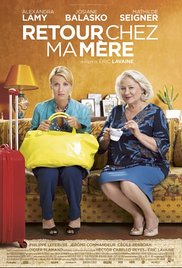
Film Review: RETOUR CHEZ MA MERE (BACK TO MOM’S) (France 2016)****

back_to_moms_poster.jpgRETOUR CHEZ MA MERE (France 2016)****
Directed by Eric Lavaine

Starring: Josiane Balasko, Alexandra Lamy, Mathilde Seigner

Review by Gilbert Seah

There is one good reason to see the new comedy that is a number one hit in France this year. The reason is Josiane Balasko, France’s favourite actress and indeed mine as well. Her most famous films are GAZON MAUDIT (FRENCH TWIST), THE HEDGEHOG, FRENCH FRIED VACATION and TROP BELLE POUR TOI. She won the Cesar for Best Script for her film GAZON MAUDIT. Balasko is a comedy heavyweight and she plays ‘la mere’ in the movie, carrying the movie and making the audience laugh out loud many times when she appears.

The title gives away the plot of this new charming French comedy. Forty-year-old Stéphanie (Alexandra Lamy) is compelled to return home to live with her mother (Balasko), after she loses everything her job, her husband and all her money. She is welcomed with open arms: she can enjoy the over-heated apartment, Francis Cabrel stuck on replay, furious games of Scrabble and precious maternal advice on how to sit at the table and how to live her life. Both women must exercise infinite patience to cope with this new situation. And when the rest of the clan turns up for dinner, settling of scores and family secrets follow on one from the other in a most joyful way.

Besides the comedy that works, the film’s charm comes from the story derived from real life. Everybody has a family of sorts and they all meet, sometimes occasionally for dinner. North Americans have Thanksgiving and Christmas, so they can relate. The film also digs deep in the heart. When the sibling quarrel and fight at the dinner table, mother finally remarks for them to go home repeating that this was the worst night of her life. Lavaine’s (BARBECUE) film is able to evoke drama though occasionally dousing the film with a little sentimentality.
Besides the obvious family dinner gathering, there are other prize comedic set-ups. One is the mother trying to get away from Steph to be with her lover who stays in the upstairs apartment. She tells Steph she is taking the train to Avignon, but Steph insists on accompanying her to la gare, with mother trying to lose her at every move.

This is the kind of French comedy like THE WOMAN IN RED, THE DINNER GAME. TAXI and LA CAGE AUX FOLLES that Hollywood will remake into successful hits. RETURN TO MOM’S is an ideal fit. Like all the other originals, the French version is the best. And no one can replace Balasko as the mother.

RETOUR CHEZ MA MERE takes a bit of time to get on its feet, perhaps a third of its running time. But besides being a comedy, it is foremost a film about family. With this strong grounding, the film can not go wrong. Lavaine’s film turns out to be an extremely entertaining crowd pleaser and it is no surprise it became a hit in its home country.. And in the words of Lavaine during an interview: “This is a story of a woman who has decided that there’s more to life than kids, even if they’re moving back in forty years after making them.”

Clip (en Francais pas sous-titres): http://cineuropa.org/vd.aspx?t=video&l=en&did=306750


TV CONTESTSUBMIT your TV PILOT or TV SPEC Script
Voted #1 TV Contest in North America.
FILM CONTESTSUBMIT your SHORT Film
Get it showcased at the FEEDBACK Festival
writing CONTEST1st CHAPTER or FULL NOVEL CONTEST
Get full feedback! Winners get their novel made into a video!
SCREENPLAY CONTESTSUBMIT your FEATURE Script
FULL FEEDBACK on all entries. Get your script performed

Film Review: AMERICAN HONEY (UK/USA 2015) ****

american_honey_poster.jpgAMERICAN HONEY (UK/USA 2015) ****
Directed by Andrea Arnold

Starring: Sasha Lane, Shia LaBeouf, Riley Keough

Review by Gilbert Seah

The fifth film and fourth feature (I have seen every one of her films) sees British director Andrea Arnold covering similar material in a total different setting. All her films have a disgruntled female as the central character often living a life in the outskirts of a city, one that the protagonist strives to get out of and make something of herself. Her first short, WASP, had a middle-aged woman go to her ex-husband’s home to beat up his woman and take her children out. She ends up leaving her children outside a pub while she goes in for a drink hoping to pick up a man. Her next two films RED ROAD and FISH TANK were hard hitting dramas, both of which were excellent, but her last film, a modern adaptation of WUTHERING HEIGHTS did not work and was plain awful. Her new film AMERICAN HONEY, that premiered at Cannes (that also won her the Jury Prize) is her first film set in America, about a 18-year old teenager, Star (newcomer Sasha Lane who was pick up from a beach by Arnold for a screen test) following a crew of hard-partying teenagers criss-crossing the Midwest while working as travelling magazine salesmen.

Star leaves her mother and her siblings, after being enticed by Jake (Shia Labeouf) who she meets at Walmart to work as a magazine sales crew. The crew is a hilarious gang of misfits: slugging hard liquor in the backs of vans, crashing in rundown motels, and selling fraudulent magazine subscriptions. Star and Jake are ecstatic in each other’s company. They begin dreaming of a house and family to call their own. But their relationship offends the crew’s queen bee, Krystal (Riley Keough).

Arnold knows how to film confrontation – the film’s best scenes are the confrontations between Star and Krystal.

One can see the fascination America has for British director Arnold. She shoots the lead characters first meeting at an American icon – a Walmart. Arnold loves the landscape of Kansas City and the barren landscapes that the van passes during their sale trips. Her verite style can be seen in the film’s loose plot and her frequent use of the hand-held camera.

Arnold is also fascinated by insects as revealed in many of the film’s scenes. Star is seen twice saving insects, a bee from a window and a ladybug from drowning in a lake. A pretty butterfly is also filmed while Sasha falls in a bog in another scene.

But the film has its English roots. The gang is immediately reminiscent of the gang of pickpocket and thieves in Dickens’s OLIVER TWIST. The character Krystal is a cross between Fagin and Bill Sykes. But redemption here, unlike in the Dickens story is up to Star herself, with no one to help. It is a hard life on the American road, even for veteran salesman Jake who Krystal finally gets bored with as a sex object.

` The film’s soundtrack varies from E-40 to Rihanna to Bruce Springsteen with the song AMERICAN HONEY used in the soundtrack at the end of the film. Star and Jake also meet to the dance beats of Calvin Harris and Rihanna’s 2011 smash “We Found Love”.

This is Arnold’s longest film, running at 2 and a half hours, an epic opus to life of American youth living on the outskirts, as seen by a Brit.

Trailer: https://www.youtube.com/watch?v=y1SpWZm1PLc

TV CONTESTSUBMIT your TV PILOT or TV SPEC Script
Voted #1 TV Contest in North America.
FILM CONTESTSUBMIT your SHORT Film
Get it showcased at the FEEDBACK Festival
writing CONTEST1st CHAPTER or FULL NOVEL CONTEST
Get full feedback! Winners get their novel made into a video!
SCREENPLAY CONTESTSUBMIT your FEATURE Script
FULL FEEDBACK on all entries. Get your script performed


Movie Review: DARKNESS FALLS (2016)

  MOVIE POSTERDARKNESS FALLS, 15min, Sweden, Sci-Fi/Thriller
Directed by Jarno Vinsencius

Melissa suffers from amnesia. When she slowly regains her memory, the world isn’t what it supposed to be. Darkness Falls is the winner of best Sci-Fi Picture award at OutlantaCon Short Film Festival 2016 and nominated for best Sci-Fi picture at SCI-ON! Film Festival 2016. Darkness Falls is also the winner of Best Cinematography at Roswell Film Festival 2016.

Shown at the September 2016 Sci-Fi/Fantasy FEEDBACK Film Festival

Movie Review by Kierston Drier

 
Darkness Fall, a Swedish film directed by Jarno Vinsencius is the compelling tale of Melissa, a woman with amnesia who wakes up in a forest with no idea who she is. She regains her memory with the help of an in-the-know male counterpart who sends her an anonymous letter offering aid. Our heroic duo is seemingly always on the run from some ominous enemy, as they frequently seem to be narrowly escaping capture or confinement by one or another figure.

There is some excellent camera work in Darkness Falls, some strong cinematography and clear visuals. The tone of the piece feels a little loose, however, with the film never reaching a nail-biting level of fear or tension. Some viewers may feel the film’s twist coming, however, the performances are strong and the films steady pace keeps interest, even if all the questions are never fully answered.

There is an eerie element to Darkness Falls. And that element plus its ultimate reveal nestle the piece firmly in the category of science fiction. A film any sci-fi lover would like to sink their teeth into Darkness Falls.


Watch the Audience FEEDBACK Video of the short film:

Movie Review: 20:15 (2016)

  MOVIE POSTER20:15, 12min., Canada, Sci-Fi/Thriller
Directed by Marc-Andre Morissette

20:15 is a drama-mystery, sci-fi thriller in which we follow the lives of a mysterious man and a loving couple. Their lives will forever be changed once their two worlds collide.

Shown at the September 2016 Sci-Fi/Fantasy FEEDBACK Film Festival

Movie Review by Kierston Drier

 20:15 from Canadian director Marc-Andre Morisette is a dramatic and impassioned piece played out with almost no dialogue. A stylistic choice that nevertheless heightens the tension of the story. After the horrific loss of his partner by an unknown gunman, our hero becomes obsessed on a machine, hell bent on using his present to somehow fix his past.

Full of graceful shots, excellent camera work and beautiful muted tones, this piece is poetically beautiful to watch. The story is engaging and the twist is satisfying, with a thought provoking ending that is sure to be a conversation starter.

Morisette’s choice to limit the diegetic sound in his piece gives this film a distinctive avant-garde tone. It changes the cinematic experience for the audience. A more traditional film may create the feeling that you are immersed in a real-life story, perhaps not even aware that you are watching a film at all, and instead standing invisible observing the lives of the characters.

20:15’s stylized choices give the distinct feeling that you are watching a piece of Art, where the stylistic choices are equal to the plot of the piece itself. Morisette’s movie has a mysterious tone, with notes of Film Noir. It is a film that feels like it provides cultural capitol as well as entertainment.

Lovely devices tie the story together and thoughtfully composed music and sound composition elevate the piece to a more refined level. A film that may not be everyones’ preference, but certainly an enjoyable watch.

Watch the Audience FEEDBACK Video of the short film:

Movie Review: THE LAST JOURNEY OF THE ENIGMATIC PAUL WR (2016)

  MOVIE POSTERTHE LAST JOURNEY OF THE ENIGMATIC PAUL WR, 17min, France, Sci-Fi/Fantasy
Directed by Romain Quirot

The red moon threatens our existence on earth. Our only hope is the enigmatic Paul WR, the most talented astronaut of its generation. But few hours before the start of the great mission, Paul disappears.

Shown at the September 2016 Sci-Fi/Fantasy FEEDBACK Film Festival

Movie Review by Kierston Drier

 There is a big red moon that hangs in the sky at all times now, and it will kill us all if Paul WR, an astronaut with the power to read thoughts, does not fly into it and save human kind. That is the pretence of Romain Quirot’s The Last Journey of the Enigmatic Paul WR. This French film must be praised on several levels, one of which being its attention to iconographic detail.

The film is set in the future, with hover cars and hyper-real technology. And yet everything the film touches has a strong retro 1960’s iconography. The film has beautiful color and brightness, and visual splendor that gives a nod to Frances’ famous Amelie.

The story leaves much to be questioned, but still satisfies the viewer. In the end we are left to wonder what makes Paul WR choose the path he does. Curiously, a film about reading thoughts, begs the audience to compose their own about the ending.

It can be argued that The Last Journey of the Enigmatic Paul WR is an alternate dimension housing a different version of earth, because the world the characters live in is both resembling our own and yet exists completely outside of us and our timeline.

We do not have an ominously huge red moon threatening our destruction, nor retro 1960’s car that hover and fly. But this is the joy of classic science-fiction- that we can throw out our disbelief and settle into a world that is a fun-house mirror to our own. We long to fall into a story set in a universe close enough to out own to be relatable, yet far enough way that we do not have to be made uncomfortable by the threats being too plausible.

Enjoy this film, it’s a beautiful view, an introspective story of a flawed hero who is at odds with a world he never made.

Watch the Audience FEEDBACK Video of the short film: