Movie Review: SHAPING SCARS (UK) LGBT, Dance

Played at the June 2017 LGBT Toronto Film Festival

Directed by Zsolti Szabo

A dance journey about two girls who once loved each other, but while one is able to embrace herself openly (and therefore their relationship), the other is struggling to step into the light and shake off her demons.

CLICK HERE – and see full info and more pics of the film!

Review by Kierston Drier

This 7 minute UK experimental Dance piece is a gorgeous intimate dance piece set to a riveting and sparkling slam poem. Director Zsolti Szabo must be commended on the vision behind the work, for not only is a stunning visual dance performance, but film captures its intricacies and puts the performers talents under a microscope.

Two dancer go through the motions (both symbolically and literally) of a relationship gone wrong. Beautifully choreographed and light, a special nod must be given to the performers who engage in the incredibly intricate dance and the spoken word artist who performs the piece.

What sets this piece apart from the usual, is the camera work! The shots in this piece give the feeling that you are standing right beside the dancers. Turely, as much choreography was needed for the camera person as for the dancers themselves. If the film is the eye through which we see this art, then SHAPING SCARS invites you to join the dance.

The film itself has a deeper symbolic meaning as well. Our dancers are partners, but their love is not meant to be. Perhaps what is so touching about this piece is that underneath the vibrant poetics and stunning visuals is a message: that it is better to have loved and lost, than never to have loved at all. A film worth seeing, if for nothing else than that.

shaping_scars_movie_poster.jpg

Movie Review: THE 3RD TRY (USA) LGBT, Drama

Played at the June 2017 LGBT Toronto Film Festival

Directed by Alfonso Rodriguez

An emotionally unstable lesbian couple tries to find solace after experiencing a traumatic loss.

CLICK HERE – and see full info and more pics of the film!

Review by Kierston Drier

In 5 short minutes, this USA film directed by Alfonso Rodriguez will pull you in, break your heart and fill you with hope. Efficient, cutting and a packing a home-run in right in the “feels” The 3rd Try is nothing short of breath taking in its simplicity.

We barely know our main characters, except that they are couple desperate to turn their loving union into a bigger family, but for whatever reason they are never able to have a child.

Part of what is excellent about this piece, is that is not weighed down with expositional, and unnecessary dialogue. It doesn’t tell you what is exactly causing the couple’s’ pain- just that, once again, they are not having the baby they were hoping for.

It is a pain not exclusive to the LGTB community, but a pain certainly not foreign to the community either. The hope, joy, anxiety, disappointment and pain associated with expectation and loss of a child is universal. That is one of the strongest parts of this piece- anyone who has ever contemplated the love and loss of anticipated parenthood is included in this couples tragedy.

But what sets this film above others is its unquestioning resilience. Every tragedy must include hope. And this piece does not fail to deliver that either.

If you have a heart, The 3rd Try will move you. Exceptionally well acted and exquisitely cast, beautifully simply and utterly impactful, this is a film not to miss.

the_3rd_try_movie_poster.jpg

Film Review: LOVE AT FIRST CHILD (ANGE ET GABRIELLE) (France 2015) ***

Deadlines to Submit your Screenplay, Novel, Story, or Poem to the festival: http://www.wildsound.ca

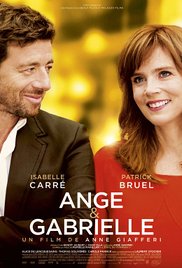
LOVE AT FIRST CHILD.jpgGabriell is a single mother, her 17-year-old daughter Claire is pregnant, however the child’s father Simon has no desire to be involved with his future baby.

Director: Anne Giafferi
Writers: Anne Giafferi (dialogue), Anne Giafferi (screenplay)
Stars: Isabelle Carré, Patrick Bruel, Alice de Lencquesaing

Review by Gilbert Seah
 
The English title tells it all. LOVE AT FIRST CHILD is a French romantic comedy of a couple that falls in love as a result of a baby. But the baby are not theirs but their kids’. This film seems ideal for a Hollywood remake as follows the line of many French comedies. The screenplay by Anne Giafferi and Anne Le Niy is based on a play by Murielle Magellan.

The film begins with a semi-hysterical woman, Gabrielle (Isabelle Carre) barging into the office of Womanizer Ange (singer and actor Patrice Brunel). He is accused of having an uncaring son, Simon (Thomas Soliveres) who has impregnated her daughter, Claire (Alice de Lencquesaing) now studying in school. All this is a lame excuse for Ange and Gabrielle to argue and eventually fall in love.
But writer/director Giaferri’s film is not without its charm. It is difficult to dislike a film that has charm and nice human touches spread throughout the movie, despite the fact that this is a typical Harlequin romance complete with obstacles to the romance and an obvious happy ending. This fact might be the reason the film is going straight to vod in North America after doing only so-so at the box-office.

Director Giafferi takes the play out into the open so that the audience is never aware of the film’s source. There is a neat scene where Angie and Gabrielle kiss in a playground surrounded by children and another showing two loving pigeons on a rooftop. The film also updates the story to include political correctness of a gay marriage of one of Ange’s colleagues.

Like the French comedy THREE MEN AND A BABY, LOVE AT FIRST CHILD contains lots of shots of a cute baby. The baby featured in this film is really cute, impossible to dislike and director Giafferi has captured and exploited (in a good way) all the best baby moments.

Heart throb singer star Patrick Bruno is now 58 and his age shows. But his charm is not lost and his womanizing character and romanced comes across convincingly enough. Cesar winner Isabelle Carrie is also charming enough, looking so much like Diane Keaton with her glasses, But the two young a actors, Thomas Soliveres and Alice de Lencquesaing give he film a fresh look. It is a pity that they only deliver supporting performances. A full movie could have been made on young love, of their characters, perhaps a young adult romantic drama similar to the ones Mia Hansen-love makes.

LOVE AT FIRST CHILD makes its debut on vod (video on demand) Nationwide on Tuesday, July 11 on all major platforms including iTunes, Google Play, Amazon,
Microsoft, Vudu, Comcast, Charter, Cox, Vimeo, and various other cable operators. The film makes a good romantic evening home with a loved one for an alternate night at the movies.

Trailer: https://m.youtube.com/watch?v=SrhGDhu9IzM

Also, Free logline submissions. The Writing Festival network averages over 95,000 unique visitors a day.
Great way to get your story out: http://www.wildsound.ca/logline.html

Deadlines to Submit your Screenplay, Novel, Story, or Poem to the festival:http://www.wildsound.ca

Watch recent Writing Festival Videos. At least 15 winning videos a month:http://www.wildsoundfestival.com

Full Review: INTEGRAL MAN (Canada 2016) ***

Deadlines to Submit your Screenplay, Novel, Story, or Poem to the festival: http://www.wildsound.ca

integral man.jpgHe chose two young architects that would come to change contemporary architecture. Jim Stewart is the most published mathematician since Euclid, a concert level violinist, calculus professor, philanthropist, and gay rights activist. He is a true polymath, a modern day renaissance man. He had a bold vision and the conviction to follow through. It took almost ten years to realize his dream, Integral House, which was completed in 2009.

Director: Joseph Clement

Review by Gilbert Seah

 The human subject of INTEGRAL MAN is Jim Stewart, the most published mathematician since Euclid, a man of unparalleled ambition. The film introduces the man, through voiceover for a full 10 minutes describing his two sides. The first is the classical, exact side where the Mathematics part lies and the second the modern dreamer and dynamic designer.

The film can be divided into 3 segments though the segments are overlapped. One is devoted to Jim Stewart the man. He is shown as a Mathematician, an architect and a music lover. The second shows the design of the house, before, during and after its construction – a magnificent piece of work. The third integrates his love of music (Stewart plays the violin) into the two segments.

Stewart’s books on Calculus (a branch of Mathematics lots of students shudder from) are sold the world over. Stewart goes on books tours around the world including China, signing his books for student and professors alike. Stewart also sets out to create one of the most renowned pieces of residential architecture in North America and succeeded, demonstrating the perfect match between client and architect. Director Clement charts the bond between architect and client with long meetings held between the two. Stewart interviewed many architects before settling with the chosen one. Using time lapse photography, Clement details the landscape of the plot from demolition of the old house, to the barren land to the outer shell to the completion of the house. This residence, overlooking a ravine in Rosedale, Toronto is grand and exhibits decadence beyond comprehension. Clement uses his camera to take the audience on an extended tour of the home, from the top to below. The most fascinating piece of structure is the central staircase, made of metal, and which took a full 3 months on install. The material to be shipped from Europe to Nova Scotia to be moulded in Toronto before installation. The residence is appropriately named Integral House.

An important point in the film, that is mentioned by Stewart himself is that all the wealth is not from luck but from hard, dedicated work. Stewart spent 7 years, working 15 hour full days only taking half a day off at Christmas to write his Calculus books.

Besides Calculus and Architecture, Stewart is a man of music – a true music lover. His house was designed to exhibit concerts, which were conducted time and again for his own benefit and for charity foundations. The film showcases a few of these with music playing while the guests in evening cocktail dress applaud and drink wine.

Clement omits Stewart’s background (it would be good to know where he inherited his artistic and mathematical genes from) but does mention his sexual orientation.

Unbeknownst to Jim however, an unexpected turn of events is set to unfold. The film takes this turn (which will not be revealed in this review) during the last 10 minutes. and brings the film neatly to its conclusion.

(INTEGRAL MAN premiered at Hot Docs and opens this week in Toronto.)

Trailer: https://vimeo.com/209647946


Also, Free logline submissions. The Writing Festival network averages over 95,000 unique visitors a day.
Great way to get your story out: http://www.wildsound.ca/logline.html

Deadlines to Submit your Screenplay, Novel, Story, or Poem to the festival:http://www.wildsound.ca

Watch recent Writing Festival Videos. At least 15 winning videos a month:http://www.wildsoundfestival.com
TIFF CINEMATHEQUE Presents – FRENCH CRIME CLASSICS

Deadlines to Submit your Screenplay, Novel, Story, or Poem to the festival: http://www.wildsound.ca

elevator in the gallows.jpgThis new Cinematheque series showcases post war French Crime classics, may of which are seldom seen. One of the best films in this series is the newly restored PANIQUE, a 1945 black and white film (remade by Patrice Leconte as MONSIEUR HIRE in 1989) which I got to see for the first time, and must say is the BEST film I have seen this year.

PANIQUE was selected for both the Cannes and New York Film Festivals and was received with critical accolades when it opened at New York’s Film Forum. The film is capsule reviewed below. A MUST-SEE! (Panique screens on Thursday, July 20 at 6:30 p.m.)

French Crime Classics running from July 6 to September 3 is curated by James Quandt, Senior Programmer, TIFF Cinematheque. There is a total of 25 classic crime films, several in new or restored prints.

CAPSULE REVIEWS OF SELECTED FILMS:

ASCENSEUR POR L’ECHAFAUD (ELEVATOR TO THE GALLOWS)
(France 1957) ****
Directed by Louis Malle

One of Jeanne Moreau’s early films that director Louis Malle help put on the filmmaking map. Moreau does a lot of sulking and wandering around the city like a crazed lady when her lover (Marurice Ronet) fails to turn up for the rendezvous after being locked and trapped in an elevator after office hours as a result of a murder they both conspired on. The victim is the husband and the target the prize money that the two lovers hope to live happily ever after with. But as stories like these are, nothing goes as planned. A young couple steal the car and murder two German tourists with Ronet being the prime suspect. Director Malle fills his suspense thriller with lots of details that aid the story’s authenticity, especially in the segments in which Ronet is trapped in the lift. The black and white cinematography (by Henri Decae) is superb and aided by an excellent jazz trumpet score by Miles Davis. A beautifully stunning and entertaining suspense thriller!

LES DIABOLIQUES (France 1955) ***** Top 10
Directed b H.G Clouzot

Undoubtedly the best suspense murder thriller of all time! Based on the novel by Pierre Boileau, the film is the typical Hitchcock movie. It was rumoured that Clouzot bought the rights of the novel just before Hitchcock could, thus infuriating the Master of Suspense. But Hitchcock could not have made a better film. Shot in black and white with the word sinister printed on every scene, DIABOLIQUE tells the story of a mistress and wife of a boarding school owner conspiring together to commit the perfect murder. As one school colleague put it – it is really strange to see the wife comforting her husband’s mistress.

Simone Signoret plays the strong mistress while Vera Clouzot plays the weak hearted wife, both abused physically and mentally by the man they plan to murder. Of course in stories like these, things never go as planned. The body goes missing and the plot twists more than once at the end. Clouzot ‘s film contains some wickedly brilliant moments. The one in which the wife begins to warn her husband of the poisoned wine he is about to down only to get slapped by him is a classic. She then quietens to pour him more of the poisoned wine.

Another has her burn the evidence with a match, the light brightening up her face to reveal her reaction. As the two women leave in the car to drive back to the school with corpse in the boot, the neighbour says casually that the cops are around the major intersections theses days. One sentence of dialogue such as this one is sufficient to drum up the audience anticipation for the entire car trip. The atmosphere of the 50’s countryside France, the boarding school and emotional trappings of the two women are all wonderfully created. DIALBOLIQUE was remade with Sharon Stone and Isabelle Adjani in the 90’s, but some films like this one (and all Hitchcock films) should never be remade.

JUDEX (France/Italy 1963) ****
Directed by Georges Franju

JUDEX (original creator Louis Feuillade) is a French mysterious hero who punishes evil men like a judge passes sentences. The plot revolves the evil banker Favraux, receiving a threatening note from Judex (Channing Pollocak) demanding that he pay back people he has swindled. He is later drugged by Judex and locked away. But Favraux is not the only villain in the piece. Meanwhile, the former governess, Diana (Francine Berge) , kidnaps Favraux’s daughter Jacqueline (Edith Scob) to try to get the banker’s money. At the same time, private detective Cocantin (Jacques Jouanneau) bumbles his way (like an Inspector Clouseau) trying to figure out what is going on. The film is rich in period atmosphere especially in the costume ball segment where JUDEX makes a surprise appearance wearing a costume with the head of a hawk. The film wonderfully transports the audience into the style of early French cinema.

PANIQUE (PANIC) (France 1946 ) ***** Top 10
Directed by Julien Duvivier

The first film (before Patrice Leconte’s MONSIEUR HIRE with Michel Blanc) based on the novel Les Fiançailles de M. Hire by Georges Simenon, PANIQUE has all the elements of a film classic. The plot is a beauty and the beast like story with all the villagers at the end of the film lynching who they think is the murderer of a an innocent girl. After an elderly woman is murdered, the murderer realizes that Monsieur Hire (Michel Simon), a solitary Jewish neighbor on the courtyard where the main characters live, knows who is responsible. The murderer and his girlfriend, Alice (Viviane Romance) manipulate local opinion against Hire, who is ostracized by the community. It does not help that M. Hire falls in lvd with Alice. He tells Alice his every move, making him more vulnerable to the murderer. They then plant evidence in Hire’s apartment to confirm popular suspicions. Director Duvivier builds up on the suspicion and mistrust by the villagers on the stranger, criticizing the small French town mentality. The butcher questions the the preference of his pork chops to be bloody hen M. Hire buys the, and another is suspicious of the gifts M. Hire offers to a little girl. The town is interested in cheap gossip, tacky entertainment like lady wrestling and taking matters into their own hands. Beautifully shot in black and white with M. Hire wonderfully performed by Michel Simon, PANIQUE is a thrilling tragedy from start to finish.

TIREZ SUR LE PIANIST (SHOOT THE PIANO PLAYER) (France 1960 ) ****
Directed by Francois Truffaut

One of Truffaut’ more obscure but no less impressive feature, SHOOT THE PIANO PLAYER follows the adventures of a bar’s pianist, Charlie played by French singer Charles Aznavour after his bother runs to him for hiding. The film is part thriller part romance but it is these little details of the film that creates the charm and magic of this sensitive film. One scene has Charlie contemplating whether to ask Lena (Marie Dubois) to have a drink or to be more subtile by asking her if she was thirsty. When he immediately turns to her to utter by mistake, “Let’s go for a drink,” she has already walked off. The execution of musical numbers like the rendering of “Framboise” also does the trick. Aznavour is no great actor, by Truffaut milks the charm that has made this singer so famous. Again, the are lots of shots of women’s sexy long legs here as in Truffaut’s other films especially L’HOMME QUI AIMES LES FEMMES. I saw the film only once 20 years ago and was not really impressed then, but am now.


Also, Free logline submissions. The Writing Festival network averages over 95,000 unique visitors a day.
Great way to get your story out: http://www.wildsound.ca/logline.html

Deadlines to Submit your Screenplay, Novel, Story, or Poem to the festival:http://www.wildsound.ca

Watch recent Writing Festival Videos. At least 15 winning videos a month:http://www.wildsoundfestival.com

Netflix Original Film Review: OKJA (South Korea/USA 2017) ****

Deadlines to Submit your Screenplay, Novel, Story, or Poem to the festival: http://www.wildsound.ca

okja.jpgMeet Mija, a young girl who risks everything to prevent a powerful, multi-national company from kidnapping her best friend – a massive animal named Okja.

Director: Joon-ho Bong (as Bong Joon Ho)
Writers: Joon-ho Bong (screenplay) (as Bong Joon Ho), Jon Ronson (screenplay)
Stars: Tilda Swinton, Paul Dano, Seo-Hyun Ahn

Review by Gilbert Seah

Ever since films like LASSIE COME HOME enchanted audiences, a lost pet reuniting
with its owner has been a favourite theme. In the new Netflix original movie OKJA, director Bong (MEMORIES OF MURDER, MOTHER, SNOWPIERCER) has broken all rules with the darkest kids movie since BABE IN THE CITY.

OKJA courted controversy at Cannes when it was argued that films like this Netflix original not slated for theatre release be disqualified from competition. Surprisingly, OKJA opens at the TIFF BELL Lightbox same day it opened on Netflix last week.

OKJA is a tale of a girl and her lost pet. The only difference is that the pet is a super pig named OKJA. For 10 idyllic years, young Mija has been caretaker and constant companion to Okja – a massive animal and an even bigger friend – at her home in the mountains of South Korea. But that changes when family-owned, multinational conglomerate Mirando Corporation takes Okja for themselves and transports her to New York, where an image-obsessed and self-promoting CEO has big plans for Mija’s dearest friend. With no particular plan but single-minded in intent, Mija sets out on a rescue mission. She encounters the Animal Rights group helping her.

The film can be divided into three parts. The first and most family friendly shows Mija in the Korean countryside playing with OKJA. Bong includes a suspenseful sequence where OKJA saves Mija’s life. The second occurs after OKJA is abducted to Seoul. This is the funniest segment which shows how an individual can infiltrate a big conglomerate armed with a strong will never to give up. No glass doors or metal walls can stop Mija. It is hilarious watching the little girl pursued by security calling her ‘a little shit’. The third and darkest segment is OKJA ‘s rescue from New York City. Mija sees an abattoir complete with pig carcasses, something really unpleasant to even an adult. Bong does not shy away from violence. The animal rights group are the main target for the violence as many of them are beaten with batons and kicked on the ground.

Mija is played convincingly by South Korean child actress An Seo-hyun. Hollywood stars Jake Gyllenhaal has a field day with his over the top performance as TV personality Dr. Johnny. Tilda Swindon plays the villain of the piece, Lucy Mirando who wants to put OKJA on the dinner table. Paul Dano is equally winning as the animal rights group leader who aids Mija rescue her pig.

The question is why Netflix financed a film like OKJA. It is reported that most studios would stay away from films that do not fit a certain mould, like the recent Brad Pitt Netflix movie WAR MACHINE. It is clear the reason studios might be afraid of the adult dark tale of OKJA with its dose of violence and company satire. But thanks to Netflix, Bongs’s OKJA got to be made. OKJA is a brilliant dark and original piece of filmmaking complete with excellent special effects. Highly recommended!

Trailer: https://m.youtube.com/watch?v=AfAIP7dqnm8

Also, Free logline submissions. The Writing Festival network averages over 95,000 unique visitors a day.
Great way to get your story out: http://www.wildsound.ca/logline.html

Deadlines to Submit your Screenplay, Novel, Story, or Poem to the festival:http://www.wildsound.ca

Watch recent Writing Festival Videos. At least 15 winning videos a month:http://www.wildsoundfestival.com

Film Review: PAST LIFE (Israel/Poland 2016)***

Deadlines to Submit your Screenplay, Novel, Story, or Poem to the festival: http://www.wildsound.ca

past life.jpgPast Life tracks the daring late 1970s odyssey of two sisters – an introverted classical musician and a rambunctious scandal sheet journalist – as they unravel a shocking wartime mystery that has cast a dark shadow on their entire lives.

Director: Avi Nesher
Writer: Avi Nesher
Stars: Nelly Tagar, Joy Rieger, Doron Tavory

Review by Gilbert Seah

 Director Avi Nesher (THE MATCHMAKER, TURN LEFT AT THE END OF THE WORLD) sets the stage in the film’s first scene when Sephi (Joy Rieger) performs (she is a tenor in a choir) in Berlin. An elderly woman ( Katarzyna Gniewkowska) reproaches her after, in public, accusing her of being a murderer’s daughter.

Back home, she relates the incident to her feisty sister, Nana (Nelly Tatar), a writer for her husband’s journal and she insists of finding the truth of what happened in the war with their father, Dr. Baruch Milch (Doron Tavory).

The film is a period piece, beautifully mounted with vintage cars and sets and set in the year 1977. It is a spellbinding tale that tracks the trans-European odyssey of two sisters as they try to unravel a wartime mystery that has cast a shadow on their lives. Sephi is an aspiring composer, determined to succeed in the male-dominated classical music world. Her older sister Nana is a scandal-sheet journalist and aspiring playwright. The daughters of Holocaust survivors, the two are bent on uncovering the truth behind a dark family secret.

The entire film hinges on what the secret is. To keep the film interesting from start to end, Nesher inserts a rift between the siblings.

Sephi is content not to unravel the skeleton in the closet while Nana is the opposite. Nesher paints a more interesting character in Nana as she is one hot female, always searching, always wanting the truth which damages her relationship with her husband who owns the journal she writes for. To make matters worse, Nana believes that he flirts with Sephi. This makes the story more down to earth though the tension feels forced at times. Nesher also inserts a segment that involves the timely discovery of the father’s document in the archives just before the starting of a concert. This tactic is obvious to heighten tension though it compromises the authenticity of the story.

Nesher’s film is also clearly devoid of humour. The light touches in dialogue come mainly from Nana’s lines, especially the ones in the hospital or seeing the doctor. But rather than being funny, they come across as cynicism.

Neshe’s strength are in the dramatic parts. The film’s best segment is unexpectedly the meeting in the park at night of the girl’s mother (Evgenia Dodina) and the elderly woman at the concert at the film’s beginning. The mother’s begging of her forgiveness for her and her husband is both moving and riveting.

The film was inspired by Dr. Baruch Milch’s book Can Heaven Be Void?, which is based on a diary he kept during WWII, and the extremely difficult decisions he had to face during the times. Nana in real life edited the father’s book while the sister Sephi composed the orchestral piece to exorcise their demons.

Nesher is himself a Holocaust survivor, so making this film must be a story he wanted to tell from his heart. PAST LIFE eventually turns out to be a powerful film about the importance of forgiveness.

Trailer: https://m.youtube.com/watch?v=2nJsh8BHMQ0

Also, Free logline submissions. The Writing Festival network averages over 95,000 unique visitors a day.
Great way to get your story out: http://www.wildsound.ca/logline.html

Deadlines to Submit your Screenplay, Novel, Story, or Poem to the festival:http://www.wildsound.ca

Watch recent Writing Festival Videos. At least 15 winning videos a month:http://www.wildsoundfestival.com

Film Review: THE JOURNEY (UK 2016) ***

Deadlines to Submit your Screenplay, Novel, Story, or Poem to the festival: http://www.wildsound.ca

THE JOURNEY.jpgA fictional account of the extraordinary story of two implacable enemies in Northern Ireland.
Director: Nick Hamm
Writer: Colin Bateman
Stars: Timothy Spall, Colm Meaney, John Hurt

Review by Gilbert Seah
 
Who would think that former enemies Rev. Ian Paisley and Martin McGuiness nicknamed ‘The Chuckling Brothers’ would remain friends for life after their meeting that finally resulted in the long awaited peace in Northern Ireland. No more bombings! No more bullets! Director Hamm underlines the violence as the film starts.

Nick Hamm’s THE JOURNEY is a dramatization about how these two two political opposites came together to change the course of history – an event that resulted in the Democratic Unionist Party and Sinn Féin (the political party of the Irish Republican Army) signing a 2006 agreement, bringing peace to Northern Ireland after nearly 40 years of violence.

Hamm’s journey is basically a two-handler, performed by two actors, one known for his humour the Irish Colm Meaney (THE SNAPPER) and the other for his dead seriousness, Timothy Spall (the Mike Leigh films). Most of the scenes involve banter between both of them. The film imagines a trip in a minivan where the two sort out their differences, come to an agreement and finally bring peace to the different groups. It is a real event though that minivan trip was imagined, as written in the script by Colin Bateman. The real trip took pace in an airplane. But the facts remain true. The reason the film changed the venue is not given but the change offers a visual treat, with lush greenery and rocky shores seen through rain-splattered windows. The drive was to the airport in Glasgow, Scotland.

Spall and Meaney are a pleasure to watch. Other British actors in the film include the late John Hurt (THE ELEPHANT MAN) as M15 boss Harry Patterson and Toby Stephens as Prime Minister Toby Stephens. Freddie Highmore has a small but mischievous role as the chauffeur, a British agent in disguise.

Director Hamm takes his time to set up the stage for the action when the two are finally the car and talking. The chauffeur, through his head set, is prompted to instigate the conversation. It is comical to see two grown men behaving just like children, fighting and wanting their own way. The conversation starts when McGuinness’s mobile is unable to get a signal but Paisley refuses to lend his. Bateman’s script, which imagines the actual conversation involves lots of funnily one-liners and rebuttals. The script is also believable in the way the ice is broken and the two eventually get talking. At the same time, hatred, humour and hard-nosed stubbornness are on full display.

They is a little film that documents a real life-changing event through imagined conversation. It is an entertaining exercise that also reflects strength overcoming the weaknesses of the human character in the strife for the good of mankind. But at the time of writing this review, problems are beginning to resurface again as observed in the recent news.

Trailer: https://www.youtube.com/watch?v=pc3jqf4cdfc

Also, Free logline submissions. The Writing Festival network averages over 95,000 unique visitors a day.
Great way to get your story out: http://www.wildsound.ca/logline.html

Deadlines to Submit your Screenplay, Novel, Story, or Poem to the festival:http://www.wildsound.ca

Watch recent Writing Festival Videos. At least 15 winning videos a month:http://www.wildsoundfestival.com

Film Review: 13 MINUTES (Germany 2015) ****

Deadlines to Submit your Screenplay, Novel, Story, or Poem to the festival: http://www.wildsound.ca

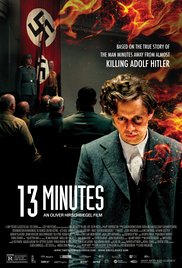
13 minutes.jpgIn November 1939, Georg Elser’s attempt to assassinate Adolf Hitler fails, and he is arrested. During his confinement, he recalls the events leading up to his plot and his reasons for deciding to take such drastic action.
Director: Oliver Hirschbiegel
Writers: Léonie-Claire Breinersdorfer (screenplay), Fred Breinersdorfer (screenplay)
Stars: Christian Friedel, Katharina Schüttler, Burghart Klaußner

Review by Gilbert Seah

A reenacted and partially imagined account of a true event, Oliver Hirschbiegel’s 13 MINUTES tells of the attempted assassination of Adolph Hitler in 1939 by the planting of a bomb inside a column of a Munich bierkeller by German Georg Elser (Christian Friedel). The bomb detonates but misses killing Adolf Hitler, the German leader, by just 13 minutes.

Director Hirschniegel broke into the world film scene with DAS EXPERIMENT and made more headlines with his Oscar nominated Best Foreign Film DOWNFALL. 13 MINUTES lost to LABYRINTH OF LIES that year for Germany’s nominated entry for the Best Foreign Film Oscar though 13 MINUTES is clearly the better film.
Watching the film, one would eventually wonder how Elser’s story came into fruition. It is clear from the film that Elser was arrested and told part of his story. Also, the explosion of the Munich bierkeller did occur and Elser confessed to the Nazis.

The film begins with Elser’s planting of the bomb and his arrest following. With maps of the building on him (why the hell would he not dispose of them after is the big question), the German Security Services link him to the assassination attempt. They believe Elser must have been working with a group of conspirators and torture him for information. They also round up members of his family from his home village, including Else Härlen (Katharina Schüttler), a married woman Elser has been seeing.

When Else Härlen is brought before Elser, he fears for her life and tells the police chief Arthur Nebe (Burghart Klaußner) and Gestapo head Heinrich Müller (Johann von Bülow) that he acted alone, procuring detonators from a steel factory and stealing dynamite from a nearby quarry. All these events including how he came to despise the Nazis are shown in the film through flashbacks when Elser is interrogated in prison. He outlines the two clockwork mechanisms he built to time the explosion and hopefully kill Hitler as he made a speech.

Still believing Elser could not have attempted the assassination alone he once more tortured using drugs (Pervitin) but with the same result as before – he confirms acted alone. The audience is also led to believe this fact, unlikely as it seems that one person from a village could be so tech savvy.

Elser is beautifully played by Christian Friedel, displaying a countryside charm and one that would change character from innocent bystander to convicted assassin.

This is not the first film made on an attempted assassination of Adolph Hitler. The Tom Cruise vehicle VALKYRIE immediately comes to mind, though that was supposedly masterminded by other German generals in 1944. But Hirschbiegel’s 13 MINUTES hits closer to home with a protagonist the audience can feel for.

Sadly, the audience learns at the end of the film that Elser was kept in concentration camps for five years and was shot only a few days before American forces liberated Dachau concentration camp (a few weeks before the war ended). Looks like time was never on the side of poor Elser.

Trailer: https://www.youtube.com/watch?v=8SsIsCWXtV4
 

Also, Free logline submissions. The Writing Festival network averages over 95,000 unique visitors a day.
Great way to get your story out: http://www.wildsound.ca/logline.html

Deadlines to Submit your Screenplay, Novel, Story, or Poem to the festival:http://www.wildsound.ca

Watch recent Writing Festival Videos. At least 15 winning videos a month:http://www.wildsoundfestival.com

Film Review: SPIDER-MAN: HOMECOMING (USA 2017) ***

Deadlines to Submit your Screenplay, Novel, Story, or Poem to the festival: http://www.wildsound.ca

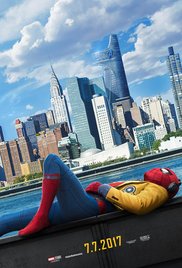
spiderman homecomingFollowing the events of Captain America: Civil War (2016), Peter Parker attempts to balance his life in high school with his career as the web-slinging superhero Spider-Man.

Director: Jon Watts
Writers: Jonathan Goldstein (screenplay), John Francis Daley (screenplay)
Stars: Tom Holland, Michael Keaton, Robert Downey Jr., Marisa Tomei, Jon Favreau, Gwyneth Paltrow

Review by Gilbert Seah

The second re-boot of SPIDER-MAN arrives with all the hype and with it fear that the new look would result in a film as disastrous as the D.C. extended universe films MAN OF STEEL, BATMAN V. SUPERMAN or SUICIDE SQUAD. Thankfully, the new Marvel Cinematic Universe SPIDER-MAN HOMECOMING is not so bad and promises a much better sequel in the making.

The film opens with Peter Parker (Tom Holland) arriving with all his super spider powers intact. Instead of learning to control his new found powers, Parker has to learn how to be Spider-Man. He has arrived several months after the events of Captain America: Civil War, and subject to the help of his mentor Tony Stark aka IRONMAN (Robert Downey Jr.), learns to balance his life as an ordinary high school student in Queens, New York City with fighting crime.
The villain of the piece is introduced at the start of the film as an enterprising business man, Adrian Toomes (Michael Keaton). Forced out of his business by the big boys, Toomes ends up taking revenge on the city by turning himself into the Vulture that eventually battles Spidey. Keaton is exceptionally cynical in his role, the only problem arising is that Toomes is so victimized that one cannot help but root for this poor victim. At one point in the film, Toomes is so convincing in naming Stark Enterprises as the villain that one cannot help but almost believe him. The Vulture’s costume looks too much like Keaton’s Birdman’s outfit, as if reminding the audience of his Best Actor Oscar nominated role.

The climatic battle between the Vulture and Spidey looks too one sided, on the side of the Vulture who seems imminent to win the battle but of course wouldn’t. When Toomes finally ends up beaten, it seems quite unbelievable.

Despite being an action film, the film’s best moments are the interrogation scenes – one where Toomes questions Parker in the car and reveals that he is aware of Parker’s secret identity. The other is Spider-Man questioning one of the crooks regarding Toomes’ activities. Both segments expertly balance humour and surprise while displaying good dialogue expected from the team of the film’s 6 writers.

HOMECOMING is the lightest and goofiest of all the SPIDER-MAN films. But one will eventually get annoyed at Spider-Man’s inability to fight his opponents properly before gaining control of his suit. Instead of learning to use his super powers, Spidey has to learn to use Stark Enterprises’ new Spider-Man suit. In one action set-up, Spider-Man is constantly bungling and falling around learning how to use his suit in extended power mode.

The film features an eclectic cast that carries it out a bit too far. Spidey’s love interest Liz is played by African American, Laura Harrier. His school principal is played by Korean Kenneth Choi and his best friend, Ned by Filipino Jacob Batalon. Tony Revolori as Flash Thompson: Peter’s rival and classmate is latino. The script invests a bit too much time in Ned’s character, his repeated remarks on Spider-Man often ending up more annoying than funny. He is at least given something to do (computer hacking) in the story. The film feels like a teen movie with the humour and high school setting. But one can notice that all the high school kids are performed by actors over 21, Holland included (at 22 playing a 15-year old). The film is not without teen dick jokes (Flash’s song as a d.j.) and the ending song with the lyrics sounding like the ‘f’ word.

It is surprising that director Watts has ended up making more an action comedy than an action hero movie. Watts made two serious films, the thriller COP CAR and the horror chiller CLOWN prior to this. But better funny than too serious. Look what happened to the James Bond and the Planet of the Apes films?

With all the goofiness and Spidey’s learning curve out of the way in this re-boot, the sequel should promise a more mature Spider-Man and hopefully a more mature action film as well – with a better balance between action and humour.

Trailer: https://www.youtube.com/watch?v=U0D3AOldjMU

Also, Free logline submissions. The Writing Festival network averages over 95,000 unique visitors a day.
Great way to get your story out: http://www.wildsound.ca/logline.html

Deadlines to Submit your Screenplay, Novel, Story, or Poem to the festival:http://www.wildsound.ca

Watch recent Writing Festival Videos. At least 15 winning videos a month:http://www.wildsoundfestival.com