ReelAsian Film Festival 2018 Review: DEAR EX (Taiwan 2018) ***

Dear Ex Poster
When Sanlian’s ex-husband passes away, she discovers he has altered his insurance policy, cutting out their son in favor of a stranger named Jay. Outraged, Sanlian decides that she and her …See full summary »

Directors:

Chih-Yen Hsu (as Kidding Hsu), Mag Hsu

Writers:

Mag Hsu (screenplay), Shih-yuan Lu (screenplay)

This gay positive Taiwanese entry arrives timely at ReelAsian just in advance of same-sex marriage becoming legal in Taiwan in May of 2019.  Taiwanese director Tsai Ming-Liang has championed the gay art house movie with films like VIVE L’AMOUR but DEAR EX is yet another worthwhile entry, looking at the gay lifestyle from a lighter though still quite serious view.

  The film follows three people who are linked by fate because of love and family. Adolescent Song Chengxi (Joseph Huang) loses his father Song Zhengyuan (Spark Chen) to cancer, but instead of having time to mourn, Chengxi finds himself caught in a feud between his widowed mother Liu Sanlian (Hsieh Ying-xuan) and his father’s gay lover Jay (Roy Chiu). 

 As Liu fights Jay for Song’s insurance money,  though it is never clear what had happened to the money.  Each of three subjects are super-hyper and when they get together, there is now hostage of shouting and fighting, driving not only the other crazy but the person him or herself.  

It is comical to see the three interact and what is the final outcome of the film.

Trailer: https://www.youtube.com/watch?v=r94pd519Jf4

ReelAsian 2018 Review: HOUSE OF THE RISING SONS (Hong Kong 2018)

Hing daai baan Poster
The musical biography of the 1970s Hong Kong rock band The Wynners. Starting with their humble beginnings as band causing noise in the neighborhood, through to their career of massive stars throughout Asia.

Director:

Anthony Chan

Who else best to make a movie of the band The Wynners, a Hong Kong pop sensation of the 70’s than a member of the band himself?  Anthony Chan started the chart-topping pop band The Wynners, the band inspired by The Beatles’ visit to Hong Kong. 

 The film traces the band’s formation.   Despite opposition from their parents, five young men form a neighbourhood band called The Loosers to play music and rebel against the staid conformity of their traditional upbringing.  

As they began to pursue their dreams, they find that the journey to stardom is never easy.  Armed with grit, perseverance and raw talent, the band weathers the strain brought on by creative conflicts, personnel shake-ups and their rapidly growing popularity to become The Wynners and establish themselves as true musical legends.  The cliche-ridden film is a breezy easy-going comedy that is often all over the place.   This is no BOHEMIAN RHAPSODY, but a teen flick where teens can do anything while the elders are the ones who always look silly and do everything wrong.   

Though touted as a bio of the band, the film feels less so.

Trailer: https://www.youtube.com/watch?v=Z3HQSJcLAMU

Reel Asian Film Festival 2018 Review: WISH YOU WERE HERE (China/Japan 2018)

China, Japan 2018 Rated PG 113:00 Mandarin, Japanese with English subtitles North  

“What’s kept hidden has its own power on us.”

On the eve of her latest fashion showcase in Beijing, successful entrepreneur Yuan Yuan is approached by Keiko, a mysterious young Japanese woman. An admirer of Yuan Yuan’s career, Keiko has learned Mandarin and fashion design for a chance to speak with her idol. As Yuan Yuan takes Keiko under her wing, long suppressed memories begin to surface of her time in Hokkaido and the husband she’d left behind.

Yuan Yuan finally builds up the courage to visit the small town she left behind more than 20 years ago in order to confront her past decisions and face her deepest fears. A journey of forgiveness and reconciliation, Wish You Were Here marks Kenneth Bi’s return to Reel Asian. His latest feature, a co-production between China and Japan, is an examination of a woman traversing through modernity and tradition; youth and maturity; past and future. -KE


Directed by Kenneth Bi

Kenneth Bi’s third film follows the tone of his early films THE DRUMMER an RICE RHAPSODY – slow and pensive.  I am not really a fan of Bi as his films require a bit of patience to reap their rewards. 

 On the eve of her latest fashion showcase in Beijing, successful entrepreneur Yuan Yuan is approached by Keiko, a mysterious young Japanese woman.  An admirer of Yuan Yuan’s career, Keiko has learned Mandarin and fashion design for a chance to speak with her idol.  As Yuan Yuan takes Keiko under her wing, long suppressed memories begin to surface of her time in Hokkaido and the husband she’d left behind. 

 Yuan Yuan finally builds up the courage to visit the small town she left behind more than 20 years ago in order to confront her past decisions and face her deepest fears.  A journey of forgiveness and reconciliation, his latest film is an examination of a woman traversing through modernity and tradition; youth and maturity; past and future. 

 The closing night film.

Film Review: CLARA (Canada 2017) ***

Clara Poster
An obsessive astronomer and a curious artist form an unlikely bond which leads them to a profound, scientific discovery.

Director:

Akash Sherman

Writers:

Akash ShermanAkash Sherman (story by) |1 more credit »

CLARA is a rare science fiction romantic drama made in Canada’s own Toronto that disguises the fact quite well, passing of as an American film in an unnamed city and in unnamed university.  Lots of references to NASA gives the impression that CLARA is an American made movie.

The film opens with Dr. Isaac Bruno (Patrick J. Adams) delivering a lecture on astronomy to an auditorium full of eager students.  He is quizzed by one who challenges his disinterest in the field.  It is here that Isaac draws a parallel between finding true love (L=0), which equates to a zero to finding life in the other parts of the universe.  

In the next scene, Isaac is fired from the Faculty by the dean (Jennifer Dale) for – it all sounds really funny – “misappropriating telescope time’.   Obsessed with his work, he decides to conduct studies on data on his own and seeks the help of an outsider who turns up to be his romantic interest. Clara (Troian Bellisario) is a sort-of free-spirit who shares Isaac’s fascination of the wonders of the universe.  Their unlikely collaboration leads to a deep connection and a profound astronomical discovery as they detect patterns in stellar data.  She also opens Isaac up to the outside of space research and data.

CLARA contains spots of uplifting moments.  One cannot go wrong with the music of Bob Dylan as Clara picks one Dylan’s vinyls and plays it.  The lyrics: “She once was a true love of mine” also tells the story of Isaac.

The script, also written by director Akash Sherman often falls into cliched territory.  Like the line spoken by Clara; “Do you want something more than all this, for the universe to surprise us?”  Clara and Isaac then kiss for the very first time.  The script also plunges the audience into the here and now of its two characters.  But nothing is known of the two characters’s past backgrounds.  

At one point, the free spirited Clara appears to be a character just out to change the life of another subject and then move on to another.  This premise made a very interesting movie in the 70’s called SWEET NOVEMBER in which Sandy Dennis picked a character every month to change a life for the better.  November was played by Anthony Newley who falls in love with her but she moves on.  CLARA sort of follows this story as Clara thus moves on while Isaac gets on with an improved life.

CLARA has an ending (unfortunately unable to be revealed here as it would be a massive spoiler) that badly undermines whatever message the film intended to portray, thus betraying the entire movie. 

CLARA is a sad film about two lonely people who eventually find each other, only to find that fate is not on their side, despite the good connection.  It is a sad premise lifted by the story’s setting in the wonders of space.  The resulting film is, as expected, a mixed bag of tricks, with some good moments as well.

Trailer: https://www.youtube.com/watch?v=7eIbm4cfA8M

ReelAsian 2018 Festival Review: MIRAI (Japan 2018) ***

Mirai Poster
Trailer

A young boy encounters a magical garden which enables him to travel through time and meet his relatives from different eras, with guidance by his younger sister from the future.

Director:

Mamoru Hosoda

Writer:

Mamoru Hosoda

Director Mamoru Hosoda’s (he started his own animated studio Studio Chizu) MIRAI is his third feature after his studios’s WOLF CHILDREN and THE BOY AND THE BEAST.  Again his interest in children and their fantasies are under consideration in his latest tale from the point of view of young Kun, the elder son in a typical Japanese family.  When the film opens, Kun is greeted with the arrival of a new born baby sister.  Things around the house are altered, as father now tends to the household chores of cleaning and cooking while mother goes on full time work.  

Emotions like jealousy and anger start to emerge.  Kun fantasizes meeting his sister when she is grown up as well as his dog, humanized while shown how to ride a bike by his late great grandfather who was in the Japanese navy.  The film’s animation is somewhat similar to Studio Ghibli’s in look and feel, especially since both studios are fond of animal creatures and Japanese folklore.  

MIRAI is simplistic in its theme, just about a boy growing up, and it is this simplicity that the film works its charm.

Trailer: https://www.youtube.com/watch?v=6d-lsJZgmJs

Film Review: TAKE LIGHT (Canada 2018) ***1/2

Take Light Poster
Trailer

TAKE LIGHT is a look at the tangled wires of Nigeria’s electricity crisis, told through the everyday trials and tribulations of a charismatic electrician.

Director:

Shasha Nakhai

A web of corruption and anger leaves 50% of Nigerians without electricity in Africa’s largest energy-producing country.  The film opens saying that Nigeria produces more gas than any state in Africa.  Yet 50% of the population are without electricity and those who are with have it for a few hours at most.  The film blames the corrupt post-colonial Government.  These are everyday stories of people connected to the grid.

Being an electrical engineering by profession who got a job at Singapore Power but did not work there as I just got my Canadian immigration approved at that same time, I take special interest in the technical portions of the film – like how the control room at the power plant operates.  The director keeps the engineering jargon at a minimum so that the layman can understand the basic principles of power generation, such as the reason blackouts occur.  The reason is attributed to two causes.

Despite the grim subject, the director does not fail to provide some needed humour.  The film also tracks the PHED workers as they cut off electricity supply to the cities that default on their payments.  The PHED is the new name for the Government Power Supply company though every Nigerian still insists on the old name – NEPA (acronym: Never Expect Power Again).  In a humours spill, they say that the are the most hated employees in Nigeria.  Everyone also thinks they are corrupt.  One swears that on the job application form, one has to declare that one is corrupt.  Also interviewed are James and Harry, in the words of Harry: “We are James and harry, two angry men on YouTube.”  They complain about the dwindling value of the currency.

A few reasons to see TAKE LIGHT:  one is that few films provide a glimpse inside the country of Nigeria and her people.  The second is a fairly understandable examination of the workings of a electricity power plant.  The third is to witness how the Nigerians deal with public corruption.

One of the film’s most intriguing segments shows Godwin, a illegal Nigeria electrician at work.  He studied electrical in school, is smart and works under the cover of darkness.  “We youth are tired of empty promises,” he says.  “We are smarter that PHED and we move fast, without safety measures.”

The film shows two sides of the argument.  The camera follows the citizens complaining about power outages.  The PHED or NEFA CEO, Jay McCowsky is interviewed mid-point during the film.  The film also includes a very disturbing image of from space, at night. Nigeria is awash in light.  But the glow almost entirely flares from oil and gas wells – accelerating global warming and polluting the planet.  The country, with the world’s largest proven oil reserves, leaves half its population without electricity, and the rest with erratic service.

Before its opening run, TAKE LIGHT has a Special Event Screening on October 29,  2018 at the Hot Docs Ted Rogers Cinema where director Shasha Nakhai, Cinematographer/Editor Rich Williamson, Producer Ed Barreveld (who also narrated the doc) will be in attendance and holding a Q+A following the screening.

Trailer: https://www.youtube.com/watch?v=9eu1ToXEvtA

EAT PRAY LOVE, 2010

EAT PRAY LOVE 2010 MOVIEEAT PRAY LOVE, 2010
Movie Reviews

Directed by Ryan Murphy

Cast: Julia Roberts, Javier Bardem, Viola Davis, Billy Crudup, Richard Jenkins, Viola Davis, Ali Khan
Review by Joshua Starnes

SYNOPSIS:

Happily married Elizabeth Gilbert (Roberts) takes a right turn in her life by enduring a painful divorce and proceeding to take a round-the-world journey of self-enlightenment and fulfillment.

REVIEW:

Do you know what the most interesting thing in the world to you is? You. Do you know what the least interesting thing in the world to anyone else is? You.

That’s not entirely true because people have relationships and empathy, but I think we can safely call it 95% true. So how do you get around that problem in a story that is essentially about you? As an author or filmmaker you can either make your ‘you’ stand-in so likeable and/or universal that everyone else sees themselves in it and goes along for the ride out of shared experience. Or you can make your stand-in such a vehicle for ridiculous wish fulfillment that everyone else comes along to pretend the have the shared experience.

A lot of movies like “Eat Pray Love” like to pretend to themselves they’re the first kind of story, without realizing (or actively) ignoring the fact they are the second, resulting in something that is simultaneously preachy and shallow, which is about as aggravating as it sounds. Try imagining one of the ‘Real Housewives’ of wherever explaining to you what you need to do reach spiritual enlightenment. Well, maybe not that shallow but certainly that immature.

MOVIE POSTER

Liz (Julia Roberts) isn’t happy with life. She doesn’t know why, she just is. She married her goofball husband (Billy Crudup) too early to realize that wasn’t what she wanted and the affair she has with a young actor (James Franco) doesn’t make things any clearer. Her only solution is to check out of life: travel to several countries (all beginning with the all important letter I) so that she can spend some time focusing on herself and what it is she really wants.

The thing is what Liz really wants is to be 20 again, with the wonderful expanse of life ahead of her and none of the cynical realizations of maturity to keep her from enjoying it. If that sounds really, really hard to relate to, it is. Liz maybe the most unlikeable character Julia Roberts has ever had to play, not because co-writer/director Ryan Murphy (“Glee”) is trying to make her so (and eventually redeem her) but because everything the film does pushes her in that direction.

I suspect that’s because his eye is less on his characters than it is on the loving, beautiful travelogue he has put together of Italy and Indonesia and India. Especially Italy. Sure, it’s the part of the movie that’s supposed to be about giving in to physical pleasures as a real thing not to feel guilty about, but it also seems to be the only part of the movie anyone making it really understands because it’s the only part that doesn’t pretend to be more than it is. I swear to God, they spent longer lovingly lighting the spaghetti under Robert Richardson’s watchful eye than they did trying figure out why on Earth anyone would ever like Liz.

However as it moves into its spiritual journey, with Liz embracing her inner ashram in India and her attempt to balance the competing desires of her heart of India, “Eat Pray Love” reveals itself to be the con man it is. It knows people want to have their cake and eat it too, and it’s going to do its best to give it to them, while spinning just enough spiritual platitudes to make sure you’re not really paying attention to the smoke and mirrors.

After a year of discovering herself Liz literally runs into a dashing Brazilian ex-pat (Javier Bardem) in Bali with all the finesse of a Harlequin romance and has to wonder if it was all for naught and all she really needed was someone else to make her happy after all. It’s the sort of thing people rake “Sex and the City” over the coals for but at least they had the honesty to be up front about it.

There are some descent supporting performances scattered in “Eat Pray Love” from Richard Jenkin’s sloganeering Texas pilgrim to Viola Davis as Liz’s publisher and one and only model of sanity in the world. But they’re not enough to turn the tide that is all, all about Liz.

“Eat Pray Love” is the shallowest of shallow wish fulfillment, which wouldn’t be so obnoxious if it wasn’t trying to gussy itself up with the clothing of enlightenment. But maybe I’m the one who’s cynical. If I met the supermodel of my dreams on a beach in Bali, I’d probably get over any personal problems I had, too.


Film Review: SCIENCE FAIR (USA 2018) ***1/2

Science Fair Poster
Trailer

Nine high school students from disparate corners of the globe navigate rivalries, setbacks, and hormones on their quest to win the international science fair. Only one can be named “Best in Fair.”

School kids giving their best for some world competition has always made good fodder for feel-good, inspiration and entertaining documentaries.  Spelling bees, ballroom dancing have successful source material and now science projects in a typical school science fair.  Hopefully these projects will do the world a change and make it a better place.  Yes, the children are our future!

SCIENCE FAIR follows nine high school students as they navigate rivalries, hiccups and triumphs on their journey to compete at the 2017 International Science and EngineeringFair (ISEF) in LA.  As 1,700 of the smartest, quirkiest teens from 78 countries face off, the stakes are high for the fair’s $75,000 top prize.

The film does well to make the subject personal as these students are interviewed and tell the camera their aspirations and goals in life.  The audience sees these kids as both highly intelligent talent as well as normal children wanting to have a good time while attaining their goals.

Choosing which nine students from the seven million that try to qualify for ISEF must have been a daunting task for directors.  And why 9?  9 seems an appropriate number to show differences and variety in the film.  I am sure whichever 9 the directors would have picked – the nine would still be interesting – so it is clear the most charismatic the ones chosen the better and the more eclectic the better, which appears to be the case in the film.

Among the 9 students: A West Virginia math whiz nearly failed algebra, yet he taught a computer to rap like Kanye West.  At a sports-obsessed South Dakota school, a Muslim girl turns to the football coach when she can’t find a teacher to serve as her research advisor.  In a poor Brazilian area, two friends identify a protein that inhibits the Zika virus.  In Germany, an aeronautics fanatic redesigns a century-old wing.  But will it fly?  Then there’s the Kentucky trio who invent a new kind of stethoscope and, from the same school, a child prodigy who deals with a set-back.

There is nothing wrong too with a touch of nostalgia.  Also interviewed are 93-year old Dr. Paul Teschen, winner of the first-ever national science competition in 1942, and Dr. Nina Schor, the first girl to win after boys and girls were allowed to compete against each other.  Script is by Jeffrey Plunket, Costantini and Foster.  Costantini and Foster also collaborated on the award-winning short documentary Death by Fentanyl.

One cannot argue that SCIENCE FAIR lacks spirit.  The film’s most energetic segment sees the finalists dancing up a storm at a dance party.  Consider the background of the doc’s two directors.  But Costantini is a two-time alumna of ISEF, thus giving her an insight into 

the scene.  Foster was a science kid too, but he admits that the level at which Costantini competed was another world.  She even skipped going to the junior prom with her high school crush so she could compete at science fair.  Dedication and obsession!

SCIENCE FAIR is a very entertaining and inspirational documentary that went on to win the Audience Award winner at both the 2018 Sundance and SXSW festivals.  SCIENCE FAIR is not the kind of doc that would go on to win the Oscar for Best Documentary but the best thing is that it is such a pleasurable and easy yet inspirational watch.

Trailer: https://www.youtube.com/watch?v=AJdYLAc-gzM

Film Reviews: TIFF Cinematheque Present – The films of INGMAR BERGMAN

A must for all those serious about cinema, Ingmar Bergman films demonstrate the art of cinema and the influence of a director’s life and religion on his craft.

Bergman has also been an influence on many a filmmaker, most notably Woody Allen, Margarethe von Trotta, Olivier Assayas, Mia Hansen-Love, Ruben Ostlund among others.  Allen has made films like STARDUST MEMORIES which is definitely Bergman in tone while von Trotta has made SEARCHING FOR INGMAR BERGMAN, a documentary on the Master’s work.    It is a pity the doc is not screened as part of this retrospective as it would serve as the perfect companionship.  The doc was screened at this year’s Toronto International Film Festival and hopefully will get a theatrical run soon.

This exhaustive series screens almost every Bergman film, which needless to say should be seen on the big screen.  The cinematography by Sven Nyquist,who has worked on most of the Bergman’s films is nothing short of astonishing.

Bergman’s films range from the playful like the most entertaining FANNY AND ALEXANDER to his most serious (about death WILD STRAWBERRIES, CRIES AND WHISPERS and of course, THE SEVENTH SEAL with the grim reaper or relationships PERSONA) to his kind of action/revenge flick, the excellent THE VIRGIN SPRING).  A warning is that the films are not an easy watch – many are ultra-grim, except maybe for FANNY AND ALEXANDER which runs more than 3 hours in length.

Religion plays part in Bergman’s films.  His childhood is best exemplified in FANNY AND ALEXANDER.  

For the complete program schedule, ticket pricing, venue and showtimes, please check th Cinematheque website at:

tiff.net

Capsule Review of Selected Films:

CRIES AND WHISPERS (Sweden 1972) ***

Directed by Ingmar Bergman

Though the only foreign film to be nominated for a Best Picture Oscar, CRIES AND WHISPERS is one of my least favourite Bergman films.  Though the cinematography here by Bergman regular Sven Nykvist is one of his best works, the film is too artsy for my taste.  The story follows  three sisters, played excellently by Liv Ullmann, Ingrid Thulin and Harriet Anderson, one of which is dying from an unnamed ailment.  She is closer to her maid that the oner two sisters though she (Agnes) tries to reconcile the problem after her death.  There are lots of heavy breathing, moaning and groaning and of course, crying and whispering, which I think could be quite laughable at times.  Religion is always at the forefront again.  There are hints of lesbian love and incest though thankfully Bergman spares the audience any sex scenes.  All a very sordid and gloomy affair.

Trailer: https://www.youtube.com/watch?v=6Pw7FYex5pQ

FANNY AND ALEXANDER (Sweden 1982) *****Top 10

Directed by Ingmar Bergman

FANNY AND ALEXANDER is the film that has been on many a critics Best Film list.  Personally, its stands as my best Bergman film, even to say that it is one of my 10 best films of ALL TIME.  The film is pure delight from start to finish despite its over 3 hour running time (The film was originally made for television).  The first hour is light and cheerful (rare in a Bergman movie) as the wealthy Swede family celebrate Christmas among the family and servants.  This is Christmas in Sweden with all the food, decorations, dancing and celebration.  At the hour mark, the father, Oscar dies and the mother marries a wicked over-religious bishop who moves the mother and children into his own house, demanding that every personal possession be left behind.  “I worry for the children'” says the grandmother, prompting the worse to come.  Alexander, particularly suffers the wrath of the bishop.  The bishop’s household is also the epitome of evil.  I have seen this 3-hour film three times, and it is pure ecstasy each viewing.

Trailer: https://www.youtube.com/watch?v=IkszXVEUHco

HOUR OF THE WOLF (Sweden 1968) ****

Directed by Imgmar Bergman

The HOUR OF THE WOLF is a bewitching hour.  As described by the Master, Bergman himself: “The hour of the wolf is the time between night and dawn.  It is the hour when most people die, when sleep is deepest, when nightmares are most palpable.  It is the hour when the sleepless are pursued by their sharpest anxieties, when ghosts and demons hold sway. It is also the hour when most children are born.”  His film captures this hour vividly through the life of painter on the verge of madness played by Max von Sydow.  It all happens when the painter mysteriously disappears and his pregnant wife (Liv Ulmann) discovers his diary and hence his thoughts of his affair with another woman.  HOUR OF THW WOLF traces the painter’s decent into madness (one of the film’s best segments involve him and his wife attending a dinner party where everything drives him crazy).  Bergman does what he does best here – shows the demons in an individual.

Trailer: https://www.youtube.com/watch?v=d6aNUjm7Y2I

PERSONA (Sweden 1966) **

Directed by Ingmar Bergman

PERSONA, quite similar in tone to CRIES AND WHISPERS is again, one of the least favourite of my Bergman films.  The film follows an actress played by Liv Ullmann who is recovering in a hospital before being cared fro by a single nurse, played by Bibi Anderson.  The two move into the doctor’s beach house where the two continue the actress’s convalescence.  The actress initially never talks but slowly opens up, which gives the chance for the nurse to go on and on about her youth and adventures including an abortion and a sexual fling with a young stranger that gave her the best sex in her life.  Needless to say, the two torture each other.

Trailer: https://www.youtube.com/watch?v=3rtSjV_gFkw

SUMMER WITH MONIKA (Sweden 1953) ***1/2

Directed by Ingmar Bergman

The lesser known work, SUMMER WITH MONIKA is Bergman’s teenage romance.  The film begins with flirty Monika (Harriet Anderson) asking for a match from Harry (Lars Ekborg) in a coffee shop.  This leads to an evening at the movies and love that soon blossoms.  In the coffee shop, an elderly mane warns of the turmoil of spring just as the teens laugh and prepare for good times.  The contrast of life’s outlook is so different from the old and the young.  But the you g eventually grow older and Bergman sows that misery is part of life, as Harry’s anther blurts out int one scene; “Suffering is part of life”.  The two lovers eventually escape on a stolen boat to spend a summer idyll in the archipelago.  Then life takes a turn as Monika finds herself pregnant.  The two marry, and matrimony rears its ugly head.  Bergman over emphasizes the emotions of his teen characters – Monika not only sobs during the teary moments in the movie but uses a hanky to wipe away tears followed by her blowing her nose.  Harry’s yawns by contrast are big ones.  Despite the lack of nudity, Bergman’s film is very sex and erotic.

Trailer: https://www.youtube.com/watch?v=S00-c-Rd-K4

THE VIRGIN SPRING (Jungfrukällan) (Sweden 1960) Top 10 *****

Directed by Ingmar Bergman

THE VIRGIN SPRING in retrospect plays like a classic art-house version of TAKEN where the father goes on an all-out revenge against the perpetuators of the crime committed on his daughter.  Bergman knows how to draw his audience into his story and by the time the father lifts up his weapon (a butcher knife) against the villains, the audience is right on the point of cheering him on and violently.  THE VIRGIN SPRING is the harshly beautiful rendering of a 14th-century legend.  While taking candles to her church, the virginal young Karin (Birgitta Pettersson) is brutally raped and murdered by three goatherds.  The assailants later unknowingly take shelter at the farm of her father (Max von Sydow), who realizes their identity when they try to sell his daughter’s clothes.   Bergman’s attention to detail is another reason this film is so perfect – from the eating utensils to the furniture of the 14th Century farmhouse.   The film won both the Academy Award and the Golden Globe for Best Foreign Language Film, and is Bergman’s most commercially accessible film.

Trailer: https://www.youtube.com/watch?v=5Ea


WILD STRAWBERRIES (Smultronstället)(Sweden1957) *****Top 10

Directed by Ingmar Bergman

Arguably Bergman’s best film, WILD STRAWBERRIES opens with Professor Borg’s voiceover describing his life, he a 79-year old widowed doctor with a son with no children.  He is looked after by a good housekeeper of 40 years service.  Bergman demonstrates his prowess at drawing the audience into his characters.  When the film begins, Borg has a nightmare – one that is classic Bergman.  Borg is walking down an empty street of deserted building when he looks up at a click with no hands.  He looks at his pocket watch, which turns out has no hands either.  A horse bearing  coffin comes around the corner with the coffin falling off right i front of Borg.  A hand reaches out from the coffin t grab his hand.  Borg opens the coffin to see the face of the corpse as his own.  This opening sequence is nothing short of genius.  The film then follows  Borg en route to receiving his honours in Lund as he is accompanied by his pregnant daughter-in-law Marianne who does not much like him and is planning to separate from her husband, Evald, his only son, who does not want her to have the baby, their first.  One of the best films eve made about old people facing death.

Trailer: https://www.youtube.com/watch?v=fs_j7y_QyM8

Film Review: SUSPIRIA (USA/Italy 2018)

Suspiria Poster
Trailer

A darkness swirls at the center of a world-renowned dance company, one that will engulf the artistic director, an ambitious young dancer, and a grieving psychotherapist. Some will succumb to the nightmare. Others will finally wake up.

Director:

Luca Guadagnino

Writers:

Dario Argento (characters), Daria Nicolodi (characters) | 1 more credit »

What happened to good old fashioned subtlety?   And what happened to the maggots dropping from the ceiling of the boarding school?

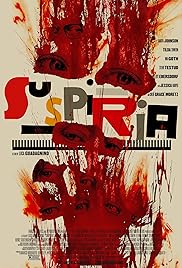
SUSPIRIA 2018 is the curious remake of the 1977 Gallo horror classic by Dario Argento about a young girl entering a new ballet school, discovering it to be run by a coven of witches.  The director here is Luca Gaurdagnino who helmed the overrated CALL ME BY YOUR NAME, whose talent (or lack of) is more evidently displayed here.  

Jessica Harper who starred as the innocent girl in the original has a cameo in this updated version as the doctor’s wife who went missing during the war.  Dakota Johnson plays the lead role here with Tilda Swinton playing Madame Blanc and an elderly male doctor using heavy prosthetics.  

SUSPIRIA opens with words implying a long film (2 and a half hours) with 6 Acts and an epilogue.  The film is and feels lengthy.  It looks great, courtesy of cinematographer Sayombhu Mukdeeprom with haunting music by Thom Yorke who won an Award for it at the Venice International Film Festival.

SUSPIRIA is all looks but it is unfair to say all looks and no substance.  There is more plot than the original though the script is based on Argento’s screenplay.  The story is still set in a German dance school.  But the problem is that Guadagnino’ s storytelling technique appears not to be in use.  It was ok for his last film CALL ME BY YOUR NAME that worked on a weaker narrative, the beauty of the Italian countryside and first love.  In SUSPIRIA many scenes appear unconnected and after reading the story from the press notes, a lot of what transpires is not communicated to the audience.  The plot is made more complicated by its setting in 1977 with the politics of the Berlin Wall.

SUSPIRIA is a complete mess.  Take this scene near the end as a classic example.  The old doctor, Dr. Klemperer (played by Swinton herself)  and his lost wife (now re-untied and played by Jessica Harper) are out walking out in the snow before she disappears for no reason.  The doctor is then dragged into a building by two elderly women, screaming at the top of their lungs.  The doctor is supposed to be lured to the building by a witch disguising herself as the wife.  A huge witch ritual begins with no shortage of nudity (the sort with lots old old withering bodies, sagging breasts and drooping buttocks) but the type one does not want to witness.  Madame Blanc (Tilda Swinton) is killed in this ritual or isn’t she?  – All too confusing.

Director Guadagnino has put too much effort and has obviously become too serious with the project.  The original SUSPIRIA was a slasher film, scary but fantastic cheesy entertainment that is on every horror fan’s list as a must-see.  Gaudagnino has definitely taken all the fun out of the horror classic.  This one is elaborate, creepy and disgusting for no reason it was meant to be this disgusting.  SUSPIRIA has so far got mixed reviews from critics, as most probably are unsure what to make out of this mess of a horror movie.  Argento’s SUSPIRIA was funny, clever and short.

Trailer: https://www.youtube.com/watch?v=BY6QKRl56Ok