Interview with Composer/Musician Michael Abels (GET OUT)

michaelabels.jpgMichael Abels is an African-American composer known for his orchestra works Global Warming, Delights & Dances, and Urban Legend, and choral pieces such as Be The Change and Limitless. “GET OUT” was his first foray as a composer in the film industry, and it definitely won’t be his last. It was great interviewing this extremely talented musician.

Matthew Toffolo: Where were you born and raised? Was music something you always wanted to do as your career?

Michael Abels: I was born in Phoenix AZ, although I lived on a farm outside Aberdeen, SD with my grandparents from infancy through age 6. My earliest memories are of music — seriously, I can remember my grandmother’s recording of Edvard Grieg’s In The Hall Of The Mountain King terrifying me in the crib. Ironically, that’s now my job.

MT: How did you get the job composing the film “Get Out”?

MA: Writer/director Jordan Peele heard an orchestral piece of mine, Urban Legends, on YouTube. It’s a very dynamic piece in which all hell breaks loose, even though it’s also quite tonal. Jordan said this piece convinced him I could bring a fresh voice to film music. He wanted someone who could use the film harmonic language with an African-American perspective.

MT: How was your working relationship with with director Jordan Peele?

MA: Jordan is whip-smart, unbelievable talented, and refreshingly modest. He knows what he wants, and is extremely capable of communicating what he’s hearing and feeling. At the same time, he respects his team as artists, and enjoys the collaborative process. Did I mention how funny he is? A dream to work for.

MT: What are you generally looking for in a director in terms of guidance and tone for your music?

MA: It’s helpful when a director can communicate the feelings a piece of music brings up for them, or the feelings that a character is feeling, or that they want the audience to feel. Most people who are drawn to directing are great at this, since they are storytellers.

MT: What do you think a producer/director is looking for when they bring on their composer to score the film?

MA: The director is looking for someone who can bring the music they are hearing in their imagination to life. The producer is looking for someone who can bring the director’s musical imagination to life on time and under budget. It’s great when these priorities align!

MT: What is your passion in life besides music?

MA: I appreciate home design, I’ve seen my share of home improvement shows. I also love riding my bike, and try to bike at least once a week no matter how stressful the rest of my life is.

MT: What’s next for you? Will you be composing more films?

MA: I have a wind orchestra commission that I’m working on. Yes more film is in the works.

MT: What move have you watched the most times in your life?

MA: The Sound of Music. Do Re Mi changed my life forever. “One word for every note, by mixing it up, like this…” Rogers & Hammerstein taught me that writing music is simple and fun! Been striving to make that lesson true ever since.

MT: What advice do you have for young musicians who would eventually like to compose movies for a living?

MA: Write the music that inspires you, because writing music purely for money will make you hate your creative life. Try to remove your ego from every piece you write. It’s so difficult to be inspired-yet-unattached, but it’s required to remain in a highly creative state. And you are a composer, regardless of whether you have a high profile project to your credit or not. Be the person you want others to see.

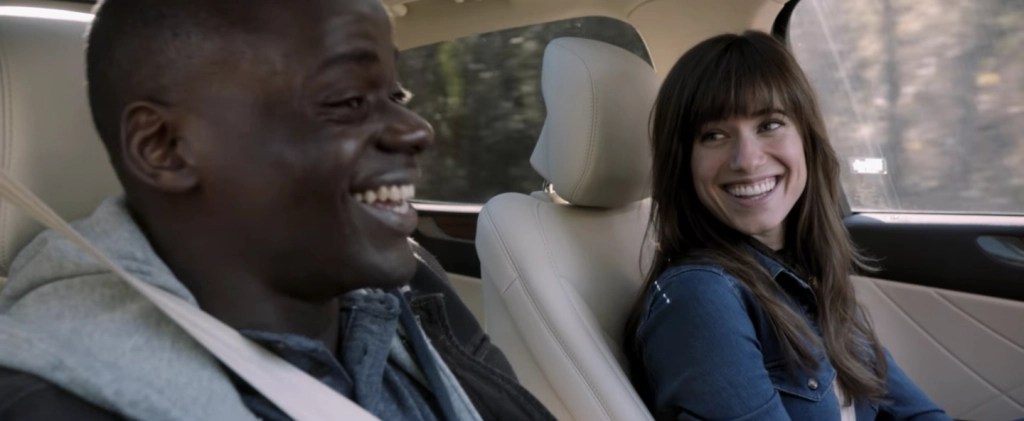
GET OUT Movie:

getoutfilm.jpg

____

Interviewer Matthew Toffolo is currently the CEO of the WILDsound FEEDBACK Film & Writing Festival. 

Filmmaker Sara Gonzalez (THE FEAST (For My Beloved Son))

The Feast (For My Beloved Son), 1min., Canada
Directed by Sara Gonzalez Lopez
A loving Mother cooks for her son, who is currently distressed by his father s disappearance. Once the feast is served, so are answers.

https://www.instagram.com/flishy_fix/

Get to know the filmmaker:

1. What motivated you to make this film?
I’ve always been fascinated by thrillers and how they manage to tell a deep message with its visuals. I wanted to experiment for my first time doing a film, so I dived into the experience! I was very motivated with the world and characters so it helped a lot with the troubles I had later on creating it! Also with the quote of “Art should comfort the disturbed and disturb the comfortable”, I wanted to try out thas theory.

2. From the idea to the finished product, how long did it take for you to make this film?
Since this was my graduation film, from the script to the end I only had around a year to make it on my own! I and some of my classmates agreed it wasn’t enough time for only one person to make a whole film but we managed in our own way! I’m just glad my film turned out to be a good success for the amount of work I had to deal with!

3. How would you describe your film in two words!?
A “Family Dinner” haha

4. What was the biggest obstacle you faced in completing this film?
Telling the story visually in only a minute (ignoring the credits). Since I started I kept referencing past winning films of my school and how they managed to create such rich storytelling in just a minute! So I tried to work extra hard to be able to find ways to tell and not confuse viewers with my film, especially since I also did not want any dialogue involved. I kept changing the script over 20 times actually hahaa, the first script was so much different than this it’s a bit funny. My teachers and friends’ feedbacks were a huge help with the end of this story!

5. What were your initial reactions when watching the audience talking about your film in the feedback video?
I was still very surprised I got selected, it made me very happy having reactions and feedback from more people! Everyone was saying different things, so it felt nice my film got understood in general and enough to form different opinions about it.

6. When did you realize that you wanted to make films?
Ever since I started my 2D animation program I wanted to make films! I love the art of visual storytelling and I really wish I can learn more and grow as an artist the more I make films in the future!

7. What film have you seen the most in your life?
I have seen Pan’s Labyrinth so many times in my life, it’s hard to count. I watch lots of films from Guillermo Del Toro and they are a key inspiration for most of my work!

8. What other elements of the festival experience can we and other festivals implement to satisfy you and help you further your filmmaking career?
It’s my first time being involved in a film festival and so far I have had no complaints! I really enjoy the feedback given, if i had to pick a favorite thing about it.

9. You submitted to the festival via FilmFreeway. How has your experiences been working on the festival platform site?
It’s been interesting. At the beginning I was a bit lost since I wasn’t taught in school anything about entering our films into the festivals but it wasn’t too hard after a bit of digging.

10. What is your favorite meal?
Haha i don’t know if this is a question referring to the film but, I love rice mixed with tuna or pancakes!

11. What is next for you? A new film?
I’m seeking to try different mediums for storytelling in my art for now! I’m planning on making a comic then a game. Eittherway, what I know for sure is that I’ll go back to filmmaking in the future once I try the other mediums!

Screenwriter Thad Alexander (THE SHADOW KILLER)

In the heart of Bangkok, Detective Aran Chen, a defiant inspector haunted by his past, pursues the elusive “Shadow Killer,” a ruthless serial murderer. Armed with his sharp instincts and lethal martial arts skills, Aran battles through the city’s underworld, uncovering a chilling link between the killer’s motives and his own scars. As the lines between justice and revenge blur, Aran faces a deadly confrontation that will test his resolve and redefine his destiny.

Get to know the writer:

1. What is your screenplay about?
Shadow Killer is a grounded crime thriller set in Bangkok, following a police investigator haunted by his past as he hunts down a mysterious serial killer. As the body count rises, he relentlessly pursues the murderer, relying on sharp detective work and his martial arts skills. His past looms over him, threatening to cloud his judgment, but he pushes forward, determined to stop the killer. The chase builds to a brutal final confrontation, where his skills and resilience are put to the ultimate test.

2. Why should this screenplay be made into a movie?

Shadow Killer is a bold, high-impact reinvention of the action genre, fusing a gripping crime investigation with bone-crunching martial arts combat. In a world where thrillers often fall into predictable formulas, this film keeps audiences on edge with relentless action, shocking twists, and a hero who fights both a deadly killer and his own past.

With one or two game-changing twists leading to a high-stakes, brutal finale, Shadow Killer delivers exactly what modern audiences crave—an electrifying, no-nonsense action experience that’s as smart as it is thrilling. It’s a ride that never lets up, never holds back, and most importantly, never forgets to entertain.

This isn’t just another action movie, it’s the one that will leave audiences breathless.

3. How would you describe this script in two words?
Relentless and thrilling

4. What movie have you seen the most times in your life?
Probably the Princess Bride, it’s a classic but it’s a good classic and one that never gets old.

5. How long have you been working on this screenplay?
I formulated the idea about 3 or 4 years ago but finally put it into words this last year so all in all it’s been about 4 years in the making.

6. How many stories have you written?
I have always loved storytelling but never really got into it until recently. That being said I have written multiple scripts and have a few already on the backburner that I’m still working on.

7. What motivated you to write this screenplay?
I love martial arts movies, I used to watch Jackie Chan and Chuck Norris as a kid then as I got older I branched off into different actors like Tony Jaa and Scott Adkins. All this to say I love the genre and I wanted a fresh take with a blend of the gritty martial arts action and an interesting story.

8. What obstacles did you face to finish this screenplay?
Formatting was the biggest obstacle I faced, I hadn’t really ever formatted a proper screenplay before so that took time and effort trying to learn all I needed to learn about that. Besides that, this story and screenplay actually came together pretty smoothly for me without many obstacles.

9. Apart from writing, what else are you passionate about?
give me anything in the entertainment industry and I’m fascinated by it, whether it’s directing, acting, behind the scenes work etc. It all fascinates me. Apart from the film industry I am passionate about fitness and health and take that area of my life very seriously.

10. What influenced you to enter the festival? What were your feelings on the initial feedback you received?
I was looking for a way to get my writing seen which seems to be increasingly difficult.

11. What genres does your screenplay fall under?
Action, crime thriller, and mystery

Screenwriter  Jane Dafoe (REWIRING JADE)

A fierce forty-something woman tries to escape traumatic memories by participating in the Ironman triathlon, only to be diagnosed with CFS. As her life unravels, she clings to an unlikely friend who helps and then hinders her journey to recovery.

Get to know the writer;

1. What is your screenplay about?

This film is centered around the protagonist Jade, a 40-something newly single woman who is very driven in her work life and with her athletic pursuits.

On the surface she appears to be chasing her dreams, but in reality, she is running away from a nightmare.

This film explores themes of how people cope with trauma. We’ve all seen stories about people who dive into counselling, others who self-medicate or those who sink into depression. In this story, the character doubles-down on pursuing her goals. We know that society celebrates and admires driven people. In this story Jade’s drive causes her life to unravel, and she sinks into a state of self-loathing.

This film also deals with themes of identity. Jade struggles with the loss of her identity because she defines herself by the things she does, not who she is at the core. Rewiring Jade explores the complex relationships Jade has with unlikely friends who both help and hinder her journey.

2. What genres does your screenplay fall under?

My screenplay is a character drama or a dramedy. It may be important to note that this is not a sports movie (even though the Ironman is a small part of it).

3. How would you describe this script in two words?

Inspiring and bittersweet.

4. What movie have you seen the most times in your life?

Probably a tie between The Wizard of Oz, Witness, Goodwill Hunting and Silver Linings Playbook

5. How long have you been working on this screenplay?

For five years

6. How many stories have you written?

I made several short documentaries in my role as a fundraiser, however, this is my first feature film.

7. What motivated you to write this screenplay?

I struggled with a chronic illness for a decade and my recovery felt transformational. When I came out the other side, I was not the same person as before. Writing this script allowed me to process and release the traumatic memories, making it a cathartic experience! Adding unexpected humour to the story helped me take my power back from an experience that almost destroyed me.

This film is not literally about me – rather it is inspired by what I went through. While the characters are fictional, a few are inspired by a combination of real people and imaginative elements.

While snippets of the story mirror real events, the main similarity that aligns with my experience is how Jade felt in certain situations. I have also tried to be as realistic as possible about the impact of CFS, but it has been toned down for the film.

8. What obstacles did you face to finish this screenplay?

There were two main obstacles. One was time, as I work full-time as a fundraiser. Therefore, I was working on it during evenings and weekends. In order not to burn out, I took long breaks.

This was helpful as it allowed me to look at scenes with a fresh perspective.

While this film is inspired by true events, it took some time to let go of my attachment to the actual events and focus more on what made the best story.

9. Apart from writing, what else are you passionate about?

I am passionate about wellness from a 360-degree POV. I am being certified as a Rieke practitioner. I am passionate about inclusion and social justice.

10. What influenced you to enter the festival? What were your feelings on the initial feedback you received?

This festival has been running for nine years and has complimentary reviews. I was particularly excited about the podcast opportunity because it allows me to share my passion project with a broader audience.
The initial feedback focused a lot on the illness that the main character Jade struggles with. I understand that is natural as there are almost no stories about chronic fatigue syndrome.

However my hope is that audiences see beyond the illness to the broader themes in the film. I did not set out to write a ‘disease movie of the week’. Rather my focus was on creating well defined, intriguing and relatable characters that the audience cares about.

11. Why should this screenplay be made into a movie?

This story could be described as a mash-up between Silver Linings Playbook and The Big Sick. Rewiring Jade may have broad appeal with its themes of identity, friendship, loss, and ultimately hope and resilience.

Cinematographer Dmytro Lutsenko (FAZA)

FAZA, 14min., Poland
Directed by Weronika Frycz-Zemenka
“PHASE” is a story about a young Ukrainian living abroad, a tale of an intense life, extreme choices, and the thin line between the pursuit of freedom and the perilous consequences of poor decisions. The film paints a portrait of youthful recklessness and the challenging journey toward maturity in a world teetering between exhilaration and abyss.

Filmmaker Alex Sebastian (WIZARD OF OZ )

Wizard of Oz, 7min., Germany
Directed by Alex Sebastian
Young Astronomer Truth needs to prevail in a world of social media misinformation.

http://alexsebastian.de/
https://instagram.com/alexsebastianmuc

Get to know the filmmaker:

1. What motivated you to make this film?
It seems that facts don’t count much any longer in this world. People are trending to want to believe whatever feels most comfortable for them and social media makes it incredibly easy for false preachers to “prove them right”. While this music and video crossover art project was not inspired by recent events, but had its origins roughly eight years ago, with folks like Musk and Trump my dystopian fears from back then what might happen were actually exceeded. Which is quite scary.

2. From the idea to the finished product, how long did it take for you to make this film?
It all started out as an album project. I wanted to produce one and the same song in different versions by working with different instrumentalists. The version were meant to be symbols for social media bubbles, where the same story is spun in different ways, even though it’s the same story. Production time of the EP was roughly four years. I already had a different script for the video early on which I threw away entirely in the beginning of 2024, as it seemed outdated and not focused enough on what I wanted to convey. So I wrote a new one and fine tuned it with my creative team in spring 2024. Principal shooting took 3 1/2 days. Editing and postproduction was done on and off in a matter of a view weeks.

3. How would you describe your film in two words!?
Disturbingly true

4. What was the biggest obstacle you faced in completing this film?
Finding enough people to play extras. It’s really funny. One would think people are really interested in being close to movie productions, but we had a hard time finding enough people. It worked out in the end.

5. What were your initial reactions when watching the audience talking about your film in the feedback video?
It was surprising to see how different people see or realize different things and perceive/interpret them.

6. When did you realize that you wanted to make films?
Well, very early on as a kid. I don’t remember exactly. Cameras always fascinated me. I did not go into it as a career, though, but found my way doing it. I only do projects I really feel an inner urge to do.

7. What film have you seen the most in your life?
That’s a hard one. I tend not to watch films all over again. I’m always interested in new stuff I haven’t seen. But if one came to mind I’ve seen plenty of times, it’s probably Life of Brian. Or to name a more odd choice: The Hudsucker Proxy.

8. What other elements of the festival experience can we and other festivals implement to satisfy you and help you further your filmmaking career?
The best thing always is: Exposure. I’m doing this in the hope to reach as many people as possible.

9. You submitted to the festival via FilmFreeway. How has your experiences been working on the festival platform site?
FilmFreeway is great. It’s easy to use and gives you a lot of choice. Even though there also are a lot of questionable formats on there. One has to be careful which Festival to select that also provides value to you as an artist. To me that’s either festivals that take place in person. Festivals where you can win money prices. And I really love Wildsound because you get audience feedback by random people who probably have never heard from you before.

10. What is your favorite meal?
Am I allowed to only name one? Pizza, Chicken Tikka, Burgers, Enchiladas

11. What is next for you? A new film?
Looks like I’m in my dystopian phase. The next song and short project will be about AI. Hoping to be ready for release before reality beats my imagination again.

Filmmaker Aldo Márquez (The Future of Chinampas: A Perspective From Its People)

The Future of Chinampas: A Perspective From Its People, 30min., Mexico
Directed by Aldo Márquez
The Interdisciplinary Environmental Association (IEA) and the Laboratorio Nacional de Ciencias de la Sostenibilidad-IE (LANCIS) UNAM have partnered with Restauracion Ecológica y Desarrollo, (REDES), to present, “The Future of Chinampas: A Perspective From Its People ”. This documentary aims to bring attention to Xochimilco, a sensitive and important agroecosystem in the southern part of Mexico City. Restauración Ecológica y Desarrollo, REDES, informs the audience about a sensitive agroecosystem in the southern part of Mexico City. The story is told from the perspective of local farmers who express both their efforts to maintain relevance despite the state’s changes in food production, and to conserve and restore what is for many farmers their only livelihood. Ongoing conflicts with governments, water scarcity and a changing society are present in Xochimilco, along with a desire to preserve centuries of agriculture tradition.

https://www.instagram.com/aldomarquez.foto.cine.musica/

Get to know the filmmaker:

1. What motivated you to make this film?

The idea of making this documentary came from Elsa Valente who is a biologist, I had worked with her on another documentary a year before, that film was about agroecological practices. This time Elsa called me to make a new documentary with a new team, almost all of them were biologists or worked on ecological issues. The concept of the film was built mainly with biologists Elsa Valente, Paola Massyel, Olivia Cason and myself. Elsa worked in an NGO dedicated to training in agroecological practices among other things; Paola is an academic and works at LANCIS of the UNAM Institute of Ecology; Olivia works on behalf of Interdisciplinary Environmental Association (IEA), a non-profit academic organization committed to the exchange and generation of knowledge between academics, researchers, professionals, activists and students in the broad field of environmental sciences and interdisciplinary studies. And finally myself, who dedicates to communication and filmmaking. The work was intended to be presented at IEA conferences, but also to be distributed at festivals so that it could reach a larger audience.
And the idea of the film was to give the main voice to the agricultural producers who work every day in the chinampas. What we wanted was to know their voices, feelings, thoughts about the beauty of living there as well as all the problems they have to face day after day.

2. From the idea to the finished product, how long did it take for you to make this film?

We started talking in January 2021, and practically the entire pre-production stage must have lasted about 7 months. The filming took place over the course of a week at the end of July, a very intense week where interviews were carried out with the agricultural producers as well as taking shots of the chinampas, the lakes and all of nature. Post-production was from August to October. Finally the work was presented online as part of the conferences organized by the IEA. And in November, a month later, it was shown to farmers and a debate was organized after the film was presented.

3. How would you describe your film in two words!?

Awareness-raising

4. What was the biggest obstacle you faced in completing this film?

Making a proffessional film with a very limited Budget.

5. What were your initial reactions when watching the audience talking about your film in the feedback video?

I was impressed, because sometimes, as a creator or a person who is very involved in a project, you can wonder if it is clear enough, and the audience understood the message perfectly and they also went deeper. One of them asked what can we do with this now? And it is an excellent question because the problems are there and we can do something to change them, that is one of the reasons for documentaries and films. Create awareness.

6. When did you realize that you wanted to make films?

Since I was a child, maybe 13 years old. I felt a great need to do it.

7. What film have you seen the most in your life?

Well, David Lynch recently passed by, and I think Mulholland Drive is the movie I’ve seen the most times, maybe it’s that one and 200: A Space Odissey.

8. What other elements of the festival experience can we and other festivals implement to satisfy you and help you further your filmmaking career?

It has been an incredible experience and receiving feedback is invaluable. I think being able to organize live feedback to a debate can be an interesting practice.

9. You submitted to the festival via FilmFreeway. How has your experiences been working on the festival platform site?

FilmFreeaway is an extraordinary platform and I really enjoy looking for festivals that this work can participate in. You can find thousands of festivals and just seeing the different festivals that exist gives you ideas to work on something new.

10. What is your favorite meal?

Chiles in Nogada. Delicious typical Mexican food that can only be cooked in July and August because the walnut is seasonal.

11. What is next for you? A new film?

Yes, I am working on new ideas to make new films, I work in photography and I am also a musician so I have some projects in mind for this year.

Filmmaker Shane Kosugi (SEEK)

SEEK, 93min,. Japan
Directed by Shane Kosugi
Kyohei Aizawa, an assassin for a covert non-governmental espionage group in Japan called “???” or “SEEK”, is grieving over the loss of his girlfriend from a tragic plane accident.

https://www.instagram.com/shanekosugi/

Get to know the filmmaker:

1. What motivated you to make this film?
A: I grew up around the movie industry and always had a passion for watching and making films. Furthermore, I love ACTION movies!

2. From the idea to the finished product, how long did it take for you to make this film?
A: From pre-production to the final product took about 1 year.

3. How would you describe your film in two words!?
A: Kamikaze Action

4. What was the biggest obstacle you faced in completing this film?
A: With all the action in this film and the limited time to film it in due to cast and location constraints.

5. What were your initial reactions when watching the audience talking about your film in the feedback video?
A: First of all, Honored. I was so happy that they thought it was exciting, the action was top notch, and that they found the story to be intriguing. All feedback good and bad will help make my future films to be even better.

6. When did you realize that you wanted to make films?
A: About 10 years ago, when I thought that it was time to step away from in front of the camera and be behind the camera.

7. What film have you seen the most in your life?
A: All genres of films from all over the world. You can never stop learning from creators from other countries. But I have to say Action movies are my favorite.

8. What other elements of the festival experience can we and other festivals implement to satisfy you and help you further your filmmaking career?
A: I would love to see the bridge between filmmakers and distribution aspect be a little more accessible and convenient. I would love to see more platforms available for filmmakers to be able to show their projects to bigger audiences all over the world.

9. You submitted to the festival via FilmFreeway. How has your experiences been working on the festival platform site?
A: It has been extremely convenient and I have no complaints.

10. What is your favorite meal?
A: Japanese food

11. What is next for you? A new film?
A: We are planning to make the sequel of “SEEK” in the summer of 2025!

Filmmaker Johannes Grenzfurthner (SOLVENT)

SOLVENT, 94min,. Austria
Directed by Johannes Grenzfurthner
While searching for Nazi documents in an Austrian farmhouse, a team of experts uncovers a hidden secret buried in its bowels. American expatriate Gunner S. Holbrook becomes obsessed with solving the mystery, and as his sanity wanes, he must confront an insatiable evil. Can he find redemption before it drains the life out of him?

http://monochrom.at/solvent
https://www.facebook.com/solvent.film/
https://www.instagram.com/monochrom.film/

Get to know the filmmaker:

1. What motivated you to make this film?

“Solvent” was born out of a need to confront and dissect Austria’s historical baggage, but not in a traditional or sanitized way. The farmhouse setting, tied to my own family history, became a metaphorical stage for exploring guilt, complicity, and the grotesque ways the past seeps into our present. I’ve always been fascinated (and horrified) by how easily we fall into patterns of denial and silence. This film is my attempt to scream into that silence, to mix surreal horror and black humor into a narrative that forces us to face uncomfortable truths. The past isn’t dead. It’s a festering wound we carry, and I wanted to visualize that.

2. From the idea to the finished product, how long did it take for you to make this film?

The production timeline was chaos in the best possible way. We, of course, wanted to shoot in my grandfather’s derelict farmhouse, but the mold situation was far worse than anticipated—it was spreading into neighboring houses. With health department issues looming, we had just two months to shoot on-site before we had to completely empty the place of furniture, old clothes, and papers. Act 1 was filmed while Ben Roberts and I were still figuring out Acts 2 and 3. We had a rough arc in mind, but the details (and even characters) emerged organically. For instance, Bartholdi’s entire plot only materialized after we had already shot chunks of footage. The whole process felt like molding clay while the potter’s wheel tried to electrocute us.

3. How would you describe your film in two words!?

Demon piss.

4. What was the biggest obstacle you faced in completing this film?

You mean besides financing this madness? Balancing historical authenticity with the surreal, comical, absurdist elements was a constant tightrope walk. I wanted to explore Austria’s cultural and historical trauma without reducing it to a simplistic caricature of Nazi horror. And then, of course, there were the technical challenges. The goddamn puke machine we built wouldn’t work, and some of the shots in the wine cellar were ridiculously hard to pull off because of how narrow the space was. My cinematographer, Florian Hofer, was incredible—he carried that heavy camera rig on his head the whole time. One day, he was so exhausted, he literally couldn’t lift his head off the ground anymore. And then there was the editing. Anton Paievski is a wizard at his craft, but we spent long, grueling days together assembling this puzzle of a film, often without a clear picture of how it should look. That’s when the movie truly came to life—through trial, error, and a shared willingness to embrace the chaos.

5. What were your initial reactions when watching the audience talking about your film in the feedback video?

Oh, it was great, really. There were plenty of comments that echoed things I’d heard from other reviewers and journalists, but also some surprising insights that hadn’t come up before. One of the feedback videos focused heavily on body parts (eyes, genitals) and really dug into the body horror aspects of the film. That level of detail was refreshing because, usually, reviewers either gloss over those elements or make a quick side joke. To hear the audience engage so directly with the visceral, grotesque elements of Solvent felt like validation for embracing those uncomfortable, raw aspects of the story.

6. When did you realize that you wanted to make films?

It wasn’t a single “aha” moment, but rather a slow accumulation of tiny rebellions. As a teenager, I was hacking together camcorders and creating absurdist little flicks—short films have been a constant throughout my life. But I came to feature-length films relatively late, making my first feature documentary only about 10 years ago. Before that, my creative energy was spread across a range of mediums: interactive media, theater, performance art, and hacking cultural tropes with my art collective monochrom. Filmmaking became the ultimate synthesis of all these influences, letting me explore narrative, technology, absurdity, and politics on a grand scale. And let’s face it: artists just want a pat on the back—but never know what to do with it when they get one.

7. What film have you seen the most in your life?

That’s hard to say! After making Masking Threshold, I was invited by Letterboxd to create a list of films that influenced me. I welcomed the challenge. I am a nerd for “lists.” But when I sat down, it was pretty overwhelming. Every movie I’ve ever watched has shaped how I view film and the world. Some films are, for various reasons, enormously present in my memory. Poltergeist, for example, because I first saw it when I was 9, alone on late-night television in our dark living room while my parents and friends had a BBQ outside. I felt I was dying of fear throughout the entire experience. Or RoboCop, because as a 12 year old nerd in a shabby theater in my Austrian hometown, it kindled my interest in politics, technology, and toxic waste that melts your face off. I didn’t include those films (and moments) in my compilation because they feel too big and too dominating. I decided instead to choose films that, for whatever biochemical reason, my brain goes back to when it is wandering, digesting, and scheming.

https://letterboxd.com/horrorville/story/johannes-grenzfurthner-the-films-that-inspired/

8. What other elements of the festival experience can we and other festivals implement to satisfy you and help you further your filmmaking career?

I’d love to see festivals embrace more unconventional programming—films that blur genres, push boundaries, or make people deeply uncomfortable in the best way. Offering spaces for filmmakers to connect in informal, chaotic ways—like a drunken roundtable or a “roast your film” session—could be fun.

9. You submitted to the festival via FilmFreeway. How has your experience been working on the festival platform site?

Not too shabby! FilmFreeway feels like an online dating site for filmmakers—it’s streamlined, efficient, and takes a lot of the soul-crushing bureaucracy out of the process. That said, it could use a bit more personality. Imagine rejection emails that came with a personalized insult or a cryptic haiku—it would at least make “thanks but no thanks” a little more fun. Maybe they should lean into the drama of the rejection process—filmmakers are used to theatrics, after all.

10. What is your favorite meal?

Wiener Schnitzel with a side of existential crisis. There’s something comforting about the simplicity of a Schnitzel—especially when paired with a debate about whether the universe is inherently meaningless.
Comfort food!

11. What is next for you? A new film?

There are ideas, definitely. But if I told you, I’d have to lock you into a cellar—the good old Austrian way. Stay tuned, but keep your cellar door locked, just in case.
Filmmaker Aniruddha Das (MADE IN PARADISE)

MADE IN PARADISE, 44min., India
Directed by Aniruddha Das
Set against the stunning backdrop of Ladakh, Made In Paradise tells the story of the Changpa nomads, guardians of the world’s finest Pashmina. A testament to human resilience and perseverance, the film highlights the community’s immense respect for the environment, and its attempt to protect a rich heritage and culture, only to ensure that their Pashmina remains a global treasure. The film also explores the symbiotic relationship between the herders and their animals, the legacy of the Pashmina, and the fight to preserve a way of life that teeters on the edge of survival.

https://madeinparadisefilm.com/
https://x.com/pashminafilm
https://www.instagram.com/pashminafilm/

Get to know the filmmaker:

1. What motivated you to make this film?

The breathtaking landscapes of Ladakh and the resilient spirit of the Changpa nomads drew me in. Their story—rooted in harmony with nature and a fight to preserve heritage—felt too precious to remain untold. This film is my love letter to them and my way of sharing their story with the rest of the world.

2. From the idea to the finished product, how long did it take for you to make this film?

It took about a year and a half to bring this film to life. We wanted to immerse ourselves in the journey of the Changpa across seasons—through the extreme winters and harsh summers of Ladakh—capturing the rhythm of their lives as it unfolds.

3. How would you describe your film in two words!?

Resilient Harmony.

4. What was the biggest obstacle you faced in completing this film?

The biggest challenge was reaching the remote, high-altitude locations near the Indo-China border and finding the nomads, who are always on the move. It was a journey of patience and persistence, inspired by the very spirit of the Changpa people.

5. What were your initial reactions when watching the audience talking about your film in the feedback video?

Watching the audience react to our film for the first time was nothing short of thrilling. Hearing their positive words and knowing the story resonated deeply was both humbling and exhilarating—it felt like the journey was truly worth it.

6. When did you realize that you wanted to make films?

After over a decade in the advertising industry, I realized the power stories have to connect with and inspire people. My work has allowed me to encounter countless such untold stories from India that deserved a global voice. This film is my humble beginning to bring those narratives to the world.

7.What film have you seen the most in your life?

The film I’ve seen the most is Baraka. Its visual poetry and ability to convey profound stories without words deeply resonate with me, reminding me of the universal language of cinema.

8. What other elements of the festival experience can we and other festivals implement to satisfy you and help you further your filmmaking career?

Festivals like yours already excel in connecting filmmakers to audiences and amplifying our voices. A valuable addition could be live Q&A sessions with the audience after screenings—whether virtual or in person. These interactions allow for direct engagement, fostering a deeper understanding of the stories we tell and inspiring future collaborations.

9. You submitted to the festival via FilmFreeway. How has your experiences been working on the festival platform site?

FilmFreeway has been a seamless and intuitive platform for submitting films. Its accessibility and organized interface make the process straightforward, allowing filmmakers to focus on storytelling rather than logistics. It’s a great bridge between filmmakers and festivals worldwide.

10. What is your favorite meal?

My favorite meal is Shapta with Tingmo, a flavorful Tibetan stir-fry paired with soft, steamed bread. Its rich spices and comforting textures make it a dish that feels like home.

11. What is next for you? A new film?

Next, I’m exploring the intricate world of Ladakh Shingskos—a centuries-old woodwork tradition, shaped by time and nature, now fighting to preserve its legacy in a rapidly modernizing world. This is the untold story of art, resilience, and the hands that carve history.