Film Review: DOLCE FINE GIORMATA (Poland 2018) ***

Dolce Fine Giornata Poster
The stable family life of a poetess begins to fall apart as she makes a controversial speech to appreciation.

Director:

Jacek Borcuch

Writers:

Jacek BorcuchMarcin Cecko (associate screenplay) | 1 more credit »

This is the rarer Polish film in that it is more light-hearted than the usual depressing Polish films.  Director Jacek Borcuch sets his film in the beautiful Tuscany, Italy.

One wishes director Borcuch would not have tackled so many issues as he did in this movie resulting in no clear direction on where he wishes to go with his material.  Or perhaps he wishes to keep an open mind and let the audience decide for themselves.

The film centres on semi-retired Nobel literature winner Maria Linde who is living out her golden years in casual luxury.  The celebrated Jewish-Polish poet (Krystyna Janda) enjoys a life filled with late-night dinners, wine-infused conversation with friends, and quality time spent with her adult daughter and grandchildren. The free-spirited matriarch’s privileged existence mostly keeps her at a remove from the escalating xenophobia engulfing Italy.  But a secret dalliance with a handsome (and much younger) Egyptian immigrant sets off a chain of events that will eventually lead to Maria’s life coming apart at the seams.

Director Borcuch makes one controversial statement in his script In Maria’s acceptance speech.  Maria says: “I don’t have to give an acceptance speech and that is why I will.”  This spells trouble.  In her disturbing speech she talks about the power of terrorists in using death.  Maria talks about the suicide bomber and asked what can  be done by the celebrated artist.  Then comes the whopper statement is what has been done is the setting up of refugee camps by the Government set up by the Mafia.  And she describes the incident where people have died as a work of art.  She denounces her Nobel Prize in protest for the unsympathetic Europe she is living in.

The character of Maria is that of a famous spoilt bitch.  She has a younger lover, cares not for the law (she deliberately fails to stop at roadside checkpoint) and is rude to the Police Commissioner who was so good to drop everything bare to search fr her missing grandson.  She thinks she is doing the world a whole lot of good while from what transpires is the compete opposite.  One wonders the reason director Borcuch made her character so as it destroys all the messages the film tries to put forward.  But what happens to her at the end (details not revealed here in the review) is what she deserves

Borcuch provides no answers to Europe’s current crisis of morality and identity.   One can hardly praise actress Jandaone for her performance in a conflicting role,  who infuses her protagonist with both the wilful selfishness of a child and the complicated desires of a woman finding her way in life’s later stages.

The use of the Frank Sinatra song lifts up spirits and puts the film into perspective.

Maria claims to be just a poet who is amoral.  She also says that she is made famous by a small group of intellectuals.  This does not explain the reason for her to make a moral speech.

DOLCE  FINE GIORMATA makes its debut at the TIFF Bell Lightbox for a limited engagement.

Trailer: https://vimeo.com/356027770
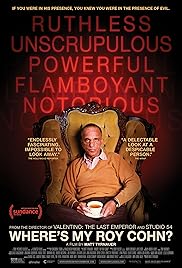
Film Review: WHERE’S MY ROY COHN? (USA 2019) ***1/2

Where's My Roy Cohn? Poster
Trailer

Roy Cohn personified the dark arts of American politics, turning empty vessels into dangerous demagogues – from Joseph McCarthy to his final project, Donald J. Trump. This thriller-like … See full summary »

Director:

Matt Tyrnauer

Before the film title WHERE’S MY ROY COHN? first appears on the screen, the audience is given a quick introduction of the infamous lawyer.  He loves to fight power, he is a caged animal, he loves a good fight etc.  But director Tynmauer ensures that his audience knows of the evil that Cohn has amassed in his career.  Great villains usually make for good movies,
and Matt Tyrnauer certainly has a doozy in Roy Cohn.  The question is whether Tynmauer will create some sympathy for this supposedly evil person.

In Cohn’s own word as captured unarchive footage: “I would do anything to get my client to win.”  And the voiceover goes on to say that he did not care what the law is, but who the judge would be.

The doc unfolds in (almost) chronological order from the time he was born in the U.S. to his rise to fame as counsel to McCarthy and to become the all-powerful lawyer.  Firstly, director Tynmauer makes it interesting by starting on Cohn’s mother.   She was the ugliest girl on the block who no man wanted to marry.  From a clever boy at school, Roy Cohn is shown to grow to become the ruthless lawyer/political power broker whose 28-year career ranged from serving as chief counsel to Senator Joseph McCarthy’s anti-communist witch hunt to molding the career a young real estate developer named Donald Trump.

  In the ’50s, Cohn formulated his playbook, ushering in a paranoid style of American politics.  Today it’s resurfaced – with scare tactics, divisive rhetoric, and aggressions against the vulnerable.
Cohn had many celebrity friends like Andy Warhol, Aristotle Onassis and George Steinbrenner.  He was a regular at Studio 54, often accompanied by his male lovers, while adamantly denying his homosexuality to everyone.  The portion of the film revealing Cohn’s homosexuality is the most intriguing and entertaining.  It is as if God made him gay to punish him.  To make matters worse, Cohn was ugly and widely believed to have undergone plastic surgery to  having sex with a different boy every day, often with someone poor.  But he had a good slim body, doing his regimental 200 sit-ups daily.

  Some of Cohn’s best-known exploits include: spearheading J. Edgar Hoover and McCarthy’s crusade against homosexuals, helping pave Ronald Reagan’s path to the oval office, torpedoing Geraldine Ferraro’s historic bid for the vice presidency, keeping many American
mafiosos out of jail and looting the bank accounts of his legal clients.

  Mixing archival footage (including journalist Ken Auletta’s ’70s audio interview with Cohn, never heard by the public before) and contemporary interviews (cousins, an ex-boyfriend, gossip columnist Liz Smith, now fallen politico Roger Stone et al.), the film also offers clues to his behaviour (a doting mother, insecurities about his looks).  

The film ends with the climax of Cohn going out fighting to the very end.  Disbarred in 1986, he went out defiantly, dying five weeks later at age 59, never admitting that he had AIDS.  Cohn is the true real life villain everyone loves to hate.

Trailer: https://www.youtube.com/watch?v=lTrHL7Vo_SQ

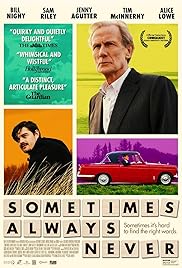
Film Review: SOMETIMES ALWAYS NEVER (UK 2019) ****

Sometimes Always Never Poster
Trailer

A detective fantasy / family drama where a love of words helps a father reconnect with a missing son.

Director:

Carl Hunter

One has to love the ambiguous title SOMETIMES ALWAYS NEVER.  The title is as smart as its quirky script, its occasionally brilliant dialogue and the crazy way it brings the game of scrabble into the story.  But the title is not as innocent as it seems.  The protagonist is a tailor and the 3 words have significant meaning with reference to a suit.  The title refers to the Sometimes, Always, Never Three-Button Rule. When wearing a suit with three buttons a man should sometimes button the top button, depending on the style of the suit, always button the middle button, and never button the bottom button.

Everyone loves a good story.  SOMETIMES ALWAYS MAYBE has one of the best premises ever thought of.  If that is not enough, there is a twist in the plot that no one would ever predict.  Director Hunter is also playful enough (there is also a splash of colour, particularly red) to go with the material as evident at the start of the film.  Some animation is inserted to put some bite into the storytelling.

Firstly, scrabble has everything to do with the story.  Alan (Golden Globe Winner Bill Nighy) is a stylish tailor with moves as sharp as his suits.  He has spent years searching tirelessly for his missing son Michael (Sam Riley) who stormed out over a game of scrabble. With a body to identify and his family torn apart, Alan must repair the relationship with his youngest son Peter and solve the mystery of an online player who he thinks could be Michael, so he can finally move on and reunite his family.  In short, it is about a lonely man trying to gain the love lost of his missing son.  Alan is also a scrabble pro.

My favourite dialogue in the script is the spill on the reason there is no marmite in Canada.  This has significant meaning for me as I grew up on it and bovril in Singapore but never realized the fact about marmite being banned by the government in Canada for its refusal to disclose a secret ingredient.  Such are the  little pleasures in the film.

Actor Nighy is always good in all his performances, again adding dignity in the role of a distraught old man.  Jenny Agutter plays Margaret, always a delight to watch, having seen her when she was much, much younger in films like THE RAILWAY CHILDREN and LOGAN’S RUN.

Though the film has a protagonist in his senior years about to settle the one mystery in his life, the story has universal appeal as it coves other issues like family relationships and senior romancing while being current with day to day stuff like gaming and cell phones.

Does Alan find his missing son in the end?  Alan does in a different way.  Frank Cottrell Boyce (MILLIONS, CODE 46, GOODBYE CHRISTOPHER ROBIN) gets my vote for most original script of the year.

Trailer: https://www.youtube.com/watch?v=22R-JQRov_U

Film Review: HUMAN NATURE (USA 2019) ***1/2

Human Nature Poster
The biggest tech revolution of the 21st Century isn’t digital, it’s biological. A breakthrough called CRISPR has given us unprecedented control over the basic building blocks of life. It … See full summary »

Director:

Adam Bolt

This documentary  on the advancements of DNA technology begins with a speech by an expert on the topic at the Californian Institute of Technology waning that advancements of DNA could lead to either disaster or positive changes.   The ad for the film claims it to be the biggest tech revolution of the 21st Century and it isn’t digital, it’s biological. 

The film goes on to tell the story of one of the most important scientific discoveries of the 21st century – CRISPR, a genome engineering tool that allows to change certain parts of the DNA, and provides a provocative exploration of the potential applications and limitations of this tool.  

Directed by Emmy Award winner Adam Bolt, HUMAN NATURE has successfully premiered at SXSW Film Festival and was further featured as the official selection at multiple film festivals across the world, including Hot Docs. 

The film is told in Chapters.  Chapter 2 itself called CRISPR and Chapter 3 called ‘The Gene Machine’.

Director Bolt’s documentary has this simple aim – to tell the story.  But in order to do so, Bolt has to educate his audience on CRISPR and CAS9 (pronounced KAST 9).  What these are is explained (as described by Wikipedia) below;

CRISPR is a family of DNA sequences found within the genomes of prokaryotic organisms such as bacteria and archaea. These sequences are derived from DNA fragments of bacteriophages that have previously infected the prokaryote and are used to detect and destroy DNA from similar phages during subsequent infections.  Hence these sequences play a key role in the antiviral (i.e. anti-phage) defense system of prokaryotes.

Cas9 (or “CRISPR-associated protein 9”) is an enzyme that uses CRISPR sequences as a guide to recognize and cleave specific strands of DNA that are complementary to the CRISPR sequence. Cas9 enzymes together with CRISPR sequences form the basis of a technology known as CRISPR-Cas9 that can be used to edit genes within organisms. This editing process has a wide variety of applications including basic biological research, development of biotechnology products, and treatment of diseases.

It is not an easy task to understand the last 2 paragraphs or to understand what Bolt’s microbiologists in the film are explaining either.  But Bolt tries hard, credit to him, using everyday English  and animation to illustrate and simplify.  In the end, it is not really necessary to understand the dynamics but how it works.  Bolt also uses an application of it with sickle cell cancer to bring his story down to earth.

Bolt goes to the extreme of using the analogy of the manufacture of the car by the Ford Motor company with genome engineering, even intercutting the latter with cars coming off the auto assembly plant.

But the doc is not without its feel good moments.  In an inspirational segment, Chinese eGenetics engineers describe enthusiastically how they can use pig cells to do the equivalent of organ donors.  With feel good also comes the horror.  Bolt informs that with one gene, it could be made available to that people could for example, be altered to survive with only 4 hours of sleep or given more muscular strength.   The ethical question is whether human beings want to go there.

HUMAN NATURE is educational though at times tough to understand film, but also a provocative and study on an urgent subject that will change the course of the human race.

Trailer: https://vimeo.com/321655980


Film Review: ROBBERY (Canada 2018) ***1/2

Robbery Poster
Trailer

When his criminal father is diagnosed with dementia, a young thief plans a series of reckless heists in order to battle the disease and pay off a dangerous gambling debt.

Director:

Corey Stanton

Writer:

Corey Stanton

There is a very sad and moving moment at the start of ROBBERY that sets the tone of this film involving a robbery.  As the father in the driver’s seat of a car asks the passenger beside him: “Who are you?”  The reply is: “I am your son, dad.”   Everyone has or will go through the time when a parent goes through dementia.  This is a sad and real problem which ROBBERY bravely examines in this indie-Canadian feature.

When his criminal father, Frank (veteran actor Art Hindle who has been in countless TV series and films including classics like PORKY’S and BLACK CHRISTMAS) is diagnosed with dementia, a young thief, Robbie (Jeremy Ferdman) plans a series of reckless heists in order to battle the disease and pay for his medication.

The film shifts between a crime film and family drama with some comedy thrown in for good measure.  The film unfolds in Chapters – 3 of them in total.  The first is entitled ‘Robin Hood’, the second “An Awful Disease” since the dementia is one though the awful disease being referred to is Robbie’s gambling addiction.

The script, written by Stanton himself contains some solid moving lines.  It also contains the concept of a 5-minute memory span that works well into a suspenseful plot though in reality (there) is no such thing.  Frank can only remember 5-minutes at a time, so when he is on a job, it must take no longer than 5 minutes.  (In truth, if one can remember 5 minutes at a time, these 5 minutes can be linked to another 5 minutes, meaning that the 5 minutes can last a much longer time span.)

Once can tell Stanton is having a field day writing the Roxanne (Jennifer Dale) scene, the one that ends with Robbie’s fingers smashed.  Dale laps up the lines in the film’s best scene, to be taken tongue-in-cheek, obviously.  The story takes a violent twist after.

The film is not without humour, or at least not without Stanton’s warped sense of it.  After a character’s speech on setting one goal after another so that in essence that becomes living effectively the rest of ones life,  Robbie decides his next step in life is to kidnap a dog with the help of his dementia-ridden father.

Superlative performances are elicited by Stanton particularly from Hingle, Dale and relative newcomer Ferdman in the title role.  Ferdman who is a real “hottie’ has been in a few TV series and in a very minor role in the Jessie Owens movie RACE.

ROBBERY tries to be too smart for its own good leading to an over-stylish but confusing ending.

Because of its quirkiness, ROBBERY is perhaps an ideal film to be selected at the After Dark Film Festival where it premiered in October last year.  ROBBERY is clearly an above-average Canadian indie with a twisted sensibility making it worth a look.

Trailer: https://www.youtube.com/watch?v=YTT_XC3TSj8

Film Review: ROGER WATERS US + THEM (USA 2019) ****

Roger Waters - Us + Them Poster
A look at Roger Waters’ 2017-2018 concert tour.

Directors:

Sean EvansRoger Waters

The Us + Them Tour was a concert tour by Roger Waters, formerly of Pink Floyd.  The tour visited the United States, Canada, New Zealand, Australia and countries in Europe and Latin America, showcasing songs from Waters’ career with Pink Floyd and from his most recent album as a solo artist, Is This the Life We Really Want? It opened on 26 May 2017 in Kansas City, Missouri and ended on 9 December 2018 in Monterrey, Mexico.

Roger Waters, now at the age of 76, co-founder, creative force and songwriter behind Pink Floyd, presents his highly anticipated film, ROGER WATERS US + THEM, featuring state-of- the-art visual production and breath-taking sound in this unmissable cinema event.  Filmed in Amsterdam on the European leg of his 2017 – 2018 Us + Them tour which saw Waters perform to over two million people worldwide, the film features songs from his legendary Pink Floyd albums (The Dark Side of the Moon, The Wall, Animals, Wish You Were Here) and from his last album, Is This The Life We Really Want?  Waters collaborates once more with Sean Evans, visionary director of the highly acclaimed movie, Roger Waters The Wall, to deliver this creatively pioneering film that inspires with its powerful music and message of human rights, liberty and love.

The concert film comes with a message.  Unlike Bruce Springsteen’s WESTERN STARS which is too preachy, Roger Water’s film takes the preaching down several notches.  The message of everyone are brothers and sisters comes across loud and clear – emphasized by the lyrics of many of the songs performed.  The film is bookended by an image on a mother sitting on a mound of sand on a beach looking out into the ocean.  A child is with her.  The image is called ‘The last Refugee’ in the closing credits and shows Waters’s fight for this cause.  There are also other disturbing images intercut with the concept, footage of refugees overcrowded into a road sailing towards  what they believe is freedom and a better life.

The best song performed is “The Wall”  which is enough to move any audience.  The song is accompanied bu children of many races n orange jumpsuits on stage during the performance.  The visuals seen on the gigantic screen behind the stage are well thought-of and executed, much the vision of Sean Evans.

The camera intercuts the performances with the reactions of the spectators many of whom know the lyrics of entire songs by heart.

The entire concert film is not only entertaining but a very moving experience.  This is the next best thing to attending the concert – without the hassle of having to deal with the crowds.

This film will inevitable be compared to Springsteen’s WESTERN STARS.  Roger Waters’s film wins hands down.  Waters works also more layered and a better listen – my view, (sorry Springsteen fans.)

Stay for the closing credits.  The credits list all the performers on stage as well as those behind the scenes.  The short entitled “A Fleeting Glimpse” comes after as a bonus.

Trailer: https://afrotoronto.com/index.php?option=com_content&view=article&id=1901&catid=67

Film Review: THE MEANING OF LIFE (Canada 2017) ***

The Meaning of Life Poster
A starving musician Finn Faber (Tyler Shaw) gets a temporary job as a therapeutic clown at a hospital entertaining sick kids. He is assigned a 9 year-old leukemia patient: Sophia Hill (Sadie Munroe). Finn soon learns that Sophia coming into his life was no coincidence, but an important lesson he needed to learn before making a big step forward in life.

Director:

Cat Hostick

Writer:

Cat Hostick

It is bold for a film to be entitled THE MEANING OF LIFE.  One expects some life altering experience for the audience or perhaps some urgent message of life.  In writer/director Cat Hostick’s film, she attempts both.  These are extremely high goals to achieve and one cannot fault her for want of trying.  The film poses this all-important question: Would one give up ones career for family or for someone one loves?

A starving musician Finn Faber (Tyler Shaw) gets a temporary job as a therapeutic clown at a hospital entertaining sick kids.  Finn is a music songwriter.  He is assigned a 9-year-old leukemia patient: Sophia Hill (Sadie Munroe).  Finn soon learns that Sophia coming into his life was no coincidence, but an important lesson he needed to learn before making a big step forward in life.

Finn’s inconsistency in character is too noticeable.  Finn is super patient with Sophia.  He encourages her in her painting to no end.  At one point, in  order to start her on drawing live animals, he tells he to close her eyes and imagine that it can be done.”  But Finn has absolutely no patience or time for his father.  Thee is no real reason of how the enmity between father and son has come to this level.

The dialogue between Finn and Sofia is at times corny, but it works and if one evaluates, one can hardly come up with anything better.  “You are a nice dork, I like you.”  “You are beautiful, with or without hair,” Finn tries to convince Sophia to do chemo.

Tyler Shaw who does Finn’s songs is pretty good. He sounds like  a cross between Ed Sheeran and Sam Mendes. The guitar playing is not half bad either.

The best thing about this film are the performances.  Tyler Shaw, who has been signed on by Sony Music in real life does a marvellous job singing and acting.  The young actress Sadie Monroe is a scene stealer.  Other veterans include Dan Lett (who I personally just got acquainted with at the gym) playing Finn’s father, a Canadian actor who has acted in countless films including X-MEN APOCALYPSE and THE SHAPE OF WATER.  Lett has only two scenes in the film but makes them count.

The film has a good message and story but it get a bit sappy and preachy especially towards the end.  “You are the only therapy these kids look forward to each day.” says the nurse to Finn at the end.  Or Finn saying: “I will never give on music.”  The tacked Hollywood ending is also a bit too much, spoiling what might have been a decent believable story.

Flaws aside, THE MEANING OF LIFE turns out to be a pretty decent film.  Director Hostick tries her best and the effort shows.  Entertaining with a message to boot, the film makes a worthy watch.

Film Review: THE FIRST KING: BIRTH OF AN EMPIRE (Il Primo Re) (Italy 2019) ***

Romulus & Remus: The First King Poster
Romulus and Remus, two shepherds and loyal brothers, end up taking part to a journey that will lead one of them to be the founder of the greatest nation ever seen. However, the fate of the chosen one will pass from killing his own brother.

Director:

Matteo Rovere

Writers:

Filippo Gravino (story), Francesca Manieri (story) | 4 more credits »

An Italian re-making of ROMULUS AND REMUS, an early pre-Christianity feature way back when, when films of this genre together with Biblical films were extremely popular.

When the film opens, the audience sees two brothers Romulus and Remus as they tend sheep right before everything is swept away by a tidal wave.  They are captured by a tribe and locked in cages.  After they are others are forced to fight each other in the mud (dirty, brutal and sexy fights) for amusement of the captors, the prisoners escape, only to travel through hard terrain in order to survive.  They also have to fight superstition and sometimes each other to survive.

Why do Romulus and Remus care so much for each other that they are willing to sacrifice their lives for each?  Apparently they have sworn allegiance when they were taken apart as kids from their mother by an attacking tribe.

There is hand-to-hand combat and fighting with ancient weapons like swords, clubs and hammers.  All this allows for a lot of blood-letting such as a spike on the side of the neck letting out gushing blood or a head cracked open.  There is even a half body (a silly looking special effect) seen hanging from a tree.

This is a male oriented film so females beware.  There is only one female in the group surviving the journey.  There is no romance – only macho males fitting each other and showing off their muddy bare bodies.  

It is just one fight after another.  The film gets a bit monotonous in tone though not for lack of trying.  If the men are not fighting other tribes, they are fighting each other.  The lack of humour clearly puts a damper on the entire film.  The founding of Rome is the excuse given for the film to have more clout.  Romulus and Remus are given credit to the founding of Rome hence the subtitle “Birth of an Empire”.

To the film’s credit, THE FIRST KING is beautifully shot.  Most of the action takes place in the country and woods amidst streams and rivers.  The men are not very gruff and sport lots of facial hair.  There has bonnet been a group of uglier actors assembled on display film.  But everyone seems to be in shape.

The film runs a lengthy 2 hours and 5 minutes but it could be cut short and edited for a tighter film.  The action set piece are equal well spread out, so there is not long a dull moment, unless one finds the action boring.  One imagines that this is reason for keeping the fights sufficiently violent.

Yet, THE FIRST KING delivers if one likes films in this genre.

The DVD and Blu-ray are just out October 24th this week.  They come with these bonus features: “Making of” and “Trailer”.  The English version is also available but it is best to watch the film in Italian with subtitles.

Trailer: https://www.youtube.com/watch?v=g1MHA-swPjs

Film Review: ZEROVILLE (USA 2018)

Zeroville Poster
Trailer

A young actor arrives in Hollywood in 1969 during a transitional time in the Industry.

Director:

James Franco

Writers:

Steve Erickson (novel), Paul Felten | 1 more credit »

James Franco has made a name for himself in pictures primarily as an actor.  He received an Oscar nomination for 127 HOURS and acted in hits like PINEAPPLE EXPRESS and FREAKS AND GEEKS.  Though credited with 39 directorial credits, the films he has directed have been mediocre at best.

In ZEROVILLE, made a few years back and only just released, James Franco stars and directs himself as Vikar a wannabe Hollywood celebrity.  He more than meets his match in the form of outrageous characters such as Seth Rogen’s APOLCALYPSE-type director, Will Farrell’s producer, Megan Fox’s starlet and Jacki Weaver’s editor.  But it is though Dotty, the editor that Vikar learns the game.  “Fuck continuity.  It is the passion that is the editing.” is what Vikar believes after watching how the kissing scene between Elizabeth Tylor and Montgomery Clift was edited in A PLACE IN THE SUN.

ZEROVILLE requires one to have sufficient knowledge of old movies to fully appreciate what director James Franco intends.  One such movie is the 1951 George Steven’s film A PLACE IN THE SUN that starred Montgomery Cliff and Elizabeth Taylor.  Vikar (Vikar with a K is what he called himself) has a shaved head and ridiculous moustache.  He loves Montgomery Cliff and Elizabeth Taylor so much that he has both Taylor and Clift tattooed on his shaved head.

Franco must totally believe the spill on continuity as his film does not pay much attention to continuity.  One scene had him break a car widow.  No blood shown, nothing and another has his hand in a bandage.  Though his film aims high, it is a mess without much direction with the characters shouting all over the place a lot of the time.  The Vikar character in contrast just broods along with a sullen look.  But the film contains isolated hilarious bits.

The film funniest segment has what is supposed to be the filming of the Arthur Hiller 1970 film LOVE STORY based on the Erich Segal novel.  Ali McGraw cannot distinguish between the lines “Love means never having to say you’re sorry” and “Love means never ever having  to say you’re sorry” which requires so many takes that she storms out in frustration.  Another one that matches is the one where Vikar is interrogated by the cops, being a suspect in the Sharon Tate murders.  The film has shades of ONCE UPON A TIME IN HOLLYWOOD.  Both films are set in 1969, Hollywood.

Of the classics, these must be Franco’s favourites, as their names keeping popping up. They are A PLACE IN THE SUN, THE SHOP AROUND THE CORNER, SUNSET BOULEVARD, CASABLANCA, JOAN OF ARC and THE SEARCHERS, even though Vikar considers John Wayne as a hontytonk racist pig.  The film has clips from John Ford’s MY DARLING CLEMENTINE, JOAN OF ARC and a 3 Stooges clip.

ZEROVILLE ends up a pretty bad movie.  It just wanders around just as its protagonist Vikar with a little aim but loses purpose on its way.  At least it is good for a few laughs.

Trailer: https://www.youtube.com/watch?v=7fw72WrOrlA

Film Review: JUDY (UK 2019) ***

Judy Poster
Trailer

Director: Rupert Goold

Writers:

Tom Edge (screenplay by), Peter Quilter (based on the stageplay “End of the Rainbow” by)

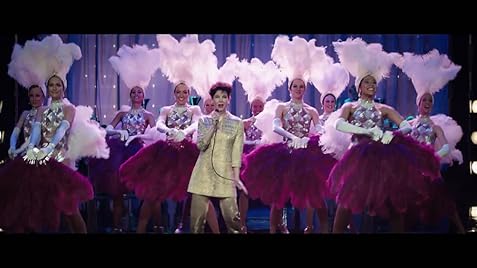
Premiering at the Toronto International Film Festival just last September to a standing ovation likely because Oscar Winner Renée Zellweger was present, JUDY makes its debut in theatres just two weeks after.   Oscar winner Renée Zellweger delivers a note-perfect performance (she reportedly sang all the songs herself) as Judy Garland during the last year of her life.   When one thinks of Judy Garland, one thinks good times like THE WIZARD OF OZ and the famous song “Over the Rainbow”, but those expecting a feel-good movie will be out of luck.  In fact, the first song sung by Garland occurs after 40 minutes of screen time.  The film is based on the Peter Quilter’s stage play “End of the Rainbow” which is pretty grim.

The film shifts to and fro, intercutting from Judy during the last year her life to the days where she was just 16 working at MGM Studios for MGM head, Louis B. Mayer.  Two aspects of Judy’s life are portrayed and both heavily involve performances.

For the 16-year old, Judy is shown to be raised on film sets and nearly every aspect of her life — from what she could eat to who she could date to what drugs she should take — was dictated by MGM studio head Louis B. Mayer.  Mayer is shown just short of being as nasty as Harvey Weinstein.  Judy became a wondrously gifted movie star who never learned to take care of herself.

When the film opens, the audience first sees Judy a middle-aged, homeless, broke, embroiled in a custody battle, and all but blacklisted in Hollywood.  She is kicked out of the hotel is is staying at and she is left homeless with two children.  She docks them off at her ex, Sid (Rufus Sewell).  In a bid to regain some control of her career, she accepts a residency at a London theatre. She refuses to rehearse and, crippled by anxiety, insomnia, and alcoholism, can barely make it to the stage opening night. But once there, in the spotlight, before an eager audience, microphone in hand and a crackerjack band at the ready, she’s suddenly at home. And it’s magic.  But not all the time.  One scene has her collapse on stage and another being heckled but the audience and then boo’ed off after she loses it and insults the audience.  These are not pleasant scenes to watch.

Though based on a play, the film does not feel like one, owing primarily to the frequent intercutting of Judy in her last year and Judy when young.  Unfortunately, the film falls into cliched territory with the expected manager that uses her, her bout with alcohol and her descent from fame.  There is little insight or background about Judy Garland that is provided.  JUDY can best be described as a play about Judy Garland than a biopic.

The film has a few solid moments.  The best of these is Judy’s chance encounter with a couple of gay admirers.  They sing with Judy and reminisce of the times when they were arrested for gay behaviour.  Judy Garland and her daughter Liza Minelli are gay icons.

JUDY is an ok watch aided by a solid performance by Renée Zellweger but do not expect too much and you will not be disappointed.

Trailer: https://www.youtube.com/watch?v=HU2GJwkH71M