Film Review: BORG/McENROE (Sweden/Denmark/Finland 2017) ***

Submit your Screenplay to the Festival TODAY

Borg vs McEnroe Poster
Trailer

The story of the 1980s tennis rivalry between the placid Björn Borg and the volatile John McEnroe.

Director:

Janus Metz


BORG/McENROE is one of two tennis films that played at the 2017 Toronto International Film Festival, the other one being BATTLE OF THE SEXES that had already opened.

The two films by inevitable comparison show vast differences in approach.  BORG/McENROE takes its subject of tennis very seriously capturing all the fear, all the glamour and all the stress each player faces of the matches, unlike the other film relying on comedy to stir its audience.  The results of the tennis matches are crucial for both films.  In BORG/McENROE, they are exciting and competently shot while the matches in the other film is laughable and boring.  The actors also here sport tennis bodies while Emma Stone is too skinny and Carell too bloated.

The best thing about the film are the filmed tennis matches.  The camera shows each player as they stride across the courts, their muscles often shown quivering in slow motion.  Those who are tennis aficionados will recall who won which game.  For the majority, one will definitely remember because of all the media frenzy that McEnroe beat Borg.  This is true but they did not play only one match.  So in the film, it will be unknown to many who would win the 1980 match depicted in the film.  (I play tennis and I got it wrong.)

Director Getz shows the punishment and pain each player goes through.  Though Borg is set as the stable reliable player the Swedes can count on, the film also shows Borg at his most vulnerable, buckling too under pressure.  On the other hand, McEnroe is shown as a player that strives on pressure and one that performs well on stress.  The film also shows more of Borg’s relationship with friends, coach and family then McEnroe, the reason likely being that the film is Scandinavian.

But the key to Borg/McEnroe is the story of the epic rivalry between Swedish tennis legend Björn Borg (Sverrir Gudnason) and his greatest adversary, the brash American John McEnroe (Shia LaBeouf).  The film devotes almost equal time to each player,  and shows them as two totally opposite human beings, despite the fact that both compete in tennis.  But the common thing is that both know that they have been pushed to the limit to get where they are.

Gudnason and LaBeouf deliver believable performances as the tennis stars.  LaBeouf probably played himself, the angry controversial person himself in real life.  Great performances elicited by Getz all around.

BORG/McENROE is what a tennis film should be.  It celebrates the game of tennis, delivers exciting matches and teaches the audience a thing or two about the game while offering some insight of what tennis professionals go through.

The film was chosen as the Opening Gala for the Toronto International Film Festival last year and garnered generally favoured reviews. A super watch for tennis fans, especially.

Trailer: https://www.youtube.com/watch?v=IgfFdEOGUqE

Submit your Screenplay to the Festival TODAY

Film Review: BIG FISH & BEGONIA (China 2016) ****

Submit your Screenplay to the Festival TODAY

Big Fish & Begonia Poster
It is a world within our world, yet unseen by any human, and the beings here control time and tide and the changing of the seasons. On the day Chun turns sixteen, she is transformed into a …See full summary »

Directors:

Xuan Liang (as Liang Xuan), Chun Zhang (as Zhang Chun)

Writers:

Xuan Liang (story by), Xuan Liang (as Liang Xuan)

China produces quite a few animated features every year, though only a few reach North America.  BIG FISH & BEGONIA, made in 2016 has achieved tremendous success both critically and financially, thus finally making it to North American screens.  It plays and looks at times like the Studio Ghibli films as the film shares common trays like fantasy in alternate universes as well as young innocent true love.

The film’s universal appeal lies in human being’s love for fairy tales.  BIG FISH & BEGONIA has all the elements of an epic fantasy with magic, romance, sacrifice, monsters and a coming of rites passage that involves a long journey filled with wonders and danger.

For an animated feature, the story is quite complicated and requires a bit of concentration to follow.  The story is set in a mystical realm that exists beneath the human world, populated by magical-powered beings.  The protagonist is a girl named Chun and when the film opens she undergoes a coming-of-age ritual where she is transported through a portal of water to experience the human world in the form of a red dolphin.  She is warned several times never to engage but to stay away from those dreaded human beings, which means she has to fall in love with one – shades of THE LITTLE MERMAID.  In the human world, she encounters a human boy who lives by the sea and reveres aquatic creatures.  During a storm, Chun in the form of a red dolphin is tangled in a fishing net near the boy’s house, and the boy drowns while freeing her from the net. Chun returns to her world, taking the boy’s ocarina with her.

Chun bargains with the soul keeper, a resident of her world who collects virtuous departed souls from the human world, to return the boy to life. The soul keeper, a real businessman takes half of her lifespan in exchange for giving her the boy’s soul, which has manifested in this world in the form of a baby dolphin. He advises her that she must nurture the dolphin to adulthood in order to return the boy’s soul to the human world. Qiu, Chun’s childhood friend, discovers her undertaking; since beings from the human world are forbidden, he promises to help her keep her task secret. Together, they name the dolphin Kun, after a massive fish of legend.

The romances are between Chun and Kun and between Qiu and Chun.  But Chun treats Qiu as an older brother which makes him really sad.  Still, Qiu will do anything for Chun including sacrificing his life for her.

The adventures take the audience through many wondrous as well as frightening places including a big sewer filled with shit and rats where they encounter the rat matron.  She is scary to Qiu and Chun but hilarious to the audience.

The animation is nothing short of spectacular, the animators unafraid to include scenes of snow, fire and water which are difficult to animate.  The fairly tale atmosphere with Chinese architecture add to the film’s beauty.

BIG FISH & BEGONIA is the third largest grossing Chinese animated feature ever after KUNG FU PANDA 3 and MONKEY KING.  On a budget of 30 million Chinese Yuan, it grossed, up to the time of writing CN¥565 which translates to a profit of 1800%.  Hopefully, the box-office success will spurn more animated features from B&T Studios.

Trailer: https://www.youtube.com/watch?v=2w1n1FX3eUA


Submit your Screenplay to the Festival TODAY

Film Review: INDIAN HORSE (Canada 2017) ***

Submit your Screenplay to the Festival TODAY

Indian Horse Poster
Follows the life of Canadian First Nations boy, Saul Indian Horse, as he survives residential school and life amongst the racism of the 1970s. A talented hockey player, Saul must find his own path as he battles sterotypes and alcoholism.

Writers:

Dennis FoonRichard Wagamese (based on the novel by)


INDIAN HORSE is a Canadian drama that premiered at the 2017 Toronto International Film Festival, based on author Richard Wagamese’s most famous novel of the same name. Wagamese and yes, Clint Eastwood both executively produced this native Indian film.  

INDIAN HORSE tells the fictional story of Saul Indian Horse but surrounded by real life non-fiction events such as the forced attendance of native children in Indian residential schools and Canada’s love for ice hockey.

Saul Indian Horse is played by different actors at different stages in his life.  Sladen Peltier plays Saul at age 6, Forrest Goodluck at age 15 and Ajuawak Kapashesit as Saul at age 22.  The only known actor in the cast is Martin Donovan who plays Saul’s Toronto hockey father.  To the credit of director Campanelli, the transition of the actors playing Saul is smooth with no big jolt in the story telling.

The story and film is at its most exciting during the first half, especially at the Indian residential school where the Indian children are mistreated and punished.  Saul’s love for hockey is what saves him.  After cleaning the stables, he practices hockey on his own and gets the attention of Father Gaston.  He eventually gets into big league hockey.  But Saul also discovers racial prejudice and ends up disheartened by life.  There is a twist to Father Gaston’s good intentions later on in the film that has shocking consequences.

The film stresses the importance of family.  Saul’s foster mother tells him in one of the film’s sweetest moments: “You ware part of our family now, and you always will be.”

The film’s starting with Saul as a boy, surviving the Northern Ontario wilderness is also magnificent to watch.  The beauty of Canada as seen in the lakes and rivers, the rooks and terrain, the forests and trees and the wild animals needs to be seen as captured on screen.  Saul and his grandmother also escape on a rowboat that unfortunately capsizes in the rapids, excitingly captured on camera, leading to the grandmother’s death.  As expected, the first part of INDIAN HORSE is the most captivating and young Peltier who plays the young Saul is most adorable.  

After giving up hockey, Saul Indian Horse hits rock bottom.  His last drinking binge almost kills him, and is a reluctant resident in a treatment centre for alcoholics, surrounded by people he’s sure will never understand him.  But Saul wants peace, and he grudgingly comes to see that he’ll find it only through telling his story.  He embarks on a journey back through the life he’s led as a northern Ojibway, with all its joys and sorrows.  The last part where he tells his story is not seen in the film and Indian Horse’s life story and the film unfortunately loses its impact, despite all good intentions.  Still, audiences get to see what natives (Canadian First nations) go through, despite the non-Hollywood ending.

Trailer: https://www.youtube.com/watch?v=02cyFlnvA4s

Submit your Screenplay to the Festival TODAY

Film Review: THE 15TH HUMAN RIGHTS WATCH FILM FESTIVAL 2018

THE 15TH HUMAN RIGHTS WATCH FILM FESTIVAL 2018

The 15th annual Human Rights Watch Film Festival, co-presented by TIFF and Human Rights Watch, features a diverse lineup celebrating the power individuals can hold in complex social and political situations.

A total of 7 films will be screened.  Capsule reviews of 3 films are provided below.

The festival is an opportunity for both organizations to come together to recognize the essential role that compelling storytelling plays in helping shine a light on important issues, from citizen journalism in West Africa to the difference spoken-word can make in the Arab world. Of the seven exceptional features that make up this year’s edition, five were directed by women.

Most screenings will be accompanied by exciting discussions with filmmakers, Human Rights Watch researchers, or subject-matter experts to spark conversations around the challenging issues featured in the films.

For more festive information, please check the fsetival website at:

https://www.tiff.net/human-rights-watch/

The festival runs from April 18th – 25th.  Tickets are NOW on sale.

OPENING NIGHT FILM:


ON MY WAY OUT: THE SECRET LIFE OF NANI AND POPI (USA/Canada 2017)

Directed by Brandon Gross and Skyler Gross


The film opens with seniors Roman (Popi) and Ruth (Nani) in a senior home kissing each other affectionately.  The two have been married for 65 years.  Popi says: “If you have problems, you work it out!  These days people use divorce as a way out.”   But at age 95, Roman reveals a secret that tests their seemingly invincible union, in Brandon and Skyler Gross’ touching portrait of their grandparents.  Nani and Popi have gone through a lot, as Holocaust survivors who tragically lost family members, their lives have been filled with darkness. But somehow, their remarkable spirits allowed them to persevere and “succeed” in America. The film also shows a candid heated argument between the two showing that their long term marriage is not always smooth sailing.  The film is essentially a home movie, but extremely well presented.  The very moving film will definitely bring tears to the eyes of the audience which is likely the reason this doc had been selected as the opening night film.

Trailer: https://www.youtube.com/watch?v=YGQmL3o__w4

THE OTHER SIDE OF EVERYTHING (Serbia/France/Qatar, 2017) ***

Directed by Mila Turajlic

The film begins with a locked door inside a Belgrade apartment that has kept one family separated from their past for over 70 years. As director Mila Turajlic begins an intimate conversation with her mother, the political fault line running through their home reveals a house and a country haunted by history.  The chronicle of a family in Serbia turns into a searing portrait of an activist in times of great turmoil, questioning the responsibility of each generation to fight for their future.  The main character on display is the mother, who has received an award in University for being the professor most involved in protests.  Lots of old newsreel footage and archive home videos authenticate the proceedings.  The film unfolds like a history lesson (there is little spicing up of the details) and those who are aware or involved with the old Serbia and Yugoslavia might be in for a trip down nostalgic (though not always pleasant) lane.

Trailer: https://www.youtube.com/watch?v=OJvB6VgVlY4

WHAT WILL PEOPLE SAY (Norway/Germany Sweden 2017) ***1/2

Directed by Iram Haq

When Nisha (Maria Mozhdah) is caught with a boy in her bedroom, though nothing really happened between them, her concerned parents kidnap her and send her to Pakistan.  The film traces Nisha’s kidnap to her abode in Pakistan where she lives with her cruel aunt and uncle.  Things get even worse, after a failed escape attempt and her being caught by the police smooching with her cousin.  They call Nisha’s dad (Adil Hussain) to take her back to Oslo.  The father is madder than ever and at one point forces her to commit suicide, which she doesn’t.  Director Haq has the audience clearly on Nisha’s side.  Firstly, she is largely innocent, only guilty of wanting to have some fun any normal teenager seeks.  When she suffers, she is also shown to earnestly want to turn over a new leaf.  The film benefits from superior performances from both Mozhdah as Nisha and Hussain as Nisha’s dad.  It also helps that Haq has developed real characters, not just one dimensional cardboard ones.  The film is not devoid of humour (like the egg lady on the bus in Pakistan).  Haq also shows the different culture and lifestyle in Pakistan compared to Norway.  WHAT WILL PEOPLE SAY is an engaging film that makes its point, while sending a message at the same time.

Trailer: https://www.youtube.com/watch?v=b8_dBOzufWQ

Full Review: ALLURE (A WORTHY COMPANION) (Canada 2017) **

Submit your Scre

Allure Poster
Trailer

A house cleaner meets a teenaged girl and convinces her to run away and live with her in secret.


ALLURE is the new title of the film A WORTHY COMPANION which premiered at the Toronto International Film Festival last year, a title more uplifting given its sombre subject matter.

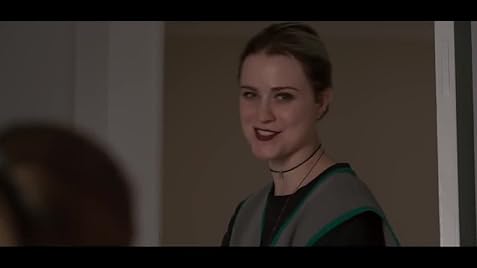
Montreal-based fine arts photographers Carlos and Jason Sanchez’s debut (written and directorial) feature is a hard psychological thriller which centres on Laura (Evan Rachel Wood), a thirty-year-old woman, troubled by her past and struggling with a dysfunctional relationship with her father, seeking sexual and emotional fulfillment through a series of failed relationships.  However, her life changes when she befriends and convinces an unhappy sixteen-year-old girl, Eva (Julia Sarah Stone) to run away to her house, under the guise of a confidante who wants to help.   Although the arrangement initially works, it soon becomes clear that for the young girl to stay and continue satisfying her needs, the older woman will have to employ immoral tactics. Manipulation, denial and co-dependency fuel what ultimately becomes a fractured dynamic that can only sustain itself for so long.  Laura also begins sexual advances towards Eva.

But Laura begins getting really obsessive and prevents Eva from leaving the house.  The relationship turns out to be something like the Stockholm Syndrome.  Apparently, though no details are given, Laura has had the same type of ‘stalking’ problems before, as her dad, who employs her mentions in the film.  The film is both disturbing and engaging though onot always likeable.  Both actresses Wood and Stone (who looks a-like a very young Catherine Frot, the French actress) bring compassion to their roles and show their need for normalcy.  Unfortunately, as can be seen in the film, this normalcy is not easily to come about and the state of affairs come about from their own personal behavioural flaws.  

The film’ setting is left vague.  Though the wrier/directors are Montrealers, the characters speak fluent English and there is no trace of French.  The neighbourhood does look like a typical Montreal neighbourhood though there are no signs in French.  The film begins in the fall (judging from the colour of the leaves on the trees) and ends in winter (with snow seen on the ground).  It is a school term but nowhere in he film is Eva’s school mentioned.  Eva’s schooling is conveniently left out in the story.  Or any of her friends or acquaintances.  Does Eva not own a cell phone?

The film suffers from an open ended ending, which for a film like this, one expects some satisfactory closure though one would to be surprised that there isn’t one.

ALLURE ends up an ok made, very nasty movie about nasty people dealing with nastiness.  The film began with dialogue like: “Fucking faggot!”  But one would think that this gay slant nastiness could have been down away with.

Trailer: http://www.eonefilmsmedia.ca/FileBank/Video/2018/91453-Allure%20-%20Canadian%20Domestic%20Trailer%20-%20Theatrical%20-%20Coming%20Soon.mp4

Submit your Screenplay to the Festival TODAY

Full Review: CHAPPAQUIDDICK (USA 2017) ***

Submit your Screenplay to the Festival TODAY

Chappaquiddick Poster
Trailer

Depicting Ted Kennedy’s involvement in the fatal 1969 car accident that claims the life of a young campaign strategist, Mary Jo Kopechne.

Director:

John Curran


CHAPPAQUIDDICK is a story not many non-Americans are familiar with.  If this is not a story that needs be told, and if it is not an interesting one, it is one that questions the right thing that human beings should do.  The story has also been given a TV movie treatment a few years back, only now a full feature treatment.

A story that deals with a tragedy and with a character that is a coward relying on others to cover up his bad deeds is hardly material Hollywood would be interested in.  But the story is told with a twist, where the main character finally redeems himself and proves to others that he is a decent human being.  This character is Senator Ted Kennedy.

The film set in 1964, is also a meticulously crafted period piece with vintage vehicles.  The accident of the car going over the bridge into the water (a repeatedly visited scene) is well executed.

Presidents of the United States have always lied when confronted with catastrophe, Nixon and Clinton being the best examples.  This film questions the integrity of Ted Kennedy, which is correctly chosen to be the subject of the film.  This suspenseful historical drama examines the infamous 1969 incident when Senator Ted Kennedy (Jason Clarke) accidentally drove off a bridge, resulting in the death of campaign worker Mary Jo Kopechne (Kate Mara).  This become known as the Chappaquiddick Incident.  Kopechne was trapped in a car that Senator Ted Kennedy drove, following a night of festivities.  Kennedy patriarch Joe (Bruce Dern), however, always considered his youngest son a ne’er-do-well — and he never let Ted forget it.  The party on Chappaquiddick reunited the “Boiler Room Girls” who had served on Robert Kennedy’s 1968 presidential campaign, among them Mary Jo (Kate Mara). Ted whisks Mary Jo away for a reckless moonlight drive that ends in tragedy.  But the more profound malfeasance begins after the drowning — itself dramatized here in harrowing detail — when a battalion of spin doctors gets to work on covering up the incident, using the Apollo 11 moon landing as a distraction.

The acting honours go to veteran actor Bruce Dern as the patriarch of the Kennedy family.  Joe is wheelchair ridden and unable to speak due to a stroke.  His mannerisms and utterings bring a different perspective to the story.  Jason Clarke is also marvellous is the role of Ted Kennedy, evoking our anger in the beginning and later earning the audience’s sympathy even forgiving him.

The film clearly stays clear any material dealing with the possible affair between Kennedy and Mary Jo.  The film also avoids any issue with Kennedy’s wife, she only said to be not feeling well during the events.  Near the end of the film, however, director Curran allows multiple opinions to be voiced through staged interviewees on camera.  One lady accurately says, that not all the facts are revealed so the public never knows the whole story.

Trailer: https://www.youtube.com/watch?v=qG-c8DtOm9g

Submit your Screenplay to the Festival TODAY

Film Review: A QUIET PLACE (USA 2018) ***1/2

Submit your Screenplay to the Festival TODAY

A Quiet Place Poster
A family is forced to live in silence while hiding from creatures that hunt by sound.

Director:

John Krasinski

Writers:

Bryan Woods (screenplay by), Scott Beck (screenplay by) |3 more credits »

A QUIET PLACE is actor John Krasinki’s third directorial effort, a horror film that premiered at the South by Southwest film festival.  Krasinski also co-write the script with Bryan Woods and Scott Beck based on their story.  His first two films (THE HOLLARS, BREIF INTERVIEWS WITH HIDEOUS MEN) were, to put it mildly, nothing to write home about .  A QUIET PLACE also stars Krasinki’s wife, Emily Blunt, which is a clear signal to stay away.  But DON’T.  A QUIET PLACE is his assured directorial piece that would put many horror directors to shame.  It is scary, suspenseful and even had the audience (at the promo I attended) cheering at the end.  These are signs of a good horror film, and the film has been getting rave reviews since its premiere.

The poster looks like David Cronenberg’s RABID.  A woman, bloodied lies in a bath tub.  The scene occurs in the middle of the film when Evelyn (Blunt) has to deliver a new born in silence while the monster attracted to sound lurks around the house.

The script concentrates on scary set-ups but omits details and history of the setting.  Nothing is mentioned on how the situation came about.  What brought about the destruction of the human race?  Where did these supposedly deaf creatures come from?  What is the reason the Abbott family is the only one that survived?  But one can argue that if the film works in its aim at scaring, no one should question these omissions in plot.  As Hitchcock as proven in many of his films, the same holds true in A QUIET PLACE.

The placement of an expecting mother having to give birth in silence for fear of monsters attracted to noise is nothing short of brilliant.  The delivery scene kept the audience at the edge of their seats, evident as I looked around the theatre during the segment.

A word of warning!  This film requires a very silent audience, so pick a seat away from others.  The screening I attended had a person bring his own snacks, and one could hear him crackling his packages open and cans of pop.  Really annoying.  The theatre should ban popcorn and snacks for the screening of this film.

The special effects and sound are impressive.  The monster with its big ears and dripping saliva moving around to the sound of a creaking door is sufficiently menacing.

It is well to note that Millicent Simmonds (Todd Hayne’s WONDERSTRUCK) who plays Regan the deaf daughter is deaf in real life.  Krasinksi did not want a non-deaf actress pretending to be deaf.  Most important is the fact that a deaf actress would help his knowledge and understanding of the situations tenfold.  Simmonds who communicates in American Sign Language in the film to avoid sound taught the actors ASL during the filming.  The authenticity comes through in the film.

A QUIET PLACE achieves what it aims at, a solid horror film with a message of strong family values that ends up satisfying entertainment for all. 

Trailer: https://www.youtube.com/watch?v=p9wE8dyzEJE


Submit your Screenplay to the Festival TODAY

Film Review: RUSSIAN DOLL (USA 2016) ***

Submit your Screenplay to the Festival TODAY

Russian Doll Poster
Russian Doll is a female-driven, sexy, edgy crime thriller about revenge. The story begins when a young woman discovers a murder plot, and calls 911. But seconds into the call, she’s …See full summary »

Director:

Ed Gaffney

Writer:

Ed Gaffney


RUSSIAN DOLL begins with three excellent segments.  The first is the rehearsal of a play called RUSSIAN DOLL which ends with a character being shot.  The audience is fooled to think that was transpires on screen is real till the camera pulls back to reveal the audience watching the stage play.  The other is the cop, Viola Ames (Melanie Brockman Gaffney) who holds her own after being hassled in a redneck bar.  The third is the attack and abduction of a woman calling 911 to report a murder.

RUSSIAN DOLL has a solid story with a play within a film that has potential for more mysterious goings-on.   A Russian doll can be opened to reveal another smaller one which again can be opened to real yet another until the last one.  The characters in the story are not what they seem.  They have hidden layers which in most cases reveal a more sinister person.  The main lead is cop Viola Ames who appears tough on the outside, but is still mourning the death of her wife, constantly having nightmares every night.

The story begins when a young woman, Dalene (Aly Trasher) discovers a murder plot, and calls 911. But seconds into the call, she is attacked and abducted. The police investigation into the woman’s disappearance leads them to interrogate the cast and crew of a play called ‘The Russian Doll.’   What the cops don’t know is that like a Russian doll, one of the people they question is a killer hiding in plain sight, preparing to avenge a thirty-year-old crime by murdering a cast member on opening night.   This fact is revealed after the first half of the film.  And what they also do not know is that if they do not act quickly, the kidnapped woman will die, too.  Running throughout the movie is a subplot focused on the lead detective, Viola Ames. Viola’s wife died two years earlier, and Viola has never really recovered.  During her investigation, Viola meets a beautiful young lesbian named Faith.   The story ties the subplot to the main one by having Faith contribute a clue to the investigation.  One way of getting thought to a cop or detective is to provide a relevant clue.  As a result, Viola is strongly attracted to Faith, which allows the film to have a double happy ending.

The film also contains a beautiful original song “Memories of You” sung by a street singer, Travis as Viola tips him too much for singing her favourite song, bringing her back good memories of her passed way lover.

The film described appropriately as a sexy lesbian crime thriller lives to its catch phrase description.  It also accepts the lead character’s sexual orientation as a given.  Viola’s mother (Kristine Sutherland) fixes her daughter up with a dinner date with Faith (Marem Hassler).  Both mothers are present during the dinner and it could very well be a straight dinner date fix-up as a gay one.  The sexual orientation is not given any issue and taken as an accepted given, a sign of good progress that this film demonstrates.  This is in contrast to the soon to be released ALLURE where the writer/directors have to resort to unacceptable offensive dialogue like “fucking faggot” to make a point.

RUSSIAN DOLL is a satisfying, well made thriller, a compelling watch from start to end. 

Trailer: https://www.youtube.com/watch?v=4WnBM8CABlU

Submit your Screenplay to the Festival TODAY

Hot Docs 2018: THE ACCOUNTANT OF AUSCHWITZ (Canada 2017) ****

Submit your Screenplay to the Festival TODAY

The Accountant of Auschwitz Poster
Oskar Gröning, known as the “Accountant of Auschwitz,” was charged with the murder of 300,000 Jews. When he took the stand in 2015, at the age of 94, his trial made headlines worldwide.

Director:

Matthew Shoychet

Writer:

Ricki Gurwitz

This eye-opening doc, despite its well worn subject of Jews slaughtered in Nazi concentration camps is based on the 2015 trial of 94-year-old Oskar Groning, the Accountant of Auschwitz.  He went on trial in his home town in Luneburg, Germany for the murder of 300,000 people, way back in 1944.

The case made headlines around the world, as a frail old man took the stand to finally face justice for crimes committed long ago.  Director Shoychet shows two sides of the argument, that a precedent must be set for the murders of the past.  On the other hand, it could be argued that Groning, like many other Germans that followed served no purpose.  The photo of Groning as a young man in uniform makes the guilty man look so innocent, and his current photo at the age of 94, which bears no resemblance at all to the old photo stresses the relevance of prosecuting the man.  

The doc is quite different here, as many Germans are interviewed and have their say on camera.  The Germans get to debate both sides.  Survivors and Nazi hunters alike are therefore torn over whether he should be prosecuted at all.  The film also contains archive footage with relevant commentary on the Nuremberg Trials. 

 But the highlight of the film are the testimonies of the survivors, prosecutors and other interviewees whose words bring shivers regarding what have transited in the past.  Oskar Groning just passed away March of this year.


Submit your Screenplay to the Festival TODAY

Full Review: THE CHINA HUSTLE (USA 2017) ***1/2

Submit your Screenplay to the Festival TODAY

The China Hustle Poster
Trailer

An unsettling and eye-opening Wall Street horror story about Chinese companies, the American stock market, and the opportunistic greed behind the biggest heist you’ve never heard of.

Director:

Jed Rothstein

Writer:

Jed Rothstein

You can never trust the Chinese.  I am allowed to say that since I am Chinese.  The Chinese are all about money and THE CHINA HUSTLE, a doc about crooked Chinese emphasizes the point.  The Chinese have been exposed to many unethical money tactics.  The last time major information like this was dispersed was the doc where the target was Chinese companies operating under international names like Nokia.  In that documentary, the Chinese workers from the farms were shown abused.  They would work long hours staying at the company’s quarters at minimum pay under unbelievably bad conditions, while not allowed to visit home till after two years working in the company.  The companies would have 3 sets of accounting, one for the international owners, one for the Chinese government and the other, the real one for themselves.  Every factory has to so the same in order to survive.  That said, THE CHINA HUSTLE reveals more crooked practices.

Produced by Alex Gibney who directed ENRON: THE SMARTEST GUYS IN THE ROOM about the last 2008 stock market crash, THE CHINA HUSTLE could be considered a sequel as well as warning to all stock traders.  As in his previous film, THE CHINA HUSTLE is an unsettling and eye-opening Wall Street horror story, though this time the target being the Chinese companies listed on  the American stock market.   The film opens with the main subject, whistleblower Dan David confessing: “There are no good guys in this story, including me.”   After the 2008 stock market crash, David — like almost everyone else in finance — was looking for ways to make big gains quickly. China became an appealing target. Hundreds of Chinese companies entered the US stock market through reverse takeovers with American companies. They boasted tremendous growth, had little oversight, and created a stock-market feeding frenzy. It seemed too good to be true and it was.  The film follows the same pattern as EVRON, interviewing the whistleblowers, with the subject of fraudulence revealed and angering the audience to boiling point.  Again, he has on camera, the poor unsuspecting investors, usually the retirees who have lost all if not a fair portion of their hard earned savings.  

The camera follows the filmmakers to China where there are huge but empty factories.  The lights are on at night and the only employees would be the security people at the gate preventing outsides from entering.  The factories make nothing but money invested on paper that will increase in value, hopefully.  Smart (and manipulative) stock people, would expose these companies forcing their stock price to drop, but not before selling short so that they benefit from the fall in stock price.

THE CHINA HUSTLE might not be as interesting to those who do not dabble in the stock market, but it is still general knowledge that is needs to be known.

The film is not as tight or strong as ENRON, bout it is till an engaging informative documentary.  All investors should put this doc down as a must-see!

Trailer: https://www.youtube.com/watch?v=55892jT06aI


Submit your Screenplay to the Festival TODAY