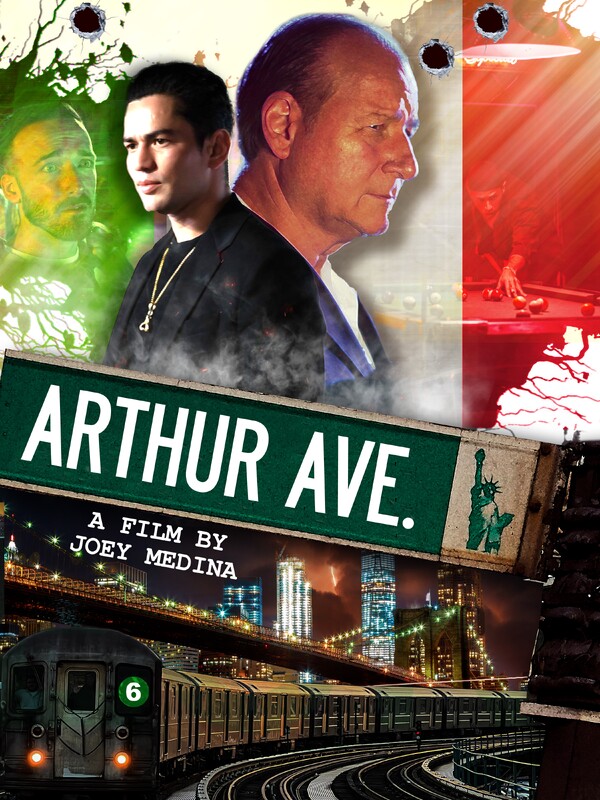
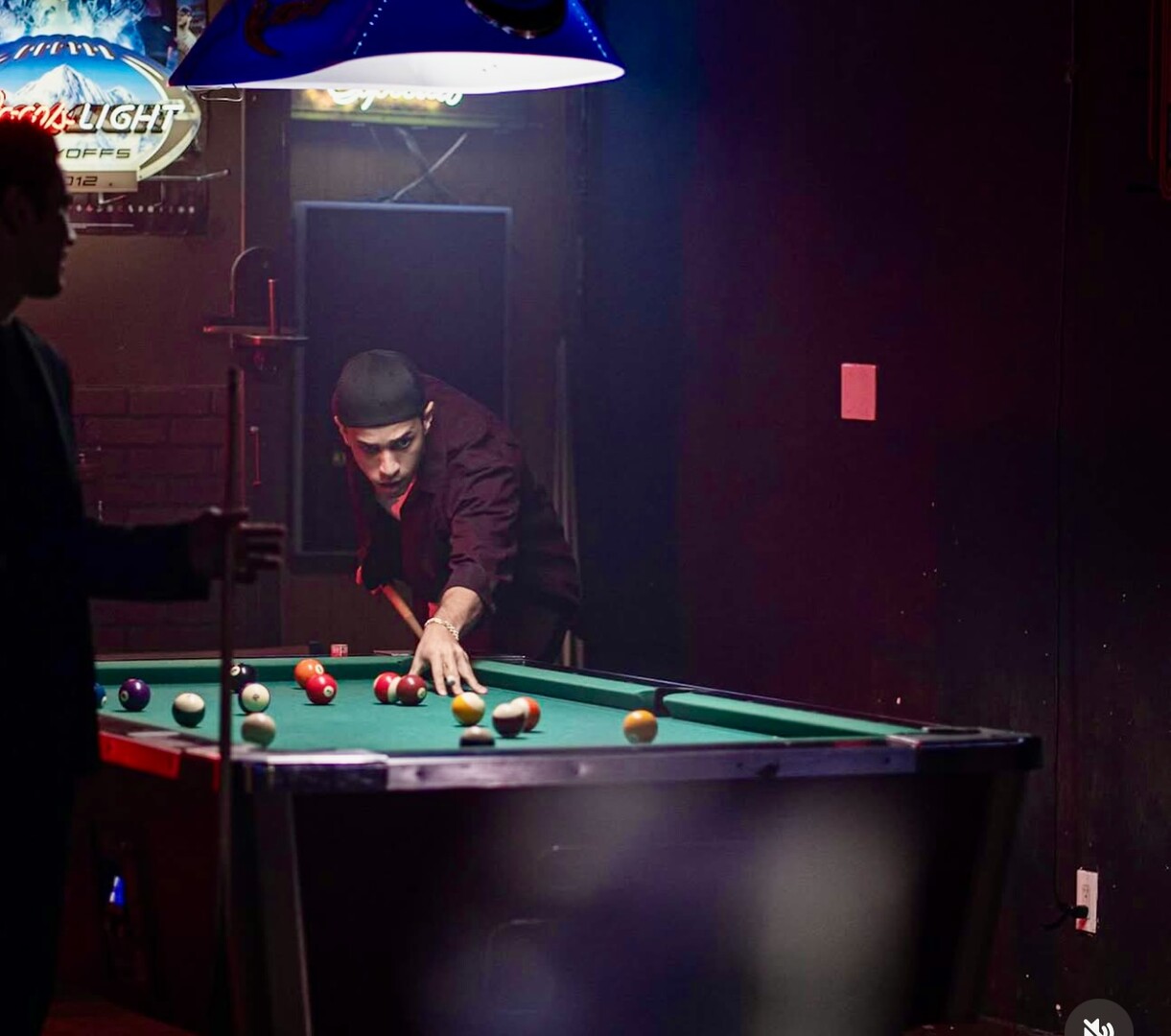
In a Bronx bar, a clash between traditional Italian-American “wiseguys” and the LGBTQ+ community leads to a confrontation that challenges the characters’ preconceptions and the dynamics of power.
Review by Julie C, Sheppard:
Arthur Ave. is a touching short set in the heart of the Bronx, New York City. There are fabulous, dizzying drone shots of the area off the top, then zooming in to Arthur Ave., and then finally landing inside the dark, smoky bar.
The narrative is excellent, with a clear situational arc — starting with the dialogue by the racist, sexist jerks in the bar, the transition to their homophobic cruelty towards the happily married gay couple and, finally, the segment of understanding towards the couple by the bar owner. The performances of the cast are outstanding, notably the gay couple and the bar owner — such genuine vulnerability and warmth in their deliveries. Kudos to Roxy the dog, who also nails her performance.
While it was satisfying to see justice delivered in this fictional tale, the real stat presented onscreen that more than 1 in 5 hate crimes are motivated by LGBTQ+ bias is quite sobering. The film is vitally important for all to see, and underscores the importance of the final note, writ large — “BE KIND TO ONE ANOTHER” — a sincere message of compassion and love.
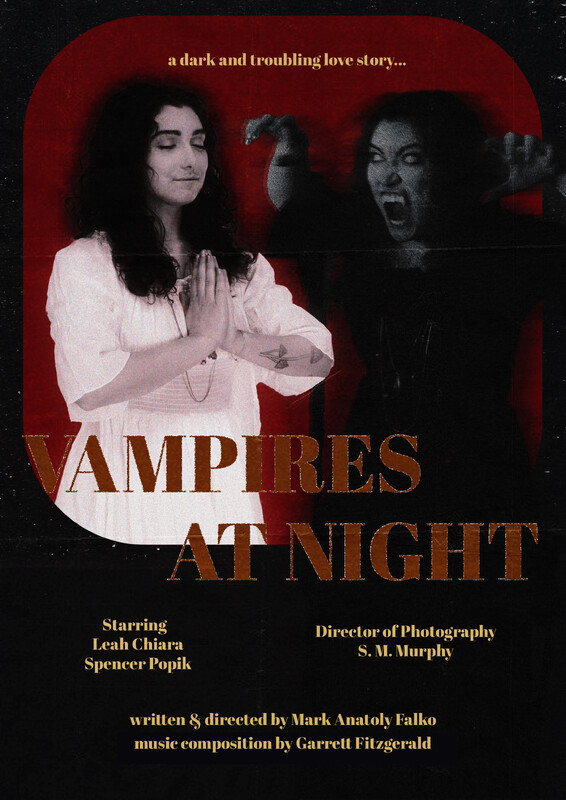
A young happy couple are attacked by a vampire. Soon, the young woman transforms into a monster. Will true love prevail?
Review by Julie Sheppard:
Vampires At Night, a spellbinding Canadian short, depicts love’s triumph despite the “hands of evil”. It effectively presents itself in the style of a pre-talk film, with elegant, framed titles, glitchy moments, and the decision to shoot in black and white. The tone is both dreamy and nightmarish, as the happy couple attempts to celebrate their love with frolicking musicians and luscious candy apples, until the stalking of a terrifying ghoul.
There was spectacular use of ghostly white eye contacts and huge menacing teeth for the vampires. The camera was well-utilized in a multitude of ways, with such elements as extreme close ups, overlays, animation and cutaway imagery. The soundtrack was suitably haunting, notably clanging piano and jarring percussion. The movements of the cast were rather ethereal and trancelike, which worked for the melodramatic style of the piece.
Another memorable thematic choice was the use of masked, robed figures presenting an unsettling choreography that seemed mirror the lead’s terror and confusion. Fortunately, some relief is provided — as the narrative suggests, despite evil’s grasp, love can indeed triumph and remain forever.
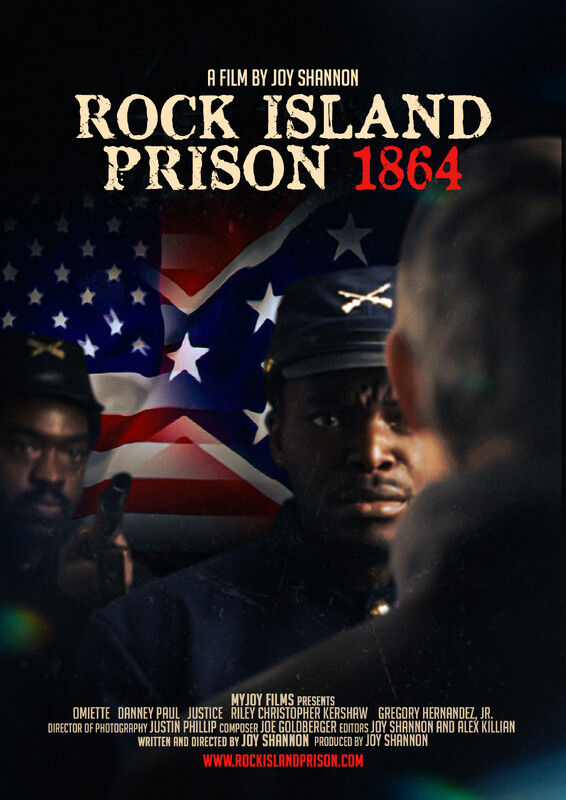
Guarding Confederate POWS in a Civil War prison, a runaway slave now Union soldier, desperately fights for power, or faces returning to slavery.
Review by Victoria Angelique:
The short film ROCK ISLAND PRISON 1864 tells the fictionalized story of the 108th regiment of the United States Colored Infantry of the Union Army. It’s a moment in time many people don’t know about and this film educates in a way that uses modern themes so that the audience can relate to Shiloh as he confronts his former master Mr. Clement within the prison.
The themes are complex, with the biggest one showing that the hardest thing that one can do is advocate for oneself. This is what Shiloh struggles with as it introduces topics such as PTSD, the struggle to face his own fears and the most important, being strong enough to face his demons. Mr. Clement makes it clear that no matter what happens, he will own Shiloh again as he does everything he can to get into his former slave’s head. He makes Shiloh coil as he berates him, reminding him of the horrors he has inflicted on Shiloh’s family. It is with the support of Shiloh’s fellow soldiers and his resolve to finally stand up for himself that puts Mr. Clement into his rightful place. After all, Mr. Clement is the one that got caught and is in Rock Island Prison being guarded by Shiloh.
The cinematography and editing in this film is brilliant. Writer and director, Joy Shannon, utilizes many different techniques to tell this story. The beginning looks like a documentary, with stock footage to appear historical before transitioning into the narrative story. The past is shot in black and white, with the present in color. Distinguishing the moments in Shiloh’s life clearly. Text is used to give subtext, intermingling a technique from the silent era of film to quickly move the story.
ROCK ISLAND PRISON 1864 is a film that gives a quick introduction to moments in history that are rarely taught. It is presented in a way that makes one want to learn more about the events at Rock Island Prison during the American Civil War. The story is interesting and emotional, which poses the question how many other former slaves had similar stories to Shiloh and were they all just as brave.
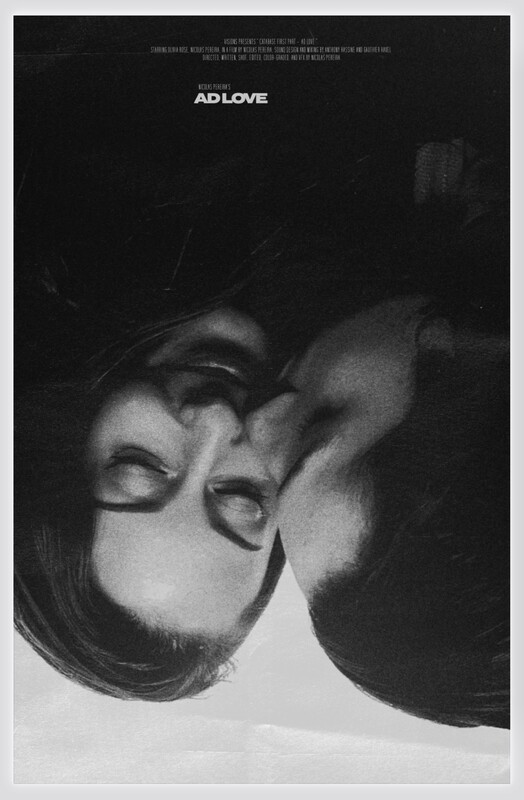
This feature film, Catabase First Part – Ad Love, is a sultry feast for the eyes and ears — a testament to both youthful love and desperate obsession. Nary a word is heard from the central characters, but this evocative film does not require speech from them. In fact, this piece is so visually and auditorily captivating, that spoken word by the performers would perhaps be jarringly distracting. Saying that, the soundtrack does provide international text via the soaring lyrics from swooning dramatic operas, which seem to energize the wordless performances even further.
The two actors display such mature composure and gravitas. Their passion for one another oozes out of their pores, both day and night, in health and in illness, as they are cocooned in a love nest of their cramped apartment or in the gorgeous vacation rental near a snowy summit. Long and close up shots — all in black and white — of remarkable facial stillness of the two never seem wooden; you can sense that couple quietly languishing together is what fuels their comfort.
The outdoor cinematography is stunning with shots of soft grassy fields, mountain ranges, long dark highways and stormy cloudbursts. The titled chapters and definitions explaining the changeable state of mind of the couple help to glue the piece together — a piece that uses artistic and emotional sensitivity of the highest level — a revelation of both obsessive love and quiet internal desperation.
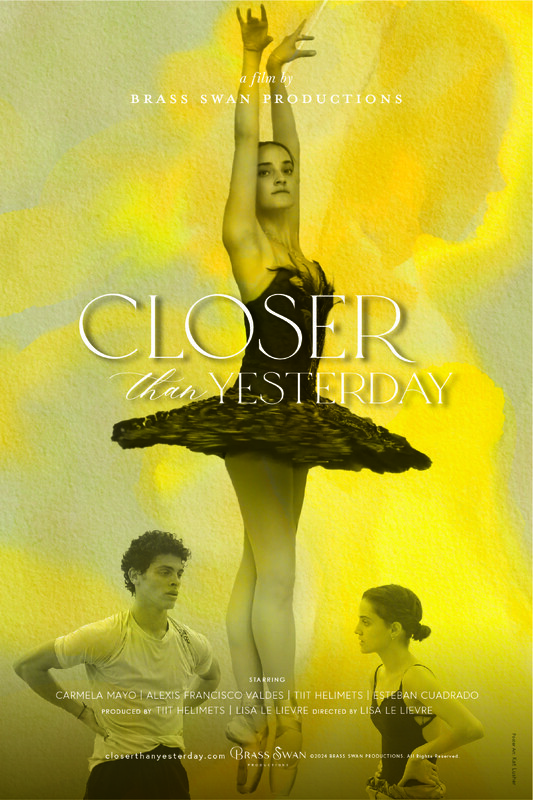
CLOSER THAN YESTERDAY is a story of resilience and courage that follows Carmela as she trains for the Helsinki International Ballet Competition with her dance partner. This documentary takes an intimate look at what goes on behind the performance of a ballet performance and how it takes to rehearse in order to compete in a prestigious competition.
The rollercoaster ride to Helsinki isn’t easy. First Carmela has surgery to fix an injury, then once she’s healed, her dancing partner has to be replaced the week of the competition because he gets Covid. Esteban’s replacement, Alexis, then has to travel six hours to get a travel visa at the last minute in order to travel to Finland. The tension could be felt through the screen, as the dreams of going to the competition felt like they could be dashed in a moment for all the dancers.
The film is shot in a traditional documentary style, yet it still feels raw. This allows for the viewer to be immersed in the journey with the performers. We are rooting for them throughout the rehearsals and the competition. The pace slows down between the rehearsals and the competition to give the audience time to feel the butterflies that the dancers must have been feeling leading up to the performances. The depiction of ballet shows how grueling of an art form it is, yet beautiful at the same time with the graceful movements of Carmela and Alexis as they move on stage during the competition. The general theme is to keep on dancing and living one’s passion no matter what the outcome of a competition is, because Carmela’s positive attitude stays consistent throughout the entire film no matter what gets in her way so long as she can continue to dance.
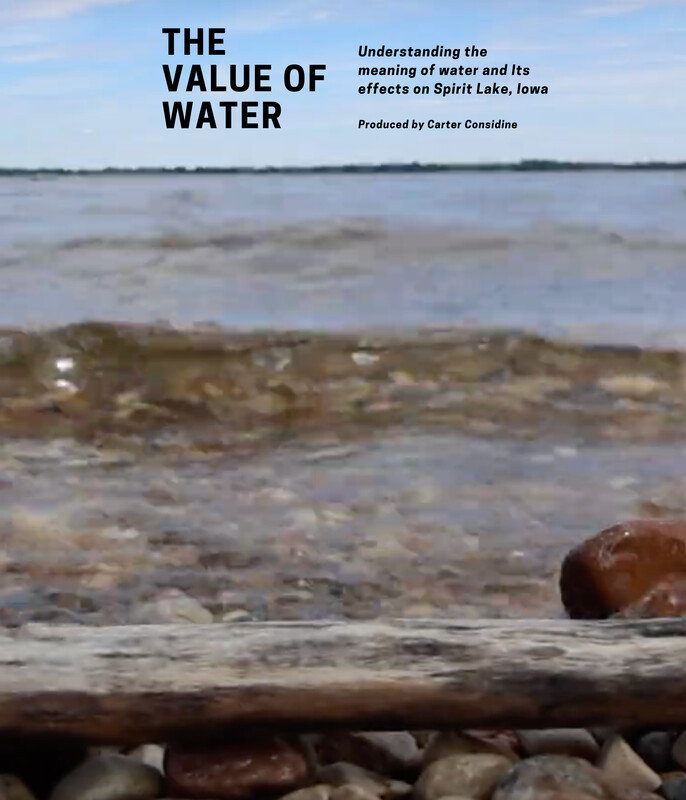
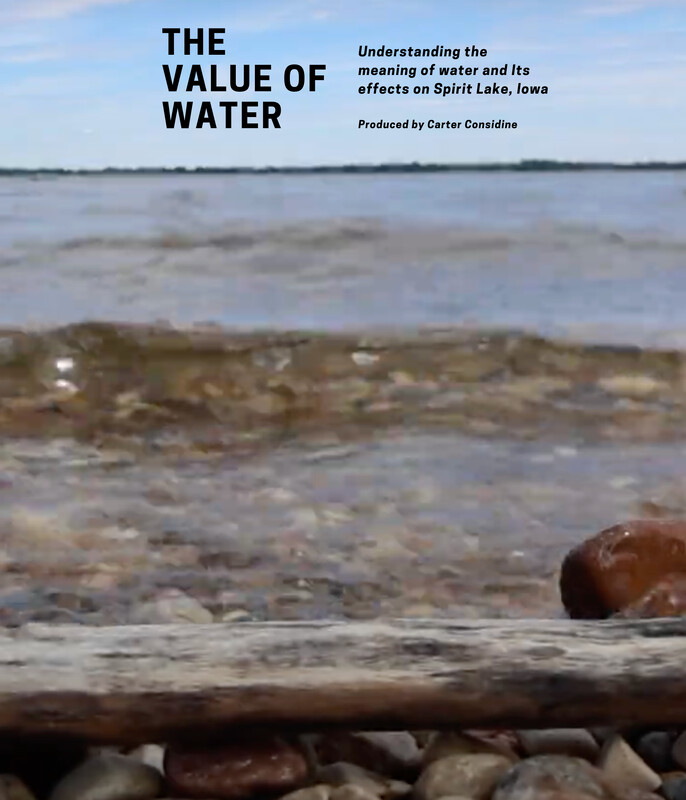
The short documentary, THE VALUE OF WATER, is an informative film that showcases the importance of cleaning up the lakes in Iowa. It uses science and personal interviews to tell the story of each lake.
Green algae and zebra mussels have become invasive species to the Iowa lakes. Interviews depict how dangerous green algae is to humans and animals that might become in contact with the lakes. It can make living creatures become very sick or even die. Zebra mussels are depicted with voice over to show how they travel from lake to lake by attaching themselves to boats. The scientists explain how they are fixing these problems to clean up the lakes in a way that everyone could understand.
The cinematography is expertly done for a documentary discussing lakes. Careful shots showcase the green algae & compares it to the cleaned up lakes. The zebra mussels are intertwined with interviews to really drive the point home on how invasive the species is by getting close up shots on them. The chemists are depicted showing the development of solutions to clean up the lakes, whether that’s from pellets or cover crop to prevent phosphorus from growing the blue-green algae or moving the zebra mussels so that aquatic life can thrive.
The best part of this documentary is the passion behind those involved in the cleanup of the Iowa lakes. Water is essential for life, proving that the work behind the Kiko Pellets could potentially save more bodies of water outside of the state. It takes more than just the scientists, but the people in the community to make a difference.
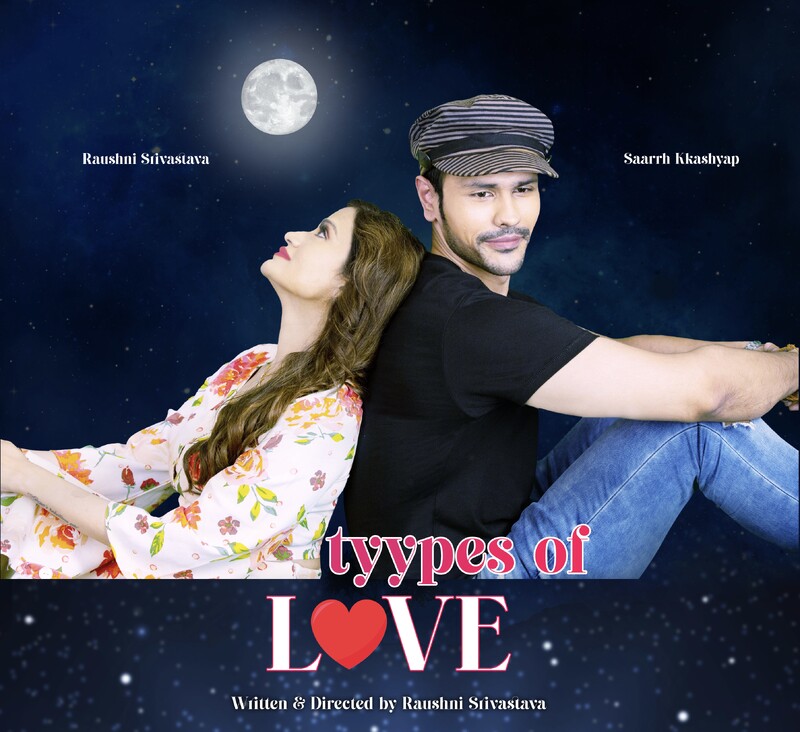
The film showcases the different types of love and what actually love means..
Directed by Raushni Srivastava
Review by Victoria Angelique:
Films about love are typically full of fluff & exaggerated tropes of romance, TYPES OF LOVE breaks this trope by giving the realistic portrayal of what comes with the different varieties of love that a person can go through in their life. Some of it is easy, while others are quite difficult and take work.
The rough, handheld cinematography gives this film an intimate feeling that goes along with the tone of exploring the complex definition of love. It gives the feeling that the audience is almost intruding on the lives of the characters, but cannot look away as the question posed needs an answer. Each character is carefully written with the hope that this person will give Arjun the answer to his question.
Love is depicted as complex. For one character, it’s hopeful as she looks forward to life with a new mate. It’s still new and fresh. For a woman that’s been married for over 30 years, she’s dedicated her life to raising her children & feels that her love has not been given back in return. Love has become a burden to her as loneliness feels the hole that used to care for her family. Raina goes from one relationship to another, quickly allowing her own insecurities to turn her desire of love into an unhealthy devotion of her romantic partners. First Raja, then Arjun. She chases them away when she becomes obsessed & confuses it with love. Raina needs to learn how to love herself before she ends up alone.
TYPES OF LOVE is a drama about the harsh realities of love, but it does end on an upbeat note in the last few moments with a beautiful monologue that defines love. The message gives the character’s a starting point to begin again, knowing that the road to love is not easy but it is worth it to be happy.
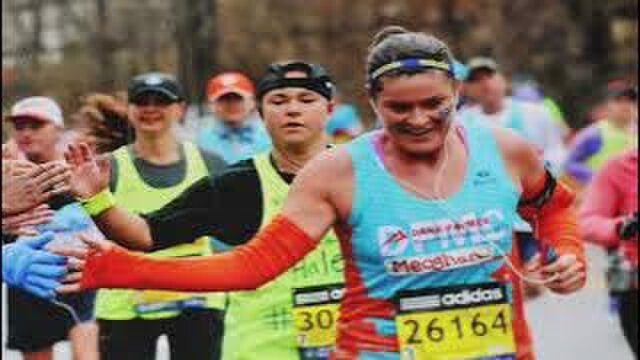
“The Boston Bulldogs” is a 90-minute documentary film interviewing 5 people from a running club for addiction recovery, interconnected by one woman’s story from finishing the Boston Marathon after her first full year of sobriety to her relapse 24 hours later, and now her recovery 10 years later.
Directed by Bryan Cote, Jack Cote
Review by Julie Sheppard:
For anyone “impacted by addiction”(which is many people in society at one point or another) this doc feature, The Boston Bulldogs, is a must see. It makes a convincing argument for promoting the activity of running together as a tool to help battle substance addiction.
The interviewer, largely off camera for most of the film which allows the viewer to focus on the central figures, asks some illuminating, intimate questions to bring out such candid answers. The most striking query is asking how the feelings associated with being high and intoxicated are like the emotions one experiences when running. This is an insightful way to promote the concept of staying active and building community that fills people with healthy pride and pleasure that was once filled with dangerous, alluring feelings coming from drug and alcohol abuse.
We do not need to see actual footage of these people when they were in the throes of their addictions, as the interviewer is able to get them to explain, in detail, their past journeys — from how the addictions began, to hitting rock bottom, and then to climbing back out of these dark phases to see the light. It is satisfying to witness the positive romantic, familial and platonic relationships that have resulted from joining this life-changing running club.
It is also interesting to see childhood footage of the various people involved to suggest that painful memories may have influenced the development of addictive personalities leading to substance abuse. In contrast, it is uplifting to witness a collection of inspiring stills and videos of successful running competitions.
The mellow piano soundtrack under most of the heartfelt interviews is suitably chosen for this type of moving doc. The swooning orchestral piece near the end of the film, as inspiring accomplishments of those involved in this running club are listed on the screen, helps pack an emotional punch.
This film proves that the impact of addiction can indeed be mitigated The Boston Bulldogs way!
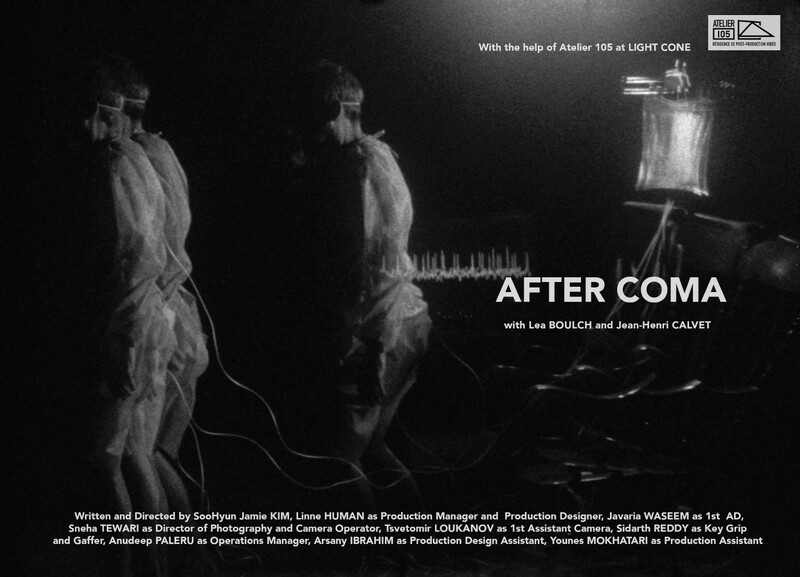
After Coma is the 2nd film of the trilogy that express about grief. This film is composed of 7 poems that take the viewers into the journey of spending the last moment with the loved one as a views of both people who leave and who is left. Each poems are represented with symbolic image and sound.
Review by Parker Jesse Chase:
The poetic film After Coma, directed by Soohyun Kim, encapsulates the raw and visceral emotions of grief, memory, and rebirth in a matter of a two minute time span. Through seven hauntingly poignant poems, it explores the final moments shared between a loved one departing and the one left behind. This dual perspective creates a deeply intimate and universal reflection on loss, memory, and the fragile boundaries of existence.
Visually, After Coma evokes a sense of nostalgia, deviating from the modern digital aesthetic to one that feels tactile, almost like flipping through weathered prints. This choice enhances the emotional weight of the poetry, making each moment linger. The film masterfully intertwines symbolic imagery with evocative sound design—a broken mirror not only shatters visually but resonates audibly, allowing the audience to feel the crunch of shards beneath a step. This meticulous attention to detail immerses the viewer in an almost sensory experience.
The words are delivered in an alluring voice, their impact amplified as the screen cuts to black, presenting the poetry in written form. This interplay between auditory and visual interpretations deepens the connection to the material. The imagery of counting scars and hearing wind chimes intertwines with poetic metaphors of despair and rebirth—drowning in water and tasting the salty ocean as symbols of grief. The poet’s words remind us that the act of swallowing tears can choke, a powerful metaphor for unprocessed emotions.
The narrative also delves into the profound transformation trauma brings. The daughter, played by Lea Boulch, confronts the reality that her father, portrayed by Jean-Henri Calvet, is no longer the man she once knew after his coma. He exists as a mere shadow of his former self, a concept many can resonate with when facing the altered state of loved ones post-trauma. The film poignantly captures the gut wrenching realization that even as breaths continue, the essence of a person can fade, leaving behind an aching void.
Flowers bloom as a recurring motif, symbolizing mourning and the human tendency to romanticize death. This juxtaposition of beauty and sorrow underscores the film’s thematic exploration of life’s impermanence.
With Sneha Tewari’s evocative cinematography bringing the poetic visuals to life, After Coma delivers an emotional gut punch in its brief runtime. It’s a testament to the power of poetry, sound, and image in storytelling. Beautifully crafted and profoundly moving, the film leaves an indelible impression—a reflection on love, loss, and the enduring scars they leave behind.
Water. It’s one of our most precious resources and I know I am guilty of taking it for granted. To be able to have a hot shower, brush my teeth, have good drinking water and natural springs or lakes to swim in. It’s priceless.
Over ⅓ of U.S. lakes are contaminated by toxic Blue-Green Algae and an invasive species called Zebra Mussels. I honestly had no idea it was this many lakes until watching The Value of Water. This candid documentary by Carter Considine centers around Spirit Lake in Iowa. Not only is it a visually stunning film but it’s really educational and fascinating.
For instance, I was unaware that the usual way contaminated lakes are treated is with copper sulfate and herbicides. Which is really harsh for the wildlife and the environment, but it’s just as dangerous to leave the lakes untreated since you can’t drink, swim or fish in the water. If you want to let your dog “Fluffy” off leash to play and he stops to take a drink of lake water? Needless to say, it’s bye-bye Fluffy.
Here’s the wonderful part…The residents of Spirit Lake, political representatives of Iowa and nearby townspeople have all gotten together with scientists and found a way to cleanly prevent the algae from growing and to stop the spread of the Zebra Mussels. It’s really ingenious and the beautiful thing is that everyone was on board to do their part.
Each interview was impactful and educational. I really enjoyed how these simple solutions could help improve and clean our fresh water lakes, preserving them to future generations.


 Festival Reviews