Film Review: DOLPHIN MAN (L’HOMME DAUPHIN)

Dolphin Man Poster
Trailer

Dolphin Man draws us into the world of Jacques Mayol, capturing his compelling journey and immersing viewers into the sensory and transformative experience of free-diving. From the …See full summary »

The title DOLPHIN MAN belongs to the legendary free-diver Jacques Mayol whose life became the inspiration for Luc Besson’s cult-movie THE BIG BLUE (LE GRAND BLEU) .  The bio doc is narrated by Jean-Marc Barr who played Mayol in THE BIG BLUE.

Free diving is as the name implies, diving deep into the ocean without any breathing aid. Lungs get compressed and without oxygen, if the diver faints, he or she will be unable to re-surface which implies certain death.  Mayol is world famous as a free diver having broken his own records of depth free diving many times.

Mayol achieved fame in 1976 when he became the first free diver ever to descend 100 metres.  This legend of the sport spent his life setting records and going beyond what was considered humanly possible.

Charitos’s bio plays safe and covers all aspects of the diver’s life from his childhood, to his philosophy (of being one with the ocean), to his lifestyle and finally to the legacy he leaves behind.

His childhood is narrated with archive footage of China.  Mayol was born and lived as a child in Shanghai as his father was a French architect there.  Mayol loved the sea and when he was old enough took off to travel the world.  He married and settled in California with a Dane.  They broke up.  Before attaining fame, Mayol worked all kinds of jobs including the chauffeur of Zsa Zsa Gabor.  (Wish there were shots of him and Zsa Zsa together.)  But always broke, he used to stay at friends’s places for free.

The title Dolphin Man comes from Mayol’s fascination of the mammal.  He was nicknamed the French Dolphin by the Japanese.  He preferred a world of dolphins without humans.  In a way, Mayol has led his life similar to the dolphin’s.  The film reveals Marol’s first sight of the creature while on a ship as a child.

The bio finally rests on the diving.  Mayol is shown in many segments, diving into the waters for various purposes – treasure hunting; lobster fishing or breaking new records.

The film includes interviews with friends, family and free-diving champs like William Trubridge and Mehgan Heaney-Grier, and the vast beauty of the ocean is explored through fascinating archival footage and breathtaking present-day underwater cinematography.

Chartos’s film diverts a bit to the subject of breathing, as breathing is an important element in free diving.  His camera takes the audience to India to meet Yoga Masters that tag the wart of breathing or non-breathing.  The film also diverts to other free divers who are also champions in the field.

Every subject in a doc would have a downturn in his or her life.  For Mayol, one downturn was the death of his true love Gerda.  Gerda was the love of his life, loving the same things he loved like animals, eating the same food and sharing the simple pleasures of his life.  Gerda died in his arms – though the reason is not given in the film.  Mayol, described as a lolly man by nature, goes into deep depression as a result.  Another time was when he was shooting a film when he descended the deep too quickly bursting an ear drum.  The footage shows Mayol much older and obviously not the young athlete he was.  Again, Mayol went into depression.

Director Chartos uses Mayol’s depression to lead the film towards its sad conclusion that nevertheless provides the audience with some valuable insight on life – distinguishing DOLPHIN MAN from the run-of-the-mill bio documentary.

Trailer: https://vimeo.com/237685725

ReelAsian Film Festival 2018 Review: DEAR EX (Taiwan 2018) ***

Dear Ex Poster
When Sanlian’s ex-husband passes away, she discovers he has altered his insurance policy, cutting out their son in favor of a stranger named Jay. Outraged, Sanlian decides that she and her …See full summary »

Directors:

Chih-Yen Hsu (as Kidding Hsu), Mag Hsu

Writers:

Mag Hsu (screenplay), Shih-yuan Lu (screenplay)

This gay positive Taiwanese entry arrives timely at ReelAsian just in advance of same-sex marriage becoming legal in Taiwan in May of 2019.  Taiwanese director Tsai Ming-Liang has championed the gay art house movie with films like VIVE L’AMOUR but DEAR EX is yet another worthwhile entry, looking at the gay lifestyle from a lighter though still quite serious view.

  The film follows three people who are linked by fate because of love and family. Adolescent Song Chengxi (Joseph Huang) loses his father Song Zhengyuan (Spark Chen) to cancer, but instead of having time to mourn, Chengxi finds himself caught in a feud between his widowed mother Liu Sanlian (Hsieh Ying-xuan) and his father’s gay lover Jay (Roy Chiu). 

 As Liu fights Jay for Song’s insurance money,  though it is never clear what had happened to the money.  Each of three subjects are super-hyper and when they get together, there is now hostage of shouting and fighting, driving not only the other crazy but the person him or herself.  

It is comical to see the three interact and what is the final outcome of the film.

Trailer: https://www.youtube.com/watch?v=r94pd519Jf4

ReelAsian 2018 Review: HOUSE OF THE RISING SONS (Hong Kong 2018)

Hing daai baan Poster
The musical biography of the 1970s Hong Kong rock band The Wynners. Starting with their humble beginnings as band causing noise in the neighborhood, through to their career of massive stars throughout Asia.

Director:

Anthony Chan

Who else best to make a movie of the band The Wynners, a Hong Kong pop sensation of the 70’s than a member of the band himself?  Anthony Chan started the chart-topping pop band The Wynners, the band inspired by The Beatles’ visit to Hong Kong. 

 The film traces the band’s formation.   Despite opposition from their parents, five young men form a neighbourhood band called The Loosers to play music and rebel against the staid conformity of their traditional upbringing.  

As they began to pursue their dreams, they find that the journey to stardom is never easy.  Armed with grit, perseverance and raw talent, the band weathers the strain brought on by creative conflicts, personnel shake-ups and their rapidly growing popularity to become The Wynners and establish themselves as true musical legends.  The cliche-ridden film is a breezy easy-going comedy that is often all over the place.   This is no BOHEMIAN RHAPSODY, but a teen flick where teens can do anything while the elders are the ones who always look silly and do everything wrong.   

Though touted as a bio of the band, the film feels less so.

Trailer: https://www.youtube.com/watch?v=Z3HQSJcLAMU

Reel Asian Film Festival 2018 Review: WISH YOU WERE HERE (China/Japan 2018)

China, Japan 2018 Rated PG 113:00 Mandarin, Japanese with English subtitles North  

“What’s kept hidden has its own power on us.”

On the eve of her latest fashion showcase in Beijing, successful entrepreneur Yuan Yuan is approached by Keiko, a mysterious young Japanese woman. An admirer of Yuan Yuan’s career, Keiko has learned Mandarin and fashion design for a chance to speak with her idol. As Yuan Yuan takes Keiko under her wing, long suppressed memories begin to surface of her time in Hokkaido and the husband she’d left behind.

Yuan Yuan finally builds up the courage to visit the small town she left behind more than 20 years ago in order to confront her past decisions and face her deepest fears. A journey of forgiveness and reconciliation, Wish You Were Here marks Kenneth Bi’s return to Reel Asian. His latest feature, a co-production between China and Japan, is an examination of a woman traversing through modernity and tradition; youth and maturity; past and future. -KE


Directed by Kenneth Bi

Kenneth Bi’s third film follows the tone of his early films THE DRUMMER an RICE RHAPSODY – slow and pensive.  I am not really a fan of Bi as his films require a bit of patience to reap their rewards. 

 On the eve of her latest fashion showcase in Beijing, successful entrepreneur Yuan Yuan is approached by Keiko, a mysterious young Japanese woman.  An admirer of Yuan Yuan’s career, Keiko has learned Mandarin and fashion design for a chance to speak with her idol.  As Yuan Yuan takes Keiko under her wing, long suppressed memories begin to surface of her time in Hokkaido and the husband she’d left behind. 

 Yuan Yuan finally builds up the courage to visit the small town she left behind more than 20 years ago in order to confront her past decisions and face her deepest fears.  A journey of forgiveness and reconciliation, his latest film is an examination of a woman traversing through modernity and tradition; youth and maturity; past and future. 

 The closing night film.

Film Review: CLARA (Canada 2017) ***

Clara Poster
An obsessive astronomer and a curious artist form an unlikely bond which leads them to a profound, scientific discovery.

Director:

Akash Sherman

Writers:

Akash ShermanAkash Sherman (story by) |1 more credit »

CLARA is a rare science fiction romantic drama made in Canada’s own Toronto that disguises the fact quite well, passing of as an American film in an unnamed city and in unnamed university.  Lots of references to NASA gives the impression that CLARA is an American made movie.

The film opens with Dr. Isaac Bruno (Patrick J. Adams) delivering a lecture on astronomy to an auditorium full of eager students.  He is quizzed by one who challenges his disinterest in the field.  It is here that Isaac draws a parallel between finding true love (L=0), which equates to a zero to finding life in the other parts of the universe.  

In the next scene, Isaac is fired from the Faculty by the dean (Jennifer Dale) for – it all sounds really funny – “misappropriating telescope time’.   Obsessed with his work, he decides to conduct studies on data on his own and seeks the help of an outsider who turns up to be his romantic interest. Clara (Troian Bellisario) is a sort-of free-spirit who shares Isaac’s fascination of the wonders of the universe.  Their unlikely collaboration leads to a deep connection and a profound astronomical discovery as they detect patterns in stellar data.  She also opens Isaac up to the outside of space research and data.

CLARA contains spots of uplifting moments.  One cannot go wrong with the music of Bob Dylan as Clara picks one Dylan’s vinyls and plays it.  The lyrics: “She once was a true love of mine” also tells the story of Isaac.

The script, also written by director Akash Sherman often falls into cliched territory.  Like the line spoken by Clara; “Do you want something more than all this, for the universe to surprise us?”  Clara and Isaac then kiss for the very first time.  The script also plunges the audience into the here and now of its two characters.  But nothing is known of the two characters’s past backgrounds.  

At one point, the free spirited Clara appears to be a character just out to change the life of another subject and then move on to another.  This premise made a very interesting movie in the 70’s called SWEET NOVEMBER in which Sandy Dennis picked a character every month to change a life for the better.  November was played by Anthony Newley who falls in love with her but she moves on.  CLARA sort of follows this story as Clara thus moves on while Isaac gets on with an improved life.

CLARA has an ending (unfortunately unable to be revealed here as it would be a massive spoiler) that badly undermines whatever message the film intended to portray, thus betraying the entire movie. 

CLARA is a sad film about two lonely people who eventually find each other, only to find that fate is not on their side, despite the good connection.  It is a sad premise lifted by the story’s setting in the wonders of space.  The resulting film is, as expected, a mixed bag of tricks, with some good moments as well.

Trailer: https://www.youtube.com/watch?v=7eIbm4cfA8M

ReelAsian 2018 Festival Review: MIRAI (Japan 2018) ***

Mirai Poster
Trailer

A young boy encounters a magical garden which enables him to travel through time and meet his relatives from different eras, with guidance by his younger sister from the future.

Director:

Mamoru Hosoda

Writer:

Mamoru Hosoda

Director Mamoru Hosoda’s (he started his own animated studio Studio Chizu) MIRAI is his third feature after his studios’s WOLF CHILDREN and THE BOY AND THE BEAST.  Again his interest in children and their fantasies are under consideration in his latest tale from the point of view of young Kun, the elder son in a typical Japanese family.  When the film opens, Kun is greeted with the arrival of a new born baby sister.  Things around the house are altered, as father now tends to the household chores of cleaning and cooking while mother goes on full time work.  

Emotions like jealousy and anger start to emerge.  Kun fantasizes meeting his sister when she is grown up as well as his dog, humanized while shown how to ride a bike by his late great grandfather who was in the Japanese navy.  The film’s animation is somewhat similar to Studio Ghibli’s in look and feel, especially since both studios are fond of animal creatures and Japanese folklore.  

MIRAI is simplistic in its theme, just about a boy growing up, and it is this simplicity that the film works its charm.

Trailer: https://www.youtube.com/watch?v=6d-lsJZgmJs

Film Review: TAKE LIGHT (Canada 2018) ***1/2

Take Light Poster
Trailer

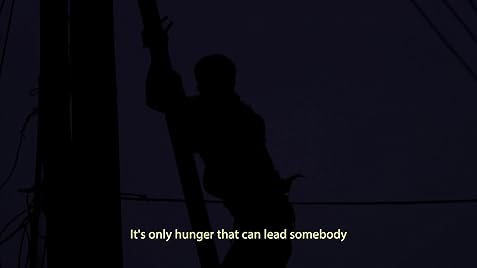
TAKE LIGHT is a look at the tangled wires of Nigeria’s electricity crisis, told through the everyday trials and tribulations of a charismatic electrician.

Director:

Shasha Nakhai

A web of corruption and anger leaves 50% of Nigerians without electricity in Africa’s largest energy-producing country.  The film opens saying that Nigeria produces more gas than any state in Africa.  Yet 50% of the population are without electricity and those who are with have it for a few hours at most.  The film blames the corrupt post-colonial Government.  These are everyday stories of people connected to the grid.

Being an electrical engineering by profession who got a job at Singapore Power but did not work there as I just got my Canadian immigration approved at that same time, I take special interest in the technical portions of the film – like how the control room at the power plant operates.  The director keeps the engineering jargon at a minimum so that the layman can understand the basic principles of power generation, such as the reason blackouts occur.  The reason is attributed to two causes.

Despite the grim subject, the director does not fail to provide some needed humour.  The film also tracks the PHED workers as they cut off electricity supply to the cities that default on their payments.  The PHED is the new name for the Government Power Supply company though every Nigerian still insists on the old name – NEPA (acronym: Never Expect Power Again).  In a humours spill, they say that the are the most hated employees in Nigeria.  Everyone also thinks they are corrupt.  One swears that on the job application form, one has to declare that one is corrupt.  Also interviewed are James and Harry, in the words of Harry: “We are James and harry, two angry men on YouTube.”  They complain about the dwindling value of the currency.

A few reasons to see TAKE LIGHT:  one is that few films provide a glimpse inside the country of Nigeria and her people.  The second is a fairly understandable examination of the workings of a electricity power plant.  The third is to witness how the Nigerians deal with public corruption.

One of the film’s most intriguing segments shows Godwin, a illegal Nigeria electrician at work.  He studied electrical in school, is smart and works under the cover of darkness.  “We youth are tired of empty promises,” he says.  “We are smarter that PHED and we move fast, without safety measures.”

The film shows two sides of the argument.  The camera follows the citizens complaining about power outages.  The PHED or NEFA CEO, Jay McCowsky is interviewed mid-point during the film.  The film also includes a very disturbing image of from space, at night. Nigeria is awash in light.  But the glow almost entirely flares from oil and gas wells – accelerating global warming and polluting the planet.  The country, with the world’s largest proven oil reserves, leaves half its population without electricity, and the rest with erratic service.

Before its opening run, TAKE LIGHT has a Special Event Screening on October 29,  2018 at the Hot Docs Ted Rogers Cinema where director Shasha Nakhai, Cinematographer/Editor Rich Williamson, Producer Ed Barreveld (who also narrated the doc) will be in attendance and holding a Q+A following the screening.

Trailer: https://www.youtube.com/watch?v=9eu1ToXEvtA

DUPLICITY, 2009

DUPLICITYDUPLICITY, 2009
Movie Review

Directed by Tony Gilroy
Starring: Julia Roberts, Clive Owen
Review by Matthew Toffolo

SYNOPSIS:

A pair of corporate spies (Owen and Roberts) who share a steamy past hook up to pull off the ultimate con job on their respective bosses — but can they learn to truly love and trust one another?

REVIEW:<

If there is any type of film that I am biased about, it's the figuring out who done it/how to pull off a great con in a complex step by step plan film. I love these movies, perhaps because I personally am exactly like these people.

No, I am not a conman, but I do like to make a plan and these plans are usually very complex and hard to pull off. The trick is to bring something to the world without having any trace that you are the one who did it. OR, in the case of these types of film, pulling off a scam without people realizing that you pulled off the scam.

Duplicity has the right title because this is the type of film that is part thriller, part romantic comedy, part crime drama. You don't really know what you're getting into when you sit down to watch it and the film's overall TONE is the exact opposite in the film's trailer and marketing concept to sell the movie to audiences. They are trying to tell us one thing whereas the film itself is another thing entirely. And people might be thrown off because of it.

I do have to admit I was very confused by these selling trailers because Director and Writer Tony Gilroy is not the type to make an all out romantic comedy. He's the man who wrote the screenplay's for all three Bourne movies and then gave us the terrific Michael Clayton in 2007, a film that I consider to be the most underrated film of this decade.

Gilroy's overall writing (and now directing) grammar is about people caught in the complex corporate system of our society. And how these people are all just ponds on the chess board who can easily be killed off without a hitch to serve and benefit their overall game. And his character's journeys are their attempts to beat the system and come out clean. But you can never come out clean as soon as you enter the game.

Duplicity is just like his past films with the only difference being that there is a love story in between the moments of the capitalism game. Clive Owen and Julia Robert's characters have come up with their own scheme to beat the big boys at their game. So for two hours we watch to see if they will win this game and outduel the masters at their own game or not. And there is definitely a surprise ending that will occur, something that I was shocked about.

Interesting thing about screen connections. Clive Owen and Julia Roberts definitely have fantastic chemistry. They are this generations Bogart and Bacall. We love them and want them to be together as soon as we see them. There are 7 scenes in the film of them just standing across from each other talking and nothing else and we are completely into it emotionally. Only two people with on screen connection like this can pull this off. And Gilroy uses it to his advantage.

The key to Duplicity is for us to like and believe that these two characters are in love with each other. They are both the middle-management version of the spy game and know they only have a short time left. And what's next for them? Is there a spy retirement home? These characters want to get away and they have figured out a plan to make some money and scam the people who have been scamming them for years.

All I can say is that you should never underestimate the Chief Operating Officers of gigantic corporations. They are on top for a reason. (but of course as of the writing of this review 21/03/2009, there is a certain rolling of the eyes with a comment like that)

I enjoyed this film and I can't wait to see what Gilroy does next. And Julia Roberts seems to have really leaped as an actress. After Mike Nichols shot her in Closer (2004), Ms. Roberts is letting the cinematographers of her films to shoot her anyway that suits her role and overall theme of the movie she's in. If you look at her past film roles, she is always shot from a Hollywood angle and there is never a hair out of place. The older she's getting, the more free she's becoming. And it usually works the opposite for female stars.

This movie might get lost in the shuffle in 2009, but it’s an entertaining movie that should be seen.

EAT PRAY LOVE, 2010

EAT PRAY LOVE 2010 MOVIEEAT PRAY LOVE, 2010
Movie Reviews

Directed by Ryan Murphy

Cast: Julia Roberts, Javier Bardem, Viola Davis, Billy Crudup, Richard Jenkins, Viola Davis, Ali Khan
Review by Joshua Starnes

SYNOPSIS:

Happily married Elizabeth Gilbert (Roberts) takes a right turn in her life by enduring a painful divorce and proceeding to take a round-the-world journey of self-enlightenment and fulfillment.

REVIEW:

Do you know what the most interesting thing in the world to you is? You. Do you know what the least interesting thing in the world to anyone else is? You.

That’s not entirely true because people have relationships and empathy, but I think we can safely call it 95% true. So how do you get around that problem in a story that is essentially about you? As an author or filmmaker you can either make your ‘you’ stand-in so likeable and/or universal that everyone else sees themselves in it and goes along for the ride out of shared experience. Or you can make your stand-in such a vehicle for ridiculous wish fulfillment that everyone else comes along to pretend the have the shared experience.

A lot of movies like “Eat Pray Love” like to pretend to themselves they’re the first kind of story, without realizing (or actively) ignoring the fact they are the second, resulting in something that is simultaneously preachy and shallow, which is about as aggravating as it sounds. Try imagining one of the ‘Real Housewives’ of wherever explaining to you what you need to do reach spiritual enlightenment. Well, maybe not that shallow but certainly that immature.

MOVIE POSTER

Liz (Julia Roberts) isn’t happy with life. She doesn’t know why, she just is. She married her goofball husband (Billy Crudup) too early to realize that wasn’t what she wanted and the affair she has with a young actor (James Franco) doesn’t make things any clearer. Her only solution is to check out of life: travel to several countries (all beginning with the all important letter I) so that she can spend some time focusing on herself and what it is she really wants.

The thing is what Liz really wants is to be 20 again, with the wonderful expanse of life ahead of her and none of the cynical realizations of maturity to keep her from enjoying it. If that sounds really, really hard to relate to, it is. Liz maybe the most unlikeable character Julia Roberts has ever had to play, not because co-writer/director Ryan Murphy (“Glee”) is trying to make her so (and eventually redeem her) but because everything the film does pushes her in that direction.

I suspect that’s because his eye is less on his characters than it is on the loving, beautiful travelogue he has put together of Italy and Indonesia and India. Especially Italy. Sure, it’s the part of the movie that’s supposed to be about giving in to physical pleasures as a real thing not to feel guilty about, but it also seems to be the only part of the movie anyone making it really understands because it’s the only part that doesn’t pretend to be more than it is. I swear to God, they spent longer lovingly lighting the spaghetti under Robert Richardson’s watchful eye than they did trying figure out why on Earth anyone would ever like Liz.

However as it moves into its spiritual journey, with Liz embracing her inner ashram in India and her attempt to balance the competing desires of her heart of India, “Eat Pray Love” reveals itself to be the con man it is. It knows people want to have their cake and eat it too, and it’s going to do its best to give it to them, while spinning just enough spiritual platitudes to make sure you’re not really paying attention to the smoke and mirrors.

After a year of discovering herself Liz literally runs into a dashing Brazilian ex-pat (Javier Bardem) in Bali with all the finesse of a Harlequin romance and has to wonder if it was all for naught and all she really needed was someone else to make her happy after all. It’s the sort of thing people rake “Sex and the City” over the coals for but at least they had the honesty to be up front about it.

There are some descent supporting performances scattered in “Eat Pray Love” from Richard Jenkin’s sloganeering Texas pilgrim to Viola Davis as Liz’s publisher and one and only model of sanity in the world. But they’re not enough to turn the tide that is all, all about Liz.

“Eat Pray Love” is the shallowest of shallow wish fulfillment, which wouldn’t be so obnoxious if it wasn’t trying to gussy itself up with the clothing of enlightenment. But maybe I’m the one who’s cynical. If I met the supermodel of my dreams on a beach in Bali, I’d probably get over any personal problems I had, too.


FLATLINERS, 1990

FLATLINERS MOVIE POSTER
FLATLINERS, 1990
Movie Reviews

Directed by Joel Schumacher
Starring: Kiefer Sutherland, Julia Roberts, Kevin Bacon, William Baldwin, Oliver Platt, Kimberly Scott
Review by Melissa R. Mendelson

SYNOPSIS:

Medical students begin to explore the realm of near death experiences, hoping for insights. Each has their heart stopped and is revived. They begin having flashes of walking nightmares from their childhood, reflecting sins they committed or had committed against them. The experiences continue to intensify, and they begin to be physically beaten by their visions as they try and go deeper into the death experience to find a cure.

NOMINATED for Best Special Effects OSCAR

REVIEW:

What is our fascination with death? What feeds our need to know more? Is it fear that there is nothing waiting on the other side, or is it wonder to know if life exists beyond life? What drives our imagination to create so many movies based on death, and why must we feel drawn to watching and hearing every story made and written? What really lies deep within our fascination?

With every step into this world, we experience life. Mistakes made and that could never be changed haunt us. Loved ones leave us too soon, and some still carry the blame of not doing enough, not being there, and living on beyond them. Taking every moment for granted and breaking all the rules is one road many take, but how far will they reach toward the end? The definition of life is the sum of all of our experiences, but once we experience death, what would define us then?

The hunger to know what really lies beyond, to prove that life still exists after death fuels one man’s bold experiment to cross that divide. Pulling a team of young, talented minds together, one doctor, Nelson puts the question to the test and places his life literally on the line. The sound of his heart races along the monitor, and minutes later… Flatline.

After a brief struggle to regain his life, the team succeeds in bringing Nelson back to the world of the living, but what they don’t realize is that he does not return alone. And one after another, members of the team take turns “walking on the moon” and experiencing life beyond death, but one by one, they discover that their amazing adventure comes with a heavy price. And there is no turning back.

The past has always stayed one footstep behind, but when you experience death, it now walks ahead but then turns around to stare you right in the face. All the mistakes that you could never erase wait to strike back. All your selfish, ruthless acts wait to taunt you. All the ones that you wronged get their revenge, and “in the end, we all know what we have done.”

The question of is there life after death has been answered, but what about all your sins let loose upon your life? How do you take back the past? How can you fight death?

Redemption. Face the past. Confront yourself. Admit being wrong and pay the price, but how can you, if the one you wronged is dead? Where do you go from there?

For one member of the team, opportunity reveals itself in her darkest moment. The blame that Rachel carried over her father’s death brings her face to face with the man that now haunts her, and no matter how hard she fights to escape, the past was waiting for her. And her father slowly rises to meet her and asks for her forgiveness, embracing her in his love, and all the blame that has held her prisoner for so long melts away. And her father’s spirit is finally at rest.

But for Nelson to find his redemption, he would once again have to cross that divide, and there was no coming back. He would confront his past, right his wrongs, and sacrifice his life. This was all his doing and his price to pay, and his heart frantically beats along the monitor. Minutes later… Flatline.

And the team hurries to his rescue, a race against time, but death is against them. And after a long struggle, they surrender, admitting defeat. The question of is there life beyond death should never been answered because you open a door that could never be closed afterward, and a heavy price has to be paid. But would they pay for it with Nelson’s life, and the answer is… No, and again they try to save him. And in the end… “Today is not a good day to die.”

With the heart and soul of a talented cast, brilliant writing, and a perfect example of a classic movie, Flatliners breaks ground in our hunt to know what lies across the divide between life and death. The storyline carries us through flickering, illuminated lights of experience, the past lying in red, and into the darkness, where the ghosts are waiting. We are carried along waves of passion and dedication by actors bringing their characters to life, and they captivate us in their struggle against what lies in wait. And the music lifts our spirits, touches our hearts, and carries us off in the end, and this movie marks forever a deep impression in our hunt to know life beyond death.