Film Review: SEDUCTIVE DEVOTION. Directed by Destin Gerek

SEDUCTIVE DEVOTION, 7min,. USA
Directed by Destin Gerek
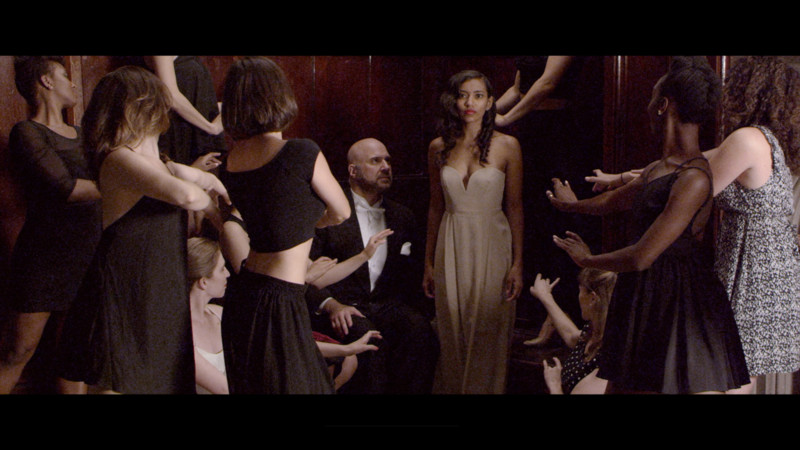
In a society where narratives of male perpetrators and harm inflicted upon women prevail, “Seductive Devotion” emerges as a powerful experimental short film presenting an inspiring alternative. Through captivating imagery and a stirring poetic voiceover, the film portrays a positive model of how a man can profoundly and healingly show up for a woman. It challenges societal norms and redefines love, intimacy, and relationships, highlighting the transformative energy between souls. “Seductive Devotion” celebrates vulnerability, courage, empathy, strength, receptivity, and grace, igniting a yearning for the level of committed desire depicted on screen. In a time marked by mistrust and division, this visually arresting and emotionally resonant film offers a refreshing perspective on the healing power of love and understanding, fostering positive change in our perception and engagement in intimate relationships.

http://seductivedevotion.com/
https://instagram.com/destingerek

Review by Victoria Angelique:

The intense poetry coupled with the brilliant cinematography invokes feelings of intrusion and intimacy in the film SEDUCTIVE DEVOTION. Attention is grabbed instantly through the opening shot, which only builds with the score and the romantic, breathy recitation of the spoken prose. The entire film feels like a moment stuck in time, repeating over and over as the viewer witnesses the extraordinary chemistry between the love artists, Elie Prana and Destin Gerek.

The entire nature of the prose gives the feeling of witnessing a private, almost forbidden nature of the couple. Writer and Director Destin Gerek is brilliant as his shots and poetry touch the soul of a woman’s heart, speaking what many women long to hear from their significant others. It leaves the heart racing when seeing how the man worships his lover as if she’s his entire world. It’s not just about sex, but the desires of each other to create an epic romance by imbedding each other into the other’s spirit.

SEDUCTIVE DEVOTION feels as if it belongs with the classics, as Gerek is not afraid of judgement from his words and film, but using them to touch others soul to soul. The shots and wardrobe gives the feeling of an epic romance from ages long past. The film exudes beauty within every frame.

The film draws from several pop culture references, while still remaining on its own. It’s a beautiful work of art and the desire to know this couples entire story allows imaginations to run wild. The fact that the world is witnessing a small glimpse of what couples usually leave private aids to the feeling of the remarkable short.

Watch the Audience Feedback Video:
Film Review: EIGHT OF SWORDS. Directed by Patricia Downey

EIGHT OF SWORDS, 19min., UK, Drama
Directed by Patricia Downey
Set in Belfast, in an ordinary house, in an ordinary street – it could be your street or next door. Helena from Poland and locals Patsy and Eva fight for survival under the rein of Russian Human traffickers.

Review by Victoria Olson:

The film, EIGHT OF SWORDS, gives an inside look at the world of human trafficking from the perspective of the women who’ve been victimized to the point that they’ve become numb to the harsh realities of their world. Director Patricia Downey did a wonderful job at depicting the coldness of a subject many artists refuse to capture in ways that feel realistic. This film was nuanced, showing the reasons each of the women became involved in trafficking drugs and sex while still portraying them as human beings that can easily hide amongst the general public without anyone suspecting that something might be wrong behind closed doors.

The leader of this particular operation, Patsy, at first glance appears cold and callous. She’s merely doing what it takes to survive so that her daughter is not killed in Cairo. This is something she proves when she’s willing to kill Helena to protect her own child. Helena is quite the opposite, protecting her own son but wanting to go to the police to be done with this world.

This film also has an important aspect that anyone addicted to social media and desperate for fame should see as it portrays the real dangers behind apps such as TikTok. Olivia should have had a bright future, but she trusted who she met online and ends up in a would where she might never see her family again as she’s trafficked to different parts of the world. This is something many individuals, particularly adolescents, should see because it puts the scenario into a real world situation that is understandable and frightening rather than just words that often fall on deaf ears.

Downey used a brilliant technique of not using a score, making this film feel more like a documentary rather than a narrative. This method is a way that will stick with the viewer as they witness what the world is like from the victims and that it is not an easy situation to walk away from to get help.

Human trafficking is a relevant topic discussed on social media platforms and in the news media on how to end it and who’s involved, when a film like EIGHT OF SWORDS shows that it would be difficult to discern who truly is involved as the victims can blend in with the rest of the society. This film can bring further discussion on the travesty that is drug and sex trafficking so that perhaps one day it can be put in the past as a moment of the world’s dark past.

Watch the Audience Feedback Video:

Film Review: FIRST SLOVAK PRIDE. Doc Short. Slovakia

FIRST SLOVAK PRIDE, 29min,. Slovakia
Directed by Roman Stranai
What is PRIDE? How it came about in Slovakia? Was the 2010 PRIDE parade in Bratislava the first one in Slovakia? Activists from the 2010 PRIDE team as well as Hana Fabry, Jaroslav Gyurik, which where present in queer activism in the early 90s talk about important events which led to the creation of the first PRIDE parade in Slovakia.

Review by Parker Jesse Chase

“First Slovak Pride” is a poignant and inspiring documentary capturing a pivotal historical moment, shedding light on the long road this LGBTQ+ community travels towards true equality and acceptance. Roman Stráñai masterfully guides us through the journey of the first creation of Slovak Pride, providing an intimate glimpse into the struggles, triumphs, and heartfelt experiences of individuals fighting for their right to be seen, heard, and celebrated.

Set against the backdrop starting in the early 90s, the film follows the remarkable journey of LGBTQ+ activists as they embark on the groundbreaking mission to establish a safe haven for public expressions of homosexuality and the forging of connections among like-minded souls. Through personal accounts and powerful imagery, the film delves into the complex and emotional process of coming out, emphasizing the importance of fostering understanding and compassion within a society who has long suppressed these voices.

The documentary’s standout moment is when two brides, adorned in rainbow veils, leave a trail of hope and symbolism through the rainy streets of Slovakia. As raindrops fall, a radiant rainbow emerges in a fountain – a timeless memory that encapsulates both the struggles and the inherent beauty of the LGBTQ+ community’s fight for visibility.

“First Slovak Pride” doesn’t shy away from the challenges faced by the activists. The narrative paints a vivid picture of the difficulties they encountered in their bid to organize the Pride March, including the threat of extremist opposition and the eventual cancellation of the first event held. However, the film expertly shifts the focus to the silver linings, highlighting the accidental formation of a rainbow-flag-adorned human chain across a bridge, a testament to the resilience and unity of those pushing for change.

As the years progress, the documentary artfully illustrates the evolution of Slovak Pride from a human rights campaign to a vibrant week-long celebration. Stráñai takes us through the transformation, demonstrating that while progress is being made, the fight for equality is an ongoing battle, a marathon rather than a sprint.

Through compelling storytelling and a well-crafted narrative, “First Slovak Pride” emphasizes the importance of activism and community-building. It serves as a reminder even in the face of adversity, individuals can come together to challenge societal norms, and gradually transform a nation’s perspective. The film underscores the significance of pride, not just as a colorful spectacle, but as a powerful force for social change and acceptance.

Roman Stráñai’s direction shines as he captures the emotional highs and lows of this inspiring journey. With an eye for detail, he guides the audience through the streets of Slovakia, effectively translating the atmosphere and emotions of the era onto the screen. The documentary’s culmination, an awe-inspiring shot of the expanding crowd overlooking the country, leaves a lasting impact, symbolizing the triumph of unity and the emergence of a brighter future.

“First Slovak Pride” is an extraordinary cinematic exploration of a crucial turning point in Slovak LGBTQ+ history. Through Stráñai’s lens, the film honors the bravery of those who dared to demand equality, celebrate diversity, and pave the way for a more inclusive society. This documentary is a testament to the indomitable human spirit, an eloquent call to action, and a vibrant tapestry of hope, resilience, and the unbreakable bonds of community.

Watch Audience Feedback Video:

Film Review: A Way for Tomás

A WAY FOR TOMAS, 29min., Columbia
Directed by Andrés Ricaurte / Martín Agudelo Ramírez

Tomás, desperate, knocks insistently on the door of a lonely house. Nobody opens it. When he leaves the place, he sees some bushes moving and goes into a wooded path. Along the way, from his memories, he faces several episodes of fear in his life until he reaches the exit of the path, which takes him back to the door of the house. Tomás enters and talks with a woman (who represents death), at which point he decides to face his fears.

REVIEW by Victoria Angelique

The powerful Columbian film, A WAY FOR TOMÁS imparts a powerful message that will stick with the viewer. The idea of confronting Death head on certainly isn’t unique, but it’s rarely done in such a profound and memorable way through every part of a film is rare. The attention is captured instantly through the beautiful cinematography. Every shot is carefully designed, to enhance the struggles that Tomás has been going through his entire life.

The story begins with Tomás meeting with his younger self, at the moment where his ability to dream of the future died with the death of his father. The focus of a toy airplane signifying life to the young boy when Death takes his dad is a powerful tool to show how significant a parent’s role plays in a person’s life. He allows himself to become afraid to live and love as Tomás goes through his past selves, relishing in the dark moments over the happy ones. The soundscape aids in the storytelling by allowing sound and visuals to tell the story, overshadowing the dialogue as the struggles Tomás faces plays out on the screen.

The dialogue is carefully crafted, especially in regards to Death. The wisdom in her words could be spoken to anyone resigned to sadness and anger like Tomás when he confronts her face to face. She’s straightforward, but a message that many need to actually live their life rather than just existing in this world. The fact that Death gives Tomás a choice shows the importance of free will. She could have very easily gone on her way without confronting this particular lost soul, but his emotional state was taking over his entire world so it left her with no choice but to force him to face his fears.

The filmmakers leave it open to interpretation whether Tomás chooses to finally live or if he’ll disregard Death’s message, but the important part is the powerful sentiment behind the mythical character’s words. She allowed him to confront his fear of living and of death, but to still continue on his way with the choice to live as he has been or actually live life to its fullest.

A WAY FOR TOMÁS is a beautiful film that directors Andrés Ricaurte and Martin Agudelo Ramierz created as their passion for the material shines through in every frame. It’s a film that deserves every award it has received and stands as a gorgeous work of art.

Short Film Review: BLUE BURROW. Directed by Leah O’Donnell

Synopsis:

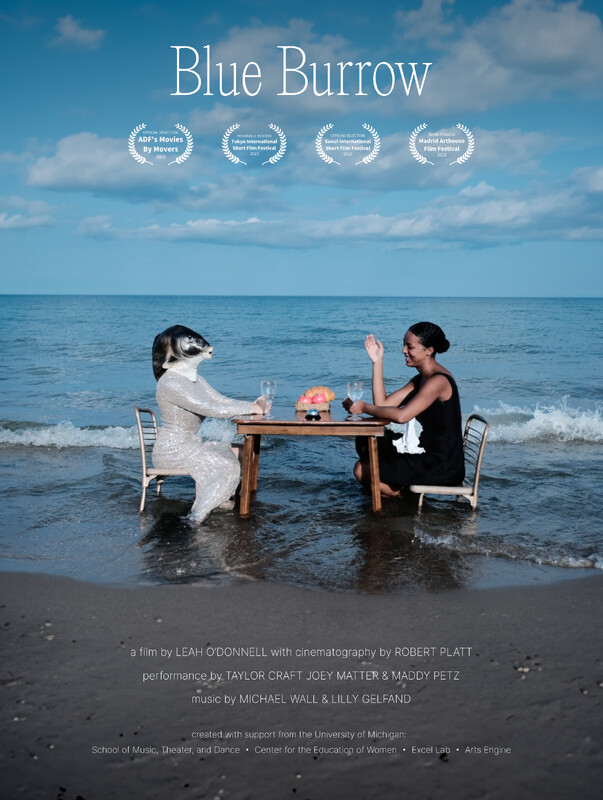
Blue Burrow is a short movement based film fully immersed in the sun, sand, and water of Lake Huron. The shore is the meeting place for characters of different species, while the world underwater comes to represent the subconscious. Perspectives shift from fish to human to sun, and metaphors about our relationship to the natural world emerge.

Review by Parker Jesse Chase:

“Blue Burrow” is a mesmerizing short film in which transports its audience to the serene landscapes of Lake Huron, where elements of sun, sand, and water intertwine with the lives of humanity. Director Leah O’Donnell takes us on a visual journey in which seamlessly blends human nature to aquatic plantlike worlds, crafting a unique narrative that dives into exploring our relationship with the natural world.

The film begins with capturing the vulnerability of human nature when the camera provides an extreme close-up of a paddle boat as it gives way to a high-angle shot, symbolizing the emotional currents that bind us all. The connection between music and emotion becomes evident as the characters, dressed in intimate flesh-toned undergarments, engage in meaningful gestures of connection. These moments highlight the grounded relationships we build within the elements – water, sand, and seashells – underlining the primal human need for connection, both with each other and with nature.

The color blue, typically associated with melancholy, is transformed into a symbol of calmness and serenity throughout the film. The blue of the water and sky provide a soothing backdrop, fostering a sense of peace that resonates deeply. This multifaceted approach to storytelling mirrors our complex interactions with the world around us.

A standout scene that involves humans holding water plants in their own mouths as the audience is suspended in the aquatic realm, offers an elemental twist on the familiar image of human interactions with plants. This creative approach reinforces the interconnectedness of all life forms and introduces an innovative visual metaphor, deriving from inspirations from plant surrealist photographer Supinatra.

Leah O’Donnell’s direction and choreography expertly guide the cast through a fluid dance that bridges the boundaries between humans, animals, and nature. The film’s cinematography, under the skilled hand of Robert Platt, is nothing short of breathtaking. From the floating water mattress sequences to the challenging in the body of water shots, every frame captures the ethereal beauty of the lake and its counterpart surroundings.

The collaboration between Michael Wall and Lily Gelfand results in a musical score that is both emotionally evocative and healing. The classical compositions complement the visuals, guiding the audience through the emotional journey of the characters as they seek physical and emotional connections.

The film’s location, Lake Huron, becomes a character in itself. Its sun-drenched shores and shimmering waters provide the perfect backdrop for the exploration of human relationships and their ties to the environment. The film successfully marries experimental, surrealist and abstract elements with the grounded nature of its subject matter. In “Blue Burrow,” humanity’s innate need for connection and physical touch is portrayed with poignant sensitivity. O’Donnell’s masterful direction, combined with Platt’s cinematography and Wall and Gelfand’s music, create a symphony of emotions that resonates long after the credits roll. As the characters embrace elements of earth, they remind us of the natural world we are privileged to inhabit. This film is a beautiful ode to life, earth, and nature, an experience in which truly immerses the audience in the depths of our collective existence.

Project Links

Directed by Leah O’Donnell

Watch the Audience Feedback Video:

Short Film Review: RUMI’S RUMBA. 19min.,

Synopsis:

Professor Johnson, a college poetry professor, lectures his students on a poem by Rumi. When class finishes, one of the students, Olivia, approaches the professor with a question about the poem. This leads into a romantic fantasy musical sequence. Conflict arises soon after when Dean Cox and his secretary, Miss Flannigan, accuse Professor Johnson of exploiting Olivia.

Written & Directed by George Kostopoulos

George Kostopoulous has created a dark comedy centering around the taboo of a teacher sexually involved with his student and having to defend his actions to the school’s principal. But is it really that simple? No, no it isn’t.

As the film opens, the first thing that captures your attention is some fantastic cinematography thanks to Nicola Raggi. The slow pans and seamless transitions from shot to shot was expertly crafted. This really helped highlight a wonderful performance by Greg Amici, who was portraying ‘Professor Johnson’. The actors definitely had a rapport with one another and it showed in how believable they were.

One of the most comedic moments was Miss Flannigan’s facial expressions as she stood listening in at the Professor’s door. Quite possibly my favorite scene was the one choreographed by Joe Medeiros. The other students as dancers doing pirouettes and jete’s around the two lead characters as they were dancing was a joy to watch. The music seemed a bit more of a Tango than a Rumba to me, but “Rumi’s Tango” doesn’t give you that fun alliteration.


All in all, this definitely had the feel of: things aren’t always what they seem. George Kostopoulous put together a unique and comedic film about reversing roles and having a student entrap their teacher.

Review by Andie Karvelis

Watch the Audience Feedback Video:

Short Film Trailer: ONCE I PASSED. 10min., Experimental/Animation

Synopsis:

Walt Whitman is one of the most important poets in American literature. His main work, Leaves of Grass, was written over a period of forty years, and describes human nature, society, and the natural world, both physically and philosophically.

Project Links

Directed by Martin Gerigk

Review written by Victoria Angelique 

The vintage feel combined with the iteration of a poem by Walt Whitman, makes ONCE I PASSED a very beautiful short film. The visuals and score really make the classic poem come to life, although with a few changes to apply to the particular story that Martin Gerigk is using to tell. The use of old photography juxtaposed with moving still photography across the screen made the story really pop and grab the attention of the audience by invoking curiosity. 

The film really explores the use of memory. Nostalgia is invoked first when the use of old black and white photography. This combines with a soothing voice that feels quite panicked in places as if the narrator is struggling to remember a specific moment in his life. The repetitive lines makes the entire film seems like the memory of an old man desperate to remember more than just small details from a trip when he was a young man. 

The score is almost bittersweet, telling the tale of a forbidden romance between two men in a time where their relationship would never have been accepted. Making this film almost like it’s trying to recall memories from a clandestine affair in a city far from home. The geometric shapes give the film a spark almost like the brain is struggling to remember more details about a flame from the past. The accompanying charts seems to be an attempt to reignite the brain through old science experiments from a time long ago. 

Martin Gerigk is able to explore the full depth of fleeting memory by capturing the key moments the brain can remember. The story tells of what seems like a pleasant trip, but the brain only clings to the negative moments for years to come by blocking out the positive. The film explores the range of human senses in order to recapture a memory, playing with sight, touch and sound in order to activate the full memory. 

The combination of Walt Whitman’s poem with the vintage, fleeting images makes this a great film for fans of Whitman. It fully captures the themes that Whitman explored by combining editing techniques with an intriguing score. 

Watch the Audience Feedback Video:

Short Film Review: NIGHT RIDE FROM LA. 5min., Experimental

Synopsis:

‘Night Ride from LA’ is based on a real car ride at night from downtown LA to the desert near Palm Springs a few years ago. The footage was taken from the car by continually shooting single long exposure photos to document the ride of about two hours without any break. This technique condensed the whole trip to a flickering twirl of time-stretched movements and night light graffiti causing a kind of psychedelic trance. A love letter to the energy and vibe of the Californian way of life.

Directed by Martin Gerigk

Key Cast: Philipp Zdebel, Stephan Sixt

Review written by Victoria Angelique 

Project Links

The perfect way to describe driving in Los Angeles at night would the film NIGHT RIDE FROM LA. The film feels chaotic with moments of peace interspersed throughout the brief five minutes. Dividing the piece into 3 segments was a great way of capturing the moment of California driving, especially with the soundscape that was included to really feel immersed into the drive. 

Martin Gerigk’s two hour drive is sped up in a way that really makes the tone of the film feel like Los Angeles. The use of inverted images of the drive keeps the film entertaining, as it captures what sometimes a long drive can do to the mind. Gerigk seamlessly moves from phase to phase in order to capture both the chaos and peace of driving at night. Lights play with the imagination as cloud cover brings a sense of serenity. 

The score captivates the viewer in a way that feels authentic to Los Angeles at night. The combination of a strong percussion with the sounds of the city makes the heart race as if it’s not Gerigk driving, but the audience. It almost feels like a race or adrenaline high that eventually leads to the inevitable mental crash. The soundscape makes the film a perfect marriage between driving in Southern California at night and the vibe of the nightlife atmosphere. 

Separating the film into three parts, using vastly different visuals that compliment each other, was a great filmmaking tactic to really draw the audience in to an authentic drive. The chaos followed by a brief moment of peace amongst the tall palm trees only to be thrusted back into city driving makes the final part of mentally crashing makes the film feel complete. Gerigk even managed the feeling of the mind going numb with the Sesame Street like countdown of close-ups of license plate numbers until the film finally came to an abrupt stop. 

If someone wants to feel what driving in Southern California is really like, this film would capture the full experience. 

Watch the Audience Feedback Video:
Short Film Review: SEPARATE. 6min., LGBTQ+ Drama

Directed by Kestrin Pantera

Written by Cool Benson & Rhyan Schwartz

Key Cast: Daelyanna Kelly Benson & Cool Benson

Review by Andy Karvelis

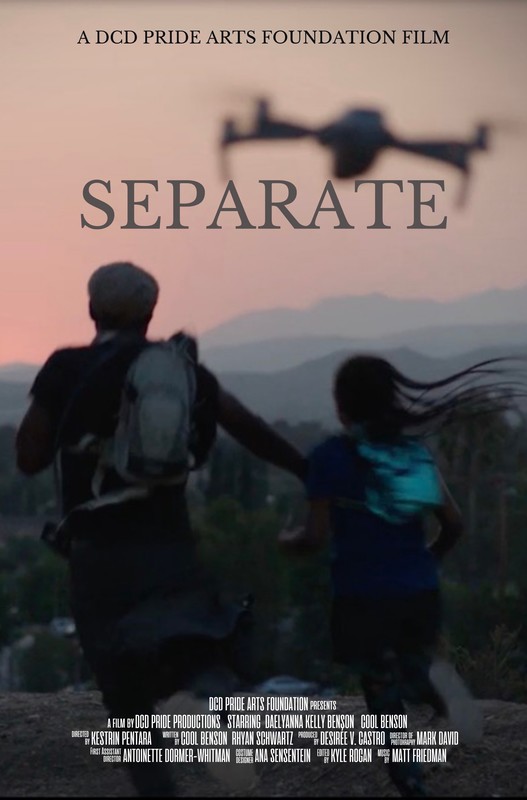
Separate gives us a glimpse of a future where the Supreme Court has the ability to overturn marriage equality and demands the children of same sex couples be placed with “traditional” families.


From the moment you hear the opening chords of a haunting lullaby and see a little girl skip across the frame, you know you are in for a very suspenseful ride. The filmmakers did a sensational job creating an ominous feel and Director of Photography, Mark David did not disappoint in making it look very dystopian.


There was a beautiful father daughter bond between lead actors Cool Benson and Daelyanna Benson. Their off screen rapport definitely translated on screen and they both were a joy to watch, bringing real emotion and believability to their characters. Cool was also the main screenwriter along with Ryan Scwartz, they both came up with a terrifying storyline that felt very Black Mirror-esque. In light of what is happening in some states, this could be a very real, very horrible future for us.


The ingenious writing in this also gives us hope and emphasizes love. A love between family that cannot be broken. One line really resonated with me and it was when Daelyanna said “They turned off their hearts”. What a powerful way to describe the intolerance of others, through the innocent perspective of a child.


This film leaves you wanting to see more. You immediately get invested in the characters and the story. Sensational film all around and I can’t wait to see what happens next.

Watch the Audience Feedback Video:
Short Film Review: THE UNICORN SYMPOSIUM, 9min., Fashion Film

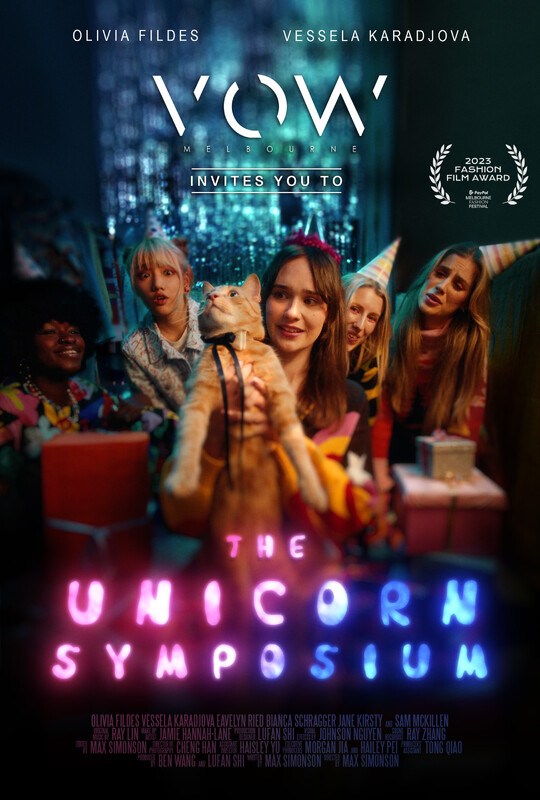
“Unicorn Symposium,” a short fashion film directed by Max Simonson, is an expressive and magical film taking viewers on a journey of self-discovery and the power of embracing the present moment. With stunning production design by Lufan Shi and captivating clothing and accessories by Vow Studio, the film creates a visually engaging experience seamlessly blending between reality and fantasy.

The opening shot introduces us to our leading lady, portrayed by actress Olivia Fildes, whose clothes—a simple white turtleneck and black denim jacket—reflect her plain and neutral personality. Standing beside her is a pedestrian holding onto a white balloon, symbolizing imagination and childlike wonder. The use of a colorful abstract sweater on this distant wayfarer creates a striking visual contrast, further accentuating her subdued character. This contrast emphasizes our protagonist as a “Plain Jane” living in a mundane existence.

As the story unfolds, we witness our leading lady spending a seemingly ordinary day shopping at the mall. However, through clever foreshadowing and the appearance of our stranger on the street, color bursts onto the screen as they pass by a contemporary Memphis design-inspired style boutique. This transition marks a turning point as the protagonist’s dull personality begins to shine brighter, as she begins to shop and choose clothing pieces for a classic dressing room montage.

The film skillfully employs extreme close-up shots to reveal our leading lady is featured in the polaroids displayed on the mirror, leaving her bewildered. Suddenly, she finds herself transported to another world, reminiscent of the movie “13 Going on 30.” Walking into her surprise birthday party, the look on her face expresses her confusion and disbelief. The production design masterfully creates a retro atmosphere, complete with paper umbrellas, polaroids, handheld cameras, balloons and metallic streamers, ultimately enhancing the overall celebratory experience.

Despite her attempts to convince the group it is not in fact her birthday, the party guests, through their gifts and affection, persist in celebrating her. The film expertly portrays a play on clichés, as the production design, including the delectable food styling, immerses viewers in the festive atmosphere. From fun drinks to birthday cake, a chocolate fondue fountain, and gelatin treats, the partygoers embrace the moment and live within the joyous celebration.

In these moments of revelry, our leading lady undergoes a transformation, changing into the clothes she left behind in the fitting room. Feathers fly, creating a dreamy and whimsical effect, symbolizing her newfound freedom to live fully in the present. The film captures the essence of a special day, filled with spontaneous singing, pinata smashing, and heartfelt laughter.

Amidst the chaos and jubilation, tears are shed and laughter resounds, underscoring the emotional depth of the characters. As the experience comes full circle, a recreated moment reminiscent of the first polaroid seen on the mirror brings everything back together. Our protagonist, realizing the significance of the occasion, feels compelled to capture the moment on her phone, reflecting the modern tendency to document and share every aspect of life.

However, as she leaves the room to grab her phone, life takes another unexpected turn, forever altering her perception of reality.

“Unicorn Symposium” is an enchanting expressive experience derived from Max Simonson’s direction, coupled with Lufan Shi’s stunning production design and Vow Studio’s impeccable clothing and accessories, create a visually captivating experience for all. Ray Lin’s music composition further enhances the film’s atmosphere, making it an ultimately cohesive and magical journey.

In its exploration of self-discovery and the importance of remaining present, “Unicorn Symposium” reminds audiences of the value of cherishing the experiences unfolding before our very eyes. This thought-provoking and enchanting film will leave viewers questioning the extent to which we should be living in the moment free from our technological devices.

Review Written by Parker Jesse Chase

Directed by  Max Simonson

Watch the Audience Feedback Video: