In a dystopian future where families are torn apart, a mother is granted one annual reunion with a digital simulation of her child — a fragile ritual that tests the limits of memory and love.
Review by Andie Kay:
Writer/Director Teresa Garza brings us this sci-fi short film that is very Black Mirror-esque. Our memories are so precious to us, they remind us of good and bad times and even can bring us serenity in a turbulent world.
The story was engaging and drops you right into a very tense, uncomfortable situation. Teresa provided a great twist at the end but if you don’t read the summary prior to watching the film, you might be a little confused. I just wish we were given a set-up of what and why the Family Services Division was abducting people.
Casting for this was amazing, every actor did such a wonderful job. They were believable, organic and it drew the viewer into the story even more. The way the filmmakers incorporated the computerized voice over was fantastic and brought in a sense of reality, like this could actually happen.
Jorge Palomo handled the score, editing and cinematography for the film and the music was a wonderful addition. The cinematography was really well done and the work with special effects added a seamless futuristic element.
The animated short Jurassic Ward cleverly mimics elements of the films from the Jurassic World franchise, with a wickedly funny edge. The visuals are colourful, textured and expressive and adeptly capture amplified human conditions such as the temper tantrum by the boy patient, and the biting sarcasm and sheer exhaustion of the resourceful, wish granting character, whilst showcasing the stellar work of the talented voice artists. The frenetic energy of the film is breathtaking, and the zany, high octane musical score does not disappoint. Worth noting are the various hospital areas that are defined with cheeky, hilarious signage.
The student creators of this college production are off to an excellent start in their chosen profession. This romp rivals any production by a major studio. The dinosaur has a terrifying energy that drives the piece the second it appears onscreen, as any of the creatures in the Jurassic World series, but with a somehow endearing, dog-like comedic essence.
Interior decorator Alice and college professor George have been married for fourteen years. They raise a son and a daughter together, and they are happily married in others’ eyes. One night, Alice waits at home for George to get back from work. What she gets is not only her husband, but also the news that he is going to leave them for an affair. The trivia of marriage life has used up all their passion; love burns into cinders in just a blink. And George is not sure about what is to come.
Review by Julie C. Sheppard:
The short film Cinders is a heart-rending story of communication breakdown. Off the top, the film uses a long silence of one the characters, the husband George, to make his eventual admission of infidelity even more dramatic and revelatory. He does not speak for over a minute of screentime with a one-sided conversation on the part of the wife, Alice. In advance of his first words, Alice’s lines and actions give clues to the husband’s reasoning for leaving her, such as her micromanaging him.
When dialogue between them finally starts and George admits to the affair, you get the sense that important topics have never been expressed between them before, such as acknowledgement of their sexual incompatibility, and the fact that Alice seems unaware of some of the things that have bothered him, like her lack of passion and playfulness, and her always trying to take care of him in a parent-child type of way.
The setting of the lovely residential home shows the external trappings of a together, well-heeled household. Both characters are neatly dressed and things seem tidy and organized. But looks are obviously deceiving. Even her admission that she always wanted to go to France, a place that George plans to take his new lover, shows how tuned out he is about his wife desires, and it seems like a fact that she has never told him before.
Other than evening crickets, there are no other sounds under the action, which gives this emotionally painful short verisimilitude. The camera work also mirrors this true-to-life essence, with the pace and editing being very deliberate. The use of these elements in a slow, methodic way matches the tone of the couple’s relationship, one that is obviously suffering from a lack of connection that, in turn, leads the husband astray.
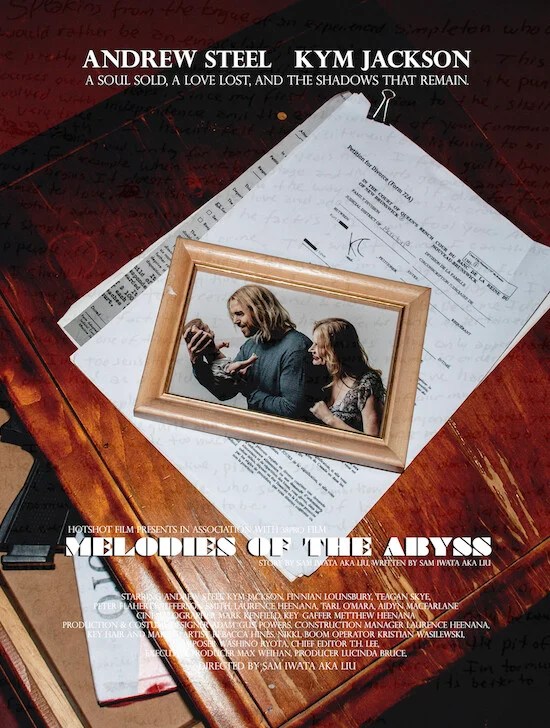
A rock star bound by a devil’s pact drifts toward oblivion, haunted by forever regrets. Across the veil, a fallen angel mourns lost grace. Each seeks redemption—and in that search, confronts what they truly are, and what they might yet become.
This short film by Iwata Sam was inspired by the true events of Kurt Cobain’s untimely death with the names slightly altered due to legal reasons. Nirvana’s music has touched the lives of so many of us and Iwata Sam has given us a story that is intriguing and thought provoking. What would you do to fulfill your dreams? Would you make a deal with the devil?
I appreciated the attention to detail in the set dressing and the nod to Nirvana’s logo as graffiti on a wall. The cinematography was absolutely stunning, thank you Mark Kenfield. It had this beautiful, haunting quality about it that fit the storyline so incredibly well. There were several great practical effects, as well as the creative beauty in the text screen overlays.
One of the things that I adored was the casting. Andrew Steel as “Kurt” and Kym Jackson as “Courtney” – pardon me, “Lucy” was incredible. Their performances really captured the essence of both characters and the way they played off one another was simply spellbinding. Andrew also wrote and performed a couple of original songs within the film, so that was even more impressive.
This film serves as a cautionary tale but also one that would urge anyone who is experiencing depression, suicidal thoughts or substance dependancy to reach out for help. It reminds us all that we aren’t alone in our struggles.
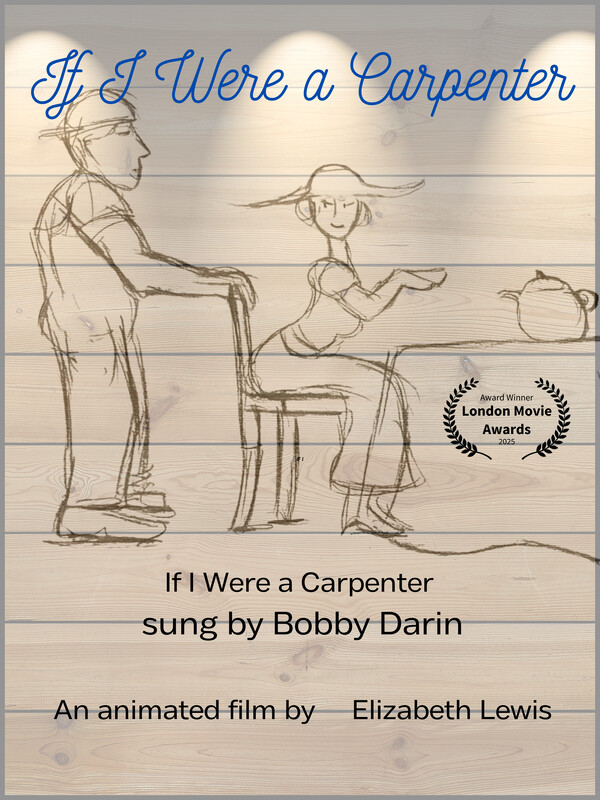
This hand drawn animated film is based on the classic song If I Were a Carpenter and sung by the great Bobby Darin. How can love conquer the social divide? This film is a tender slightly tongue in cheek story of how love can transform us and ultimately bridge our differences.
Review by Victoria Angelique:
The music video, IF I WERE A CARPENTER, utilizes a long lost art style to animate the lyrics and bring new life to this 1966 song written by Tim Harden and sung by Bobby Darin. It’s quite rare to see hand drawn animation anymore, much less in the form of pencil sketches. It worked for this particular song, not only to give it the vintage feeling, but to add another layer of symbolism to the lyrics.
The lyrics are heavy about the carpenter longing for a woman that looks like a lady. He’s insecure, wondering if she would want a man that works with his hands. Each frame of the film being drawn with pencil emphasizes the importance of crafts that involve developing unique skills that are appreciated much more if they are done by hand. It brings a new level of respect for the carpenter that longs for his own family.
The animated video and the corresponding lyrics have strong family themes. A carpenter dreams of marrying a lady, but his insecurities make him wonder if she would want to marry a tradesman. He knows he could make her happy and make her emotionally rich by being a devoted husband. The second he sees the lady, he pictures her as a mother and wants to be the man that can provide a living for her so that they can raise a family.
This music video has a timeless feeling. It asks the questions about what one looks for in a spouse and a partner to raise a family with, while allowing minor insecurities to hold them back. It gives into daydreams, allowing the carpenter to fantasize about what his life would be like if he could marry this beautiful lady.
Young siblings Ben and Mikey’s innocent game of hide-and-seek takes a terrifying turn when they encounter a supernatural entity lurking under the bed. As the creature’s dark presence grows increasingly menacing, the children must rely on their wits and bravery to survive the nightmarish ordeal.
The US horror short Under is masterfully suspenseful. The direction is exceptional – – the viewer is quickly caught in an ominous web of both tension and apprehension.
The camera work is fabulous – – it moves dizzily across the floorboards and under the bed. Fear is generated by a terrifying sound design, complete with creaks, growls, bangs, creepy toy voices and heavy breathing. The frightening musical refrains enhance the nightmarish build up.
Props are highly professional, notably the well-crafted monster with its disgusting blue goop, supported by a well-selected residential location with many doorways for evil to hide. Also notable is the convincing naturalistic performances of the two lead children.
Startling and chilling, this horror short does what it sets out to do – – to create a suspense that entertains.
A terminally ill Vietnam veteran finds solace and purpose in rescuing an abused dog no one else wanted, rediscovering the meaning of life and the profound power of companionship.
Review by Julie Sheppard:
While this short Roxy & The Man runs only 28 minutes, it is chock full of heart. Although the film notably appeals to dog fans given its central canine figures, its messaging is one of love, and faithfulness – themes of universal appeal.
From the outset with the quote “Dog Spelled backwards is God”, we can tell that the creators have an engaging sense of humour. This humour is played out beautifully by the lead performer whose humble honesty and kindness shine through both vocally with his soothing, raspy voice and visually with his physical expressions of cheeky warmth. The clever cinematography often zooms in on his friendly face and on the adorable dogs in the film. There are also many gorgeous scenes of a pristine beach, palm-lined vistas, and a striking sunset.
The screenplay moves the action along at a good pace, as you sense that the lead is beating the odds, beyond his initial cancer diagnosis, largely due to his ongoing connection with geriatric dogs.
Perfectly complementing the heartwarming sentiment of the film is the resonant soundtrack, with its melodic guitar, poignant piano and stirring vocals about togetherness.
The quote near the end “You can’t buy love, but you can rescue it” serves the film perfectly – as with the opening quote, man’s best friend takes on a saving, spiritual role!
Written & Directed by Joey Medina Starring: Paul Rodriguez
A young woman waits for her lover for a secret trip. However, he does not show up and does not respond to her messages. That’s when strange and inexplicable events begin to happen in her house. She asks for help from her lover, who ignores her. Realizing that she is hopelessly alone, she gives up waiting for salvation and surrenders to her own shadow.
Review by Victoria Angelique
The short film, SUBMERGED, is a world set in symbolism as a woman is trapped by her own feelings. She is left alone, during a time that she desperately needs another person, which leaves her feeling like she is drowning in darkness as she frantically continues to call and text her “Love.”
Something bad has happened, at first the audience assumes that her love has passed, since he isn’t answering, only for the truth to be discovered when she opens a bathroom drawer filled with pregnancy tests. This is the final plunge after years of trying for a family, with hope being dashed and this woman being left alone to deal with the news at the most inopportune moment. She has been submerged into a state of desperate psychosis, needing her “Love”, only for him to be unavailable at this moment.
Penélope is fighting with herself. Symbols to show her drowning manifesting in the form of a fish and water. There is dripping water, as she sits in shadow clutching her phone before she sees a fish. After she finds the drawer of pregnancy tests, she begins to see herself as a fish out of water. Lost in the world with no one to help her. She even begins to fight with herself as she drowns in a tub of water.
This film speaks to an unexpressed taboo that many women deal with when it comes to infertility and the feelings that come with it. Penélope shows what there are no words for and what the burden many women bear in silence when they learn that they can never give birth. She shows how devastating the news truly is and why a woman should not be left alone when given such a tragic diagnosis. The actress gave an award winning performance to depict a topic that many people are uncomfortable with discussing, even though it plunges many women into a deep depression where she feels like she might never surface again like it did Penélope.
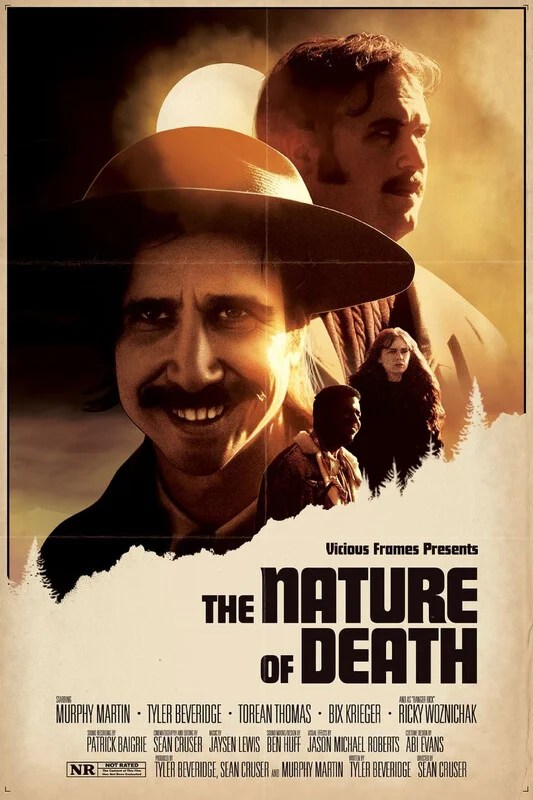
When an eccentric park ranger crosses paths with a grieving hiker, he offers his help in finding the perfect spot to scatter the hiker’s father’s ashes. As they venture deeper into the remote wilderness, the ranger’s true intentions begin to blur.
When Alan’s father passes he is tasked with fulfilling his dad’s last wish by scattering his ashes in the Sierra National Forest. As Alan is taking a moment to grieve he encounters Ranger Dan, who offers to help him find the perfect spot…But not everything is what it seems.
Set in 1978 the Cinematographer and Director, Sean Cruser did an excellent job in making the entire film look like it was from the late 70’s. The attention to detail in the costuming, hair, and makeup was absolute perfection. Even the score added this nostalgia but also a sinister undercurrent.
Tyler Beveridge starred as Alan and wrote the screenplay for this film. The storyline is so engaging and written beautifully. Tyler understood how to build the suspense without giving the twist away. At the same time giving you a little morsel so you think you know what’s going on when you don’t. That in and of itself is next level writing, not to mention that Alan’s acting chops are also top notch! Murphy Patrick Martin portrays Ranger Dan and I must admit, the southern accent threw me and pulled me out of it for a moment especially when that accent started to fade but by the end, it made so much sense!
The entire cast did a wonderful job and everything about this short film is unbelievably clever, including the title. The Nature of Death – a smart play on words and a bit of foreshadowing. If national forests and parks didn’t make you feel uneasy before? They will now.
A young woman enters into a journey of self-exploration, discovery, and identity. As she travels through the ephemeral, working through her understanding of self-perception, other travelers within the same universe try to join. These travelers soon realize that her story is not for them to mimic or assume, but to discover through their own experiences. They learn to accept that one can be empathetic to the experiences of others, without being central to the plot. These travelers become members of a creative community, observing and understanding a greater universal struggle: accepting oneself as a thread within the fabric of existence, and not the fabric itself. The young woman continues on her journey within the greater schema of reality. She endures everything and nothing all at once—accepting her present reality for its momentous nature, knowing it will be quickly lost to the vastness of time.
Matter is a meditation on identity, community, and the space between individuality and collective existence. The film follows a young woman on a journey of self-perception, where others attempt to step into her story only to realize it isn’t theirs to take. Instead, they’re reminded that empathy does not mean centering oneself in another’s path. Her movement through the ephemeral becomes a mirror for our own human tension: wanting to be both unique and connected, both the thread and the fabric.
The film opens in a stark white space, sterile and stripped down, our main figure in black, her face concealed by a helmet. The contrast is striking. A jazz-like wind instrument plays faintly, textured with background noise as if we’re overhearing it at a small cafe. Movement begins, fluid and deliberate, and the costuming folds into the choreography so naturally it feels like an extension of the body itself.
Soon another figure intrudes, removing the helmet, followed by more dancers drifting into the frame. At first, their presence is ambiguous. Are they invading her space, or offering community? That tension lingers as bodies multiply. Movements ripple, one blending into another, pairs forming and dispersing, a current of mimicry and fluidity that raises the question: how do we hold our own shape while surrounded by others?
Each dancer gets moments of individuality, flashes of expression through body and gesture. Yet as the camera widens, the ensemble surrounding them looks heavy, even sorrowful. Drooped shoulders, bleak expressions, a kind of condemnation of the one in focus. The group closes in, zombie-like, pushing forward and down to the floor. It reads as a physical metaphor for the struggle between breaking free and being pulled into the conformity of the whole.
The cycle repeats. The crowd fades, only for smaller sets of dancers to return, layered routines intersecting within the same space. Background noise swells, reminding us that life is always filled with unseen passerbyers, strangers whose presence is felt even without direct contact. Dancers clutch their hearts, shield their faces, run corner to corner grasping for any sense of individuality in a space that keeps inevitably folding back into the group itself.
The film circles back to its beginning. The helmet returns. The original figure collapses, body limp, hand dropped lifeless to the floor. The black helmet rests ahead of her, now transformed into a symbol of both burden and release, maybe even death. The film leaves us in that stillness, confronting the inevitability of returning to matter itself.
Gabe Katz’s hand is present throughout, not just as choreographer, but as a guiding force across costuming and the emotional architecture of the piece. Paired with Sam Gendel’s soundscape and the minimalist staging, Matter becomes less about watching a performance and more about feeling through one. It asks us to consider the truth that we are both small and infinite, fleeting but part of something vast.
We are matter. Sometimes we feel like the center of the room. Sometimes we dissolve into the crowd. Either way, we are here.





 Festival Reviews