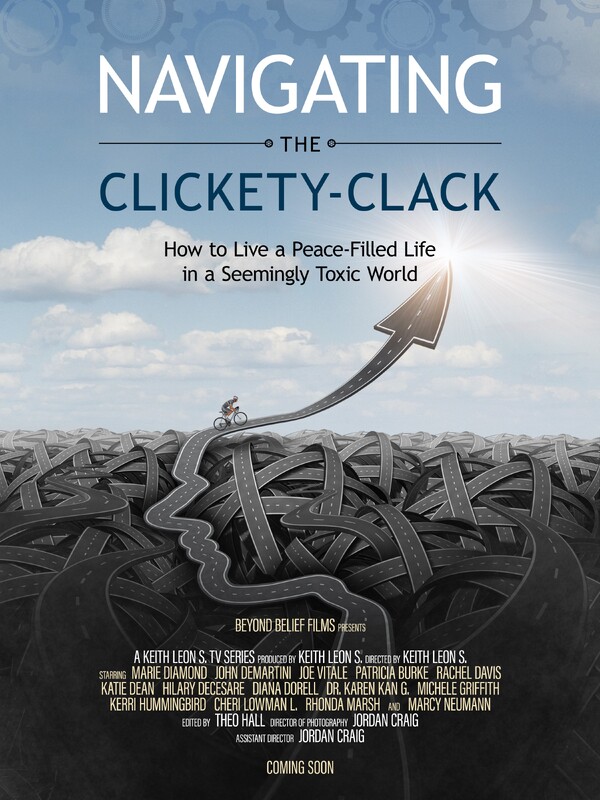
MOVIE REVIEW: Navigating the Clickety-Clack: How to Live a Peace-Filled Life in a Seemingly Toxic World

Navigating the Clickety-Clack is a 28X award-winning enlightening TV Series, based on the 4-volume award-winning international BESTSELLER book series with the same name. Producer / director, Keith Leon S. hosts this 7-episode series exploring topics that include, death, fear, job loss, money fear, family issues, relationship challenges, and how to stay peace-filled in a seemingly toxic world.

http://navigatingtheclickety-clack.com/

Directed by Keith Leon S.
Review by Victoria Angelique:

The documentary, NAVIGATING THE CLICKETY-CLACK, is a positive and upbeat series that will follow the stories of individuals describing key moments in their lives that changed their lives. The filmmakers consider the phrase “clickety-clack” as the moment that life “switches gear” or changes unexpectedly to the point it often causes significant distress, but questions if it should or if we are simply needing a different perspective in order to get back on our divine paths.

Many people have heard of the phrase, “count your blessings”, which is rephrased in this series as part of the clickety-clack. It’s described as the moment where people confuse stressors with blessings and end up getting overwhelmed. One example given is when a different perspective is offered to show that what is frustrating one of the interviewees was seen as blessings by his late father. It just took someone else’s point of view for him to take a step back and realize his life wasn’t as bad as he thought at that moment to begin enjoying life instead of living through what he perceived as stress. He was merely stepping into a new phase of his life.

The concept is interesting. It’s one that has been discussed in many different ways, through many religions and academic groups. This series aims to address the concept of getting back to a positive world through looking at oneself by becoming a spectator of your own life. It depicts stories of those who figured out how to do that, either by themselves or with help to get a fresh perspective. It tackles the issue most people don’t want to admit head on, that often we hold our own selves back.

The series is careful to address issues that some people may be sensitive to, such as suggesting people might be the cause of their own toxic world and it can only change if each individual person is willing to start taking a step back to look at themselves. The clickety-clack seems to be about the transition period in life when people must follow intuition and get a fresh perspective to continue on a positive journey that has been aligned for us, even if it might not make sense at the time. It means to look towards the future and try not to stress so that the world becomes less toxic.
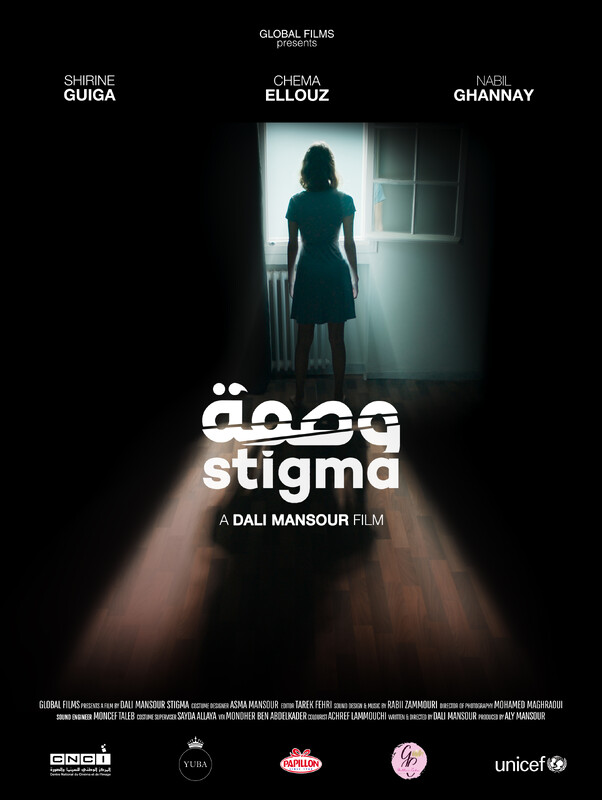
Short Film Review: STIGMA, 30min., Tunisia. Directed by Dali Mansour

During the Covid-19 lockdown, “Stigma” explores the emotional impact on Bochra, a young woman living alone in France. Through webcam exchanges with her parents in Tunisia, Bochra struggles with painful memories and a dark past. Confronted with solitude in her Parisian apartment, she faces shadows of her past, gradually revealing a deeply buried trauma. The film delves into themes of resilience, the importance of family bonds, and the quest for self in an isolated world, leading to a poignant revelation.

https://www.instagram.com/stigmashortfilm/

Review by Victoria Angelique:

The short film STIGMA is a powerful narrative that delves into many themes through the use of symbolism and character exploration. It seems to have an element of ALICE THROUGH THE LOOKING GLASS twist as the story depicts the desperation of parents to save their daughter through a video call when they can’t physically get to her location.

The story is heart wrenching from the first moment when Bochra’s father appears on screen. The filmmaker makes the audience think the film is a science fiction world with the outstanding special effects and makeup design, though quickly makes it clear that this is a dream world of the girl’s father. A symbol of the man feeling powerless and silenced as he can’t save his child from drowning in her own world. He and her mother are desperate to save their daughter from her pain, wanting her to look at them as they literally watch the life drain out of her. Their screams penetrate through the screen and it’s only their love that echoes into Bochra’s drug induced hallucinations.

As life begins to drain from the young girl, it begins to get hard to tell what is real and what is fake for her. It gives a Wonderland vibe as Bochra begins to go between the world of the living and the dead. She sees everyone she’s ever loved and everyone who has ever hurt her outside of a train. The story makes the character come to a powerful choice, where it is up to her to decide if she wants to continue to live or if she wants to die. 

The biggest question that remains is if the entire film was a hallucination for Bochra as she has a picture frame of a cemetery. It leaves the question open to if she really was talking to her parents on the video call or if she got off the train to join them in heaven. The film shows both realities, her parents crying through the video call and Bochra getting off the train to meet them in the clouds. This leaves it up to the audience to determine what really happened to the fate of this young woman. 

Short Film Review: SENTIENT. Directed by Kayley Atkinson

Ella and her friends take a weekend getaway to rural Australia to disconnect from their devices and reconnect with one another. However, an evil presence has other plans for them.

Project Links

Review by Julie Sheppard:

This riveting short, Sentient, taps into the concept that obsession with social media can cause people to mute their sentience, or ability to experience true human emotions and experiences.  

The plot recounts a story about close friends launching into a getaway weekend as painful losses and truths are explored, with social media addiction being much of the culprit. As in classic horror, the lead protagonist is like the untouched virgin as she is “not on social media” and therefore is “not a threat” and is protected from harm. 

The four main performers do justice to their places in the narrative, all delivering text in believable, conversational style, which serves as a foil to a zombie-like presence of characters once “infected” by AI. The pristine, modern home for the weekend escape is a perfect setting for this piece and makes the convincing gore seem even more graphic. The expert camera work helps create suspense and intensify the drama, as do the fitting musical choices, notably sombre keyboard for sad scenes and heavy rock during the wild party scene.

A viewer can glean a strong message of warning as the credits role. We sentient beings must steer clear of the dangers of sacrificing human connection to social media fixation, or risk losing those closest to us.  

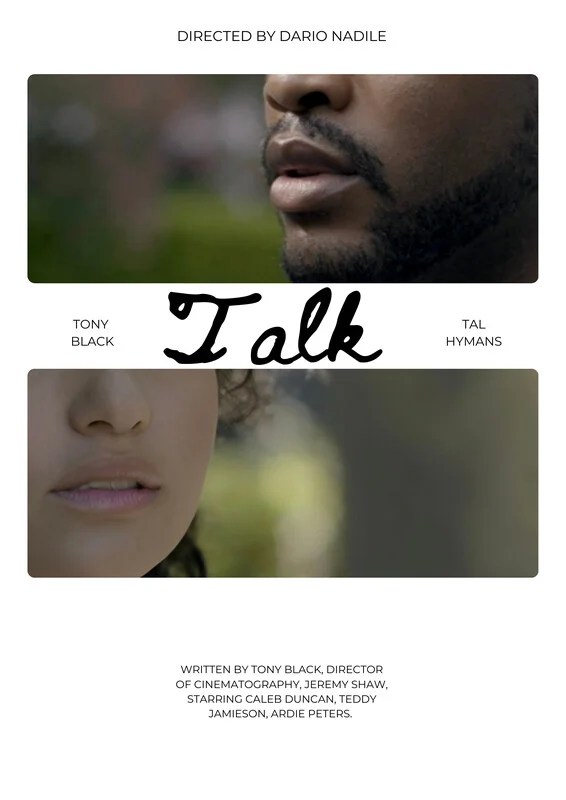
Short Film Review: TALK. Starring/Written by Tony J. Black

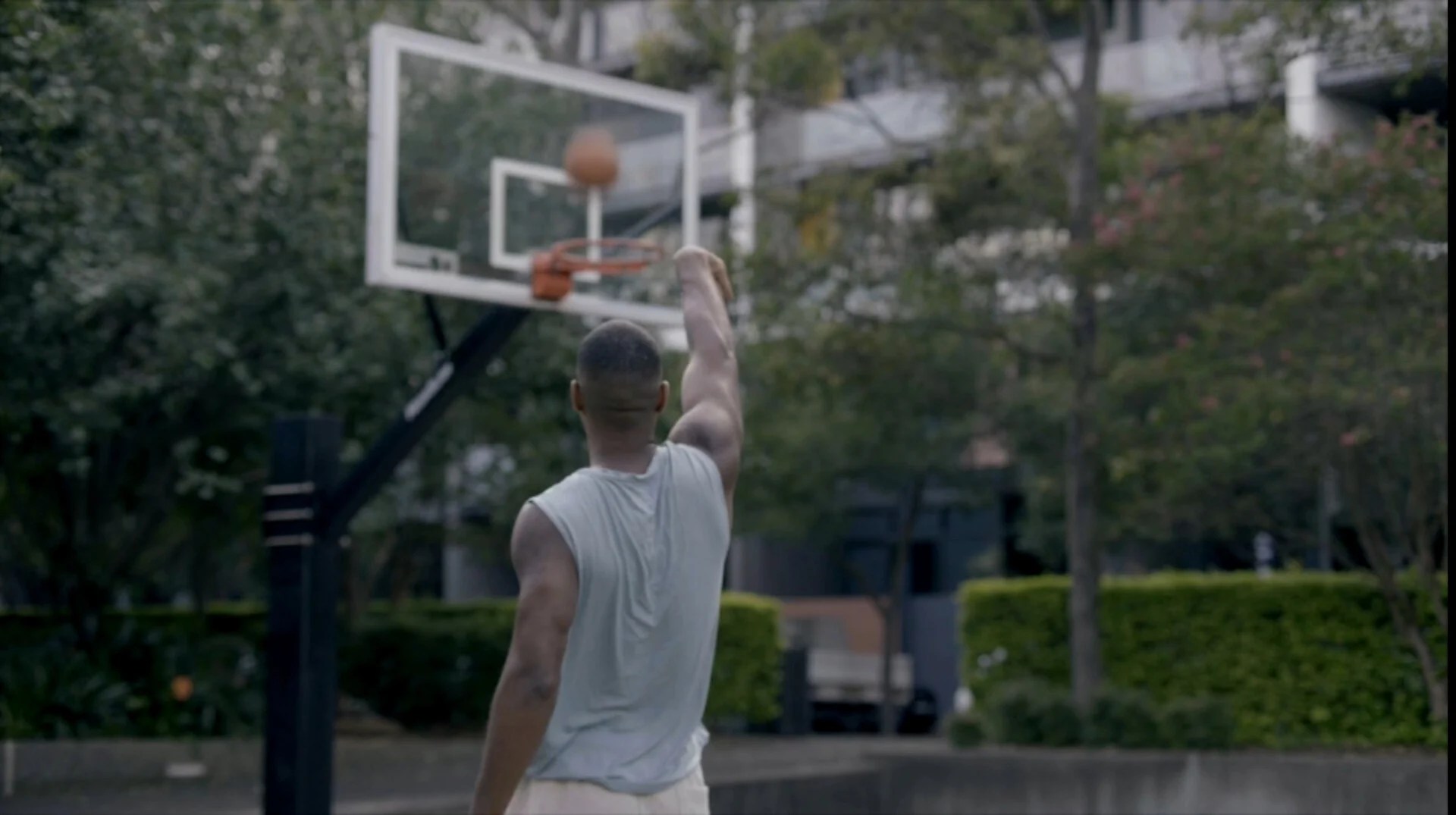
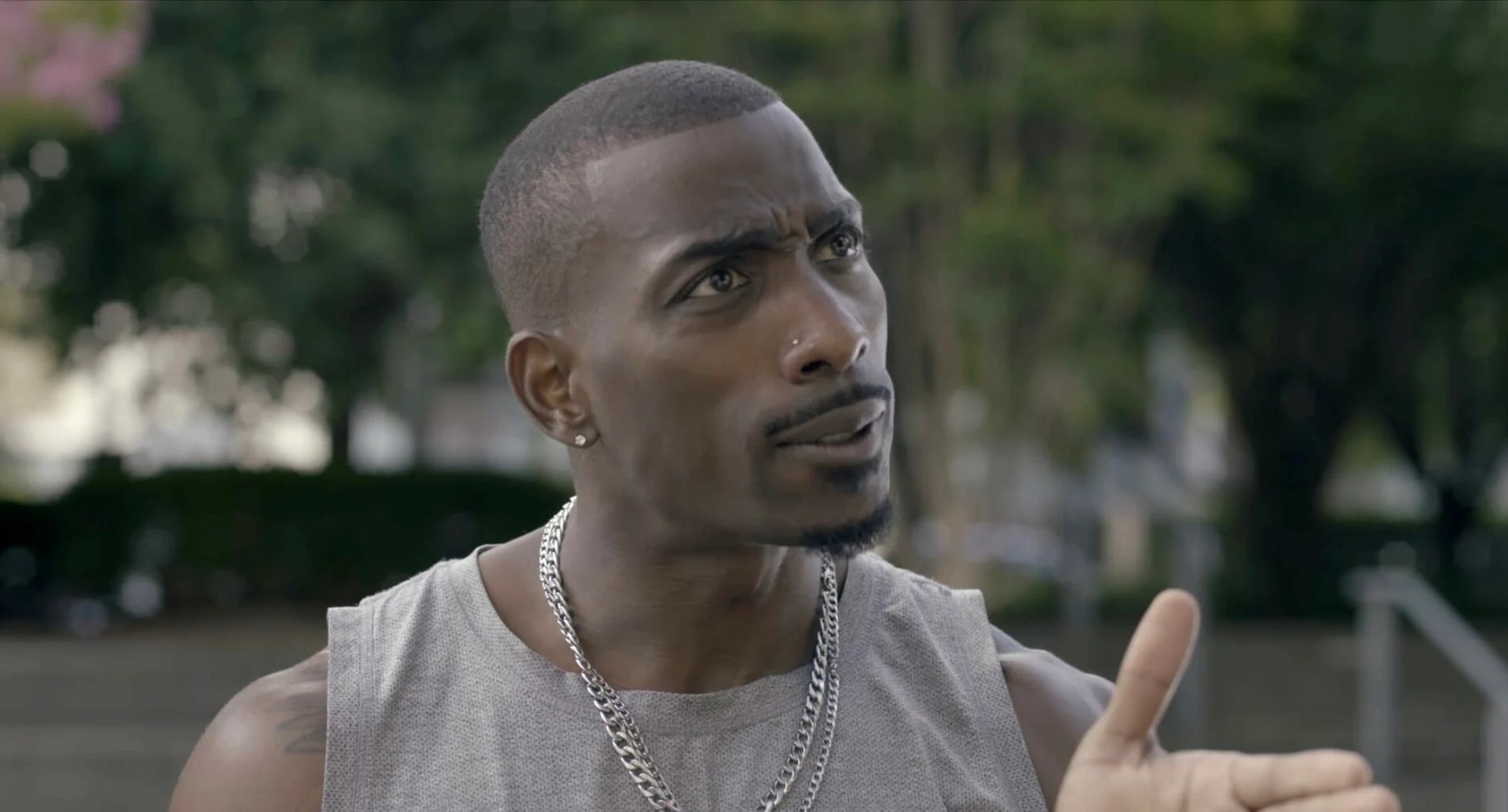
“TALK” starring Detroit’s Tony J Black ( Sting; Apples Never Fall) is a drama delving into the nuances of love, communication, and the mysterious impact of silence. The narrative unfolds through the complex dynamics between characters, exploring emotional connections and the unspoken aspects of relationships. As the story meanders through intimate scenes, it gradually reveals the main character’s struggles with communication and the consequences of having unresolved conflicts in his relationships. The evolving plot touches on isolation, education, and transformation, leaving the audience to contemplate the intricate dance of human connections.

Review by Victoria Angelique:

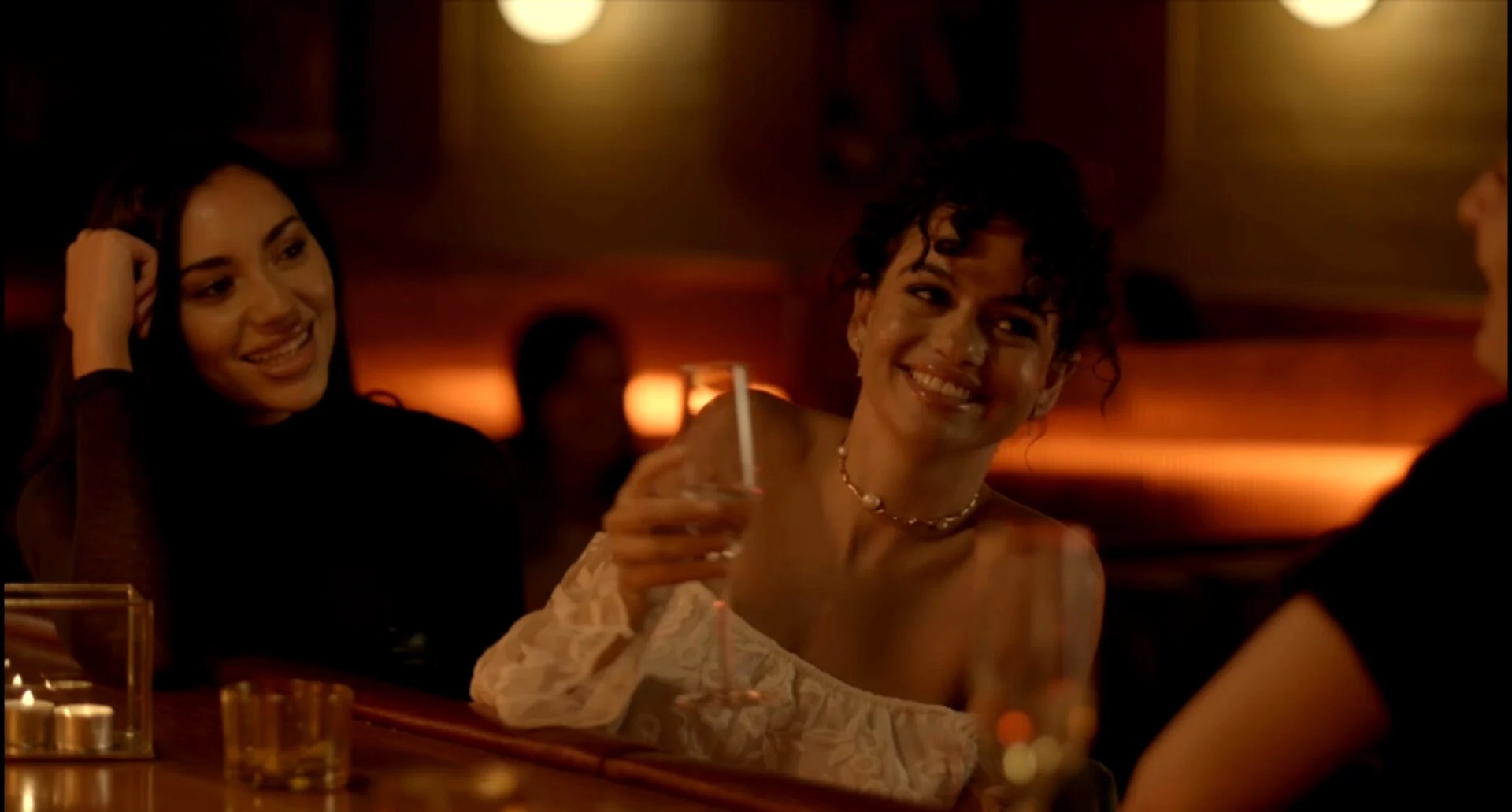
The importance of communication in a relationship is the focal point of the short film TALK. The story begins with Henry and Elizabeth meeting, with her thinking his admittance to being a man of few words is endearing, quickly changing to annoyance once they live together. She wants him to talk when they have disagreements, rather than just shut down and leave. 

Henry has a friend, Eric, that also tries to emphasize how important communication is in a relationship. The narrative shifts focus to begin showcasing a deeper portion of Henry’s personality, how being an introvert can also cause him to shut others out of his life. This leads him to a depression where he can’t even take care of his home, as laundry and trash begin to pile up around him. He needs someone in his life to be able to take care of himself, but that would involve being able to compromise and learn how to talk through relationship issues without thinking it makes a man “soft” as he told John 

The very implication of it talking makes a man weak suggests that Henry’s quiet nature is a learned behavior. Someone taught him that men should walk away, rather than work through solutions. Something in his past indicates that it is what made him an introverted man and that it is better to avoid confrontation rather than fight. 

This film takes another approach that most short films do not, it takes Henry stumbling upon Lisa’s opinion of the fight. She’s doing the same thing with a man named James, trying to figure out where she went wrong. 

This is a beautiful film to show that there are two sides to a fight and that it is possible to resolve them. It just takes honest communication.

Short Film Review: A SILENT CRY. Directed by Donna Weng Friedman

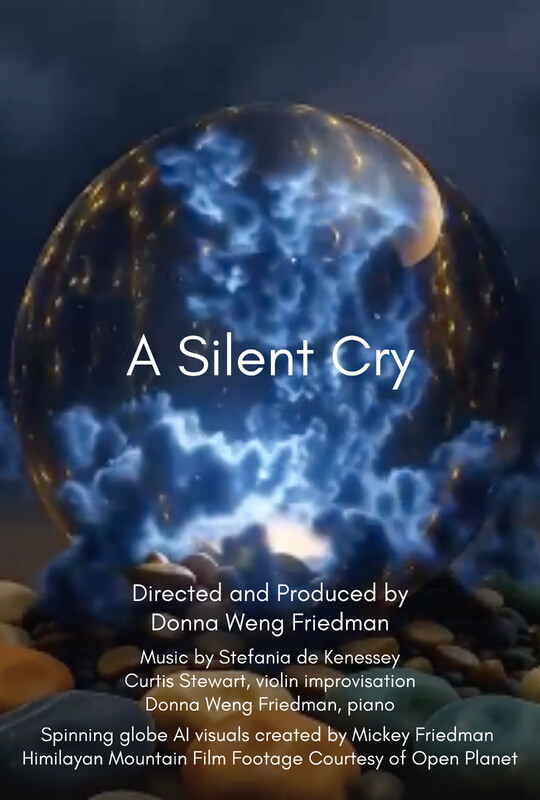
“A Silent Cry” is a two-and-a-half-minute microfilm set in the Himalayan Mountains—one of the world’s most vital and fragile ecosystems. The film uses evocative visuals and music to highlight the urgent need to sustain and protect this unique environment, which is essential for countless species and provides life-sustaining resources for millions of people.

Project Links

Review by Andie Kay:

Donna Weng Friedman created, directed, produced and even played piano in this short film which she has lovingly dubbed “a microfilm” because it’s under three minutes long. In an age where so many films are unnecessarily lengthy I found myself really wishing this film was longer. Donna focuses on these beautiful snow leopards that reside high in the Himalayan mountains.


Their very fragile ecosystem is in desperate need of being sustained and protected. She was able to create this A.I. imagery of a sphere encapsulating a little world, which was a perfect visual to represent the film’s message. While I loved how she did the snow leopard overlay onto the A.I. sphere, I longed for that transition to where you could see the snow leopard fully.


The music for this film was equally as stunning. The song Clouds by Stefania de Kenessey was so perfect for the film and Donna was the pianist. The addition of Curtis Stewart playing violin really added such a great depth to the music so it flowed with the emotion of the film.


I loved the addition of the text at the end of the film giving you more information about these incredible animals. I almost wished that was at the beginning of the film but regardless I thought it was a smart idea to include it. This whole film just captures your heart and your senses, definitely worth seeing.

Short Film Review: REVENGE. Directed by Mari Penteado, Eduardo Campos

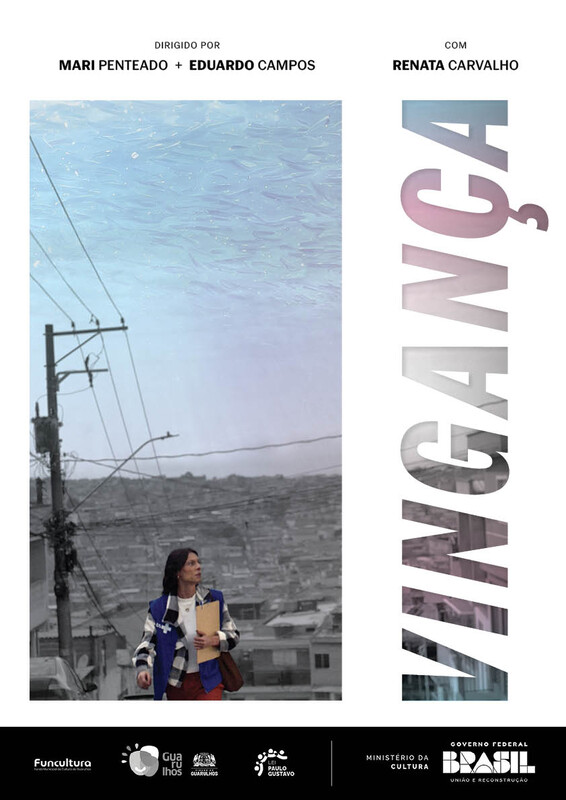
Virginia is a 43-year-old transgender woman who works as a community health agent in Guarulhos, Brazil. The film follows a day in her life, marked by the exhaustion of work, but also by meaningful encounters, dreams, and, above all, the need to live – and resist.

Project Links

Review by Parker Jesse Chase:

Revenge is a poetic, necessary meditation on resistance, care, and the radical act of continuing. In Revenge, directors Mari Penteado and Eduardo Campos deliver a film reclaiming survival not as passivity, but as a radical resistance. This Brazilian short walks alongside Virginia within the intimate, sun-soaked, and deeply grounded in the quiet rituals of a life tenderly lived.


The story centers on Virginia, a trans woman and community health agent in her final week on the job. Renata Carvalho gives a performance that is arresting in its gentleness and care. From the opening scenes such as watering a plant with whispered kisses to tending her space with care and rhythm we’re ushered into a world where softness is not weakness, but armor.

The cinematography is gorgeously observational, allowing long takes to breathe and scenes to unfold with a lived-in cadence. You can practically feel the steam rise from her morning coffee, or the sweat bead as she walks the streets, offering compassion like communion. Water, throughout, is used not just as metaphor, but as active resistance: we are told, “If you throw me into a river, I’ll neither sink nor float. I’ll drink all the water and walk away super hydrated.” It’s a line landing between poetry and politics all at once.


Split into two parts: Thou Shalt Kill Sisyphus and For Whom Every Return Is an Odyssey, the film skillfully layers the mundane with the mythic. Virginia’s days are full of small acts of care: de-escalating a patient in crisis, reminding friends to book their PrEP appointments, offering water to a sister in need. But the weight of her labor (emotional, medical, and political) begins to crack through. Her exhaustion is palpable, and in one devastating scene, she finally admits: “I’m tired. I can’t take it anymore.” It’s a grief that’s collective and individual, political and personal. The title Revenge could be misleading. This is not a tale of vengeance in the traditional sense. There’s no violent retribution, no bloodshed. Instead, the film reclaims revenge as life, as legacy, as refusal to disappear. Virginia’s revenge is her laughter. Her community. Her home. Her survival.


One of the film’s most affecting moments comes in a conversation about trans health access: Even if we’re the perfect version of what trans society wants, it’s never good enough. The dialogue, penned with rare authenticity, threads righteous rage with love and heartbreak. These women aren’t symbols or martyrs: they’re fully rendered humans, aching and radiant.


The supporting cast is wholesome and filled with care. Ayô Tupinnambá as Vicky and Andrea Rosa Sá as Belle bring humor, fire, and ferocity. Their bond with Virginia pulses with truth, especially in a conversation that lays bare the fractures of the systemic failures that shape them.

By the time the film closes, with Virginia sitting on her porch growing older, glowing, and sipping a glass of water it feels like a quiet revolution. A woman who has walked through fire, and flood, and fear, and come out soft. Whole. Still here.


Revenge doesn’t scream. It sings. It mourns. It nourishes. And above all, it dares to imagine a future where trans women not only survive, but grow old.

Short Film Review: Can’t Stop, A Star Trek Fan Production

The starship USS Greenwich Village, commanded by Captain Glenn Dirk, is sent to the Deneb system, historically known as the site of Captain Picard’s first contact with the mysterious and powerful being Q. The crew expects a peaceful scientific mission, full of exploration, discovery, and data collection. Newly appointed First Officer Felipe Scott, descendant of the famous Montgomery Scott, brings a fresh approach to planning and enthusiasm for space exploration.

Project Links

Written & Directed by Radek Belina

Review by Victoria Angelique:


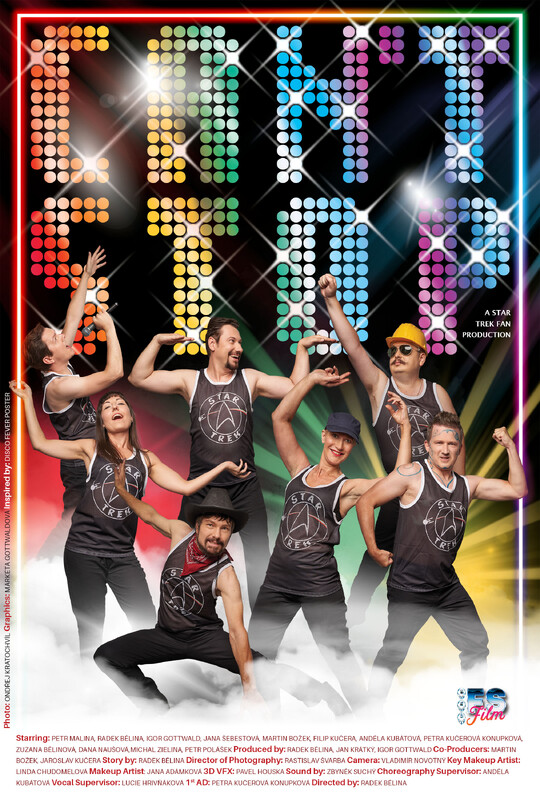
CAN’T STOP is more than just a STAR TREK fan film, it’s a tribute to the classic television show and the band, The Village People. This is a fun film that shows what the true love of fandoms means, to honor that which inspires. 

The majority of fan films are disappointing when it comes to graphics. This film was careful to use high quality graphics for the spaceship and outer space itself. It didn’t look like it was made 40 years ago, as it was clear the filmmaker took time to make the graphics cinematic quality. 

The costumes give to the amazing tribute that the filmmaker and cast gave to STAR TREK and The Village People. They appear to be carefully designed so that they honor both the show and the band when it is appropriate throughout the film.

The story itself is one that people can relate to, whether or not that are STAR TREK fans. The idea of being forced to take a vacation, whether or not you have time, and then still being forced to work during the mandated time off. The Captain on this ship is still being ordered to complete reports, even though he and his entire crew were ordered to take several months off. This is a theme all too common in the real world, which is stressful and makes this film relatable to anyone in the adult world. 

This film, CAN’T STOP, really is the perfect tribute to STAR TREK and The Village People. It shows the love for both through song and dance while telling a story that everyone can enjoy. 

Short Film Review: The Golem of Gabirol. Animation. Directed by Olga Volozova

My puppet film “The Golem of Gabirol” follows the legends about Solomon Ibn Gabirol (XI century, Andalusia, Spain), famous Hebrew poet and philosopher who allegedly created the female golem, for the sake of love…It i is a dramatic story that deals with the mysteries of the Creation and human existence. It has been told from the point of view of the young Andalusian girl.

Review by Victoria Angelique:

The animated film, THE GOLEM OF GABIROL, gives praise to vintage storytelling that takes the viewer back in time. The story feels like a parable that comes straight from scripture, complete with the soothing narration with the voice of a grandmother telling children her tale. It’s easy to sit back and just be swept away as the story takes flight. 

This film takes from Jewish folklore, combining an allegorical tale to retell the familiar creation story of Adam and Eve. The surface story is a woman spotting a man forming a puppet from clay that looks just like her and the woman comes to life. She thinks the man loves this clay woman and is confused over his affections to her. It becomes clear of the allegory to Adam and Eve when figs are picked from a tree, symbolizing the tree of life. 

The whimsical songs that are interspersed throughout the animated film are typical of Jewish culture, but it keeps the attention of the viewer. This is especially true if children are to pay attention and learn from the story. The song at the end is what really ties the surface story to the allegory of Adam’s affections for Eve and Lilith. This would make even the youngest viewer realize what they saw, enhancing their education of metaphors without needing the definition.

The vintage animation style is one rarely seen anymore, but it feels right for this particular story. It feels like scripture coming to life, as if flipping pages. It’s a simple paper animation, with little movement of the character’s on the screen as if reading from a picture book. It’s classic and works when telling stories of religious nature. 

Short Film Review: THREE S3CONDS. Directed by Diana Shield

Arlo, a 17 year old boy struggles to open up and express himself to his counselor. He is haunted by his past actions due to his inability to control his rage and anger issues.

http://galacticbutterflyfilms.com/

https://www.instagram.com/galacticbutterflyfilms

Review by Parker Jesse Chase:

Diana Shield’s THREE S3CONDS opens not with violent spectacle, but with a simple, chilling motif: the relentless tick-tock of a clock. From the outset, time becomes a character as a witness, an accuser, a quiet judge. And in the center of it all sits Arlo (Mark Bellemare), a 17-year-old boy unraveling at the seams in the sterile setting of a therapist’s office. Or so it seems.


This is not your typical therapy session. It’s a descent as we watch a spiraling meditation on rage, violence, and the irrevocable damage that follows it. Shield’s direction wraps us inside Arlo’s mind, where guilt and grief distort time and memory. The atmosphere is claustrophobic. Sofia (played with quiet precision by Kelly Robinson) guides Arlo with guarded empathy, but there’s a palpable tension as though something unseen lurks just beneath the surface.


Antagonism. Threat. Confrontation. Self-security. Domination. These are the words that pulse at the center of Arlo’s confession. As the narrative unfolds, so does the truth of his past: a string of violent acts from the act of bullying, starting bar fights, moments of emotional manipulation, and then… something more. Something irreversible.


The specter of a woman haunts him, but not as a cliché. She’s not a ghost in white. She’s a presence urging Arlo toward getting the help that’s right in front of him. It’s not preachy, but it is intentional: this film is a warning, a plea, and a reckoning.


Alex McDowell’s score heightens the emotional landscape with eerie intensity. In one especially visceral moment, Arlo is yelling, completely consumed by rage, and yet, we can’t hear his words. They’re drowned by the score, but we feel every syllable in our gut. This choice is brilliant. It reminds us that violence, often loud and theatrical, leaves silence in its wake.


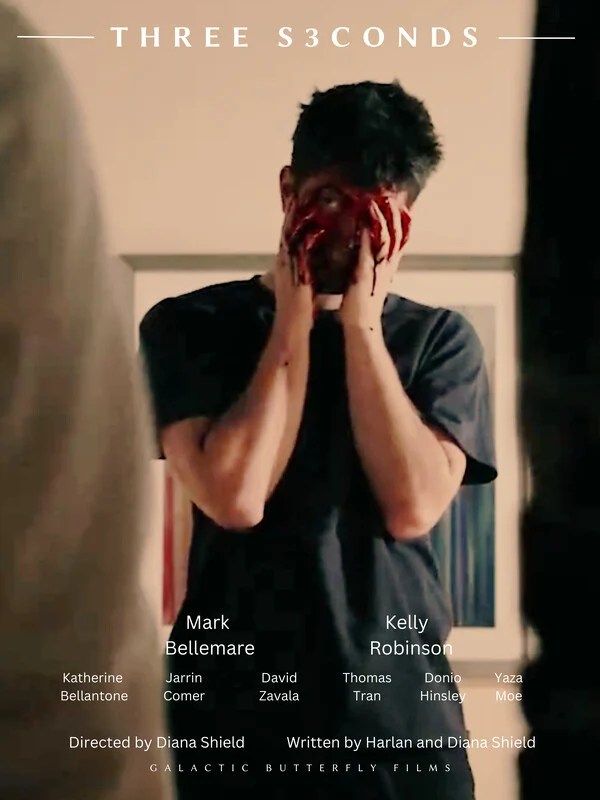
The horror of the film doesn’t come from gore or jump scares, it comes from realization. When Arlo stands covered in blood, we’re not shocked by the violence itself, but by how quickly it all happened. Three seconds. That’s all it took for a life to end and for him to fracture beyond repair.


And then we’re met with silence. Arlo speaks. And we realize we’ve been watching not a conversation, but a mental projection. The clock was never broken. The therapist, in reality, was met with nothing but silence. We, the audience, have been trapped in the storm of Arlo’s mind.


In a final twist of poignancy, Sofia reaches for a bottle of scotch hidden in her drawer, pouring it into a coffee mug. She rewatches a video of their session which reveals a record of silence, of weight she silently carries. It’s a subtle nod to the toll this work takes on those who bear witness to trauma, violence, and remorse.


THREE S3CONDS is a short film with long-lasting resonance. It is a chilling character study and a devastating reminder of how quickly anger can calcify into violence. Both Diana and Harlan Shields have crafted something that lingers like the echo of a slammed door, or the ticking of a clock that no longer tells time but reminds you of everything you lost.


A striking, unsettling film that lingers in the bones. Essential viewing for those exploring the intersections of accountability, mental health, and the fragile line between anger and action.

Short Film Review: (WUR) Wake Up Running. Directed by Anthony Rodriguez

Wake Up Running (06/24) is a poetry collection, an offbeat playlist, ad hoc meditations, amateur bird watchings, post-punk coated gratitude, love letters, and the grittier misadventures of trying to understand yourself while everything continues to happen at once.

Project Links

Review by Andie Karvelis:

Wake Up Running is an eclectic mixture of poetry, pictures, sounds and experiences. Ant Honey is the creator and artist of this film with Bill Mummy composing the score and Angel Jimenez handling sound.


Ant’s vision for Wake Up Running is one of creativity, allowing him to explore his inner thoughts and feelings. The stream of consciousness style poetry has an organic, therapeutic quality while the film’s score had a significant uniqueness. While I enjoyed the artistic expression, I found myself wishing the music sat farther back in the mix so I could hear the voice-over more clearly.

One of the areas this film really shines is the cinematography. The special effect framing and filters really made this look as if it were videotaped back in 1970. That nostalgic atmosphere continues throughout and the camera panning across sections of buildings gives you the feel of whizzing by on a train but it’s that adorable dog that steals your heart and makes you go “Awww” every time they are on screen.