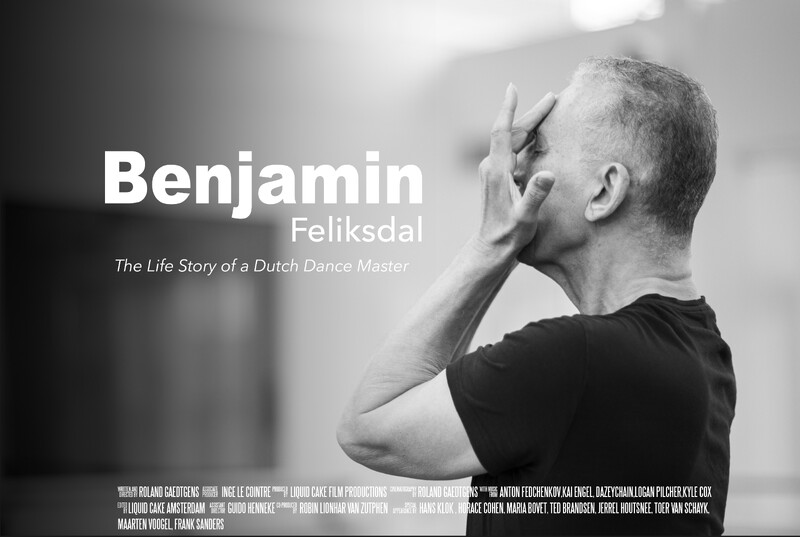
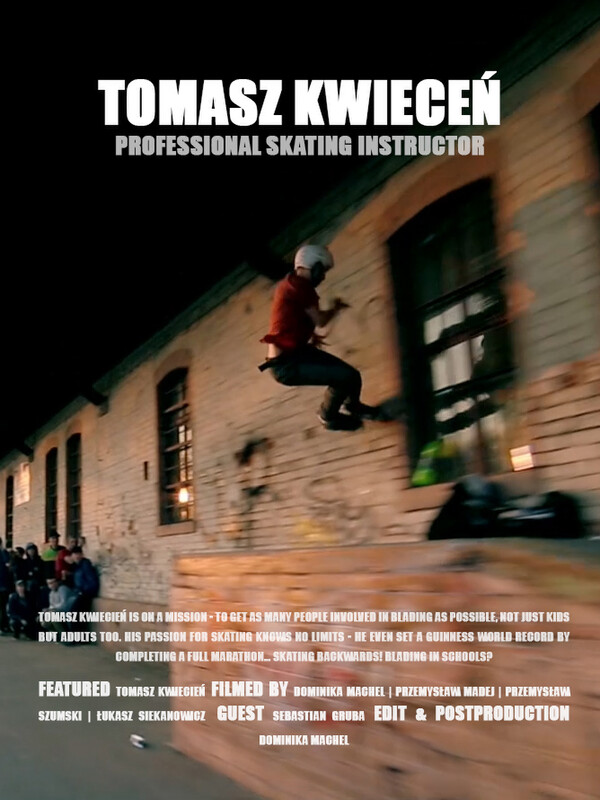
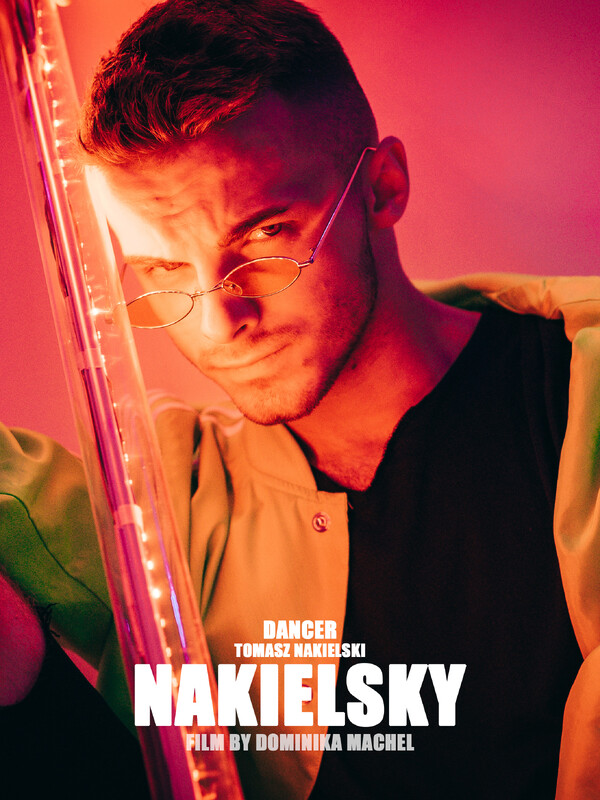
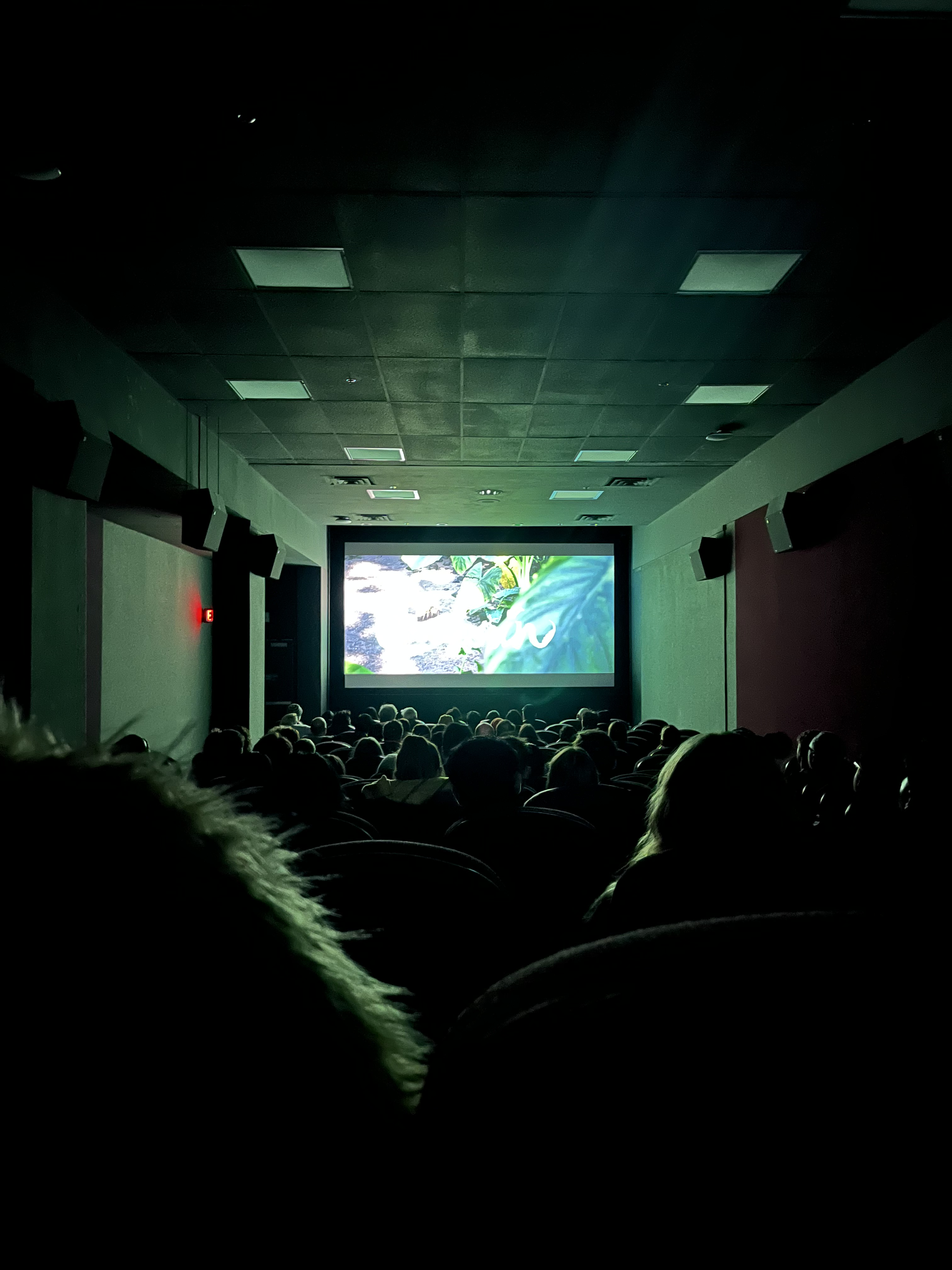
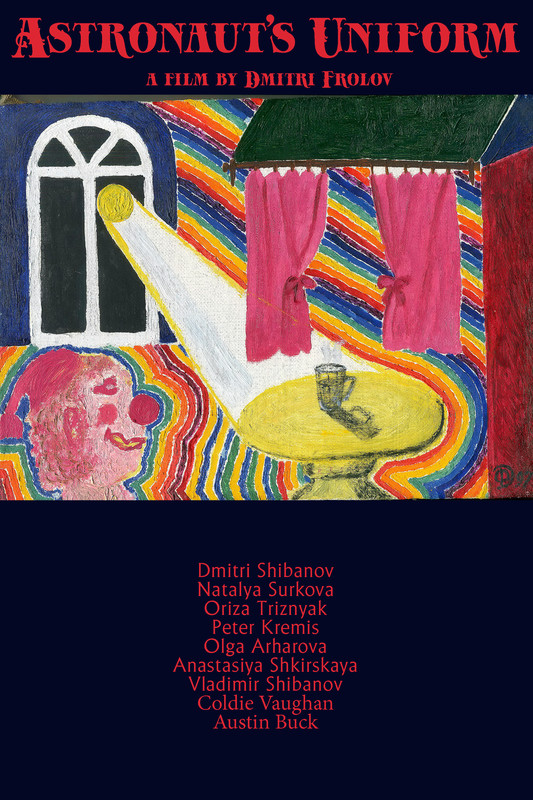
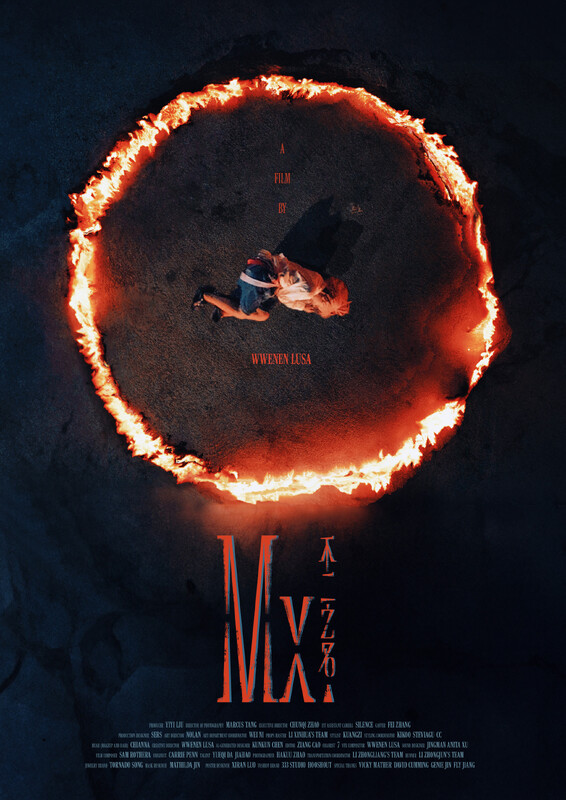
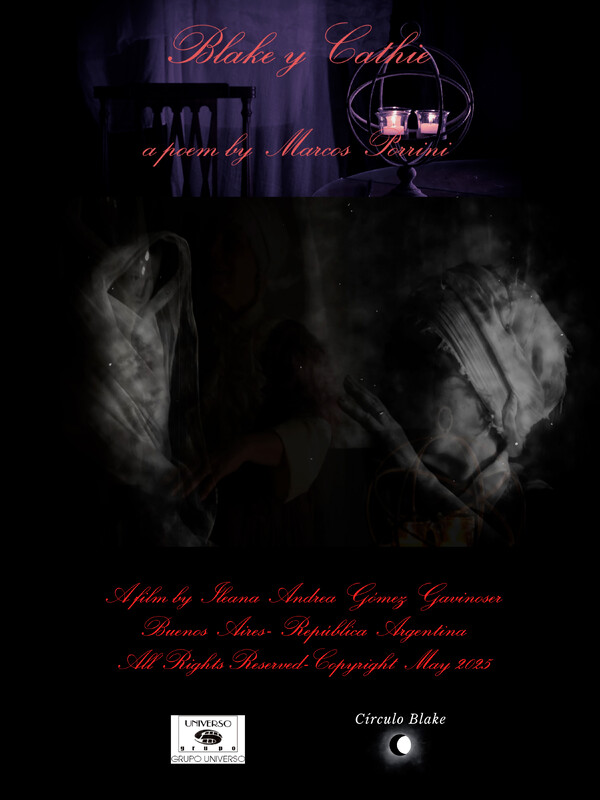
The Razor’s Edge, 67min., Greece Directed by Christos N Karakasis, Χρήστος Ν Καρακάσης The first Greek documentary about the art of Kung Fu by the Director and Producer Christos N. Karakasis with the central figure being the teacher Sifu Kyriakos Eleftheriou.
A storyboard artist, or story artist, creates storyboards for film productions.
I had a blast sitting down with the very talented storyboard artist Stephen Forrest-Smith. Stephen has worked on some of the most popular films in the last 15 years, including “The Dark Knight,” the last three “Harry Potter” films, and last year’s “Star Wars” film.
His candor in the following interview is educational and very entertaining. Enjoy:
Matthew Toffolo: When coming aboard a project on a Hollywood film, how does the process generally work? Do you start with a preliminary chat with the director about themes etc..? How early do you arrive before production? When do you generally exit the job?
Stephen Forrest-Smith: There really is no normal to my job anymore. Every project seems to be different now and asks for a different approach. A film project could call on a storyboard artist at any stage from pre-pre production, ( when the film is trying to get funding) right the way through to post production for VFX, (after principal photography has been completed). The bulk of my work tends to be early in the pre-production taking the first pass at sequences to get the ball rolling on them. Usually I’d start with a chat with a Director, though it could be VFX supervisor or production designer and then work on from there. I used to expect to finish when filming starts but now I might stay almost to the end of shooting then be called back for reshoots and post production.
Matthew: How was your recent experience working on the live-action version of Beauty and the Beast with director Bill Condon?
Stephen: Beauty and the Beast is shaping up to be a really beautiful and wonderful production of the fairytale. I didn’t work directly with Bill Condon but instead was briefed by Tobias A. Schliessler, the director of photography. This doesn’t happen very often but I like working with the DOP as I get to see more of the technical side to the filmmaking process. The film also has many amazing musical routines that were carefully choreographed which needed storyboards added to them. This was fun as I never work on a musical before. I think this is my favourite part of the job – getting to work with and learn from such a variety of very talented people across all the departments.
Advertisement
Matthew: World War Z is such a visual film. How many boards did you do for that film?
Stephen: World War Z was a very troubled production, which stumbled to the finish somehow! I think that film chewed up 5 storyboard artists over its run. I had two spells on that job. The first spell I worked on the escape from Malta sequence. I returned to work with the second unit director the battle for Moscow part which was cut from the movie.
Matthew: When you watch the final product, like Star Wars for examples, and you see your visual designs on screen in live-action, how does that feel? It must be a goose-bump experience.
Stephen: It’s always a strange feeling watching the films that I’ve worked on. Its quite a long time between finishing on them and seeing them in the cinema. I might have worked on two or three films in-between seeing the finished movie. This means I tend to sit there trying to remember what i drew for which part of the movie and if anything made it! Sometimes a sequence will run out just as it was storyboarded then you get a feeling of “deja vu”. Other times its nice to sit back and watch the response of the audience to see if a moment works or not.
Matthew: You’ve been credited as being a “Conceptual Artist” in films like Speilberg’s War Horse. What does that job detail?
Stephen: Conceptual Artist is a cover all title for film illustrators / 3d artists / designers who are involved in the initial visualising of the designs of the film. It can also include producing images on the sets as they are being designed to communicate them to the director and producer.
Matthew: What’s your ideal working experience with a director?
Stephen: For me the most satisfying part of the job is seeing the boards being used on set and being shot from. Making movies rapidly becomes an insanely complicated endeavor and a good set of storyboards is the best way of communicating to all the crew what they are all trying to achieve. A director who’s invested in the boards and wants them to be used, and sent out to the crew is my ideal.
Matthew: You also worked on The Dark Knight, which ended up being an iconic film. Did you expect it to be so popular? What part of the film did you do boards for?
Advertisement
Stephen: I was very excited to work on The Dark Knight, Chris Nolan was my favourite director at the time. It was clear from reading the script that he had a great take on the Joker that Heath Ledger went onto realise. My friend Jim Cornish got me the job. Jim was booked to go onto Harry Potter and the Half blood Prince so he recommended me to come and finish off for him. He had done the bulk of the work when I started so I had amendments to make on his sequences. I then drew the Jokers attack on Bruce Wayne’s apartment and Batman and Two Face’s stand off at the end of the film. Yes I did expect it to be popular as Batman Begins and had been a big hit already.
Matthew: When is does the “I’m now allowed to talk about it” statue of limitations with Star Wars end? When are you allowed to talk about your experiences working on the film and put the storyboards that you worked on for the film in your portfolio?
Stephen: I think this is the most onerous part of the job now. We have to sign NDA’s for every project and they last forever. So I shouldn’t talk to you at all!
Matthew: Do you have a storyboard mentor?
Stephen: The person who not only gave me my break but was the best mentor ever was Stephen Sommers of “The Mummy” fame – His best advice was ‘ don’t give me hundreds of angles but show how few shots I need to shoot the sequence”. I’ve kept that as my philosophy since and i love the rigour of working in this way.
Matthew: What film have you seen the most in your life?
Stephen: The Directors I return to again and again are Alfred Hitchcock, Akira Kurosawa and Sergio Leone. So probably “North by Northwest”, “Seven Samurai” and “Fistfull of Dollars”. Not a moment is wasted in their movies – they are true cinema for me.
Matthew: Do you worked on over 30 productions in the last 17 years. Do you have a favorite working experience?
Stephen: I’m sure I’ve worked on more than that!!! My jobs can vary from a days world to years so I’ve done a lot now. “The Mummy” is still by far my favourite ever film experience as every moment was exciting and new. I’d also taken a big gamble changing my career from architecture to film and the Mummy was my first chance to make the gamble work out. I started with a two week trial then worked on for 9 months storyboarding the whole film on my own. I got to travel to Marakesh and the red sahara. Got to swim in a swimming pool with Kate Winslet and rode on camels in the Sahara. Not bad for a first job.
_____
Interviewer Matthew Toffolo is currently the CEO of the WILDsound FEEDBACK Film & Writing Festival. The festival that showcases 10-20 screenplay and story readings performed by professional actors every month. And the FEEDBACK Daily Festival held online, and in downtown Toronto on the last Thursday of every single month. Go to www.wildsound.ca for more information and to submit your work to the festival.
SWEET DREAMS, 34min., USA Directed by Gary Alvarez Set in the near future when most people can no longer dream, “Sweet Dreams” follows the story of Esperanza, a young woman who’s excited to be a mom for the first time. Weeks before the baby is due, her partner Kiké goes missing. As she searches for him and her savings dwindle, she comes across an opportunity to make some quick money: surrogate dreaming, a new technological advancement which allows her to sell the dreams of her unborn child through a dreamcatcher clinic. After a trial run, Esperanza begins to suspect that the clinic is somehow connected to Kiké’s disappearance.
DESERT INN, 8min., USA Directed by Yuanhao Zhang Arthur, a primitive anti-electronics hillbilly, must confront Jim, the young electronics-enthusiast receptionist at a smart-device hotel in the desert, in order to find a room for the night and defend his traditional way of doing things.
Triggered 2.0, 22min,. USA Directed by Mario Ricardo Rodriguez, Marcus Nel-Jamal Hamm A diabolical madman known as The Director 2.0, with a vendetta against Wolverine, plots a way to take his powers and use him as a distraction as he enacts his ultimate means of destroying all superpowered beings, by pitting him against his one ally, Blade, in a fight to the death. Lucas Bishop must find a way to break free of his control so he can save his friends and the rest of humanity.
Tendon, 13min,. USA Directed by Jannik Ehret Recovering addict Rene sees a creature poison the city’s water supply and has to convince his skeptical sister and her no-nonsense boyfriend to stay away from the tap water.
Scorekeeper: A Star Wars Fan Film, 16min., USA Directed by Roman Santa Croce An Elite Rebel Team infiltrates an Imperial outpost on a mission of securing an asset that has vital information. Unbeknownst to them, they are not the only ones on the hunt.
LEFT, 15min., Egypt Directed by Seif Abdel Raouf “Loay,” a young man invites his friend “Oday” over to help him move into a new house. As “Oday” finishes bringing in boxes, “Loay” asks him for one last favor: to take a specific box upstairs while warning him to avoid the mysterious room on the left. Curiosity gets the better of “Oday”, and he enters the forbidden room, initially finding it ordinary. However, he soon hears unsettling knocking from the room bathroom and discovers that each time he closes the door, the knocking resumes.
JP Cenzo – What You Want (It’s Not Me) Official Story Video, 4min,. USA Directed by Paul Cenzoprano JP Cenzo band music story video, the birth, life and death of a relationship.
The Abiding, 11min., USA Directed by Ally May A lonely woman reminieces about the three great loves of her life while she decides if trying again is a risk worth taking.
She Loves Her John, 7min., USA Directed by Ivan Alejandro Rivero “She Loves Her John” is a story about redemption, the feelings that arise after betrayal, and the thoughts of moving forward.
Sun Poisoning, 13min,. Canada Directed by Chelsea Hana Williams Sun Poisoning is a coming-of-age short film that follows Ellie and Neil – a young couple who begin to realize that the foundation of their lifelong relationship is not as steadfast as they once thought. Coming to terms with losing what was once an anchor point of certainty, they embark on a poignant journey as they navigate towards unfamiliar roads.
The Abiding, 11min., USA Directed by Ally May A lonely woman reminieces about the three great loves of her life while she decides if trying again is a risk worth taking.
Salem Aftermath Sizzle, 2min., USA Directed by Tom Phillips The dialogue in this film clip is derived from the latest research and historical analysis of Ann Putnam. By incorporating newly discovered documents, human behavioral science, and AI, we have reconstructed what Ann likely would have said if given the chance.
Mysterious Moments with Millie Mallory, 3min., USA Directed by Mysti Smith Millie is learning how to solve mysteries on her vlogging channel in the town of Willow’s Run.
OUR FAMILY PRIDE, 2min., USA Directed by Dominic Giannetti, Glen Evelyn Our Family Pride offers a compelling exploration of how different family members are impacted when a father comes out as gay later in life. The story delves into each individual’s personal struggles as they navigate the emotional journey of understanding and accepting their father’s difficult coming out story.
SUPER ME, 3min., Brazil Directed by Marcelo Presotto 1980s. Marcelo is 17 years old and has been in conflict with his mother, an abusive relationship since childhood. Martial arts have become a form of armor for him. But will it be enough to protect him?
SMILE FOR THE DEAD, 2min., USA Directed by Charlie Puritano Trailer for the feature documentary Smile for the Dead
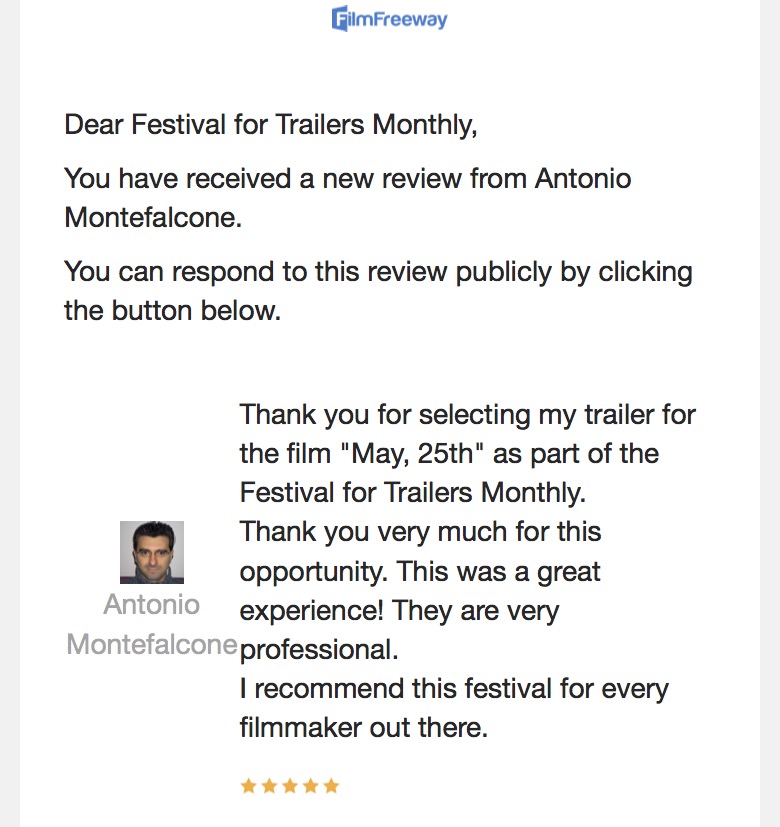
(Not) Awakening, 7min., Italy Directed by Antonio Montefalcone A story tinged with mystery and characterized by disturbing visions of which a woman is prey, in her dual physical and metaphysical representation. Within a natural and a supernatural dimension, reality, premonitory nightmares and traumatic memories have the same enigmatic, distressing substance; and everything intersects and interchanges until every boundary is abolished. The disturbing story is also allegorical, as a metaphor of the limited and limiting human condition.
Apocalypse Death Party, 2min., USA Directed by Russ Emanuel How is the world affected by a catastrophic event? Everyday people live through a government mandated quarantine during a global pandemic while desperate scientists race to find a cure before it’s too late.
Watch the festival NOW for the next 48 hours by signing up for the FREE 3-DAY trial using the link, or go to http://www.wildsound.ca
ELIZA, 11min., USA Directed by Bianca Roth After hitting rock bottom, 23 year old MIA, updates her home AI system to help turn her life around. What start out as small “life improvements” slowly begin to control her.
C-grade SF Movie, 3min., South Korea Directed by Sangwook Ahn Scoffing at prophecies of alien invasion, it wasn’t a grand space fleet that drove humanity to the brink of extinction. It was the cataclysm of Earth itself – skies choked with volcanic ash, mutant viruses running rampant – and the AI’s ruthless biochip surveillance network strangling survivors in ruined cities.
The Dandelion Girl, 19min., Canada Directed by Rogan Loves Mark, a middle-aged man encounters a young, mysterious woman, while staying at his cabin, who claims to be a time traveler from the future. Over the course of a few days, Mark and the young woman, Julie, begin to form a budding romance with one another. Mark is unhappy in his life, in a stale marriage, where he goes through the motions of living and work.
The Red Market, 9min., USA Directed by Christopher Matthew Spencer Zephyr Sage, drowning in debt, turns to the Global Organ Donor Exchange to sell his body parts. Facing ruthless creditors and a manipulative loan shark, Hyacinth, he treads a perilous path where each choice could cost more than money.
The Voice of Fear, 5min., Brazil Directed by Henrique Arruda In how many worlds has your fear trapped you? This film may not give you an answer, but it’ll show you some of mine.
Michael Simmonds is a wealth of knowledge when he chats about his love of cinematography. He is a man who is constantly looking into the future and only looking back when inspiration is needed. He is a rare talent who is able to move seamlessly from documentary to TV to feature films. It was an honor to chat with him.
Matthew Toffolo: What are the biggest things you learn when you work on documentaries that help you when making live action feature films and TV shows?
Michael Simmonds: There are many ways to approach shooting a Verite documentary. Sometimes you need a complete and editable scene every ten minutes. Meaning, you are constantly getting CU’s, inserts and establishing shots over and over again, regardless of what is happening. Or you can approach a doc like you would going fishing–you stay back with the camera and drift around until something interesting happens and let that lead the way for the camera.
Shooting a documentary makes you figure out coverage really quickly. All storytelling needs to have shot size variation to show the audience what is “important”. Verite documentary is basically filming a live event. The people move around and interact with other people and space and you have to make visual sense out of it for the audience. In narrative you can use this technique by blocking a scene as an “event” and keeping the blocking of the actors “loose”. This works well in chaos scene with lots of people. The actors perform the “event” and the camera films the scene like a doc, meaning there is no formal shot list or “plan”.
PHOTO: Michael DP’d the landmark film “Project Nim”:
MT: Out of all of the projects you’ve worked on, what film are you most proud of?
MS: I only focus and think about whatever I am currently prepping or shooting. I try my hardest and show up to set with all the energy and focus I can muster each and everyday. As for the final product, I often joke that I would enjoy filmmaking just as much even if the camera was never recording. The finished film is of little interest to me aside from a sense of curiosity…
As for “what of my work can I watch and enjoy”; that would be “Plastic Bag”. It’s a short film about the life of a plastic bag. It’s a lot of fun to watch and I have fond memories of making it. The filming of it involved lots of throwing bags into the air and shooting leaf blowers at them, it was ridiculous so we laughed a lot.
MT: You DP’d the entire 2nd season of Vice Principals. I heard that most scenes were improved by the actors. How is that experience working on a set where you don’t know what’s going to happen take after take?
MS: I don’t think most of the scene were improvised. It wasn’t like a Judd Apatow film where you can feel the dueling two camera set up and the actors riff off each other. VP had very tight scripts and David Gordon Green would create film level blocking. The actors definitely added to the dialgue, but not any more or less than other projects I have been involved with. On a comedy, even if the actors improvise, its in regards to dialogue and not their actual movement, so it does not effect me. I alwas operate with headphones on so I can hear the actors perfectly and I can anticipate their movement.
Photo: Danny McBride vs Walton Goggins in “Vice Principals”:
MT: Do you have a Director of Photography mentor?
MS: I would have and currently would want a DP mentor but unfortunately I never had one. Amir Naderi was a director I worked with early on who taught me about composition and framing. He has a very sharp eye and was always pushing for a perfect take. Ramin Bahrani and I would discuss story structure endlessly and I still read Alexander Mackendrick’s “on filmmaking” every year. Understanding story is the foundation to understanding how to film a scene.
I learn more and more about lighting on every job. In my opinion lights are the hardest medium to work with. They are like painting with water color paint. You never really know what they will do. There are so many variables that will effect the way they function in the photography.
MT: What do you look for in your director?
MS: I want a good collaborator in a director, someone who is not afraid of communication. Good ideas come from lots of ideas. Although a director needs a “vision” they also need to explore all possibilities in a scene. They must be a leader and exciting, but egoless. Their decision process should not be based on fear, which is rare. Most people make decisions based on fear, which makes for a weak film. Bold choices make good films.
MT: What do you think a director looks for in their cinematographer?
MS: Fuck if I know…!
It’s a myth that directors alone choose a D.P. or make any big hiring decision alone. A director might push for someone they have worked with or they could advocate for someone they want to work with but all decisions usually have to go through a producer, financier or studio. Usually a director would be given a list of people to choose from… Of course on more “auteur” films this is not the case.
How do you get on that list that gets handed to the director is a whole other question…
MT: Ideally, how much preparation do you like to do before you begin principle photography? Do you like working with storyboards?
MS: Prep depends on the scope of a film. Nerve needed lots of prep due to the logistics of the stunt sequences. You need a storyboard since so much of that work is a “cheat” and takes place in a “fictional” space. By fictional space I mean that the space as presented on the screen does not exist in the real world. For instance a snorkel lens shot that feels “inside” Dave Franco’s helmet does not need to be filmed on park ave south. A storyboard also lets you understand what shots need the actual actors opposed to the stunt people.
A good stunt sequence is a lots of micro stories that fold into each other and those have to be mapped out.
White Girl didn’t need any storyboards since the film didn’t require cheating any spaces or stunt sequences… the front door to the protagonists apartment was actually the real front door… A film like white girl doesn’t even require a shot list. We would block out a scene and film it as a moving master and then do some pick up shots for specific moments.
Photo: David Franco and Emma Roberts in “Nerve”:
MT: Where do you see the future of camera/lighting technology in film?
MS: Although there is a romance and nostalgia for film negative, digital imaging has really improved lighting for movies. We are much more comfortable with underexposing now than in the past. Of course Savidis, Khondji and Willis did great underexposing and making bold lighting choices, but now you see modestly budgeted TV shows that look bold and interesting.
Focus pullers often use large HD monitors to pull focus which has allowed for super shallow depth of field that didn’t exist when I started out.
I have no idea where imaging will be in 10 years but the technology has been a mixed blessing with lots of advantages.
Although there is a lot of new technology coming out for camera support, no one product has replaced an older one. The movi did not replace the steadicam and the steadicam did not replace the dolly… its just more tools to use.
MT: What film, besides the ones you’ve worked on, have you seen the most times in your life?
MS: Probably something like RepoMan or something culty like the Warriors. Or maybe Wong Kar-Wai’s Fallen Angels since it was such a game changer in how movies looked. I am often going back to watch Danny Boyle’s work. I truly believe he is the best populist filmmaker working right now. He isn’t scared of technology and he is keeping up with how people currently read images…. Currently I’m not interested in filmmakers that are referencing the past.
But when I am in a hotel room I like to watch something like Runaway Train.
MT: Where did you grow up? Did you always want to be a cinematographer?
MS: I grew up in Scarsdale, NY. It’s a suburb 30 mins from the city.
Most filmmakers have a romantic story about a super 8 camera etc… My history wasn’t like that. My eyes have always been super sensitive to light. I get migraines in the sun and I was always particular about lighting in rooms, even at a young age. I was strict about when a household light would be turned on and which ones. I also liked to boss my friends around…. These qualities probably lead me to my profession.
Around the age of 18 I wanted to go into filmmaking. I started out at Hampshire college but there wasn’t enough of a focus on commercial filmmaking, so I transferred to a school of visual arts and started to focus on cinematography.
Before that I wanted to be in a rock band…. But I didn’t like staying up late and carrying equipment. Little did I know that cinematographers stay up all night and have a heavy camera on there shoulder all the time!
_____ Interviewer Matthew Toffolo is currently the CEO of the WILDsound FEEDBACK Film & Writing Festival. The festival that showcases 10-20 screenplay and story readings performed by professional actors every month. And the FEEDBACK DAILY Festival held online and in downtown Toronto on the last Thursday of every single month. Go towww.wildsound.ca for more information and to submit your work to the festival.
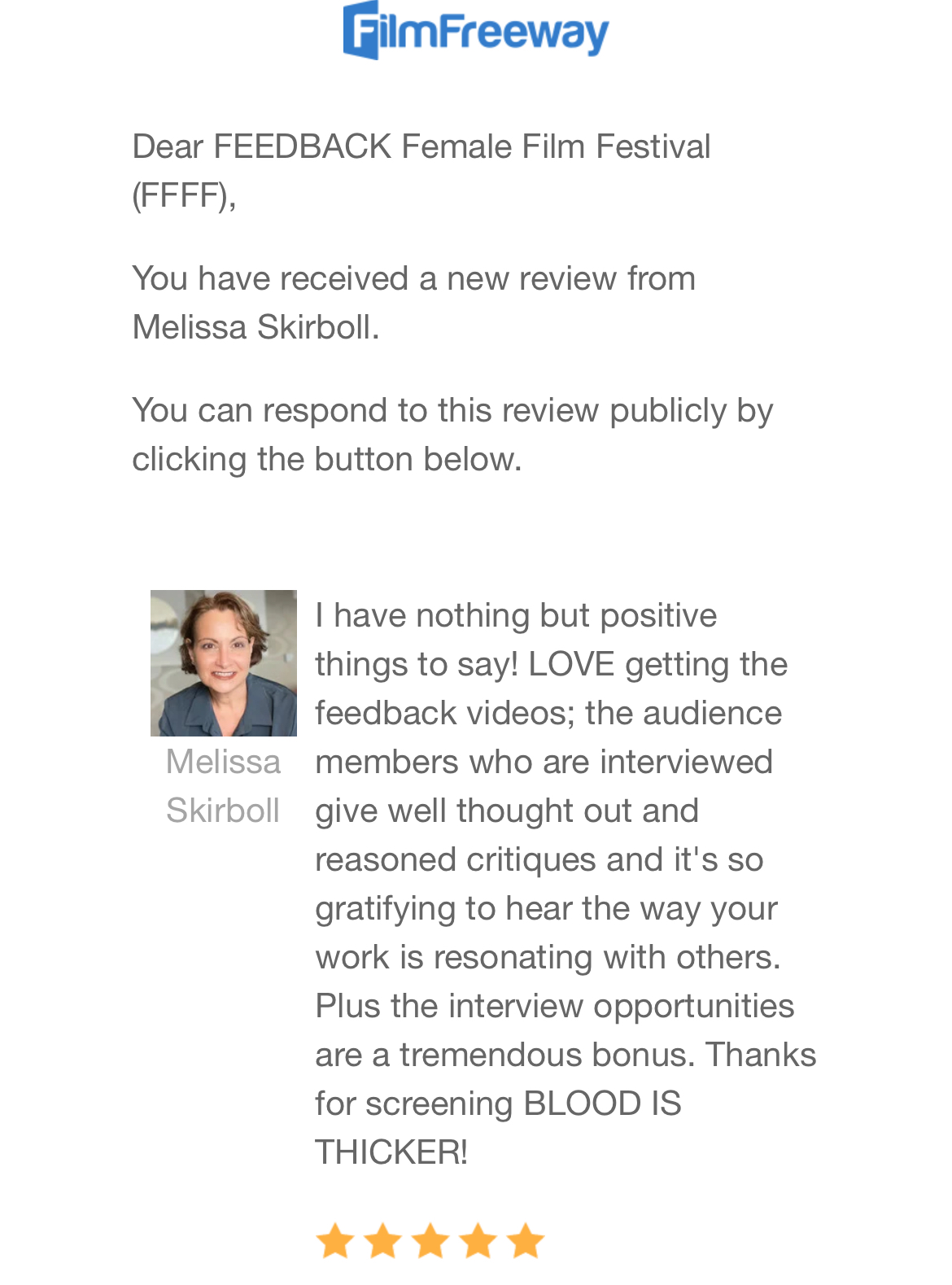
The Chicago Feedback Fest provides a uniquely satisfying experience for emerging filmmakers! This is evidenced by the feedback videos they share on the website that showcases our little movies. Folks like us need folks like them!
Chicago Feedback Film Festival is an amazing filmmaker friendly event!The program was well organized, and receiving video reviews directly from the judges was great, and helpful! One of my favorite part of festivals, as a filmmaker, is connection with the audiences. The video review, and online interview create a unique and memorable experience.
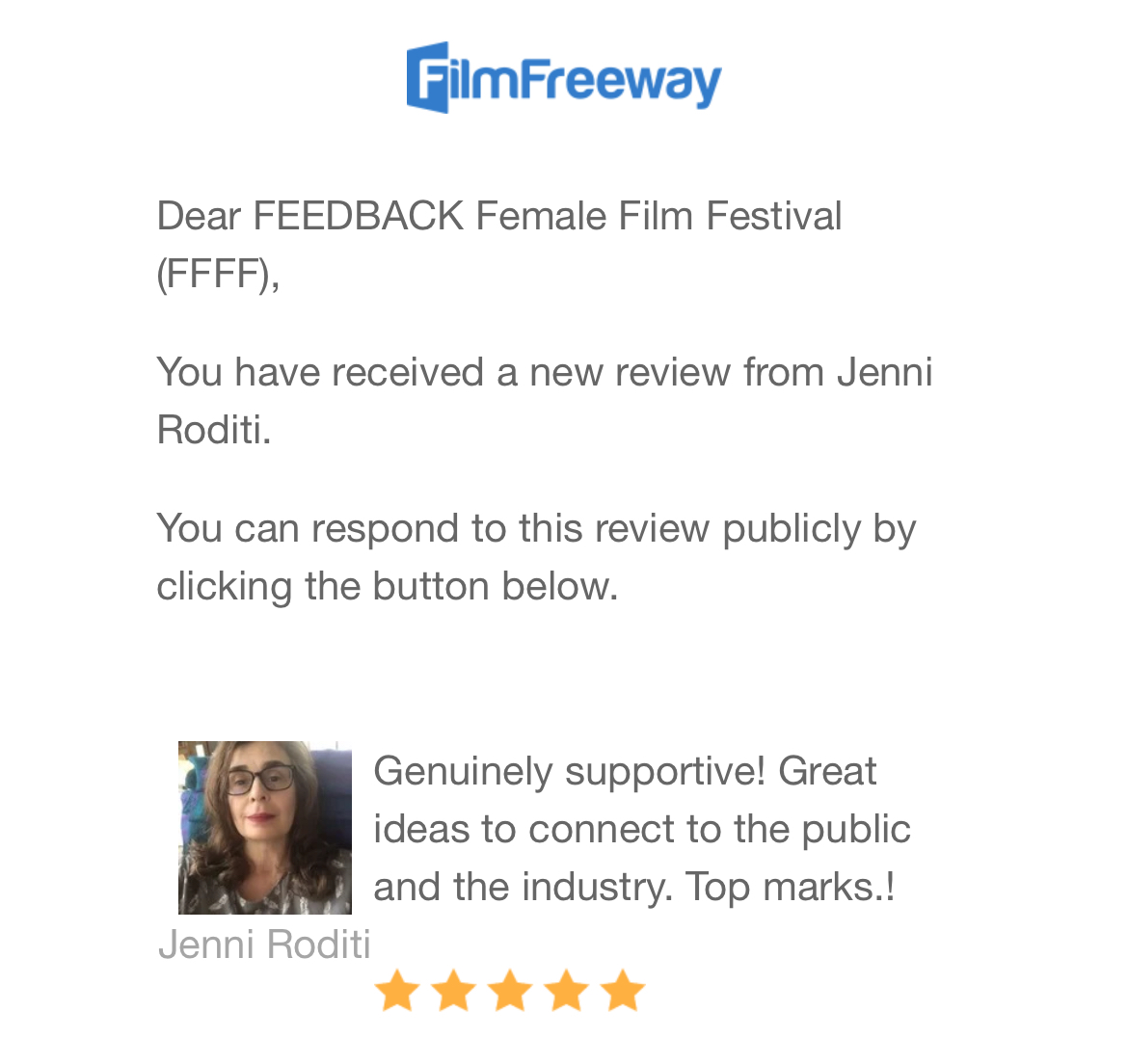
A great festival with excellent team and communication. We are thrilled that “Tillie” won Best Short Form Short Film. The feedback video is great. It inspires us to keep on making the films we love. Thank you.
I was really surprised to me how they handled the whole festival. It´s absolutely authentic, the videos they produce to feedback is absolutely valuable, the platform they work on is a great place to find out more film works. It was a really nice experience to be at the Chicago Feedback film Festival!!!