In war-torn Syria, a troubled woman, her idealistic son, and her mentally challenged cousin take in a wounded Western aid worker, unknowingly igniting a chain of deadly consequences that forces them to confront their pasts, their beliefs, and the brutal realities of survival.
Get to know the writer:
1. What is your screenplay about?
The need to face one´s worst fears if any redemption or peace are to be found.
2. What genres does your screenplay fall under?
Drama.
3. Why should this screenplay be made into a movie?
It deals with the many traumas and desecrations of war, it delves into the divisions and differences from which conflicts spring and it evokes the love and common humanity that is our only hope.
4. How would you describe this script in two words?
Poignant. Inspiring.
5. How long have you been working on this screenplay?
Researching and imagining, for over 1 year. Planning for 2 months. From first words to completed draft, 4 months.
6. How many stories have you written?
Three.
7. What motivated you to write this screenplay?
The ravaging of the lives of civilian populations in Syria, Lebanon, Gaza, to name a few. A film from Syria (The Day I lost my Shadow). A film from Syria, Iraq, Kurdistan and Lebanon (Notturno). And a film from Afghanistan (Three Songs for Benazir). The similarity of the landscape (mountains and olive groves) of the place I live to the landscape of Northern Syria, where my story is set.
8. What obstacles did you face to finish this screenplay?
Just the usual leaping with faith, being prepared to face my own mediocre work and to find a path to better, but that’s the process in any script that’s finished in draft and worthy of continued development.
9. Apart from writing, what else are you passionate about?
Photography – large format film photography particularly and portraits specifically. The landscape of the human face and all of the complex character that lay behind it.
10. What influenced you to enter the festival? What were your feelings on the initial feedback you received?
A longstanding, highly-rated festival in Canada, outside of the LA epicenter – more receptive to indie film and not adverse to the drawing of main characters of Muslim faith.
11. What movie have you seen the most times in your life? Fargo.
Shesafella, a modern twist on Cinderella, is about a kind-hearted teen forced into servitude by a ruthless stepmother and closeted stepbrothers, who defies the odds with help from her butch fairy godmother. At a Ball, she wins Princess’s heart but vanishes, leaving behind a single Doc Martens shoe. Princess’s Instagram posts spark a citywide search, and Shesafella must outsmart her family, reclaim her true self, and fight for her happily ever after.
2. What genres does your screenplay fall under? Fantasy, romance, fairy tale, LGBTQ
3. Why should this screenplay be made into a movie? Cinderella movies (Ever After, Ella Enchanted, A Cinderella Story) are beloved for their timeless themes: rags to riches, kindness over cruelty, and finding one’s voice. But they’ve all followed the same blueprint—a girl meeting a boy. Shesafella flips the script. It’s a girl meeting a girl, in a joyful, queer reimagining that feels both long overdue and perfectly timed. This is the inclusive fairy tale audiences have been waiting for.
4. How would you describe this script in two words? Queer fairytale.
5. What movie have you seen the most times in your life? Working Girl.
6. How long have you been working on this screenplay?
Six months. Before that it was a short story that I edited (off and on) over a few years.
7. How many stories have you written? I’ve written three books—What Papa Told Me, 90 Lessons for Living Large in 90 Square Feet (…or More), and Half In. Shesafella is the first story in my Fancy Tales series, a collection of reimagined fairy tales with an LGBTQ twist. Other titles include Peter Pan Zee, Jack and the Bad Stock, Sleeping Booty, Beauty and the Butch, Little Red Rider in the Hoodie, and more.
8. What motivated you to write this screenplay? I’ve always loved theater and originally imagined Shesafella as a play—maybe even a musical. Then a friend mentioned that a streaming service was looking for fairy tales with a twist and encouraged me to write it as a TV script. So I did!
9. What obstacles did you face to finish this screenplay? It wasn’t so much obstacles as it was self-doubt—wondering if I was “doing it right,” especially since this is my first screenplay. But I trusted the story and kept going. Plus, it was fun and challenging.
10. Apart from writing, what else are you passionate about? Family, cycling, reading, stand up paddle boarding, theater.
11. What influenced you to enter the festival? What were your feelings on the initial feedback you received? I entered the festival because it welcomed the genre I’m working in and felt like a great fit for Shesafella. I was genuinely thrilled with the feedback—it was thoughtful, spot-on, and insightful. That fresh, professional perspective highlighted what was missing, sparked new ideas, and ultimately helped me make the script stronger.
When the paths of the 11th Pennsylvania Civil War regiment and an American Staffordshire Terrier pup intertwine, the men of the 11th’s lives are changed in ways they never could’ve predicted.
Get to know the writer:
1. What is your screenplay about?
It is about a dog named Sallie who is the mascot of the 11th Pennsylvania Infantry Regiment of the Civil War. We follow her throughout the entire war and see the war through her eyes as she forms bonds and relationships with the men of the 11th. It is also based on a true story.
2. What genres does your screenplay fall under?
Drama, family and history.
3. Why should this screenplay be made into a movie?
This screenplay should be made into a film because it shows war from a unique perspective that not many others see very often, the point of view from a dog. It also demonstrates why dogs are man’s best friend, how they are willing to be there for us during our darkest moments.
4. How would you describe this script in two words?
Emotional, heartwarming.
5. How long have you been working on this screenplay?
I first found out about the story of Sallie in January of 2023 when I visited the Gettysburg battlefield myself. And from that moment on I had been in my head kind of envisioning it in the form of a screenplay, and really thinking it out. I then began putting my idea down onto paper in November. I did not finish it for approximately 5 month. So I began thinking of the story in January of 2023 and finished writing it in April of 2024, so in other words, about a year and 4 months.
6. How many stories have you written?
This is my first screenplay.
7. What motivated you to write this screenplay?
My motivations for writing the screenplay are many. My love for history, particularly Civil War history, my love for dogs, and my love for storytelling. I loved the raw emotion I felt when I first learned of Sallie’s story and wanted to pass that on to other people, and show just how remarkable dogs truly are.
8. What obstacles did you face to finish this screenplay?
Without a doubt the number one struggle I had in writing this screenplay was remembering the formatting for screenplays. Remembering to remain in the present tense, no “ing” words, and also remembering not to write in the characters emotions. I’ve been taught that when you write in the characters emotions, you limit the freedom of the actors/actresses, which therefore leads to stale or even forced acting performances. I guess what I’m trying to say is learning to trust the actors was very difficult.
9. Apart from writing, what else are you passionate about?
I have been told I have a number of passions. I obviously love the art of filmmaking and screenwriting. In addition to loving film I would also say I am fairly into theater, including plays and musicals. However I would also say I am quite into travel (have been to 25 states as well as 10 countries). I am also a massive history nerd, with the American Civil War being one of my favorite events to study (though I do also love learning about the American Revolution, the Napoleonic Wars WWI, WWII, and the Cold War). I am also a massive basketball fan, and Michael Jordan is by far my favorite athlete of all time.
10. What influenced you to enter the festival? What were your feelings on the initial feedback you received?
I think one of the factors that influenced me to enter the Feedback festival is the feedback aspect of it. In this line of work, critical and constructive feedback is crucial, especially if you have goals like me, of making it to Hollywood and making films professionally. Also Chicago is one of my favorite cities I have ever been to.
11. What movie have you watched the most times in your life?
The film I have seen the most times in my life is Christopher Nolan’s “Interstellar,” the film which taught me that films are more than just entertainment, they are an art form!
Summary: On the run from a job, Steph finds herself in danger and a target. She falls and lands under a Boulder which traps her for 2 days. While trying to survive as long as she can for help to arrive, she reaches an unpleasant realization.
Get to know the writer:
1. What is your screenplay about?
This single location thriller is about a woman named Steph who is forced to confront the choices she’s made in life – lying to her biological son about who his mother is, leading a life of crime because it was the easier path to follow – all while trapped under a rock as hired thugs try and find her.
2. What genres does your screenplay fall under?
Action. Thriller. Single location.
3. Why should this screenplay be made into a movie?
Not only is it a thriller, but I’m trying to say something as well about the decisions that we make as we move along in our life.
4. How would you describe this script in two words?
Claustrophobic. Emotional.
5. How long have you been working on this screenplay?
I got the idea over 15 years ago, set it in an office building, and struggled to make it work. Then in the summer of 2021, I threw everything I had written out the window. Decided to start from scratch which included changing the location to the deep woods. Wrote the first draft in 2 weeks. Since then, I’ve done a couple of polishes and here we are.
6. How many stories have you written?
Again, no idea. I wrote my first screenplay in 1988, my first stage play in 1989, went through a poetry phase in the 90s (are those stories?), have written a fair amount of screenplays, a couple of stage plays, shorts, and so on. In the last few years, I’ve been writing more short stories. Just a few weeks ago, I wrote my first microfiction piece – 98 words. That was an interesting challenge.
7. What motivated you to write this screenplay?
It started as a writing challenge. Could I make a single location script work? There’s a Canadian film called “Cube” which I love that really got me thinking about writing something like this. All I needed was a strong character to anchor the story, which led me to Steph.
8. What obstacles did you face to finish this screenplay?
When I first had the idea, I set it in an office building. Nothing worked, nothing felt right. It was a disaster. So the story sat and percolated in my head for many years. Then in 2021, I quit working for a year and I revisited this idea, starting from scratch.
9. Apart from writing, what else are you passionate about?
Dogs, cycling, books, movies, new adventures, stories in general. People. I also like helping people – I’ve taught and mentored throughout my life. I also like challenges – whether it’s a 24 hour bicycle race or writing a short story in under 100 words.
10. What influenced you to enter the festival? What were your feelings on the initial feedback you received?
I’ve gotten emails about your festival for years, but since it’s a female festival, I thought it wasn’t for me. Then last fall, I emailed you all and asked if I could enter since my lead character is a woman.
11. What movie have you seen the most times in your life?
No idea. In the last few years, “Apples” which is a Greek film that I love; “Interstellar” or “Everything Everywhere All at Once.” Just a few weeks ago, I went to the laundromat where “Everything Everywhere All At Once” was filmed. That and Nakotami Plaza are the only two film locations that I have actively sought out.
A highly sensitive, two-spirit person living above their adopted parent’s appliance store has their life turned upside down when they learn their two “stillborn” babies may still be alive (now teens) and that their recurring childhood nightmare of the alien abduction of their birth parents may have truth to it.
Get to know the writer:
1. What is your screenplay about?
After learning there may be something behind the recurring childhood nightmare of her parents’ alien abduction, and that two (supposedly) stillborn IVF babies born to them may be alive (and now teens!); a two-spirit person sets out on a quest for the truth and to reunite.
It’s about the importance of truth-telling and creating a family of choice. It’s about the folly of “Otherism” and that “difference” is not bad; but represents strength.
2. What genres does your screenplay fall under?
Its four quadrant appeal is based in genre-bending and that it defies the gravity of heavy-handed tropes. It’s SciFi, but also Family and Road picture combined. It contains conspiratorial elements, so Intrigue and Action-Adventure are apropos genre, as well.
3. Why should this screenplay be made into a movie?
It introduces contemporary elements that have not been seen in this way. It employs cinematically commonplace genre, character, and story elements while introducing contemporary themes in a way that make them more palatable for general audiences, wider audiences.
More than ever before, Otherism has become the weapon of the wealthy; tearing families, communities and cultures apart. The story emphasizes the importance of embracing those who are labeled, “Alien” as our neighbors, not enemies; Potential allies, not monsters.
4. What movies have you seen the most times in your life?
a. “Wizard of Oz”, naturally, would be #1. (It was broadcast annually from 1959-1991, pre-VCR days)
b. Hitchcock’s “Psycho” from 1960 (I watched it about 16 times in 1972, in high school)
c. Hammer Films’ 1958 “Horror of Dracula” w/Christopher Lee and Peter Cushing (same as above)
d. Franco Zeffirelli’s 1972 “Brother Sun, Sister Moon” (about 12 times in theater during a period of religious zeal)
e. “Sorority Girls from Hell”(3:00) segment from 1985 “Television Parts” NBC summer replacement/pilot. 100s of times. It’s an homage to 1950’s horror and college-life. Hysterical.
5. How long have you been working on this screenplay?
The initial concept was developed in 2006 with my late writing partner. When he succumbed to a lifelong battle with depression in 2021, I chose to pull it out and rework it in a way I felt would honor both our journeys.
6. How many stories have you written?
I’ve been writing stories since I was ten. In March I turned 70. That’s high math. Beyond me. My left-brain is atrophied from years of neglect. Let it suffice to say, “A LOT”
7. What motivated you to write this screenplay?
A lot of personal experience. Creative expression is very much a part of my wellness and healing regimen. I did want to honor my late writing partner. His on-going battle with mental illness was exacerbated by a need to meet socio-cultural expectations. However, he was a very sensitive, loving, and creative person who deserved to be remembered for his progressive passion, not simply the way he left this world.
8. What obstacles did you face to finish this screenplay?
I felt an organic synergy in working this; the experiences of the past dancing a tarantella of urgency with present day issues. I really don’t believe in magic. I believe in work. But I do know there is something mystical about the creative process. My only obstacle was getting my butt in the chair. Once I sit with it, it’s like a flood of energy exudes from all synapses.
9. Apart from writing, what else are you passionate about?
Digital Photography. Mixed media (mostly found objects, because I’m a firm believer in second chances), Music, Indigenous art, public service, community building… but more than anything, like this story’s protagonist, I’m passionate about truth-telling, my mindfulness practice, gun-control, and celebrating my “Family of Choice.”
10. What influenced you to enter the festival? What were your feelings on the initial feedback you received?
Last year I accepted a commission from my state’s governor to serve on an advisory board on issues that impact the LGBTQ2S+ senior community. The protagonist in my script is two-spirit (as am I). I felt that, not only could I speak with authority, but presenting such a character in a normal cinematic environ would humanize them and wake viewers up to the folly and danger of “Othering”. This festival, I felt, could provide readers who understood that message in a profound way. Feedback received served to validate those feelings, as it was supportive, thoughtful and well-considered.
11.How would you describe this script in two words?
This festival has a guaranteed 4-tier set up for each accepted script. (No matter what, all screenplays submitted receive FULL FEEDBACK on their work.) 1) Full Feedback on your script 2) Actors performance video reading of your script 3) Blog interview promotion. 4) Podcast interview on the Film Festival ITunes show
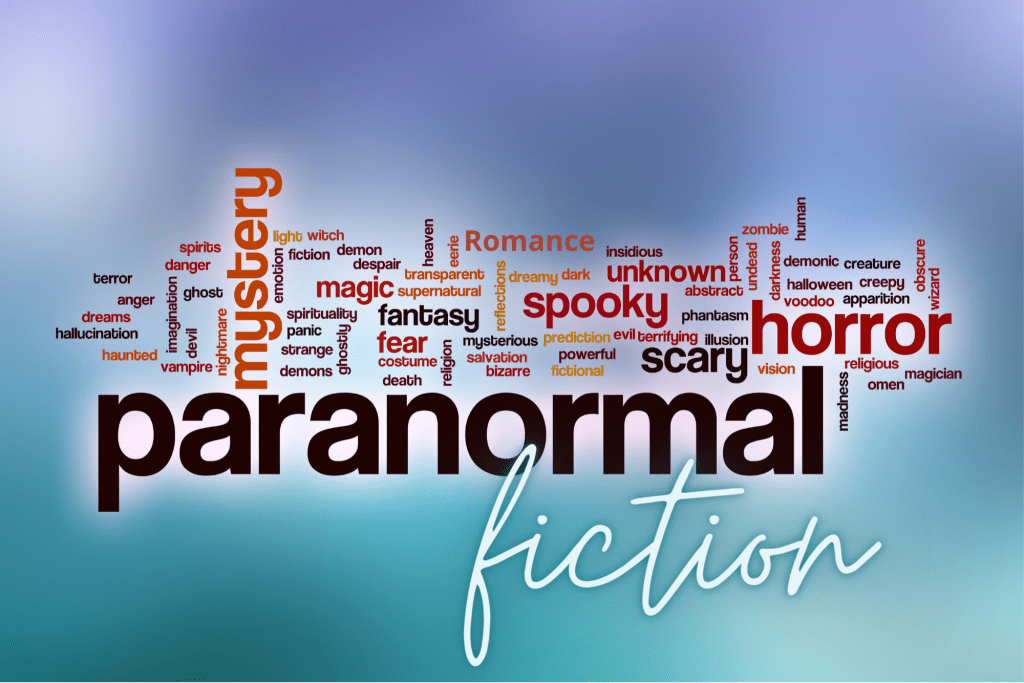
A paranormal story is a work of fiction that explores phenomena and beings that are beyond the scope of scientific understanding. They include elements like ghosts, vampires, werewolves, witches, and other entities that cannot be explained by the laws of nature. They can be set in the real world, but generally includes elements that defy scientific explanation.
SAVE $40 off the regular submission for full novel submissions. Get FULL FEEDBACK on your novel by our committee of industry professionals. Get a transcript of your novel performed by professional actors at the Festival.
Dystopian stories are a type of speculative fiction that explore the darker aspects of human nature and the human mind. They often serve as a warning about what could happen to modern society if certain aspects grow out of control.
SAVE $40 off the regular submission for full novel submissions. Get FULL FEEDBACK on your novel by our committee of industry professionals. Get a transcript of your novel performed by professional actors at the Festival.
This festival has a guaranteed 4-tier set up for each accepted script. (No matter what, all screenplays submitted receive FULL FEEDBACK on their work.) 1) Full Feedback on your script 2) Actors performance video reading of your script 3) Blog interview promotion. 4) Podcast interview on the Film Festival ITunes show
SAVE $40 off the regular submission for full novel submissions. Garner FULL FEEDBACK on your novel by our committee of industry professionals. Get a transcript of your novel performed by professional actors at the Thriller/Suspense Festival.
This festival has a guaranteed 4-tier set up for each accepted script. (No matter what, all screenplays submitted receive FULL FEEDBACK on their work.) 1) Full Feedback on your script 2) Actors performance video reading of your script 3) Blog interview promotion. 4) Podcast interview on the Film Festival ITunes show
Go to the Daily Film Festival Platform http://www.wildsound.ca and sign up for the free 3 day trial to watch a new and original festival every single day.
Abstract Skies, 4min,. Canada Directed by Roger Gallant A short film that reimagines the skies as a gallery of abstract forms, captured in motion through time-lapse.
Oregon’s Boat: the McKenzie River Drift Boat, 35min., USA Directed by Randy Dersham Oregon’s Boat is an expository documentary that explores the evolution and enduring influence of the McKenzie River Drift Boat, a distinctive craft that represents the Oregonian spirit for adventure. Featuring a compelling mix of historic film, archival photographs, and insightful interviews, the film charts the boat s evolution along the McKenzie River, reveals its role in transforming fishing and whitewater adventures in shallow rocky rivers, and showcases the ingenuity and craftsmanship behind this iconic vessel, providing an engaging exploration of its lasting legacy in outdoor recreation and American river culture.